December is yet again the devilish Finals month, and everyone here is an all-nighter champion. Nights when you get to bed before midnight can be counted on one hand.

U.S. wearable device company Jawbone tracked sleep data from 18,500 students wearing its wristbands across 137 American universities, compiling over 1.4 million nights of sleep data and releasing the list of U.S. universities where students are most sleep-deprived.
Who takes the crown as this year's all-nighter champion? Why do today's international students stay up late? We will interpret these findings one by one.
Does a Better School Mean Earlier Hair Loss?
Relevant research data indicates that the higher the school ranking, the more likely students are to be sleep-deprived.
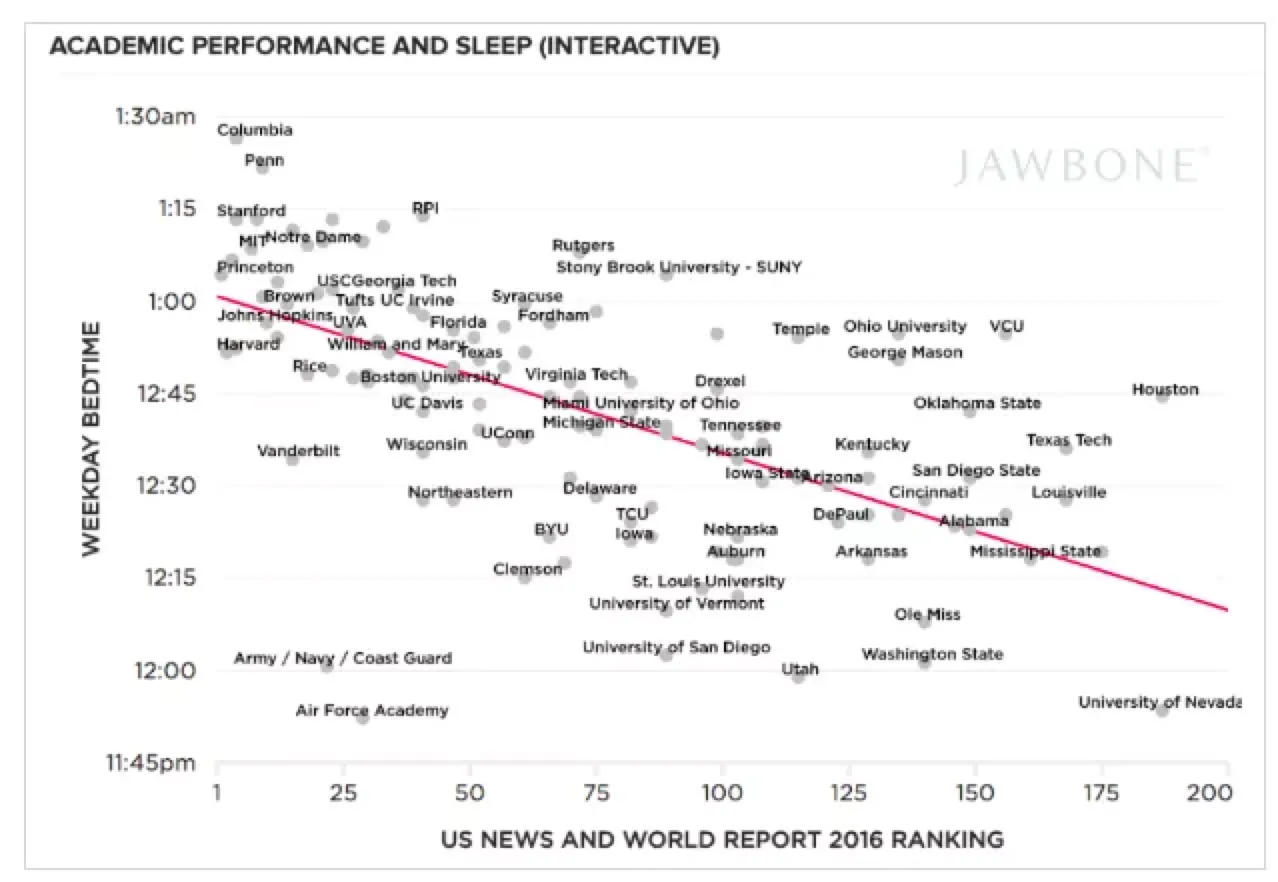
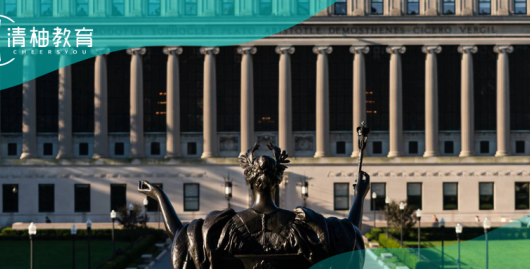
Columbia University (#2) tops the sleep deprivation list, with students' average bedtime at 1:26 a.m. Columbia's architecture program certainly deserves a mention — it's a traditionally grueling major.
University of Pennsylvania (#8), Stanford (#6), and Duke (#9) follow closely, with bedtimes also past 1 a.m.
Students at top 30 universities generally go to bed after 12:30 a.m., and the top 10 are known for their daily grind.
In any case, a better school choice seems to lead to earlier hair loss, right?

Data shows that only students at the University of Nevada (#227) and the U.S. Air Force Academy can get to bed before midnight.
Military academy students make sense, as their schedules are strictly enforced.
It just goes to show that the privilege of sleeping early simply does not belong to top U.S. undergraduate students; if you're not an all-nighter champion, you'd be embarrassed to say you attend a Top 30 school.
Now when choosing a school, you not only have to look at its ranking, location, and acceptance rate — you also have to ask: How many hours of sleep can I get?

Why Do Today's International Students Stay Up Late?
1. Academic Pressure
Studies say that people with high IQs tend to stay up late, and the better the school, the more likely you are to burn the midnight oil.
As is well known, U.S. universities love quizzes and mid-terms that make you question your life; dozens of pages of reading, back-to-back presentations across courses, overwhelming capstones, group projects, papers... When Finals season hits, all of these come at once, and sleep is basically out the window.
In any case, days studying abroad are basically: you never know when you'll finish, and you won't leave until the library closes.
Of course, some say whether sleep deprivation is due to academic obsession depends on the major. Take architecture students, for example, who are notorious for all-nighters and the ability to "sleep anywhere."

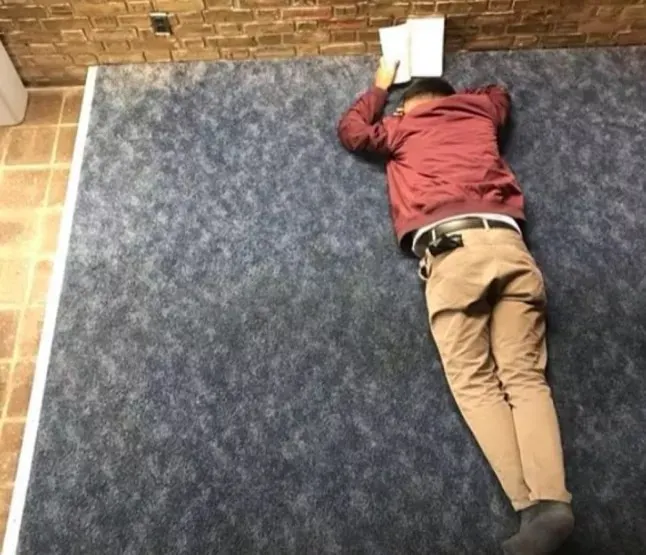
Medicine might be one of the few majors even more grueling than architecture. For medical students, 300 out of 365 days a year involve exams.
Recently a medical student on TikTok went viral for being too miserable.
His daily life: Mom, I want to drop out

Failed an exam, crying in the shower at 4 a.m.
.gif)
After crying, back to studying

Actually, it's not just medical students — many students at Top 30 universities just cry and then get back to studying.
Check out the unified question from students at Top 30 schools on Zhihu: "Are there any places to cry at XX University?"
University of Chicago
You feel like crying when you can't write code, when you can't write a paper, when you see wealthy classmates flaunting grades.

Columbia University
As the all-nighter champion school, you feel like crying for no reason. You have to cry in the library, and you can even cry while doing homework.

Johns Hopkins University
Every time I go to the library, I see classmates crying...
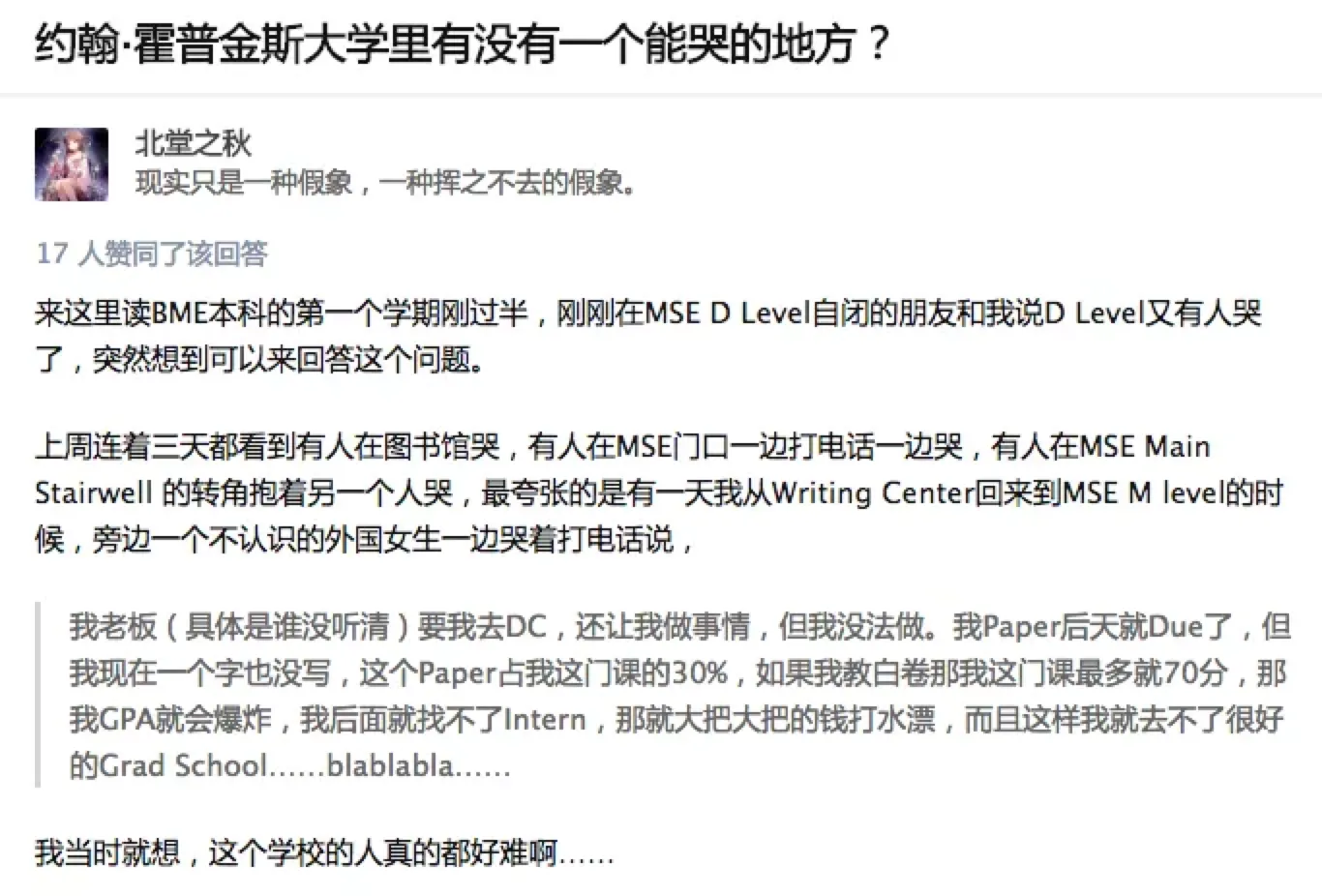
Why is attending a U.S. university so tough? Perhaps it's a form of cultivation, simply spreading China's college entrance exam over four years.
2. Peer Pressure
Peer pressure is a mysterious phenomenon that is everywhere.
Especially at Top 30 schools, your daily reality is: being crushed. Everyone thought they were hot stuff before arriving at a Top 30, but once here you realize that if you want an A, you have to be even more exceptional than others.
You struggle mightily for a B+, while the academic god always sits in the back row dating and still easily gets an A. While you can barely handle one major, others have already double-majored and graduated early.
.jpg?x-oss-process=style/opt-webp)
Open Xiaohongshu, and it's either people showing off Harvard, Yale, Princeton, Stanford, MIT student IDs, or humblebrags like "earning a million dollars a year after graduation but still a bottom-tier Silicon Valley resident."
Let alone the über-achievers around you: while you haven't finished reading your case, they've already landed a Fortune 500 internship offer. While you worry about group project slackers, they've already started a business with partners and earned their first bucket of gold.
Just how intense is the competition in overseas student circles today? Freshmen think about grad school applications, sophomores have already sent out countless resumes for internships, juniors have co-authored published papers, and upon graduation either hold multiple top job offers as bargaining chips or have become self-made success stories through entrepreneurship.
These days, if you haven't made Forbes 30 Under 30, you'd be embarrassed to say you graduated from a Top 30 school.

3. Societal Pressure
Society often has excessive expectations for international students from prestigious schools.
Salary must not be low, job must not be bad, otherwise you'll hear: "Weren't you a graduate of XX school?" and next thing you know, people start questioning the value of education.

Especially since many international student families are merely middle class; spending half a million yuan a year to study in the U.S. is not something all families can take lightly, allowing you to just coast after graduation.
Many families still have expectations that their children will find high-paying jobs, obtain residency, and settle down. However, the high-paying jobs accessible to international students are basically limited to software engineering, finance, and in recent years, data analytics.
As for liberal arts majors finding jobs in the U.S., you know the deal. It's another level worthy of booking a library study room for a good cry.
International Students' Mental Health Issues
So it's not that today's international students enjoy staying up late; sometimes they simply have no choice.
You have to pull all-nighters when you can't finish homework, during Finals, when job hunting for internships and full-time positions. When all these hit at once, mental breakdowns become very easy.
Most international students report only good news to their families, never the bad; their parents never know about the tough times — they bear it all themselves.
Many middle-class children carry an excessive weight of family expectations. Studying abroad feels like a one-way road, and any step backward seems like failure.
Under the pandemic, various psychological pressures have only intensified. Every year there are international students suffering from depression, and even taking their own lives.
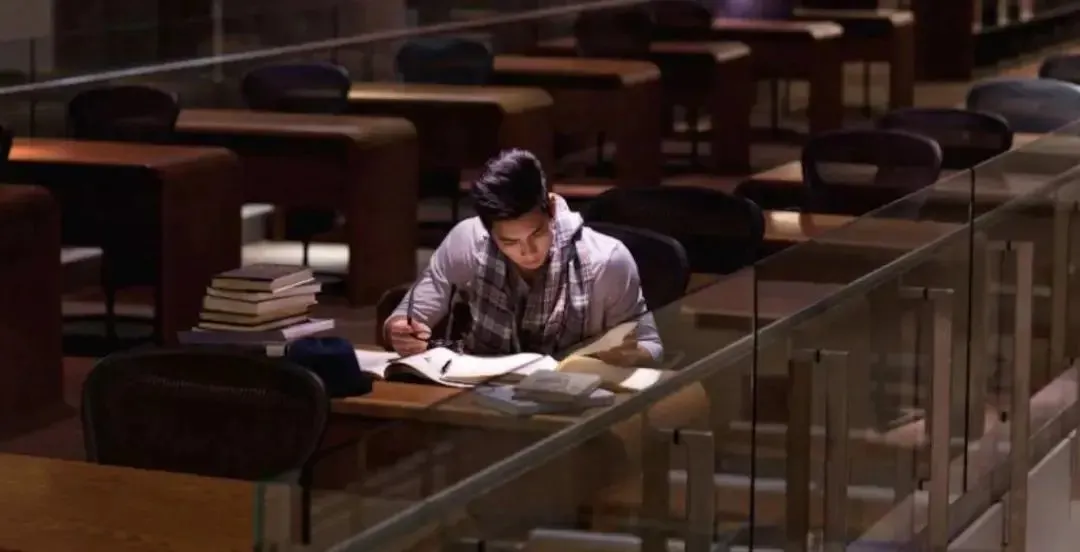
In fact, the loneliness and anxiety of studying abroad are things everyone experiences. These periodic emotions need to be acknowledged and adjusted in real time.
Perhaps many of the things we worry about now, when placed in the long river of life, are not that important after all.
Additionally, we suggest everyone try to minimize staying up late, as sleep deprivation can more easily lead to depressive moods. Moreover, maintain healthy lifestyle habits, communicate more with family and friends when facing difficulties, or talk more with the school's mental health counselors.
If nothing else works, a good cry is fine too; gather your spirits and set off again.