Last Thursday, the New York City Council passed a bill that will allow more than 800,000 non-citizen legal taxpayers in New York City to gain the right to vote in NYC municipal elections.
It is estimated that over 110,000 Chinese residents will gain the right to vote for the first time, including H-1B, EAD, and green card holders.
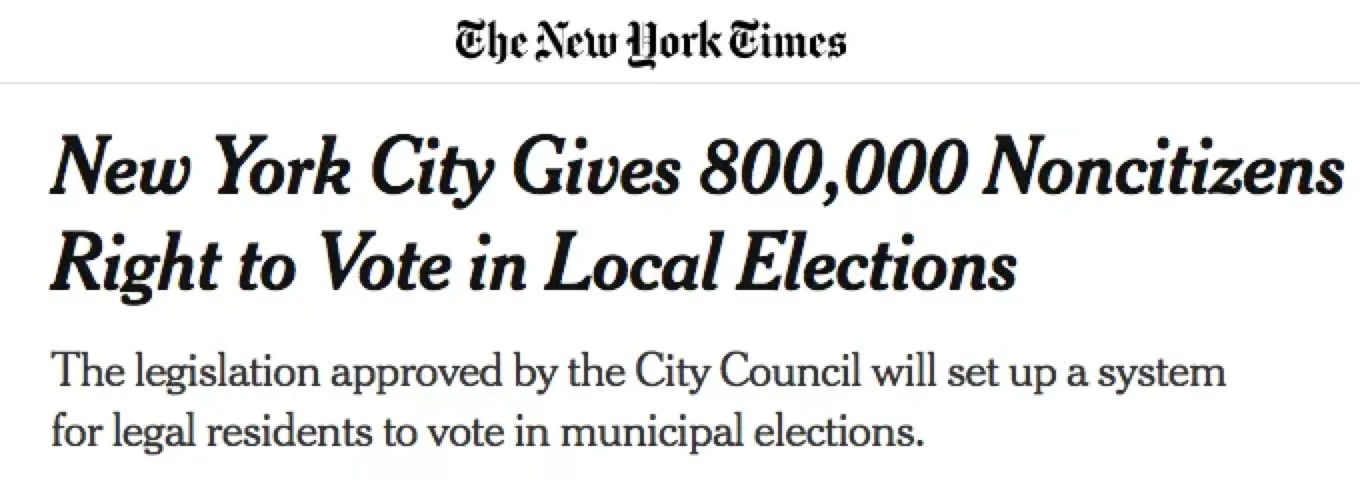
CheersYou(清柚教育) will provide a detailed introduction to this new bill and interpret its significance for international students.
NYC New Bill: Empowerment
The bill, called "Our City, Our Vote", was initiated by NYC Council Member Ydanis Rodriguez.
He stated that this bill would give more voice to foreign legal taxpayers living in New York City.
According to the bill, any resident with legal work authorization who has lived in NYC for more than 30 days is eligible to vote in municipal elections.
Eligible groups include:
-
Green card holders
-
H-1B work visa holders with legal work status
-
H-4 spouses with EAD work permits
-
F-1 visa holders on OPT working
-
L-1, O-1 and other work visa holders
-
DACA (Deferred Action for Childhood Arrivals) Dreamers
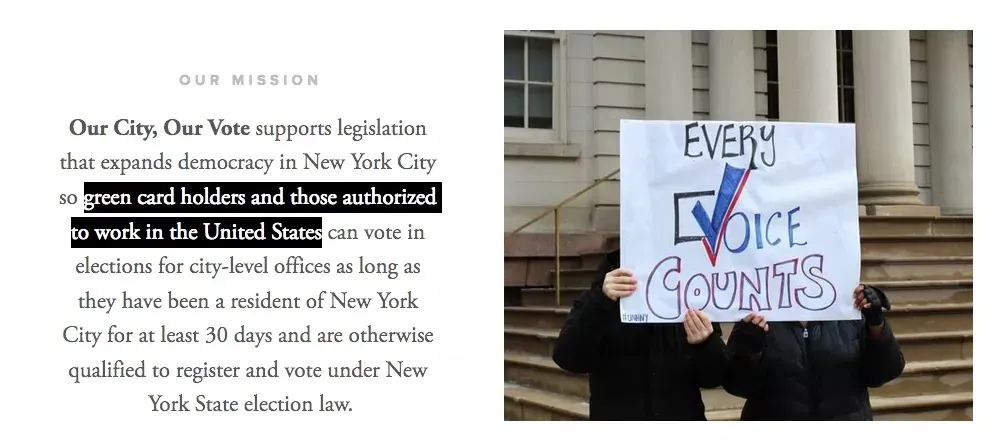
The bill will take effect in September 2023. Eligible foreign residents can register with the Board of Elections starting December 9, 2022, to vote in the next large-scale NYC election.
Non-Citizen Voting Rights: Ongoing Controversy
Granting voting rights to non-citizens in NYC has sparked considerable controversy. Opponents believe that the passage of this bill will discourage foreign residents from seeking U.S. citizenship.
Council Member Laurie Cumbo from Brooklyn expressed that the bill would dilute the voting power of African Americans and shift the city's power structure, hence her opposition.
In addition, opponents argue that 30 days of residence is not sufficient to be considered a resident and does not demonstrate enough contribution to the city, among other reasons.
Legal experts say the bill will face legal challenges. Opponents of the bill, including Republican Council Member Joseph Borelli, have indicated they will file lawsuits on the grounds of unconstitutionality.
Mayor Bill de Blasio said that while he would not veto the bill, he also questions whether the City Council has the authority to grant voting rights to non-citizens. However, whether de Blasio signs it or not, the bill will automatically become law within 30 days.
Across the United States, the issue of non-citizen voting rights is contentious, with policies varying greatly by region.
Colorado, Florida, and Alabama have taken a conservative stance, clearly stipulating last year that only U.S. citizens can vote in elections. Arizona and North Dakota have formally banned non-citizen voting.
However, some parts of the U.S. are more open. Some areas in Vermont and Maryland already allow non-citizens to vote in municipal elections; San Francisco permanently grants non-citizens the right to vote in school board elections. Additionally, cities in Illinois, Maine, and Massachusetts are also considering opening voting rights to non-citizens.
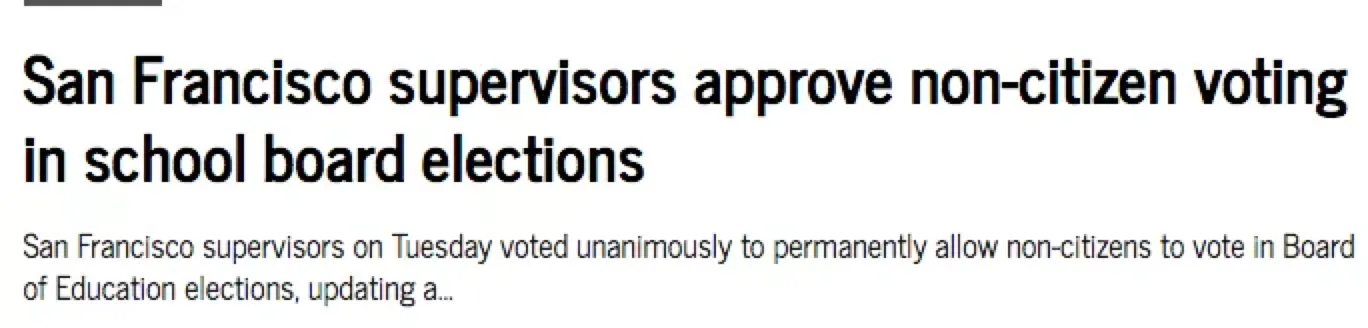
With this bill, NYC will become the largest jurisdiction in the U.S. to grant voting rights to non-citizens, and it will serve as a model for other regions.
NYC has demonstrated a more inclusive attitude, sending a positive signal that non-citizens can gain more political voice, which is more favorable for H-1B, EAD, and green card holders.
Strong Demand from a Large Immigrant Population
On why NYC opened voting rights to non-citizens, the bill's sponsor Rodriguez believes that for new New Yorkers, true integration is not just about employment and homeownership, but having the right to vote like other American citizens and having a voice in their city.
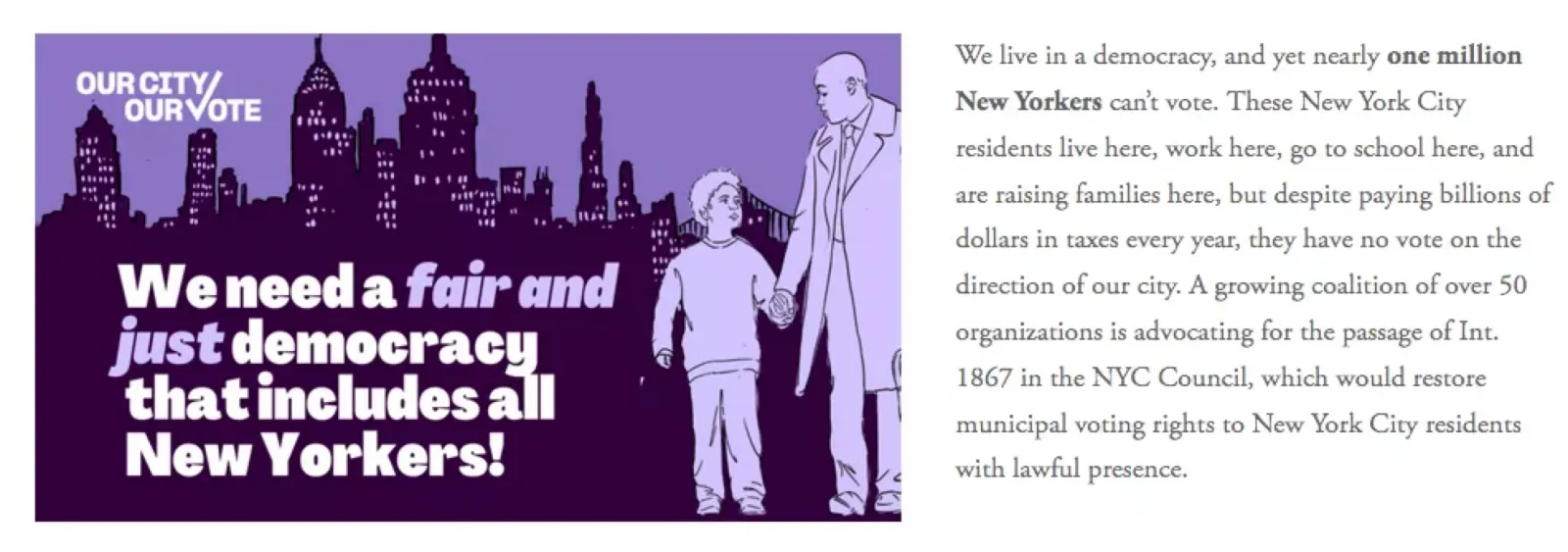
NYC has always been a diverse city, hence a more inclusive attitude on the issue of non-citizen voting rights.
Census data shows that immigrants account for about 37% of NYC's 8 million residents. Of these, nearly 60% are naturalized citizens, and the rest are green card holders, work visa holders, international students, and undocumented immigrants.
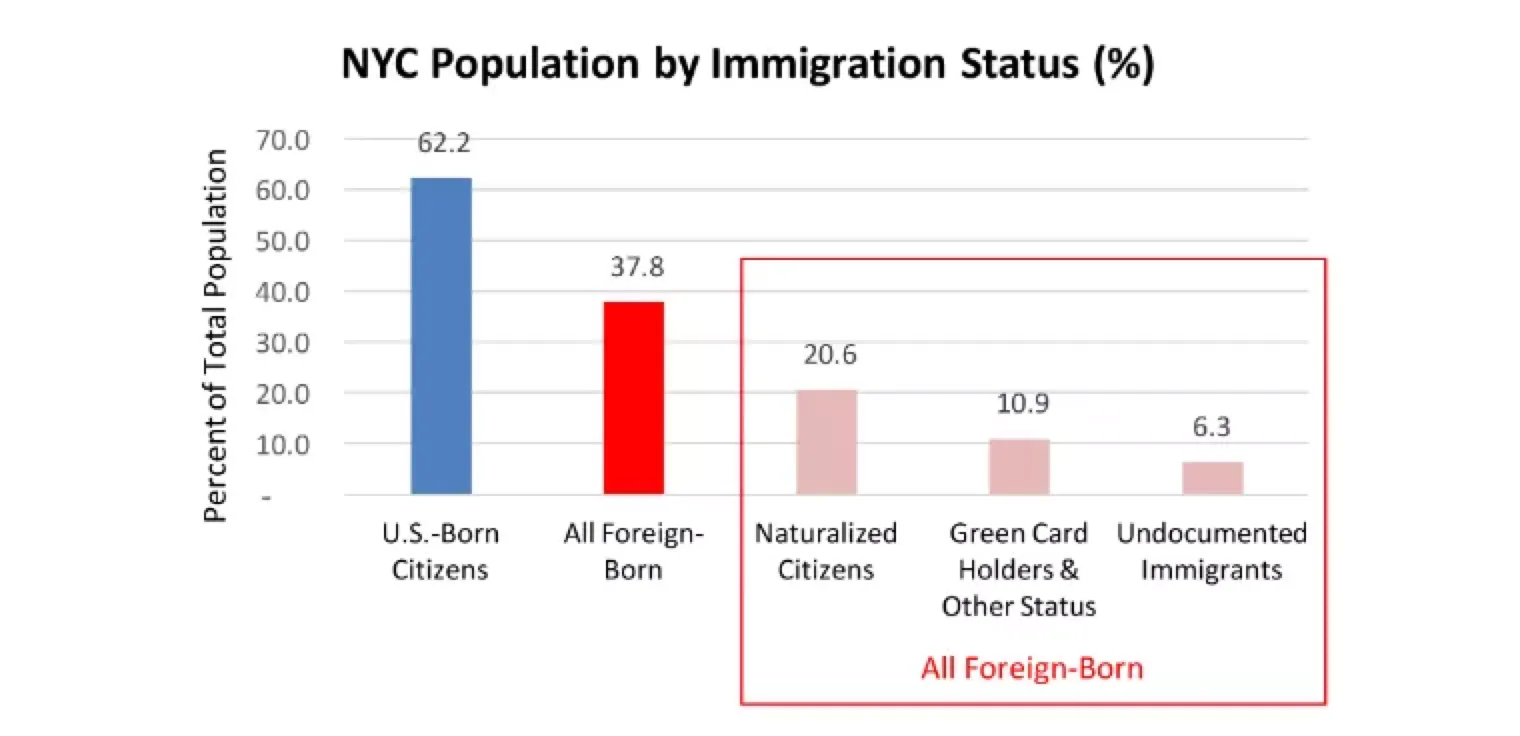
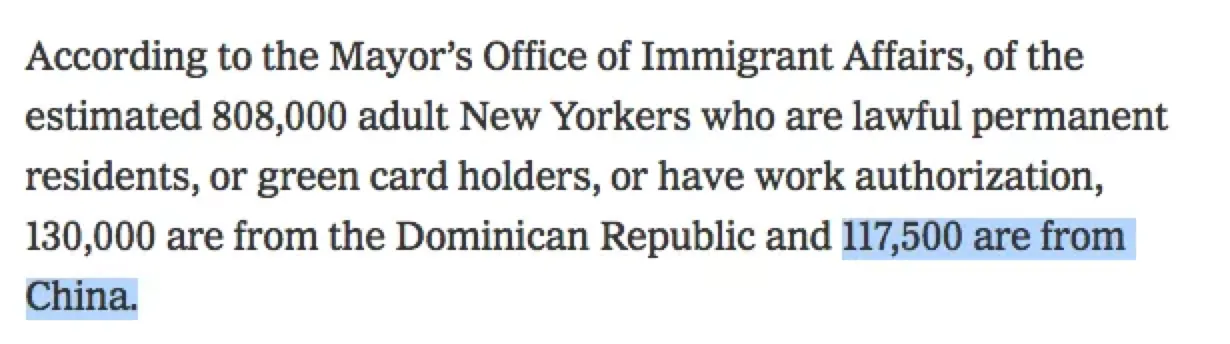
Data from the Mayor's Office of Immigrant Affairs shows that NYC has over 800,000 non-citizens who are either lawful permanent residents, green card holders, or work permit holders. Among them, 130,000 are from the Dominican Republic, and over 117,000 are from China.
These groups—green card holders, H-1B workers, international students, etc.—have injected continuous vitality into NYC's economic and cultural development, and have become a source of charm that attracts businesses, capital, and talent to the city.
With such a large non-citizen population making significant contributions to local taxes and development, there is inevitably a need for a certain degree of political representation. Even without naturalization, they can participate in politics and promote fairness and equity in local policies and legislation.
Although conservative forces remain opposed and many obstacles lie ahead, in areas with large foreign populations, this policy direction is a general trend in the United States.
At least, NYC will be the first to try this.
Impact of NYC's Non-Citizen Voting Rights on International Students
So, what does NYC's granting of voting rights to non-citizens mean for international students?
In fact, this policy is beneficial for international students at both the study and employment stages, as political voice is a prerequisite for fairness.
The slogan of "Our City, Our Vote" is clear: we vote for those whose policies benefit us.
In the future, with over 110,000 Chinese residents having voting rights in NYC, politicians will inevitably tilt toward the interests of this large group during elections, and we believe international students will also benefit. At the same time, NYC's example will, to some extent, provide a reference for other regions.
Whether it is the racial hatred that has intensified since the pandemic, the fluctuating policies and attitudes toward international students, or the long-standing unbreakable Asian career ceiling, these may all be alleviated after achieving voting rights. We believe that future policies on education, employment, and immigration will become more friendly.
NYC will welcome every new New Yorker with a more inclusive attitude.