
With the emergence of the "multi-country joint application" concept, "cast a wide net and focus on catching fish" has become a core tactic for many students preparing for graduate applications.
Applying to multiple countries like the US, UK, and Canada isn't enough; one school isn't enough without applying to several programs; one direction isn't enough, applying in three streams gives a sense of security; not enough safety schools, and reluctant to give up reach schools—adults don't make choices, they want to go ALL IN…

And here we have a student who tested the waters, applying to 50 schools for Fall 2023! Not to mention the time and energy spent, the exorbitant application fees alone have astonished many onlookers…

In the eyes of a large number of applicants, applying to ten schools is basic, twenty is just enough, and filling a school list with thirty finally makes them feel satisfied.
Everyone has a desire to be a "player", but can everyone afford this kind of outrageous operation?
.png)
Hard to Be a "Time Management Master"
The workload of applying to a dozen or even dozens of programs is not as simple as just talking about it. The situations vary for different regions, schools, and colleges; deadlines are scattered, and timing is tricky. It's really not easy to be a "time management master" during the application season!
Different Application Deadlines Across Institutions
Taking US and UK institutions as examples, there is a significant difference in application timelines between the two.
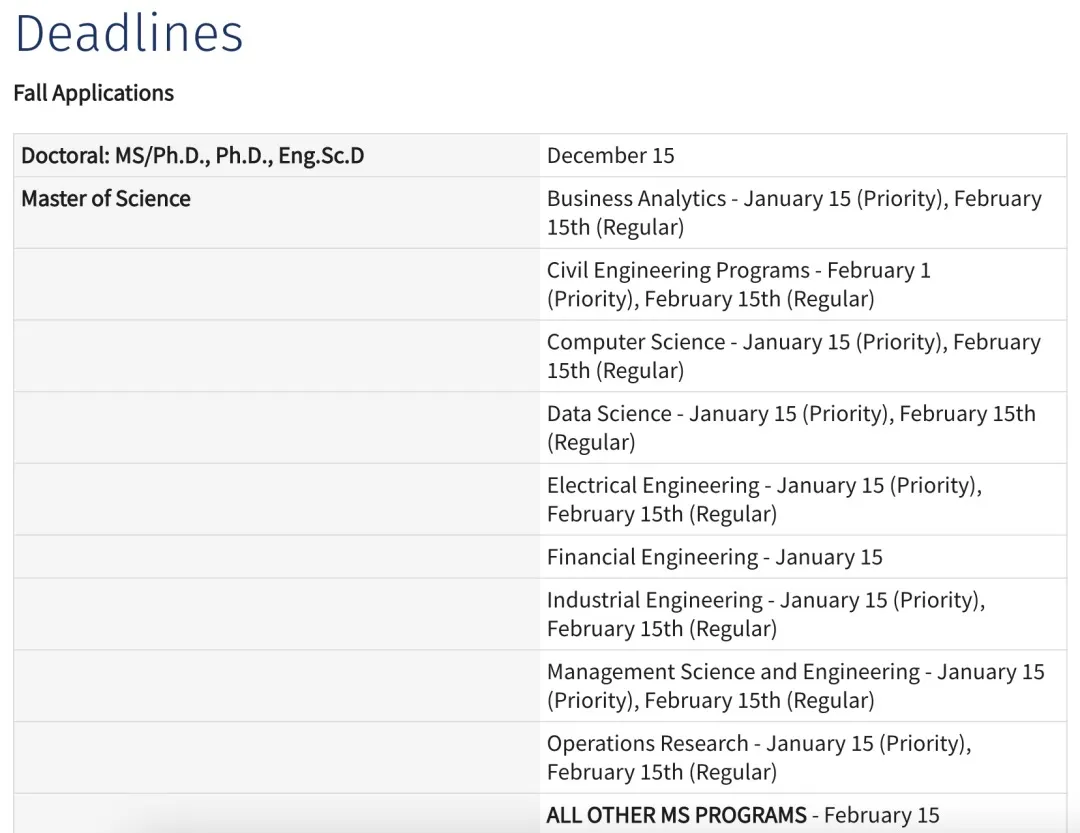
US universities generally open graduate online applications around September to October, with priority round deadlines in December to January. The following year, second and third round applications close successively from February to May.
In other words, if you miss the first round, you can still submit materials in the second or third round. Although you bear the risk of late application, you are still on the same starting line as other applicants in that round.
UK graduate applications have a wider range of deadlines; most institutions open applications from mid-September to early October, with deadlines mostly from January to March.
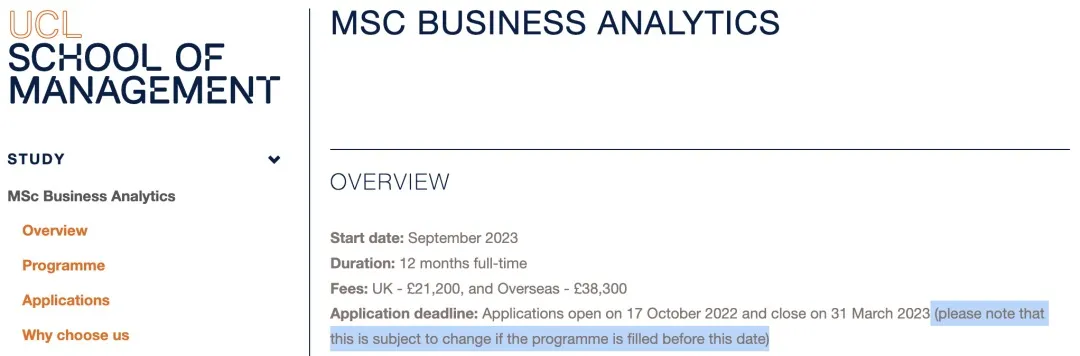
At the same time, unlike the US, UK graduate applications have an unwritten rule of "first come, first served". So a common phenomenon occurs: some students haven't submitted their applications yet, thinking there's still time; while others have already received offers and are happily planning their graduate life.
Different Deadlines for Programs in the Same Field
Even within the same application direction, the application timelines vary greatly between different schools.
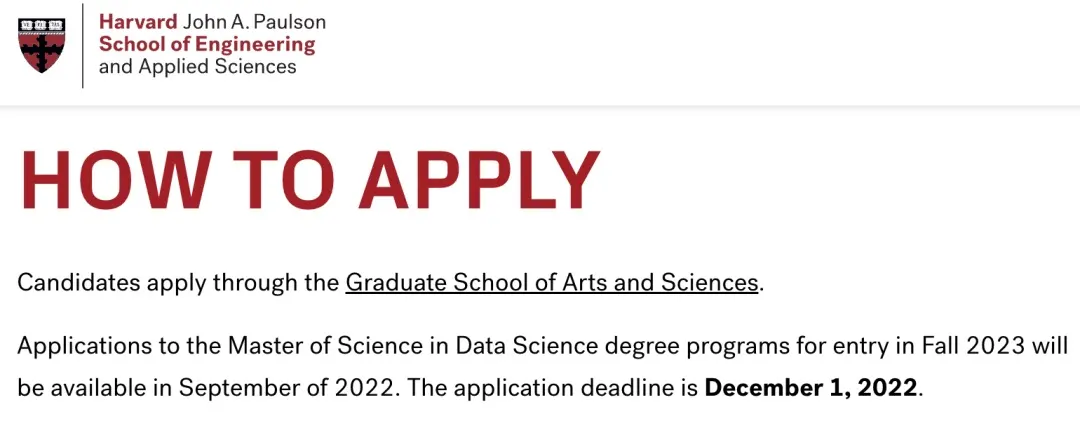
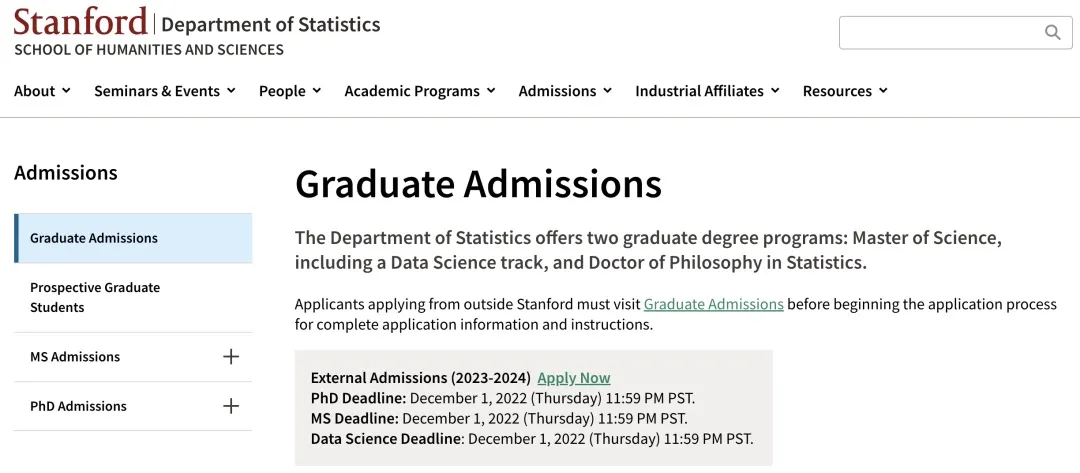
Taking data science programs as an example, Harvard and Stanford have the earliest deadlines, both stopping all applications on December 1.
Columbia and UPenn allow submission of data science application materials until February.
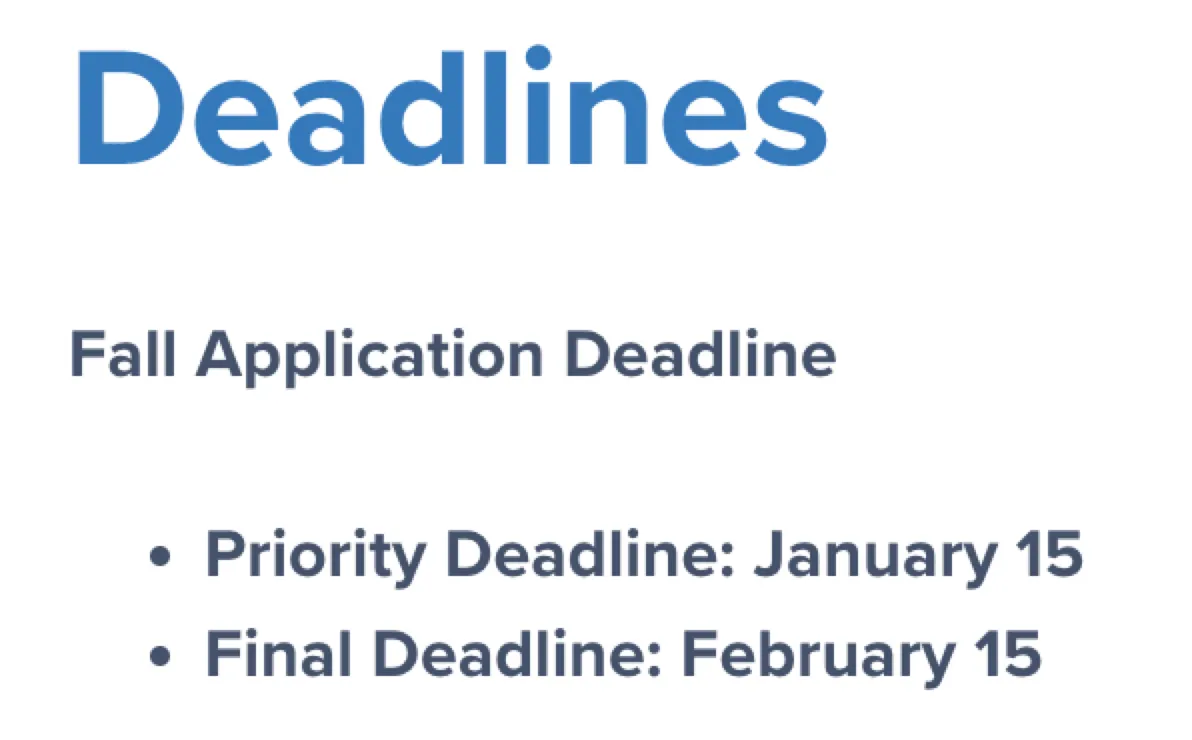
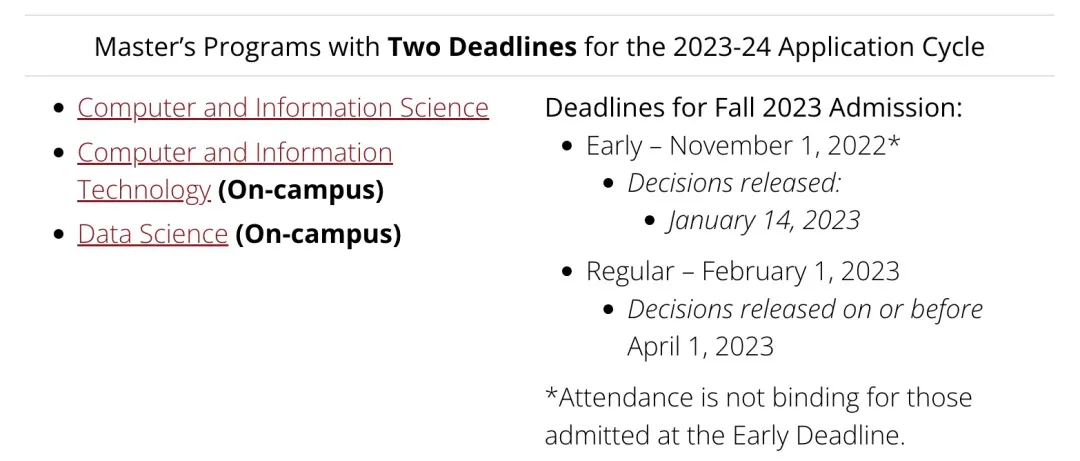
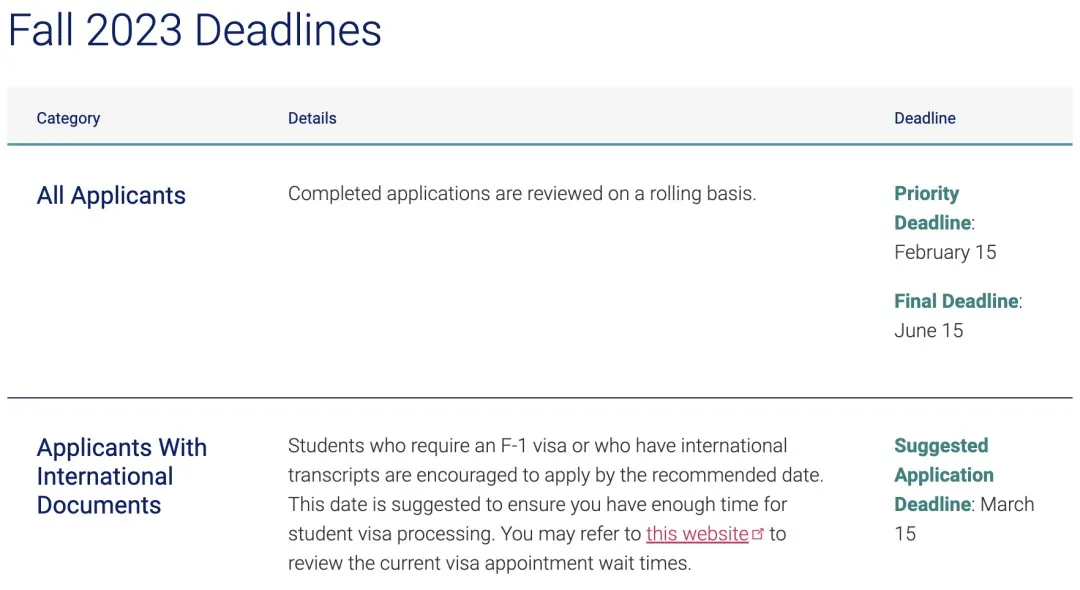
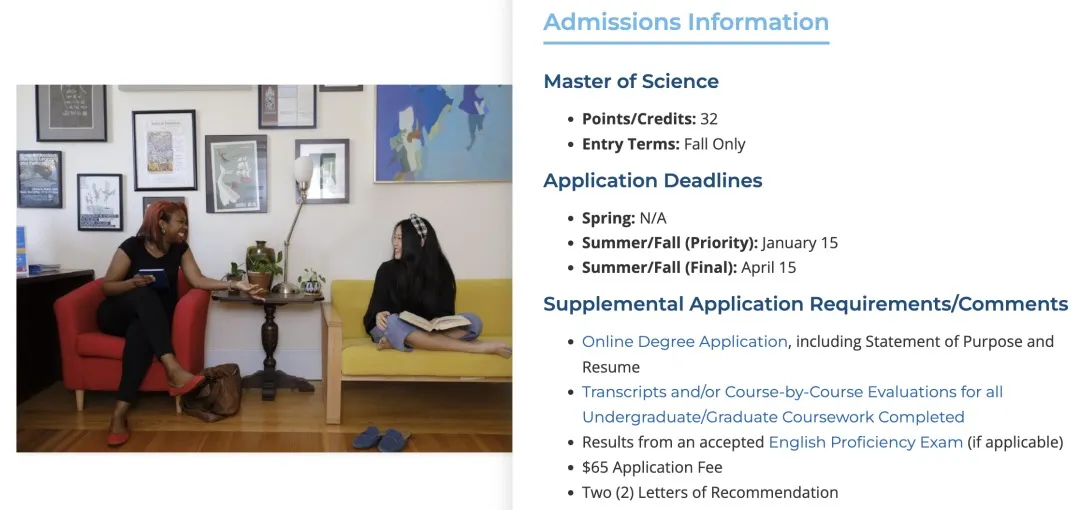
And even when applying to programs in the same field but in different colleges at the same school, the application deadlines can differ.
Taking Columbia University as an example, because the course directions are similar, some students choose to apply to both Applied Analytics and Learning Analytics programs. These two programs belong to SPS and the College of Education respectively, and the application deadlines are completely different.
Hard to Control the Timing of Lengthy Application Steps
In addition to the varying application deadlines, there are also time-consuming steps during the application process. For example, slow transcript delivery is a problem many applicants encounter.
If having the original school send transcripts to the target institution, the original school takes 2-3 business days to process the request and send, and the admissions office takes another 2-5 business days to receive and process.
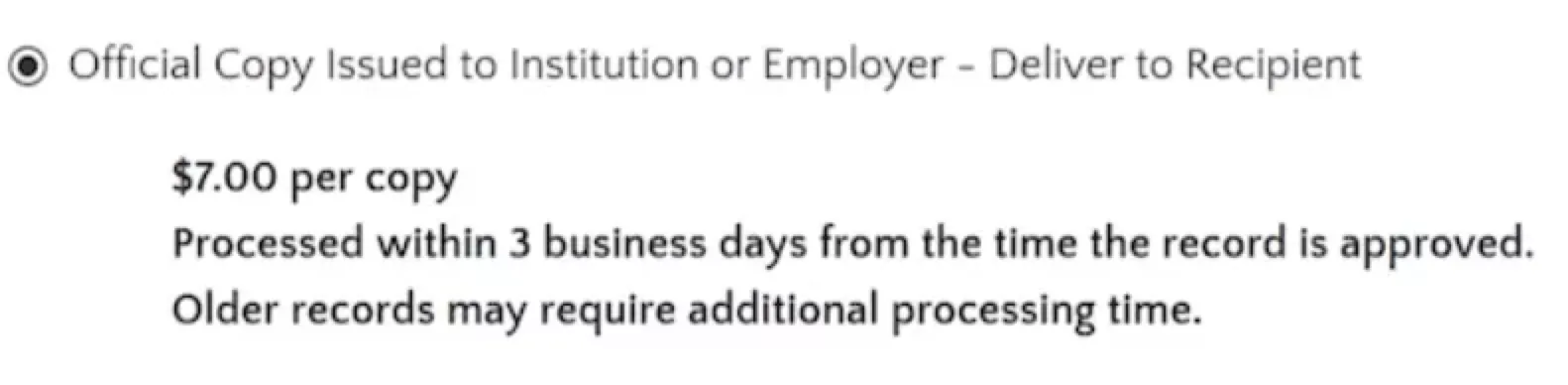
Processing times may differ between universities, colleges, and programs. For instance, NYU Steinhardt's transcript processing time is as long as 10 days.

At the same time, one must ensure that standardized test score reports, WES certification, recommendation letters, and other application materials are balanced in timing between third parties and schools, and processed before different deadlines.
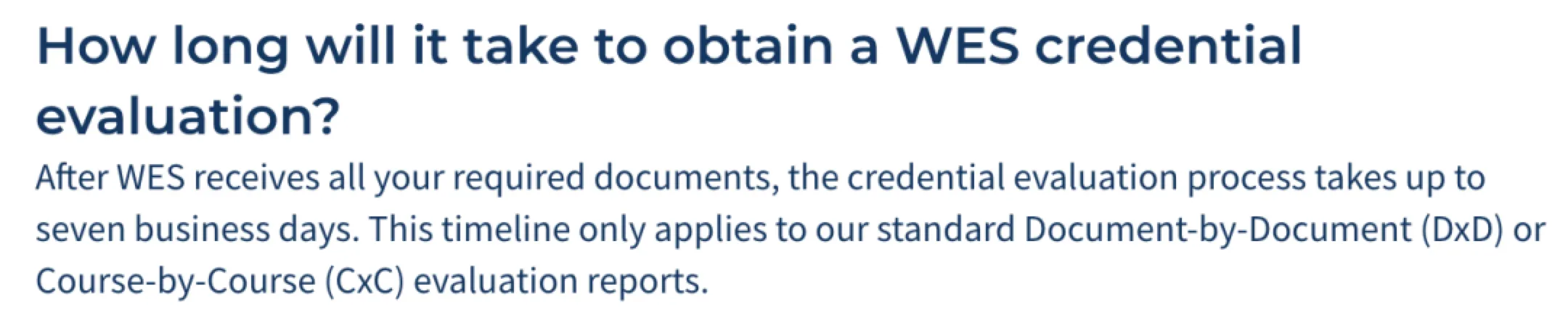
If applying to a dozen or even dozens of programs, the timing points an applicant needs to plan are probably not easily calculable.
Ideals Are Beautiful, Reality Is Cruel
Besides the many timing issues, "player" applicants who want to cast a wide net also find it hard to cover everything in terms of energy.
For a student intending to study abroad for graduate school, preparation should start no later than junior year.
Including but not limited to: preparing for language exams; maintaining GPA steadily; preparing for GRE/GMAT; finding suitable programs and schools; completing targeted and valuable internships or research projects; contacting appropriate professors for recommendation letters; writing and polishing resumes and essays; submitting online application materials; preparing for school interviews…
To obtain a desired offer, every step must not be slack, and the mental and emotional energy consumed is imaginable.
Difficult to Get Standardized Test Scores
Starting with GRE/GMAT preparation, many students face numerous difficulties.
Can't learn, can't understand, the questions don't know me, and I don't know them. How to part ways peacefully with GRE is a major challenge troubling many students. One month of prep, three months to get a score, this is already considered "Chinese speed".

But the common situation is that there are many applicants who can't get a score for six months or even longer. However, for many programs, standardized test scores are still one of the key factors admissions officers examine. Hard to get a score? Grit your teeth and keep going.
Hard to Produce Application Essays
When reaching the stage of preparing application materials, some students realize that an essay of less than 1000 words is harder to write than a thesis of thousands of words in college.
Unable to find the focus, unable to structure, too much to write but blank when putting pen to paper—this is the problem most students encounter in essay writing.
More importantly, one cannot "use one essay for the world". Different regions have different requirements and characteristics; different directions require highlighting different strengths.

For students applying to n number of programs, each region and program must be analyzed one by one, and then essays written accordingly.
Just one essay can make an applicant "pull their hair out", let alone writing multiple or even dozens at the same time.
Many Pitfalls in Filling Online Applications
When all materials are ready and it's time to fill out online applications, students aren't relaxed either.
Different schools and programs have different requirements, and applicants applying to multiple programs often register many accounts to fill in application information; one slip can lead to mistakes.
First and last names reversed or birthday wrong; GPA or course number entered incorrectly; uploading wrong files, submitting without noticing, etc.
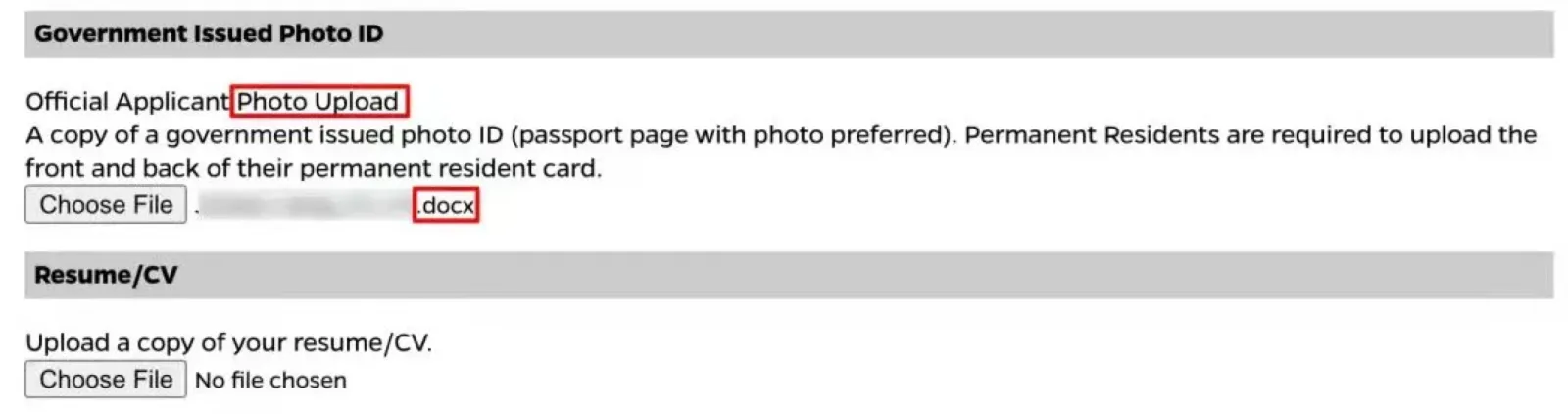
Even many accidents aren't the applicant's fault. For example, professors filling out recommendation letters with wrong names or phone numbers, website system bugs causing file upload failures, etc., are all possible.
With so many tasks, even applying to one program might not be handled perfectly, let alone applying to n programs at once—the enormous workload is probably unimaginable.
"Player" May Dream Big, But the "Fish" Have Countermeasures
Besides time and effort, the "fish" won't let the "player" cast nets at will; the feasibility of applying to n schools or programs simultaneously is also questionable.
Universities Control the Number of Applications
Generally, each university allows only one application per school or college. Top schools like UCB and UCLA often strictly limit applications to one per entire university, disallowing multiple applications.
As one of the UK's most sought-after "fish", University College London (UCL) has announced a new application requirement: each applicant is allowed to apply to a maximum of two programs. This means the "player's" plan to cast a wide net at UCL won't work.
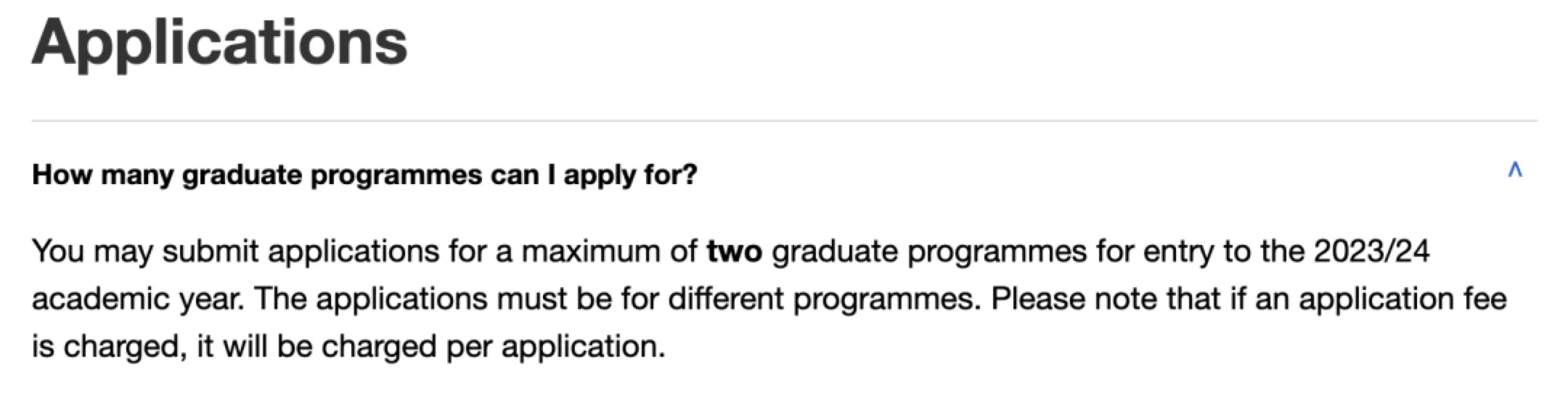
A surge in applications, overwhelming workload for admissions officers, expansion of IOE, and ongoing controversy over being a "watered-down" school may all be main reasons behind UCL's decision.
"Player-style" application sounds great, but schools may not let you "succeed". Want to choose so many university programs to apply to? The time you spend selecting schools and determining programs might be longer than the subsequent application process.
Recommenders Control the Number of Recommendation Letters
Generally, professors control the number of recommendation letters they write. Nice professors are usually willing to write letters for about 8 programs at most.
Getting one professor to write recommendation letters for dozens of programs—even if the professor is your own parent—is really difficult in practice. With professors already "besieged" by students, finding more recommenders is not easy.
Also, recommendation letters need to be submitted by professors themselves, and issues always arise in this submission process.
Especially around the end of the semester and year, professors with many tasks and breaks easily don't check emails promptly or miss emails due to too many, leading to failure to submit letters on time.
Successfully having a busy professor complete submissions for 7-8 letters without any issues is honestly a stroke of luck in the application process.
To apply "player-style", you must first pass the recommender hurdle. Without this crucial material, even if you apply to many programs, the probability of getting an offer is minimal, and the loss outweighs the gain.
Want "Honey"? Do You Have the Money?
Beyond time, energy, and feasibility, the most realistic factor preventing effective simultaneous application to n programs—costs.
First, there's the application fee. For US graduate applications, it averages $50-300 per school. West Coast schools are especially expensive.
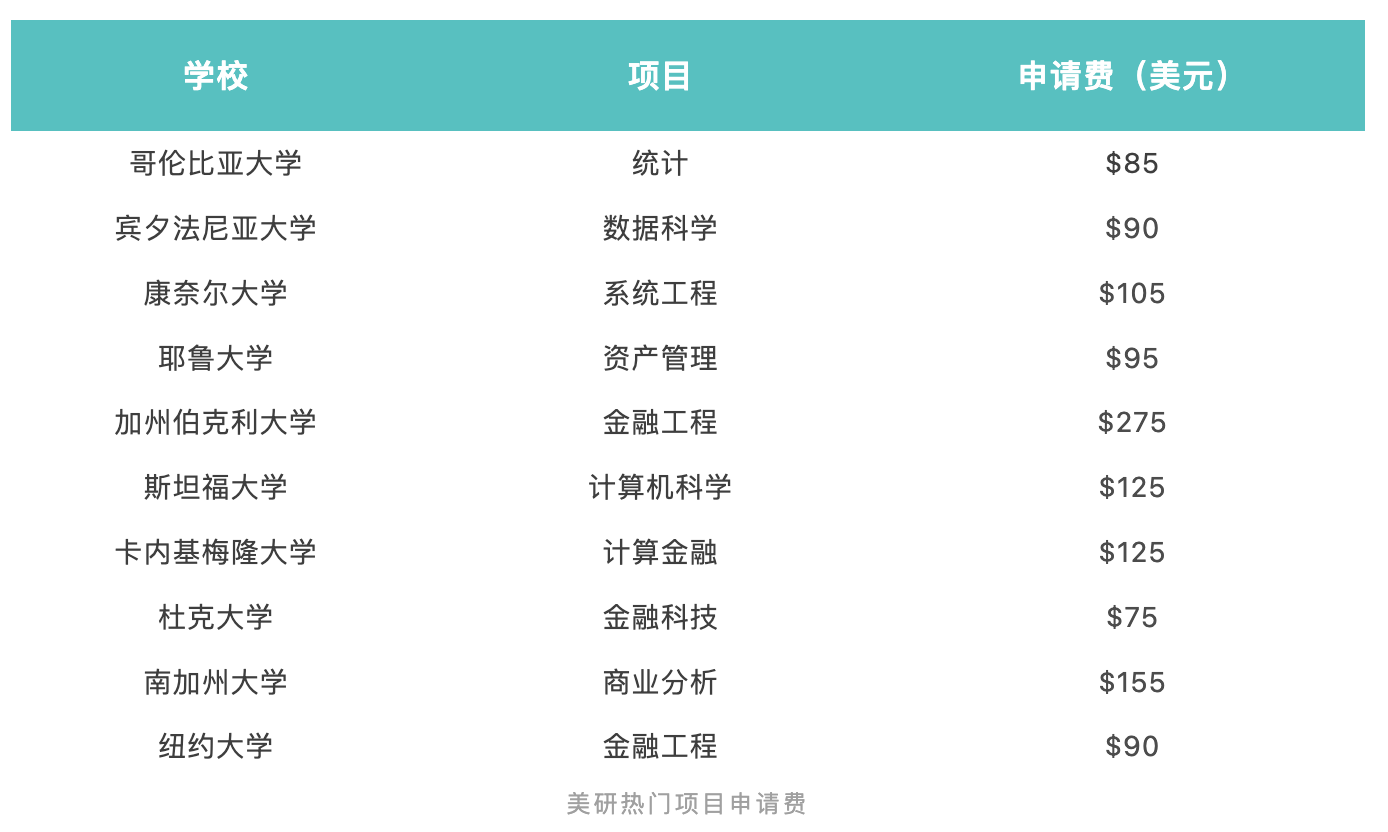
Typically, each applicant applies to about 8 schools, meaning each applicant pays thousands in application fees. For those applying to a dozen or even dozens of programs, just the application fees can cost tens of thousands of RMB.
Additionally, besides application fees, there is the "deposit fee", i.e., the deposit paid to accept an offer. Deposits generally range from $500 to $2,000 and must be submitted within about 2-6 weeks of receiving the offer.
Notably, if you change your mind and reject the offer after paying the deposit, this fee is non-refundable.
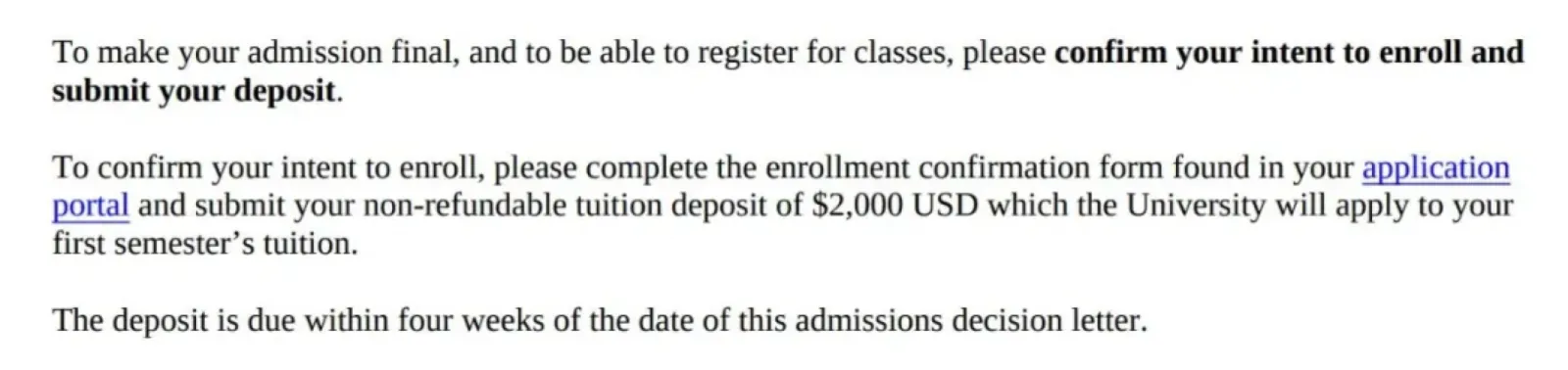
This often leaves students applying to multiple programs in a dilemma: unwilling to give up without a dream school offer, afraid of having no school to attend without paying the deposit; paying the deposit and then anxiously awaiting the dream school, fearing they might have paid a "huge sum" mistakenly…
Even if "player-style" application lets you taste sweetness and get more offers, the financial entanglement and pain are doubled both before and after application. Not to mention the common tragic cases of getting few offers and paying more in application fees than deposit fees.
Rather than ending up like this, it's better to narrow the school list to a reasonable scope earlier.
Don't Be a "Player", Hold Hands with the Dream School "Goddess"
Some students may say they don't want to be a "player" applicant either, but they always worry about "ineffective school selection" and ending up without a school.
However, there are tricks to selecting schools and programs. Asking Google, researching materials—these are doable, but doing "homework" without logic can only yield half the results with twice the effort.
Today, CheersYou(清柚教育) has summarized for everyone the factors that cannot be ignored in school and program selection. Find the right direction, don't be a player, and you can still hold hands with the "goddess"!
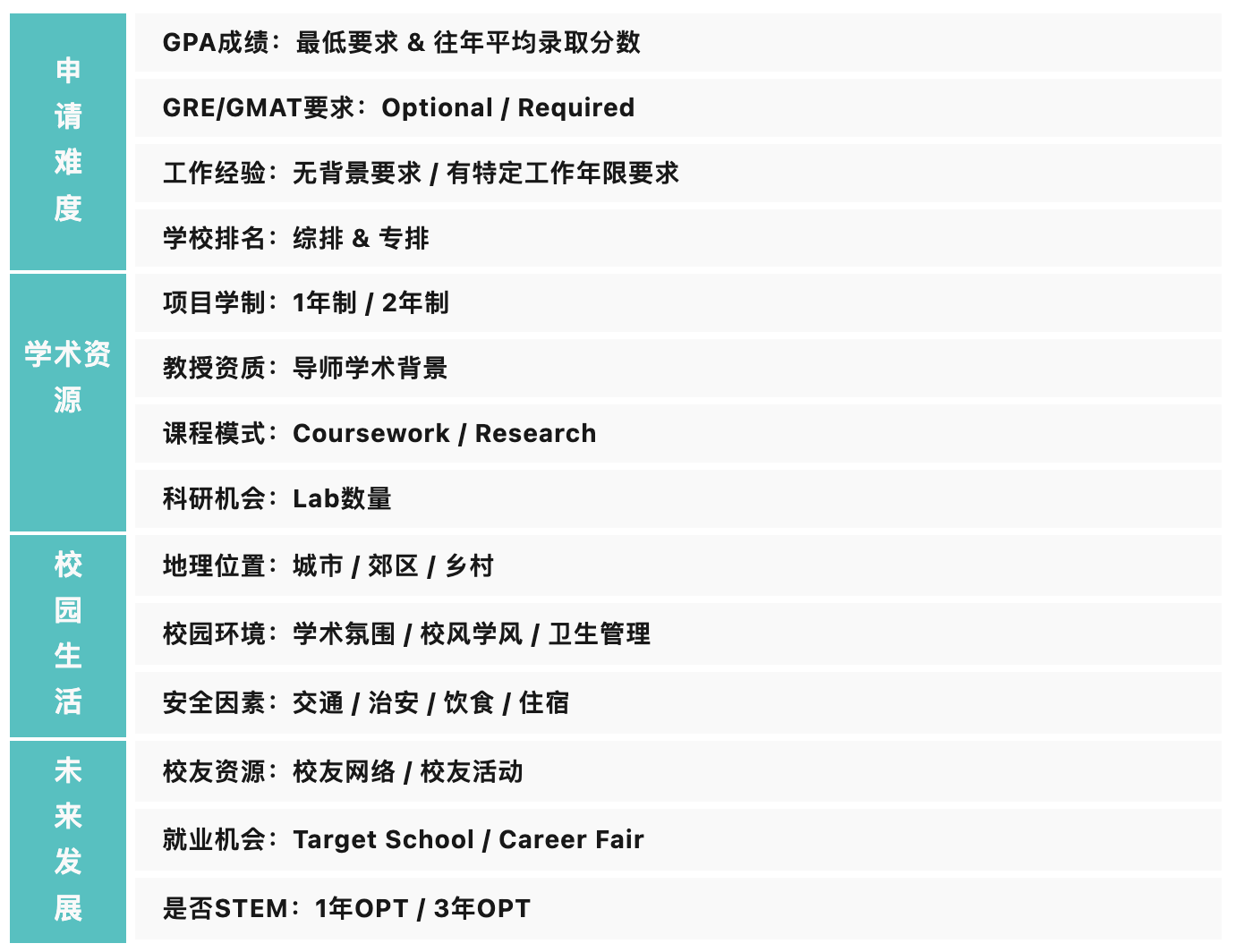
By matching and filtering schools and programs according to the above four aspects, one can efficiently complete school and program selection in a targeted manner that fits the applicant's situation and needs. While avoiding the drawbacks of "casting a wide net", it also allows applicants to have a high probability of getting into their desired schools.
Furthermore, for students planning to study abroad for graduate school, whether you are an early bird or a late starter, you should have a graduate application plan checklist. Effective planning can make your application journey twice as effective with half the effort.

The path of graduate applications is complex and rugged; the quality of results lies not in quantity but in quality. Reject "player-style" applications, starting with yourself.
I hope all students can proceed step by step, steadily moving forward, planning in detail, avoiding ineffective applications, not letting the efforts of the application season go to waste, and successfully realizing their dreams at prestigious schools.