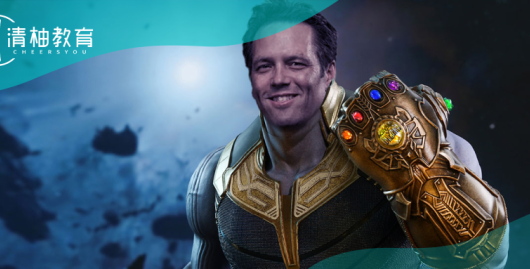
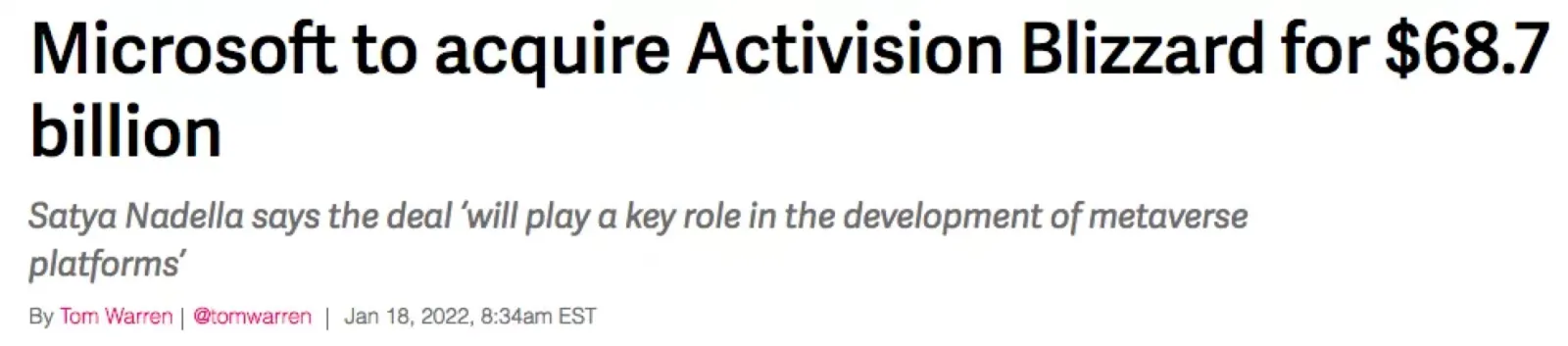
Last week on January 18, Microsoft officially announced its acquisition of Activision Blizzard, shocking the entire internet.
This dream collaboration, comparable to Disney's acquisition of Marvel, was especially jaw-dropping because Microsoft made a all-cash purchase at $95 per share, with a total deal value of $68.7 billion!
Microsoft Splashes Hundreds of Billions, Who Is the Top Player?
Indeed, as an old money member of the trillion-dollar club, Microsoft started the year by dropping nearly $70 billion in full cash, directly buying gamers' "Blizzard daddy" and showing who the real daddy is.
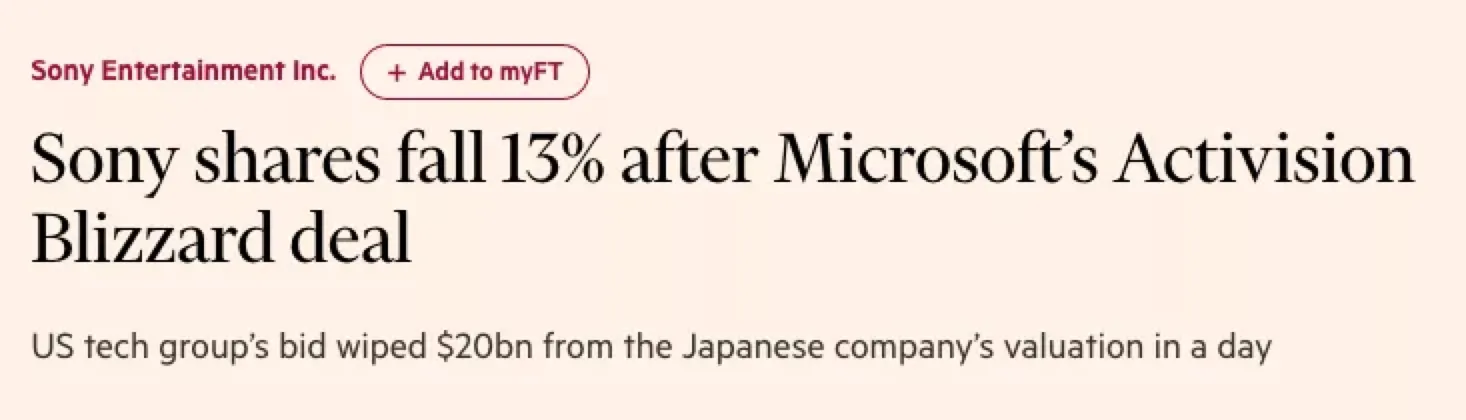
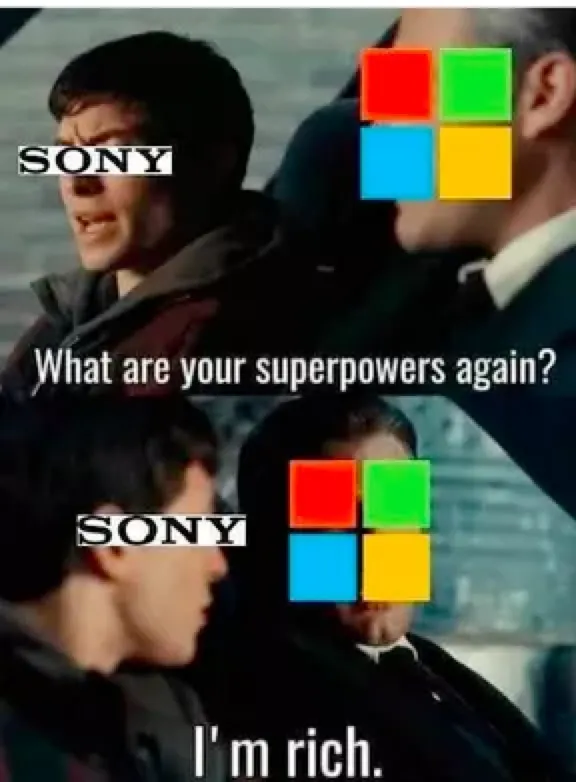
Sony's stock price plummeted 13% on the news, erasing $2 billion in market value:
Microsoft didn't bother with stock swaps; it was all cash, at a nearly 50% premium. Just buy it and be done. Maybe this is the power of super money.
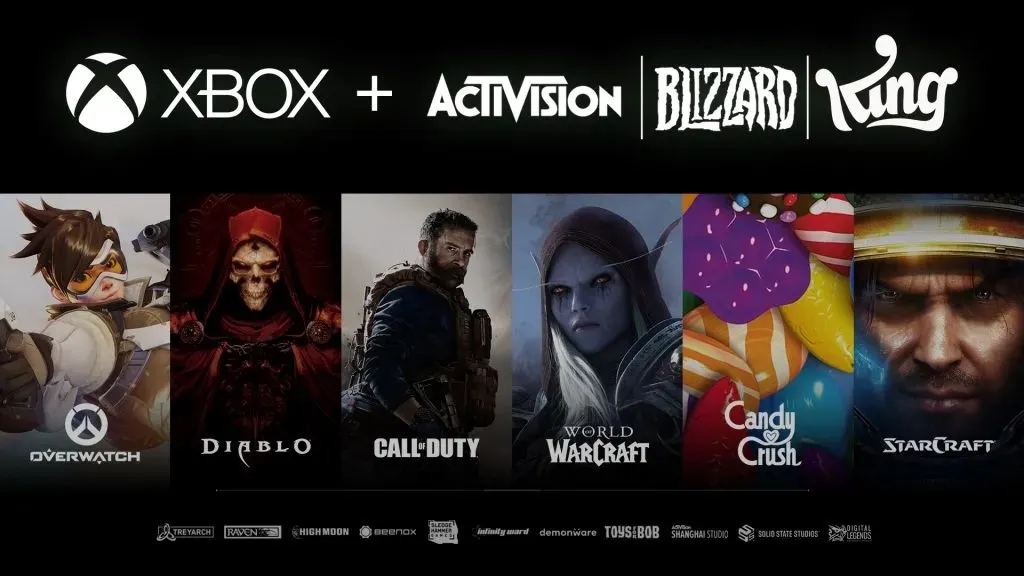
Activision Blizzard holds major IPs like Warcraft, Diablo, Overwatch, Call of Duty, and Candy Crush—these are classics and sentimental favorites for a generation of gamers.
But over 20 years later, today's Blizzard is no longer in its glory days, and many people are questioning whether it's really worth tens of billions of dollars.
When asked "How would you evaluate Microsoft's $68.7 billion purchase of Activision Blizzard," a player responded: just trash being bundled and recycled.

Faced with a Blizzard that's half-dead and exasperating, old players who once said "Blizzard出品,必属精品" now feel a mix of love and hate.
Now that Blizzard has been added to Microsoft's premium package, it's as if a powerful benefactor has breathed new life into it.
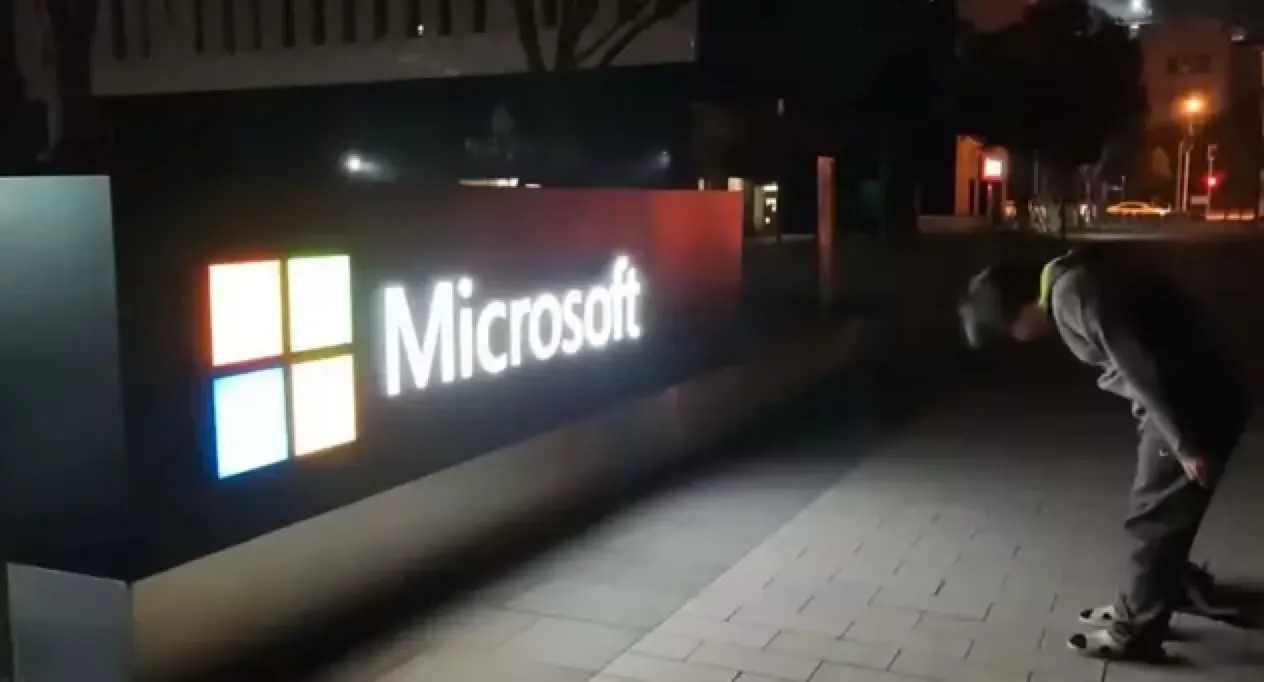
It's no wonder die-hard Blizzard fans rushed to the Microsoft building to pay their respects that very night.
What does $68.7 billion mean? If one $100 million can fund a AAA project, that amount could produce a new AAA title every week for 10 years.
To be fair, Blizzard's net profit in 2020 was only $1.905 billion.

So, is Microsoft truly a modern philanthropist? Does it really just sprinkle all-cash with a 50% premium?
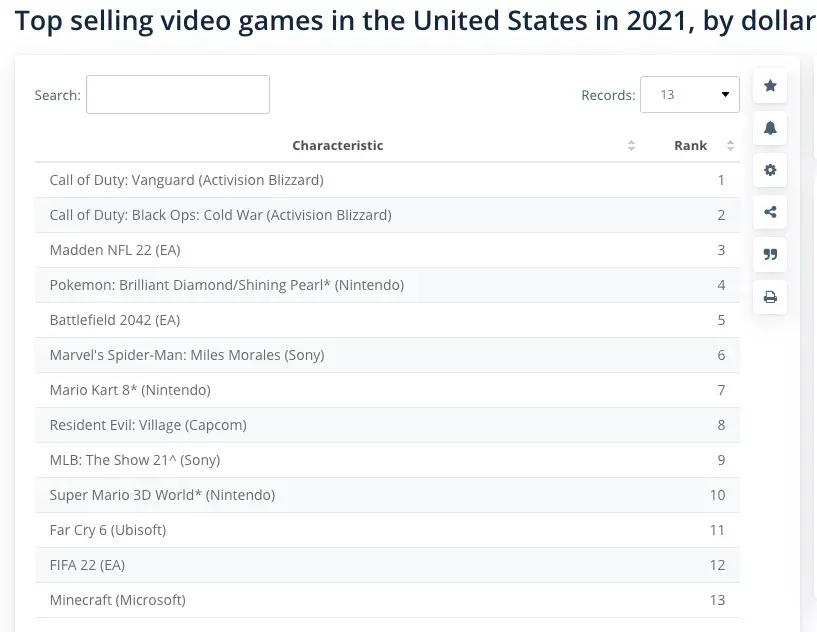
Netizens then speculated that maybe Microsoft values Activision more than Blizzard. After all, Activision's Call of Duty is the top-selling video game in the US annually:
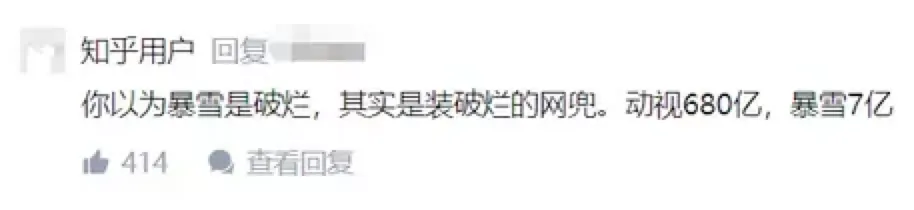
In comparison, Blizzard seems more like the add-on gift you get with a purchase of $1,000 when the minimum spend is $200.
But Microsoft's vision is bigger than that. It's not just buying market cap; it's buying a future.
The acquisition of Activision Blizzard demonstrates Microsoft's determination to enter the Metaverse, and it marks the beginning of reshaping the entire internet landscape.
Although Facebook kicked off the first year of the metaverse, in Meta's universe, it's definitely not the top player. At least in front of Microsoft, it's still a little brother.

The Gaming Industry Rises Against the Trend
Actually, gaming has always been a severely underestimated but rapidly growing industry. In recent years, the rise of AI, VR, 5G, and live streaming has created enormous development space for gaming. The gaming industry has now surpassed music and film, becoming one of the most lucrative industries in recent years.
During the pandemic, the gaming industry defied the odds and thrived. According to Newzoo, the global gaming market reached a highlight in 2021, with mobile revenue alone surpassing $90 billion.
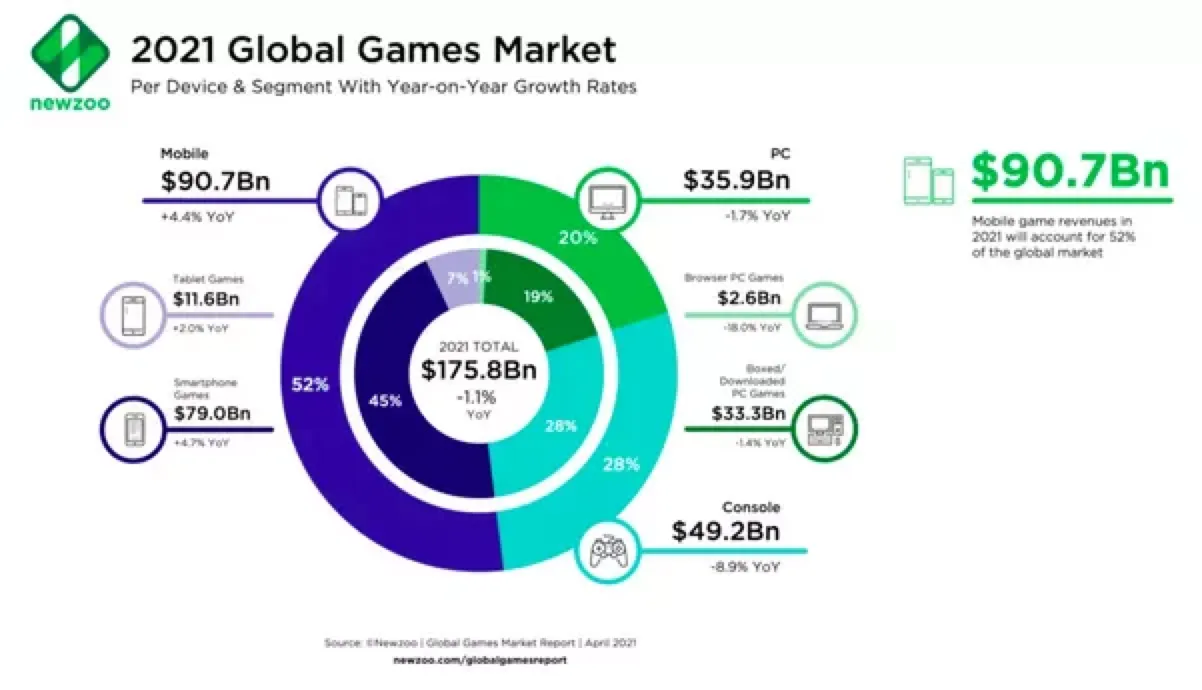
Driven by 3 billion players worldwide, total global gaming market revenue in 2021 reached a staggering $175.8 billion!
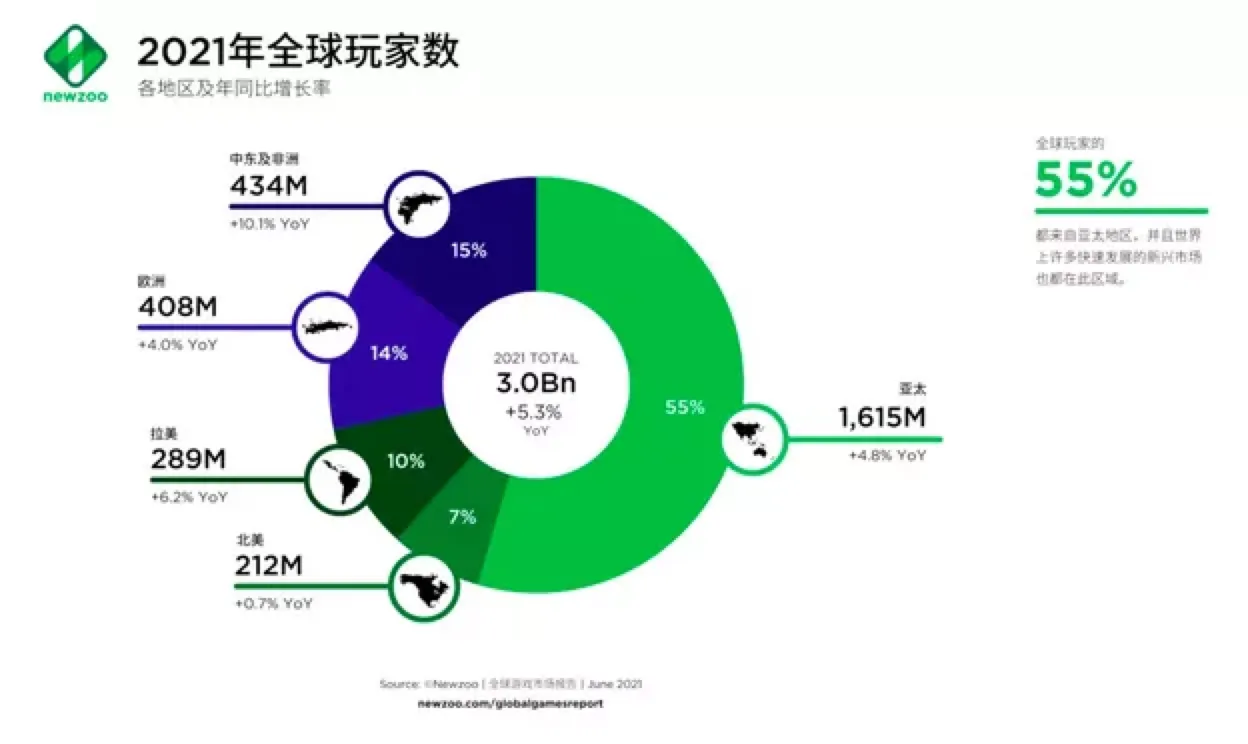
Newzoo predicts that with an annual growth rate of 8.7%, the global gaming market will surpass $200 billion by 2023, and Asia-Pacific users are the main force driving this growth:
Looking at the financial reports of domestic game companies, Tencent's gaming revenue in 2020 was 156.1 billion yuan, accounting for one-third of total revenue, up 36% year-on-year, firmly holding the top spot.
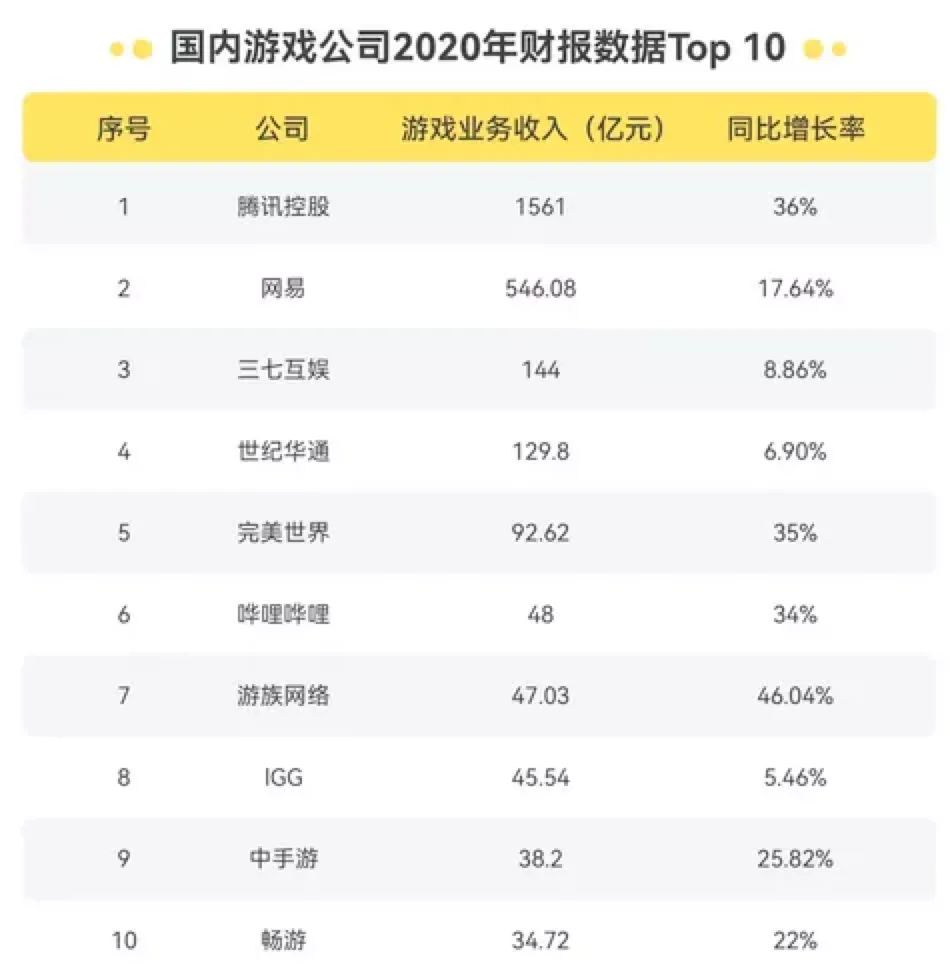
With two major cash-cow IPs—League of Legends and Honor of Kings—Tencent Games currently has 800 million users globally, ranking first in the global gaming market and occupying over 50% of the Chinese market share.
NetEase's total revenue in 2020 was 73.667 billion yuan, and gaming revenue alone reached 54.68 billion yuan, accounting for 74.23%.
Here's a joke: China has only three game companies—Tencent, NetEase, and the others.

But as that famous line from World of Warcraft goes: No king rules forever.
Even among games dominated by Tencent and NetEase, there are still game-changers. For instance, miHoYo became a legend with Genshin Impact.
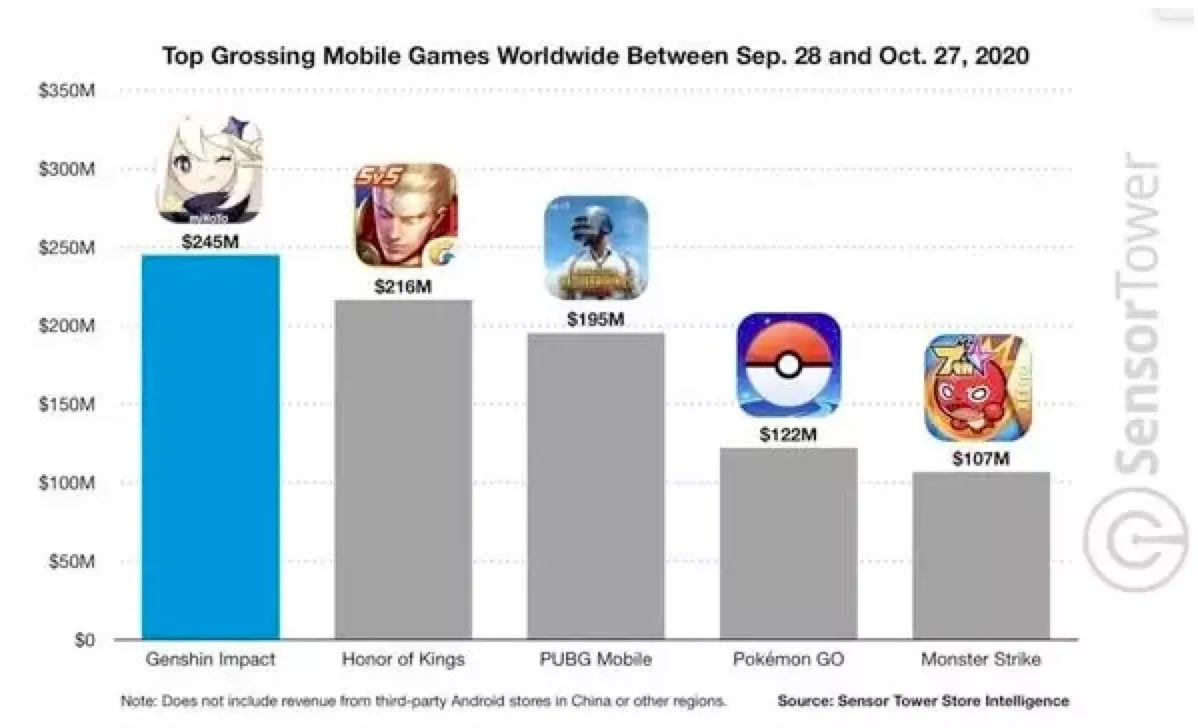
In its first month, Genshin Impact generated $245 million in revenue, briefly surpassing Honor of Kings to top China's game-revenue charts. Also notably, the biggest contributors to Genshin Impact's revenue were overseas players, with the US, Japan, and South Korea accounting for over 70% of revenue, making it the king of Chinese games going global.
How popular is Genshin Impact? Even Elon Musk came out to interact and endorse it—truly a top-tier game in the industry 👇

Within five months of launch, Genshin Impact swept the download charts in 27 countries—it really went wild!
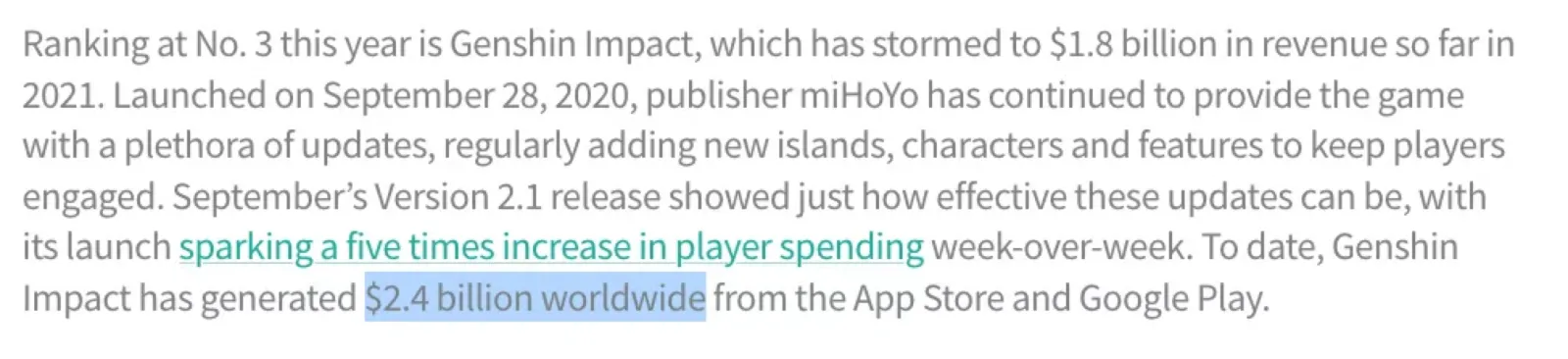
According to Sensor Tower, by the end of 2021, Genshin Impact's mobile version had grossed $2.4 billion globally. In just over a year, it ranked among the top three global games. miHoYo thus joined the ranks of gaming giants with annual revenues exceeding 10 billion yuan.
The Gaming Industry's "War for Talent" Intensifies
You've probably heard how sweet jobs at gaming companies have been during the pandemic. Yearly salaries of five to six hundred thousand yuan, absurdly high year-end bonuses, and a relaxed, fun work atmosphere.
Since this new tycoon has been making a fortune quietly, even investment bank offers have lost their appeal.
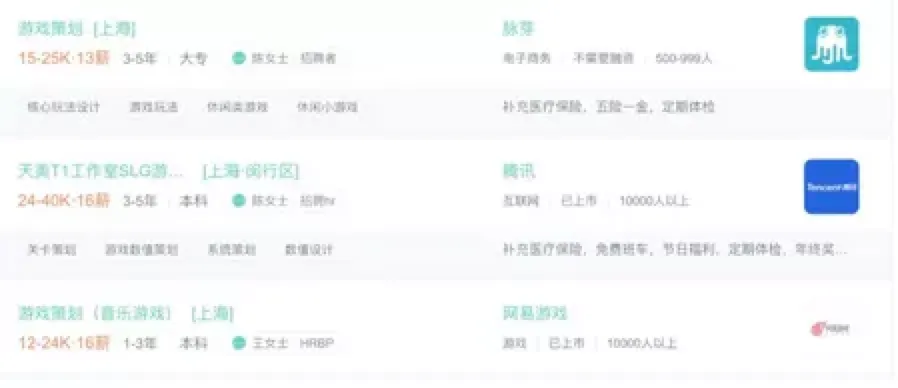
The gaming industry is a new wealth-creating sector, and with the global performance of Chinese gaming companies in recent years being impressive, gaming professionals are being fiercely competed for by big tech firms.
In 2021, salary increases and talent wars in the gaming industry reached an all-time high.
In Chengdu, a game lead planner's top salary jumped from 600,000 yuan to breaking the million mark.
In Chengdu, hot positions like 3D engineer, numerical planner, game artist, and game producer saw overall increases of up to 20% compared to 2020.
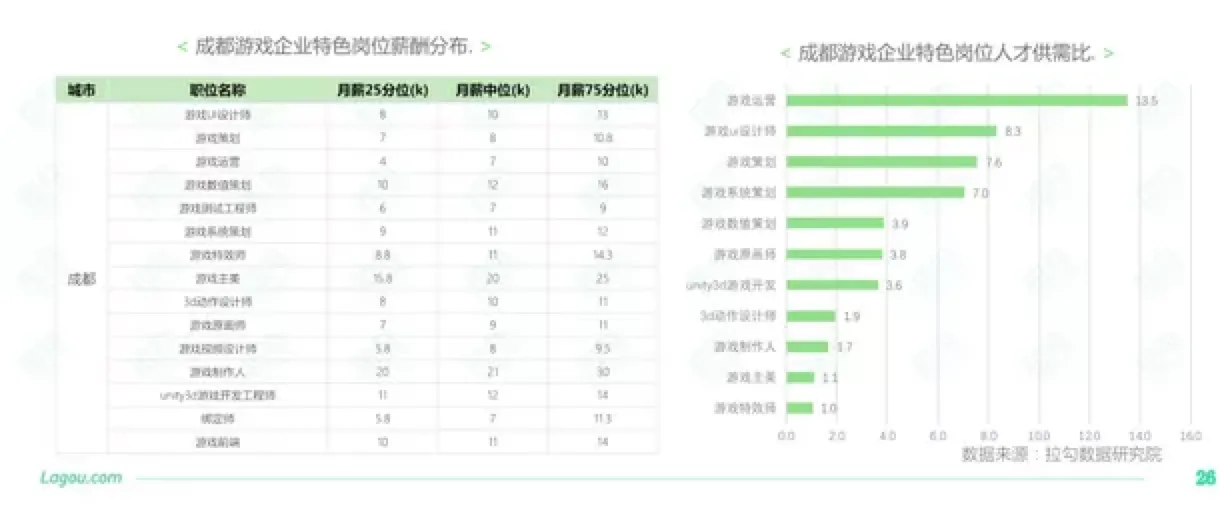
Annual salaries of a million are everywhere in the gaming industry, spreading from Chengdu to Shanghai. For instance, at some Shanghai companies, new graduates in Technical Artist and Engine roles can earn 600,000 yuan a year!
Data from Lagou shows that salaries in the gaming industry have risen more than 30% for three consecutive years. Among them, positions in TA, engine, and art have surged by up to 60%, while core project roles like lead planner and lead artist have doubled.
In this recruiting war, rising gaming upstarts like miHoYo and Lilith have started poaching talent from old giants like Tencent, NetEase, and Westhouse.
After all, in the gaming industry, anything is possible.
Just like before League of Legends, who could have imagined that the esports industry would reach such heights? From IG winning the championship to EDG's legendary victory, esports carries the dreams of the post-90s and post-00s generations and signifies the rise of an entire industry. What DOTA couldn't achieve back then, LOL has accomplished.
Highly Sought-After Gaming Majors
In the "gold rush" of the gaming industry, an increasing number of international students are choosing game-related majors, such as esports, arts management, game design, interaction design, game programming, etc. American universities are also pioneers in developing game-related programs.
CheersYou(清柚教育) will present the top game design graduate programs in the U.S.
Game design majors at American universities mainly fall into three categories:
-
Science (BS/MS): Focuses on technical skills, such as programming and engine development
-
Arts (BA/MA): Focuses on visual and narrative aspects, including scriptwriting, atmosphere, system design, game planning, and world-building design
-
Art (BFA/MFA): Emphasizes visual art and digital design
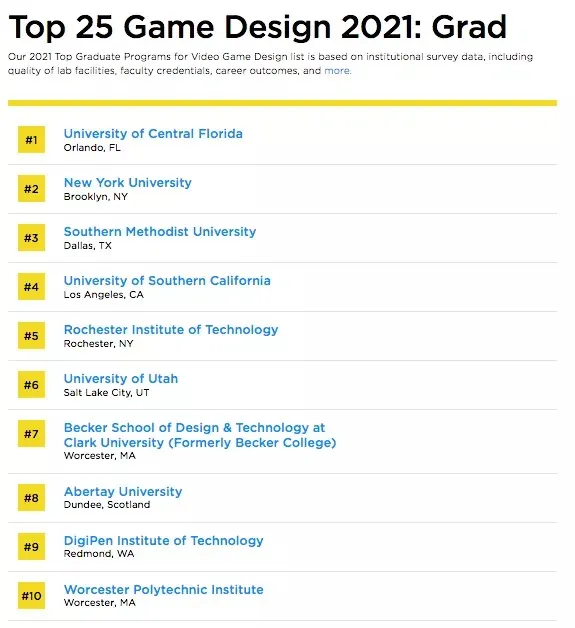
According to the Princeton Review, the top 10 graduate programs in game design for 2021 are:
-
University of Central Florida
-
New York University
-
Southern Methodist University
-
University of Southern California
-
Rochester Institute of Technology
-
University of Utah
-
Becker College
-
University of Dundee (UK)
-
DigiPen Institute of Technology
-
Worcester Polytechnic Institute
USC - University of Southern California
USC's game program (USC Games) is top-tier nationally, jointly created by USC's renowned School of Cinematic Arts and the Viterbi School of Engineering, integrating design, art, production, and engineering fields.
In terms of specializations, it offers not only a design track but also a computer programming track; even more uniquely, there is a game program related to healthcare and wellness.
Graduate programs offered include:
-
M.F.A. in Interactive Media
-
M.S. in Computer Science with Specialization in Game Development
-
M.A. in Cinematic Arts: Media Arts, Games and Health
Given that many game companies now subdivide game art into different roles such as concept art, character creation, animation, environment art, and special effects, USC's program divisions will provide more direction and applicability.
NYU - New York University
NYU's graduate game design program is part of the Tisch School of the Arts, a 2-year program that offers studies in art, media, and culture, training talent in game design, development, art, and planning.
RIT - Rochester Institute of Technology
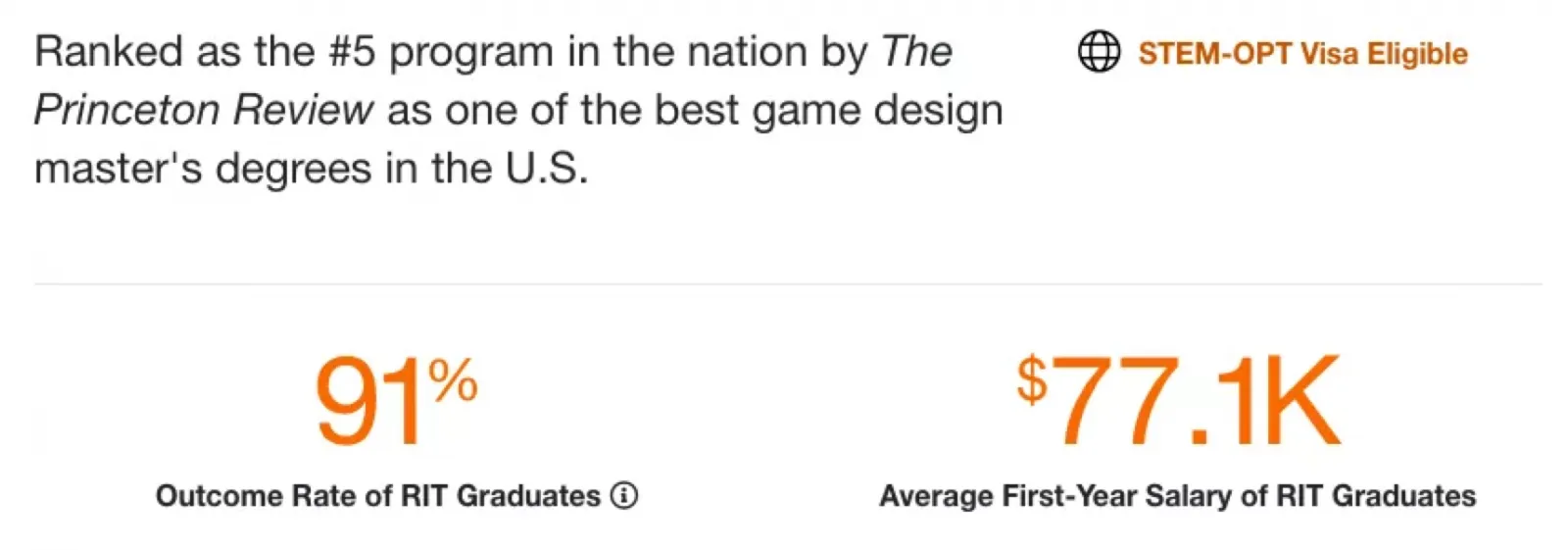
RIT's graduate game design program is ranked among the top 5 nationally, with a 91% employment rate and an average starting salary of $77,000 for graduates.
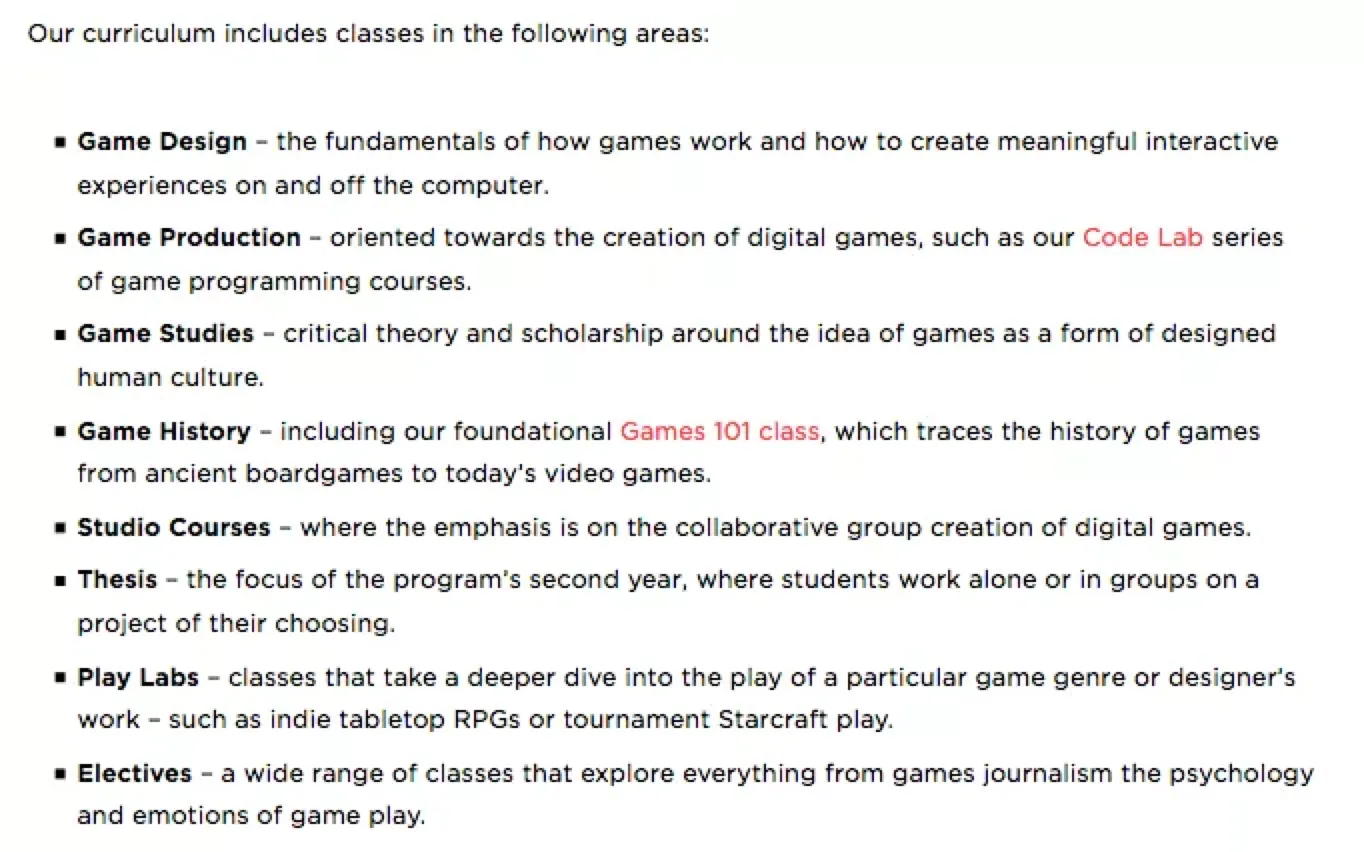
RIT's MS in Game Design and Development is a 2-year program with small class sizes, and a portfolio is required for admission. In the second year, students can undertake simulation projects, participate in defenses, and make public presentations.
The program emphasizes game development while also covering game design. Students learn computer imaging, game engines, interaction design, game world-building, etc., suitable for those aiming for careers in game development or UI design.
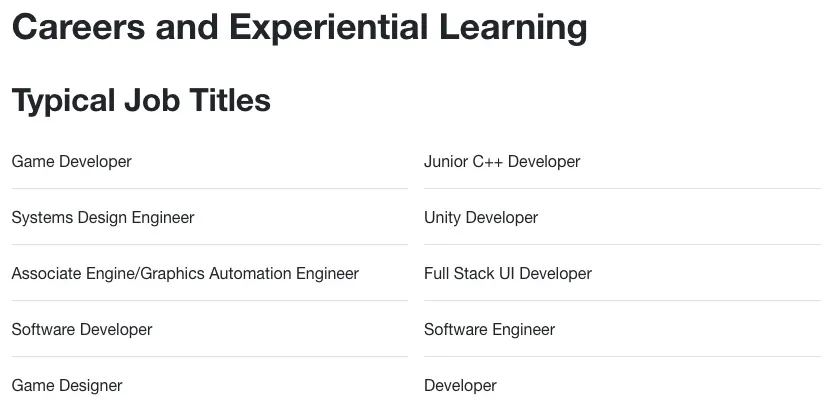
How to "Roll" into a Game Company?
So the question is, in this year's most competitive job market with millions of domestic graduates plus millions of returnees, how do you get into a high-paying game company?
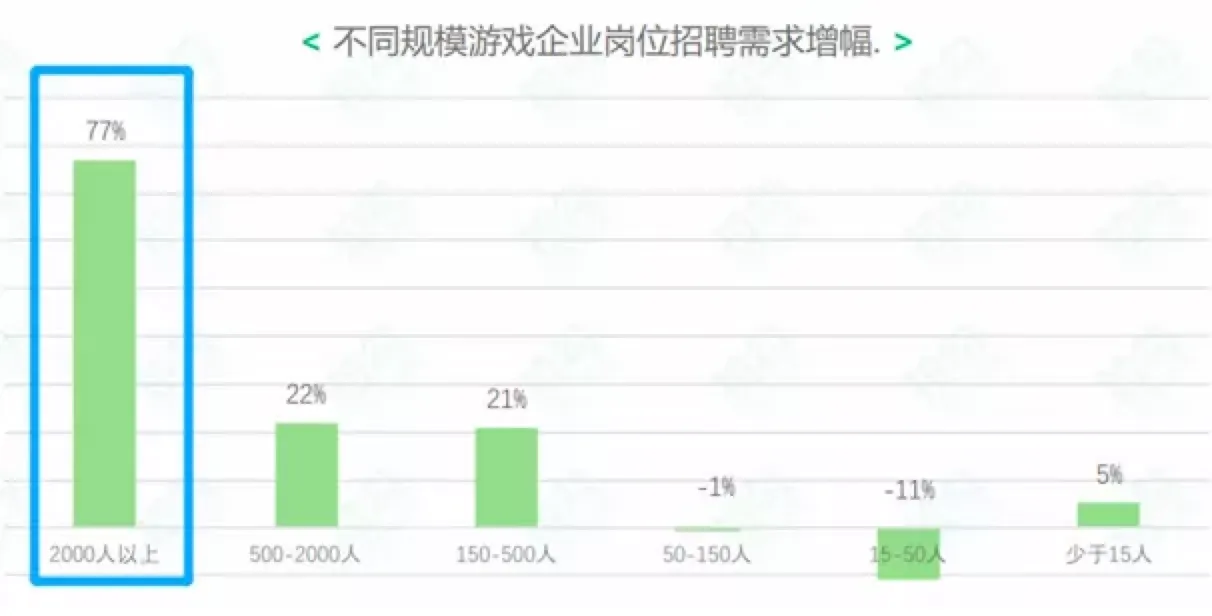
Actually, it's not that hard. Game companies that have risen against the trend during the pandemic are all expanding hiring, with recruitment volume surging by 77%!
It's the same for overseas game companies. Riot Games recently opened over 500 positions, and Take Two as well as Valve, the parent company of Steam, have also posted numerous jobs.
But opportunities always favor those who are prepared.
It's recommended that students with target companies plan ahead as much as possible, applying for internship programs during school to accumulate real project experience.
In addition, preparing a relevant portfolio in advance and articulating your passion for games will be a big plus in the application process.
If you get an interview, be sure to research the company, understanding its game products and industry trends beforehand.
Of course, the most important thing is solid professional knowledge and skills. With everything in place, the offer will naturally come.
In the new year, we wish all former esports players become future offer kings.