Recently, the U.S. Department of State and the Department of Homeland Security announced significant good news for international students, introducing new measures related to STEM (Science, Technology, Engineering, and Mathematics) to retain outstanding talent in these fields.

Details of Biden Administration's New STEM Policy
This STEM policy includes the following key aspects:
22 New STEM Majors Added, Eligible for Three-Year OPT
U.S. universities typically designate certain programs as STEM within the official list, and graduates of these programs are eligible for the 12+24 month three-year OPT.
Non-STEM students can only apply for one year of OPT, and must leave the U.S. if they do not secure an H-1B visa within that year.
In this new policy, the U.S. government has directly added 22 new fields to STEM, including hot majors like Data Science, Data Analytics, and Financial Analytics. The inclusion of terms like general data science means that programs involving data analysis may now be eligible for STEM designation.
At the same time, the new STEM additions also include social science fields traditionally considered liberal arts. Students in Economics, Sociology, Psychology, Education, Management, Communications, and similar fields may now also benefit.

The following are the 22 specific fields:
Bioenergy (bioenergy)
Forestry (general forestry)
Forest Resources Production and Management (forest resources production and management)
Human-Centered Technology Design (human-centered technology design)
Cloud Computing (cloud computing)
Anthrozoology (anthrozoology)
Climate Science (climate science)
Earth Systems Science (earth systems science)
Economics and Computer Science (economics and computer science)
Environmental Geosciences (environmental geosciences)
Geobiology (geobiology)
Geography and Environmental Studies (geography and environmental studies)
Mathematical Economics (mathematical economics)
Mathematics and Atmospheric and Oceanic Science (mathematics and atmospheric and oceanic science)
General Data Science (general data science)
General Data Analytics (general data analytics)
Business Analytics (business analytics)
Data Visualization (data visualization)
Financial Analytics (financial analytics)
Other Data Analytics (other data analytics)
Industrial and Organizational Psychology (industrial and organizational psychology)
Social Sciences (social sciences)
Research Methodology and Quantitative Methods (research methodology and quantitative methods)
Overall, this policy gives U.S. universities more flexibility, allowing more programs to apply for STEM designation in the future.
Essentially, any university program related to the new fields may become STEM-designated, and the inclusion of social sciences is particularly good news for liberal arts students. Of course, the specific implementation will depend on each university, and we will wait and see.
Extension of J-1 Visa Duration for STEM Scholars
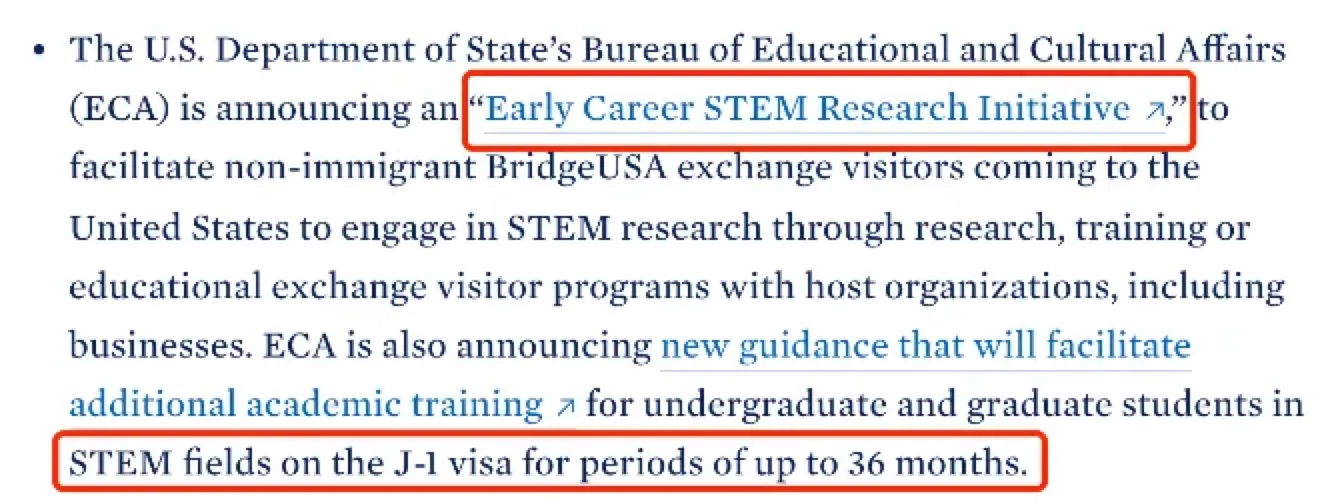
To further encourage academic exchange and research in STEM fields, the State Department has also extended the J-1 visa duration for participants in STEM academic programs from 18 months to 36 months (3 years).
Expanded Eligibility for O-1A Visas
The O-1A visa is typically for non-U.S. citizens with extraordinary ability in sciences, arts, education, business, or athletics, making it very difficult to obtain.
Unlike the H-1B visa, the O-1A has no lottery, no annual cap, and can be applied for at any time of the year, with immediate approval and effectiveness.
Under this new DHS policy, STEM scholars (such as PhD holders) will also be eligible for O-1A visas (details to be released).

STEM Talent May Apply for Green Card through NIW
NIW stands for National Interest Waiver, a path to a green card.
The new policy aims to allow advanced STEM talent to obtain a green card through NIW without finding a job or employer sponsorship. However, how to address the shortage of visa numbers still needs clarification.

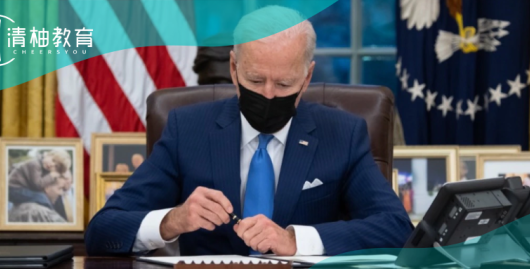
Although many details have not been disclosed, these concrete measures reflect the Biden administration's sincere attitude toward international talent and deliver on the earlier Democratic call to "grant green cards to all STEM PhDs."
Biden Administration Extends Olive Branch to International Students
The Significance Behind More Students Getting OPT Extensions
Overall, the new OPT policy is good news for international students.
Regardless of how many PhDs ultimately receive green cards, it's certain that more international students, including those in liberal arts and business fields previously not in STEM, can get OPT extensions, giving them more time to find desirable jobs.
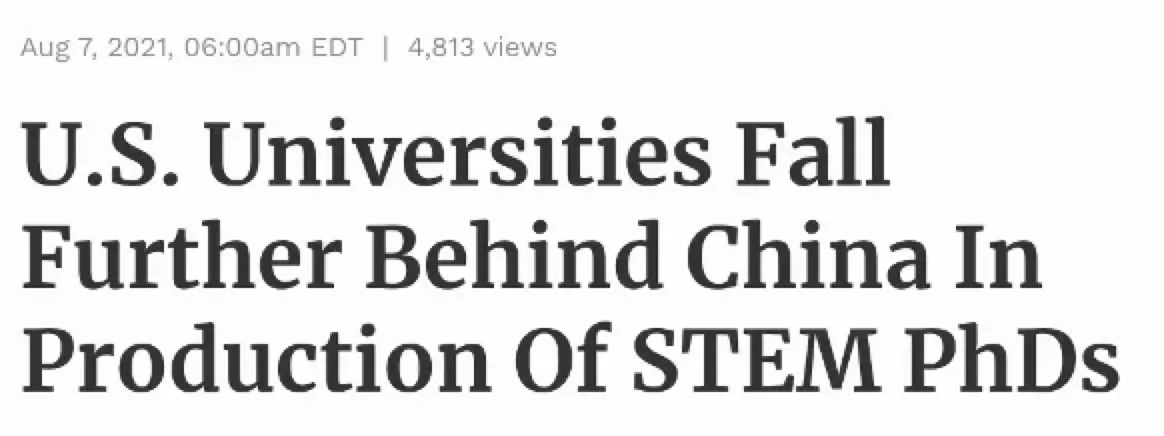
The previous Trump administration's unfriendly stance toward international students and immigrants, combined with the pandemic, led to a continuous decline in international student enrollment at U.S. universities over the past five years, causing a significant brain drain of highly skilled talent. Studies also show that the number of STEM PhD students in the U.S. has fallen far behind China. It seems the Biden administration has realized that attracting and retaining talent is the cornerstone of economic growth.
Earlier Repeal of Wage-Based H-1B Allocation Paved the Way
In fact, the Biden administration's friendly stance towards international students was already evident. Late last year, the DHS issued an announcement restoring the random H-1B lottery and rescinding the "wage-based allocation" reform proposed under Trump.
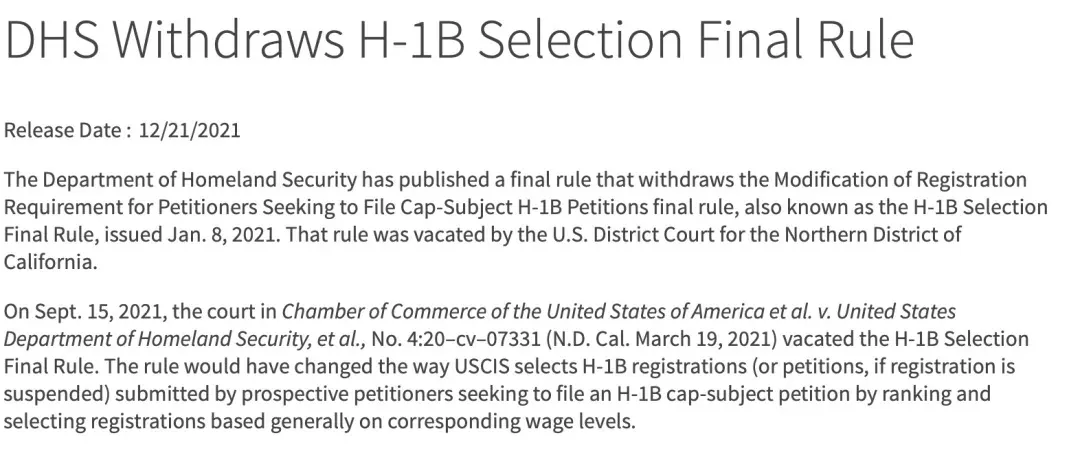
Under that previous proposal, STEM graduates would have faced "graduation equals unemployment," as all visas would go to high-salaried foreign workers, leaving fresh international graduates almost no chance.
The Biden administration's restoration of the random lottery has given fresh graduates a renewed hope of working in the U.S., without having to worry about packing up and leaving upon graduation.
As more favorable policies for international students are released, students have more opportunities to choose from.
We believe there will be more good news ahead~