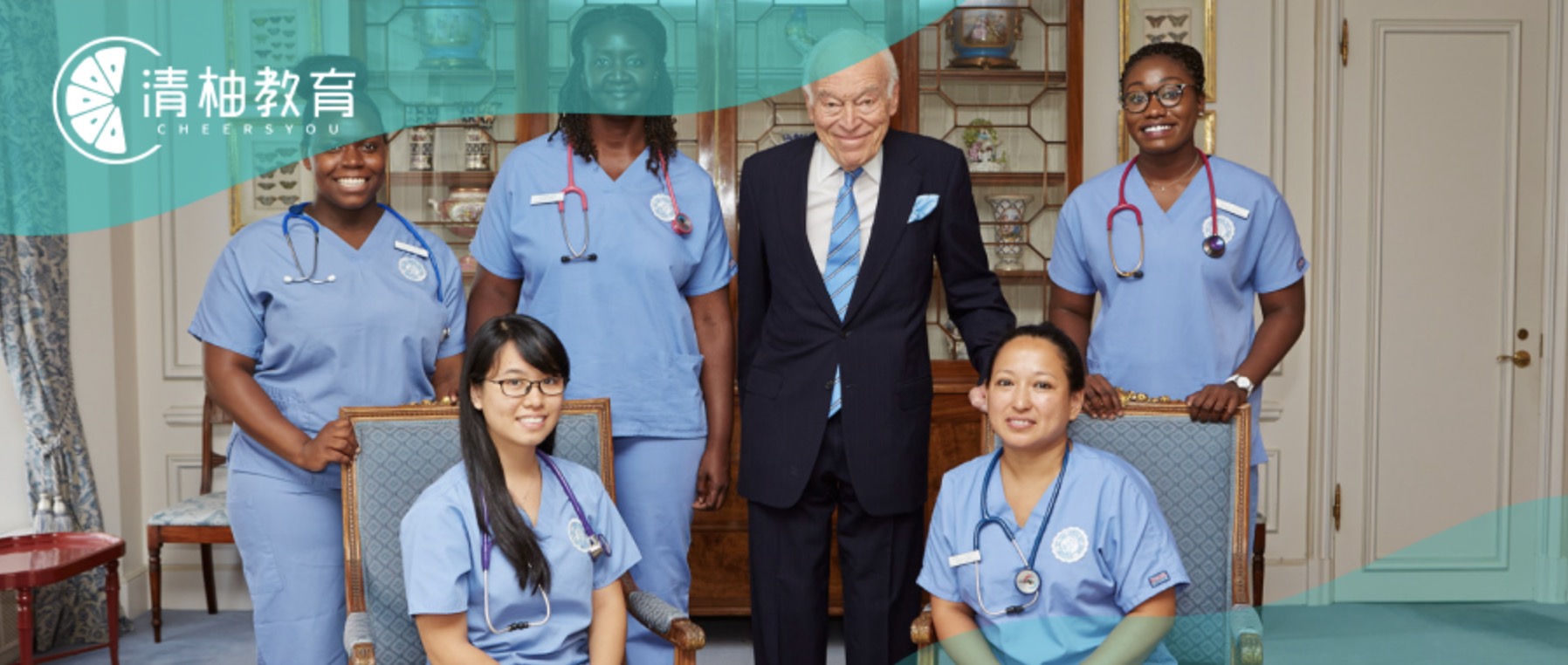
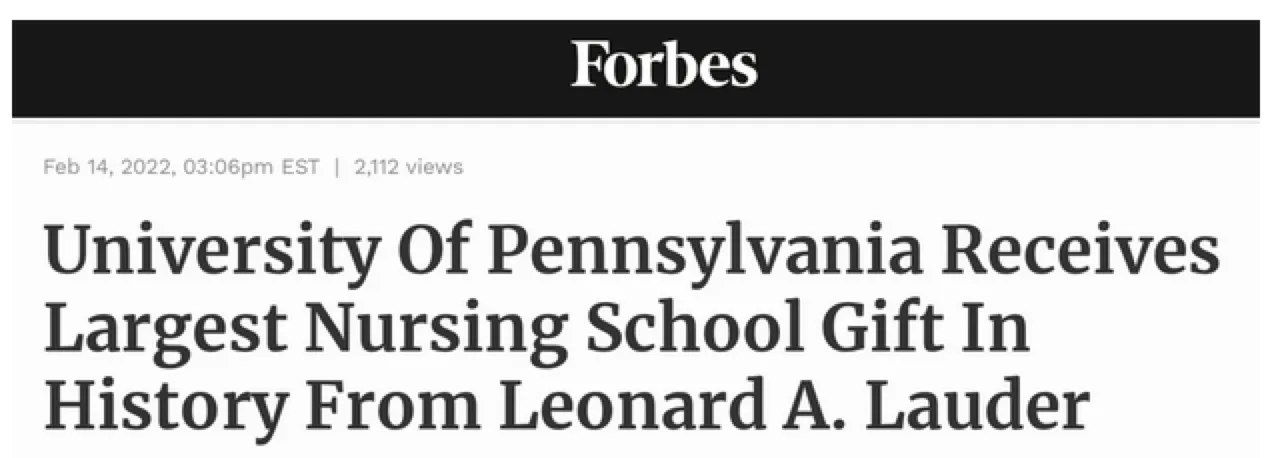
Recently, the University of Pennsylvania announced that it has received a $125 million donation from Leonard A. Lauder, Chairman Emeritus of The Estée Lauder Companies and a Penn alumnus.
This is the largest donation ever received by a nursing school at an American university, and it will be used to establish a Community Nurse Practitioner program aimed at alleviating the nursing shortage that the United States has faced since the pandemic.
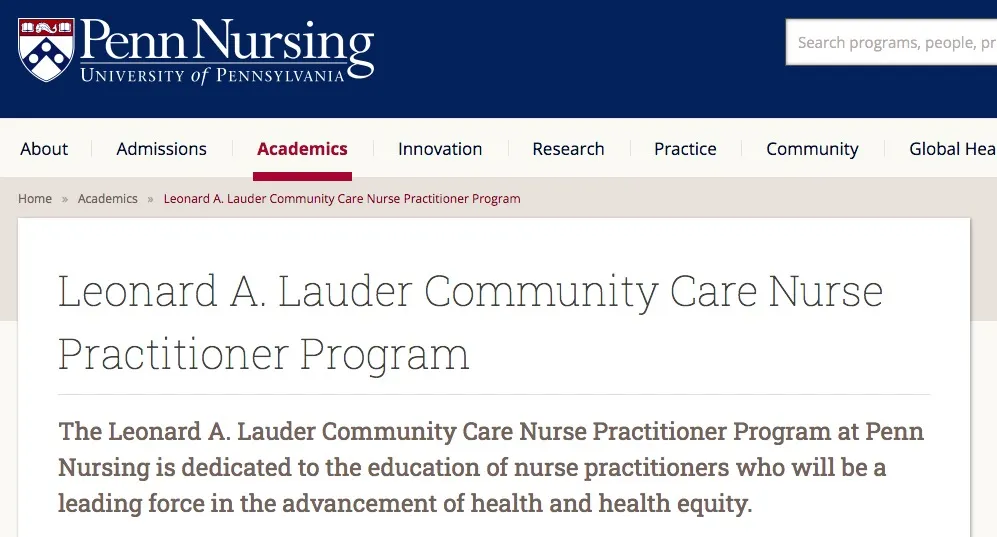
The University of Pennsylvania's Community Nurse Practitioner program will focus on improving underserved urban and rural communities by providing high-quality healthcare services to local residents. Penn expects to enroll 10 students in 2022, increasing gradually until reaching the target of 40 by 2026.
Current students enrolled in Penn's School of Nursing who are committed to serving community residents are eligible to apply. The program offers not only full-tuition scholarships but also stipends.
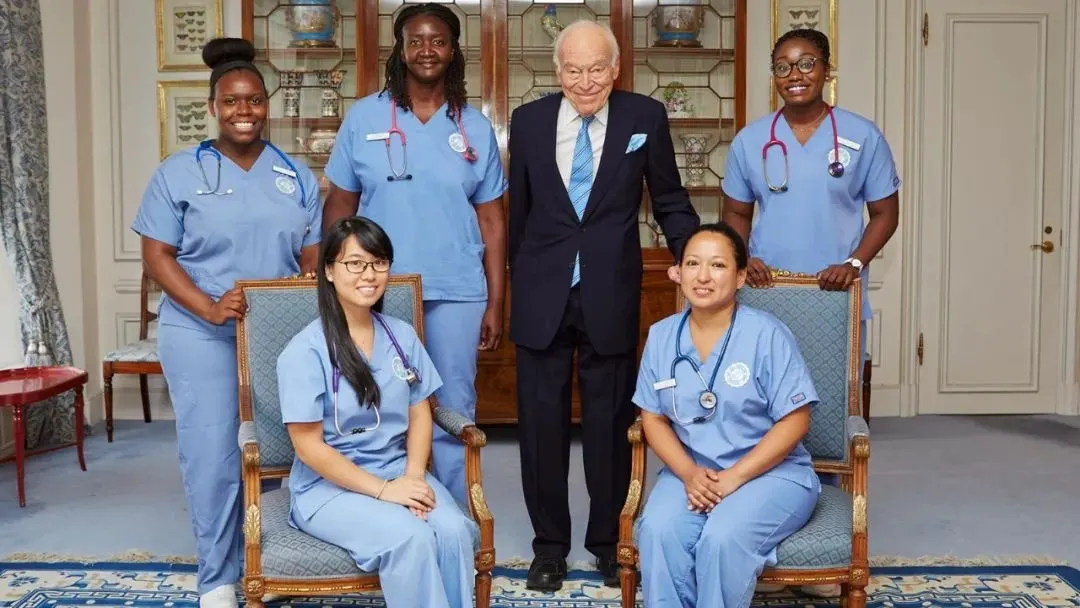
The program's benefactor, Leonard A. Lauder, is an heir of The Estée Lauder Companies, ranked 44th on the Bloomberg Billionaires Index, and a renowned philanthropist.
His generosity extends to funding for medical education. In addition to this year's $100 million-plus donation to Penn's School of Nursing, he previously donated $10 million to Hunter College's School of Nursing.
When discussing his motivation for funding nursing schools, Lauder noted: Due to the uneven distribution of healthcare resources, many remote areas lack sufficient nursing staff. The pandemic has made this gap even more apparent, and he hopes to address the shortage of medical resources by starting with the training of healthcare professionals.
"Now more than ever, we need more equitable and high-quality primary healthcare services, and highly skilled nursing professionals are key to achieving this goal."
In fact, UPenn is just one of many US universities that have received massive donations recently. The tycoons have chosen to donate around Valentine's Day, making it a romantic gift to the universities.
Tycoons Clustering to Donate: A New Fundraising Trend for Universities
University of California, Irvine
The Bernand Heritage Foundation donated $57.75 million to UCI in early February, which will be used to establish a new on-campus research center dedicated to studying the causes and treatments of depression. This is the largest donation ever received by a US university for depression research and treatment.

In recent years, depression has become a leading cause of unemployment, broken social relationships, drug abuse, and suicide. According to the American Psychiatric Association, 1 in 15 people suffer from depression, and one in six people have experienced mental or psychological issues in their lives. The pandemic has led to a significant global increase in depression cases.
Frank LaFerla, Dean of the School of Biological Sciences, stated that UCI will build a world-class depression research center in the future, which will benefit millions of people directly or indirectly affected by depression.
Virginia Commonwealth University
On February 15, Virginia Commonwealth University received a staggering $104 million donation, the largest single gift in its history and the highest amount ever given for liver-related public research in the United States. This generous donation came from R. Todd Stravitz and his family foundation.
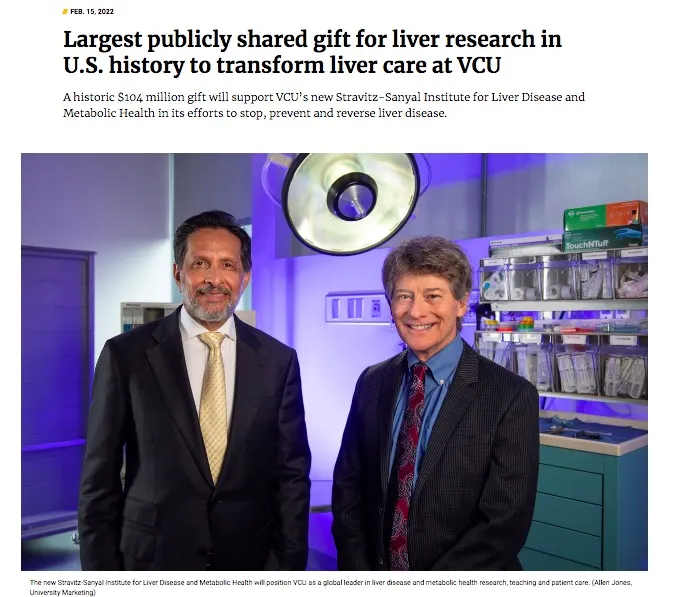
VCU will establish the Stravitz-Sanyal Research Center, dedicated to research, education, and treatment of liver diseases and metabolic health, covering areas such as liver cancer, alcohol-induced liver diseases, and liver transplantation.
President Michael Rao expressed that the university, together with top teams, will provide clinical treatment and adopt advanced technologies to investigate causes, prevent, and treat liver diseases, enabling more people to recover or even avoid illness.
Emory University
Earlier this month, Emory University's Rollins School of Public Health received a record-breaking $100 million donation from the O. Wayne Rollins Foundation, which will be used to enhance the school's global leadership and research capabilities in disease prevention and public health.
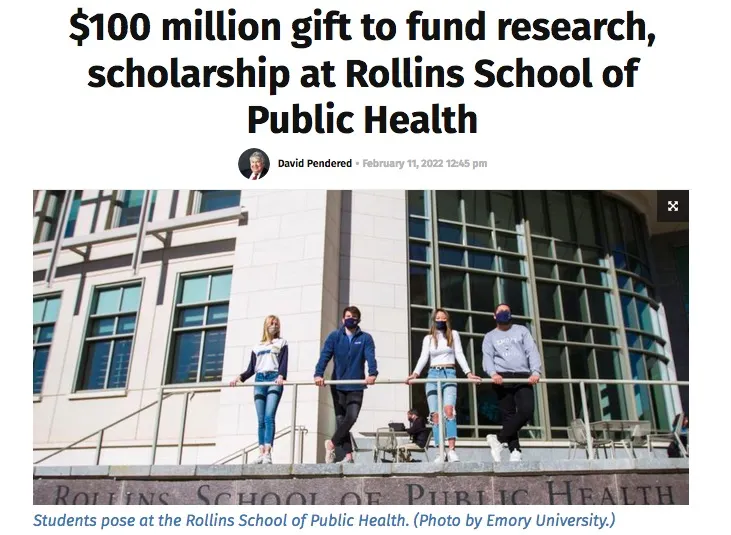
The donation will be used to enhance faculty and support students: on one hand, it will recruit and retain more outstanding teaching and research staff; on the other, it will provide more financial aid and student employment opportunities.
Dean James W. Curran stated that this transformative gift from the Rollins family will enable the school to better promote health, prevent disease, and save lives, with a profound impact on global public health.
University of Iowa
The University of Iowa also recently received a $70 million donation to support its hospital and clinics and to establish a new patient care center.
This is the largest donation in the 175-year history of the University of Iowa, coming from the Richard O. Jacobson Foundation.
Jacobson is a university alumnus, and his foundation primarily supports education, youth development, and medical research. In 2020, the foundation provided $2 million to the University of Iowa Health Care to cover COVID-19-related expenses.
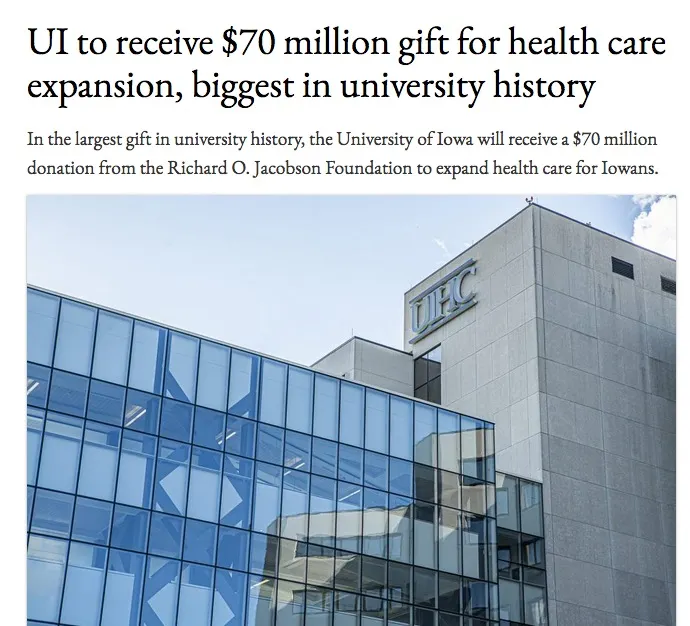
President Barbara Wilson said that due to a shortage of beds in the past, they had no choice but to turn some patients away. After the new medical building is completed, it will enable the university hospital to accommodate more patients. This donation is a turning point for both the university and its hospital.
US University Donations: Who Is the Fundraising King?
American private universities operate more like corporations, unlike public universities that rely on government funding; one of their key revenue sources is endowments.
U.S. News' Top 10 US University Fundraising Powerhouses are as follows:
-
Harvard University
-
Yale University
-
Stanford University
-
Princeton University
-
Massachusetts Institute of Technology
-
University of Pennsylvania
-
Texas A&M University
-
University of Notre Dame
-
University of Michigan, Ann Arbor
-
Columbia University
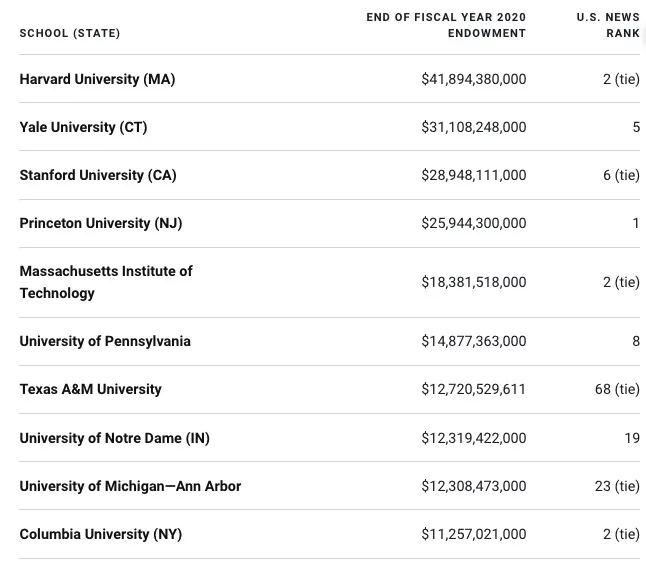
Looking at this ranking, only 2 of the top 10 are public universities; the rest are private, and Ivy League schools account for half the list. Harvard University reigns supreme with a total endowment of $41.8 billion, wealthier than many nations.
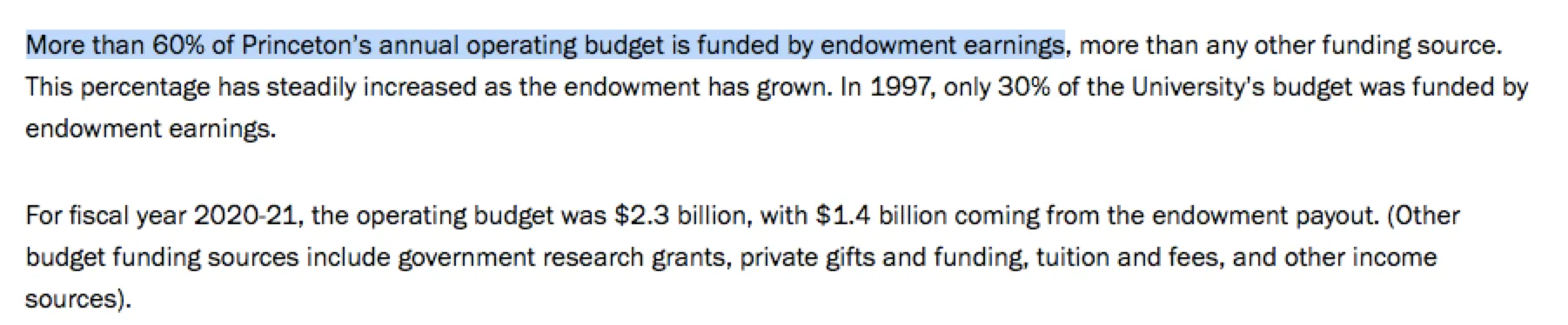
The academic research, student body, faculty, campus facilities, and abundant resources of top elite schools all require strong financial backing, and donations are a crucial funding source. Typically, private universities derive 30-40% of their revenue from donations, and Princeton University even relies on endowment income for over 60% of its operating expenses.
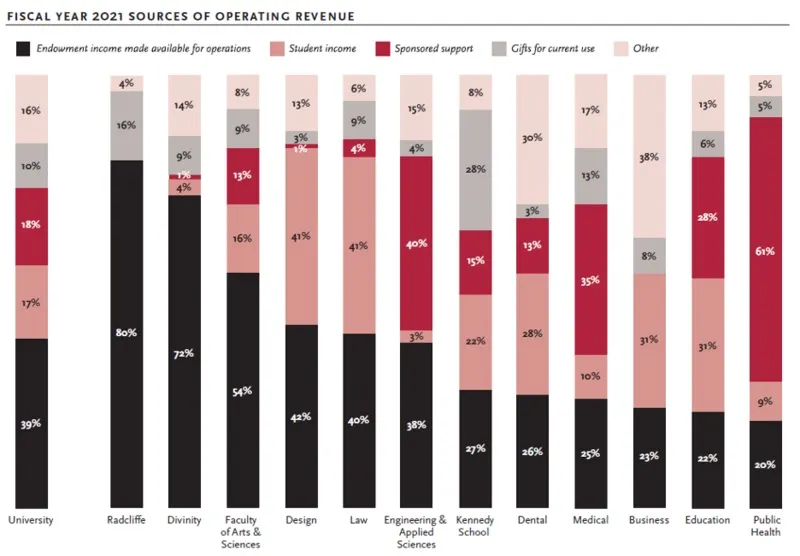
Taking the fundraising king Harvard as an example, it received $2 billion in donations in 2021, accounting for 39% of total revenue. Notably, the Harvard Radcliffe Institute for Advanced Study receives up to 80% of its income from donations.
Endowment spending primarily serves two purposes: first, covering faculty salaries, scholarships, and financial aid; second, improving academic programs, libraries, art museums, extracurricular activities, and campus facilities.
Despite having the largest endowment in the country, Harvard's massive fiscal expenditures ($5 billion in 2021) still require about two-thirds to be covered by other funding sources, including government research grants, tuition, and investment income.
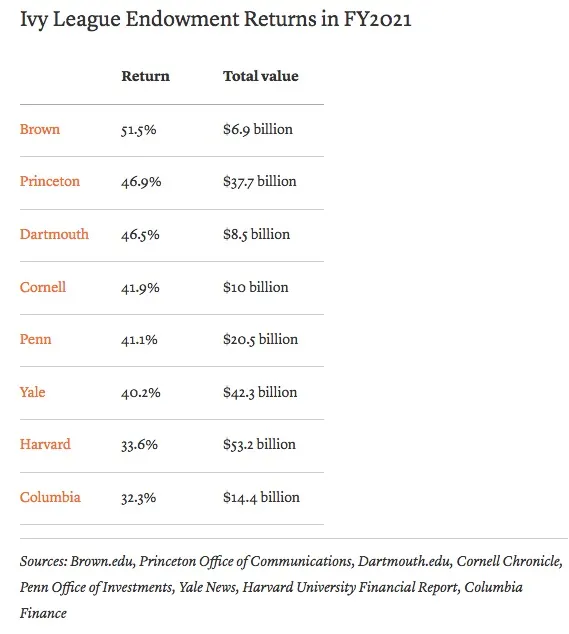
Therefore, universities have dedicated foundations to manage their endowments, growing wealth through investment portfolios. Schools like Brown, Princeton, and Dartmouth have achieved annual returns of over 45% on their endowments.
This operational model allows top US universities to possess richer resources, in turn attracting even more donations, creating a virtuous cycle. This has, to some extent, widened the gap between elite schools and average universities.
Under the Pandemic, Donations Flow to Health and Medicine
Do you recall a few years ago when Stephen Schwarzman, Chairman of Blackstone, donated $350 million to MIT's College of Computing for artificial intelligence research and development?

Unlike past years when donations favored technology and business, recent university donations have shifted more towards healthcare resources.
The recent massive donations mentioned above are all related to research and treatment of health care, cancer, depression, COVID-19, etc. Many tech tycoons have also redirected their philanthropy toward medical institutions.
Last year, Elon Musk donated $55 million to St. Jude Children's Research Hospital. In 2020, he gave $1 million to the Mercatus Center at George Mason University for COVID-19-related research. He has also donated to Sacred Heart University in Connecticut for COVID-19 antibody research.
According to media reports, Musk's total donations this year will amount to a staggering $5.7 billion, and we'll be watching where the funds go.

From tech and business to healthcare, this shift in donations increasingly reflects the social responsibility of alumni, entrepreneurs, and philanthropists in promoting health and well-being.
As seen in last year's US university commencement ceremonies, more medical experts appeared on the lists of guest speakers. Dr. Fauci was even the "most in-demand speaker"—he gave virtual addresses not only at Emory University but also to graduates of UNC, Vanderbilt University, and Yale's School of Public Health.
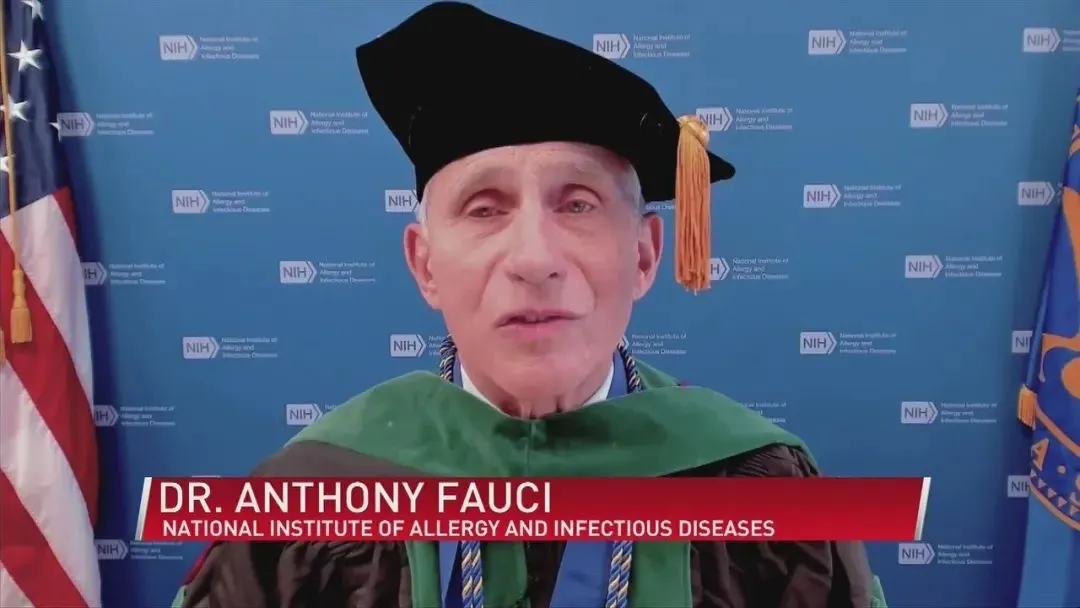
This also represents, to some degree, a shift in values. The celebrities we once idolized pale somewhat in comparison to the real heroes.
Over the past two years of the pandemic, it is these outspoken and honest medical experts and frontline healthcare workers who have given people strength and the courage to overcome COVID-19.
The COVID-19 pandemic presents an unprecedented challenge to humanity but also offers opportunities for reflection and progress. How to effectively support students, faculty, and medical research, help ordinary people suffering from physical and mental illnesses, and advance global healthcare development will be key objectives for universities to address with donations in the post-pandemic era.
Wealth used for good, when one is prosperous, they should help the world. The ultimate goal of universities is to take the world as their responsibility and make it a better place.