

At the end of February, the 4.25 million postgraduate entrance exam takers finally received their preliminary scores. In those days, looking at the score reports, some were happy and some were sad, and the number of the “sad” seemed to flood the internet.
With the number of applicants reaching a new high, 2022 is called the year with the most participants and the hardest to succeed in the history of the postgraduate entrance exam, and perhaps also the year with the fewest “survivors”.
Are This Year's Exam Score Lines Really That Ridiculously High?
In previous years, a preliminary score of 390+ in some majors not only allowed you to choose schools freely but also ensured a solid chance of advancing to the reexamination. This year, getting into the reexamination with such a score is as difficult as winning the lottery, and there is basically no room for adjustment.
For some less popular humanities majors, a score of 350+ is also hardly competitive. For instance, in the Marxist Philosophy program, even among the top 40 scores, many exceed 400 points.
Not to mention disciplines like Chinese Language and Literature, which are already popular. It is said that at East China Normal University, over 70 applicants scored above 400 points. At Shenzhen University, a “non-double first-class” institution, the psychology major has seen scores surpass 410...
For science, take Electronic Information as an example: a few years ago, 380 points could smoothly land you in a Project 985 university, but this year, candidates with 400+ high scores may not even secure a reexamination spot.
The score line for Management Science and Engineering is relatively lower, but a score of 380+ still does not guarantee success, and 360+ is only considered below average...
Faced with such a “fierce” landscape, many students and parents turn their eyes to overseas options. However, to some students, the postgraduate entrance exam and studying abroad seem like two parallel lines that never meet; once they step onto the single-plank bridge of the exam, it's hard to board the ship of studying abroad.
Is It Too Late to Prepare for Studying Abroad After the Exam?
On this single-plank bridge, the “survivors” who succeed are naturally overjoyed, but the candidates who were swept away can only grieve in silence. However, for these students, direct employment raises concerns about lack of competitiveness, while a second attempt at the exam is feared to be unsustainable and a waste of time.
Yet, studying abroad, this seemingly parallel line that never intersects with the exam, is sometimes not only a fallback after failure but could also be a good way out.
United States
Graduate applications in the U.S. generally have two intakes: spring and fall. Compared to fall, spring enrollment and applicant numbers are relatively smaller. Apart from the timing difference, spring and fall entries are essentially the same in terms of application materials and admission requirements.
For graduate programs starting in the fall, most top 30 universities have application deadlines between December and February of the following year, while some schools set deadlines in March or even later. Taking the 22 Fall intake as an example, the period from February to April of that year is typically when students wait for admission results.
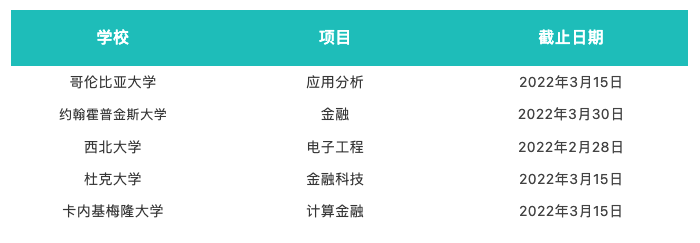
The national score line for the domestic postgraduate exam is usually announced in mid-March, which means that if you fail the exam, the chances of studying abroad in the same fall are slim, but not entirely impossible.
There are many schools and programs in the U.S.; institutions ranked beyond the top 30 still have many programs open, especially most STEM projects have not closed their applications, and they typically remain open until after April (varies by program).
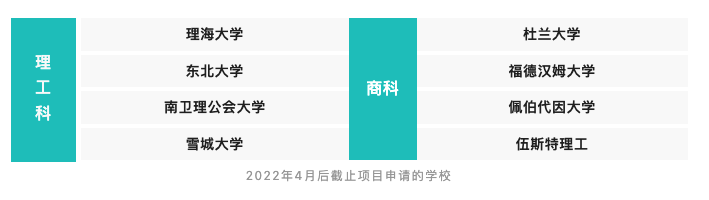
Therefore, students who have prepared for language tests (TOEFL or IELTS) and graduate entrance exams (GRE or GMAT) during their undergraduate studies, and whose hard backgrounds like GPA meet the requirements of the above schools and programs, can directly apply and start their major courses in fall 2022.
Additionally, if you only have language scores but other backgrounds are weaker and you still want to apply urgently this year, you can consider pre-master's programs at top 50 schools.
For example, the pre-master's deadlines for the University of Southern California and Northeastern University are quite late, and the overall rankings of these schools are quite good. After being admitted to a pre-master's program, you can directly proceed to regular courses upon completion, saving some time.
United Kingdom
Graduate applications in the UK usually open in October, and by March of the following year, when domestic postgraduate results are announced, it is the middle-to-late stage of the UK application cycle.
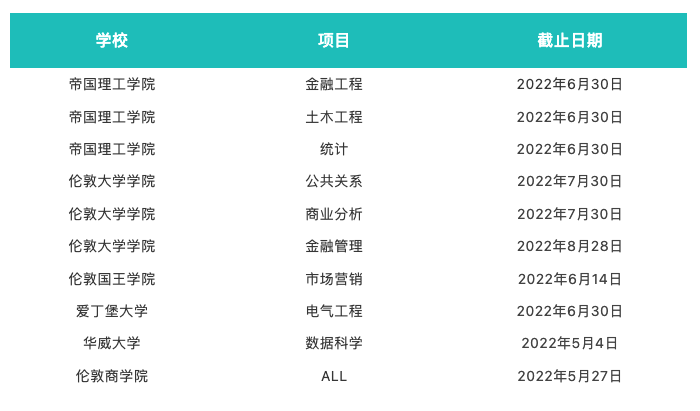
For students with high GPAs and good English proficiency, they can quickly finalize school and program choices among those still accepting applications, submit their materials promptly, and prepare for the IELTS exam simultaneously. This gives them a high chance of making the September intake in the UK.
For students with average grades who still wish to attend prestigious universities, or those who do not meet the master's admission criteria, they can opt for a pre-master's program in the UK. Pre-master's programs typically offer multiple entry points each year, so fall 2022 admission is also possible.
Hong Kong, Singapore
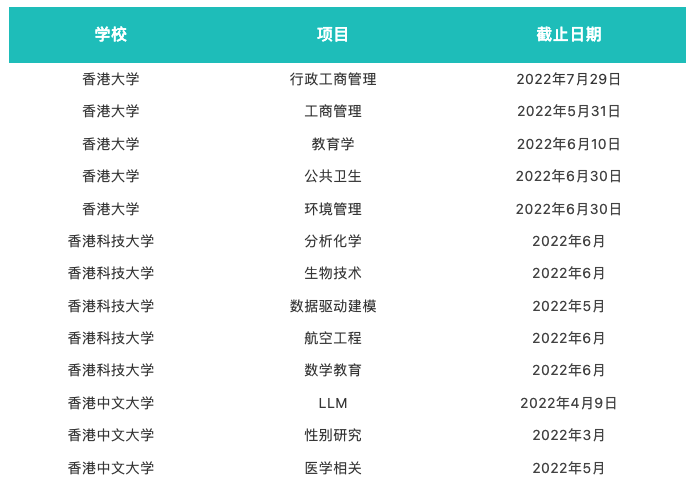
For Hong Kong (the top three universities), fall program application deadlines are relatively early, with most programs closing their application channels in March.
However, the University of Hong Kong has a small number of programs with deadlines after April. For students with relatively strong soft and hard backgrounds, submitting an application at this point after failing the exam is still a good choice.
However, for Singapore (the top two universities), because their fall semesters start in July or August, application deadlines are generally early. Preparing an application after the domestic exam is usually quite difficult.
How to Seamlessly Connect the Postgraduate Entrance Exam and Studying Abroad?
The above deadlines are for reference only. In reality, even for programs with late deadlines, admission spots may already be filled early. Not to mention that most exam candidates who hadn't considered studying abroad before may find themselves with insufficient time or inadequate preparation of materials.
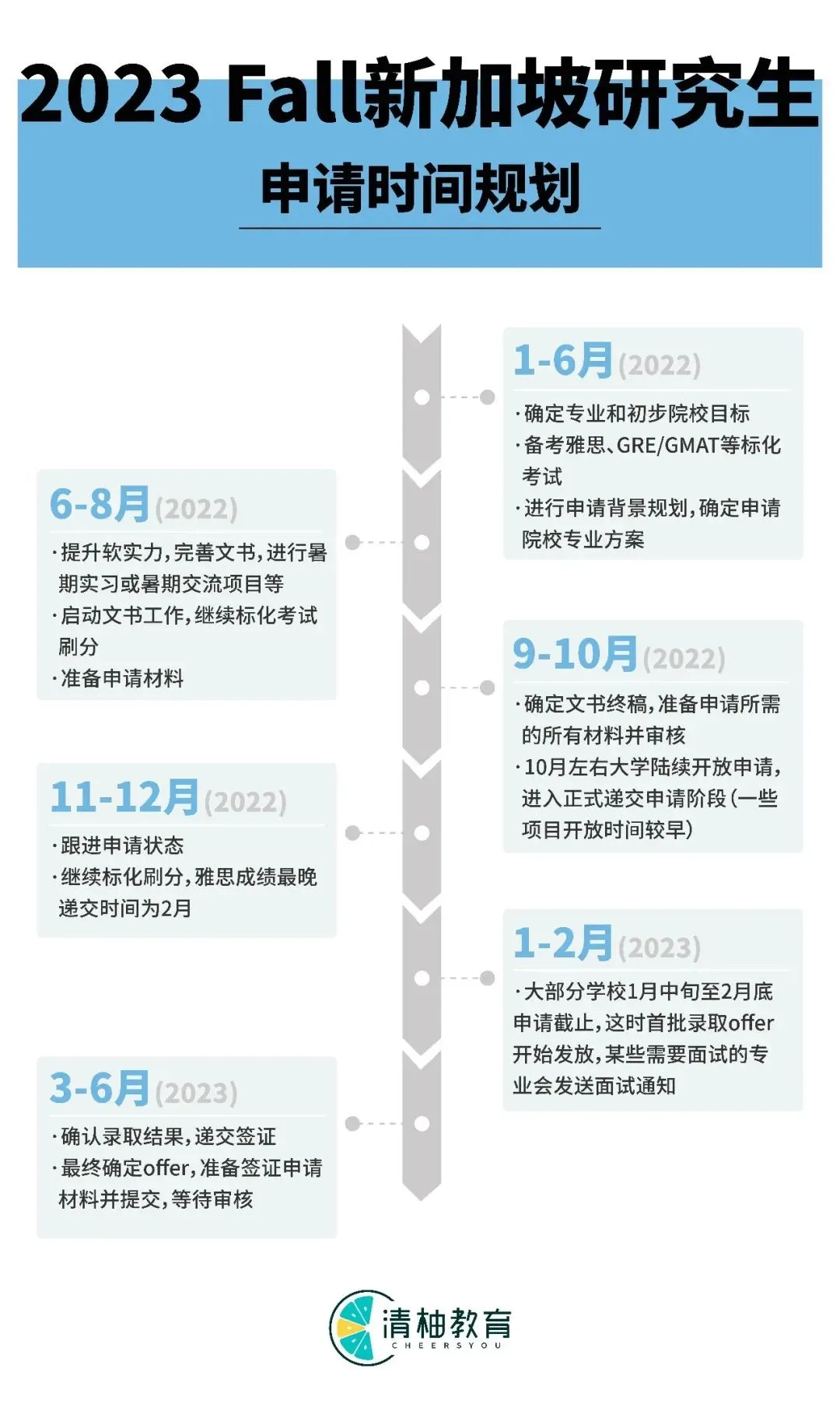
For students who really can't make the application deadline or lack overall competitiveness, and who want to take some time to enhance their profile and aim for top universities, it is recommended to consider applying for the 2023 Fall intake.
Applications generally start in September-October. During the five months from the end of the domestic exam to the opening of applications, students can prepare for language and standardized tests, while also gathering necessary application materials including undergraduate transcripts, recommendation letters, resumes, personal statements, etc. If you submit these materials as soon as applications open, you could receive an offer as early as November.
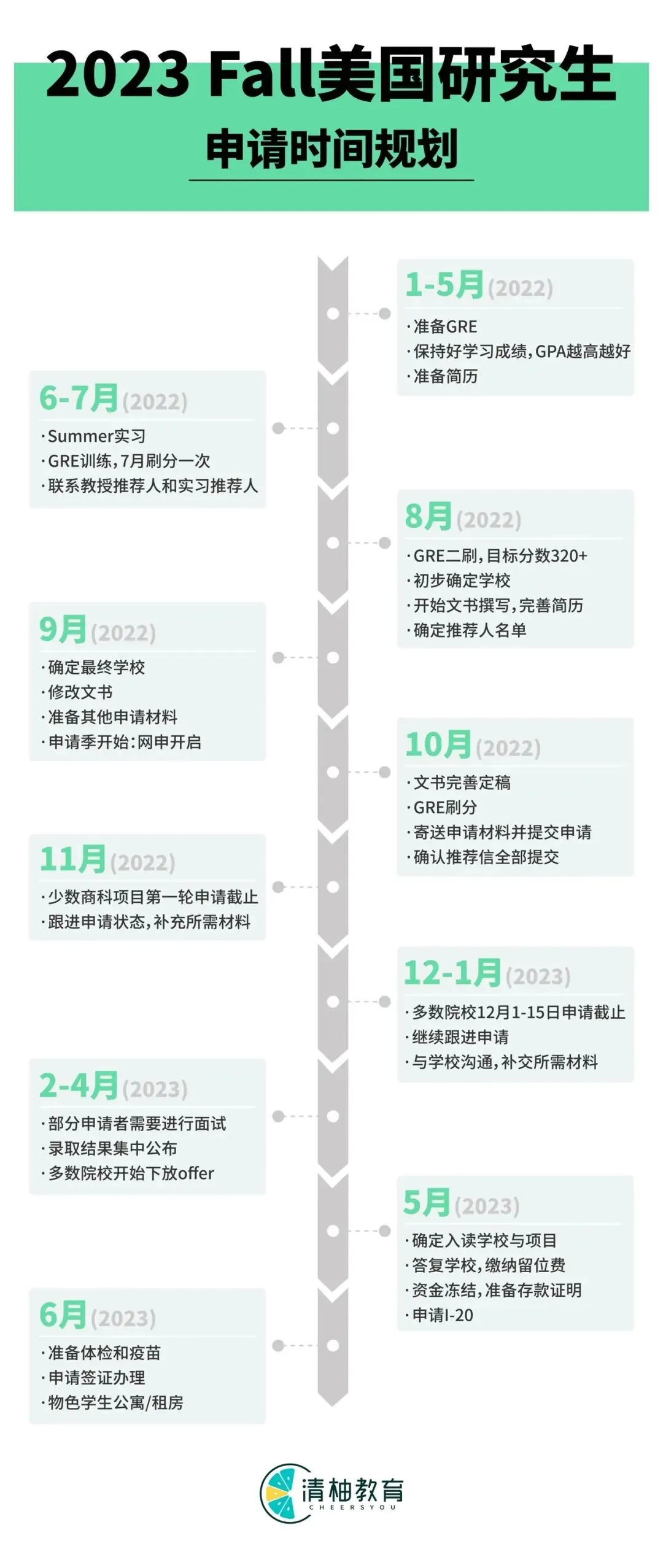
And for students aiming to apply to universities in the UK, Hong Kong, or Singapore, there will also be ample preparation time. It would be ideal to catch the early application wave in September-October 2022 and secure a spot in the first round of admissions.
.jpg?x-oss-process=style/opt-webp)
.jpg?x-oss-process=style/opt-webp)
In fact, whether it's the postgraduate entrance exam or studying abroad, they are merely hurdles on the path to realizing life dreams. There's no need to be overly anxious or impatient for outcomes.
Strive in the present, leave no regrets, and we believe that everyone will have a bright future.