
When it comes to the streaming industry, it seems impossible to avoid mentioning Netflix. But who would have thought that Disney+, which entered the scene at the end of 2019, could amass over 120 million subscribers in just over two years, leaving the industry leader feeling unsettled?
This momentum is just like last year's release of LinaBell from Disney—instant success upon debut. Disney is too good; they just win every time.
Disney Has Won Big, with Strong Momentum Both Offline and Online
In early February, Disney released its Q1 2022 earnings report, with revenue exceeding $21.8 billion, up 34% year-over-year. Earnings per share (EPS) was $1.06, far higher than the $0.32 in the same period last year.
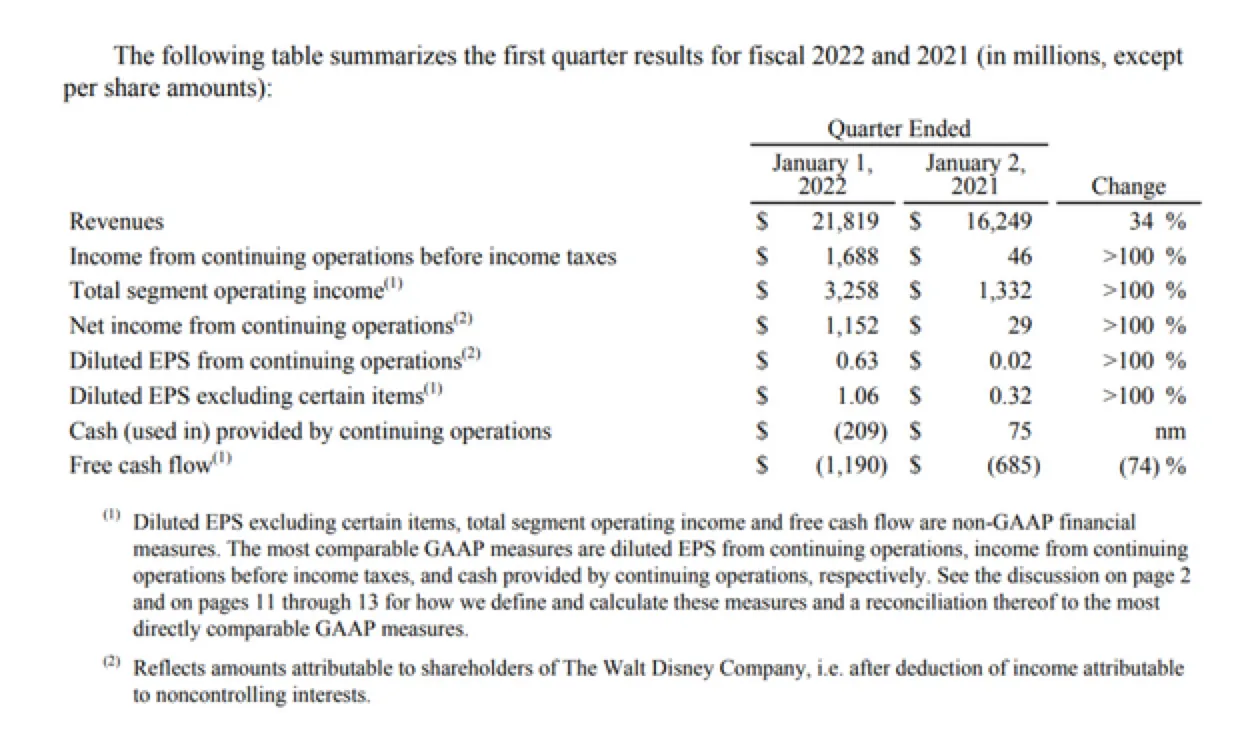
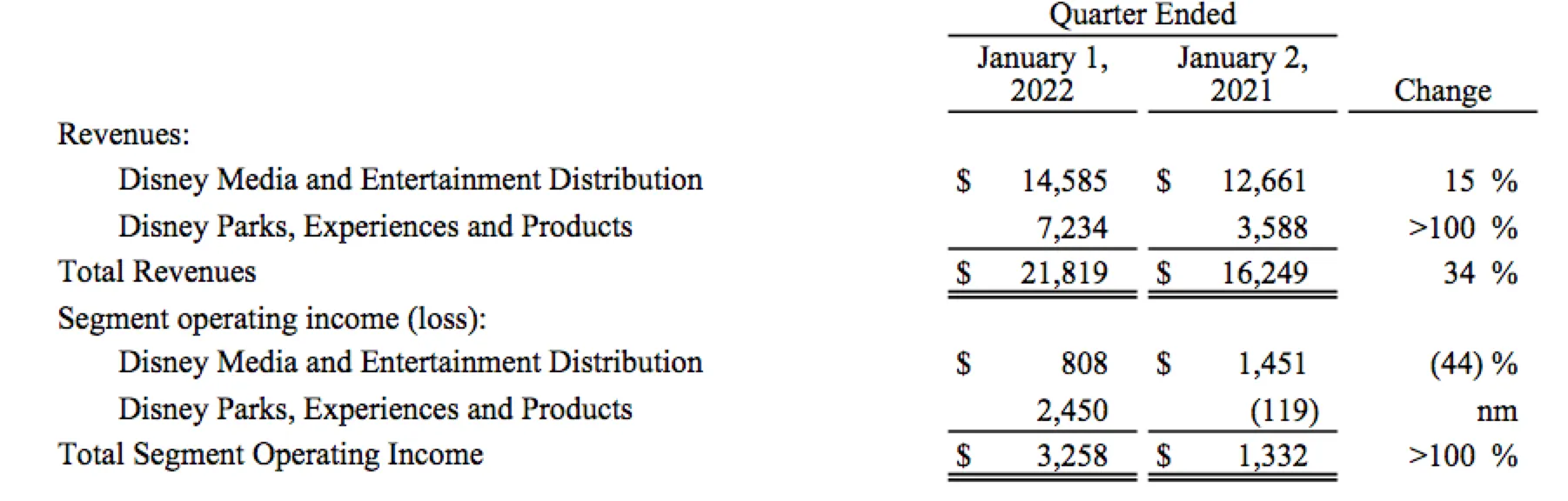
Not only did Disney's theme parks and merchandise achieve a sharp growth of over 100%, reaching $7.2 billion and recording the second-best quarterly performance in history, defying the pandemic to rake in cash;
Disney's streaming services also showed strong momentum, with total paid subscribers reaching 196.4 million. Among them, Disney+ alone added 11.8 million new users in the first quarter of this year, a 37% increase year-over-year, bringing the total to 129.8 million.
In addition, Disney's ESPN+ paid subscribers reached 21.3 million, surging 76% year-over-year; Hulu paid subscribers reached 45.3 million, up 15% year-over-year.

It is estimated that by 2024, the total number of subscribers for Disney's streaming services could reach 260 million.
Upon the release of the earnings report, Disney's stock price immediately jumped 8%.
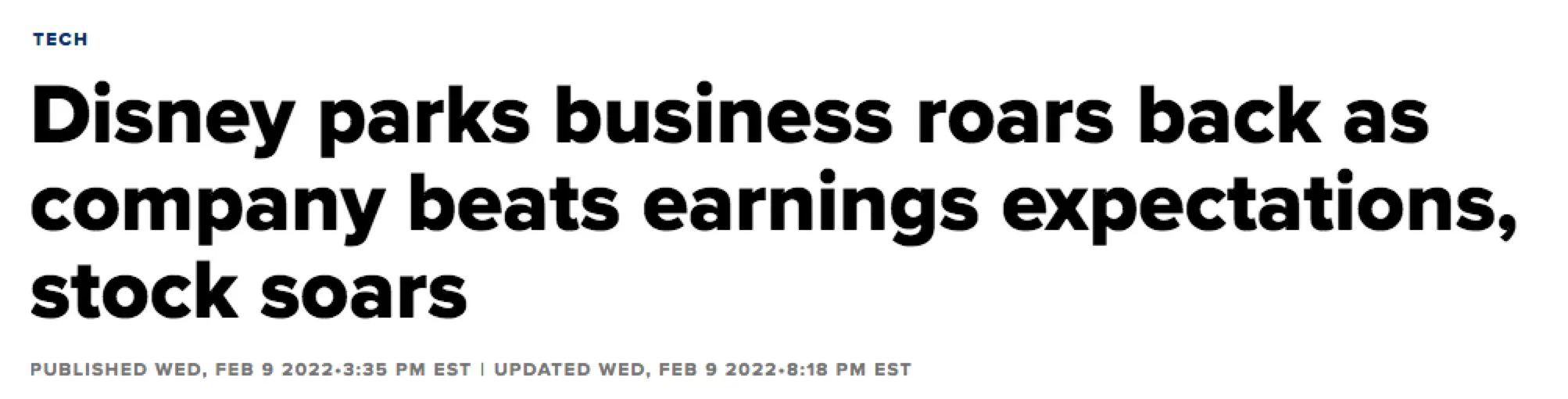
Who won big? Disney won big, and in the process, gave Netflix a slap in the face.

Netflix Lacks Staying Power, Considering Adding Ads?
Faced with the surging Disney, it's impossible for Netflix not to be worried.
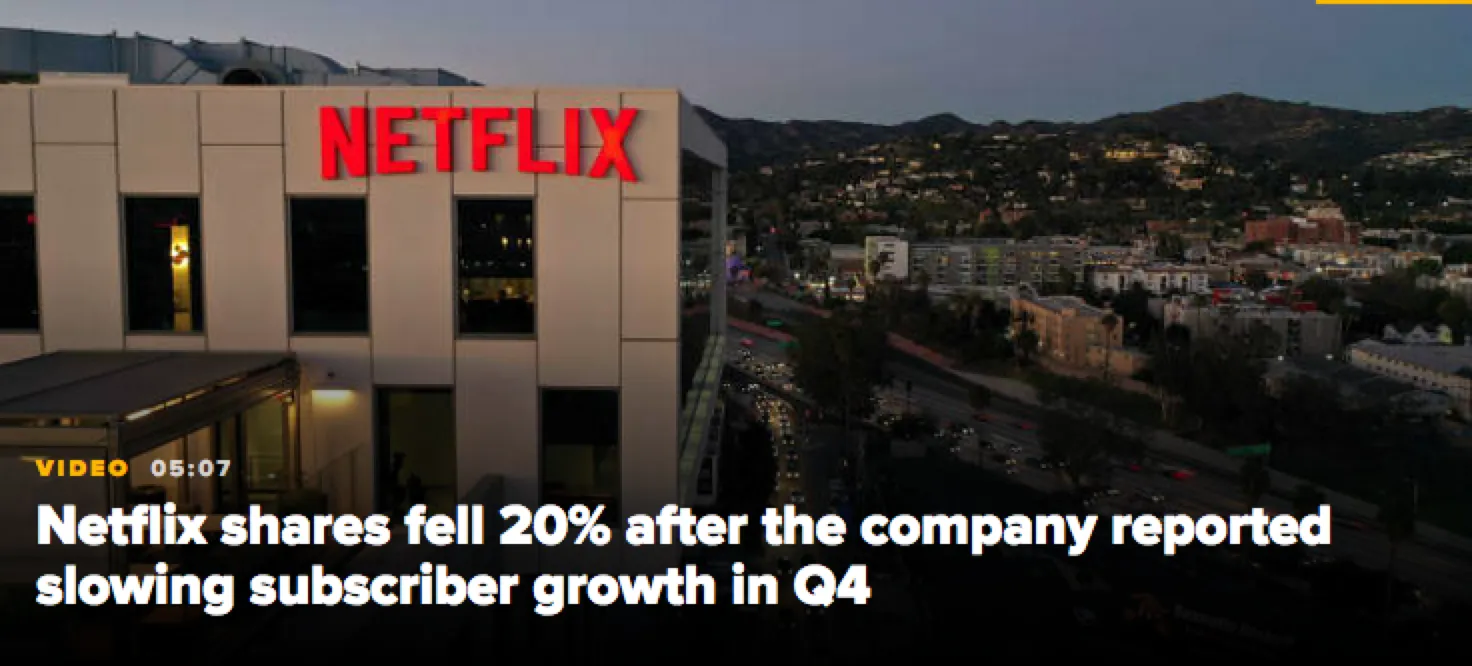
After Netflix released its Q4 2021 earnings report this January, its stock plummeted 21.8%.
The earnings report showed that Netflix's Q4 revenue was $7.71 billion, up 16% year-over-year; operating profit was $607 million, and EPS was $1.33, exceeding analyst expectations of $0.82.
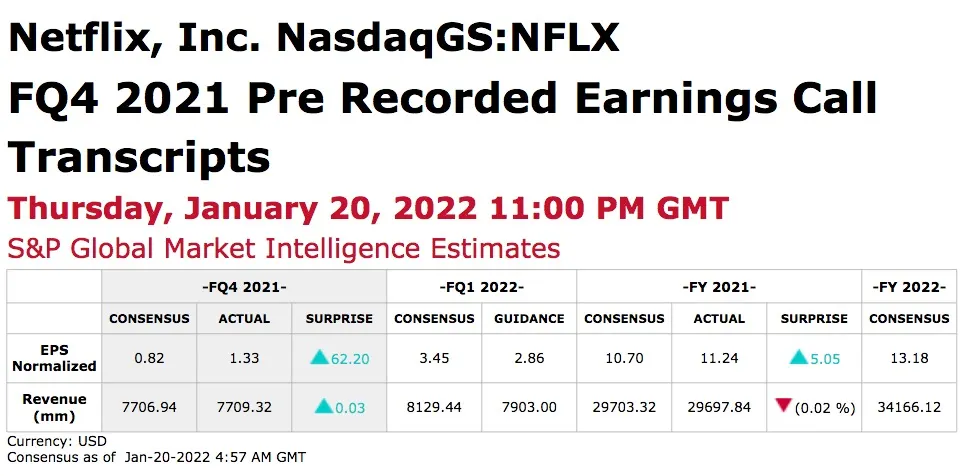
Even though both subscriber numbers and EPS exceeded analyst expectations, the secondary market's reaction dealt a heavy blow to Netflix. Since the earnings release, the stock has fallen 34%. The last time Netflix fell this badly was back in 2012.
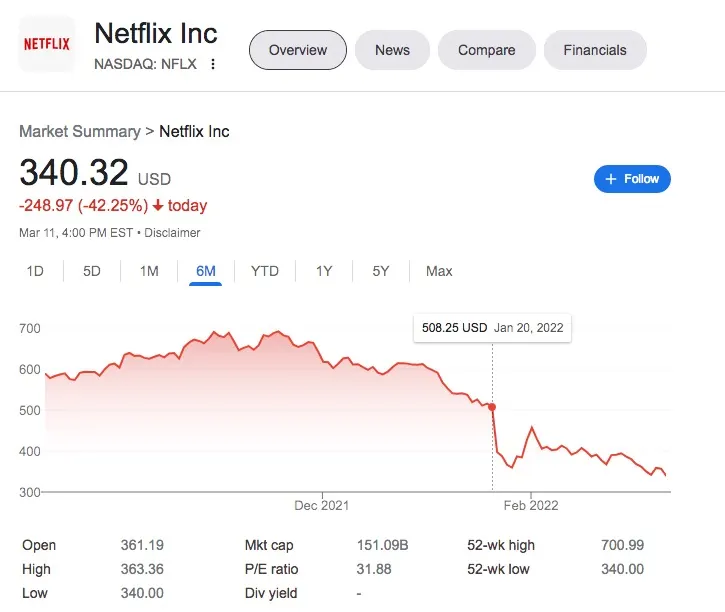
Netflix now boasts 220 million subscribers worldwide and remains a streaming giant, but its growth momentum seems slightly lacking.
After adding 8.3 million new subscribers in Q4 last year, Netflix expects to add only 2.5 million new subscribers in Q1 this year, a figure that is less than one-quarter of Disney's additions.

At this moment, Netflix appears to be facing both internal and external challenges.
The significant decline in operating profit is mainly due to a sharp increase in Netflix's content production costs, including copyright fees, production costs, marketing expenses, and streaming transmission costs.
Netflix's long-proud content-first strategy is now somewhat dragging down the giant ship. Original productions require huge upfront investments, and if the funds cannot be recouped quickly, there is a risk that this production pipeline could break at any time.
Meanwhile, externally, there are fierce competitors like Disney, NBCUniversal, and WarnerMedia Studios vying for market share.

Thus, even the proud Netflix has changed its previous stance of “not considering competition from other companies to have a material impact on its growth” and admitted that marginal growth has been damaged in the increasingly intense competition.
When asked whether the company would consider generating revenue through advertising in the future, the CFO's response was intriguing: “Although it's not in the plans right now, nobody dares to say never.”

Some Wall Street analysts believe that Netflix could introduce a lower-tier subscription with ads to supplement revenue. After all, at the start of this year, Netflix's stock price did seem to revert to pre-pandemic levels overnight. The pandemic-driven benefits appear to have come and gone quickly.
Amid the growing pains, Netflix is hesitating over whether to abandon its long-standing ad-free model. It might go against its original intentions, but nobody wants to turn down money.
Unless Netflix can find new business growth drivers, adding ads is likely a matter of time.
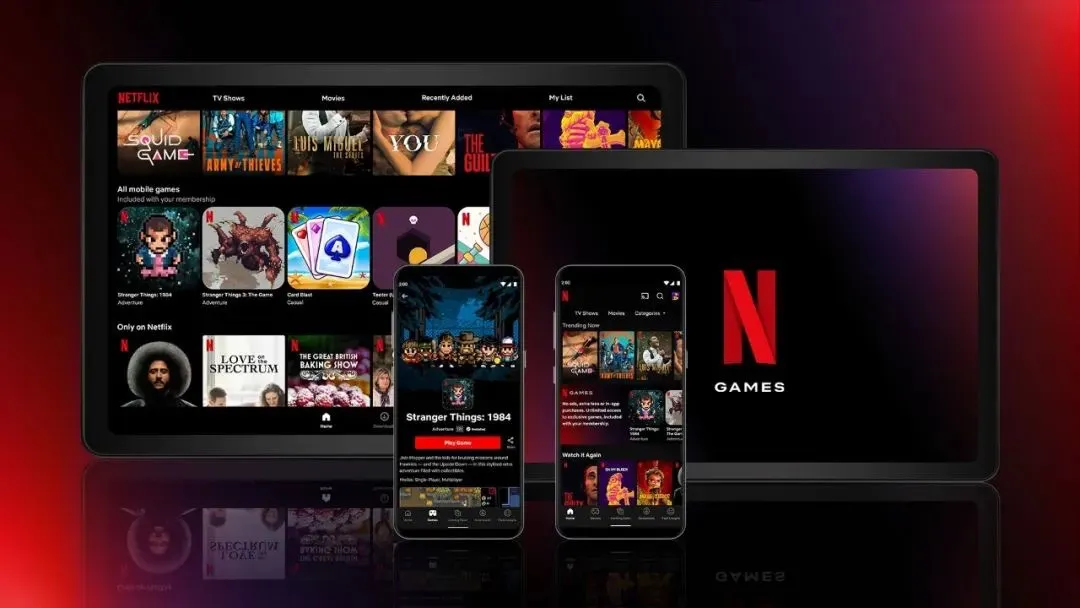
Last year, Netflix tested the waters of the mobile gaming market, launching 14 games. It remains to be seen whether venturing into the gaming market can turn the tide.
The Frenzied Competition in Today's Streaming Market
Netflix: Content is King, But Pressure is High
For a long time, Netflix has been the epitome of content being king.
In 2013, 'House of Cards' burst onto the scene, stunning audiences. It also brought Netflix back to life, giving it a foundational work that could compete with HBO's 'Game of Thrones'.

In 2014, it acquired the rights to 'Black Mirror', and a series of high-quality content further elevated Netflix to a pedestal.
In the hearts of viewers, anything produced by Netflix is guaranteed to be quality.
However, without an advertising business, Netflix relies on a large volume of high-quality content to sustain its subscription revenue growth.
But by 2022, acquiring rights has become increasingly difficult, meaning the pressure on Netflix to produce content is immense. After all, not every production can be a massive hit like 'Squid Game' and generate huge returns.
If it can't drive profits, it may end up tarnishing its reputation. It's no longer news when Netflix shows underperform and get canceled.

Disney+: Theatrical Integration and IP Dominance
Compared to Netflix, Disney+ entered the game a bit later, but it enjoys the benefits of a strong backing. After all, Disney owns Pixar, Marvel, Star Wars—any one of them is a top-tier IP.
In terms of IP reserves, production capabilities, and financial strength, Disney has a winning hand.

Disney executives stated in the 2021 annual report that content spending for fiscal 2022 would increase by $8 billion year-over-year to $33 billion; Netflix's total content spending for all of 2021 was $17.5 billion, only about half of Disney's planned 2022 expenditure.
The streaming competition is ultimately a money-burning war, and facing an opponent like Disney with numerous blockbuster IPs, excellent production capabilities, and strong cash-generating power, Netflix is somewhat weary in response.
First is content integration. The new Disney-Pixar film 'Turning Red' skipped theaters entirely and premiered exclusively on Disney+. Although theaters inevitably suffered and industry opinions were mixed, this move was ultimately to boost Disney+.

With a monthly subscription fee of $7.99 for Disney+, if you can watch Disney movies simultaneously, it's a huge win for movie fans. The whole family watching together is like making money while sitting down.
Compared to HBO Max's $14.99 and Netflix's starting price of $9.99 per month, Disney+ seems to offer even better value.
Especially for families with young children, they can avoid pandemic-related concerns about going to theaters. After all, children under five still cannot get vaccinated, so watching movies at home is safer.
Simultaneous theatrical releases are a major strategy for Disney, and they keep experimenting. In 2020, 'Luca' and 'Soul' were used as test cases, and last July's 'Jungle Cruise' was simultaneously released on Disney+, but required an additional $30 payment to upgrade to a premium account.
Marvel's superhero movies generally follow a promotional route of being released in theaters first for two months before moving to online streaming.
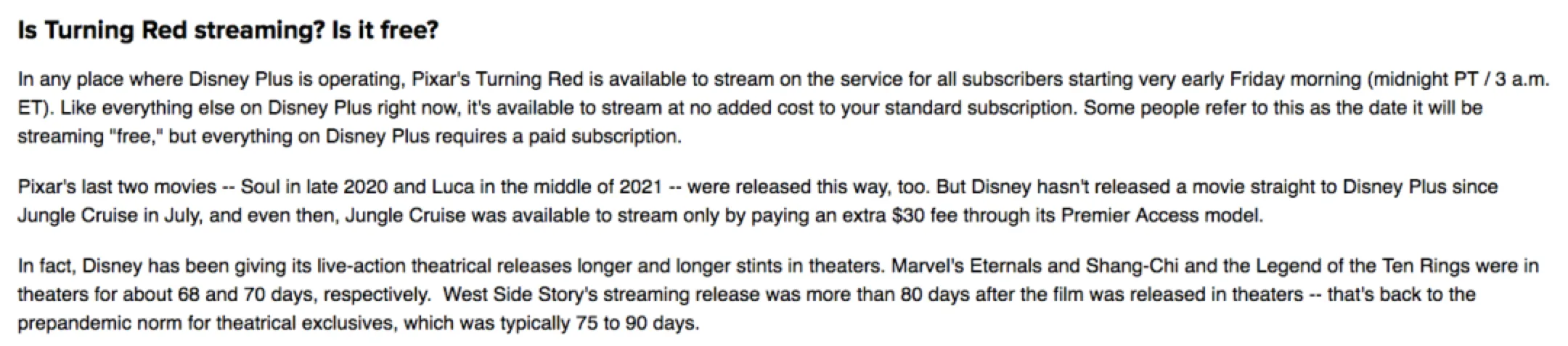
For 'Encanto', this window was shortened to one month.
Now, 'Turning Red' skipping theaters entirely and becoming a Disney+ exclusive not only attracts more new subscribers but also stabilizes existing ones.
Crunchyroll: Niche Market, Anime Dominance
Recently, the two major anime streaming services, Crunchyroll and Funimation, announced a merger.

For anime lovers, this is definitely great news. With over 1,000 anime titles, you can subscribe for just $9.99 a month.
However, for giants like Disney and Netflix that also offer anime streaming services, this brings new challenges.
Although Netflix's 'Love, Death & Robots' was a masterpiece that seemed to redefine anime, the second season quickly flopped, disappointing many anime fans.

Turning a good IP into a series of bad productions is a predicament that even Marvel can't avoid. After all, when you have to make a living, assembly-line products are inevitable.
Niche markets with dedicated players focusing on a specific area only make the streaming giants more uneasy.
Netflix, Disney, Amazon, and others are fighting tooth and nail to secure exclusive anime distribution and simultaneous streaming rights, not missing any opportunity to retain their share of the anime streaming market.

Spending money is necessary, but it must be spent wisely. This streaming battle ultimately needs to ride the wave of big data.
Years ago, Netflix analyzed data volumes of tens of millions or even hundreds of millions, leading to the launch of the phenomenal hit 'House of Cards', which also made Netflix one of the best-performing stocks on Nasdaq that year.
The same goes for today's major players; to win the market, data analysis is key.
From the genres and actors that audiences prefer down to a classic memorable shot, everything can be precisely captured through data analysis.
Using Data to Come Back in the Streaming War
Data analytics/data science is a discipline that integrates mathematics, statistics, and programming, enabling in-depth analysis of large data sets to uncover trends and optimize decisions.
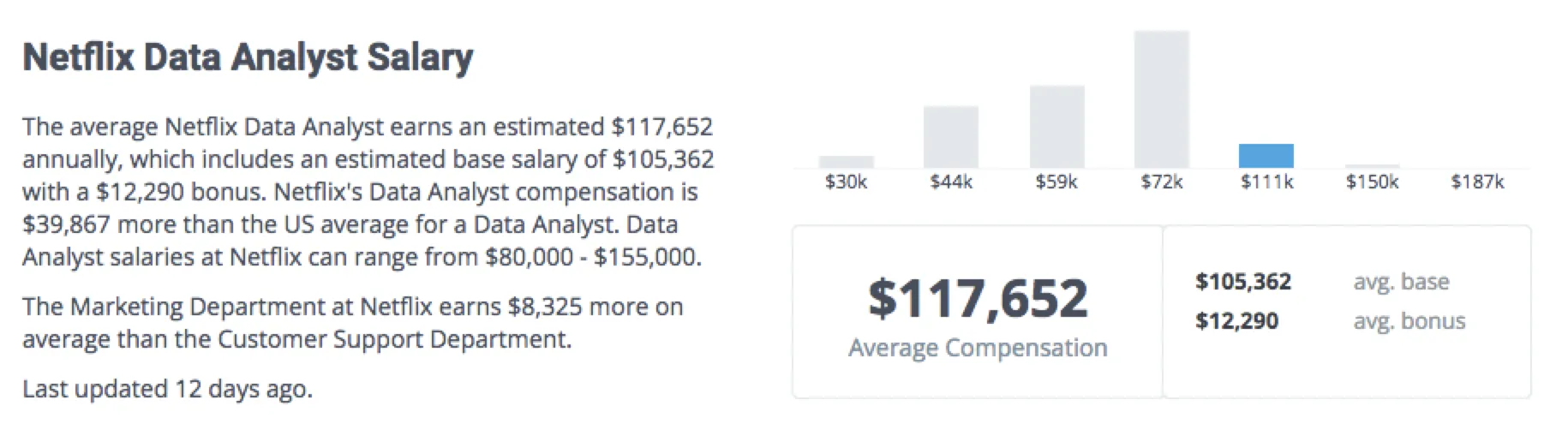
With STEM fields enjoying three years of OPT, excellent career prospects, and high salaries, data analytics has become a popular employment choice in recent years. Taking Netflix as an example, the average annual salary for a data analyst is as high as $117,000.
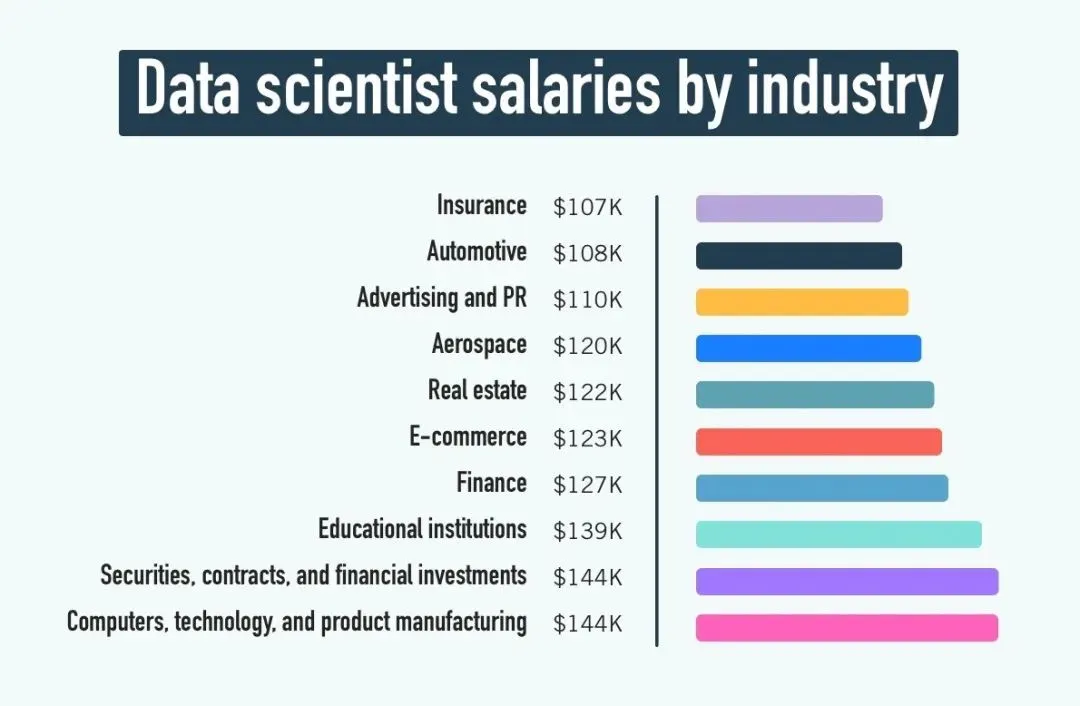
Data analysis-related majors are not only sought after in tech companies but also highly paid in industries such as finance, education, e-commerce, real estate, advertising, automotive, and insurance.
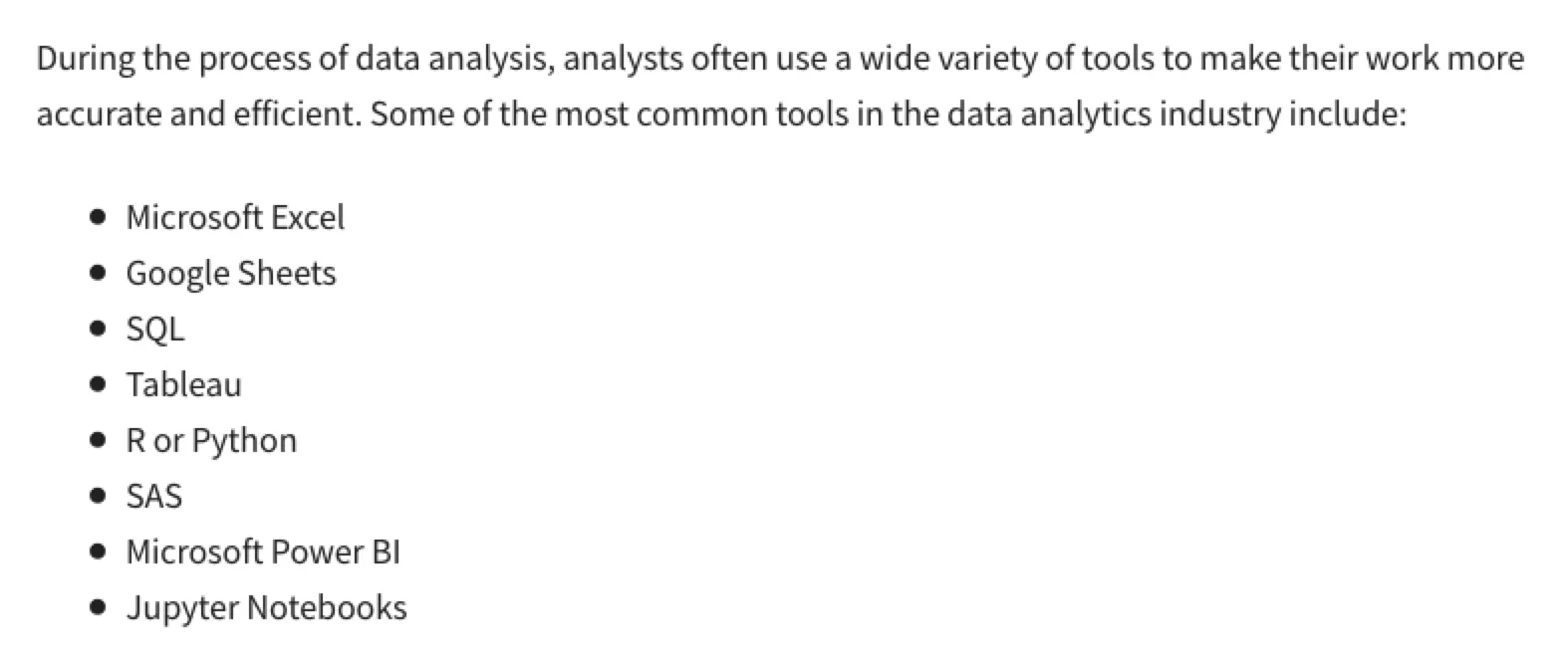
For students who are not particularly keen on coding but still want to take advantage of the STEM benefits, data analytics is a good choice of major. However, there are still some basic tools that need to be mastered, such as Excel, SQL, Tableau, Python, SAS, etc.
Taking the Master of Data Science (MDS) program at UCI as an example, this program is housed under the UCI School of Information and Computer Science, lasts 15 months, and covers areas such as applied probability theory, statistical modeling, machine learning, data visualization, and artificial intelligence.

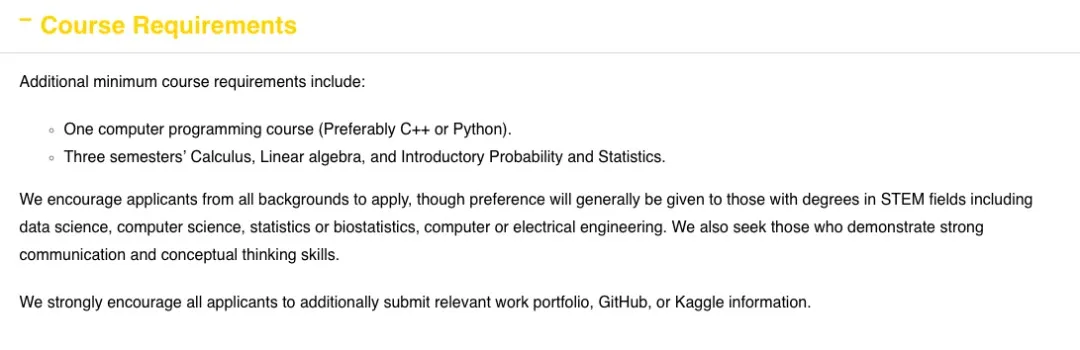
Applicants need to have at least:
-
One computer programming course (C++ or Python)
-
Three semesters of calculus, linear algebra, and introductory probability and statistics
And preferably, the applicant's undergraduate major is in a STEM field, including data science, computer science, statistics or biostatistics, computer or electrical engineering, etc.
It is reported that 85% of graduates from this program find a job within three months.

Such a high employment rate also reveals that to secure a data position early, one should carefully consider geographic location when choosing schools and programs.
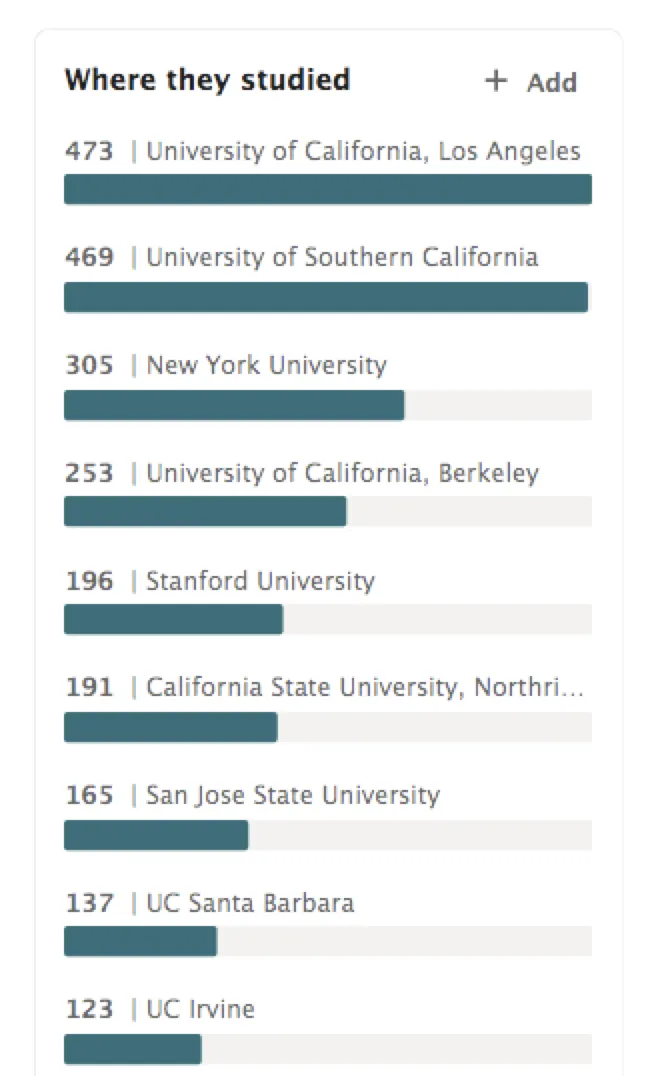
Many large companies consider proximity in their data position recruitment, hiring from local universities. For example, Netflix is located in Los Angeles, and many of its employees graduated from UCLA, USC, UCB, Stanford, UCI, etc.
Furthermore, networking and the accumulation of relevant internship experience are essential elements for successfully stepping into a data role.
Amid the streaming market war, competition for data positions is also increasingly fierce. Only with strong personal skills, diligent practice of interview questions, thorough interview preparation, and the support of networking resources can the dream of receiving a high-paying offer after graduation truly come true.
We wish everyone success in both their studies and careers!