Left hand Hermès, right hand Louis Vuitton, wearing a mink coat, attending top-tier parties, bouncing checks for monthly five-star hotel suites, casually tipping $100 bills.
Anna Sorokin might just be the person who knows how to be a socialite the best in the world.

Unlike many "fake socialites" on Xiaohongshu, who are merely vain and superficial gold diggers, Anna Sorokin possessed insight and confidence, combining logic and eloquence to converse with Wall Street tycoons at ease—a high-level con.
That's why "Inventing Anna" shot to the top of Netflix's trending charts immediately upon release, sparking global buzz!

Real and Fake, Blurring the Lines
The series is inspired by a New York magazine article "How Anna Delvey Tricked New York’s Party People," and as stated at the beginning of each episode, "This story is based on real events"...

Before Becoming a "New York Socialite"
In real life, Anna was born into an ordinary family. At 16, she moved to Germany with her parents. With an interest in fashion, she dropped out of university and interned at "Purple" magazine, using the job to attend fashion shows, art exhibitions, and parties. The glamour gradually consumed her, opening the door to a new world.

A Variety of Scams
Anna posted photos of herself with celebrities on social media and claimed that her father had set up a $67 million trust fund for her, but she couldn't access it until age 25... With this phantom trust fund, Anna gained entry into elite circles. Using the guise of founding a private arts club, she tricked business tycoons into funding her.

Life After Exposure
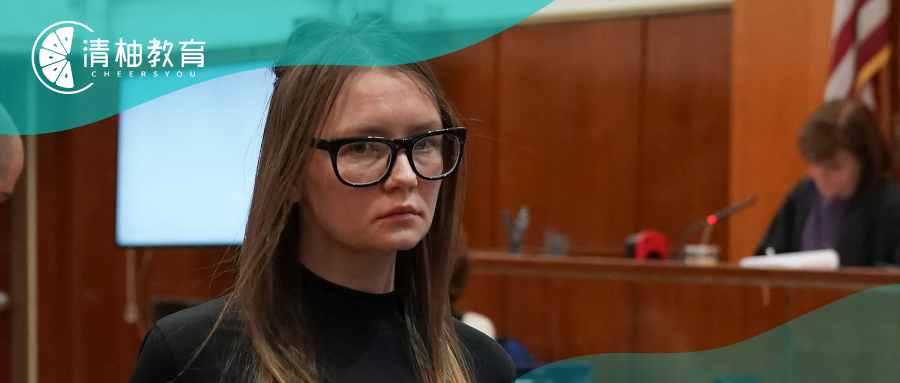
But lies eventually unravel. After being exposed for fraud, Anna still leveraged social media to turn her trial into a spectacle, refusing to wear prison garb, hiring a professional fashion stylist for her court appearances, and using public opinion to pressure the court for early release.
After watching "Inventing Anna," what everyone wants to know is: what is Anna doing now?
The Downfall of the Fake Persona
Just like the show's ending, in real life, Anna was indicted on multiple counts of grand larceny. In addition to hefty fines, she was sentenced to 4 to 12 years in prison.

Netflix paid Anna $320,000 for the rights to her story, enough to pay off debts and start a new life after prison.
Anna, the German "fake socialite" who mingled in New York high society, inevitably brings to mind the con artist played by Leonardo DiCaprio in "Catch Me If You Can," who with his talent for assuming identities and forging checks managed to trick 25 countries. After prison, his exceptional check fraud detection skills helped the FBI catch many financial fraudsters, and he even designed anti-counterfeit checks for banks.

Stories of brilliant con artists are always fascinating, but reality is ultimately harsh.
"Female Steve Jobs" Convicted of Fraud
A Stanford dropout turned entrepreneur, the "darling of Silicon Valley," once a sensation for "blood testing for cancer," and hailed as the next Steve Jobs: the story's protagonist, Elizabeth Holmes, claimed to have developed a portable device that could extract comprehensive biochemical data from just a finger-prick of blood.

If successful, the invention would greatly improve disease prevention efficiency and even fundamentally change the operational model of the healthcare system, including hospitals and pharmaceutical companies.
However, Elizabeth didn't succeed; she used this gimmick to secure massive investments until she could no longer hide her hollow results.

A U.S. federal jury found Elizabeth guilty on four counts of fraud, and she faces up to 20 years in prison, $250,000 in fines, plus restitution for each count.
Application Fraud Leads to Prison Time
Many may have seen the Netflix documentary "Operation Varsity Blues: The College Admissions Scandal." In the notorious U.S. college admissions scandal three years ago, students involved not only were expelled but also faced varying prison sentences, like Lori Loughlin and Sui Xiaoning.

The most famous case is Instagram influencer Olivia Jade, packaged as a "rowing team recruit." Her parents were arrested for bribing a USC admissions official with $500,000.
Afterwards, Olivia Jade tried to return to social media, posting lifestyle videos on her channel. However, this comeback video sparked huge controversy and backlash...

Titles like "celebrity," "tycoon," "entrepreneur" can easily monetize attention, but fake "packaging" will eventually be exposed.
Nowadays, the phenomenon of "over-packaging" in study abroad applications has left a bad impression on some overseas institutions, which have adopted stricter review processes, such as more detailed interview questions, transcript verification, and phone/email checks on recommenders...
How to Gauge the Degree of Packaging in Study Abroad Applications
For students planning to study abroad, how can properly gauge packaging to enhance competitiveness?
Essay Content: Tell a Good Story
Center on "me." Writing the application essay is a process of packaging oneself, or rather, establishing a positive "persona" in front of admission officers.
Dig deep into growth experiences, search for examples that fit the theme. Study the specific descriptions and sub-questions under the prompt, outline them one by one, and have a clear plan.
For example: some applicants have participated in invention or research projects, and some even hold patents certified by official bodies—these can certainly showcase "creativity."

However, some domestic applicants tend to present a laundry list of school experiences, both curricular and extracurricular, that fail to stand out.
Regarding "leadership," they think of taking a leading role in a class or school event; for "overcoming challenges," they recall struggling with a particular course and improving through effort.
These aren't off-limits, but the wording should account for cultural differences, making it easier for admission officers to understand the circumstances you describe.
At this point, you'll also realize the importance of background enhancement.
Graduate Application Background: Effectively Enrich Your Experience
In graduate applications, background enhancement is a key guarantee for a stronger application. Seeking highly relevant internships, participating in high-value research projects—these effectively "package" your profile and greatly benefit your application.
Since many applied master's programs are course-based and employment-oriented, application materials naturally focus more on internship experience. That's why most master's applicants ultimately choose to enhance their background with internships.

For students dedicated to research and applying to more academic, research-oriented programs, enhancing research background is likely a better choice. This also builds more research experience for later pursuit of a PhD or higher degrees.
For students applying to multiple fields or programs, it's necessary to thoroughly understand each program's features, curriculum, and application requirements, carefully gauge admission preferences, comprehensively assess your own situation, balance time and energy, make reasonable choices, and then pursue appropriate background enhancement.
Plan Early, Apply Early
Dream school applications wait for no one; ample time ensures stronger academic performance. Early preparation also allows you to raise your GPA, accumulate activity experiences, and fully equip yourself to be more competitive when applying!
This latest 2022 study abroad calendar and timeline guide hopes to help you get a head start!

"Once shortcuts exist in life, they become the only path."
Over-packaging has never been a passport to success. What you truly need is a solid inner core. We hope all students can rely on their real abilities to land dream school offers!