The number of Chinese international students has been growing steadily, and studying abroad is increasingly seen as a necessary choice in many families. More and more parents are willing to send their children overseas to broaden their horizons and gain global exposure.
The United States and the United Kingdom remain the two most popular study-abroad destinations, with New York and London being dream destinations for many students. Today, let's take a closer look at the clash between these two global hubs!

London vs New York: School Distribution
London – QS Ranking Top 50
London has a greater number of top-ranked schools compared to New York, with four institutions in the world's top 50: Imperial College London (IC), University College London (UCL), King's College London (KCL), and the London School of Economics and Political Science (LSE). Among them, IC, UCL, and LSE are part of the UK's prestigious G5 group.
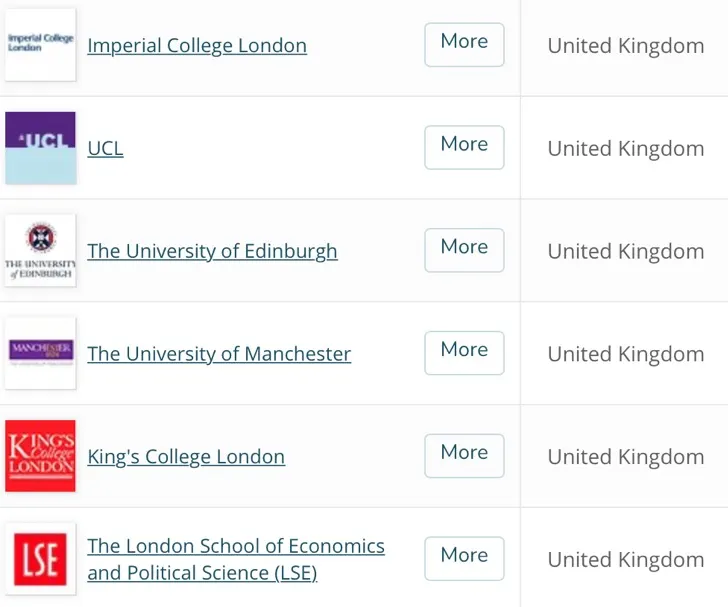
Let's take a look at the signature programs of each university—students can use this as a reference when choosing schools.
-
Imperial College London (IC): Computer Science, Biomedical Sciences, and Mathematics & Mechanical Engineering.
-
University College London (UCL): Education, Architecture, Law, Anthropology.
-
King's College London (KCL): Medicine, Law, Mathematics, Politics, Linguistics.
-
London School of Economics and Political Science (LSE): Social Policy, Management, Media and Communications, Economics, Law, Geography.
New York – QS Ranking Top 50
New York City is home to two QS World University Rankings top-50 schools: Columbia University and New York University. New York offers countless job opportunities, especially for business students in the U.S.—who wouldn't want to start their career with a position on Wall Street?
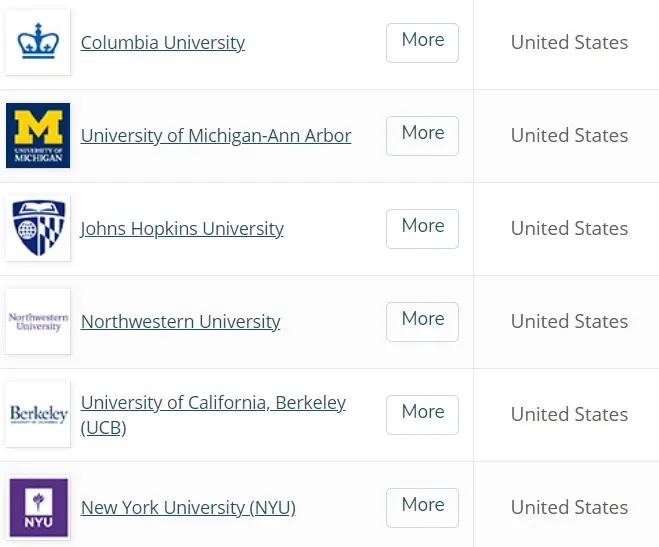
Columbia University is one of the five oldest universities in the United States, with notable alumni including Barack Obama, Franklin D. Roosevelt, Warren Buffett, and Xu Zhimo. Its strongest schools are the Law School, Business School, Medical School, Journalism School, and Engineering School.
New York University, founded in 1831, is one of the largest private universities in the U.S. In addition to its main campus in New York, it also has branch campuses in Shanghai and Abu Dhabi. Today, NYU is highly diverse and international, with students from every U.S. state and over 133 other countries, including visiting scholars.
Master's Program Duration and Holidays in the UK and US
Is a UK master's degree considered lightweight? Is it harder to get into a US master's program? Let's take a close look at how master's programs are structured in both countries!
UK Master's Program Duration
Key features of UK master's programs: tight schedule, heavy workload. The duration is one year, which may seem shorter than domestic programs, but that year is packed with intensive coursework.
The curriculum is practice-oriented and consists entirely of specialized courses, including electives. Students typically take 4-5 courses per semester, each requiring extensive reading from designated reference lists, writing short essays, and completing group projects, with final exams to assess learning outcomes.
UK Master's Holiday Schedule:
First break: Christmas holiday, from early December to early January, usually lasting about 20-40 days.
Second break: Easter holiday, from early April to late April, usually about 2 weeks.
Third break: Summer holiday, from July to August. Students typically work on their dissertations during this period.
US Master's Program Duration
Key features of US master's programs: greater course flexibility; students graduate once they fulfill credit requirements, allowing them to start their careers sooner. Program length is typically 1-2 years, varying by major due to different professional requirements and knowledge frameworks. The high quality of US education ensures the value of the degree, and graduates from top US universities are highly sought after by global employers.
In a 2019 CNBC report on graduate salary data, MIT alumni with over ten years of work experience earned an average annual salary of up to 1.05 million RMB.
US Master's Holiday Schedule:
First break: early December to early January
Second break: May to August (excluding summer courses)
Other breaks: one week for spring break in March, one week for Thanksgiving in November.
Comparison of Daily Living Expenses
Daily expenses include accommodation, food, travel, and other study-related costs as well as personal expenses such as clothing and entertainment (tuition not included).
Daily Expenses in London
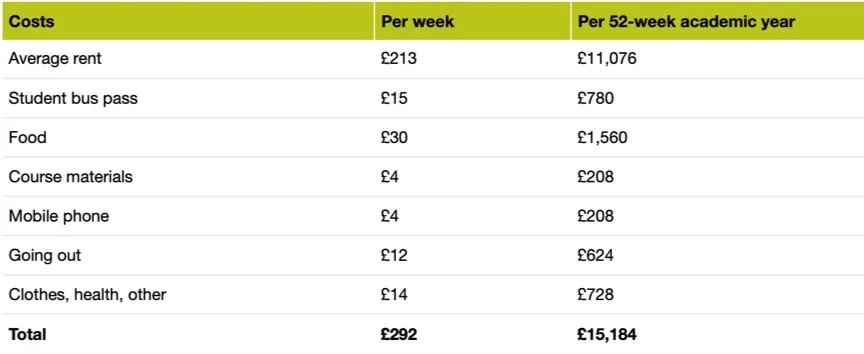
According to UCL's official website, a student's annual living expenses in London are approximately £15,184 (around RMB 135,000).
Daily Expenses in New York
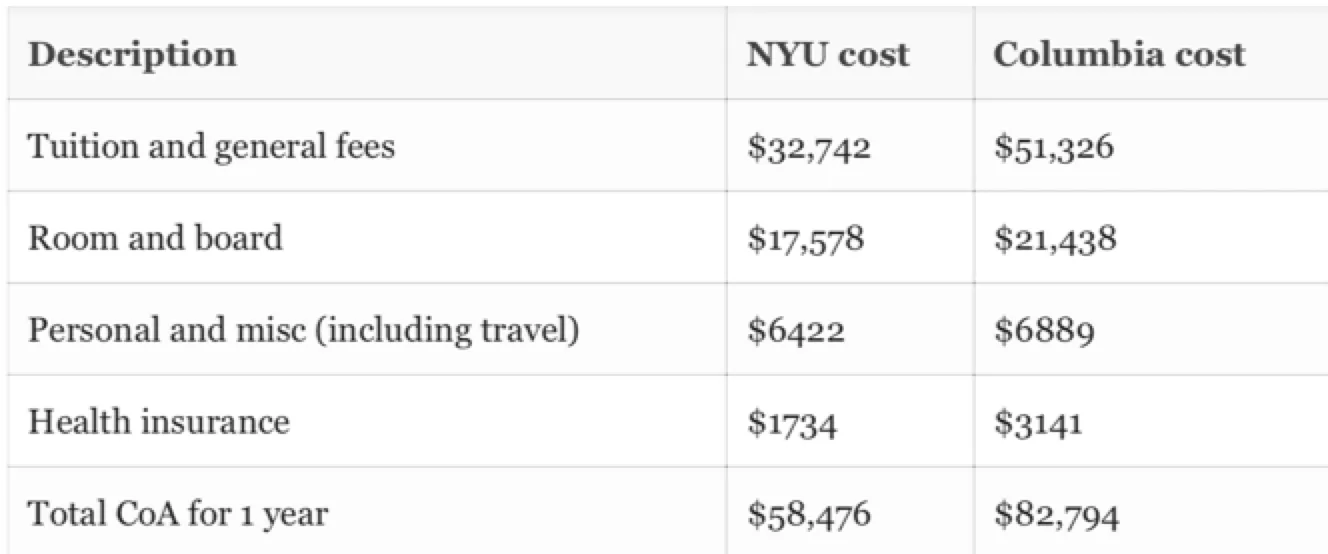
Data shows that NYU's annual living expenses are approximately $25,734 (around RMB 166,000), while Columbia's are approximately $31,468 (around RMB 204,000).
London vs New York: Job Opportunities
Job Opportunities in London
According to data on the percentage of workers from different ethnic groups in various industries in London, Asians are most commonly employed in the following sectors: financial services, distribution, retail, banking, consulting, public administration, and transport and communications.
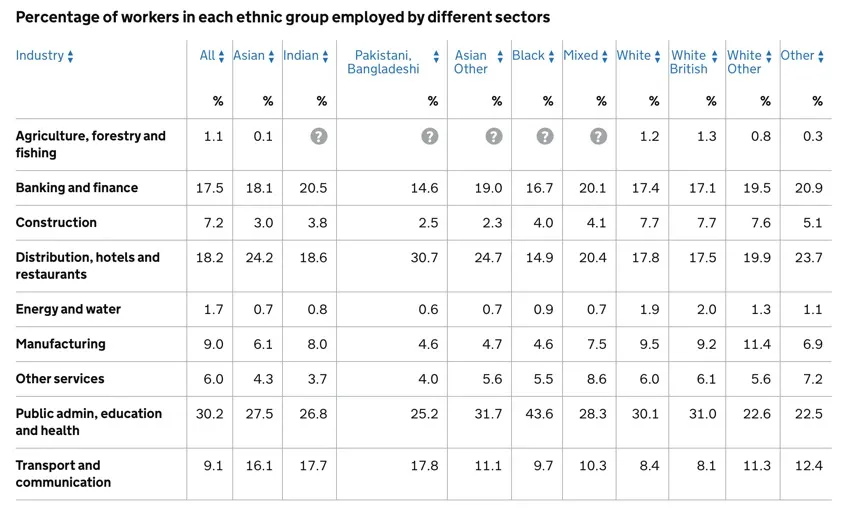
In terms of average salary, although London's average wage is high, it is mainly driven by the high incomes in the financial sector; residents in other industries often earn below the average. Therefore, banking services and related IT services remain the most popular and highest-paying sectors in London.
Job Opportunities in New York
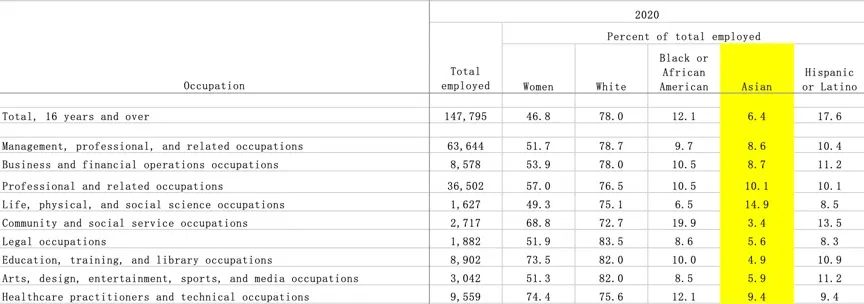
Based on data on the percentage of workers from different ethnic groups across industries in New York City, Asians are most heavily employed in: science, IT, management, finance, and banking.
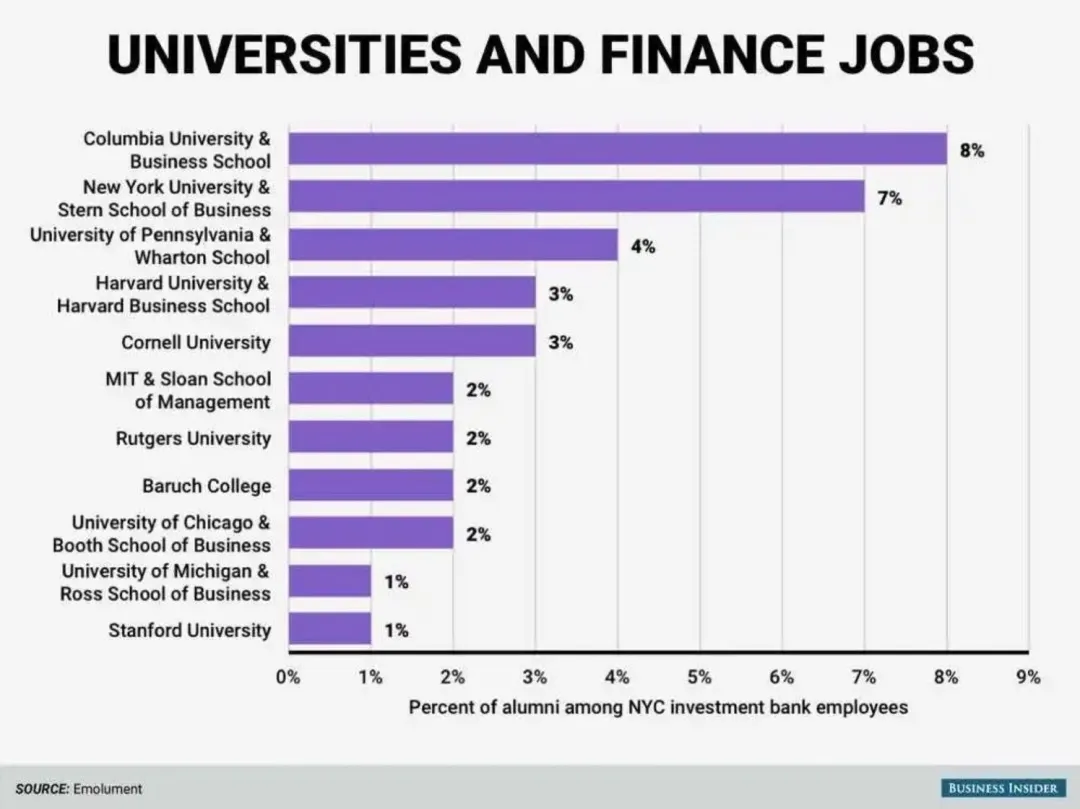
For business students—who make up the majority of international students—the gap in corporate resources between studying business in New York and, say, North Carolina is enormous. New York's universities are also target schools for local employers, who prioritize these institutions for recruitment, helping international students land their first jobs in New York before graduation.
Leisure and Entertainment: A World Apart
London's Historical Depth
After a week of classes, you might invite friends to visit the British Museum on the weekend: explore the Ancient Egyptian sculpture gallery, the Parthenon gallery, the Assyrian galleries from Mesopotamia, the Uruk and Babylon displays, the Asian collections, the Chinese ceramics gallery, the mummy rooms... History enthusiasts can easily spend an entire day there!

After immersing yourself in history at the British Museum, you can take the Tube to London's shopping hub—Oxford Street. As the city's premier shopping street, it boasts over 300 major stores within less than two kilometers.
For those who love retro culture, head to Shoreditch in East London, which epitomizes the city's street-level vintage culture. Every alley exudes a rebellious, retro vibe, and the area is a haven for street artists, with colorful graffiti everywhere.

New York's Dazzling Diversity
Whether you're a New Yorker or a visitor, you'll inevitably be captivated by the city's glamour and fashion, while also struck by its pride and congestion.
New York is a global fashion capital and a hub for art and style. From the Upper East Side, where the elite reside, to SoHo, the city's trendiest district, your shopping cravings will be satisfied. Centered on Broadway, SoHo is packed with countless mainstream and niche brands, with art galleries lining the streets—a true shopper's paradise.

Many students' first impression of New York is Central Park—a miraculous fusion of vast greenery and architectural perfection within a bustling city. And while you're in New York, how can you miss a Broadway musical? With its stirring music, romantic plots, and brilliant choreography, 'The Phantom of the Opera' remains a timeless classic.

After reading this, do you feel you have a better understanding of studying abroad in London and New York?
In truth, whether it's London's profound history or New York's concrete jungle, we recommend that students first choose a major that suits their interests and background.
Then, compare the program structures and career prospects at universities in both cities, considering all factors before deciding. Of course, as an adult, you can also have it all—apply to both the UK and the US simultaneously!
If you still have questions about choosing schools and programs, feel free to scan the QR code at the end of the article to add a consultant and get advice!