
Just now, QS finally released the 2023 QS World University Rankings.
In fact, a few days ago, "QS Rankings" had already trended on Weibo because a bug on the QS website caused the 2023 world university rankings, originally scheduled for release on June 8, to be leaked in advance.
Although the complete list of the 2023 QS World Rankings was widely circulated online, netizens remained somewhat skeptical since it was not officially released by QS.

Finally, on June 8 US time, QS officially released the latest 2023 World University Rankings!
The QS World University Rankings, compiled by global higher education analytics firm QS Quacquarelli Symonds, are published annually to help prospective students identify top institutions of interest.
This year, QS compared the performance of nearly 1,500 universities worldwide. Let's take a closer look at the latest rankings!

2023 QS University Ranking Indicators
This year's QS World University Rankings assess top universities from various countries and regions using six key indicators for evaluating and benchmarking global higher education data:
Academic Reputation (40%)
Employer Reputation (10%)
Citations per Paper (20%)
Faculty/Student Ratio (20%)
International Faculty Ratio (5%)
International Student Ratio (5%)
This year, QS also added two new unweighted indicators:
Employment Outcomes
International Research Network
As an internationally authoritative ranking agency, QS has always emphasized multi-dimensional indicator comparisons across institutions. In addition to academic metrics, employer reputation and internationalization are also key focuses of QS.
2023 QS Ranking Overview
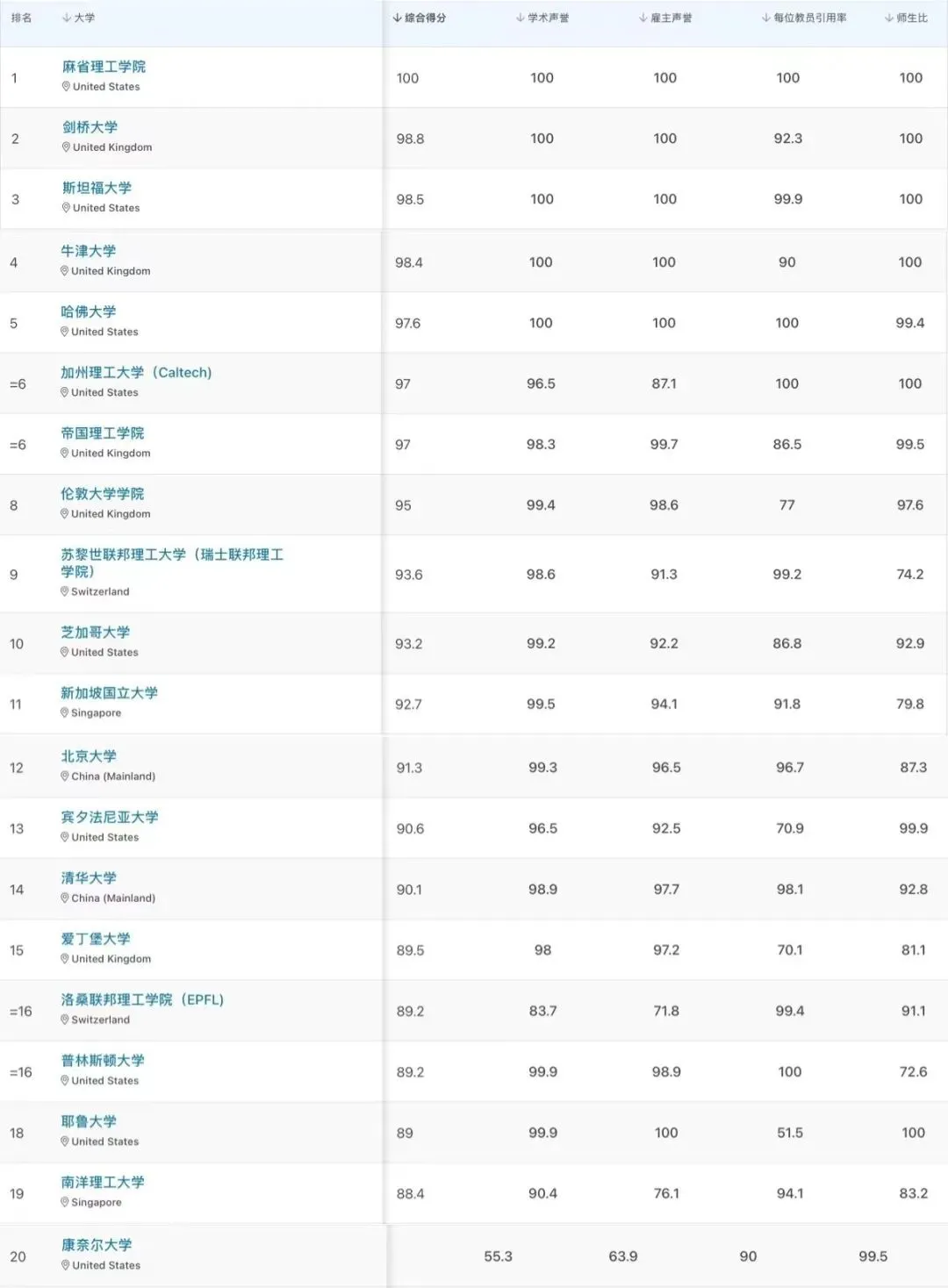
The top five in this year's ranking saw little change compared to 2022, with the University of Oxford dropping two spots and the University of Cambridge rising one.
The top five are MIT (1st), Cambridge (2nd), Stanford (3rd), Oxford (4th), and Harvard (5th).
This marks the eleventh consecutive year that MIT has ranked first in the world!

Looking at the top 20, US and UK institutions still dominate, with nine from the United States and five from the United Kingdom; Switzerland and Singapore each have two schools, along with China's Peking University and Tsinghua University.
We are also pleased to see an overall upward trend in rankings for mainland Chinese universities this year. Peking University rose six places (from 18th to 12th), and Tsinghua University rose three places (from 17th to 14th)—their highest rankings since joining the QS World University Rankings.
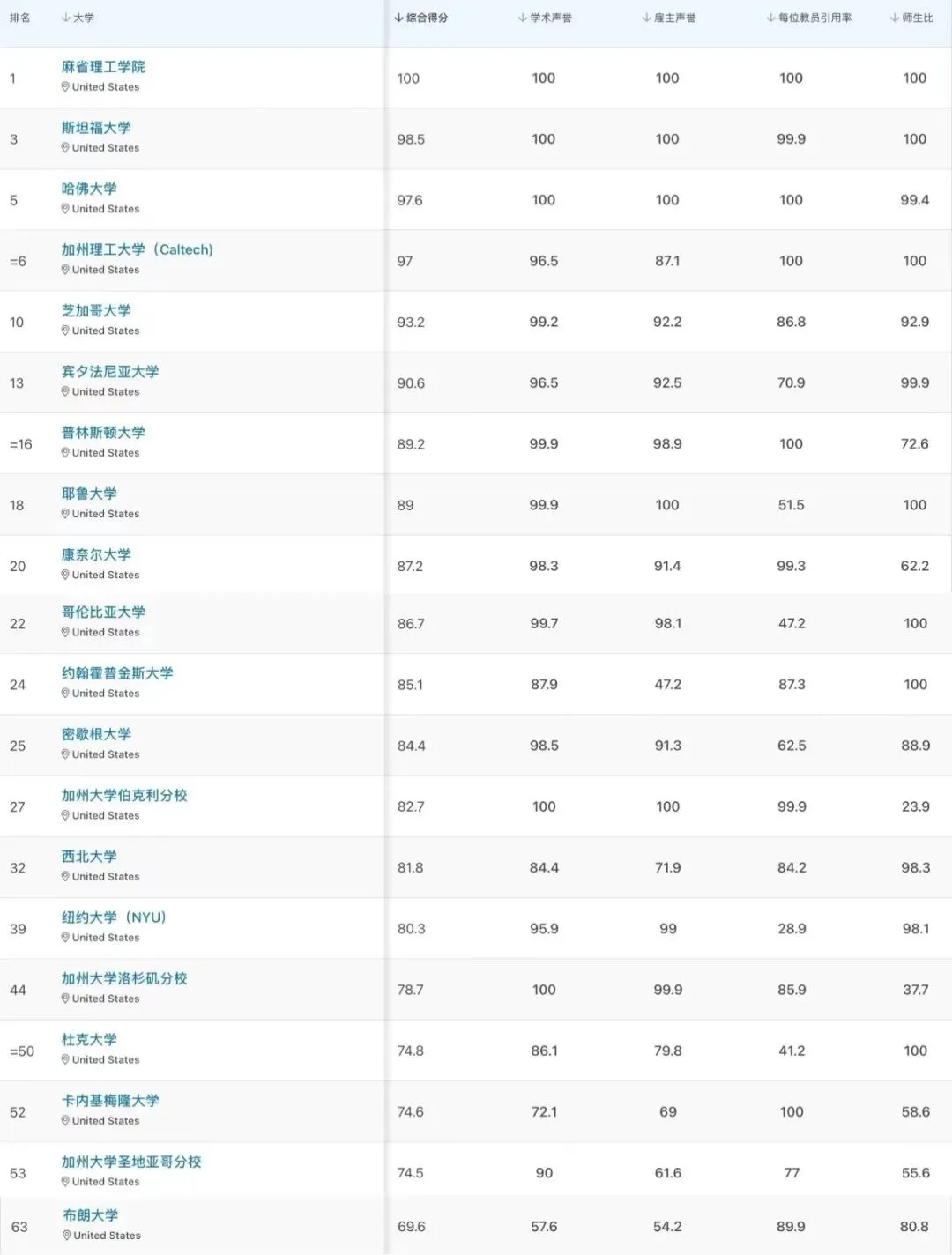
2023 US University Rankings Top 20
Although US universities still occupy half the list, their overall rankings have declined somewhat compared to last year.
Caltech slipped out of the top five for the second time since 2015, and Columbia University fell out of the top 20, landing at 22nd this time.
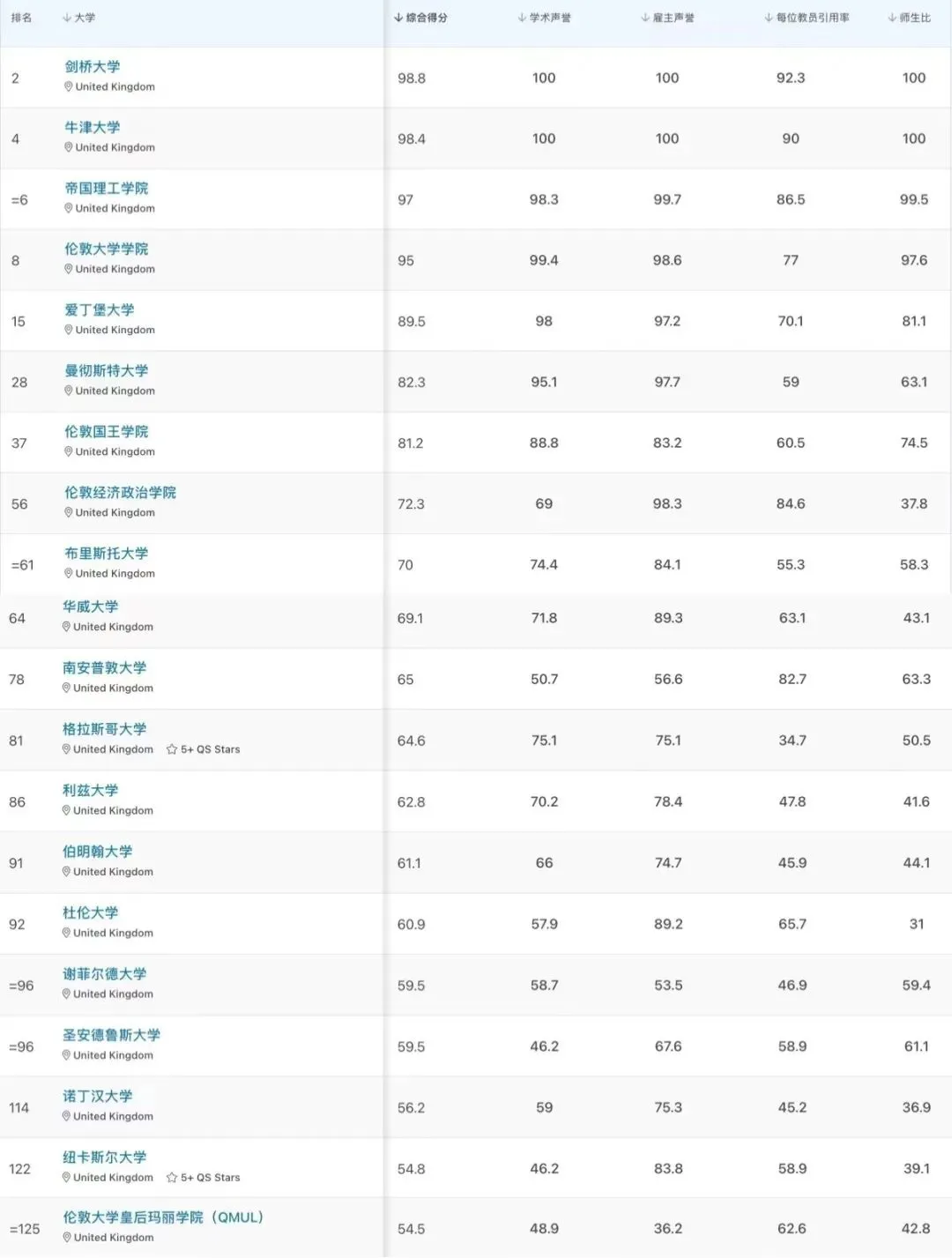
2023 UK University Rankings Top 20
Among UK institutions, 17 made it into the top 100, the same number as last year. Four entered the top 10, five made the top 20, and 28 improved their ranking compared to last year.
This is also the first time since 2016 that the University of Cambridge has risen to second place globally—a great achievement!
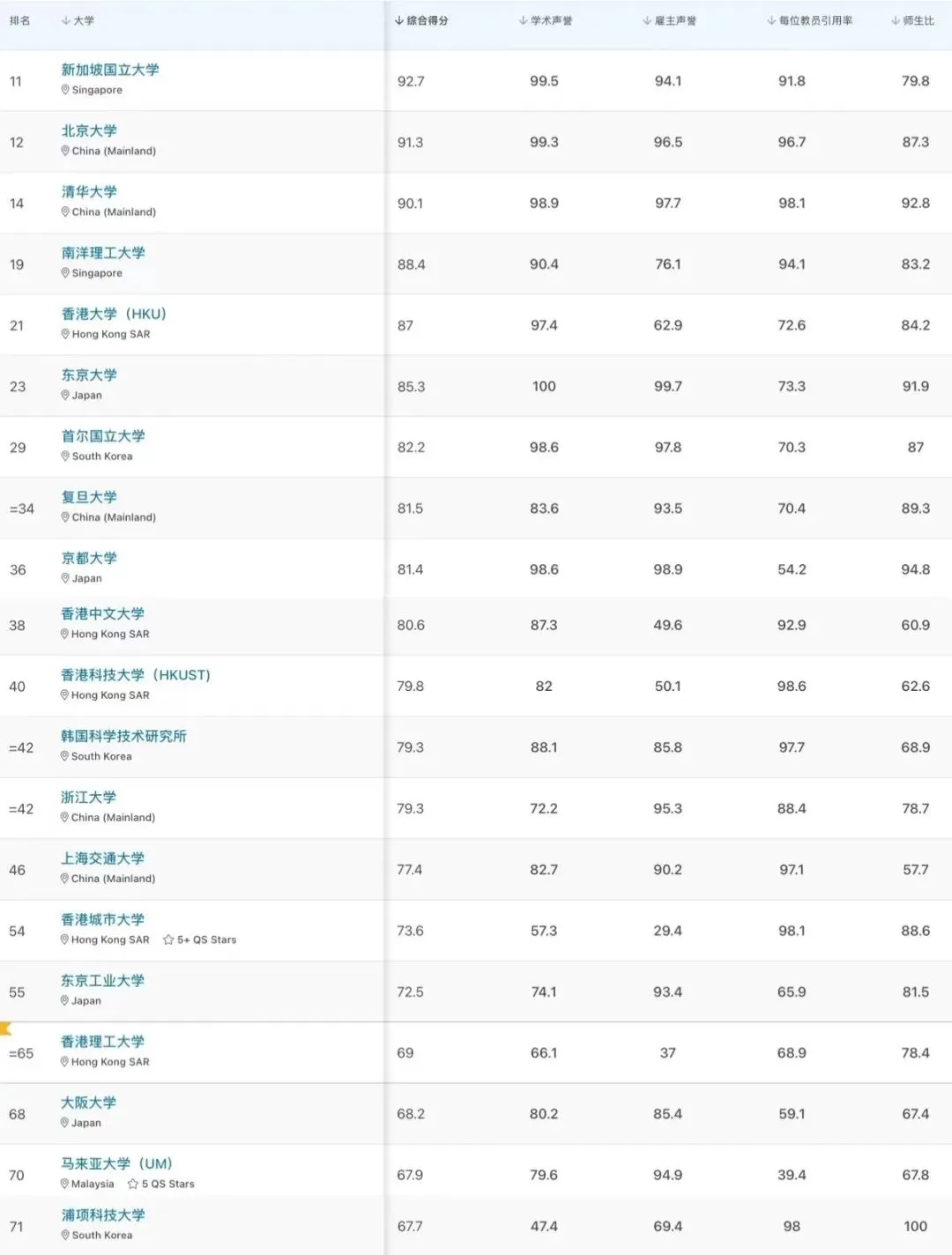
2023 Asian University Rankings Top 20
Asian universities also performed impressively this time, especially those from mainland China.
According to QS, mainland Chinese institutions—particularly Peking University and Tsinghua University—saw significant improvements in the "research influence" and "faculty/student ratio" indicators, which are key reasons for their sharp rises in the rankings.
To view the complete 2023 World University Rankings, please visit the QS official website or the CheersYou(清柚教育) official website:
https://nlg.cheersyou.com/ranking/world/qs
For students considering multi-country applications, this latest QS World University Ranking can serve as a reference to help identify institutions of interest during the school selection process.
Of course, rankings are for reference only. They should not be the sole basis for university applications.
When choosing target universities, it is important to view all types of rankings rationally and consider your own background and various personal needs to make a more reasonable and personalized choice.