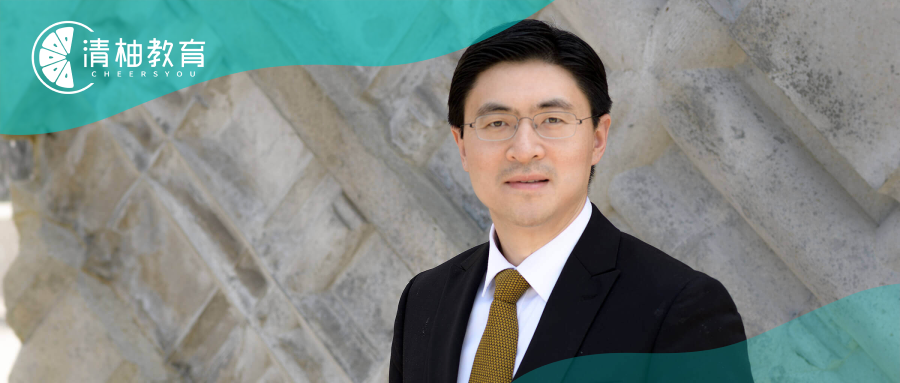
Purdue University is set to welcome its first Chinese-American president!
On June 10, Purdue University's Board of Trustees announced the appointment of 45-year-old Chinese-American scientist Mung Chiang as the university's next president.
Dr. Chiang becomes the university's first Chinese-American president and the second to be appointed from within the institution.
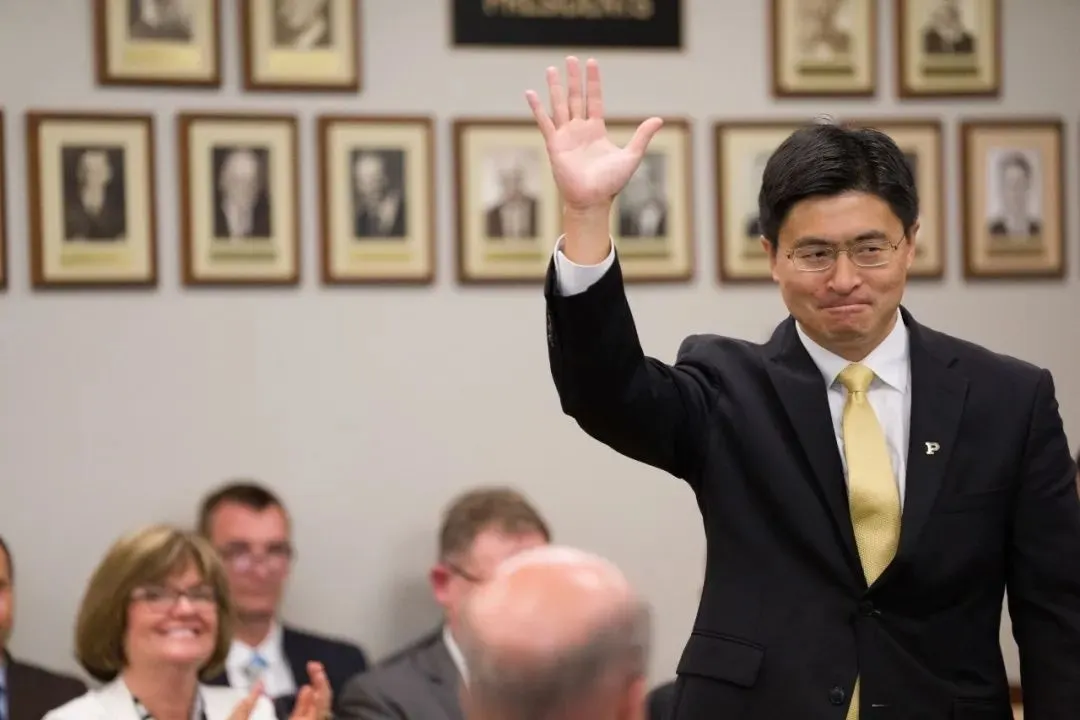
Purdue's First Chinese-American President
Chiang has served as the John A. Edwardson Dean of the College of Engineering since 2017 and as Executive Vice President for Strategic Initiatives since April 2021.
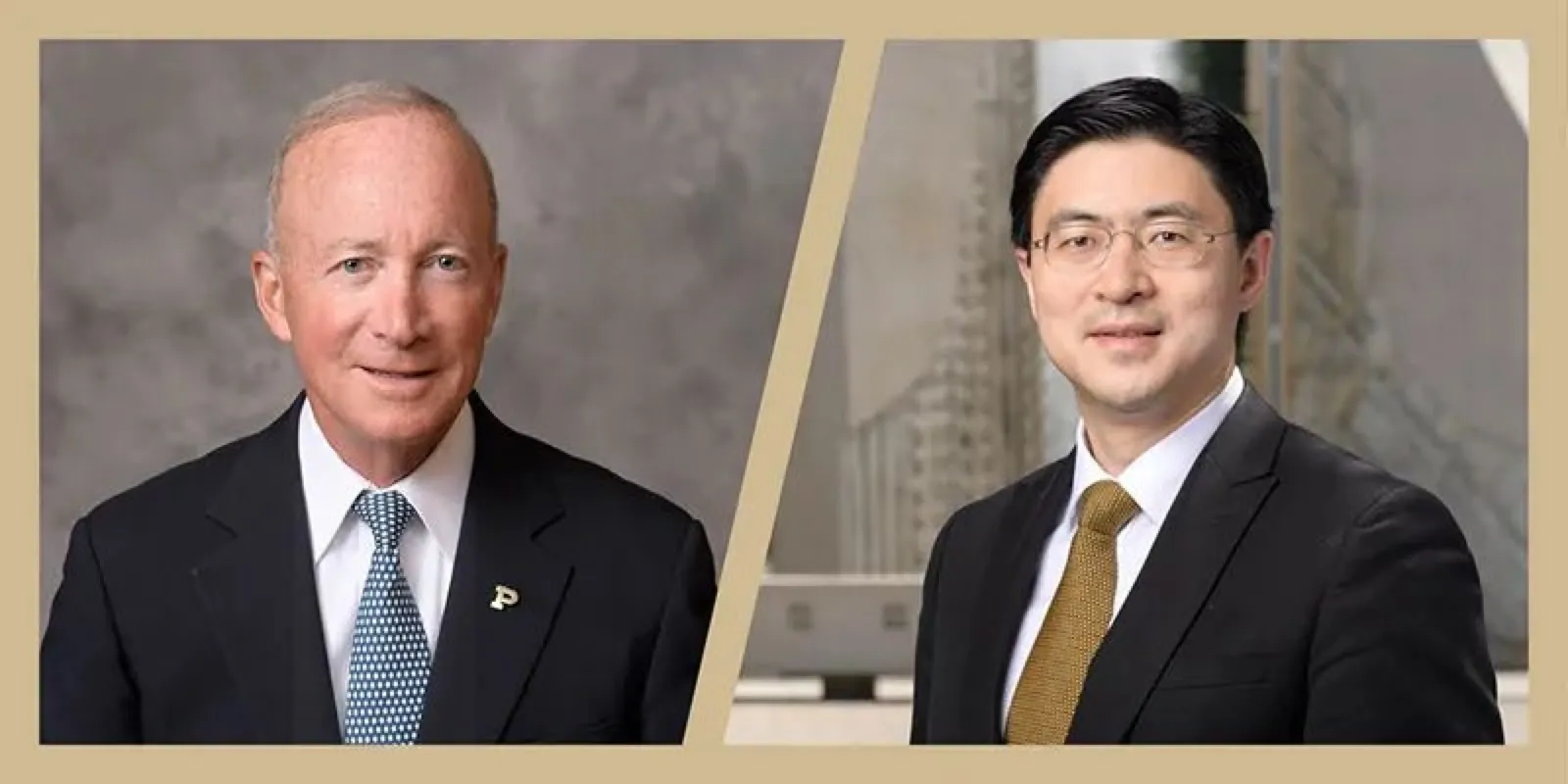
He will succeed current President Mitch Daniels as Purdue's 13th president, effective January 2023.
He had been courted by several American universities but declined all invitations, choosing to remain at Purdue.
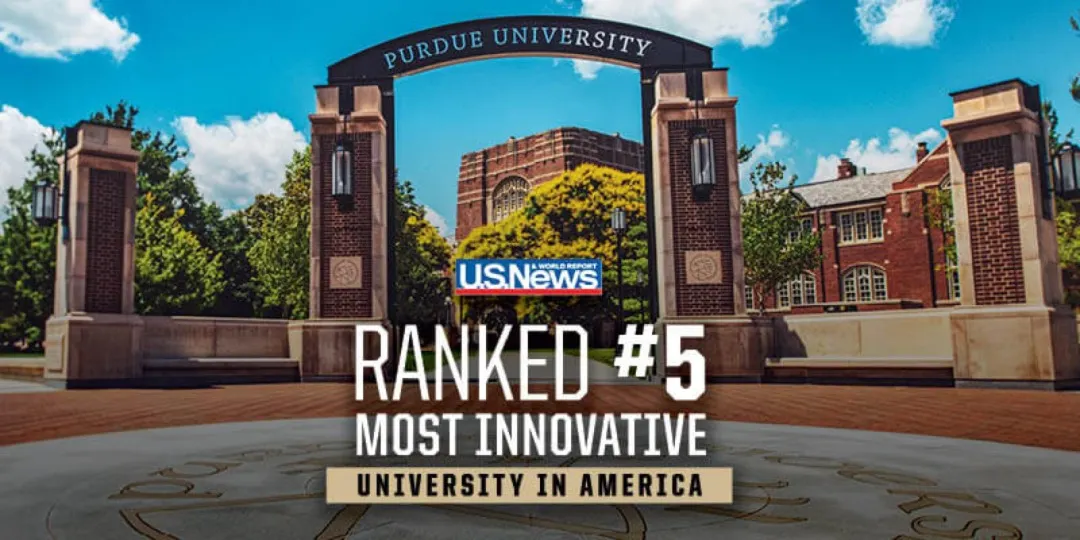
During his five years at Purdue, Chiang led the university to its highest-ever rankings, significantly improving both undergraduate and graduate programs. Purdue now ranks No. 4 in graduate programs, No. 3 in online offerings, and No. 10 in undergraduate education, with the largest undergraduate enrollment among the top 10. Government and corporate research funding reached record highs, and 12 national research centers are headquartered at Purdue.
Chiang also played a central role in forging partnerships with federal agencies including national security and economic development departments, and successfully attracted corporate investment and recruitment to Purdue's Discovery Park. In 2020, he served as a science and technology advisor to the U.S. Secretary of State.
Board Chair Michael Berghoff stated, "Mung Chiang is the ideal candidate to lead Purdue's next 'giant leap.' He combines outstanding academic credentials with managerial acumen and a proven ability to build partnerships with academia, government, and business. He possesses all the talent and experience needed to drive Purdue further forward. We are grateful for his loyalty in choosing to stay despite interest from other institutions."
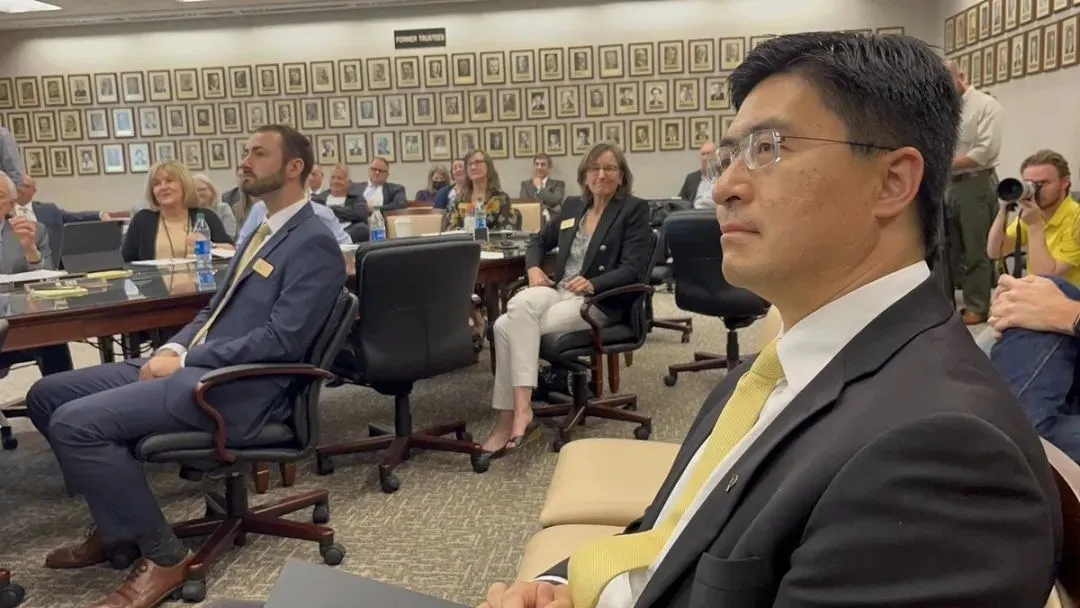
Mung Chiang's Elite Path
Chiang was born in Tianjin in 1977, attended Hong Kong's Queen's College for secondary school, and entered Stanford University in 1995. He earned a B.S. in Electrical Engineering and Mathematics with honors in 1999, an M.S. in Electrical Engineering in 2000, and a Ph.D. in 2003, all from Stanford.
In 2004, at just 27, he became an assistant professor at Princeton University; he was promoted to tenured associate professor in 2008 and became the Arthur LeGrand Doty Professor of Electrical Engineering in 2013, one of Princeton's youngest endowed professors. In 2017, at age 40, he became Dean of Engineering at Purdue, one of the youngest leaders in top U.S. universities. On January 1, 2023, he will officially assume the presidency.
Chiang received the Alan T. Waterman Award in 2013, recognizing him as the top scientist under 40 in frontier computing, internet, cloud computing, and video research. His papers have been cited over 30,000 times with an H-index of 81. He has also mentored over 50 doctoral and postdoctoral researchers, 24 of whom have become faculty at U.S. research universities.
Beyond academia, Chiang is an accomplished entrepreneur. He served as the first chair of Princeton's Entrepreneurship Council, holds 25 patents, founded three companies, and was named New Jersey CEO of the Year in 2014.
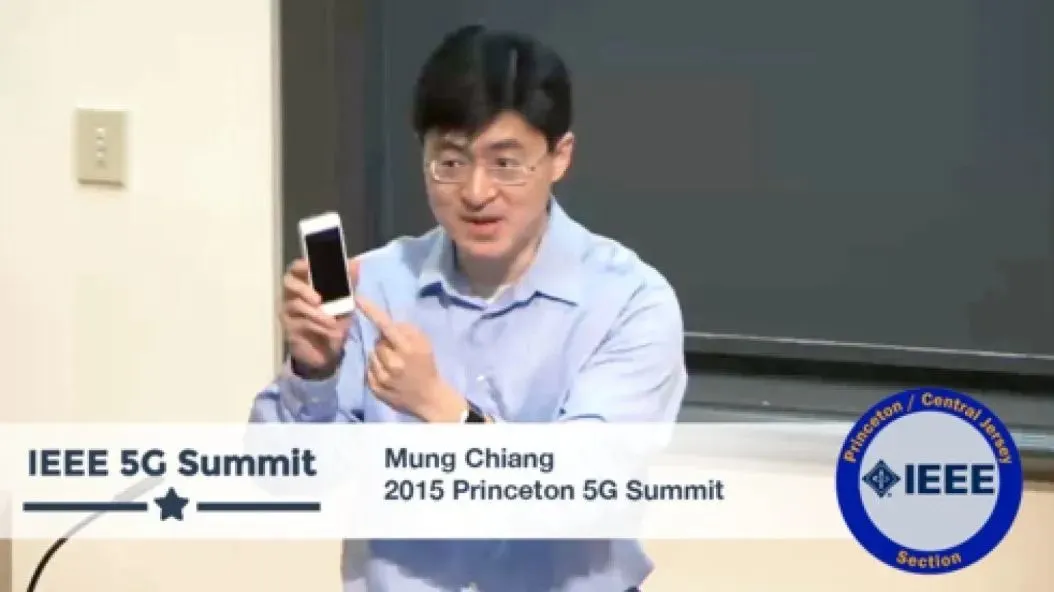
On his upcoming presidency, Chiang said, "This is the highest and most humbling honor. Universities must remain a sanctuary for all who pursue knowledge and love exploration, and I am proud to contribute."
Chinese-American Leaders at U.S. Universities
Mung Chiang is undoubtedly an outstanding Chinese-American leader, and we can expect more to step onto the world stage. This represents both hope and legacy.
Columbia's First Chinese-American Vice President: Jeannette Wing
Last year, Columbia University welcomed its first Chinese-American female vice president in its century-long history — Jeannette Wing.
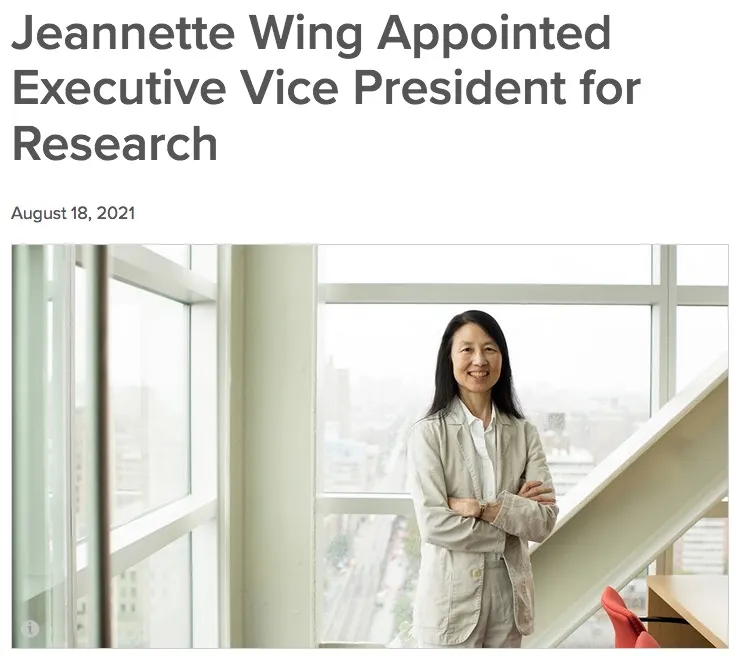
An acclaimed Chinese-American computer scientist, Wing earned her bachelor's, master's, and Ph.D. from MIT, studying under Turing Award winner Ronald Rivest. From 1983 to 2012, she taught at the University of Southern California and Carnegie Mellon University, where she also served as head of the Computer Science Department. She later served as corporate vice president at Microsoft.
In 2017, she joined Columbia as a professor of computer science. In September 2021, she formally assumed the role of Executive Vice President for Research, overseeing research across the New York campus and global affiliates.
Wing was named an IEEE Fellow in 2003, and with a career spanning academia and industry, she is a powerful advocate for computational thinking.
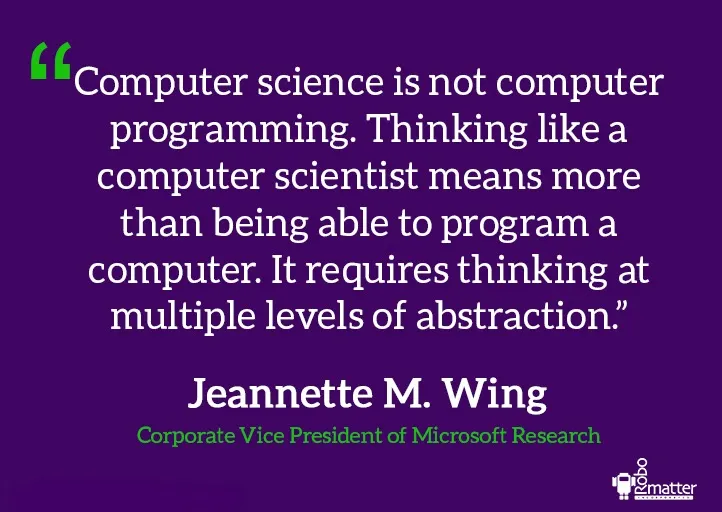
Challenging stereotypes of Asian prodigies, Wing is a multitalented scientist with wide-ranging interests. Nicknamed "Dragon Lady," she is a Chinese martial arts enthusiast and is accomplished in ballet, tango, modern dance, jazz dance, and tap.
Carnegie Mellon President Jared L. Cohon once noted, "Jeannette Wing is one of the most innovative and original computer scientists in the world today. She has made significant contributions in research, teaching, and administration."
America's First Chinese-American University President: Chia-Wei Woo
When discussing breaking the "glass ceiling," one must mention the first Chinese-American university president in U.S. history: Chia-Wei Woo.
In 1983, at age 45, Woo became president of San Francisco State University, making him the first Chinese-American to lead an American university.
He earned a B.S. in Physics and Mathematics from Georgetown University, followed by an M.S. and Ph.D. in Physics from Washington University in St. Louis, and a postdoctoral fellowship at UCSD. He taught at Northwestern University and the University of Illinois before becoming the founding president of the Hong Kong University of Science and Technology in 1988.
Woo made outstanding contributions in quantum many-body theory, statistical mechanics, liquid crystals, low-temperature physics, and surface physics.
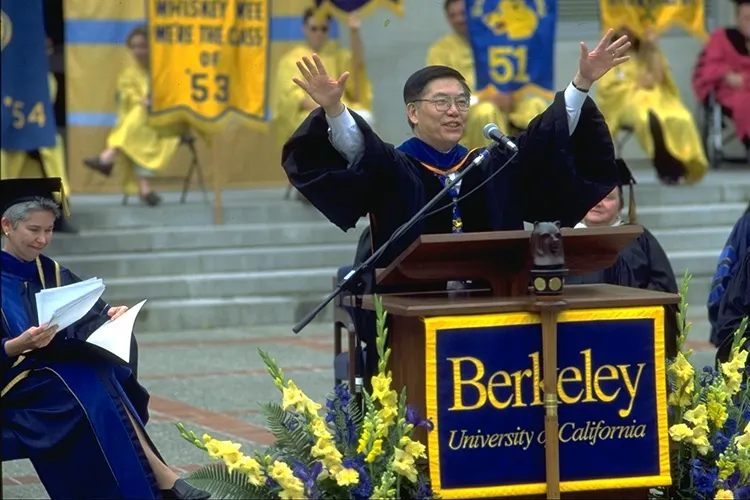
UC Berkeley's First Chinese-American Chancellor: Chang-Lin Tien
In 1990, Chang-Lin Tien became the first Chinese-American chancellor in the history of the University of California, Berkeley.
Tien earned his M.S. and Ph.D. in Mechanical Engineering from the University of Louisville, and later an M.A. and Ph.D. in Mechanical Engineering from Princeton University.
He joined UC Berkeley as an assistant professor of mechanical engineering at 24, became its youngest professor at 26, and received the Distinguished Teaching Award. At 40, he was elected to the National Academy of Engineering, and at 55, he assumed the chancellorship — a milestone in American education history.
He never forgot his personal resolve to break racial barriers, and his leadership propelled UC Berkeley to the top spot among U.S. public universities. President Bill Clinton once called him "a worthy leader and mentor."
In fact, it's not only Chinese-American leaders who are shattering glass ceilings at American universities; an increasing number of Chinese students are also stepping into the spotlight, with many speaking at this year's commencement ceremonies.
Chinese Student Speakers at Commencement
Brown University: Jiuyang Bai
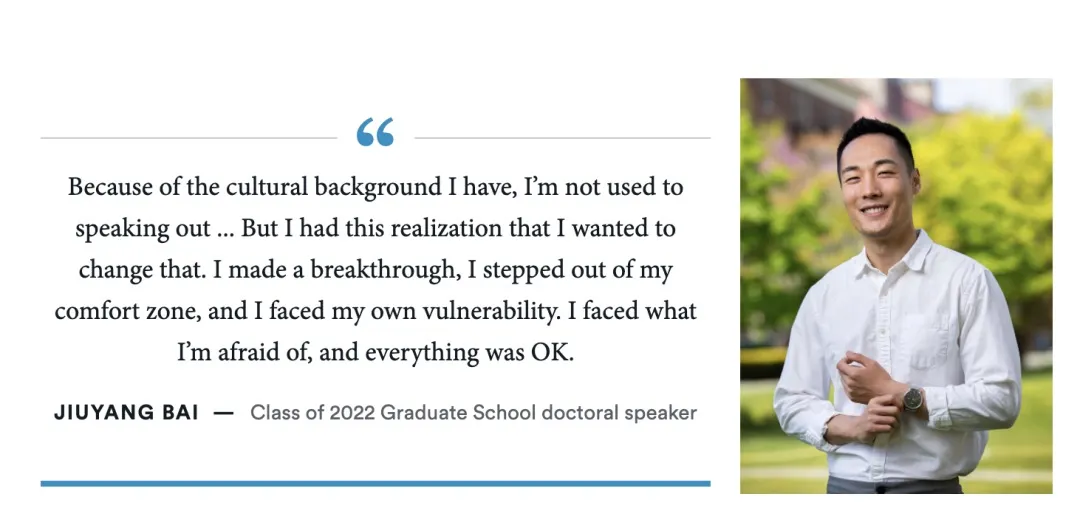
This year, Chinese student Jiuyang Bai delivered the commencement speech at Brown University, breaking a tradition over 200 years old.
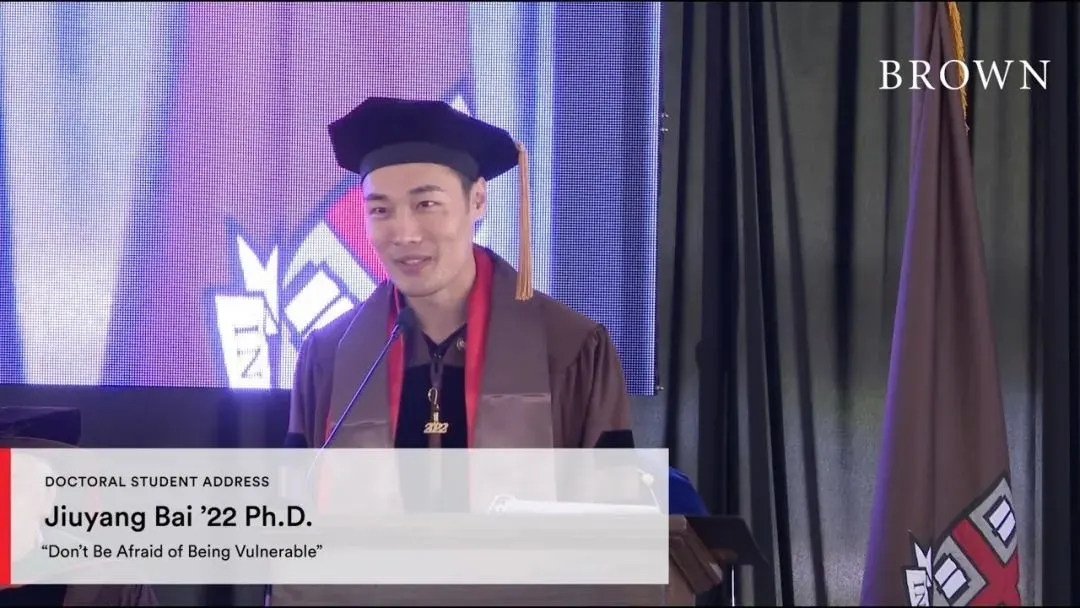
He earned his bachelor's in Psychology from Zhengzhou University, followed by a master's in Cognitive and Behavioral Sciences from Illinois State University, and a Ph.D. in Cognitive Science from Brown. His deep commitment to the field led him to the podium at Brown.
His speech was titled "Don't Be Afraid of Being Vulnerable": embrace vulnerability, and you will ultimately find strength.
After graduation, Bai will head to Seattle to continue his research at Meta, working on assistive technologies such as smart wheelchairs and sensory substitution devices.
American Film Institute: Vanessa Kong Leqi
At this year's American Film Institute (AFI) commencement, as the first Chinese international student to take the stage, Vanessa wowed the audience with her confidence and wit, shattering stereotypes of inarticulate Asians.
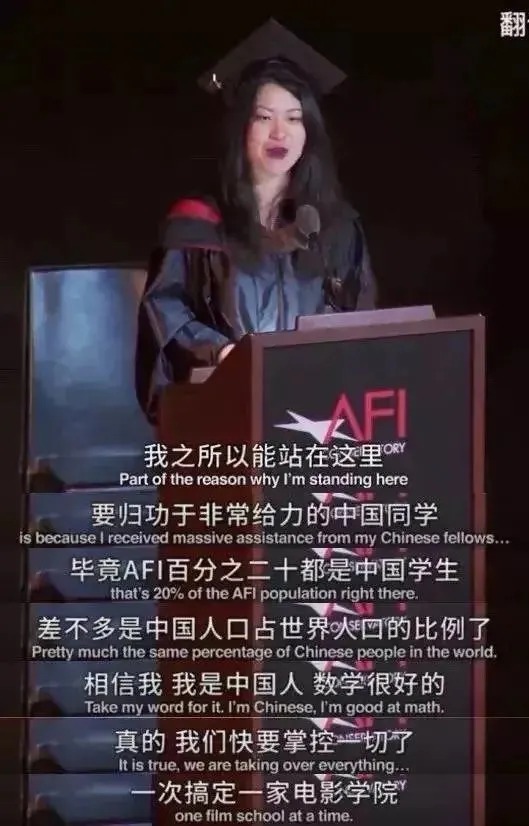
In 2019, AFI swept the narrative category of the Student Academy Awards; Vanessa was the screenwriter for one of the winning films, THE CHEF.

Harvard University: He Jiang
As early as 2016, Harvard University welcomed its first Chinese speaker at commencement — He Jiang, a doctoral student in biochemistry from a rural Hunan village.
He recounted a childhood story of being bitten by a poisonous spider: due to scarce medical resources, his mother could only treat the wound with fire, an unforgettable pain. Such disparities make scientific innovation more crucial than ever. That sense of mission drove him forward.
After Harvard, he continued as a postdoctoral researcher at MIT, studying hepatitis viruses, malaria, and early cancer detection. He hopes to contribute to global healthcare.
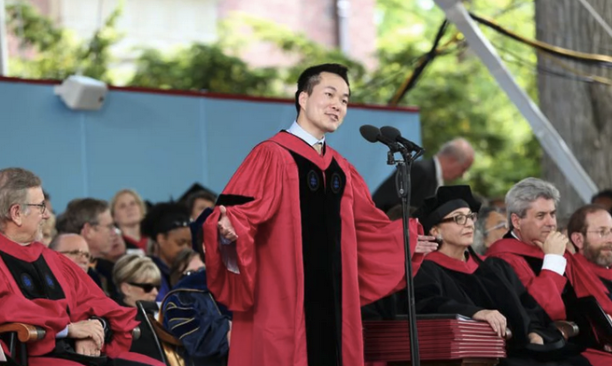
Whether Chinese-Americans leading top universities or Chinese international students becoming commencement speakers, the world is witnessing outstanding Chinese leadership and hearing their voices. Breaking the ceiling, anything is possible.
As the influence of Chinese individuals in academia and education grows, more Chinese students and faculty will shine on the global stage.