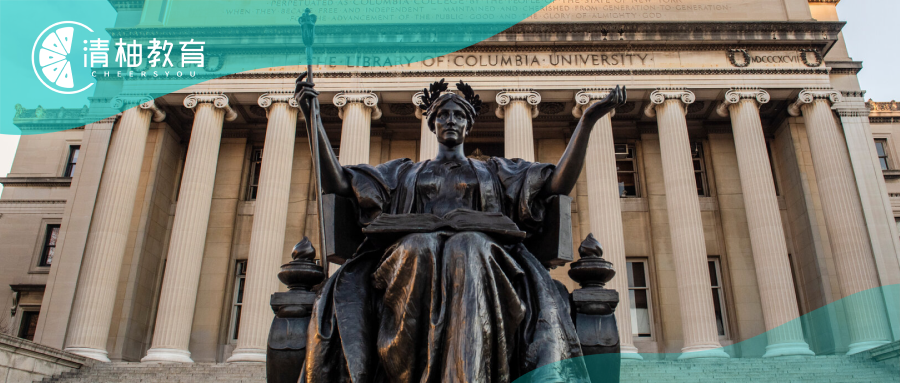
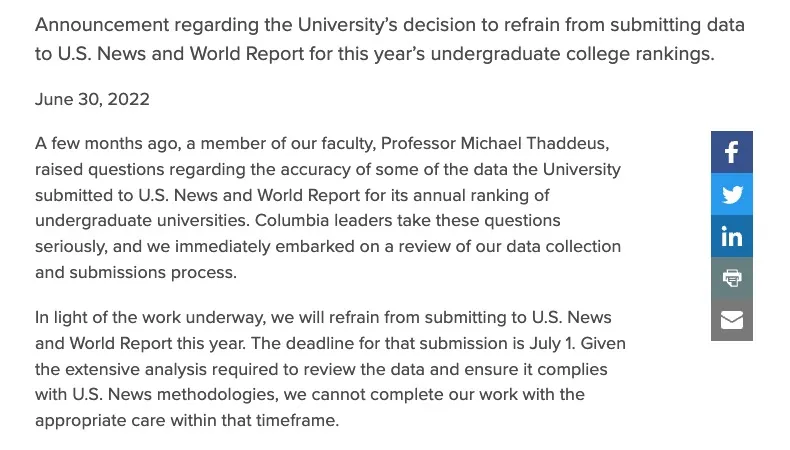
Just now, Columbia University officially announced that it will withdraw from the next, 2023, U.S. News rankings and will not submit any data to them.
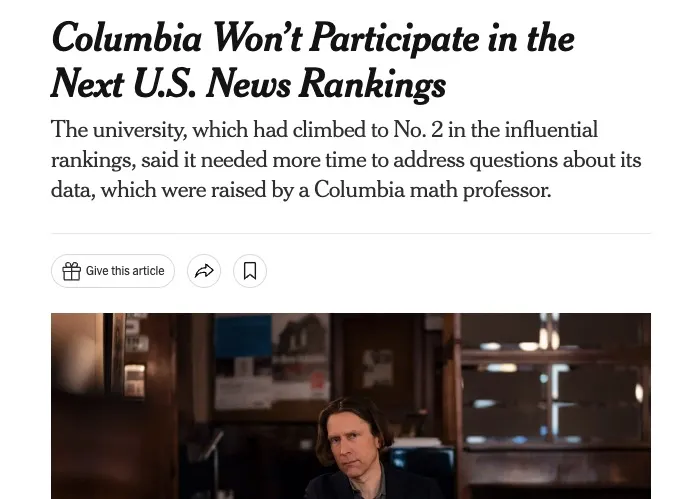
Columbia University Provost Mary Boyce stated that a few months ago, our faculty raised questions about the accuracy of Columbia's ranking data. This prompted the leadership to take these issues seriously and immediately begin reviewing the data collection and submission process.
The deadline for U.S. News data submission is July 1. Given the extensive analysis required for the current data review and to ensure compliance with U.S. News ranking methodologies, Boyce expressed that Columbia unfortunately cannot complete the data submission for participation in the rankings this year.
As soon as this news broke, netizens around the world once again started grabbing popcorn.
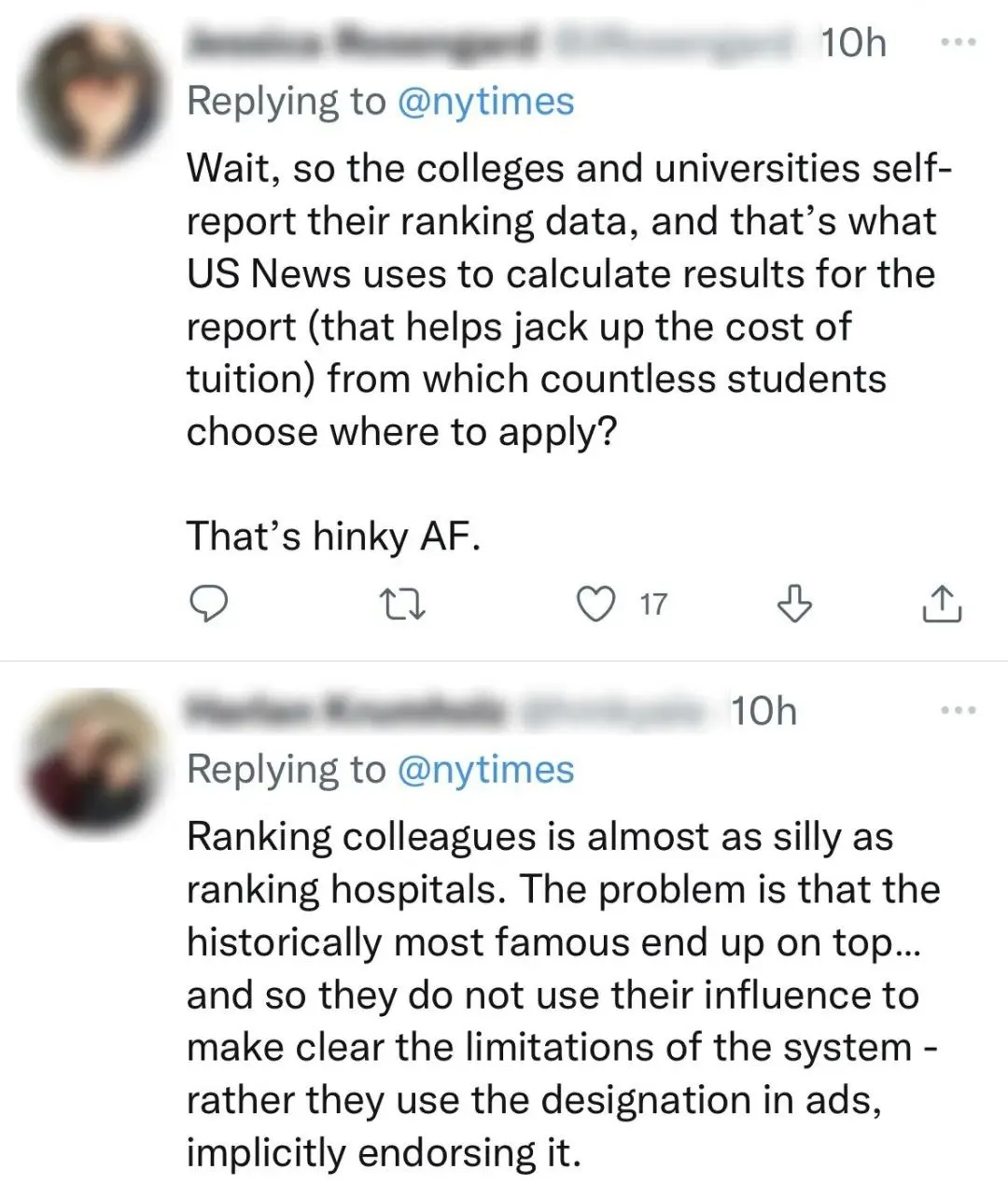

Low emotional intelligence: All rankings are bubbles!
High emotional intelligence: My university's ranking just got +1!
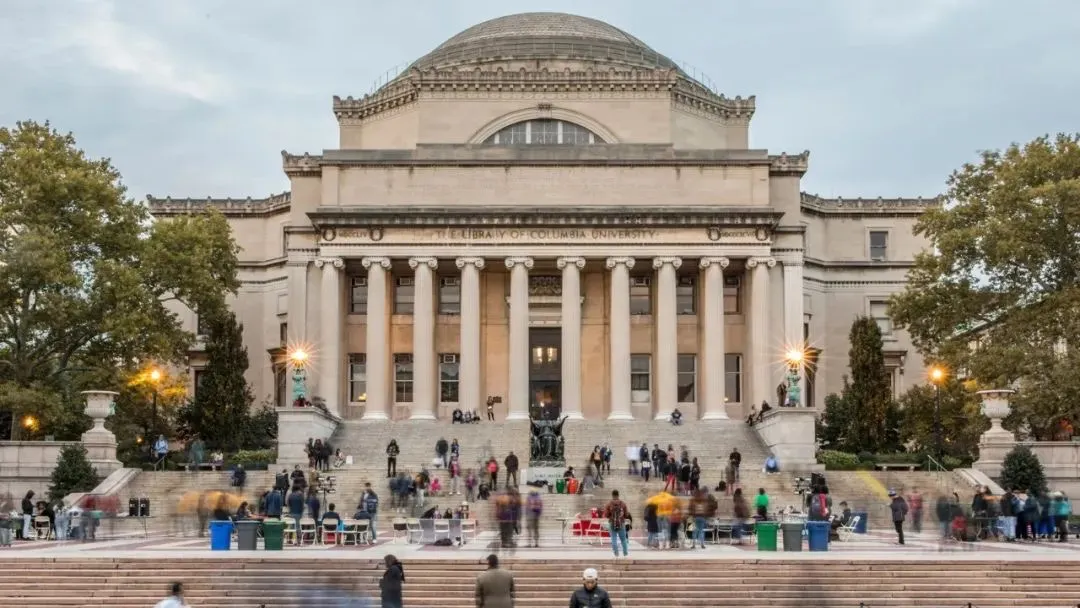
Though Columbia's Ivy League aura still shines brightly and its prestige won't be much affected, this ranking episode has still drawn some unnecessary awkward buzz.
Columbia Professor's 10,000-Word Report Alleges Ranking Fraud
The trigger for Columbia's withdrawal from the U.S. News rankings can be traced back to a ranking scandal that erupted this February.
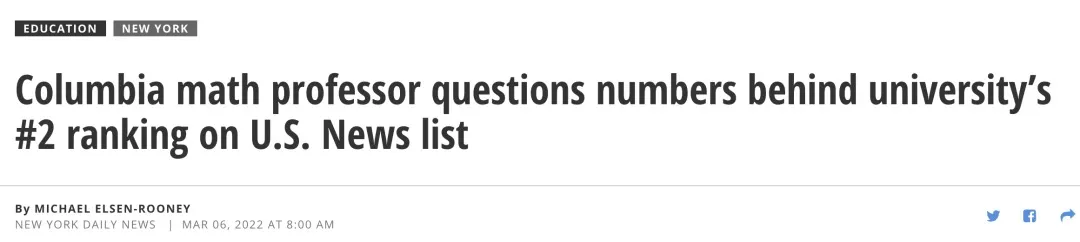
This Columbia ranking scandal was triggered by a professor's act of "honorable whistleblowing"...
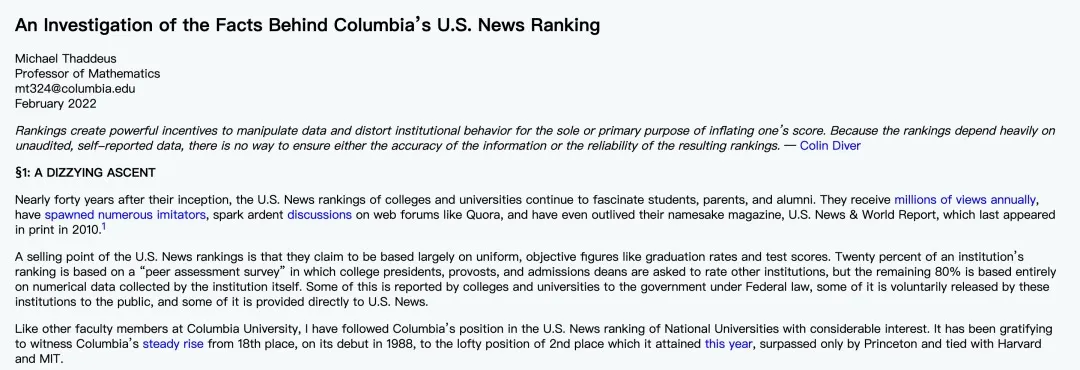
Michael Thaddeus, a mathematics professor at Columbia University, published a lengthy report of tens of thousands of words a few weeks ago, directly accusing the Columbia administration of providing false data to boost its ranking.
Keep in mind that in 1988, Columbia was ranked 18th, but by 2022 it had jumped to second in the nation, tied with Harvard University and the Massachusetts Institute of Technology.
In reality, Columbia's endowment size falls far short compared to the other top-five schools (Harvard, Stanford, MIT, Yale, and Princeton), which have endowments roughly two to four times larger.
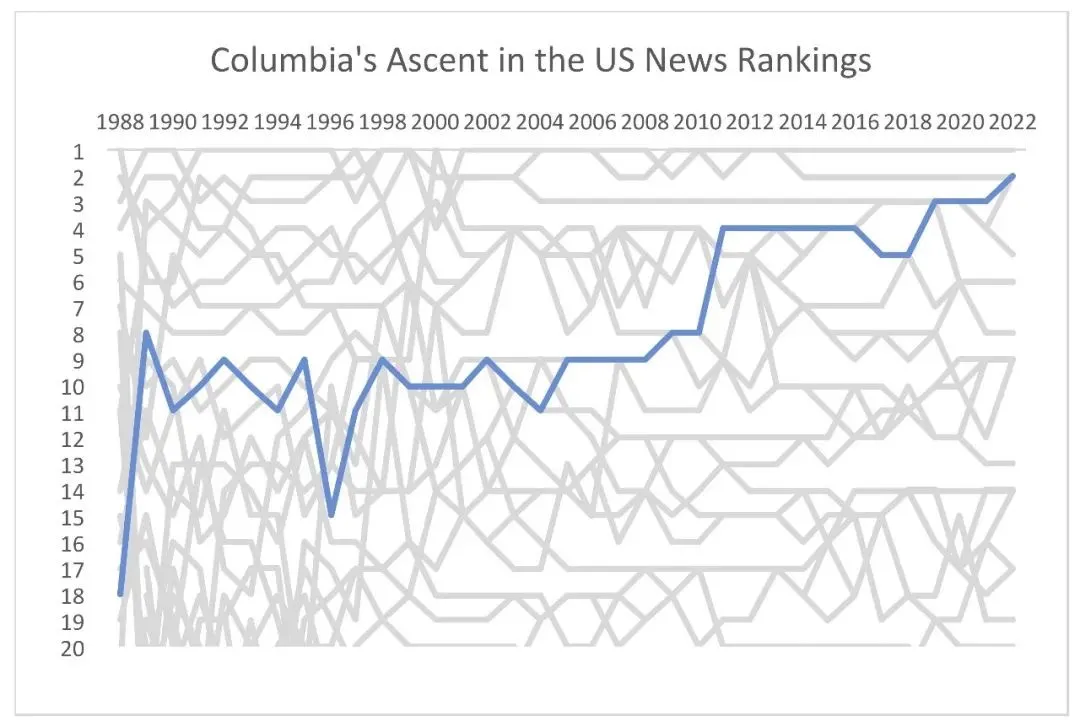
In addition, Professor Thaddeus listed six areas of data manipulation, including undergraduate class size, percentage of full-time faculty with doctorates, student-faculty ratio, research output, instructional spending, and other ranking factors.
He concluded in the report that "several key numbers supporting Columbia's high ranking are inaccurate, dubious, or highly misleading."

Class Size Allegedly Falsified
Among the data, Columbia reported to U.S. News that 82.5% of its classes had fewer than 20 students, a figure higher than any school in the U.S. News top 100.
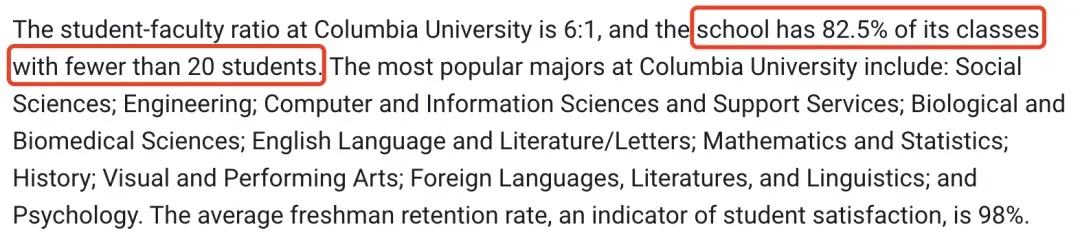
According to Professor Thaddeus's investigation of Columbia's course registration information, from Fall 2019 to Fall 2022, only about 63% to 67% of courses had fewer than 20 students, significantly different from what Columbia officially submitted to U.S. News.
Thaddeus also found that approximately 10.6% to 12.4% of classes had over 50 students, while Columbia's submitted figure for this metric was only 8.9%.
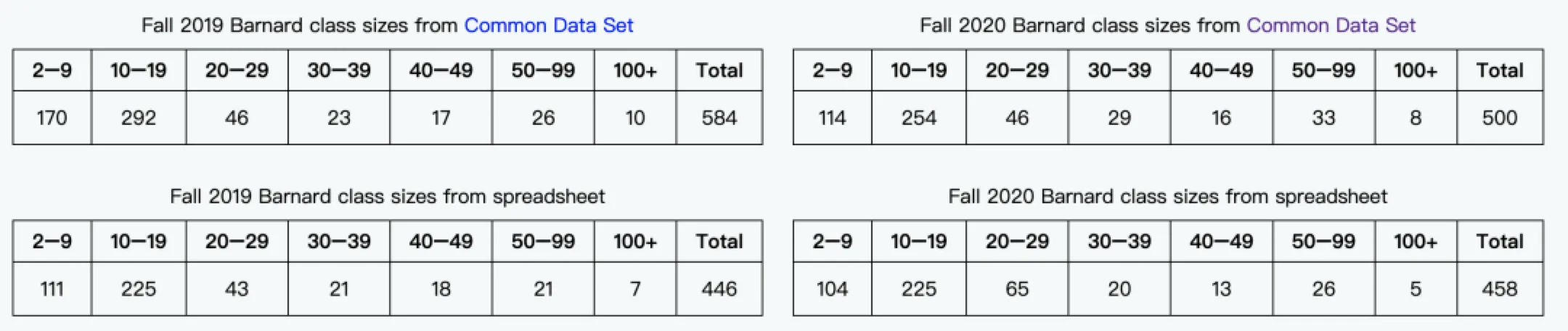
In response to this data point, Columbia officials initially argued that enrollment numbers in the online course catalog were not verified by course registration administrators and might deviate from officially counted figures.
Instructional Spending Allegedly Falsified
Another data point that aroused Thaddeus's suspicion was Columbia's reported instructional spending.
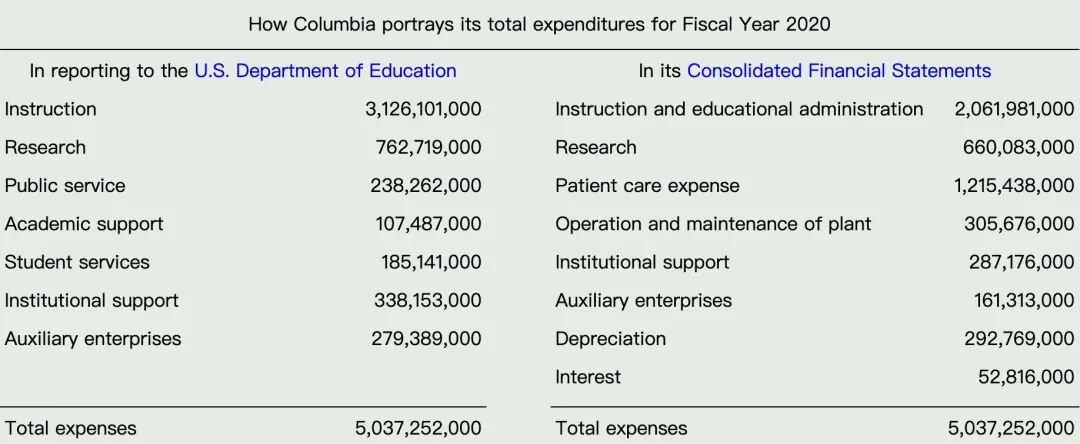
The Columbia administration claimed that in the 2019–2020 academic year, instructional spending reached a staggering $3.1 billion, a sum larger than the combined instructional expenditures of Harvard, Yale, and Princeton.
By reviewing the school's financial records, Thaddeus discovered that Columbia's $3.1 billion in "instructional spending" included patient care costs at its hospital. In fact, other universities, including New York University, explicitly exclude patient care costs from instructional spending.
Columbia officials responded that patient care costs are indeed included in Columbia's instructional spending because medical faculty may also provide training and guidance to students while delivering services, and costs generated by non-medical faculty were not counted in the ranking data.
Authority Rankings Need to Be Challenged
Of course, Professor Thaddeus acknowledged that his analysis is not foolproof. While calling for an independent investigation of Columbia's data, he also pointed out that U.S. News bears some responsibility for the questionable data and rankings submitted by Columbia.
If even the second-ranked university in the country has unclear and inaccurate data, it's easy to question the truthfulness and reliability of the entire ranking system.
He considers the whole concept of college rankings a "disastrous idea" because everyone needs "something different," and hopes to challenge the so-called "authority" of rankings.
At the end of this drama, Columbia chose to withdraw from the rankings, conduct a careful review, emphasize integrity, and will release a common data set this fall for students and parents to consult.
University Ranking "Data Fraud" Is Nothing New
In fact, U.S. News is not encountering "false data" scandals for the first time, and Columbia is not the first U.S. university caught fudging data.
UC Berkeley Ousted for Ranking Data Fraud
In 2019, U.S. News issued a statement that five U.S. universities, including the University of California, Berkeley, acknowledged misreporting data used to calculate the 2019 Best Colleges rankings.
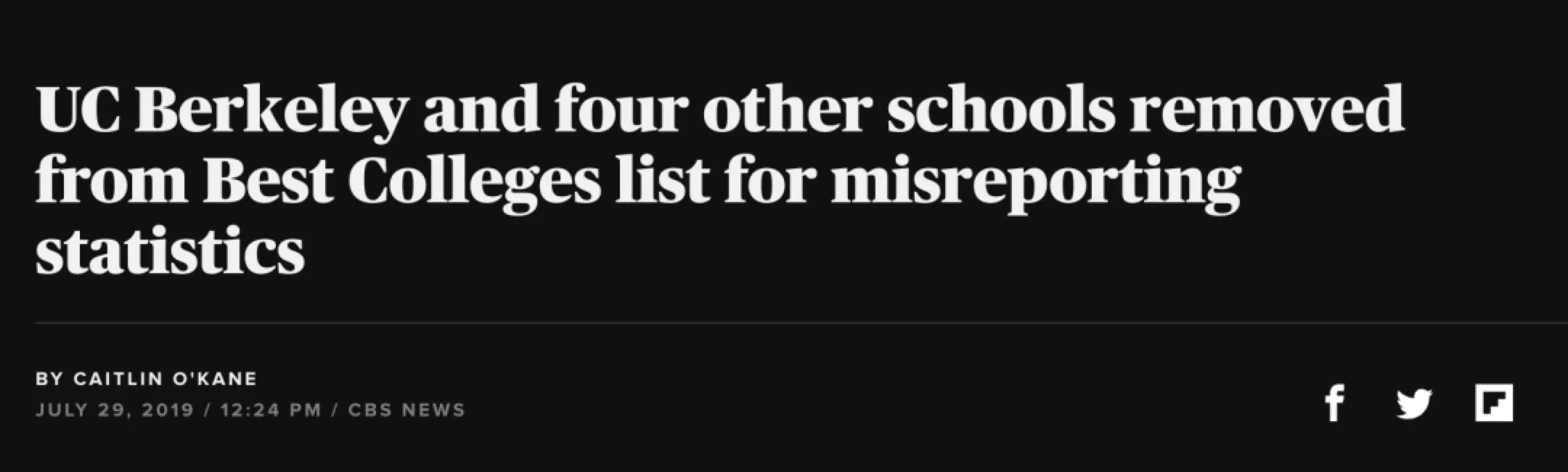
U.S. News noted that Berkeley originally submitted an alumni giving rate of 11.6% for 2016 and 2017 but later revised it to 7.9%. Berkeley officials quibbled that the 11.6% figure included "alumni pledges," but U.S. News had clearly stipulated that "pledges" should not be counted.
In the end, U.S. News removed these five universities from the 2019 Best Colleges rankings.
Emory University Misreported Data for at Least a Decade
In 2012, an internal investigation at Emory University found that staff and administrators had intentionally misreported data for at least a decade, submitting SAT/ACT scores, class rank, and GPA of admitted students as those of enrolled students to obtain more favorable numbers.
These erroneous data were also reported at the time to third parties, including the U.S. Department of Education and U.S. News. Although the investigation later found that the misreporting had little impact on Emory's ranking, the practice was widely condemned.

Top Universities Leading "Fraud" Has Serious Consequences
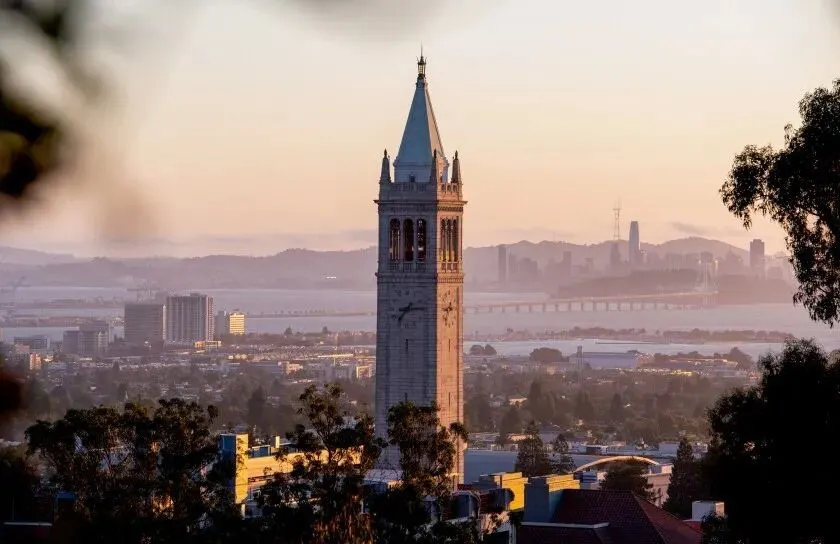
Setting aside data falsification, the University of California, Berkeley, Emory University, and Columbia University are all top-tier institutions that have long been favored by outstanding students and parents worldwide.
Emory is one of the most distinguished top universities in the American South, Berkeley is considered one of the best public universities in the country and even the world, and Columbia is undeniably a prestigious Ivy League school.
Many students and parents wonder: with such a strong reputation, is it necessary to falsify data for rankings? But for universities, there's no ceiling to rankings, and the reasons may not be easily grasped by outsiders.
Moreover, if even top-ranked schools are caught misreporting data to boost rankings, it's hard to imagine that data from other institutions are truly accurate. When the upper beam is crooked, the lower beams will be crooked too—this is perhaps why data fraud by elite universities draws so much attention.
View Rankings Rationally; "Ranking-Only Thinking" Is Misguided
For a long time, authoritative ranking organizations like U.S. News and QS have annually released national or world university rankings, serving as key references for parents and students when choosing schools.
Some domestic companies even stipulate that they only recruit graduates from the world's top 50 universities, leading to frequent "ranking-only" mindsets. However, rankings are merely a reference and cannot prove whether a school is the best fit for you.
Although these rankings synthesize various indicators across different dimensions, cold quantitative numbers alone may not fully showcase a school's true value.

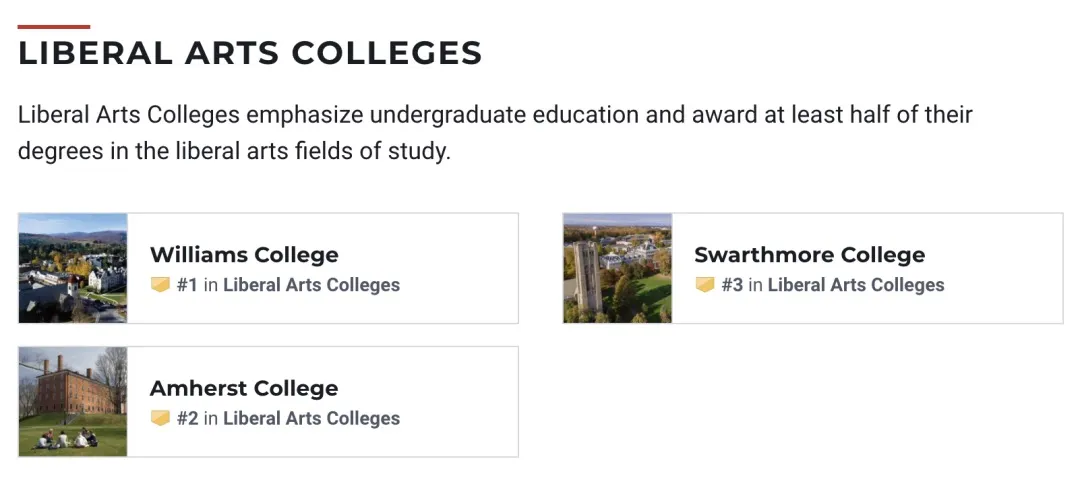
For example, many liberal arts colleges offer far fewer majors or courses than comprehensive universities, so their achievements in certain fields may not be eye-catching, but that doesn't mean the liberal arts college isn't worth attending.
Most public universities have lower tuition and largely rely on state or federal subsidies for daily operations; alumni donations and instructional spending cannot compare with those of private Ivy League institutions.
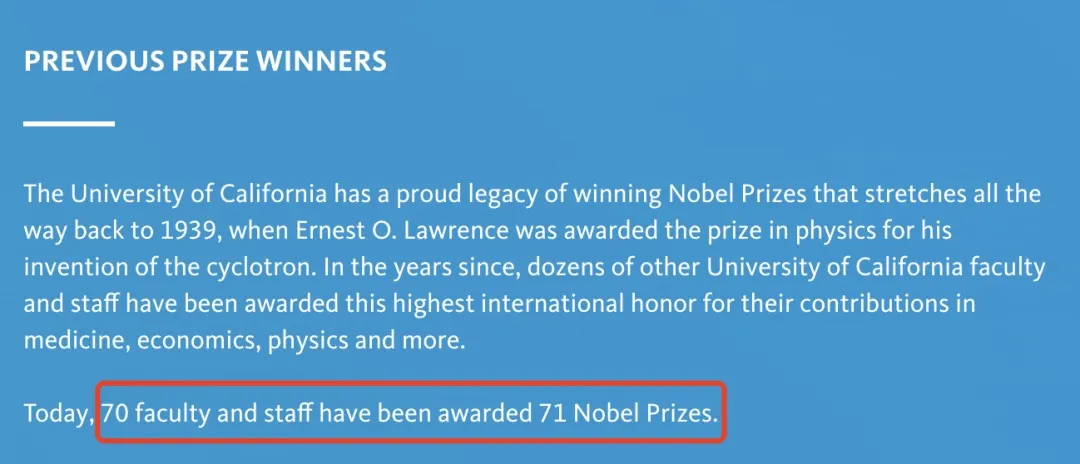
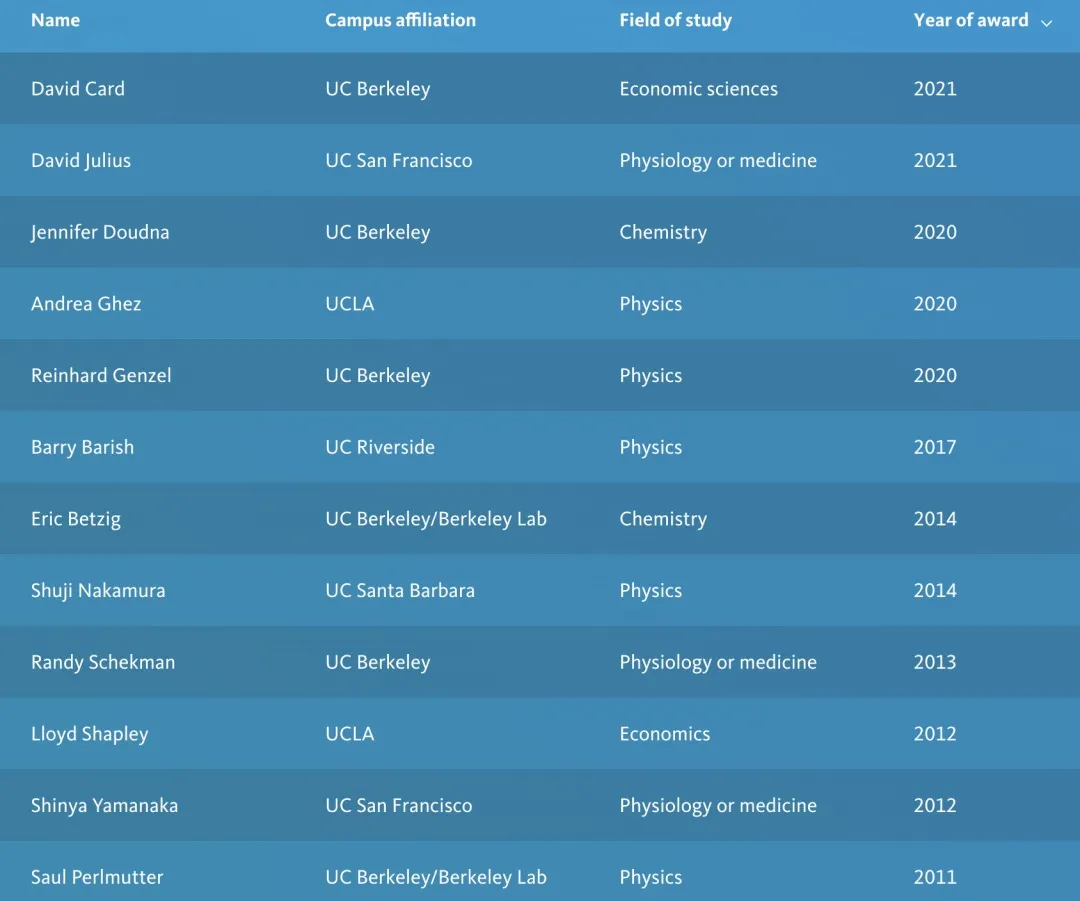
But this does not negate the fact that many public universities boast top-notch faculty and educational resources. For example, the University of California system has produced over 70 Nobel laureates, underscoring its research excellence.
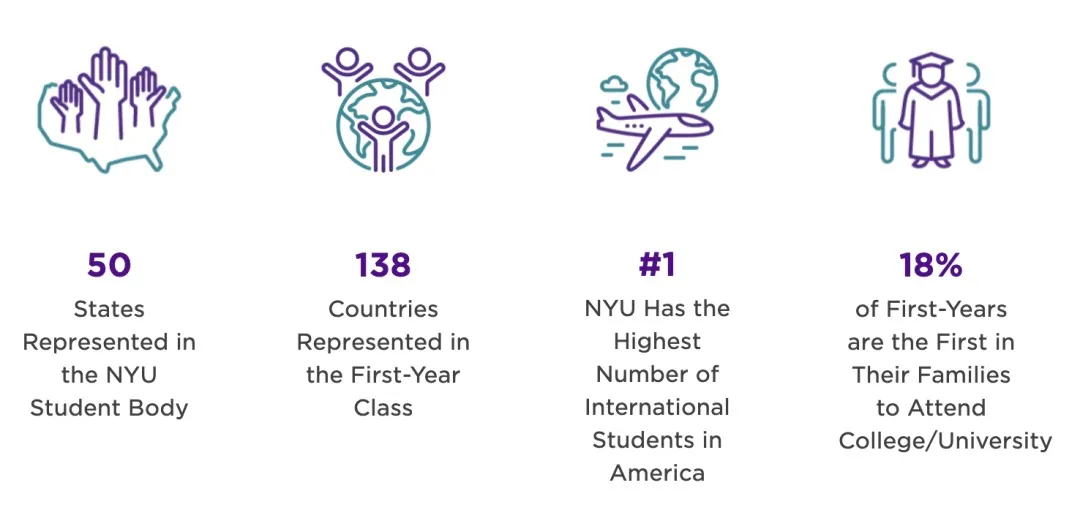
Beyond rankings, factors to consider when applying to study abroad should be more multidimensional and comprehensive, including curriculum, faculty, location, campus atmosphere, international student ratio, and more.
Each student and parent should have their own set of criteria, evaluating schools and majors holistically through what matters most to them, ultimately choosing the one that best fits.
Michael Thaddeus also said that he spent so long investigating Columbia and chose to expose the issue because he believes the ranking system creates unnecessary anxiety and vicious competition, which is clearly not a healthy educational environment.
University rankings themselves come in different dimensions—not just national or global rankings, but also public university rankings, liberal arts college rankings, subject rankings, student satisfaction rankings, and so on.
When consulting rankings for school selection, you can also examine each institution's level in the specific fields you plan to study or are interested in, rather than just blindly following the numbers.
We still hope you won't be overly bound by rankings. Choose the dream school that you truly love and that suits you best—that's what really matters!