The fall semester is approaching, and Canada has recently fully lifted its entry restrictions. I believe students who have received their offers are already making various preparations for the start of school.
Of course, before that, it’s also a good idea to check the back-to-school checklists provided by each university, which can help you start your study abroad life more smoothly.
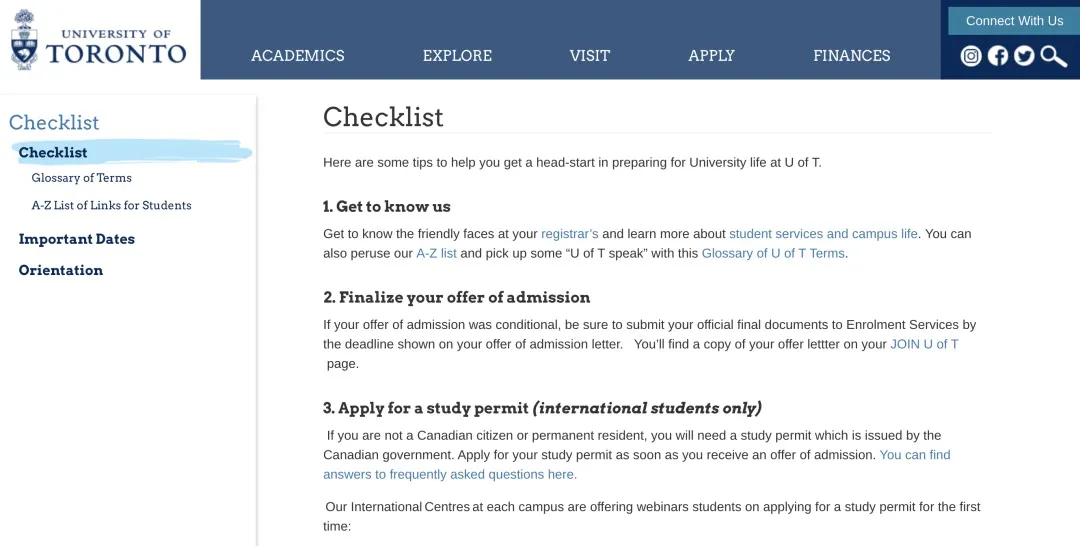
University of Toronto
Key points of UT's new student checklist:
1. Complete the admission offer
2. Apply for a study permit
3. Obtain your TCard, UTORid, and UTmail+ account
4. Sign up for UTAlert emergency notifications
5. Check the library system
……
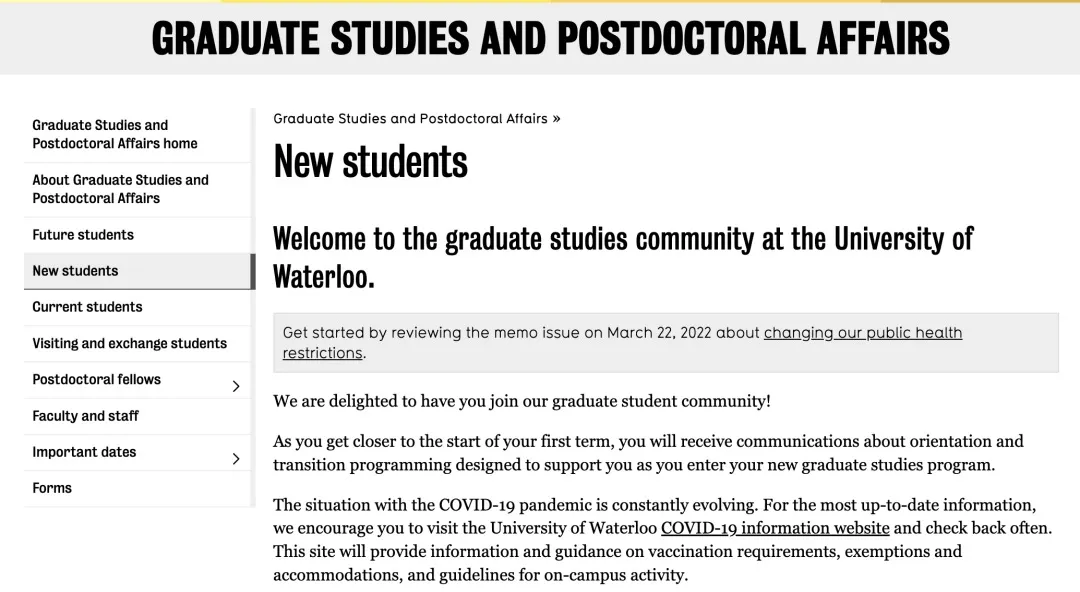
University of Waterloo
Key points of Waterloo's new student checklist:
1. Check the acceptance of the admission offer
2. Apply for a study permit
3. View your tuition, fees, and resources
4. Check and meet your admission conditions
5. Review and update your personal information in Quest
……
From the two checklists above, it's easy to see that "applying for a study permit" is a mandatory requirement for new students entering Canadian universities.
So how do you apply for a study permit?
What are the new entry policies for Canada recently?
What should students who are about to study in Canada prepare?
To address these and similar questions, CheersYou(清柚教育) has also compiled a detailed return-to-Canada guide for everyone!
Pre-departure Preparations for Canada
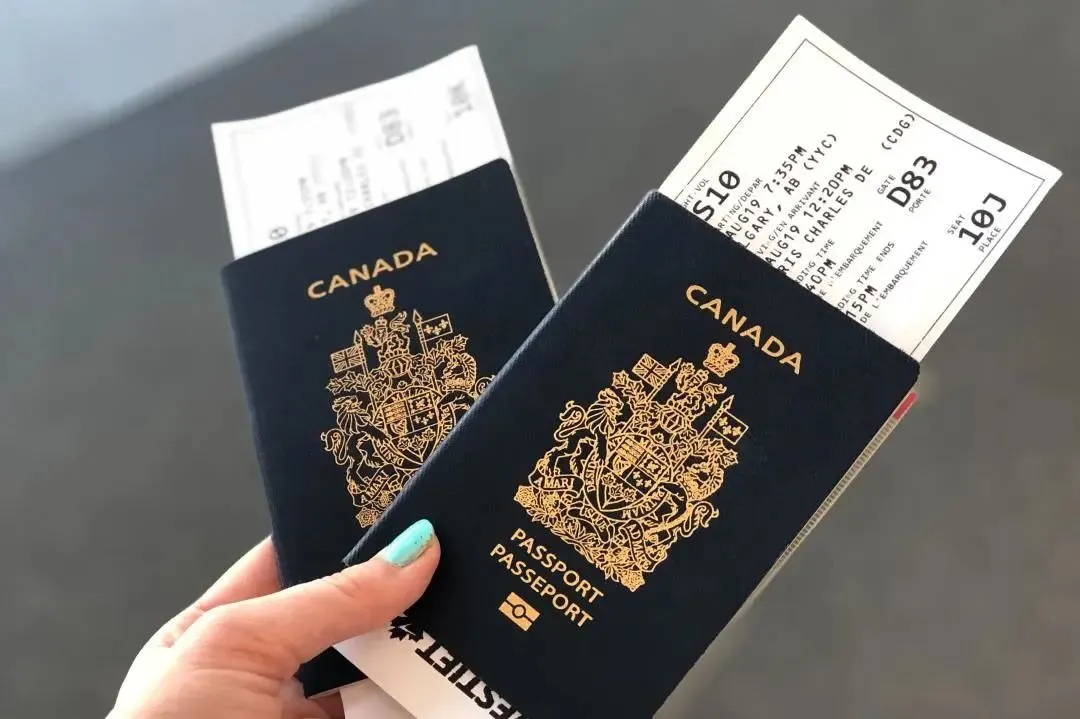
First, the essential documents you generally need to prepare and carry with you when traveling to Canada:
1) Passport
2) Customs form
3) School-related documents
4) Printed copy of the visa approval letter
5) QR code generated after completing ArriveCAN
6) Bilingual version of vaccination certificate
7) Pre-filled out China Customs applet
8) 48-hour negative nucleic acid test certificate (required at domestic airports)
Luggage Preparation
Most airlines allow two pieces of checked luggage and one carry-on suitcase, which is enough for basic daily necessities. Each piece can weigh up to 23 kg, and one carry-on item up to 10 kg, but please check with your specific airline.
Note: Canada prohibits the entry of any agricultural products, pirated discs, pork, beef, lamb, chicken, and other meat products. Each person is allowed to bring up to 1 carton of cigarettes and 2 bottles of alcohol (total 1000 ml).
Packing Suggestions:
● Daily essentials: toiletries, glasses
● Books: English reference books, etc.
● Clothing: Canadian winters are cold; bring a thick down jacket with a hood, preferably knee-length or longer. It is recommended to bring one formal outfit for various important occasions.
● Medication: In Canada, anti-inflammatory drugs require a doctor's prescription. You may bring a suitable amount of cold medicine, anti-inflammatory, anti-diarrheal, wound dressing, and burn ointment. Do not bring too many of the same medication.
● Bedding: Common bed sizes in Canada differ from those in China; you can buy them locally.
● Electronics: Canada's voltage is 110V, while China's is 220V, so if you bring appliances with different voltages, you need to buy an adapter to use them.
*If you plan to bring your own laptop, make sure to delete any foreign movies or TV shows from it.
Latest Entry Policies
Canada's current entry policies mainly target two groups: fully vaccinated travelers and those not fully vaccinated.
1) Fully Vaccinated Travelers
● Have received at least 2 doses of a Government of Canada-accepted vaccine (China's Sinopharm and Sinovac are included)
● Possess an English vaccination certificate in paper or digital format
● Received the second dose at least 14 days before entering Canada
● No signs or symptoms of COVID-19
● Must submit all required information via ArriveCAN before boarding
2) Not Fully Vaccinated
Definition: Have not received at least 2 doses of an accepted vaccine, or cannot provide proof of vaccination.
● Complete the IRCC official form to determine eligibility to enter Canada
● Prepare a 14-day quarantine plan
● Take a nucleic acid test within 72 hours before travel and obtain a negative result
● If arriving in Calgary, Montreal, Toronto, or Vancouver, pre-register for a mandatory airport test upon arrival
● Upload the above information and relevant documents in ArriveCAN, obtain a receipt, and carry these documents with you
Canadian Visa Application
Canada has two types of visas: the "study permit" and the "visa". The "study permit" is the one mentioned earlier as the "study permit".
"Visa" – Canadian Visa
The "visa" is a Canada Visa, a sticker affixed to your passport, serving as proof for entry and exit from Canada, issued by the Canadian embassy in China.
Required documents for visa application:
● Letter of Acceptance from the school
● Passport (with at least one year of validity)
● Passport-sized photo
● Proof of financial support
Documents that may be required:
● Statement of purpose, including study goals and plans;
● Quebec Acceptance Certificate (required for students studying in Quebec).
When applying for a student visa, carefully prepare background materials and a study plan to dispel any doubts the visa officer may have about financial capability and immigration intent.
"Study Permit" – Study Permit
The "study permit" is a large document, an A4-sized credential for international students, containing information such as the institution and program you are enrolled in and the duration of permitted study in Canada.
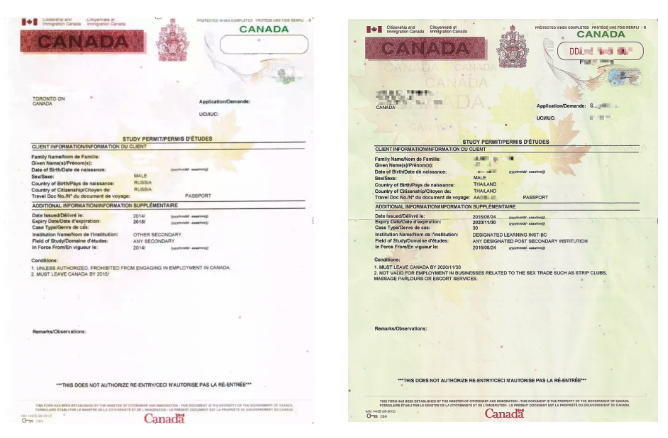
Students need to exchange it upon entry at a Canadian immigration office with their visa, letter of introduction, and Letter of Acceptance.
Flight Booking and Customs Procedures
Flight Booking
Currently, there are direct flights to Canada from Beijing, Guangzhou, and Shanghai, but there are more connecting flights available. Reasonably priced tickets are in very limited supply, so it is recommended to book as early as possible.
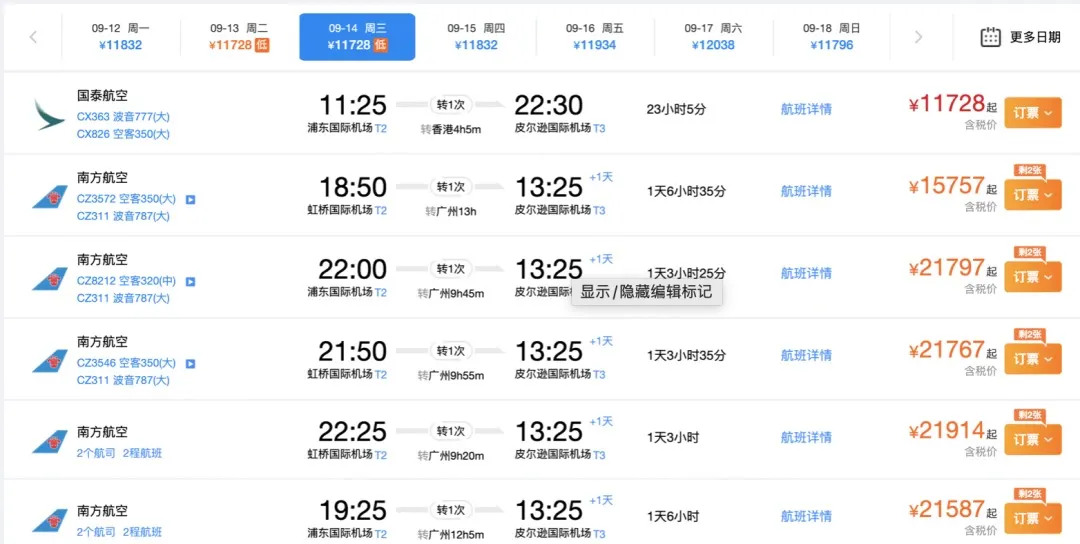
Although negative nucleic acid tests are no longer required for entry into Canada, it is worth noting that the four major Canadian airports—Vancouver, Calgary, Montreal, and Toronto—have reinstated mandatory random nucleic acid testing.
Customs Clearance Process
● After takeoff, flight attendants will distribute a Canadian customs card, which needs to be filled out in English.
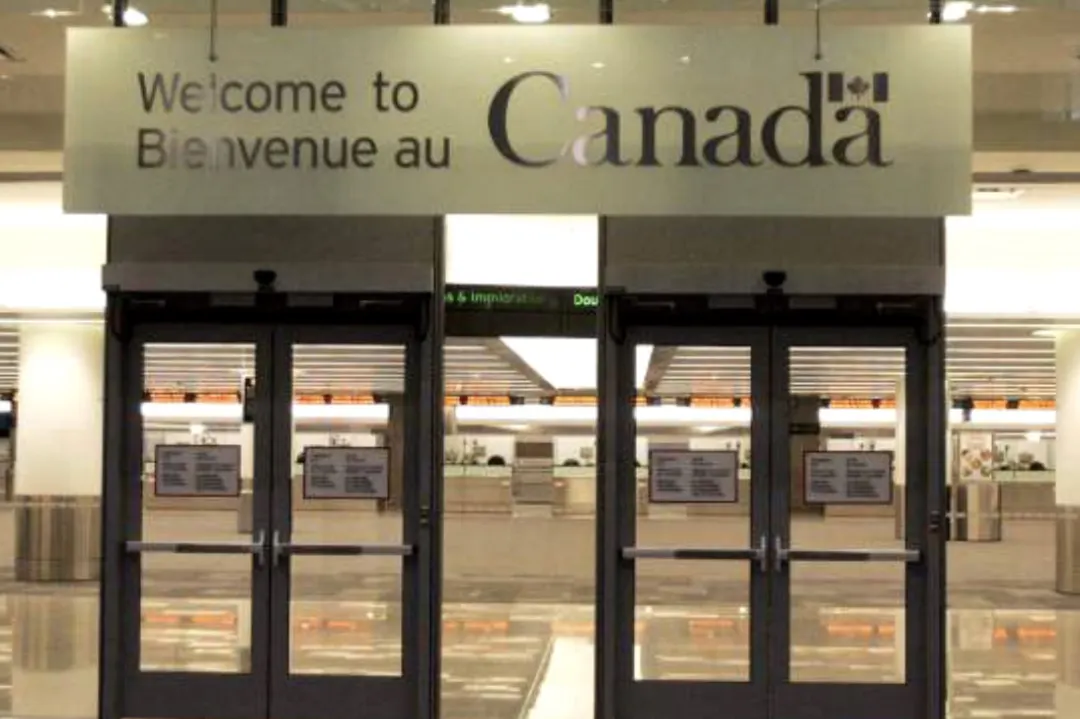
● After arriving at the Canadian airport, follow the prompts of the self-service border control kiosks.
● After clearing customs, you will need to go to the immigration office to exchange for your study permit. Hand your customs form and passport to the immigration officer; they may ask you a few questions. If you don’t understand, you can ask for interpretation.
● After obtaining your study permit, you can collect your luggage. During this time, police dogs may patrol and sniff the bags—don’t panic, they are just checking for explosives or drugs.
● After collecting luggage, there will be another walk. Remember not to appear overly excited, as that might arouse suspicion and lead to being sent for a secondary inspection.
Pre-Move-in Considerations for Renting
For students renting in Canada, pay close attention to the following points before moving in:
1. Carefully inspect the interior before moving in to ensure everything is working and observe the surrounding environment.
2. Pay special attention to whether stoves, sockets, refrigerators, faucets, light fixtures, etc., are working properly; check for leaks or blockages in drains.
3. If there are any damages inside the room that existed before you moved in, it’s best to take photos as evidence so that you can request the landlord to make repairs.
After Arriving in Canada
After arriving in Canada, international students can first complete registration at their school. Also, get your student ID card, library card, health insurance, etc.
Getting a Mobile SIM Card
Regarding carrier options, Canada's major mobile network operators can be roughly divided into three tiers:
● Tier 1: Telus, Rogers, Bell (premium route)
● Tier 2: Virgin, Fido, Koodo (more mainstream for the general public)
● Tier 3: Lucky, Chatr, Public (essentially not considered by international students)
Opening a Bank Account
Having a local bank account for students newly arrived in Canada not only makes daily life more convenient but can also help you save money.
First, you need to make an appointment to open an account—unlike in China where you can walk in with your ID. You can book online or at the counter.

Required documents:
● Passport
● Study permit (holding a study permit may waive handling fees)
● If you have Canadian cash with you, you can deposit it at the counter after opening the account
Familiarizing Yourself with the Surroundings
Getting familiar with the transportation routes to school and supermarkets, as well as the surrounding environment, is one of the most important tasks for international students, especially for those renting off campus.
● How long it takes to get to school and to supermarkets, the bus frequency, routes, and how to purchase tickets.
● The route to the supermarket, how long it takes, and its operating hours; some supermarkets abroad do not open seven days a week, and weekend hours may vary, so you need to check this yourself.
International students arriving in a new and unfamiliar environment will undoubtedly feel both excitement and strangeness. Make sure you prepare thoroughly in advance!
The new semester is about to begin! We hope everyone can arrive smoothly in Canada for the fall term and kick off an amazing university life.