
In today's North American study-abroad circles, it seems we've entered an era of 'switch to coding or die'.
Whether you previously studied media, accounting, business, or medicine, and regardless of any prior CS background, everyone is switching to coding.

Even traditional high-paying professions like dentistry and law are considering switching ❓

Ask them why, and it's because the offers from tech giants are just too tempting — upon joining, you instantly enjoy an annual package worth hundreds of thousands 💰.
How good is a coder's life? 'Silicon Valley housewives' probably have the most say.
The Hermès in the car, the 3-carat 💍 on the finger, the lavish lifestyle showcased on Xiaohongshu — all thanks to the coder husband who transported them to the Bay Area.

So in their spare time, they either share their husband's interview experiences:

or share reviews on finding a husband in Silicon Valley:

Although 'Silicon Valley housewives' are mocked, there's no doubt that coders are in high demand in the marriage market.
In North America, coders are synonymous with high salaries, stable lives, and boundless prospects.
With an annual package of $200k, a house worth over a million, a million saved by 30, financial freedom by 40... Even the grinders can grind even harder in Silicon Valley.

The CS Conversion Myth: 'As Advertised' vs. 'As Received'
As everyone knows, 'Just graduating with a million-dollar salary still makes you a bottom-tier worker in Silicon Valley'👇

Thus, business students twiddling their thumbs at home, art students barely scraping by, regardless of their previous majors, are all preparing to switch to CS.
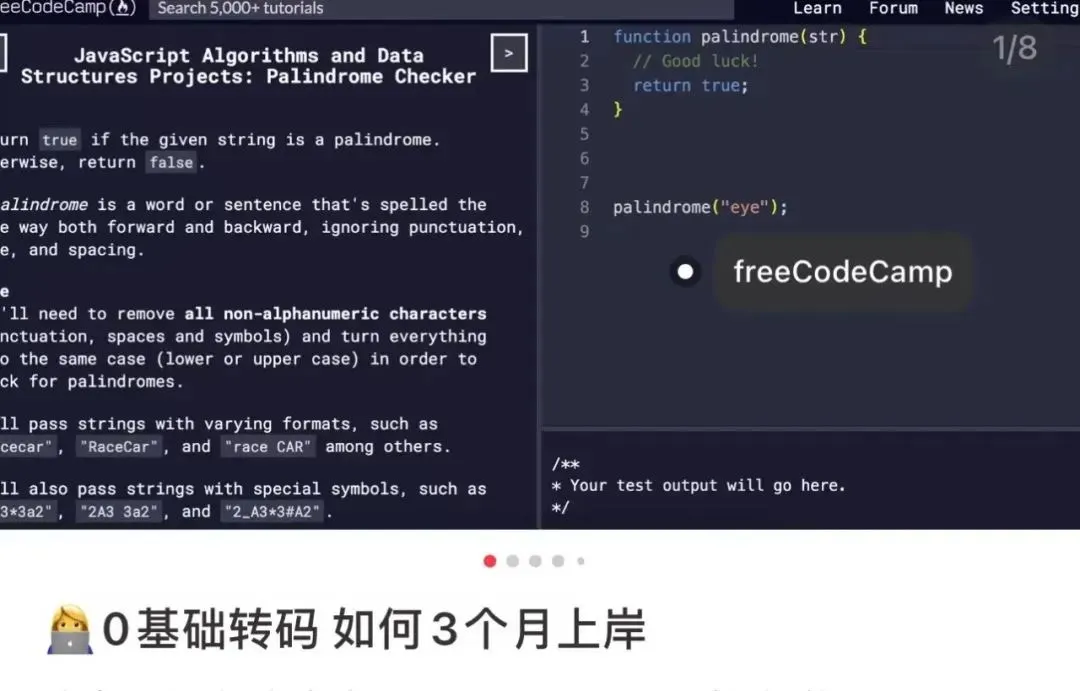
After all, Xiaohongshu is full of posts like: 'Zero-to-hero CS switch: landed a job in 3 months'👇
'From accountant to coder: salary tripled'👇

After reading enough inspirational stories, you start believing you can do it too. If not now, when!
But three months later, you'll be posting Xiaohongshu emo confessions:
'Liberal arts student failed the CS switch, struggling every day, wanting to give up'👇

'Switching to CS is so painful, I've failed interviews everywhere, big and small companies'👇
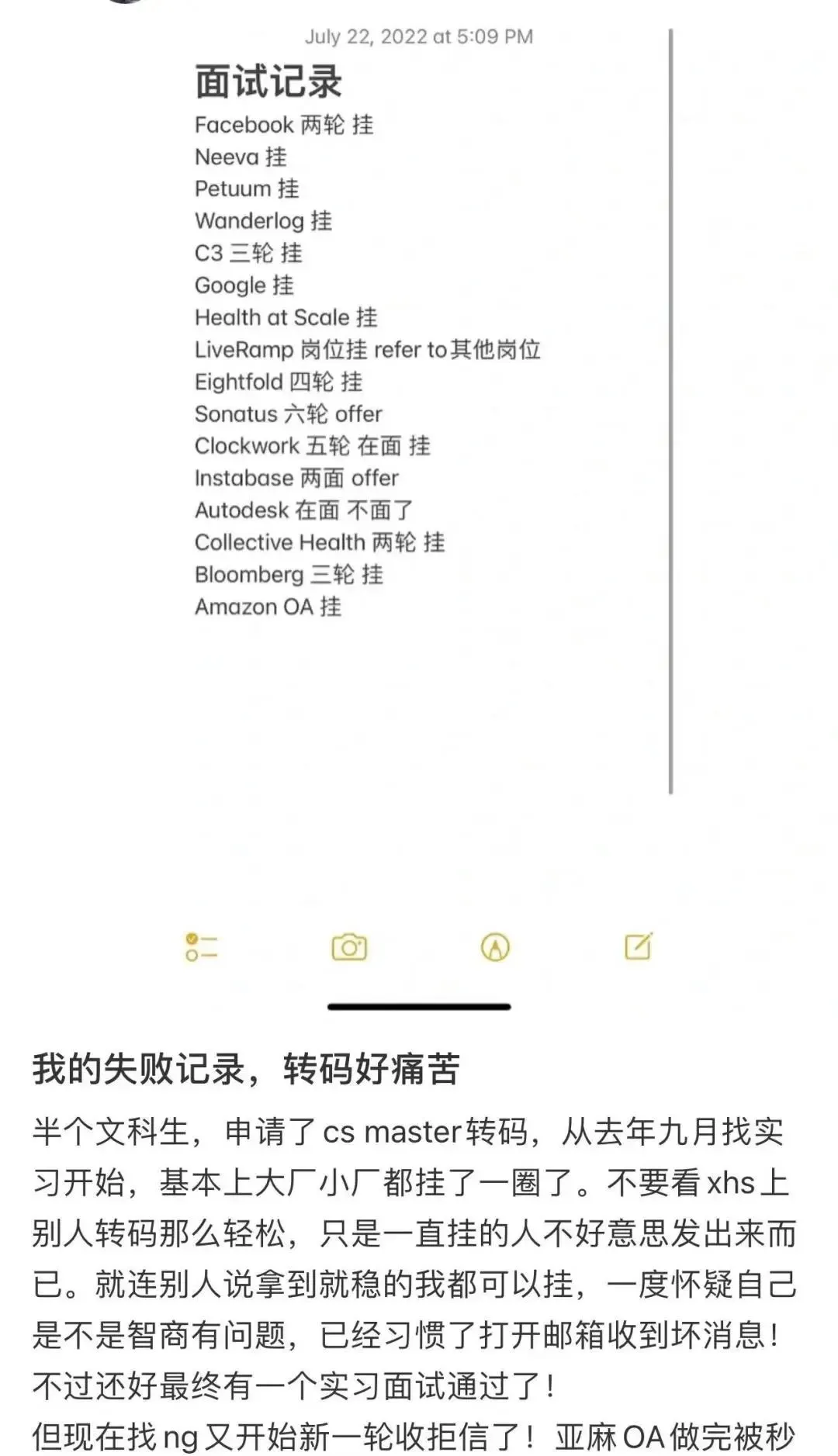
After the emo, they realize: Xiaohongshu is still Xiaohongshu, it's just survivorship bias.
What you see are just a few lucky ones who successfully switched and posted about it; the countless who spent time and money only to find they're not cut out for it or can't persevere — those are the majority, the ordinary folks.
From the 'as advertised' to the 'as received' — that's the journey back to rationality.

Moreover, with the current economic downturn, tech giants are generally reducing hiring and tightening their belts. Not only have Google and Meta frozen hiring, but companies like Microsoft, Netflix, Lyft, Twitter, PayPal, Tesla have even started layoffs.

And who gets laid off first? Usually the new hires. Many haven't even warmed their seats when the big companies turn their backs. This year, Coinbase infamously rescinded offers on the spot, leaving many new grads in the lurch.
Meta has been particularly brutal this year, not giving return offers to interns, forcing everyone to go back to grinding LeetCode and try again.

In short, switching to CS is not easy, and landing a job doesn't guarantee lasting happiness. After all, coding isn't a secure job; though high-paying, employment is not that stable. And now that everyone is trying to switch, competition only intensifies. Failures are normal, so we all need to adjust our mindset.
CS Graduate Applications: Do Top Schools Discriminate by Background?
This 'everything can turn into coding' mentality has spread to the study-abroad community, leading everyone to want to pursue a CS graduate degree.
In reality, applying for CS graduate programs is not that easy; some programs are very strict about your background.
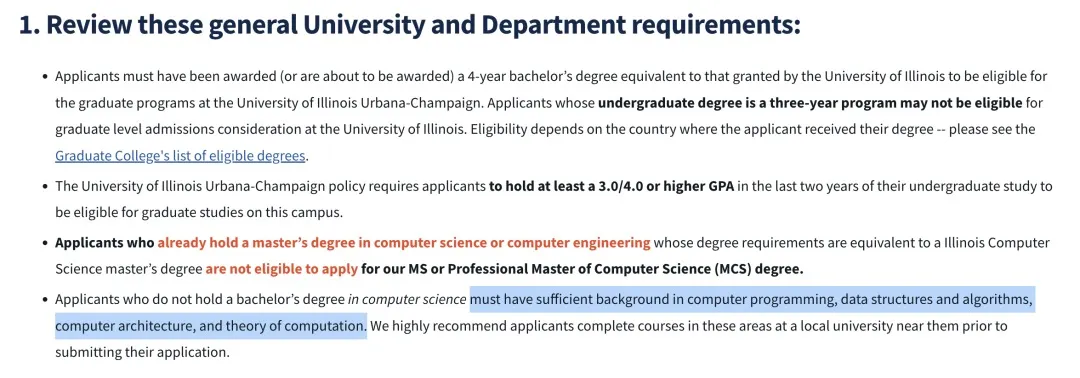
For example, the top-2 ranked UIUC computer science graduate program requires applicants to have solid background knowledge in computer programming, data structures, algorithms, computer architecture, etc., and strongly recommends that non-CS undergraduates complete the necessary prerequisites.
UC Berkeley's EECS program is similar, recommending applicants have a background related to CS, with a minimum GPA requirement. For non-CS background applicants, the school has relatively strict coursework requirements.

Cornell's ECS program is also very strict about background. For non-CS undergraduates — even those from related fields like electrical and computer engineering, information science, operations research — the following required courses must be completed:
-
Object-oriented programming and data structures
-
Data structures and functional programming
-
Computer system organization and programming
-
Discrete structures
-
Basic calculus and linear algebra

Such strict background and course requirements mean a high barrier for most students from non-technical backgrounds.
Is There Still Hope for Non-CS Students to Switch to CS?
But don't despair; there are still some graduate programs with less stringent requirements, suitable for non-CS students looking to pivot.
University of Chicago
Program: MS in Computer Science
UChicago's computer science department is top-ranked nationally, emphasizing the integration of CS and business, highly practical.
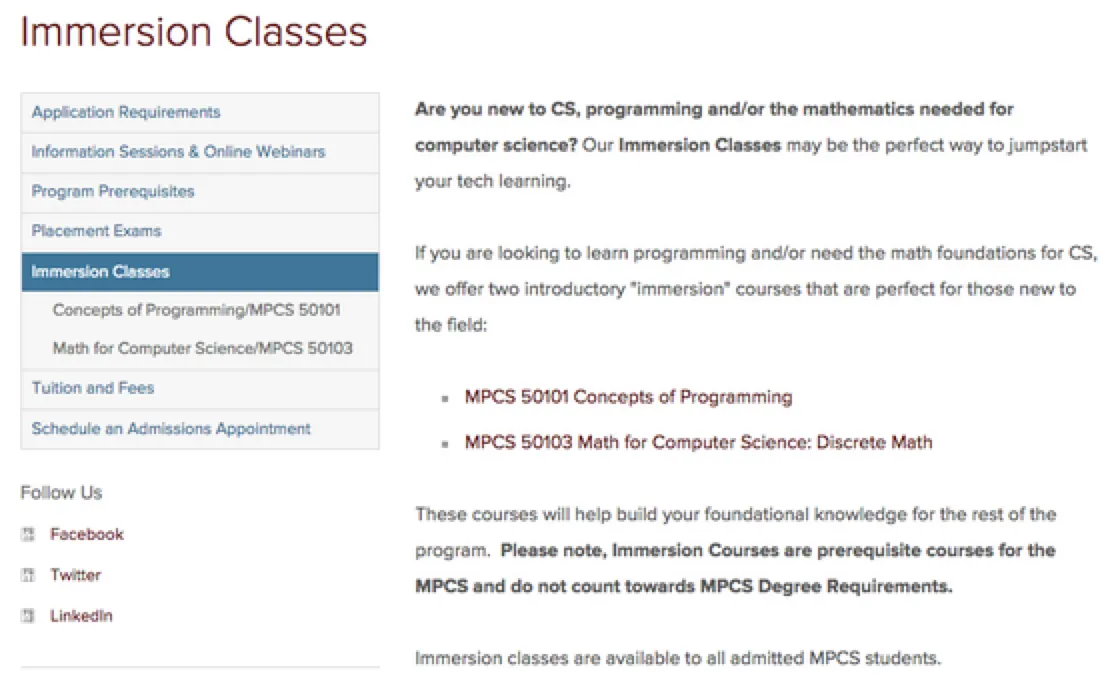
The school's MS in Computer Science program (MPCS) offers Immersion courses, very friendly for applicants with no CS background. They can first take two prerequisites:
-
Programming concepts
-
Discrete mathematics
After building a foundation, they can then officially pursue the degree.
Brandeis University
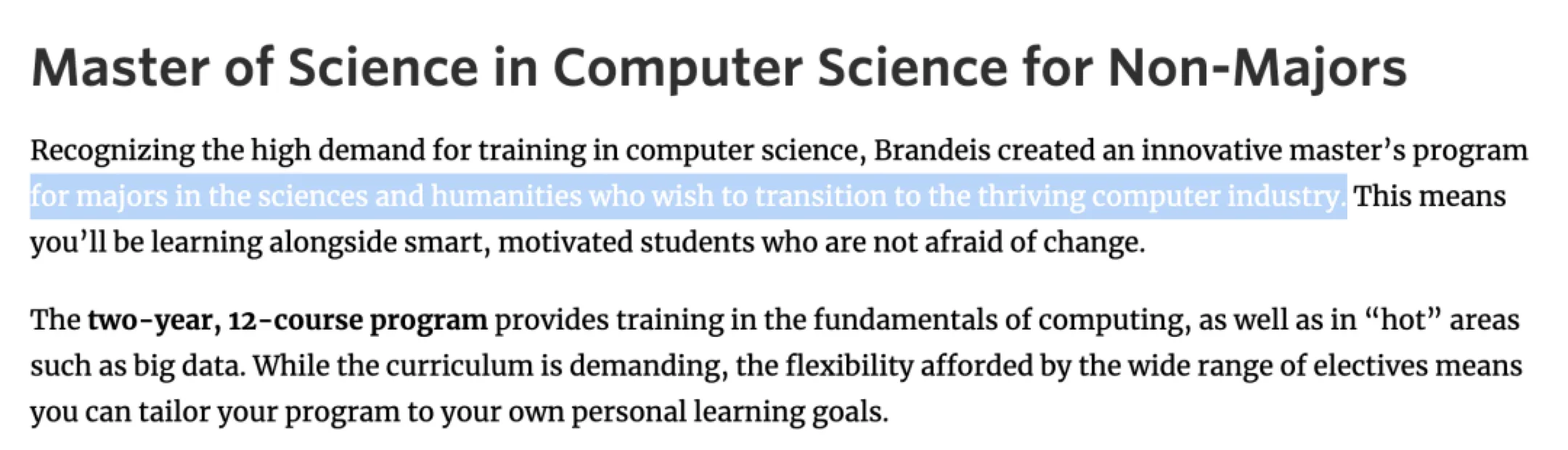
Program: Master of Science in Computer Science for Non-Majors
Brandeis University offers a master's program for non-CS background students, a two-year program with 12 courses covering hot areas like computer programming and big data.
Alumni often work at tech companies like Google, Microsoft, Dell, Uber, in roles such as software development and design engineering.
Northeastern University
Program: Align Master of Science in Computer Science (MSCS)
Northeastern's Align MSCS program is very friendly for students with no CS foundation, offering a series of bridge courses including:
-
Fundamentals of computer science
-
Discrete mathematics
-
Computer systems/algorithms
-
Object-oriented design/Java programming
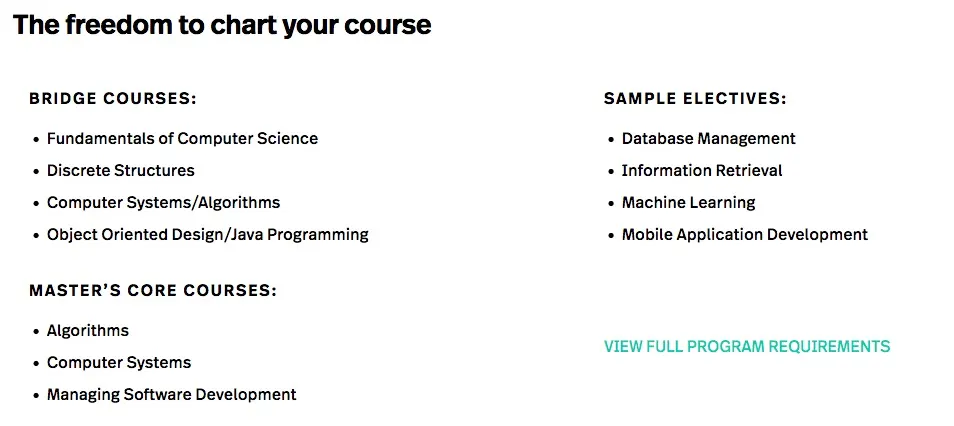
After completing the foundational bridge courses, students can choose research directions like artificial intelligence, human-computer interaction, data science, game design, graphic design, information security, programming languages, software engineering, etc.
NEU graduates from this program have good employment outcomes, landing at companies like Facebook, Amazon, Cisco, Bose, LinkedIn, and other renowned firms.
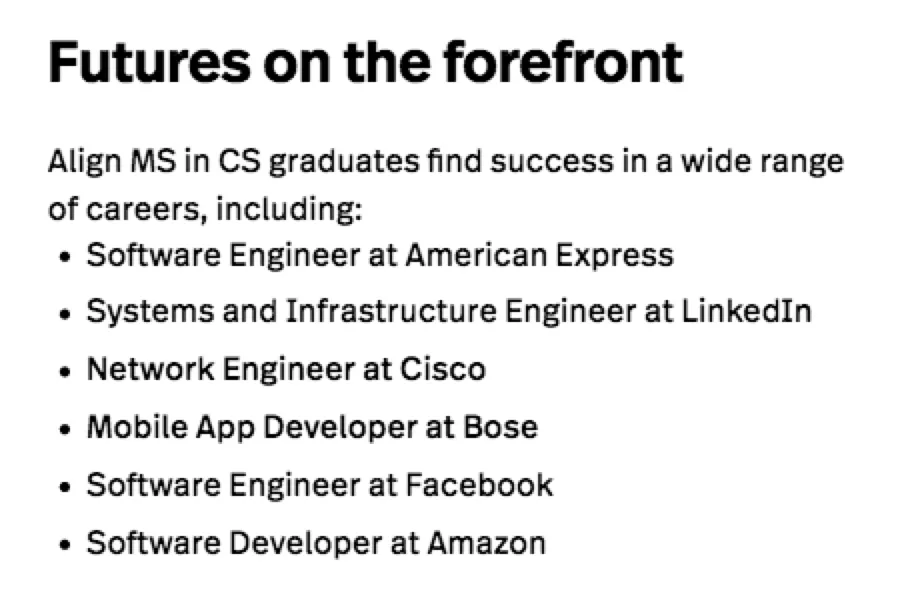
These programs don't heavily filter by background and are relatively friendly for those switching to CS. However, such programs are few and far between, while the number of people wanting to switch via a CS degree is countless, making the competition no less intense than for popular CS programs.
Switching to CS Is Not Your Only Path
Nowadays, hordes of people are scrambling to switch to CS each year, wanting to stand out in a vast pool. As a result, CS programs continue to raise the bar for GPA and GRE scores.
Even programs that don't emphasize a specific background still tend to favor applicants with relevant experience. If your academic background and experience are completely unrelated, the transition remains quite challenging.
As those failed switchers say, if your foundation in science is weak, the CS path will be tougher. If you already have a background in Data Science, EE, ECE, Financial Engineering, etc., with a solid math foundation, you actually have an advantage in switching.
To be safe, when applying to graduate school, consider applying to multiple programs, develop multiple paths, and avoid putting all your eggs in one basket.
Besides, wanting to grind your way into a big tech company is definitely not the 3-month quick fix touted on social media. Don't let these clickbait posts make you anxious; instead, carefully evaluate based on your own background.
Experienced career-switchers to CS have shared that you might need to grind 500 coding problems in half a year, which gives you an idea of the time and effort required.

Switching to CS is by no means a yardstick for professional prestige. Every trade has its master; finding the career path that suits you best is what truly matters.
I hope everyone can stay true to their original aspirations, persist in being themselves, and see things through to the end.