
A strong essay or resume can catch an admissions officer's eye and sometimes directly determine whether an applicant is accepted or rejected.
Yet despite its importance, countless students every year blindly entrust their fates to the university writing center. The result: wasted time, wasted effort, a mangled essay, and a missed window for securing an offer from a top school.
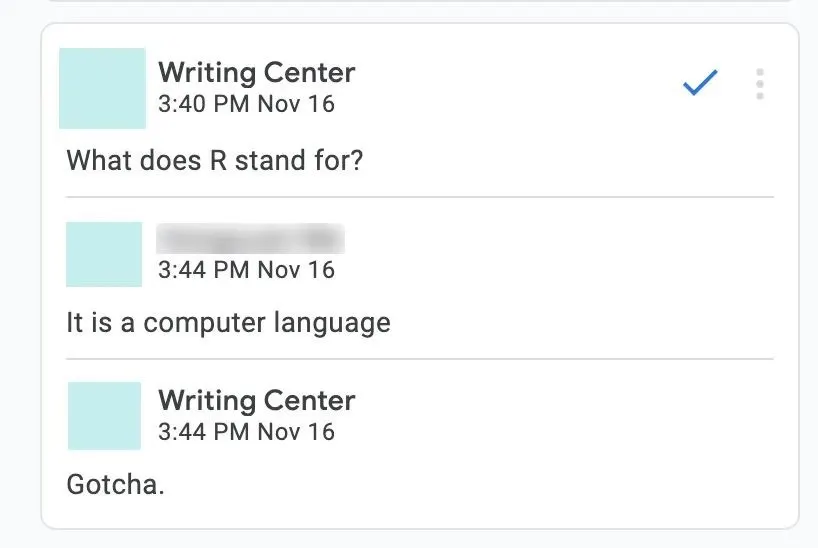
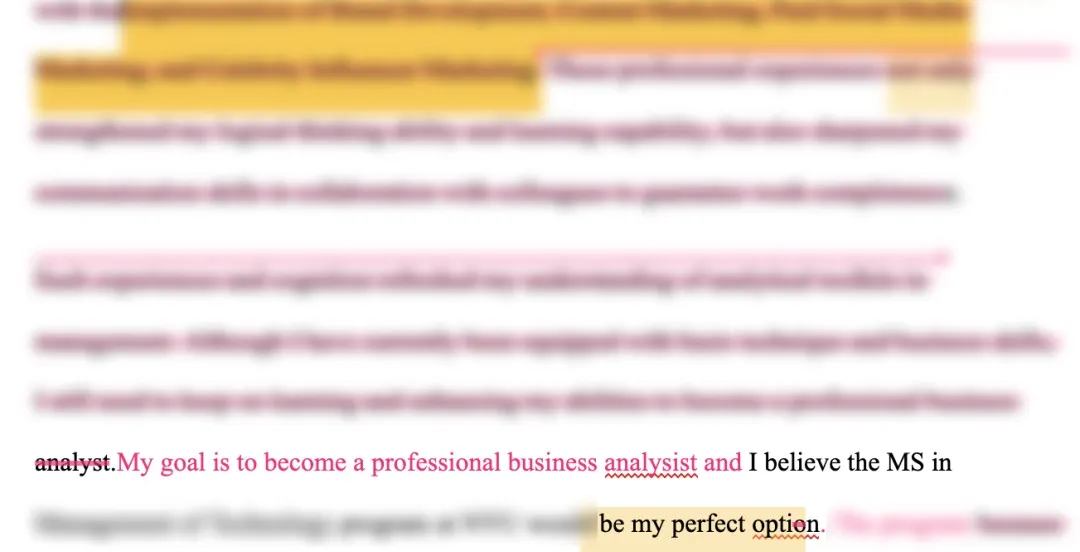
We've seen horror stories from students burned by writing centers. So-called “writing tutors” didn't even know what R is, nor what a Q-Q plot is, and ended up mangling the essay beyond recognition...
The reality is harsh, and only students themselves know the pain of dealing with writing centers.
Why University Writing Centers Are So Unreliable
Writing Centers Only Offer Suggestions and Opinions
Writing centers, as free writing support services provided by universities, look appealing on the surface but are actually more flash than substance.
Take Columbia University's writing center for example. The help it offers is mainly grammar polishing, sentence structure tweaks, and essay structure optimization—to make your essay “readable”, and that's about it.

And quick fixes—the kind of immediate results many students hope for—are not the purpose of university writing centers.

Many universities emphasize that their writing centers are not there to “edit” or “proofread” essays but to offer subjective advice and suggestions to “help” improve the writer's craft.
But hopeful students often end up with nothing substantial after a 20-50 minute session that feels more like a vague “spiritual cleanse” than real editing.
Writing Center Tutors Have Uneven Qualifications
A solid understanding of the program is the prerequisite for a good essay, but writing centers focused only on language polishing can hardly offer any deep, subject-specific advice. And the quality of tutors varies wildly from one center to another.
As we all know, most writing center tutors are students from the same university, and the vast majority are undergraduates.

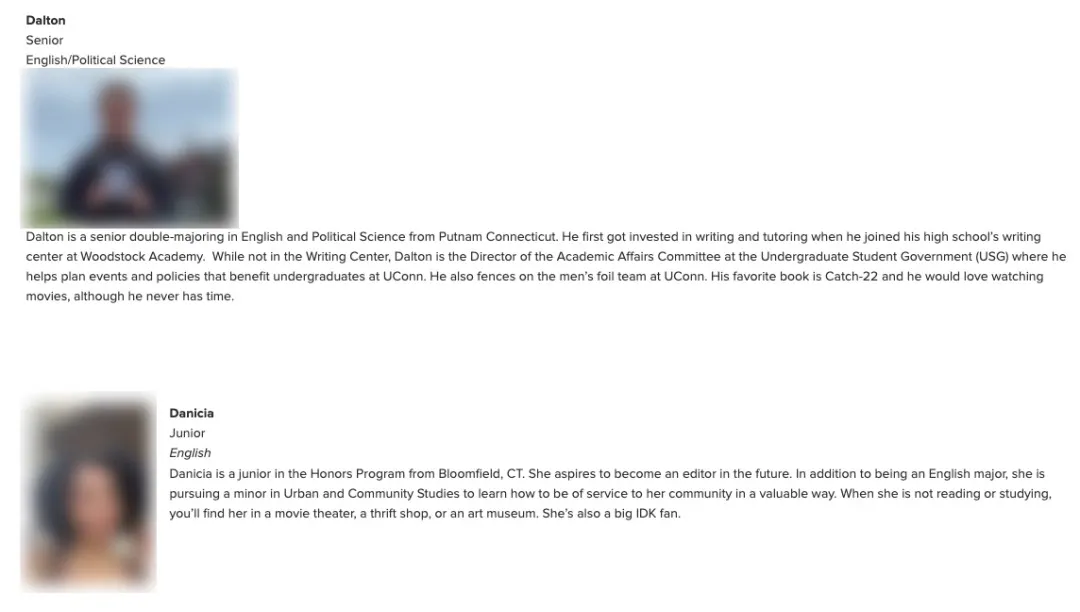
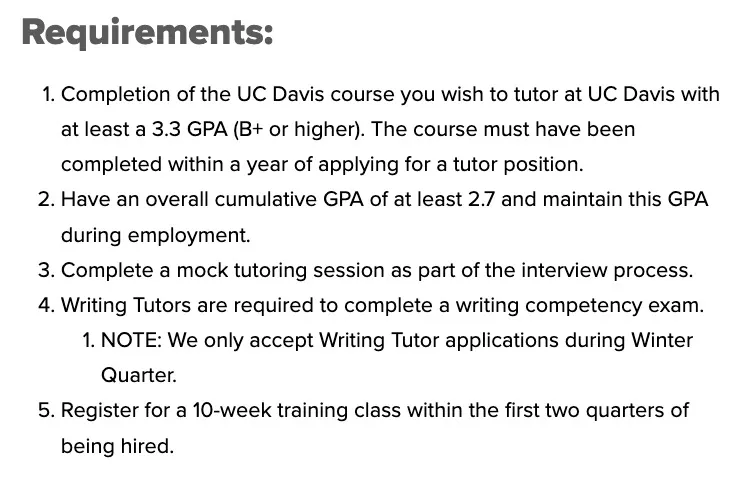
Tutors are hired mainly based on GPA and writing ability, not specialized knowledge in any particular field. So their scope is limited, and most tutors are humanities majors.
At the same time, working at a writing center is a thankless job. They're busy during regular times, and it gets even more packed around midterms and finals. Juggling their own studies with tutoring, the quality of guidance inevitably suffers.
On social media, you can often see writing center tutors joking that they only have basic writing skills and just wing it when they don't know the subject.
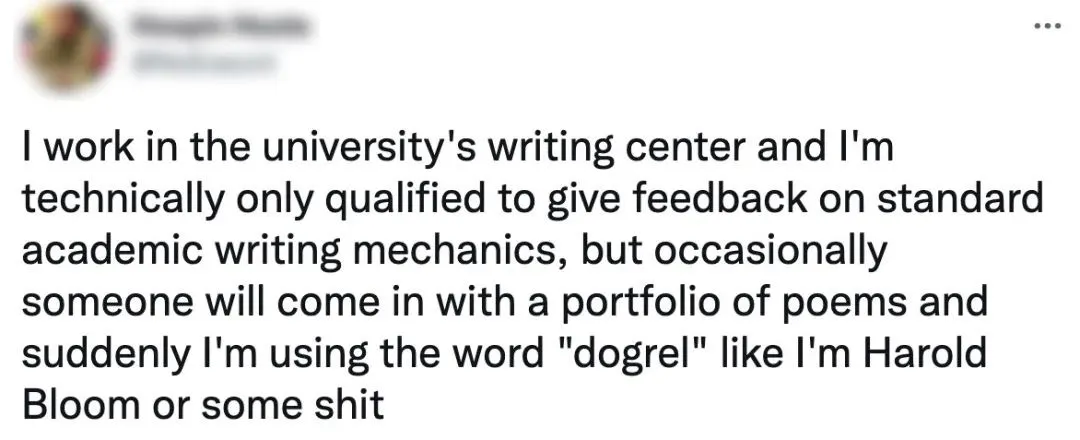
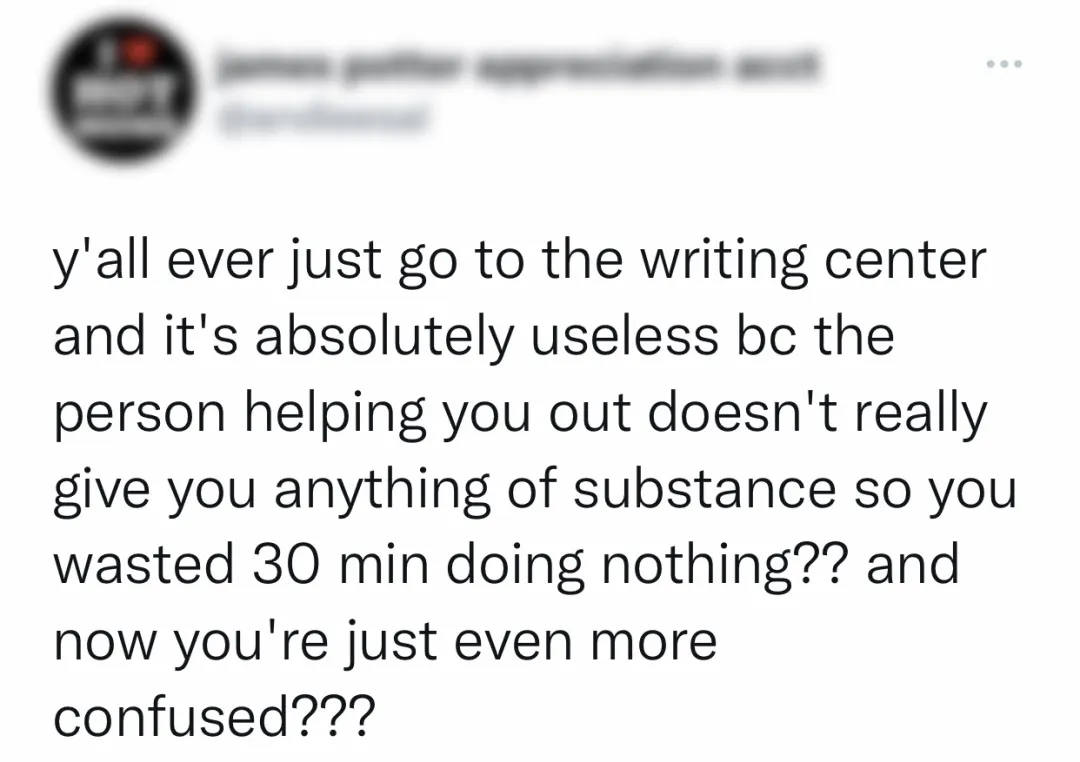
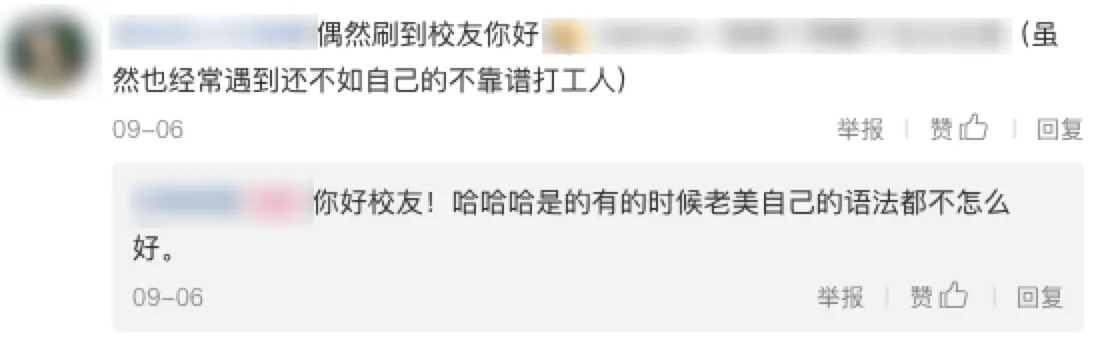
No wonder both domestic and international students complain that these tutors offer no real help, sometimes even having worse grammar than themselves—just a waste of time.
Writing Center Tutors Don't Understand Graduate Application Essays
If you're an undergrad needing help with an assignment or project, your university writing center might be okay.
But having a fellow undergrad—whether a senior, junior, or someone with zero graduate application experience—guide your application essay? Honestly, you'd be better off running it through Grammarly.
Because they probably don't even know what the GRE is.
And expecting a humanities major to guide your STEM application essay? That's pure fantasy.
Take Cornell Tech's graduate application essays for example. Their requirements are extremely detailed, covering program plans, skills, experiences, and career aspirations—down to a specific software development experience. Even the initial phase requires rigorous brainstorming and material organization.
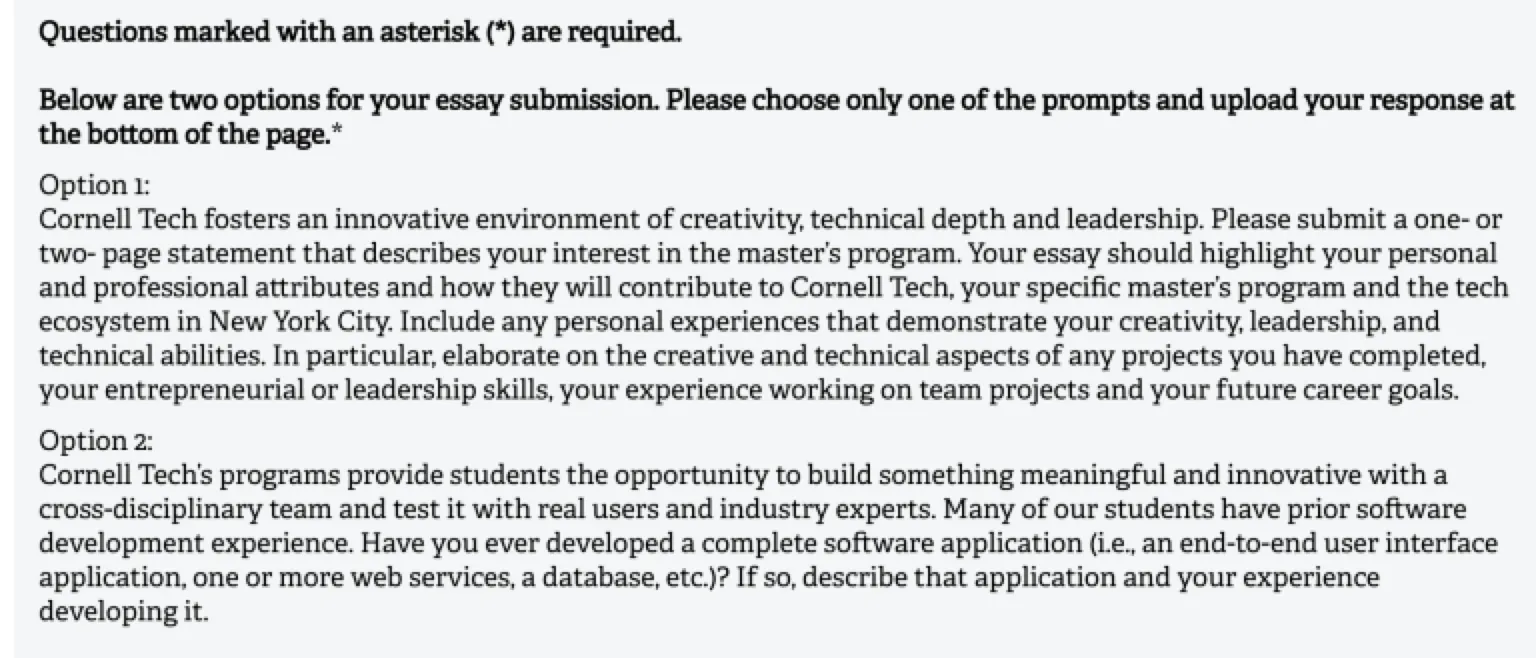
The essay is a key basis for admissions officers to evaluate an applicant's professional knowledge and experience and their fit with the program (match).
Moreover, graduate programs come with a wide array of complex essay requirements, and writing centers simply cannot provide effective guidance in a short time. Even career centers are no help, because their staff don't know how to tie career development topics closely to graduate application essay prompts.
Graduate Application Essays Need Careful Crafting
Rather than letting a writing center's well-meaning but clueless tutor mess up your essay, it's better to tackle it yourself or get professional help to truly solve the essay puzzle.
So how do you write a great application essay? We'll review the writing process using MIT's “5 Stages of Essay Writing” framework:
Do Your Homework: Research the Program
Initial research is the foundation of the essay writing process.
Only by understanding program requirements, identifying the field's characteristics, clarifying your interests, and thoroughly organizing and updating your knowledge of the area can the subsequent steps—information gathering, content creation, and editing—be focused and effective.
Writing centers rarely have time for this, so they often head in the wrong direction from the start—turning a technical program essay into a prose piece, glossing over essential experiences, and blowing up irrelevant details. Tragedies like these are all too common.
Reflect and Brainstorm
How did your intellectual development unfold over four years of college?
Why did you choose your undergraduate major?
Why do you want to pursue advanced study in this program/school/field?
What are your career goals for the next 10 years?
…………
A strong essay may require you to look back and ahead 5-10 years, thoroughly organizing your experiences and plans through brainstorming. And this is another step that writing centers simply skip.
Determine the Central Theme and Outline Your Essay
An essay is about quality, not quantity. After gathering material, you need to identify highlights—a central theme or topic that emerges from your reflection and brainstorming.
Then you can use bullet points and brief comments to effectively organize your ideas to support your central theme. The essay outline must cover numerous points, all of which are easily overlooked by writing center people.
Draft Your Essay and Meet Basic Standards
☐ Always use positive language when referring to yourself
☐ Give specific but concise examples
☐ Use transitional words, sentences, and paragraphs; flow is key
☐ Leave a blank line after each paragraph
☐ Don't start adjacent paragraphs in the same way
☐ Avoid using words you aren't familiar with
☐ Don't repeat yourself
☐ Ensure a strong opening and a strong closing
☐ Control length to 2-3 pages
☐ Thank the admissions committee at the end, but don't seem groveling
…………
These are basic drafting standards, but many writing center tutors focus only on grammar structure and end up even failing to meet these basic essay metrics.
Seek Critique, Revision, and Editing
This is probably the only stage where writing center people ever get involved.
The final essay should be perfect in terms of flow, conciseness, interest, deliverability, understandability, and showcasing candidate qualities.
But writing center people often only focus on flow and understandability, unable to provide professional insight into the other aspects—or they just throw out random suggestions.
As a result, students who were already unsure about their essays may become more and more frustrated, to the point of questioning their life choices.
Since this is the last stage and tutors haven't been involved in earlier stages—or students haven't paid close attention—most applicants end up stuck, having to start all over again and wasting precious preparation time.
In the post-pandemic era, admissions offices are placing even greater emphasis on essays. Writing a standout, successful essay is truly no easy task.
We hope you take your essays seriously and don't assume that a writing center can effortlessly solve your application challenges, only to end up with more harm than good.
And we wish all applicants the best of luck—land that dream school offer!