Recently, Harvard University officially released a report stating that 27 students were forced to withdraw from Harvard College due to academic misconduct, a six-year high.
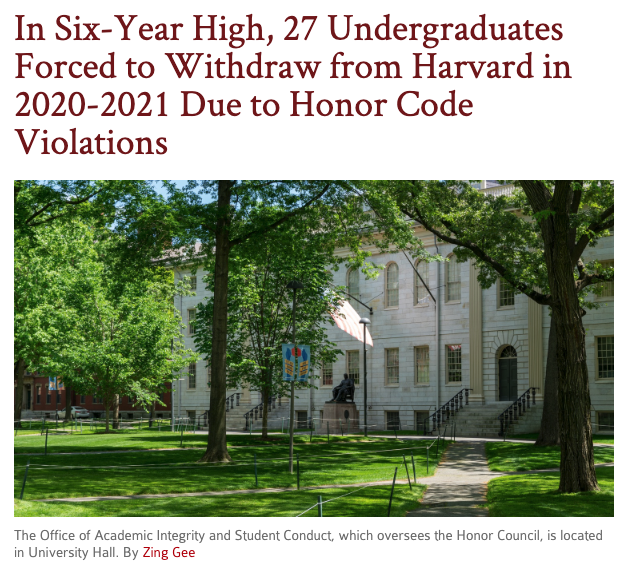
Due to the pandemic, Harvard moved classes online for the 2020-21 academic year, with both semester exams conducted online. This remote learning model naturally led to an increase in cheating students.
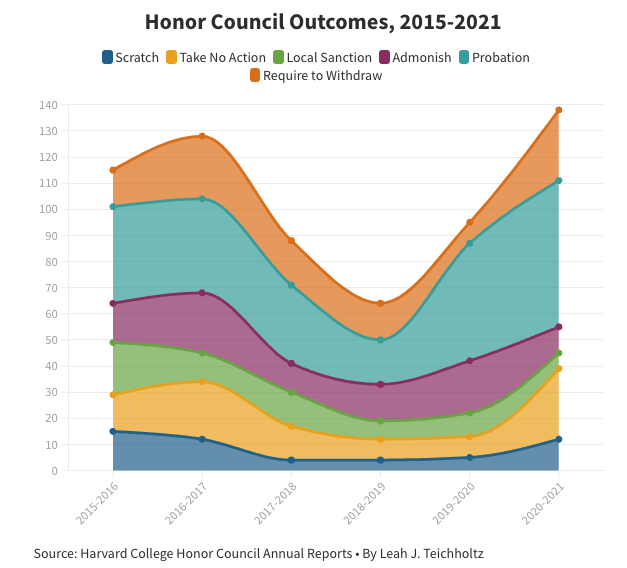
During this period, Harvard reviewed a total of 138 academic integrity cases, of which 99 were determined to involve actual academic misconduct requiring accountability.
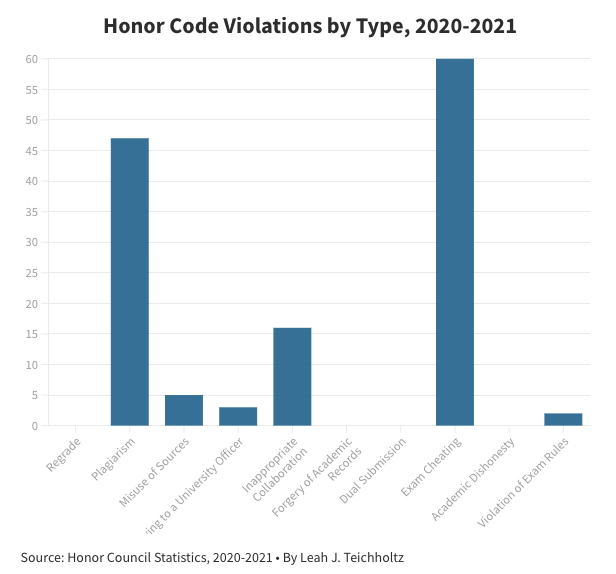
The cases were mostly concentrated in courses offered by the Science Division and the School of Engineering and Applied Sciences. Plagiarism and exam cheating were the most common types of violations.
In addition to the expelled students, 56 students were placed on probation and 10 were given warnings.
The latest report from Harvard shows that in the post-pandemic era, universities are placing even greater emphasis on academic integrity, with corresponding penalties sometimes exceeding those for disciplinary violations.
Pushing the Boundaries of Academic Dangers
Since the shift to online learning, student participation both in and out of class has significantly declined. After returning to in-person instruction, universities have not relaxed their strict academic policies for a moment.
If a school discovers academic dishonesty such as plagiarism, cheating, or contract cheating (including taking exams for others), penalties may be imposed even faster than before. Cheating and plagiarism are serious violations of academic discipline at any university, and once discovered, students will face severe consequences.
The USC provost stated early on that the university continuously emphasizes the importance of academic integrity and is adjusting AI proctoring systems to address academic integrity issues in online exams.
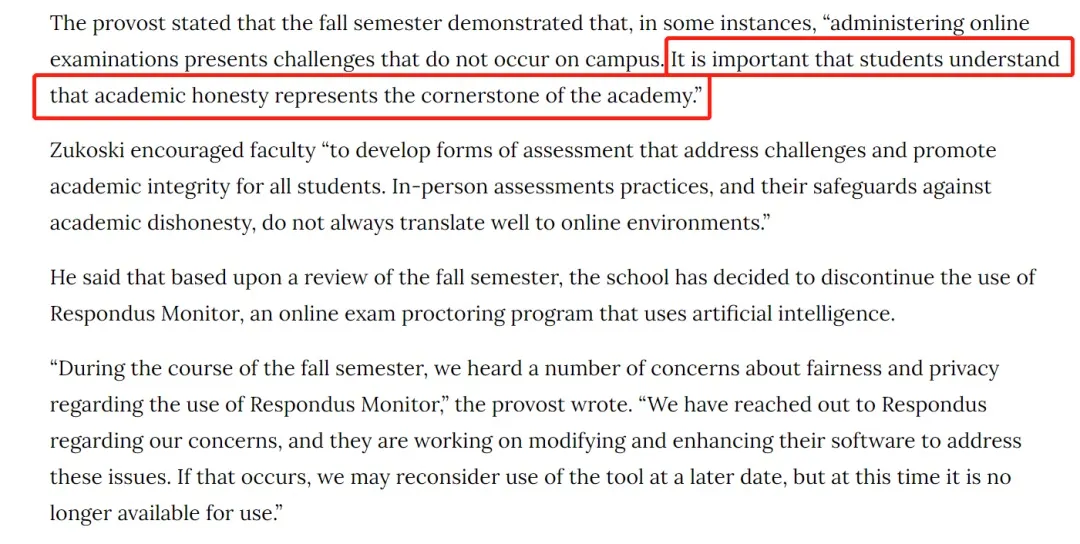
Of course, the university's strict investigations and penalties seem to have triggered a 'masochistic' response in some students, with countless individuals testing the boundaries in recent years.
From the earlier surge of Kenyan contract cheating services that even enabled someone to complete all coursework, obtain a diploma, and secure a high-paying job.
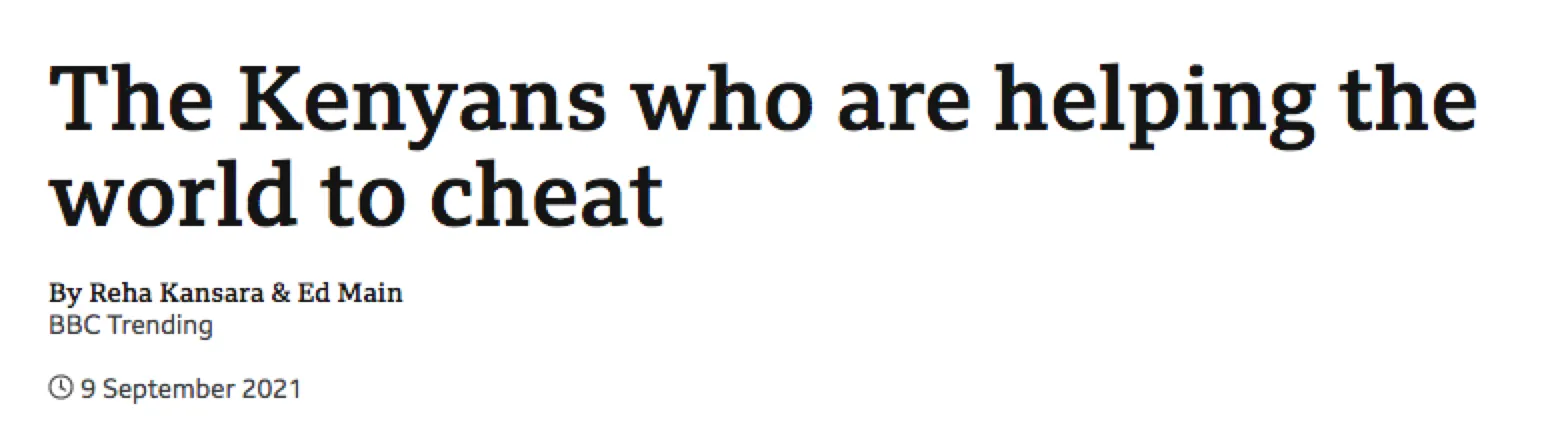
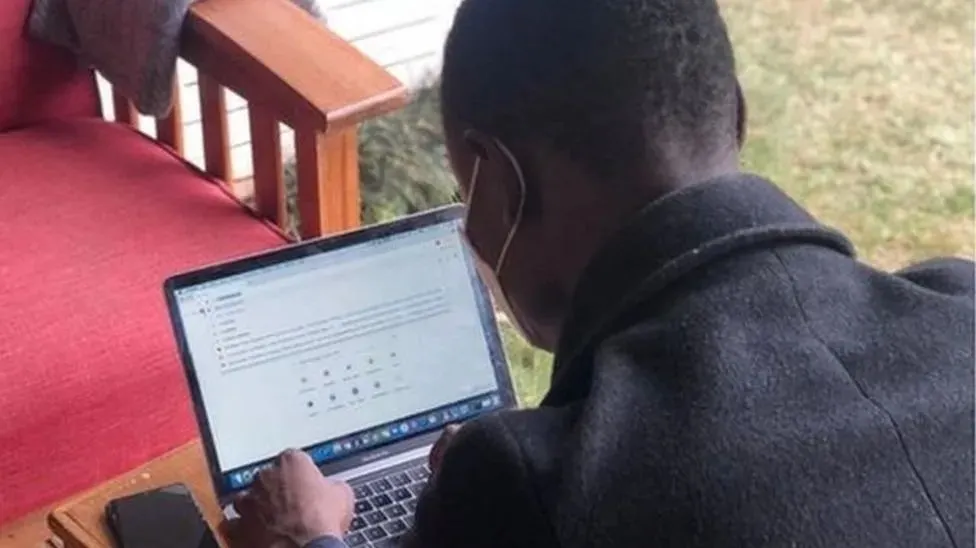
Essay mills in Africa can completely disregard academic ethics—money is the only king.
To the widely discussed 'homework slave' sycophants who do all assignments for their 'goddess' without expecting anything in return, and sometimes even pay for the privilege.
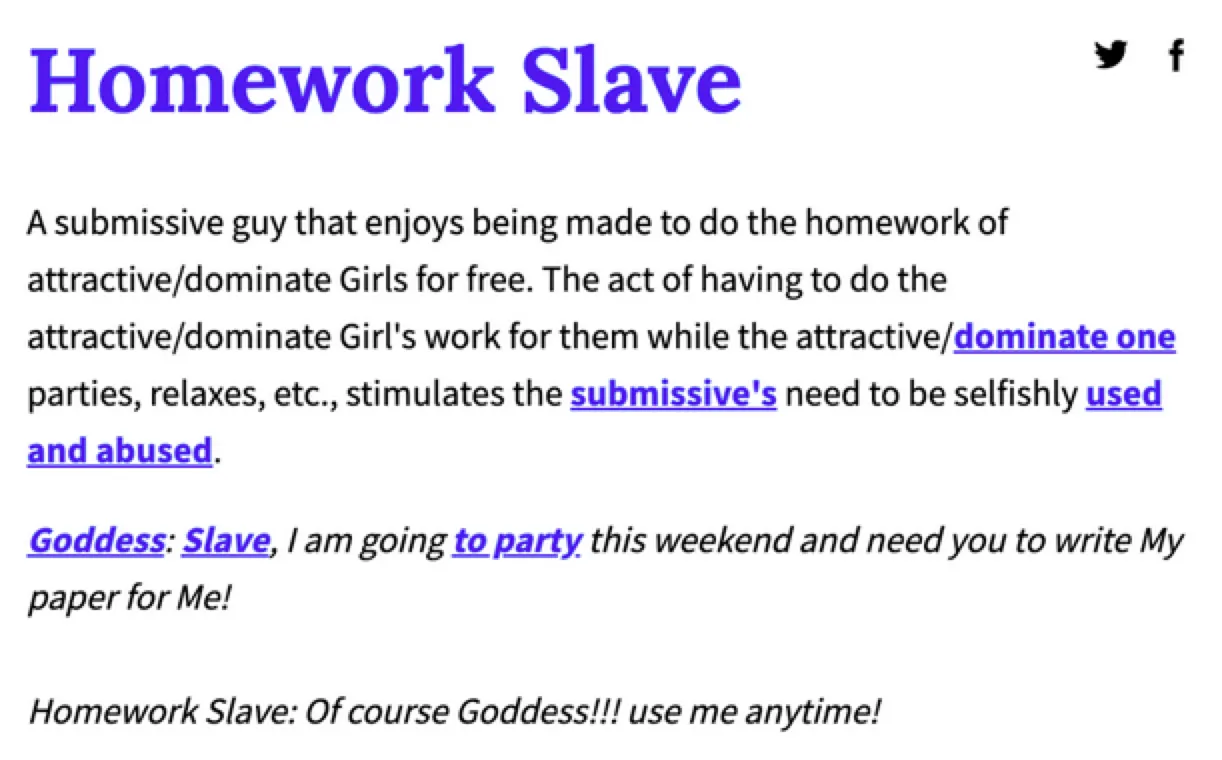
Don't ask—they're the modern-day Lei Feng. 'Completing the assignment and seeing my goddess's approving smile gives my life value.'


Academic Dishonesty Will Eventually Be Exposed
But what seems easy before the exam can lead to a reckoning after.
Taking American universities, which place great emphasis on academic integrity, as an example: acts like contract cheating and exam cheating are classified by severity. Minor cases may result in warnings or probation, while serious ones can lead to a hearing, suspension, or expulsion.
Remember the college admissions bribery scandal that shocked the world? Academic dishonesty ultimately comes with a steep price.

Let's look at how other countries are cracking down on academic misconduct.
UK: Essay Mill Operation Now a Criminal Offense
To curb academic fraud at its source, the UK Department for Education announced that essay mills will be deemed illegal operations: any entity providing educational services to students aged 16 and over that offers, arranges, or advertises contract cheating services for profit will be classified as a criminal offense.
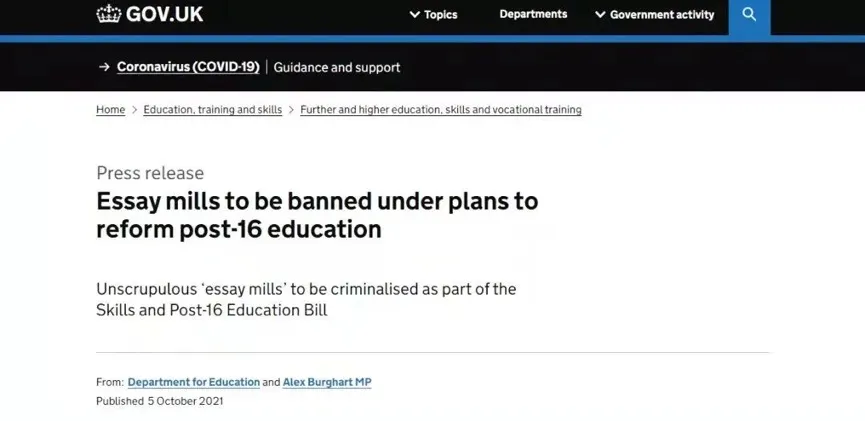
Once established, this educational bill will be a significant milestone for promoting academic integrity and protecting the value of UK degrees. It also helps shield students from the 'deceptive marketing practices of contract cheating services.'
Australia: Up to 2 Years in Prison, $200,000 Fine, and Expulsion
The Australian Department of Education has proposed draft legislation targeting contract cheating services: anyone providing academic fraud services will face two years' imprisonment or a fine of up to 200,000 Australian dollars.
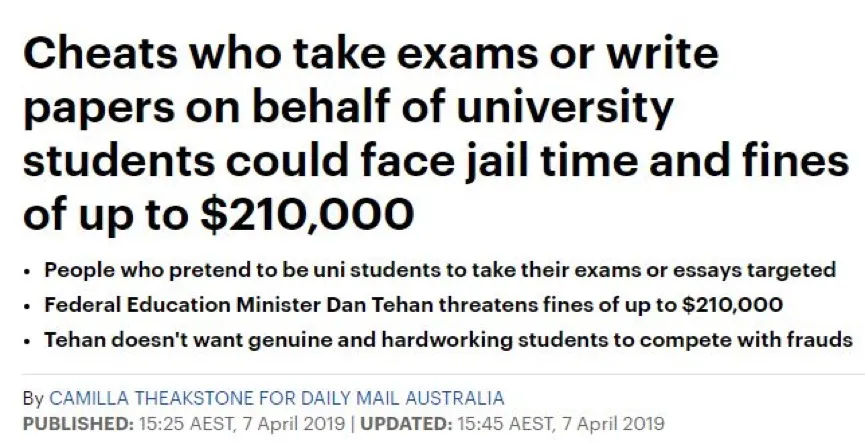
In addition, many Australian universities have jointly stated that once a student is found using contract cheating, they will be directly expelled and their student visa revoked. Students with such a record will also be unable to apply to other Australian schools in the future!
China: Revocation of Degrees and Records of Fraud
The Ministry of Education's 'Measures for Handling Degree Thesis Fraud' clearly stipulates that 'having someone else write or writing a degree thesis for others' constitutes degree thesis fraud. Once discovered, both the degree applicant and the ghostwriter will face penalties.
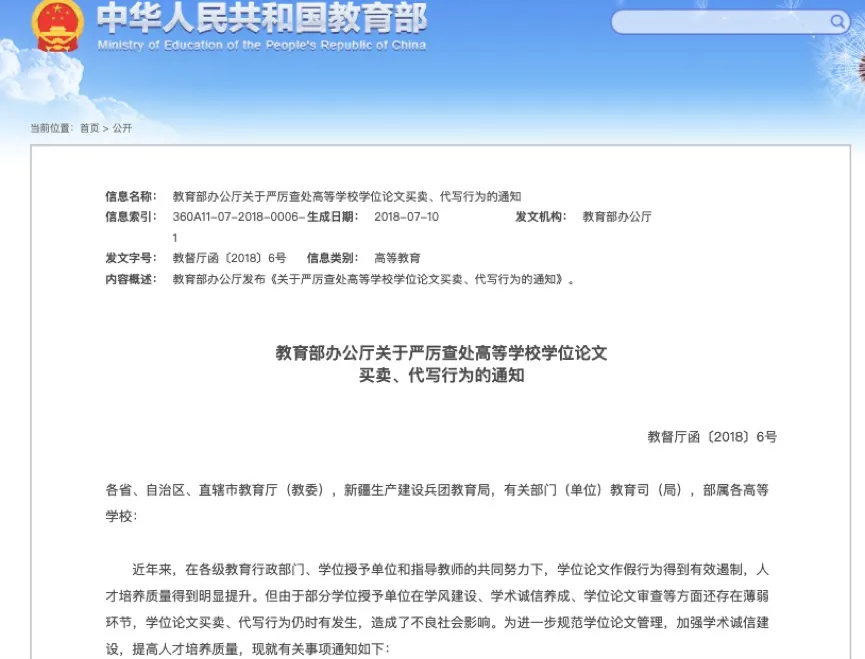
Students involved in buying or writing degree theses will face expulsion. Those who have already obtained degree or diploma certificates will have them revoked in accordance with the law. If the revoked certificates are already registered, they will be canceled and reported to the education administrative department to be declared invalid.
Having domestic degrees revoked and a record of fraud will also seriously affect students' future study-abroad applications.
Never Cross the Academic Bottom Line: Harming Others and Yourself
Whether for international or domestic students, academic integrity is our bottom line as students. Contract cheating, plagiarism, or exam cheating are extremely serious offenses.
Everyone knows this, but under the cumulative temptations of socializing, gaming, parties, and dating, students rushing to meet deadlines near finals or graduation may first think of taking unethical shortcuts.
Once a student is found guilty of academic misconduct, the basic penalties include retaking courses, suspension, or probation. In severe cases, they may be directly expelled, have their student visa revoked, be deported, and be unable to complete their studies.
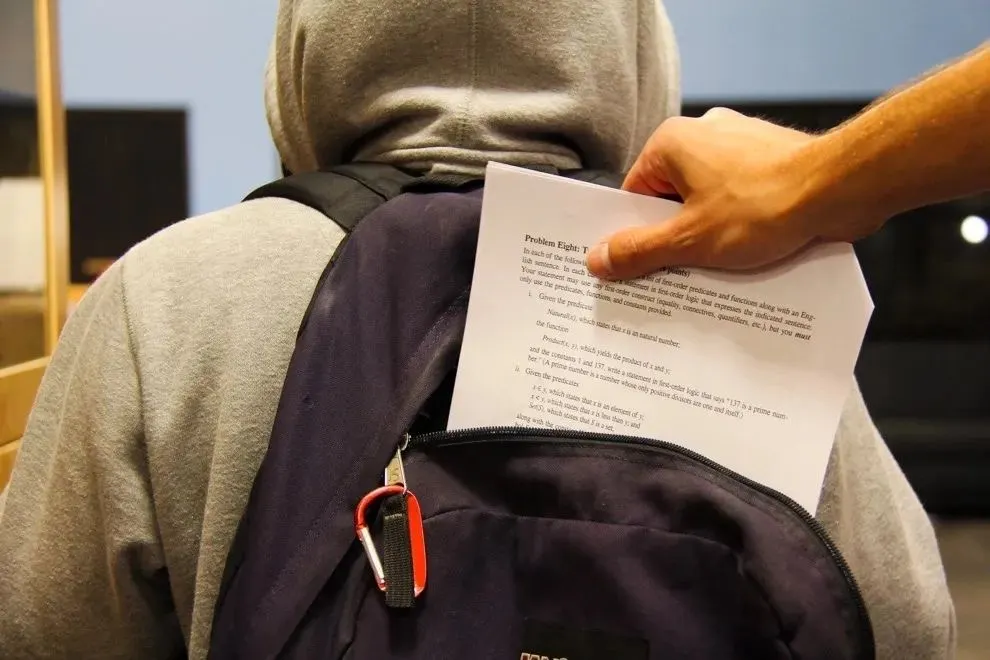
Every year, many students are suspended or expelled for academic dishonesty. This not only casts a shadow over one's personal integrity but also has a significant negative impact on future education and employment.
Contract cheating and exam-taking services are often scams as well.
A Chinese international student in California sought someone to do his assignments and later received an anonymous email demanding $5,000 in 'hush money' or else his academic fraud would be reported. Afraid of being expelled, he reluctantly paid up. Even if no further contact occurred, this incident likely became an ever-present 'ticking time bomb' in his mind.
.jpg?x-oss-process=style/opt-webp)
Taking risks for a momentary convenience or out of misplaced luck ultimately only ruins one's bright future.
There are no shortcuts to success. Students must attend classes seriously, study with integrity, and saturate themselves with knowledge while in school, never letting their hard work go to waste.