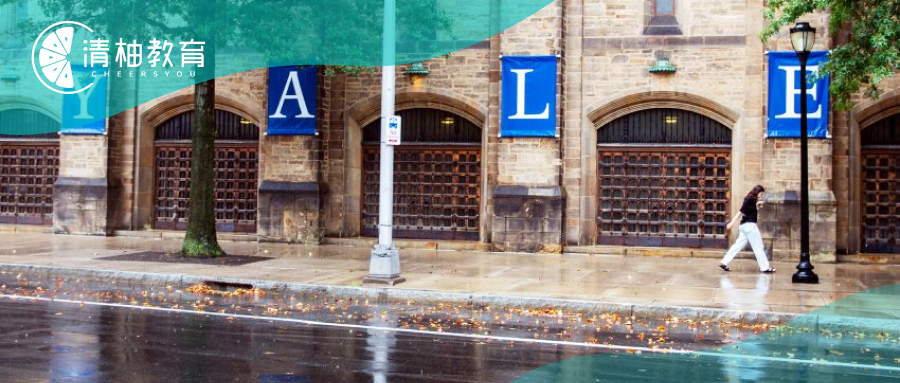
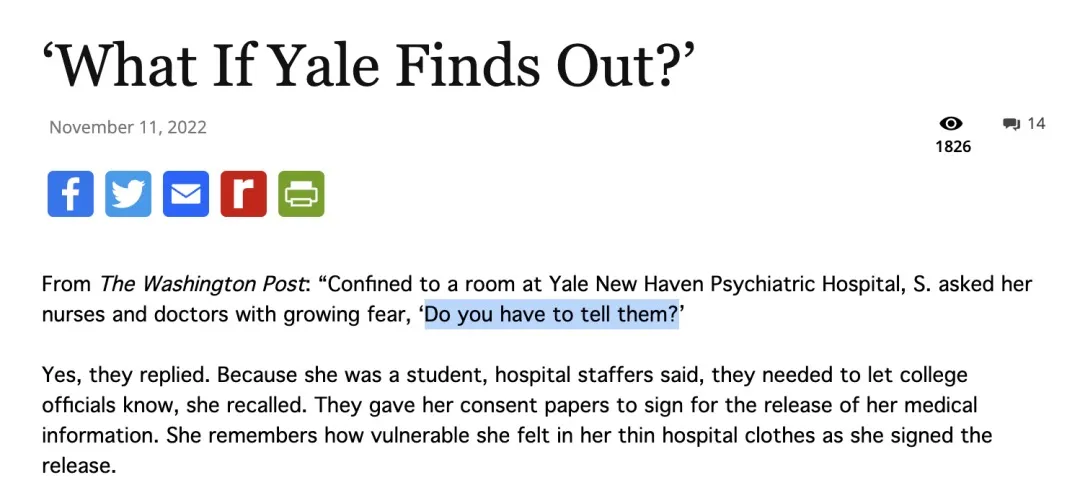
In a psychiatric hospital in New Haven, S cautiously asked the nurses and doctors: "Do you have to inform the university?"
Unfortunately, the answer was yes.
Later, university staff contacted this female student via Zoom and learned about her previous experience of sexual assault and how those experiences led to suicidal thoughts.
A few days later, the university recommended that she withdraw.
However, students who withdraw and wish to return to Yale must reapply.
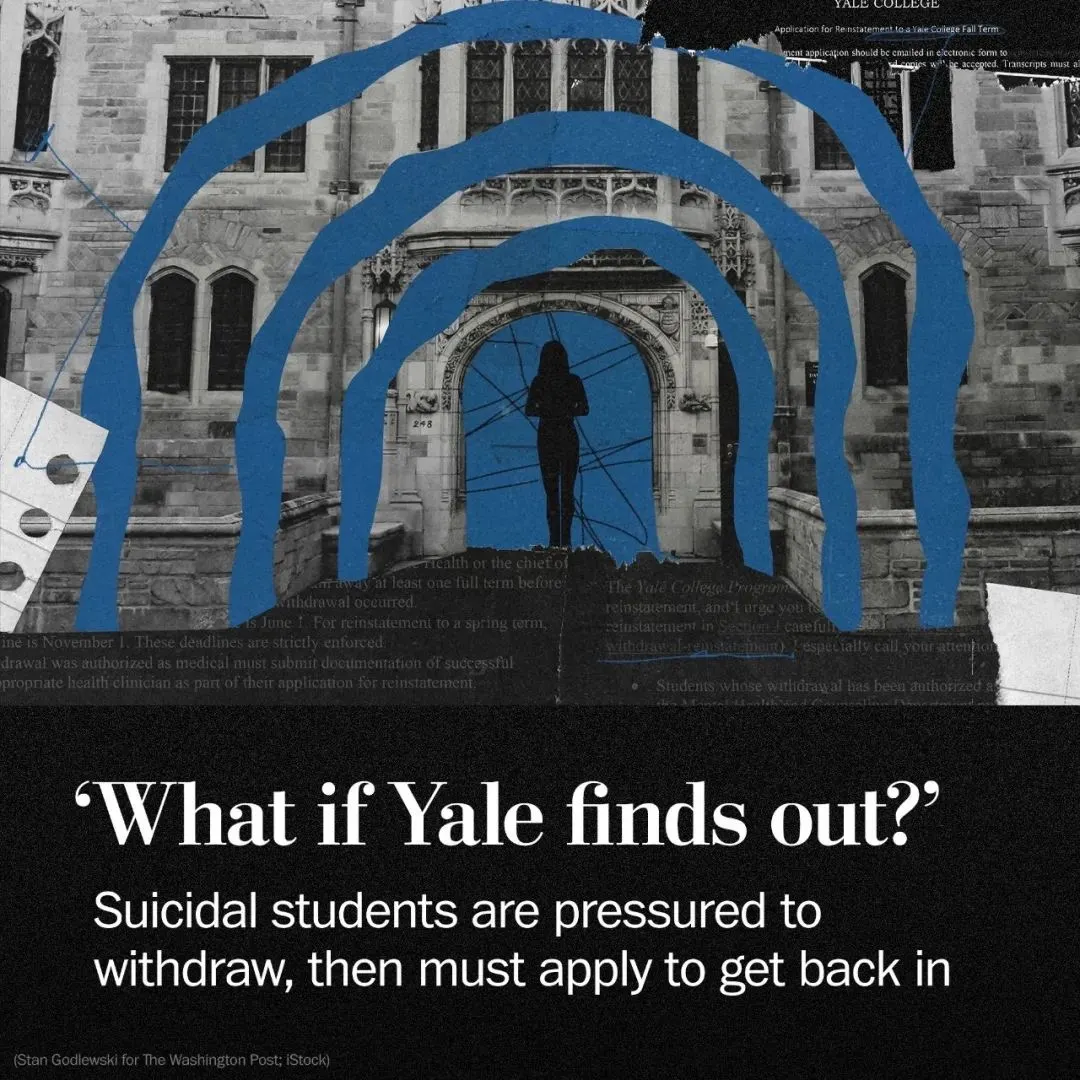
This means all the efforts she had made to get into Yale would be in vain.
She would have to leave her teachers and classmates, the people who had helped her. Her life would be derailed, and her dream of entering medical school would be shattered. Everything she cherished—past, present, and future—would be broken into pieces.
"Can you not tell Yale I attempted suicide?"
S understood that even if she didn't want to withdraw, the university could force her to.
Yale has an explicit policy that students with suicidal tendencies are not allowed on campus and must be cared for at home.
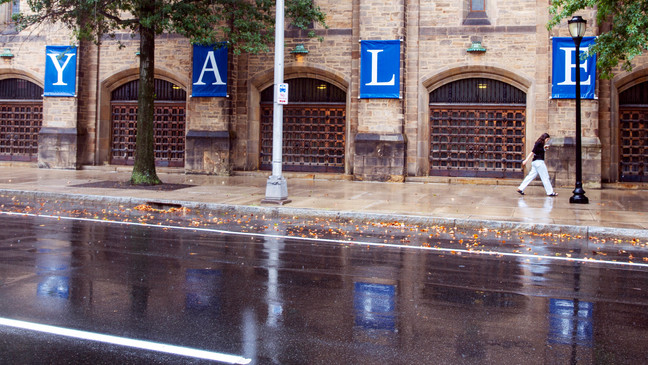
So students with psychological issues had to suffer in silence, afraid of being seen as different, and even more afraid of leaving Yale.
But is it really the students' fault?
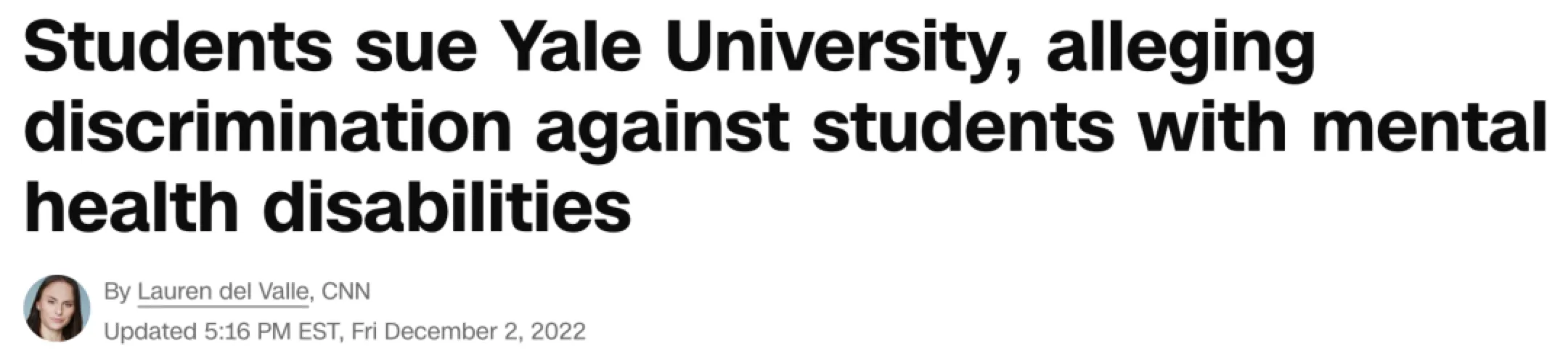
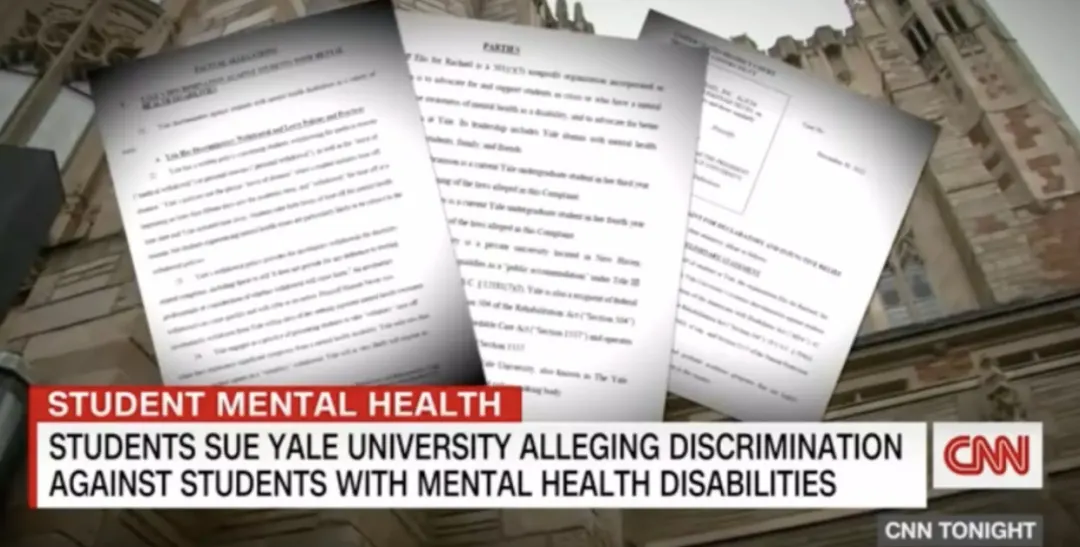
Recently, Yale University has been sued by current students and civic organizations, accused of "discriminating against students with mental illness." When students develop psychological problems or even suicidal tendencies, instead of helping, the university forces them to withdraw.
It is reported that when students exhibit serious psychological issues, the university pressures them into taking "voluntary" leave for one or two semesters, otherwise they will receive a "mandatory withdrawal" notice and must move out of the dormitory within 48 hours.
Moreover, without prior permission from the university, students who have been "forced to withdraw" are not allowed to visit the campus or participate in any campus activities, including summer courses open to non-students.
Yale alumnus and the plaintiffs' attorney, Rishi Mirchandani, said that when he was at Yale, he suffered from mental illness. What was even more painful was the university's attitude of simply wanting to wash its hands of the matter.
"For students with severe mental health issues, Yale wants nothing to do with them. They just want the students to withdraw."
Although Yale officials vehemently deny this, stating that the university cares deeply about its students and has been adjusting its withdrawal and readmission policies.
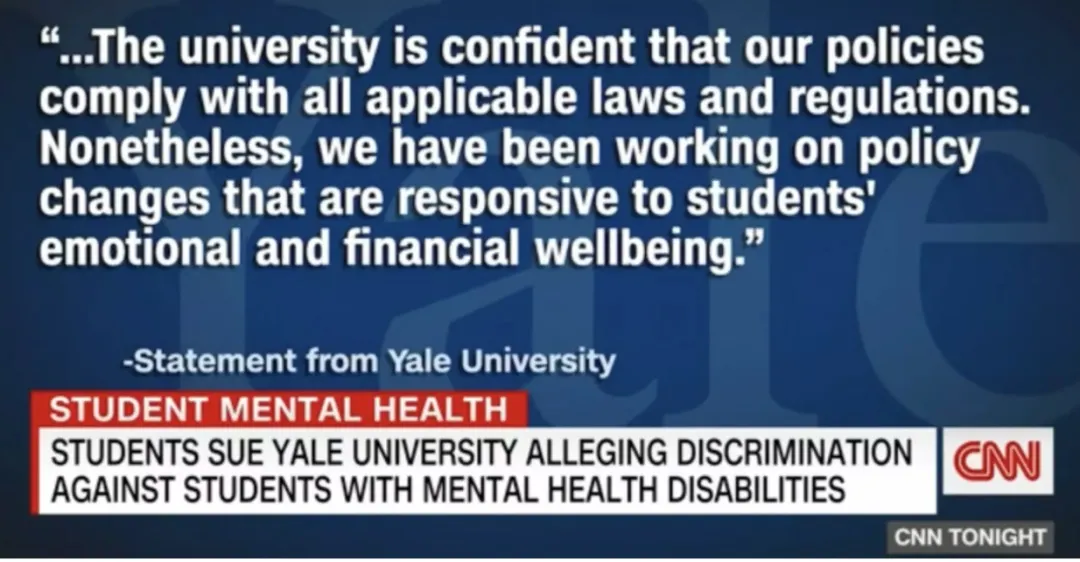
However, whether Yale can provide accommodation and assistance for students with suicidal tendencies remains unknown.
In fact, suicide at Yale is not an isolated case. At Yale and many other prestigious universities across the United States, young lives are lost every year.
Standing up for justice, but threatened with expulsion by Stanford?
Katie Meyer, 22, was just a few months away from graduating from Stanford.
As captain of the school's women's soccer team, she led Stanford to the 2019 NCAA Women's Soccer Championship. An outstanding student with a 3.84 GPA, she was the epitome of a "perfect child."
Yet this campus star with a bright future chose to end her young life this March, just before graduation.
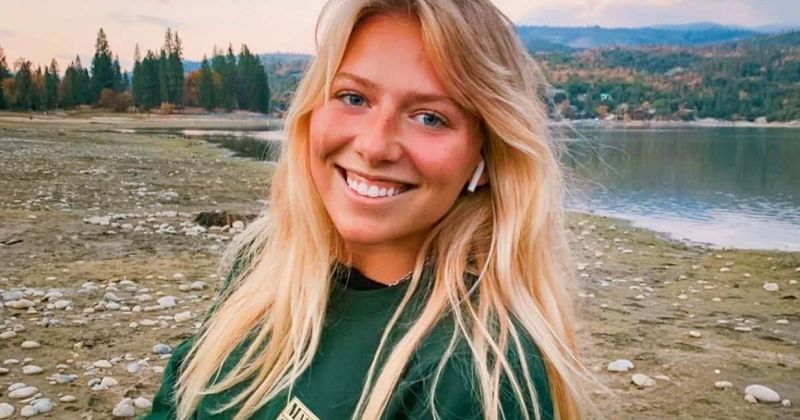
Meyer had always been a dazzling campus star. She excelled academically, was warm and sunny, excellent in character and learning, and possessed outstanding athletic talent.
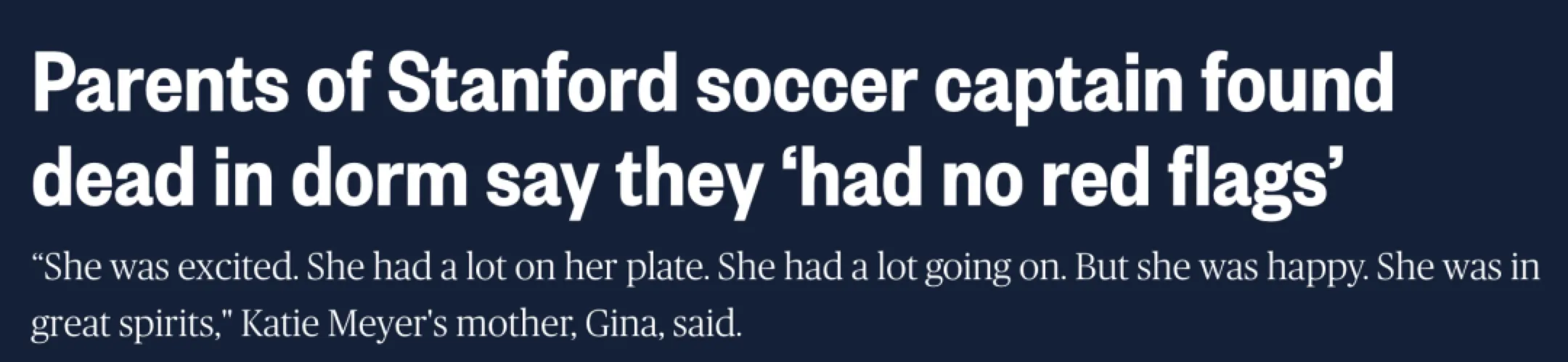
Shockingly and heartbreakingly, Meyer stood up for a friend and was threatened with expulsion by the university. Under immense pressure from the school, she made an impulsive decision and took her own life.
Last summer, an underage player on the team confided in Meyer that she had been sexually assaulted by a member of the school's football team. The university did not take any clear action; the player wasn't even removed from the team.
As captain, Meyer couldn't ignore this. Outraged, she threw a cup of hot coffee at the male student.
Unexpectedly, this act of standing up for what was right dragged Meyer into a bottomless abyss.

The university turned a blind eye to the sexual assault but severely clamped down on a girl's just action.
In September, Meyer received the first accusation letter from the school, filled with threats. School office staff later admitted it was a standard pressure process.
In her reply to the school, Meyer wrote:
"I've been under a lot of pressure these past few months, terrified that this would ruin my future."
"Perhaps the status of a football player is unshakable, but a female athlete's future can be destroyed by one mistake. I have spent my entire life afraid of making mistakes—no alcohol, no tickets, not even a single A- on my transcript.
Everything had to be perfect to keep me at Stanford. Like many female athletes, I have anxiety and perfectionism.
We know very well that as women in a professional environment, we can lose everything at any moment, and we must work twice as hard to prove ourselves. Any mistake is magnified, and any attitude is demonized.
I gave everything I had to Stanford and the people here. I love Stanford. So why would I risk it all on a Saturday afternoon?"
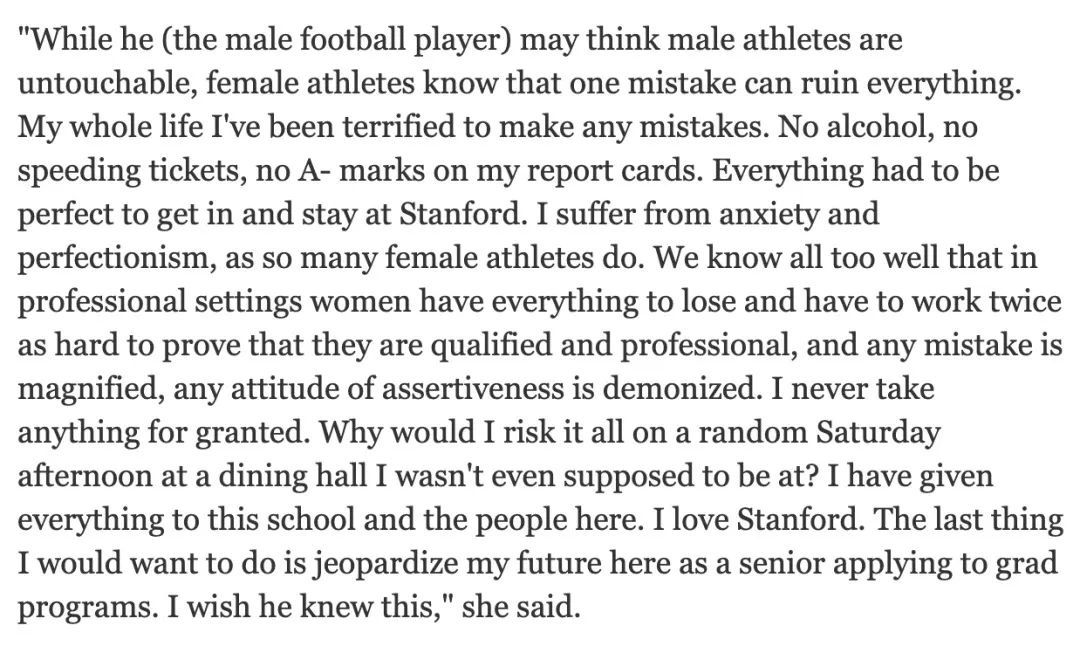
These words are truly heartbreaking.
Yet six months later, this March, Stanford still issued Meyer a formal written disciplinary notice, charging her with "spilling coffee on another student, violating the fundamental standards of the university."
The letter was full of threats, stating not only that she would face a three-month graduation delay but also that she might be expelled from the school and the team, lose her scholarship, and even be unable to attend Stanford Law School in the future.
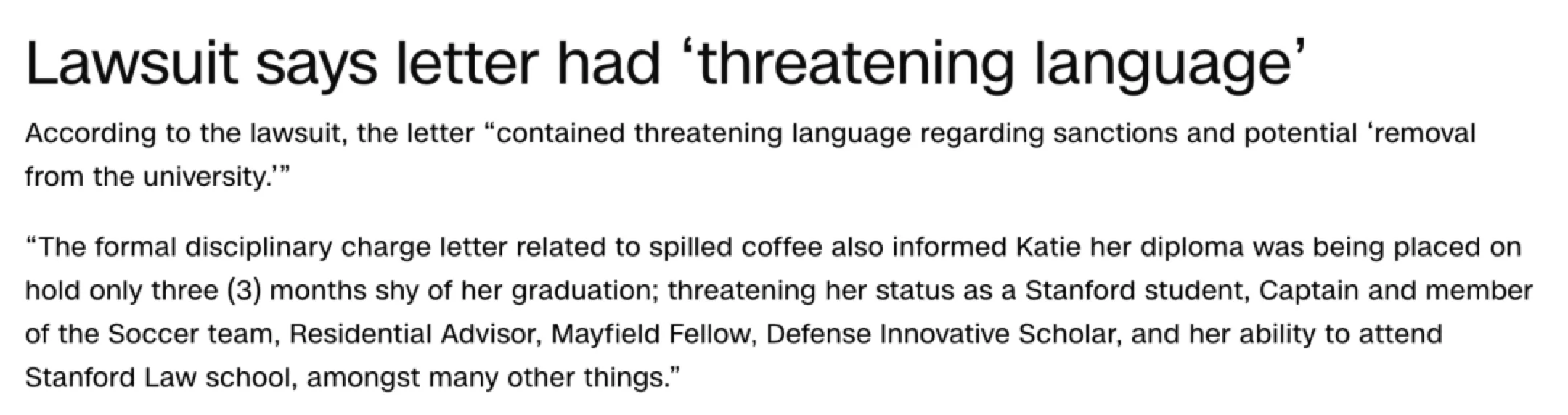
One can only imagine how desperate Meyer must have felt upon reading that letter.
That night, Meyer took her own life.
Her family, in their grief, also filed a lawsuit against Stanford.
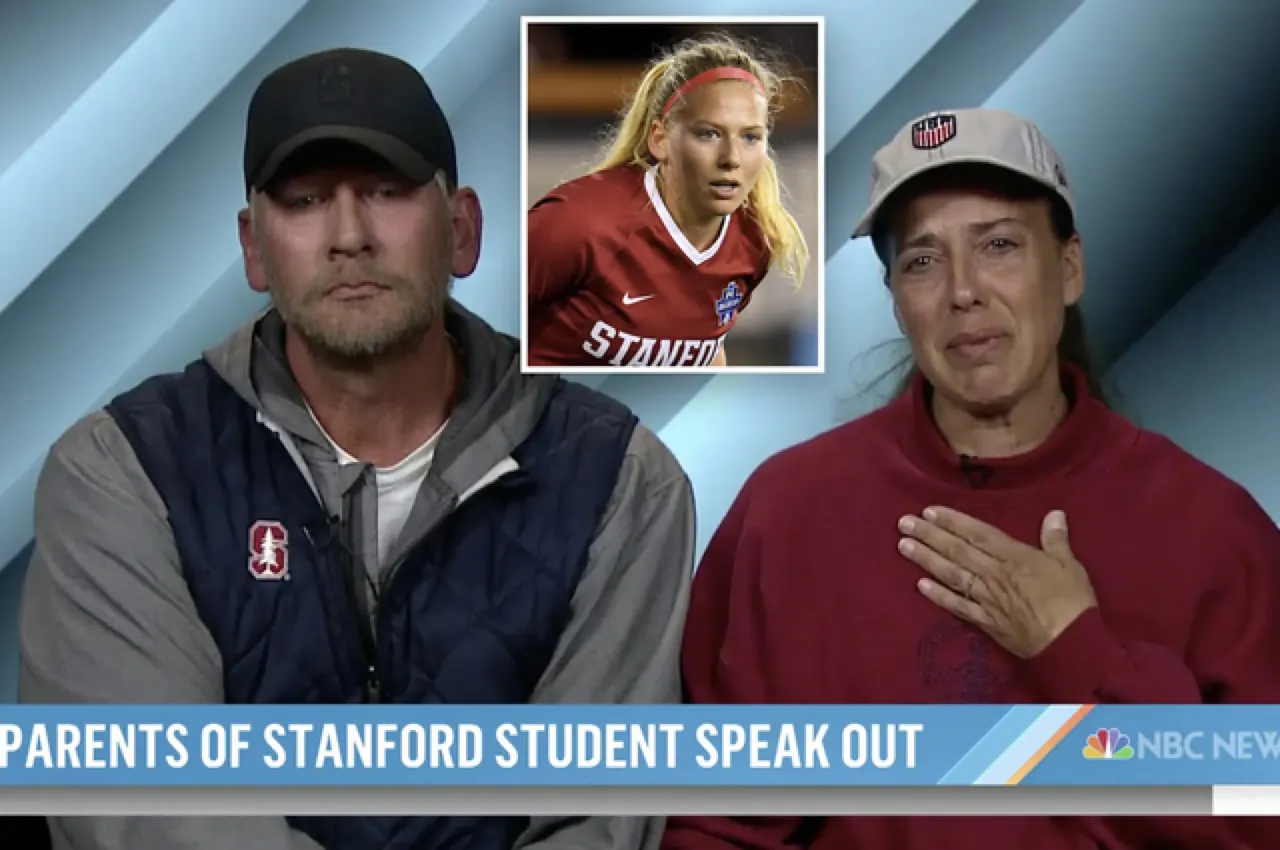
Stanford's arrogance was shocking. On December 1, the university issued an official statement denying that its actions were related to Meyer's death.
The statement said: "We strongly dispute any suggestion that the university is responsible for her death. The allegations made by the Meyer family contain false and misleading claims."
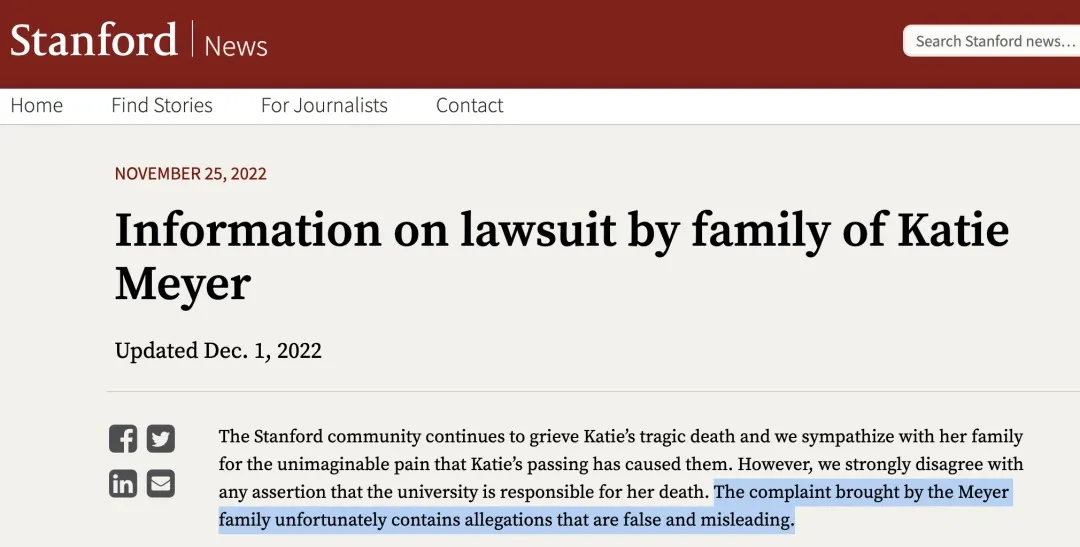
If none of this had happened, perhaps she would still be that girl running on the green field, entering law school after graduation, and continuing to bring glory to her school.
But now, all that past glory seems bitterly ironic.

According to the New York Post, at least nine Stanford students have died by suicide since 2019. The media attributes these suicides to the perfectionism of elite university students, which increases psychological pressure.
However, whether or not students are perfectionists, Stanford's indifference to the sexual assault case, its aggressive pressure on students, and its neglect of student mental health are all culpable.
Frequent suicides at elite universities
Since the beginning of 2022, Cornell University has already lost four students.
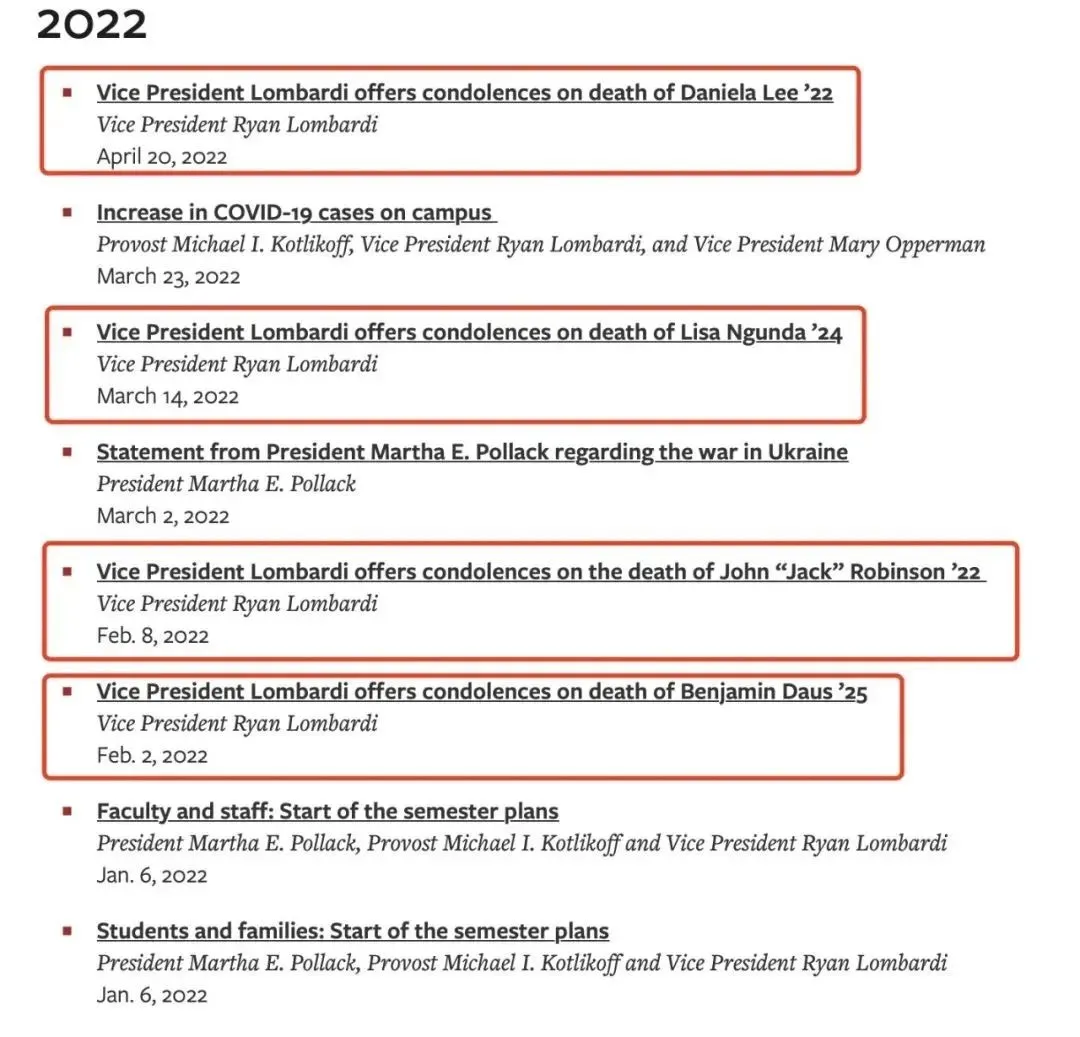
In March this year, Lisa Ngunda, a sophomore international student at Cornell, died suddenly while staying up late studying for an exam.
In April, Daniela Lee, a senior at Cornell who had been battling depression, passed away.
At Dartmouth College, two students committed suicide between August and September this year.
Senior Sam Gawel died by suicide on campus. He had entered Dartmouth as valedictorian of his high school and was a fraternity member.
Another senior, Joshua Watson, committed suicide at home. His father said he might have been too tired.
In October this year, Columbia University freshman Ashley Kim died by suicide. She had just transferred from UC Davis to Columbia this spring, and the various pressures after transferring became too much for her to bear, leading her to take her own life.
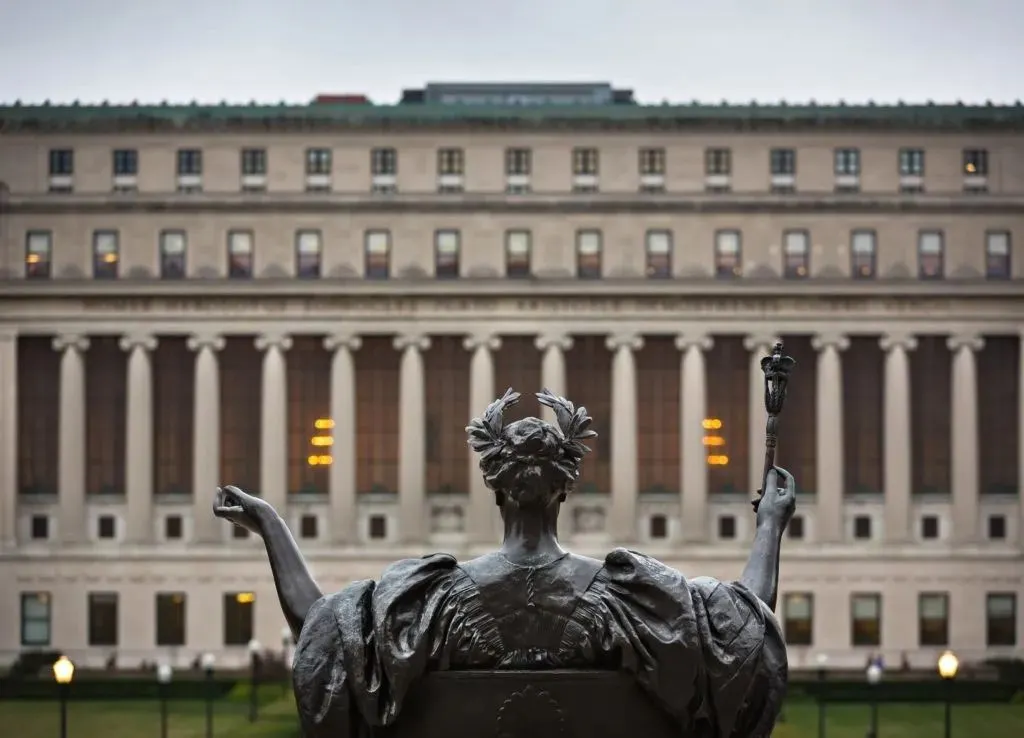
These top students from elite institutions survived the fierce competition to get in, only to fall into the abyss after setting foot on their dream campuses.
College in the US is academically demanding, especially at prestigious schools.
How to find your balance among outstanding peers, manage a heavy study load while handling social life, and stand out in internships and campus recruiting... all these pressures, competition, and feelings of inadequacy place enormous psychological burdens on students.
It feels like you can't make a single mistake, or you lose everything. That fear and suffocation hang like a sword over the heads of these academic stars.
According to a Boston University survey, from 2013 to 2021, the number of college students nationwide suffering from depression increased by 135%, anxiety rose by 110%, and the number of students diagnosed with at least one mental health issue doubled.

International students facing mental health issues: how to self-rescue?
Among the hundreds of thousands of Chinese students studying abroad, many also face mental health problems.
According to the 2022 "Survey on Psychological Problems of Chinese International Students in the US" published by PLOS JOURNALS, among 1,881 respondents, 24.5% of international students had depression and 20.7% had anxiety.

When international students arrive in a completely new environment, they need to readjust in many ways. Language and cultural shock, academic or financial pressures, and limited social interaction under the pandemic—any one of these factors could be the last straw that breaks the camel's back.
While studying abroad, it's important to pay attention to your mental health. If you notice any fluctuations or abnormalities in your psychological state, be sure to deal with them promptly and effectively.
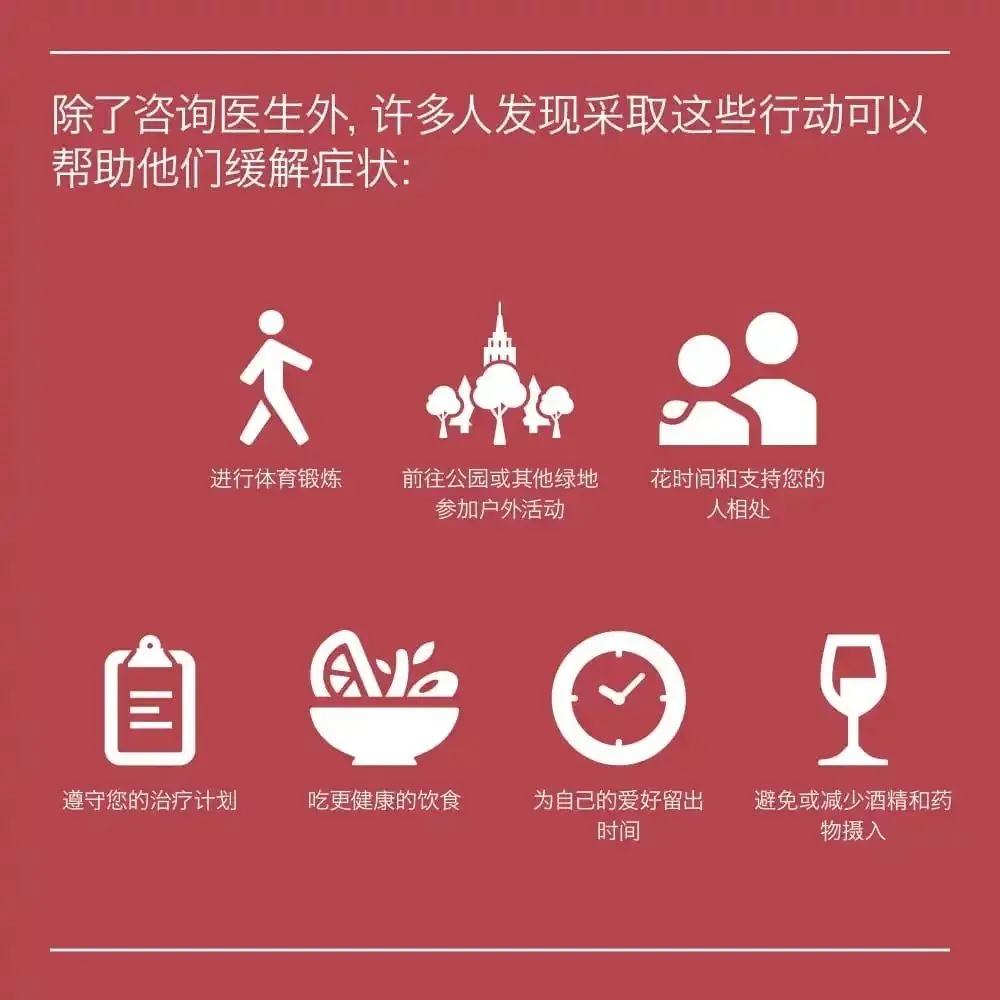
Besides consulting a doctor, exercise regularly, eat healthily, and maintain physical and mental well-being. Talk and share with family and friends, and do things you enjoy.
In the grand scheme of life, nothing happening right now is really that important.