As we enter late January, U.S. graduate applications are at their most critical final sprint. Many students have already completed their preparations and are systematically submitting applications or awaiting results.
But some are still stuck at the school selection stage...
GPA is just okay, experience isn't rich, GRE scores keep getting delayed, yet you don't want to miss the 23 Fall cycle. There's always a workaround, and here CheersYou(清柚教育) must mention the old notion of "safety school" SPS colleges.
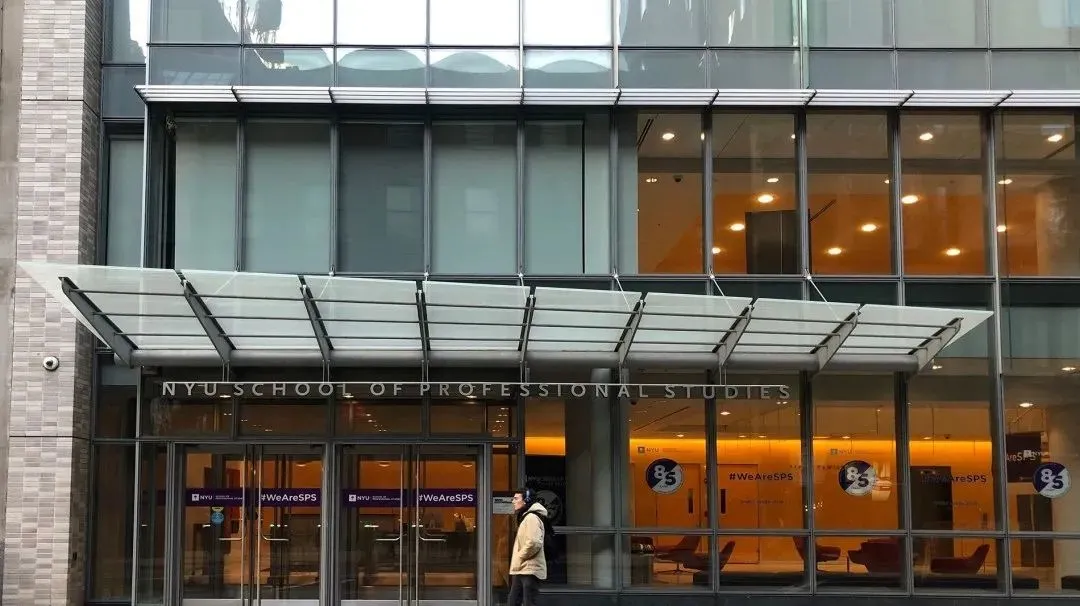
This college, present at nearly every major North American university, has long been at the bottom of the application hierarchy and was demonized early on as "a desperate last resort."

So much so that just mentioning SPS triggers reflexive resistance from students, everyone online looks down on it, and if an advisor recommends it, they're accused of pushing a trap.
Envious of others' graduation photos? Just curse SPS colleges; after all, SPS students are the "scapegoats."
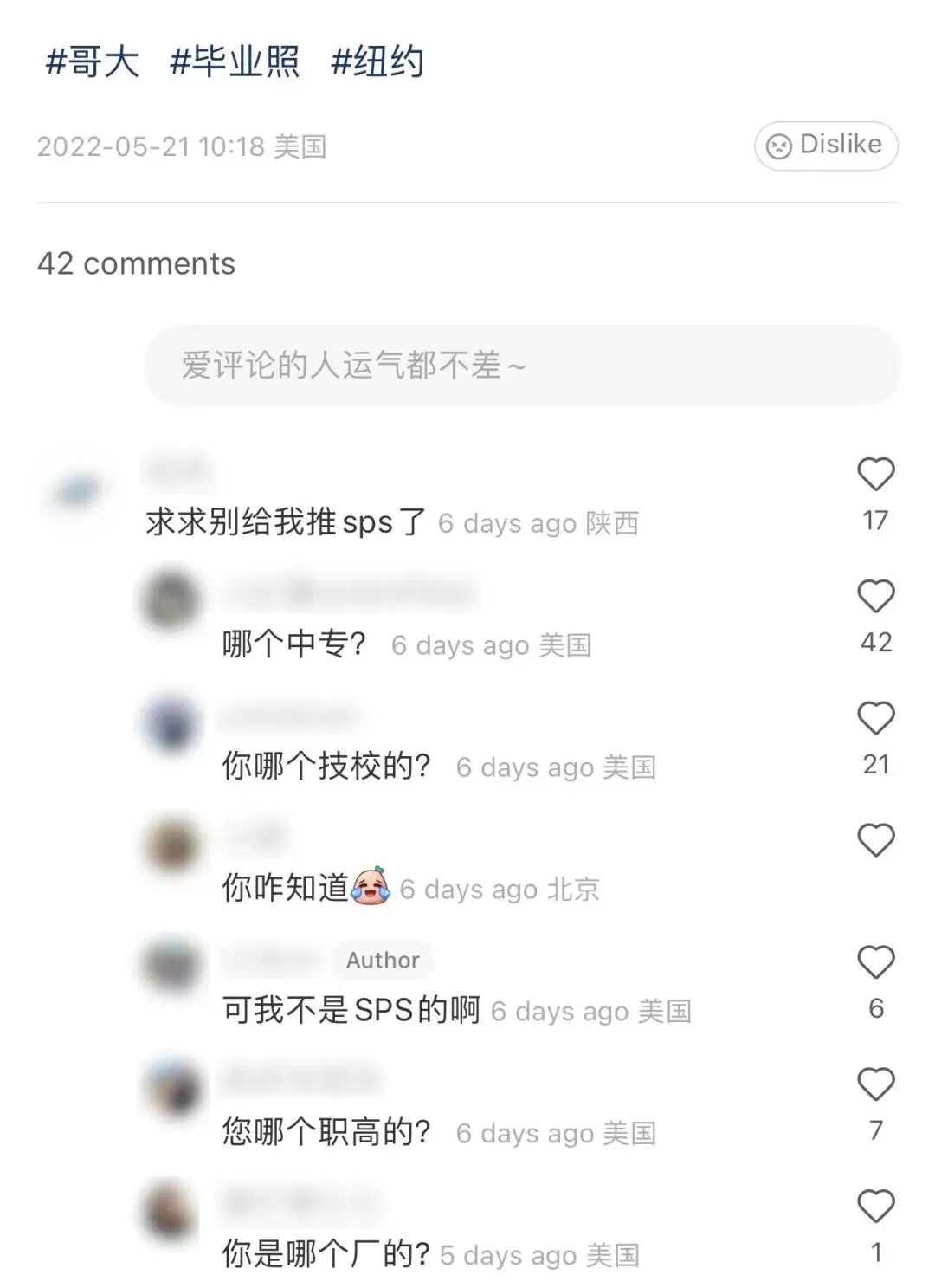
But sorry, starting with the 2023 application cycle, SPS colleges now look down on you.
.gif)
SPS Admission Thresholds Low? 23Fall Will Teach You a Lesson
Academic Review Becoming Stricter
Starting with the 23Fall application season, NYU's SPS college has tightened transcript review:
For current semester grades at the application stage, the corresponding transcript must be submitted before the admissions office begins reviewing your application.
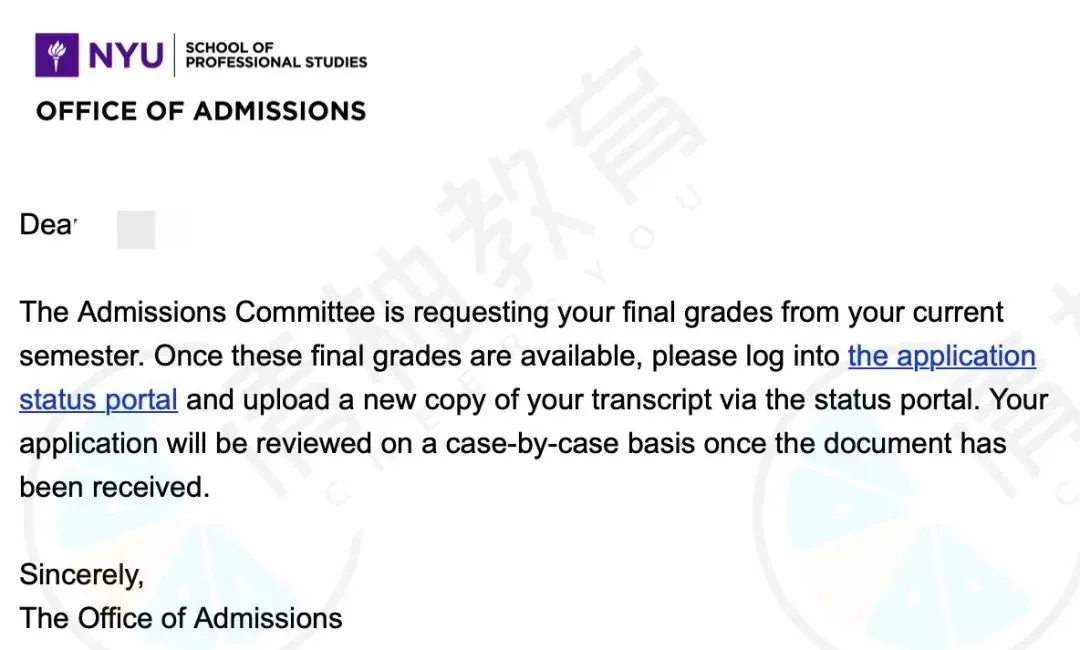
Think you can slack off after submitting? SPS tells you: no way!
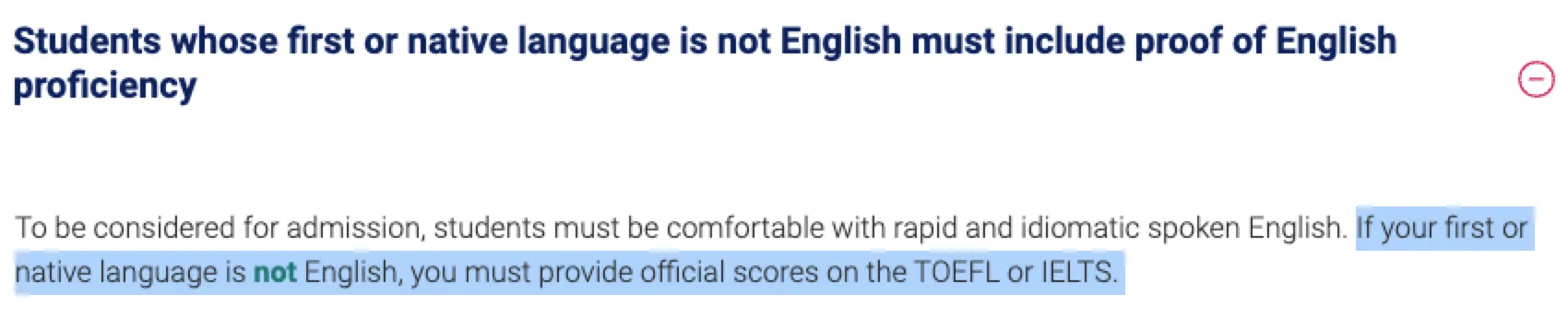
Columbia's SPS college has been strict for years; some programs even require U.S. undergraduates to submit TOEFL scores.
Interviews Tougher Than Ever
Kira interviews have become standard across SPS colleges. The era of pain-free, no-interview SPS applications officially ended with the 23Fall cycle.
Take a look at the unprecedented, mind-bending question thrown at NYU SPS's new Kira interview this year:
Describe what a flower is to someone who has never seen or heard of one before. Please walk us through your thinking. What are the possibilities? What different strategies could be used to solve this problem?
60 seconds to prepare, 90 seconds to answer.
If an applicant is unprepared, facing this in the interview basically means 150 seconds of hell.
(5).gif)
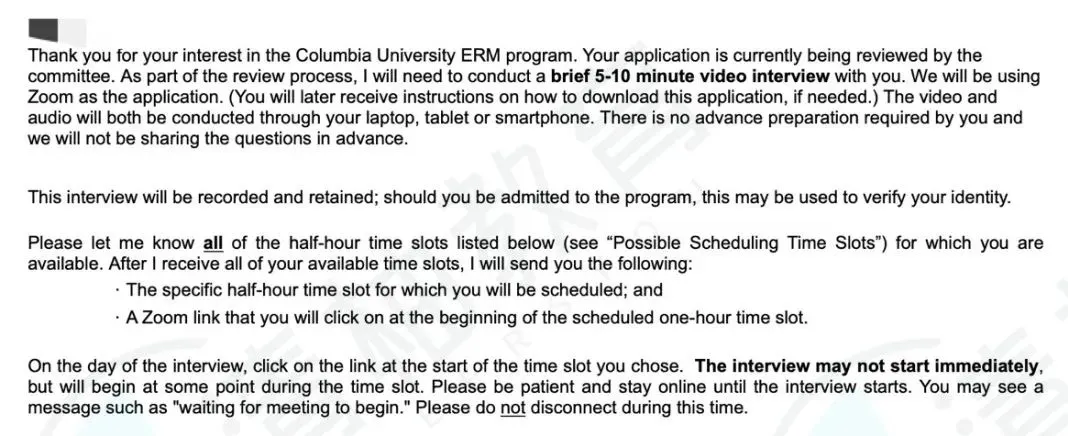
Columbia's SPS interview process is even more complex; in addition to the Video Interview, virtually all applicants must undergo a live interview.
New Recommendation Letter Tricks
Columbia University's SPS college also updated its recommendation submission policy for 23 Fall.
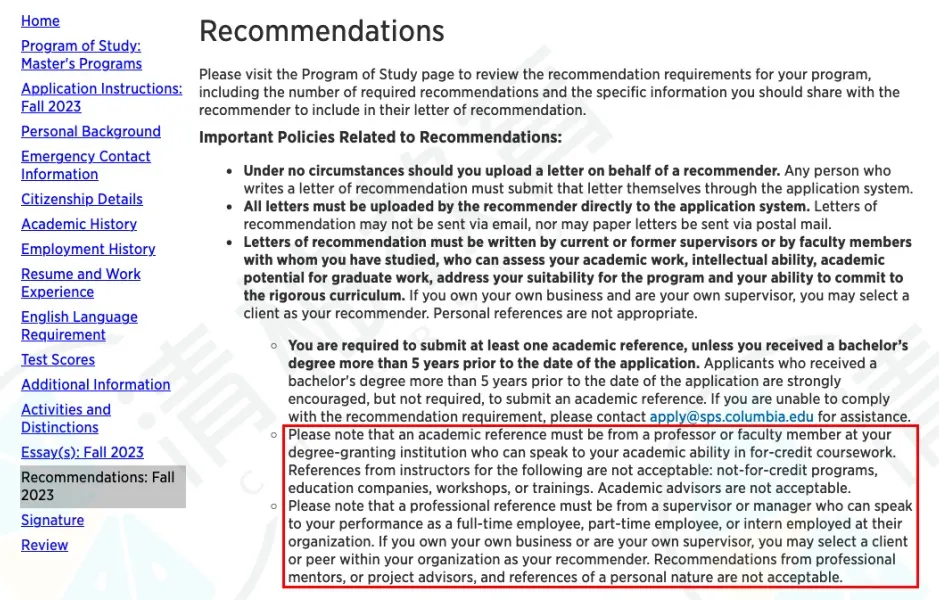
For academic recommenders, Columbia SPS now explicitly requires that they must be from a degree-granting institution and be a professor or faculty member who can attest to your for-credit coursework.
For internship recommenders, Columbia requires the supervisor or manager to write the recommendation. They must also specify the recommender's current and past work units.
For the resume and work experience section, Columbia SPS this year also asks applicants to clearly distinguish whether they used paid internship referral services.

Such detailed background checks—even job hunting might not be this rigorous!
Raising the Bar Across the Board
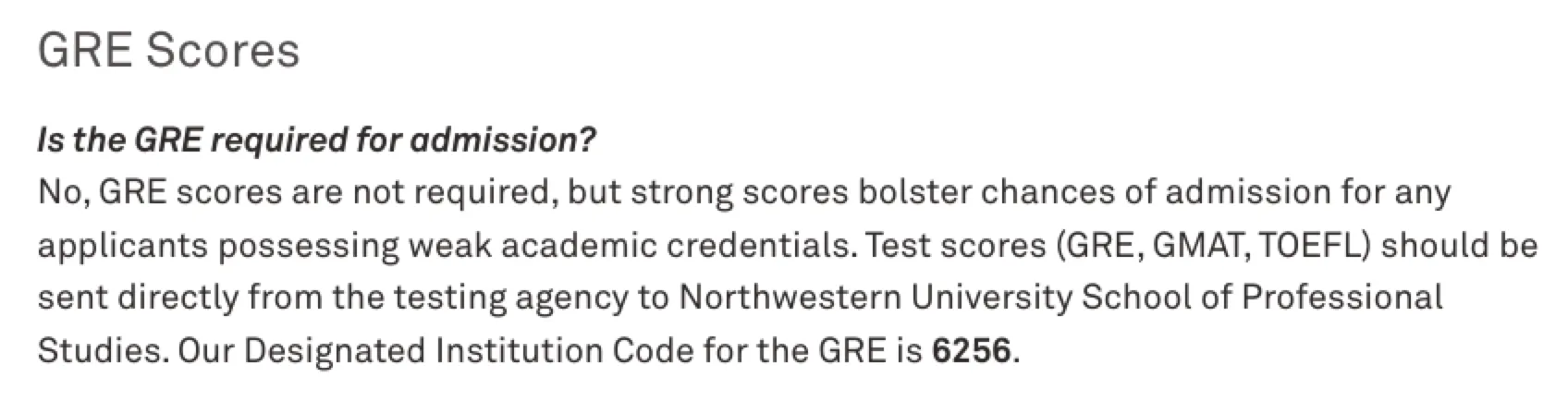
Northwestern's SPS college, while not mandating GRE scores, clearly states: for applicants with weaker academic backgrounds, a high GRE score will increase admission chances.
At NYU's SPS college, some programs require a minimum TOEFL of 110 or IELTS of 8; others need 100 and 7, respectively. Those who fail to meet SPS language score requirements will be forced to take the VEPT exam.
.jpg?x-oss-process=style/opt-webp)
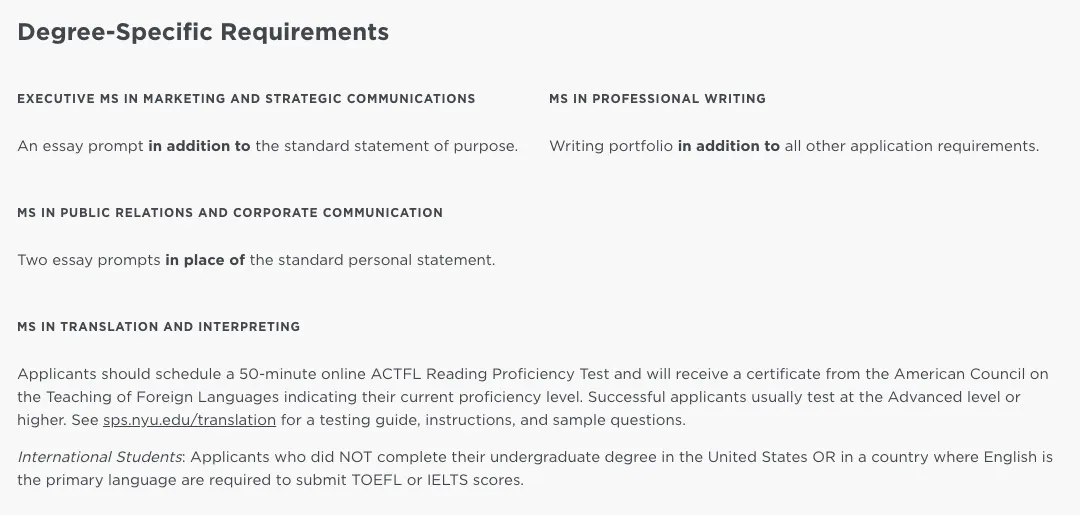
Furthermore, some SPS programs have specific application requirements. For example, NYU's PRCC program requires two essays, and the Professional Writing program requires a writing portfolio...
The overall application requirements for SPS colleges now stand at around GPA 3.4+ and TOEFL 110+. Many programs have even higher requirements, favoring those with work experience.
Apply and get in automatically? SPS says: not a chance.
SPS: Tomorrow You Won't Be Able to Look Down on Me
A College That Triggers Aversion Just by Its Name?
SPS (School of Professional Studies) is a common college across U.S. universities, sometimes appearing under SCS, CPS, or SCPS acronyms.
Nonetheless, whenever words like "professional" or "continuing" are heard, many students and parents immediately become resistant.
Over the years, controversy around SPS colleges has never ceased. The main points of contention fall on admission thresholds, course quality, and employment prospects.
The Original Purpose of SPS Colleges
The first SPS college appeared at the University of Chicago, later followed by Harvard, Columbia, NYU, and other top schools.
Most SPS colleges host business-related or highly vocational programs. The original intent was career-oriented, closely tied to market industries, aiming to cultivate more practice-oriented professionals for society.
Some highly specialized fields like sports management, real estate development, or tourism management, as well as broader business categories like marketing, project management, and human resource management, often face awkward classification issues.
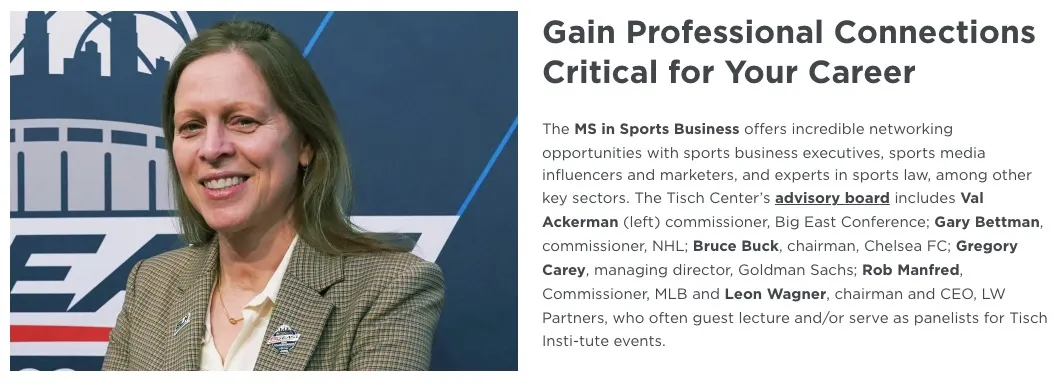
Putting them in a business school would raise admission standards too high, contradicting the goal of cultivating more practice-oriented talent; placing them in liberal arts or engineering colleges would be a poor fit. Thus, universities set up SPS colleges to reasonably house these programs.
When SPS colleges first appeared, education consultants exploited the "new college, lower threshold" loophole and funneled in large numbers of international students. The two "original sins"—low admission difficulty and many Chinese students—quickly spawned the one-sided view that "anything SPS is garbage."
But now in 2023, if you still cling to this mindset, you're the one lagging behind.
SPS Colleges Have Long Changed
According to the latest official data released by Columbia SPS, aside from pandemic-era rebounds, enrollment growth in SPS colleges has gradually slowed.
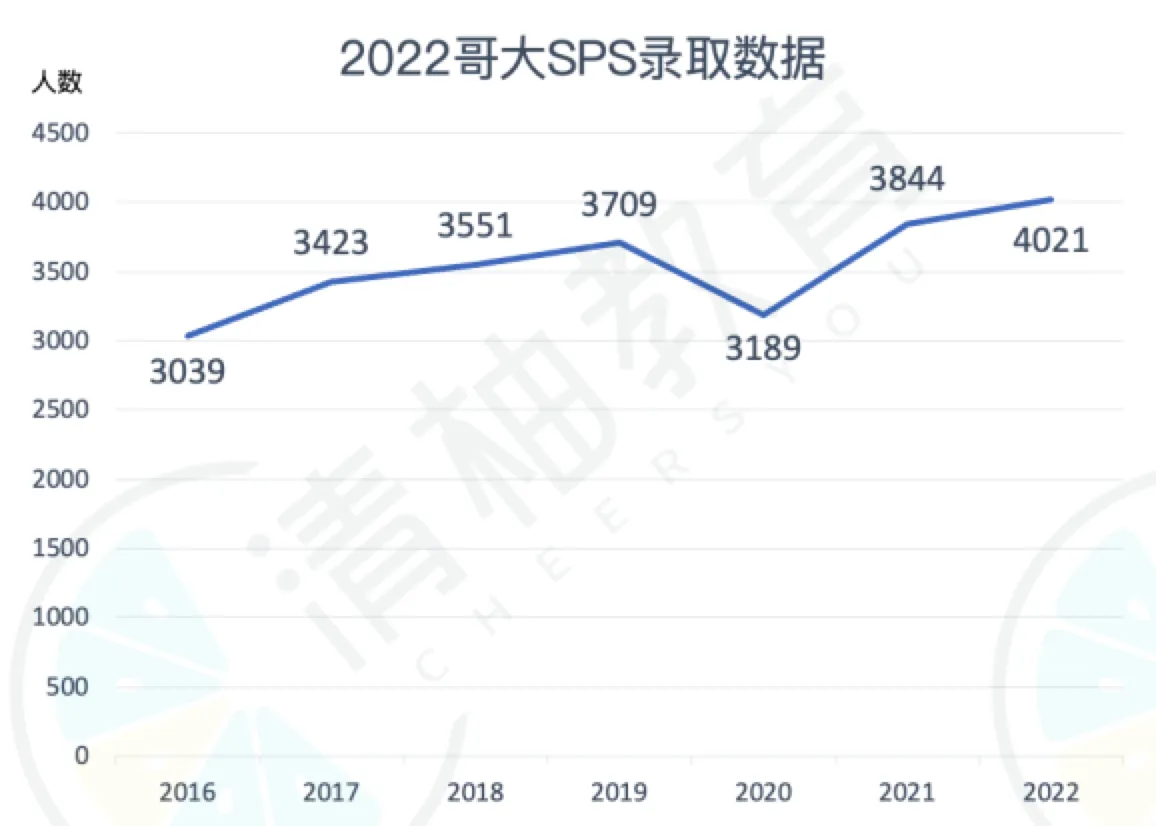
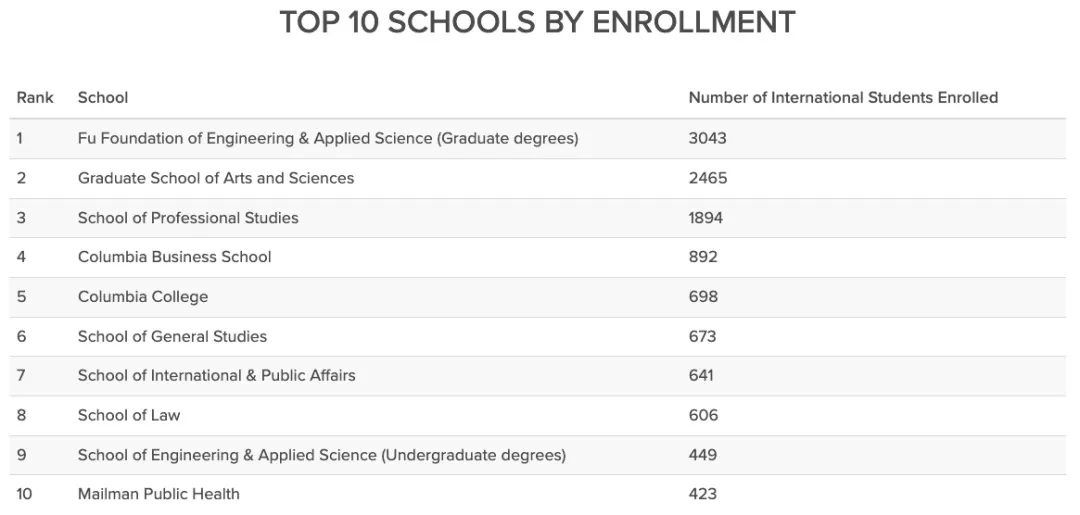
SPS is also not the college with the most international student enrollment at Columbia.
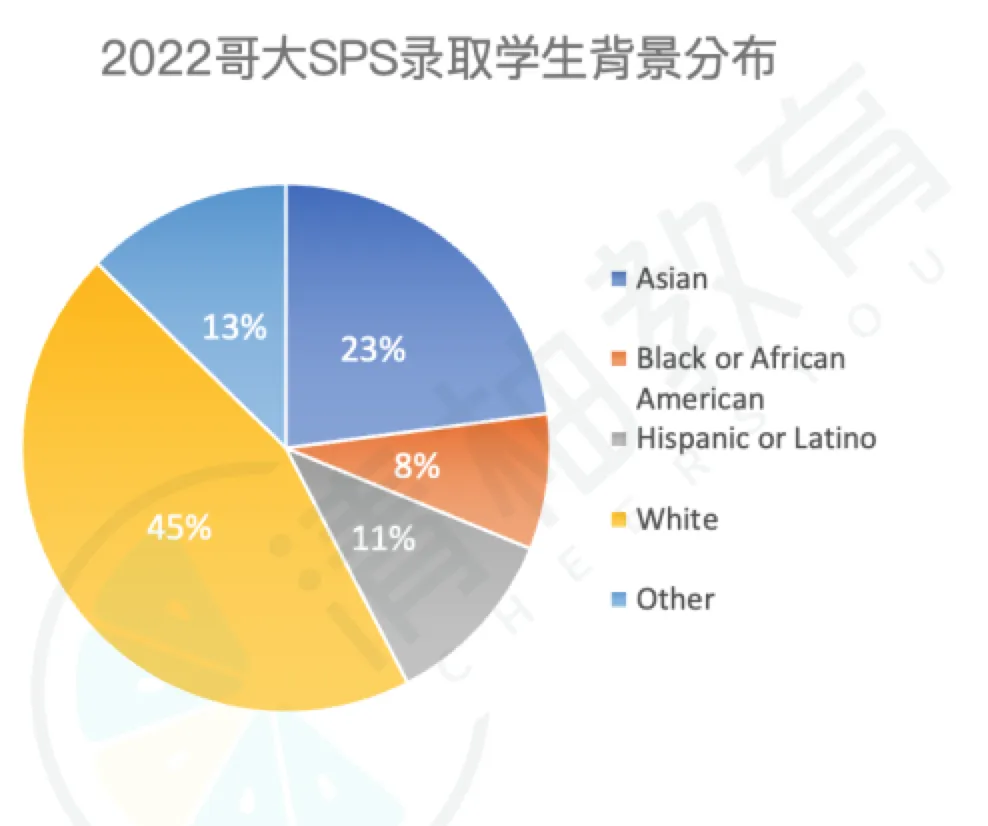
Among the newest admitted students in 2022, Asian students, including those from China, accounted for 23%. Nearly half were white students, with no sign of Chinese students being everywhere.
The long-rumored extreme cases of "buying your way into SPS with an ultra-low GPA" are virtually impossible under today's strict anti-fraud verification systems. Even if such an applicant slipped through, they would eventually be discovered and expelled by the university.
Today's SPS colleges have long updated their official websites with legitimate programs, and the phenomenon of mixed-quality students and faculty has diminished; waitlists and rejections are being issued more confidently than ever.
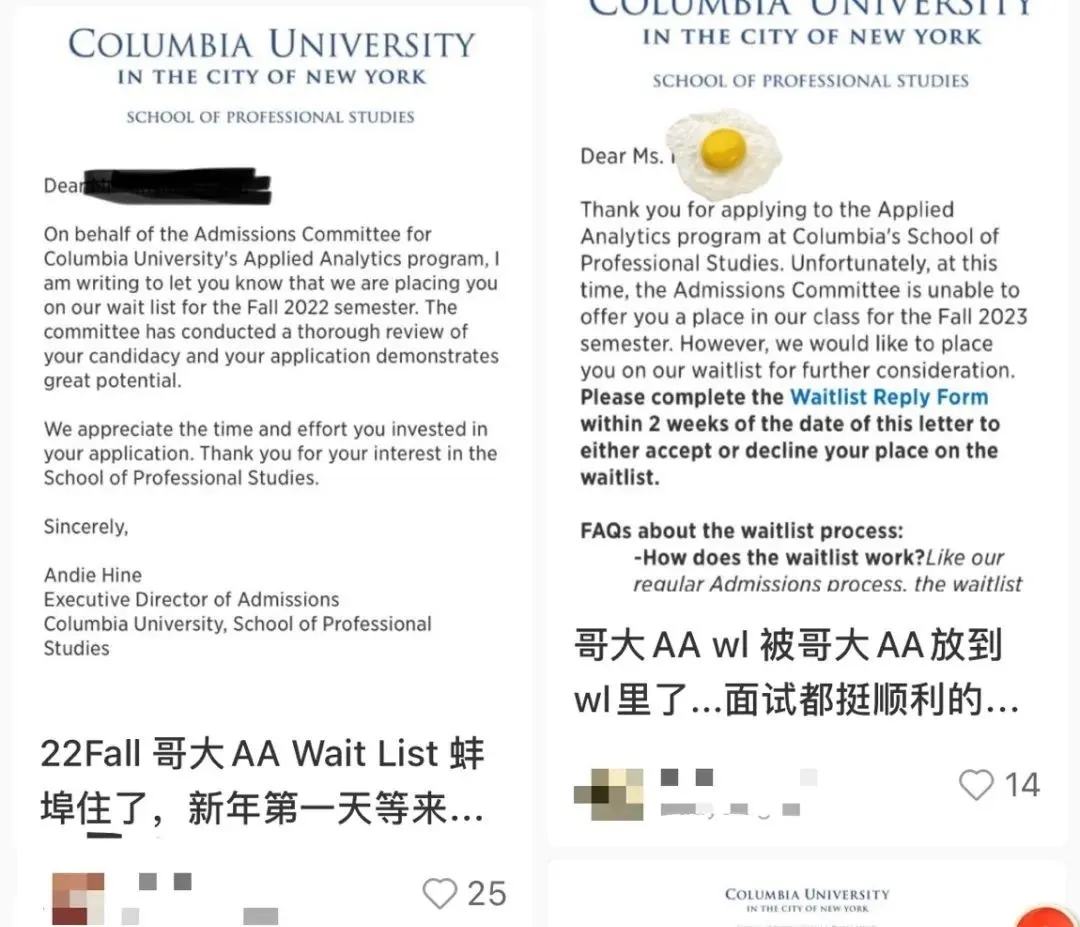
For applicants with unremarkable GPAs, no GRE scores, no work or internship experience, and average backgrounds across the board—you're still reading old negative comments, aiming too high and settling too low, being overly picky.
Even if you applied now, SPS probably wouldn't consider you.
SPS Courses and Employment: No Need to Hate for Hating's Sake
SPS curricula have always been close to market needs, emphasizing the application of theory to practice, enhancing students' practical skills within their industries.
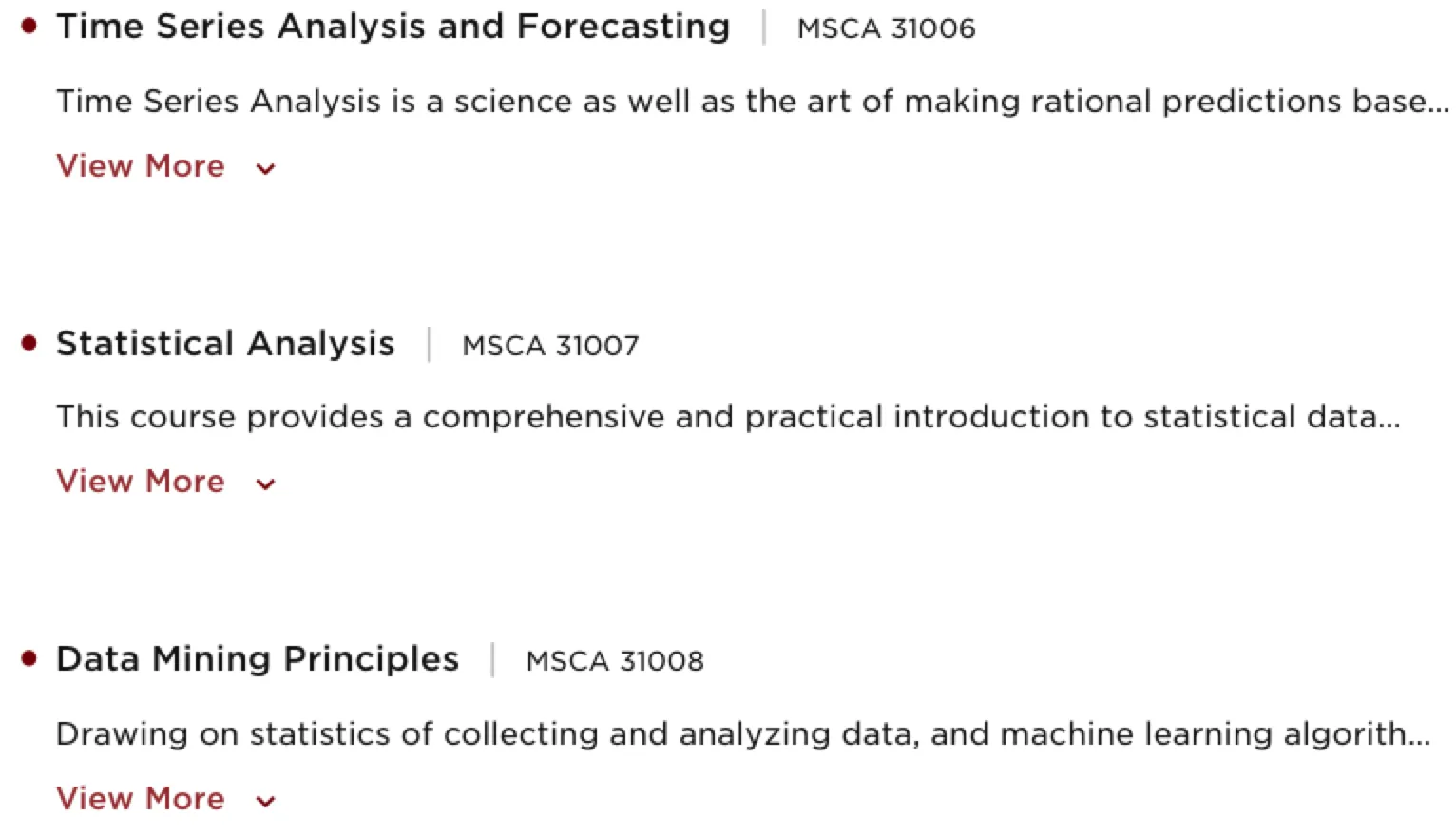
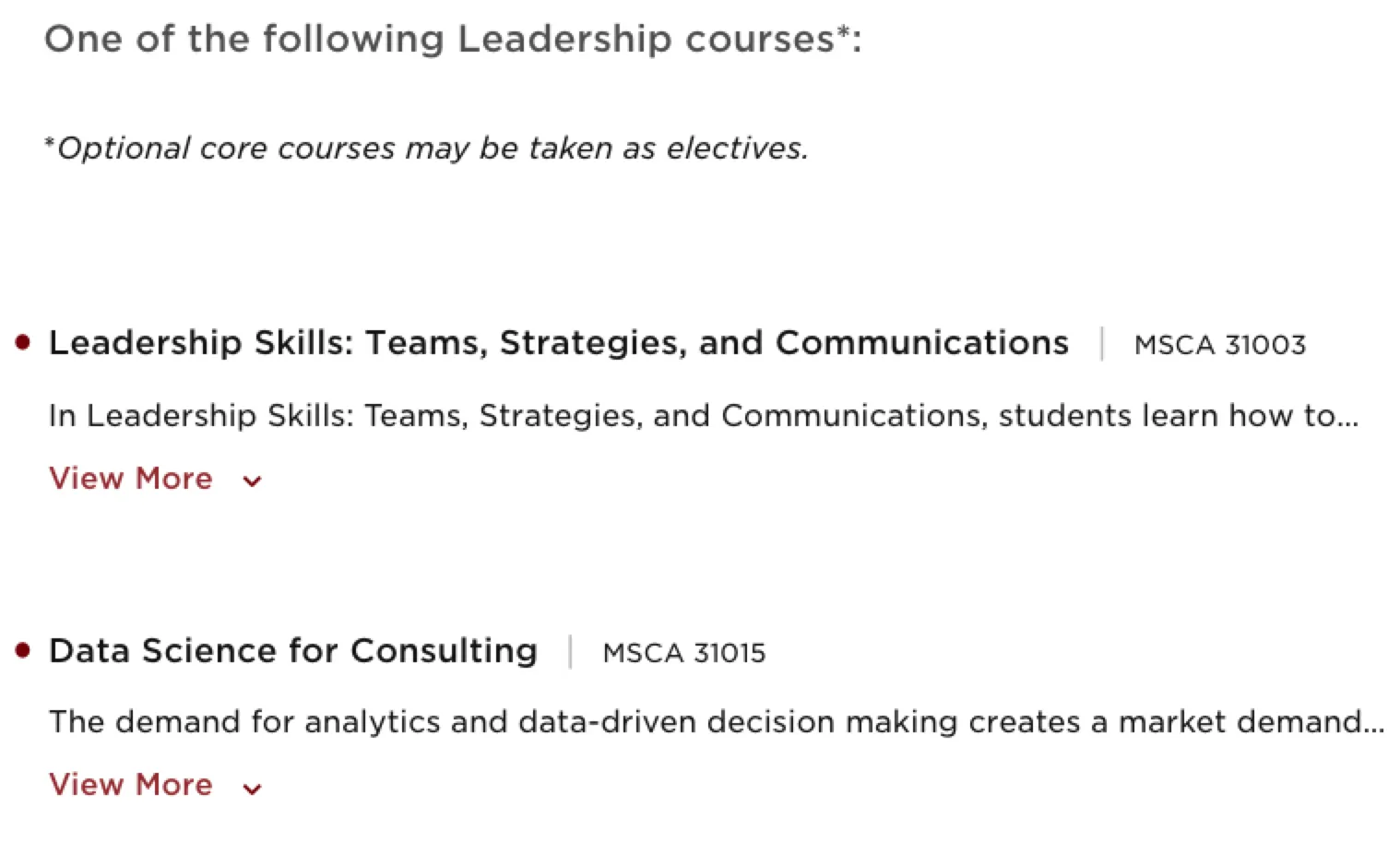
UChicago's Analytics program not only cultivates data analysis abilities but also focuses on leadership skills to solve real business problems.
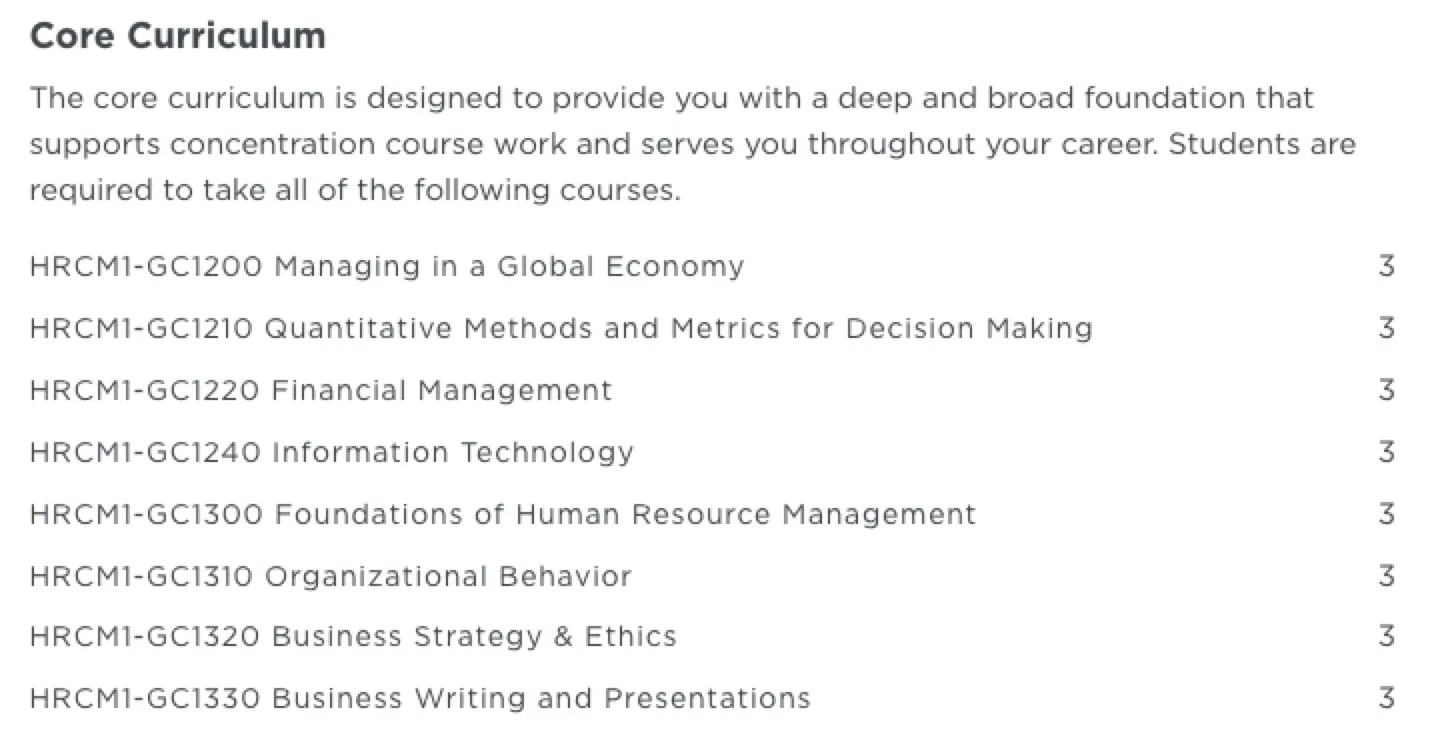
NYU's Human Resources program is designed to integrate closely with real corporate behavior.
Columbia SPS's Applied Analytics elective courses also include hardcore topics like machine learning and Python.
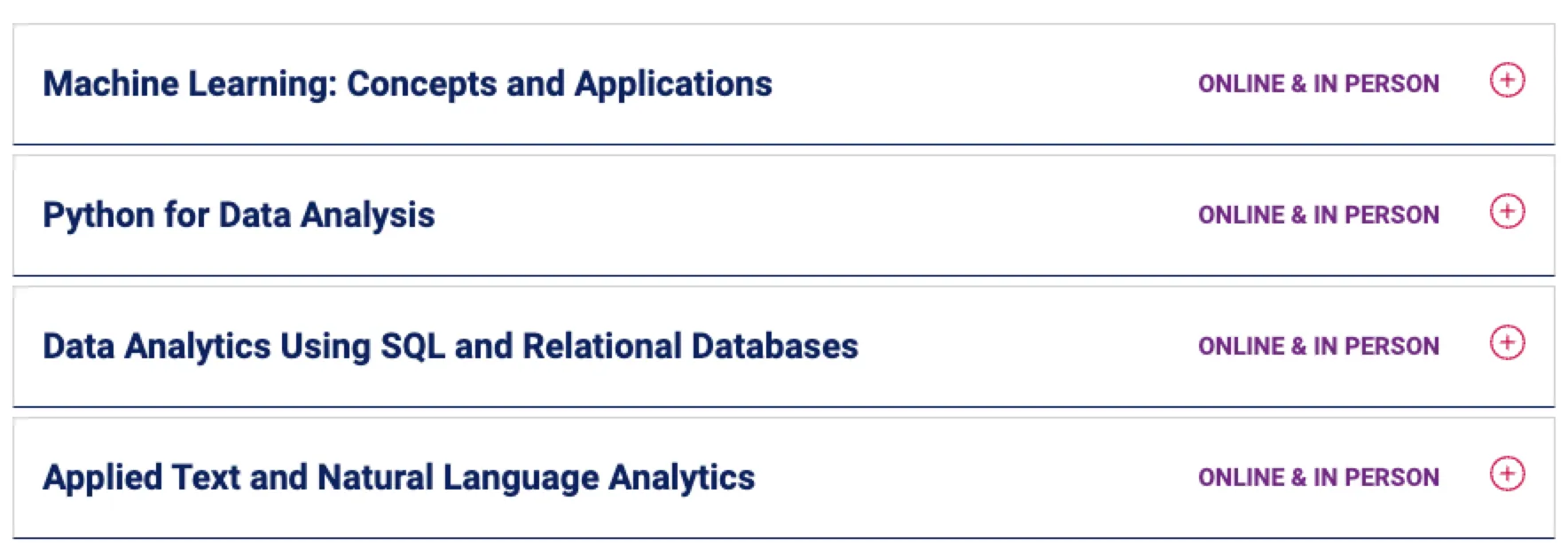
It can be said that SPS programs and courses are more career-oriented, and just because they are tied to professional development, they get labeled as not academic enough—isn't it extreme to claim such course content lacks substance?
A prestigious university background combined with a prime location naturally helps students find internships and jobs. Many SPS professors are seasoned industry professionals with deep experience and insights, and many classmates are working professionals who returned for advanced studies.
In terms of alumni networks, internship referrals, and job recommendations, SPS resources are not necessarily inferior to so-called "elite networks" and can provide students with more practical career advice.
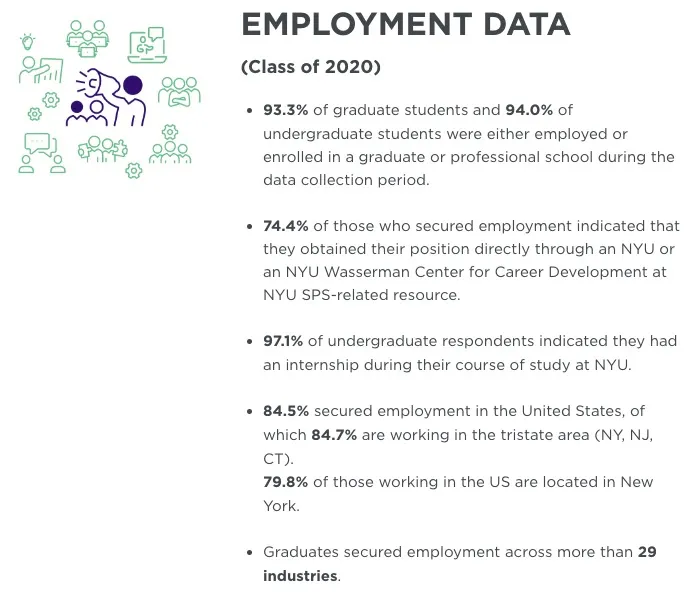
Employment prospects are never determined solely by a university, a college, or a major.
If you don't work hard, don't network, skip career fairs, and can't find an internship or job, then blame it all on SPS—that's just a "giant baby" mentality.
Think Rationally, Choose Schools Wisely
When applying to schools, many students are lost and anxious. Coupled with the current "everyone is a top student, looking down on everything" vibe on Xiaohongshu, students easily get lost in a sea of information.
If you have doubts about SPS, we recommend talking to truly knowledgeable peers or teachers, understand your own real situation and what you want, and then make a decision.
SPS is an application option, but not necessarily a last resort. Just because of stereotypes, you think the college isn't worth attending—isn't that overly rigid thinking?
If you really don't want to go to SPS, then honestly work hard to improve your overall profile and continuously add chips for applying to top colleges.
Think rationally, choose schools wisely. Today's SPS deserves your objective, unbiased consideration.