
With the pandemic, the public health field has gradually come into everyone's sight. Public health is a highly specialized field and is still a relatively new discipline in China, so MPH programs at top U.S. universities have become a popular choice for more and more international students. So, what exactly are public health programs in the U.S. like? And what are the career paths after graduation? Below is a detailed analysis.
Comparison of Public Health Programs at Home and Abroad
Public health systems abroad are highly developed, with programs offering many concentrations and areas of study. They are welcoming to students changing fields—those from biology, chemistry, statistics, and even business can transition to public health. Students can also engage directly with the local public health system, learn its strengths, and then apply them whether working locally or back home.
In China, public health is mostly housed within medical schools, which is less friendly to students from other backgrounds. To strengthen our public health system, the disease control sector in China will need significant expansion, creating a huge demand for public health professionals.
Introduction to U.S. MPH Programs
The MPH in the U.S. is mainly divided into four concentrations:
Master of Public Health
Biostatistics
Epidemiology
Environmental Health Science
Health Policy & Administration
Biostatistics and Epidemiology are the two most popular concentrations among international students.
Looking at schools, let's take Johns Hopkins University (JHU) as an example to introduce the details of studying public health abroad:
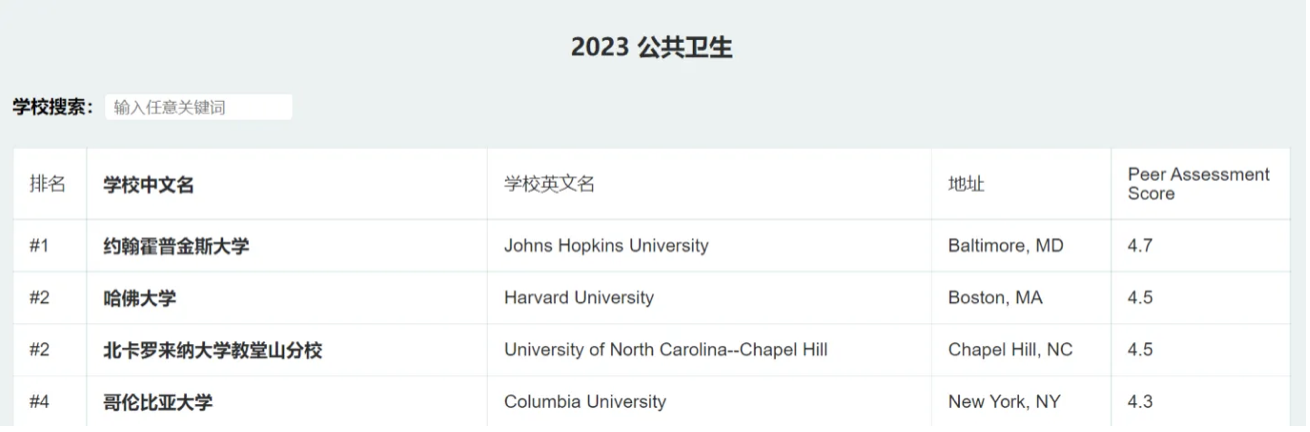
JHU's School of Public Health is ranked #1 in the United States
JHU's public health master's degrees include:
MPH: Equips students to address current global health issues through multidisciplinary, evidence-based approaches.
MSPH: Suitable for students who wish to gain more skills in a specific public health area or lack two years of health-related work experience to start or advance a career as a public health professional.
MAS: The Master of Applied Science is a fully online, part-time degree.
MHS: The MHS degree requires at least four terms of full-time study.
ScM: ScM students are typically interested in practical experience to achieve excellence in public health research.
MAPHB: The Master of Arts in Public Health Biology is a fully online, part-time degree program.
MBE: The Master of Bioethics (MBE), offered in collaboration with the School of Public Health, is an innovative, interdisciplinary, and cross-sector graduate program that combines approaches from science and technology, humanities and arts, and public health and medicine to prepare students from diverse backgrounds to investigate and address bioethics challenges in professional and civic life.
MHA: The MHA degree emphasizes management capabilities such as human resources management and marketing planning, and is the closest to an MBA among all concentrations, but requires work experience for admission.
Among these, MPH and MS degrees are the most common at schools of public health. Both are master's degrees, but the MPH is more professional—upon completion you become a Master of Public Health—while the MS is a standard master's degree.
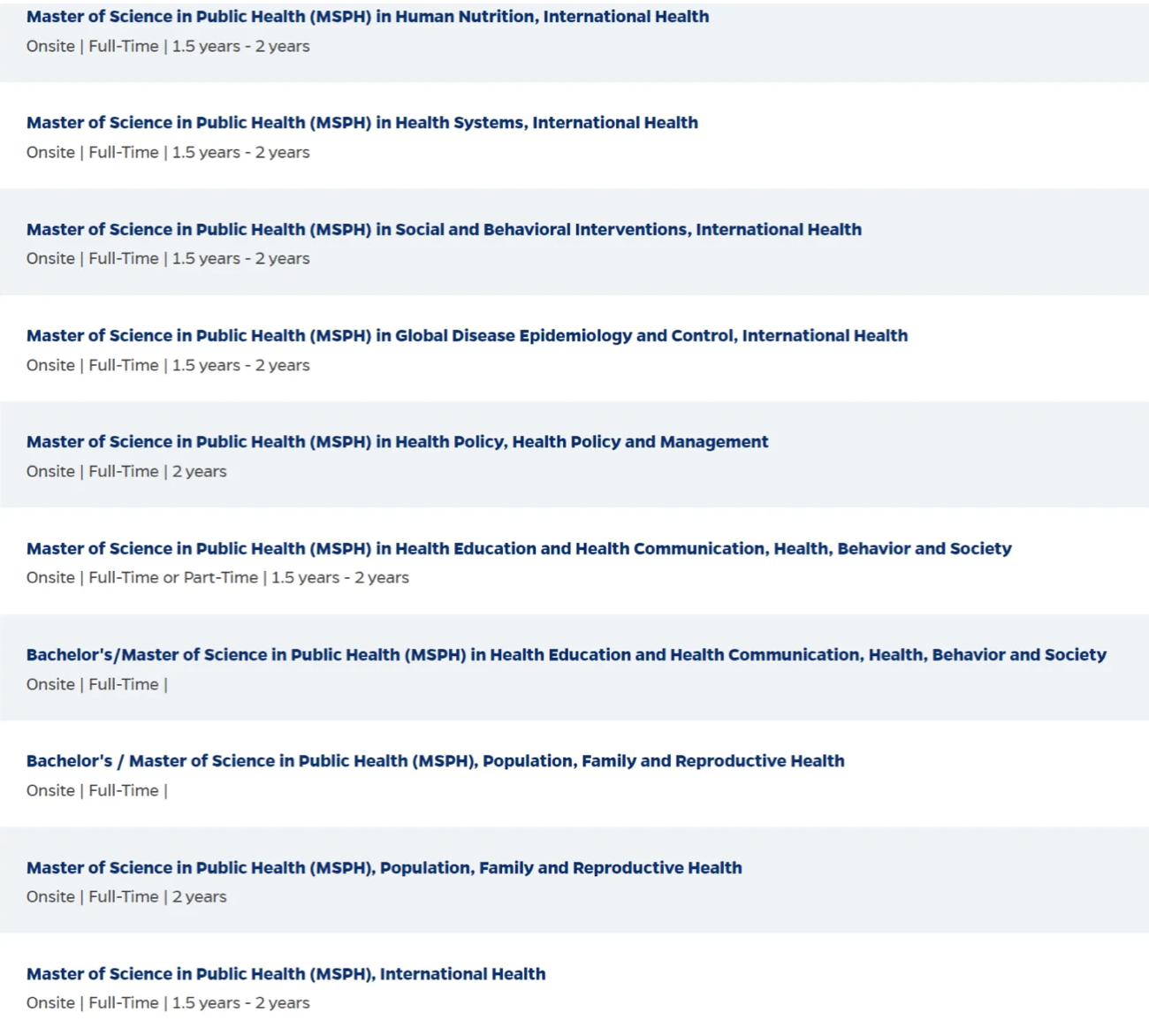
Under different degrees, there are various concentrations. Taking MSPH as an example:
Admission Requirements:
GRE: 325+ (Q:167+)
GPA: 3.8+ is competitive
Language: TOEFL 100+/IELTS 7+
Prerequisites: one math course (e.g., calculus, algebra or statistics), one introductory general biology course, and one health-related science (e.g., microbiology, nutrition, or anatomy and physiology) or a second biology course.
Relevant internship or research experience is a great plus.
Career Paths after Graduating from a U.S. MPH Program
The main employment directions for U.S. MPH graduates are:
- Research institutes and public institutions related to public health, such as CDCs and health inspection agencies at all levels.
- Preventive health departments, medical records statistics, and information statistics departments in large general hospitals.
- Medical industry companies (GSK, MSD, and also pharmaceutical companies like BGI).
- National or local civil servant positions, such as the National Health Commission and the Medical Products Administration, which are main choices for medical students taking civil service exams.
- Consulting firms (KPMG, IQVIA, etc.)
- Medical insurance companies (Taikang Insurance, Ping An Insurance, etc.)
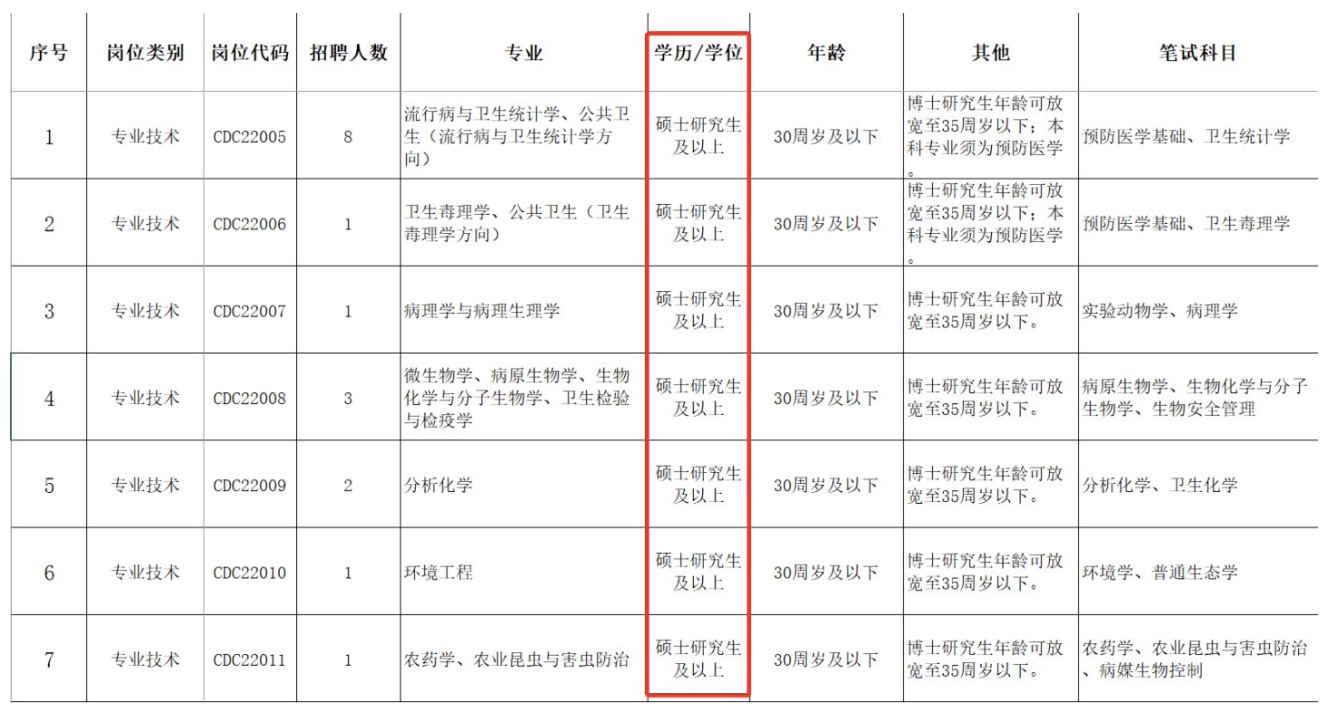
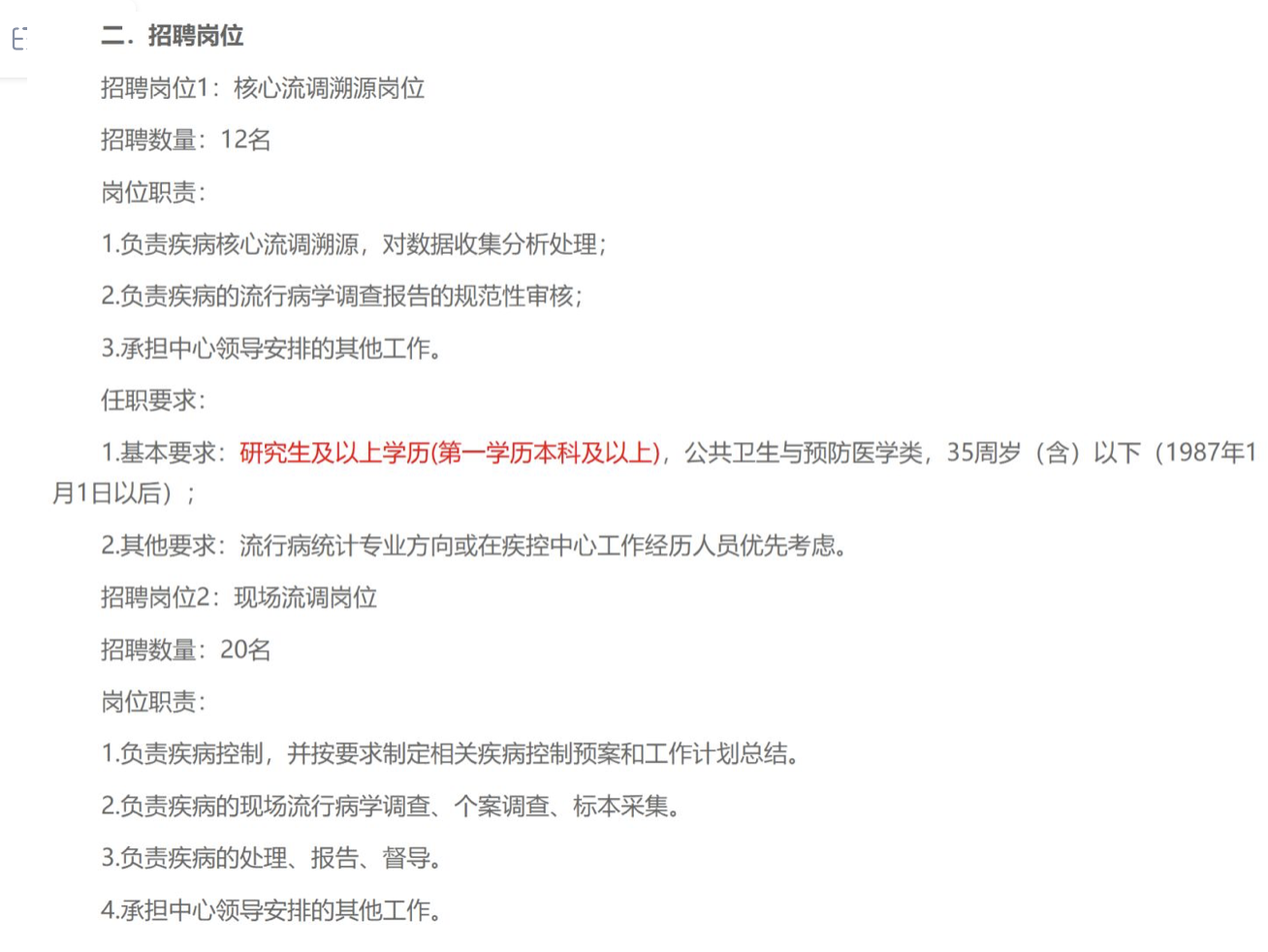
Let's also look at the recruitment requirements of domestic CDCs; as we can see, each position requires at least a master's degree.
Here are some other recommended U.S. MPH programs:
Cornell - Master of Public Health
Emory - MPH in Epidemiology
NYU - MPH in Biostatistics
USC - MPH in Biostatistics and Epidemiology
It's clear that MPH-related careers have strict educational requirements. We hope students planning to study abroad in this field will start preparing early! Thorough preparation is the key to standing out in a competitive application season.
Below are some offer letters from top U.S. MPH programs~

If you're interested in studying MPH in the U.S., scan the QR code below to start a one-on-one consultation~
.jpg?x-oss-process=style/opt-webp)