Nowadays, MPP (Master of Public Policy) and MPA (Master of Public Administration) have become increasingly popular choices for international students. What about the MPA/MPP programs at Hong Kong universities? How do the MPP/MPA master's programs at the University of Hong Kong, the Chinese University of Hong Kong, and the Hong Kong University of Science and Technology compare? Here is a detailed introduction.
Introduction to Hong Kong MPP/MPA Master's Programs
Historically influenced by Western culture and now serving as a Special Administrative Region of China, Hong Kong is characterized by strong political and cultural diversity and inclusiveness, making it an ideal place to study political and policy-related subjects with a high degree of practicality. MPA/MPP programs at Hong Kong universities typically include visits to government departments such as the Independent Commission Against Corruption, allowing students to experience a unique blend of Eastern and Western public-sector political culture.
Program Overview
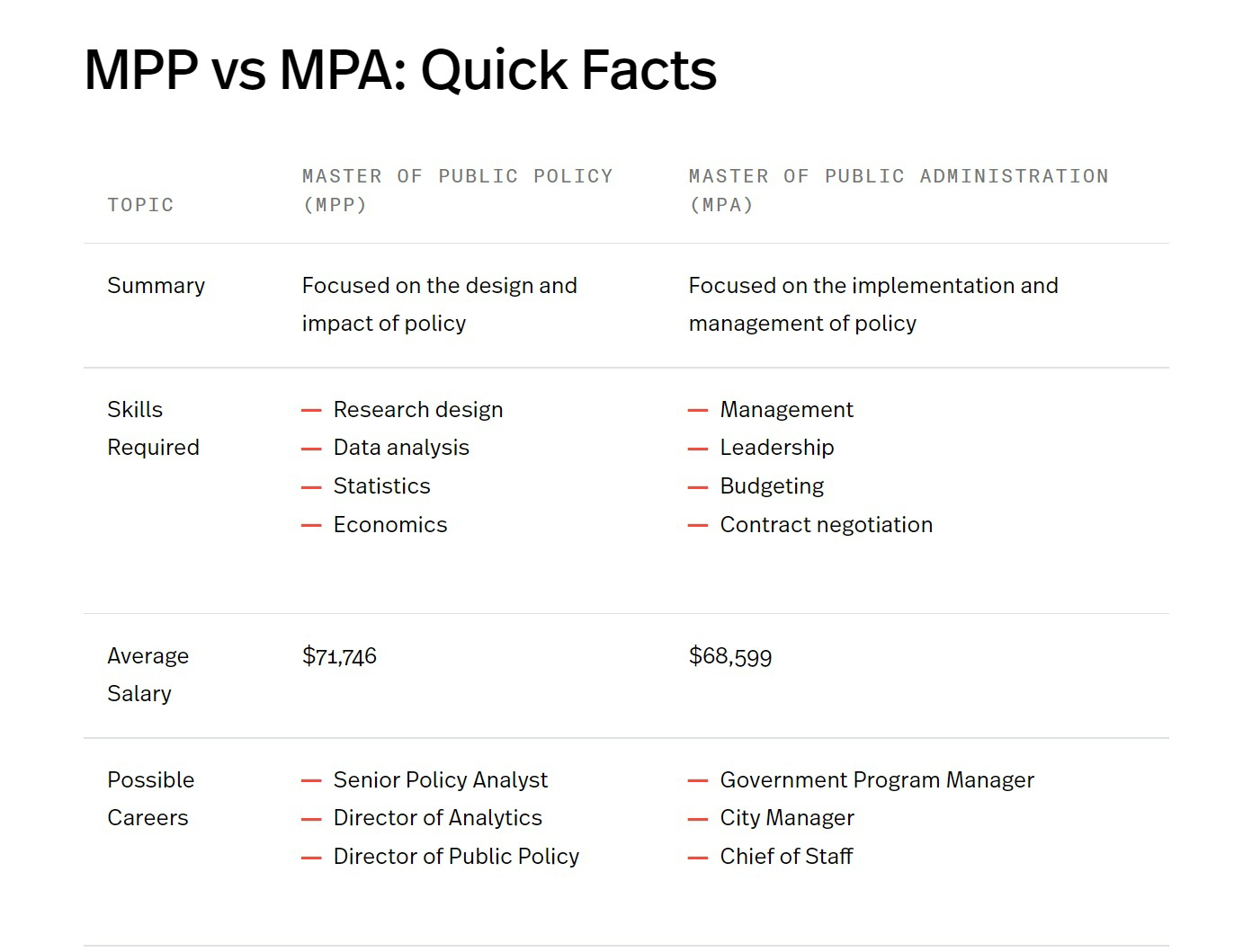
Since MPA and MPP are both typical interdisciplinary programs that share similarities in curriculum design and application requirements, they are often grouped together in applications. Here is a brief explanation of their similarities and differences.
MPA
Master of Public Administration focuses on management and implementation skills. The curriculum typically covers economics, statistics, quantitative analysis, and leadership development.
Common courses include: Introduction to public administration; Budgeting/finance; Managerial economics; Political and legal processes; Quantitative methods; Ethics. Some MPA programs require applicants to have full-time work experience. MPA programs generally prefer applicants with at least one year of work experience.
MPP
Master of Public Policy focuses on policy research, evaluation, and analysis. The curriculum often emphasizes policy analysis skills, quantitative methods, and modeling. Common courses include: Introduction to public policy; Statistics and data analysis; Public finance; Micro/macro economics; Policy analysis methods; Quantitative methods; Ethics.
MPP programs have no mandatory work experience requirement, but relevant government or strong internship experience is highly valued.
Career paths: government and public sector, private enterprises (consulting, quantitative analysis, HR management, etc.), non-profit organizations, international organizations, or NGOs.
Detailed Comparison of MPP/MPA Programs at HKU, CUHK, and HKUST
University of Hong Kong – Master of Public Administration
MPA (Master of Public Administration)
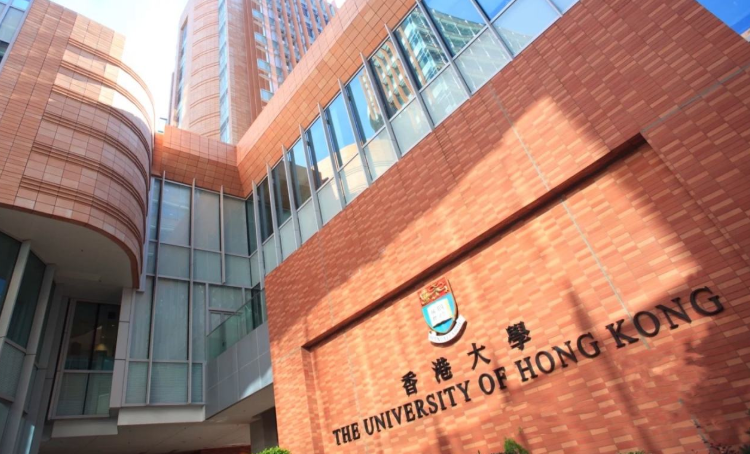
The Department of Politics and Public Administration under the Faculty of Social Sciences is one of the founding departments of the university. Since 1969, it has played a leading role in public administration research and teaching in Hong Kong and the Asia-Pacific region. As a core teaching unit of the university, it offers Bachelor of Social Sciences, Master of Public Administration, Master of International and Public Affairs, and Doctor of Public Administration programs. Its curriculum is one of the most renowned in Hong Kong, and many of its graduates now hold senior positions in the Hong Kong SAR government. At the forefront of political and public administration education, the department is committed to excellence in preparing students to become future leaders in the public, private, and nonprofit sectors.
The Master of Public Administration (MPA) program, offered by the Department of Politics and Public Administration at the University of Hong Kong, was first launched in 1978! Its long history demonstrates its strengths in faculty, curriculum design, resource allocation, and institutional commitment. The program aims to provide students with high-quality professional education and prepare them for leadership roles in the public sector. Of course, individuals working in the private sector and corporations may also find the program useful in enhancing their understanding of government and other public organizations. The curriculum helps students comprehend the ever-changing institutional and political contexts of public affairs, examine critical issues and possible solutions to governance challenges, and equip them to become effective public managers and leaders.
Program Features
The program adopts an interactive teaching approach, with courses taught by distinguished international scholars and enriched by the experience sharing of senior practitioners and professionals from the public, private, and nonprofit sectors. It also offers opportunities for one-day study visits to various organizations.
Curriculum
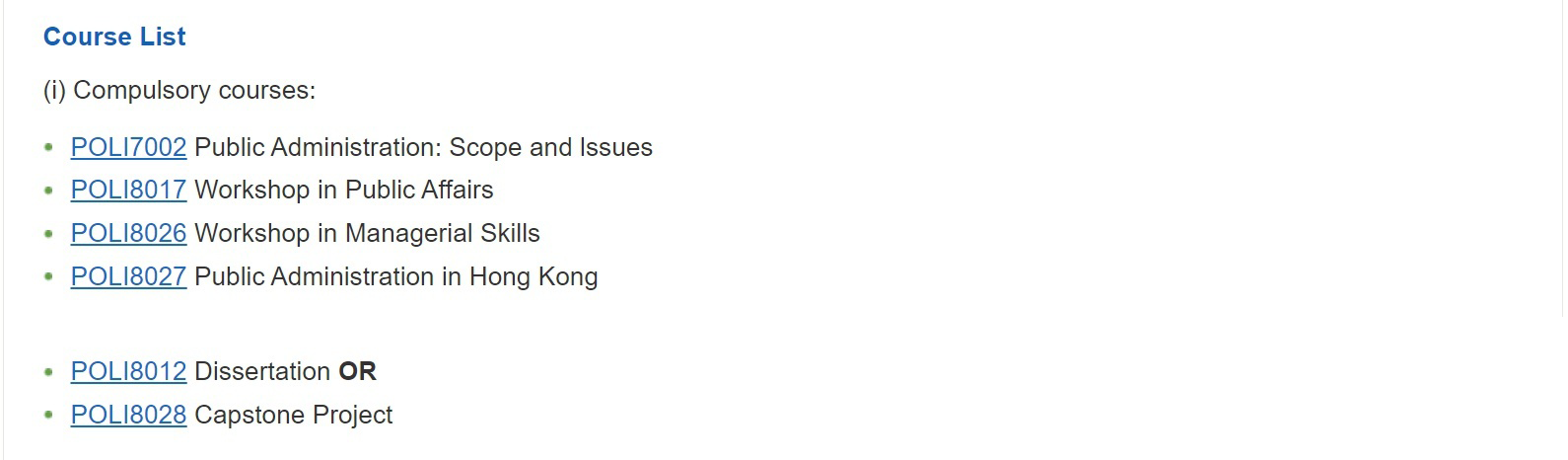
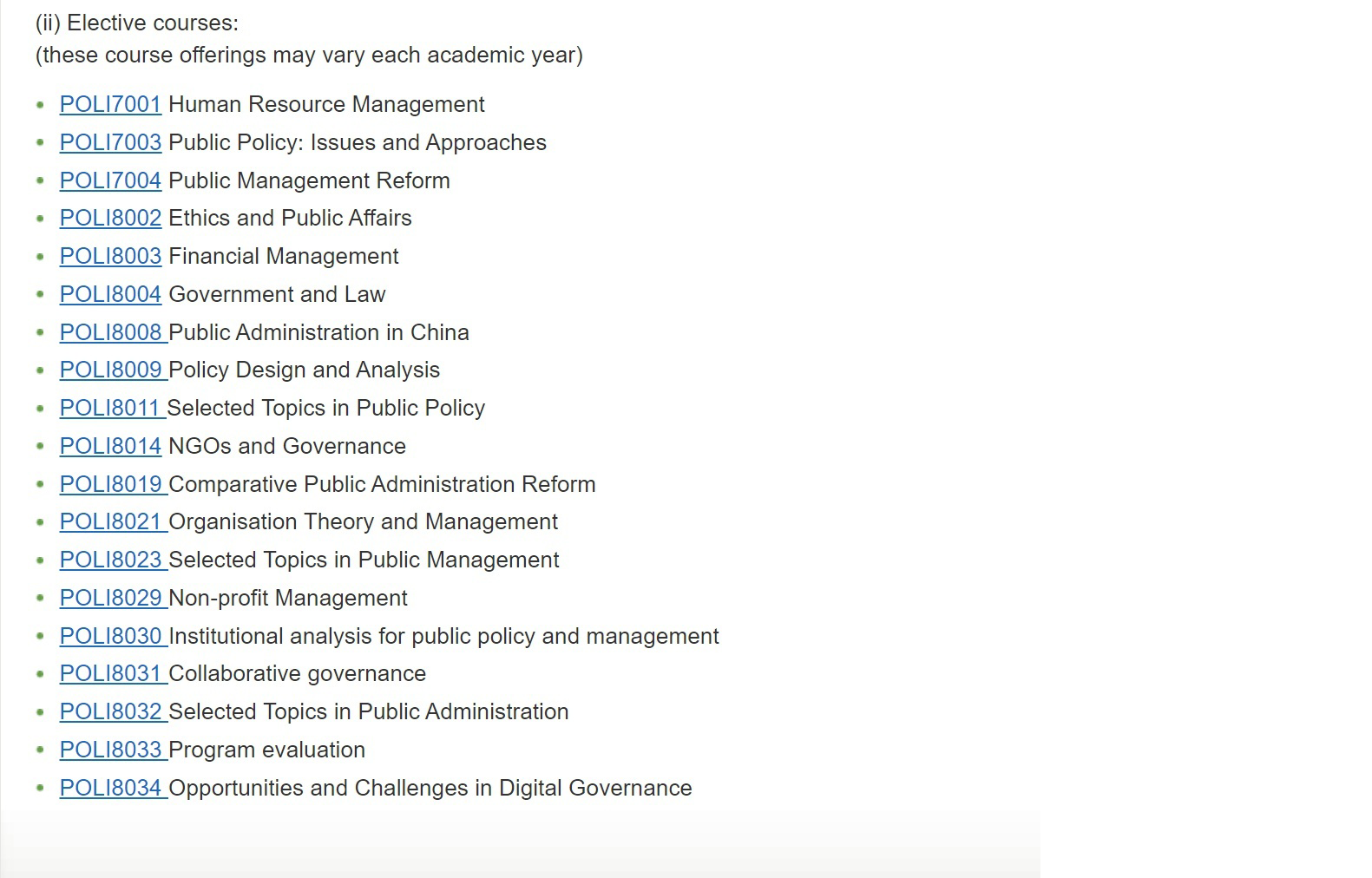
HKU’s MPA can be taken as a two-year part-time or one-year full-time program. Students must complete eight taught courses and a final project or dissertation to graduate. The eight courses must include four required courses and four elective courses.
The core courses include Public Administration: Scope and Issues, Seminar in Public Affairs, Workshop in Managerial Skills, and Public Administration in Hong Kong. Electives cover Human Resource Management, Financial Management, Public Management in China, Nonprofit Management, and Opportunities and Challenges of Digital Governance, among others.
Application Requirements
IELTS 6.0 (5.5) or TOEFL 80, GPA 3.5. Work experience is highly valued; typically, three or more years of work experience is required.
The Chinese University of Hong Kong – MSSc in Public Policy
MPUP (MSSc in Public Policy)
The Faculty of Social Science at CUHK comprises six departments and two schools, with a teaching team of renowned scholars and instructors. Faculty members share the goal of nurturing young people to become globally minded, high-quality professionals. The diverse and culturally rich environment of each department and school, along with interdisciplinary teaching and research, greatly benefits students. Faculty students have won numerous prestigious awards, such as the Rhodes Scholarship, Fulbright Scholarship, Sir Edward Youde Memorial Fund Postgraduate Fellowship, and other competitive awards.
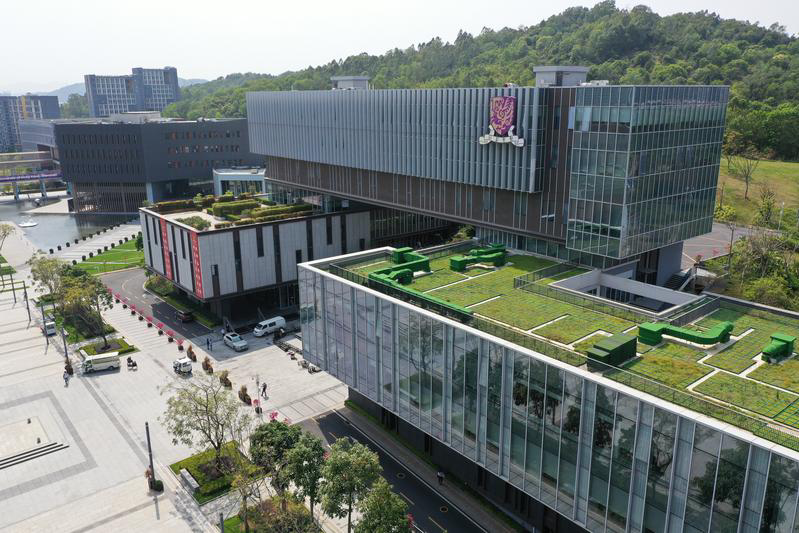
The MPUP program serves as a hub and engine at CUHK, promoting education, research, and engagement in public policy from an interdisciplinary perspective with local, regional, and global impact. It is designed to meet the needs of leaders and professionals aspiring to make a difference in government, non-governmental organizations, and all related sectors.
MPUP graduates will be able to understand the political institutions, processes, and strategies of public policy making; acquire quantitative and qualitative analytical skills for public policy research; gain a broad perspective in evaluating alternatives by applying different models and theories; and learn how to successfully formulate and implement public policy strategies, applying knowledge, ideas, and frameworks to effectively respond to global and local policy changes.
Program Features:
The program is taught by a unique team of scholars and practitioners, providing students with integrated knowledge and essential professional skills, emphasizing decision-making expertise, and offering unique insights into major policy areas such as social policy, economic policy, environmental policy, and urban development. Top decision-makers are regularly invited to have face-to-face dialogues and interactive opportunities with students. Visits to public and policy institutions such as the ICAC and the Legislative Council are organized to deepen students' understanding of their roles, management, and operation, with opportunities to interact and share with senior staff.
Curriculum
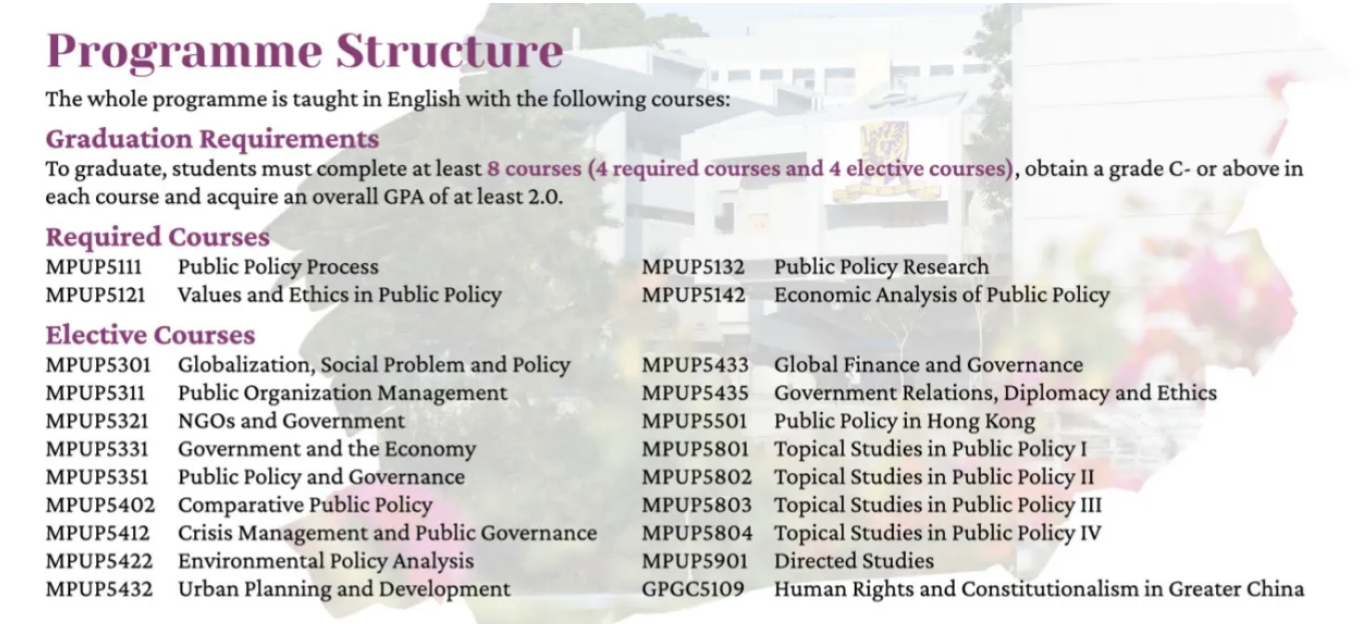
CUHK’s MPUP can be taken as a two-year part-time or one-year full-time program. Students must complete at least four required courses and four elective courses, achieving a grade of C- or above and a GPA of at least 2.0 to graduate.
The core courses include the Public Policy Process, Research Methods in Public Policy, Values and Ethics in Public Policy, and Economic Analysis of Public Policy. Electives include Public Organization Management, NGOs and Government, Crisis Management and Public Governance, Environmental Policy Analysis, Global Finance and Governance, and Human Rights and Constitutionalism in Mainland China, among others. The overall curriculum is relatively friendly to cross-disciplinary students, with many theoretical concepts taught from scratch, so there is no need to worry about a lack of prior knowledge.
Application Requirements
IELTS 6.5 or TOEFL 79; 985/211 universities: GPA 3.2+; other universities: 3.5+. A relevant educational background and work experience are advantageous. An interview is required.
Hong Kong University of Science and Technology – Master of Public Policy
MPP (Master of Public Policy)
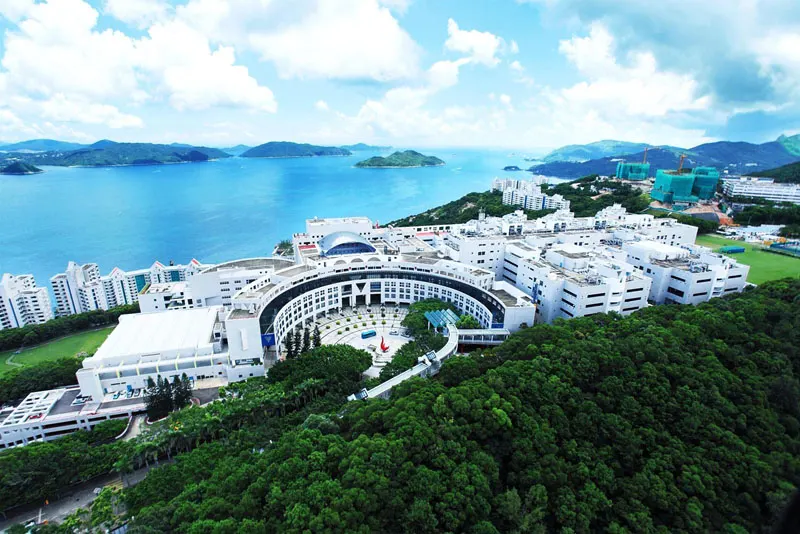
The Division of Public Policy, established in 2017, is one of the newest units at HKUST. It aims to conduct independent academic research at the forefront of public policy studies globally, and to have a meaningful impact on the broader policy agenda through collaboration with government agencies, think tanks, and regional organizations, contributing to the development of the Hong Kong region.
HKUST’s MPP is a two-year full-time taught master's program. It is an interdisciplinary program that emphasizes the interplay between technology and policy, designed for students from diverse educational backgrounds, including social sciences, engineering, business, and other fields. The program stresses professional knowledge, analytical skills, and management capabilities. Upon completion, students will be able to adopt cross-disciplinary perspectives on global policy challenges and innovative solutions, proficiently apply appropriate analytical tools to solve real-world problems, build and apply expertise in their chosen field, and develop the management acumen essential for future leaders in the public and private sectors.
Curriculum
Two concentrations are available: Environmental and Sustainability Policy Concentration, and Science and Technology Policy Concentration. The program includes a relatively large number of quantitative courses compared to similar programs, such as Quantitative Analysis and Empirical Methods, and Microeconomics and Public Policy, covering statistics and empirical analysis—highly beneficial for employment.
.png)
.png)
.png)
Students must complete 48 credits to graduate, comprising 24 credits of core courses and 24 credits of elective courses. Each semester, a minimum of 12 credits and a maximum of 15 credits are required (over four semesters). For electives, at least 12 credits must be taken from PPOL courses within the chosen concentration, with the remaining 12 credits selected from any PPOL elective or other elective courses listed in the program.
Application Requirements
985/211 universities: average score of 80+; other universities: average score of 85+. IELTS 6.5 (5.5), TOEFL 80+, Duolingo 105+. GRE/GMAT scores are a plus. Relevant work or internship experience is preferred. Video or phone interview may be required.
Comparative Analysis Summary
Hong Kong universities have become increasingly competitive in recent years. Programs that might have been accessible two years ago for students from non-prestigious universities with an average score of 80 may now require 85 from 985/211 university students. Therefore, applicants need to accurately gauge their positioning. The difficulty of gaining admission to the top three Hong Kong universities speaks for itself. In addition to striving for a high GPA, applicants should aim to achieve the best possible language test scores and GRE/GMAT scores within their capabilities to enhance their competitiveness.
Public policy and public administration programs are highly extensible, spanning a wide range of disciplines, making them relatively friendly to cross-disciplinary applicants. However, beyond standardized test scores and undergraduate backgrounds, these programs place great emphasis on internship or work experience. To stand out among numerous cross-disciplinary applicants, it is essential to include internship experience at government departments or NGOs on your resume, and quantitative research experience can also be a significant plus.
HKU and CUHK have longer histories offering these programs, resulting in abundant alumni networks and institutional resources, along with impressive awards and prestige; however, their curriculum and academic style tend to be more traditional.
In contrast, HKUST’s newer program offers greater flexibility, with a more practical, employment-oriented curriculum that focuses on cultivating interdisciplinary talent—combining data analysis with liberal arts.
Other Recommended Public Policy Programs at Hong Kong Universities:
City University of Hong Kong – Master of Arts in Public Policy and Management
(Four streams available: Public Policy; Public Management; Smart Cities; Governance in China Stream)
The Hong Kong Polytechnic University – Master of Arts in Social Policy and Social Development
Above is an analysis of the MPP/MPA programs offered by the top three Hong Kong universities, along with program recommendations. Students can choose programs based on their own aspirations and development goals.
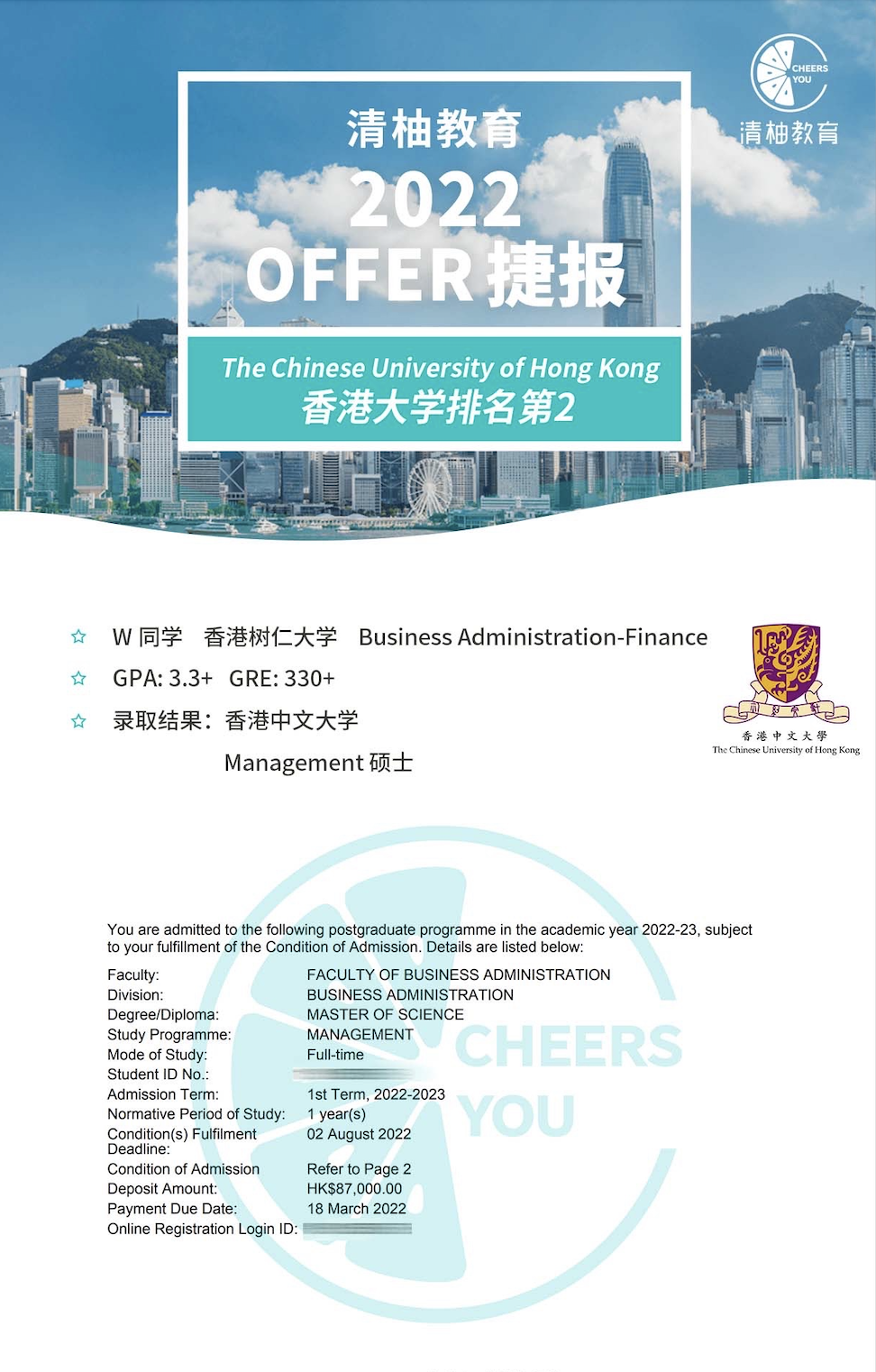
Below are some MPP/MPA offers from Hong Kong universities~
If you are interested in studying MPP/MPA in Hong Kong, feel free to scan the QR code below to immediately start a one-on-one consultation~
.jpg?x-oss-process=style/opt-webp)