
This year, finding a job as an international student is really tough; sending out hundreds of applications and only getting single-digit onsite interviews is the norm.

Even more absurd is that, after a student couldn't find a job for a long time, Glassdoor recommended a dishwashing position to her👇

And she's not alone; other netizens have been recommended dishwashing jobs by LinkedIn👇

Or a Finance master's degree holder was recommended a security guard job by Glassdoor👇

And some have been recommended to pick up trash by Glassdoor 😂

Or, without a driver's license, they were recommended to drive a garbage truck 😂

It seems jobs are really hard to come by lately; even job search websites can't find you a matching position.
After all, Musk would rather have a dog as CEO than expand hiring😓
The day after cloud communications giant Twilio laid off employees, Musk passionately posted: "My new CEO is amazing! Better than anyone else!"
Accompanied by a picture of his Shiba Inu.

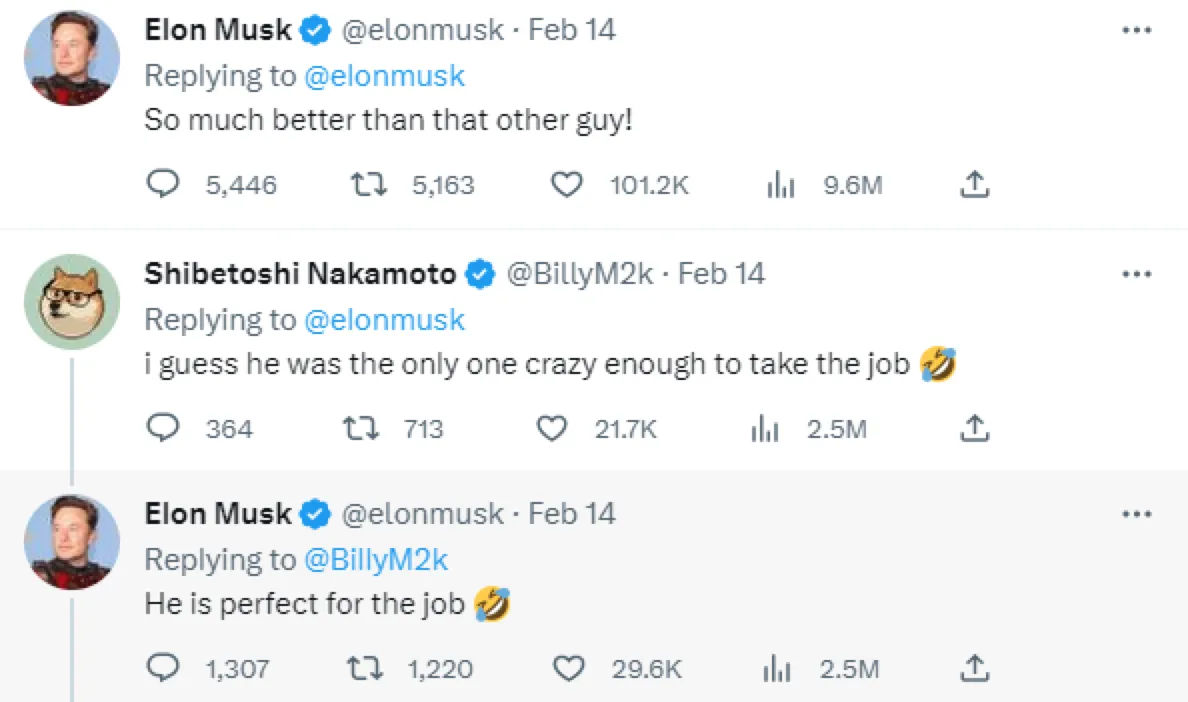
Both those who are CEOs and those who aren't fell silent after seeing this.
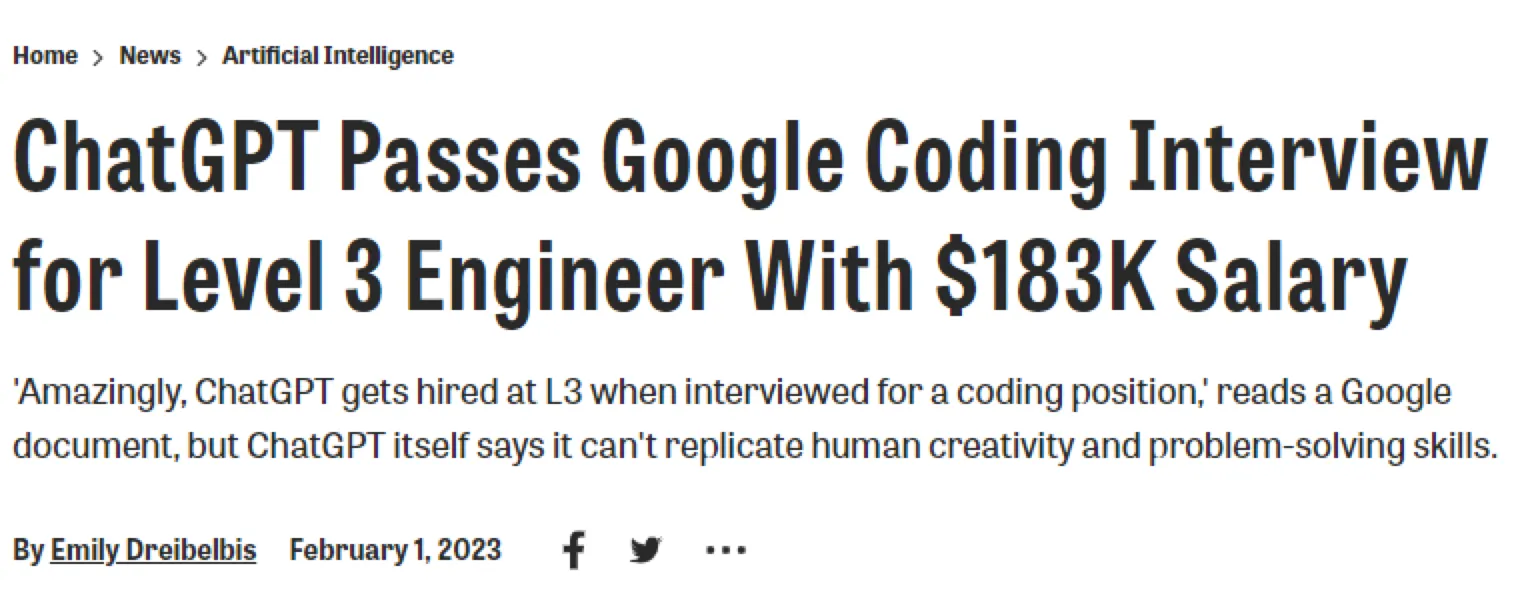
Although Mr. Ma's move is suspected of pushing Dogecoin, given that ChatGPT can be hired as a Google Level 3 engineer, who knows if tech companies will still need people in the future.
.png)
Tech Companies Laid Off Over 100,000 Since Start of Year
In 2023, the wave of layoffs at tech companies continues. Google, Amazon, Microsoft, Yahoo, Zoom and a slew of other tech companies have already laid off over 100,000 employees this year.
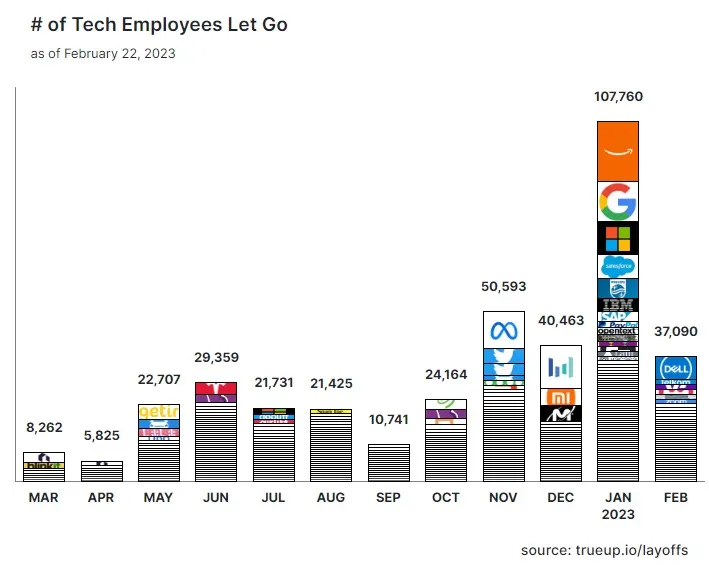
Among them, Amazon, Google, and Microsoft each laid off more than 10,000, and it's rumored that Meta's second round of layoffs is on the way.
Zoom
Earlier this month, Zoom announced a 15% reduction in force, affecting about 1,300 employees.
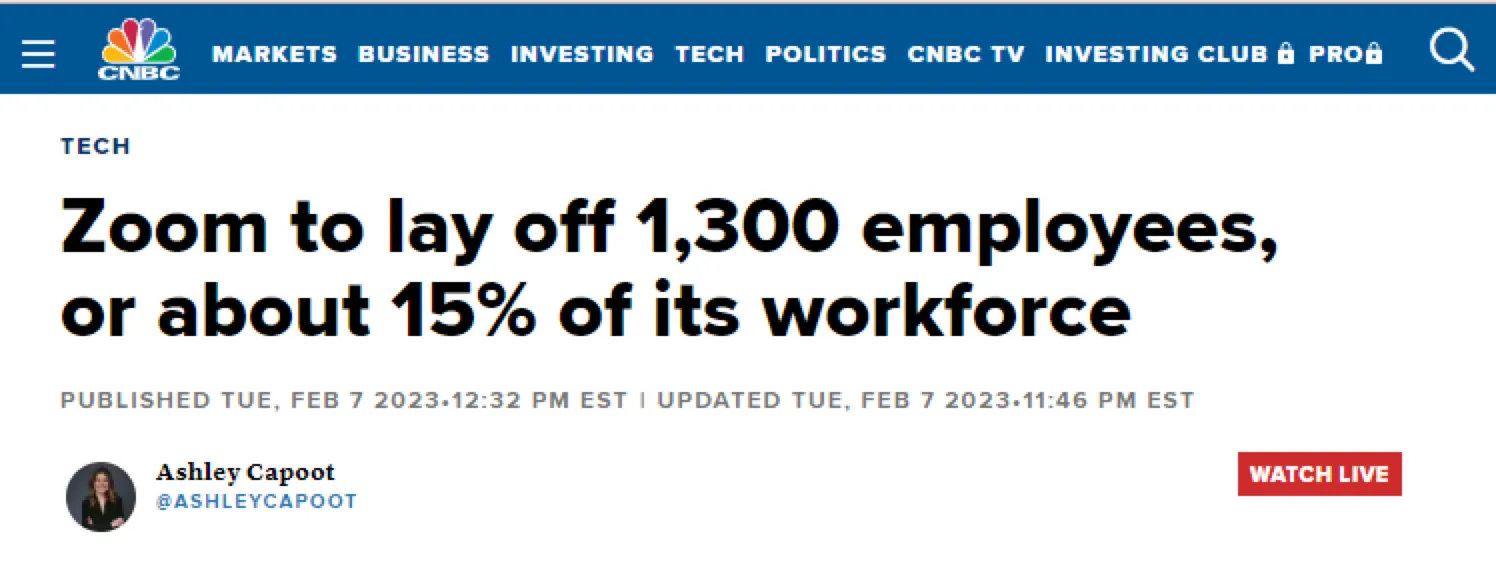
CEO and founder Eric Yuan said the company needs to adapt to the post-pandemic "global economic uncertainty" and "the impact on our customers."
Zoom indeed benefited greatly during the pandemic, tripling its size over the past two years. Eric said the company misjudged the stability of its business growth, leading to the current situation. He will take a 98% pay cut and forgo his fiscal 2023 corporate bonus.
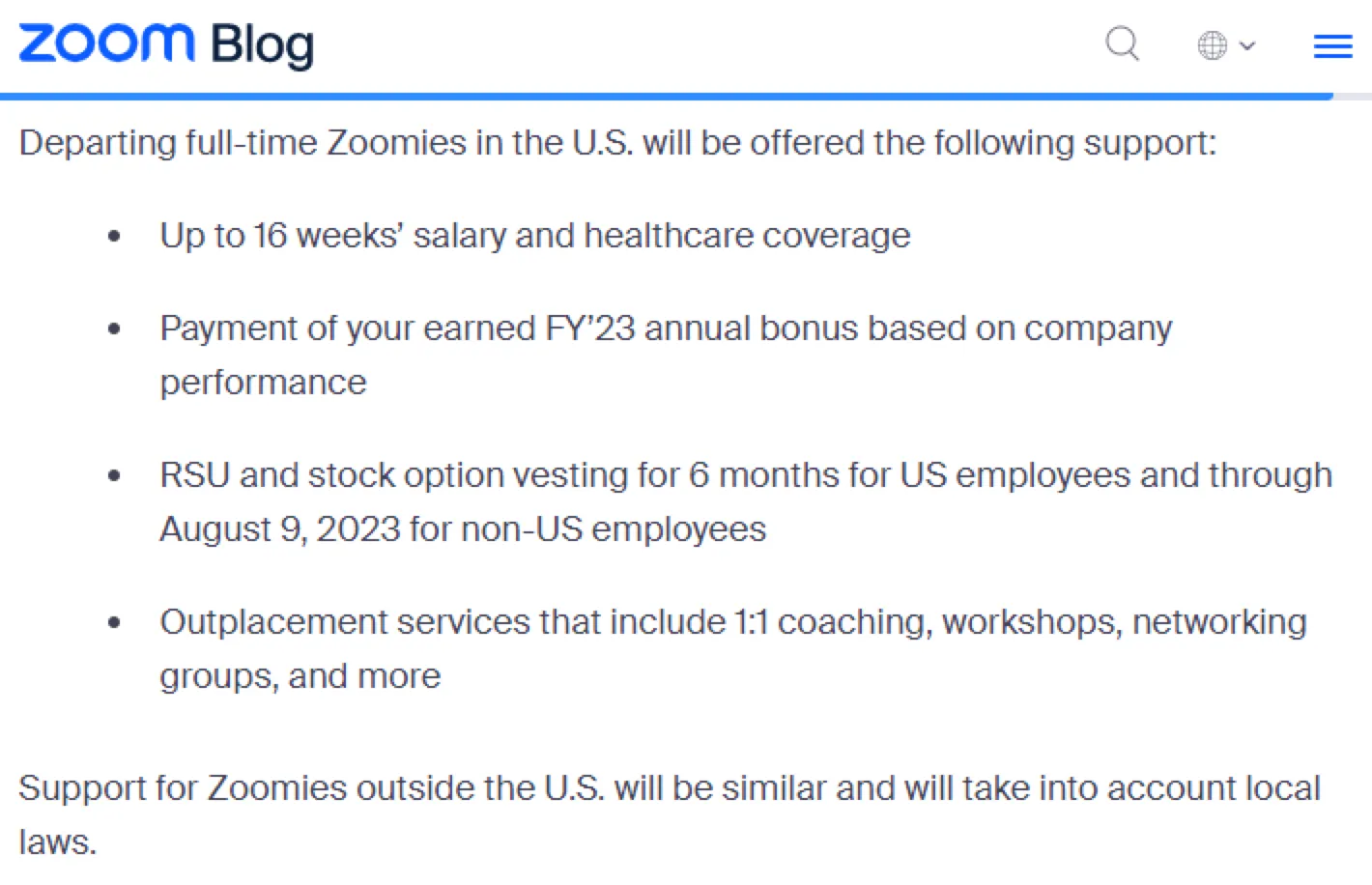
It is reported that Zoom's layoff package includes:
-
Up to 16 weeks of salary and health insurance
-
Fiscal 2023 company performance bonus
-
Six months of equity vesting for U.S. employees
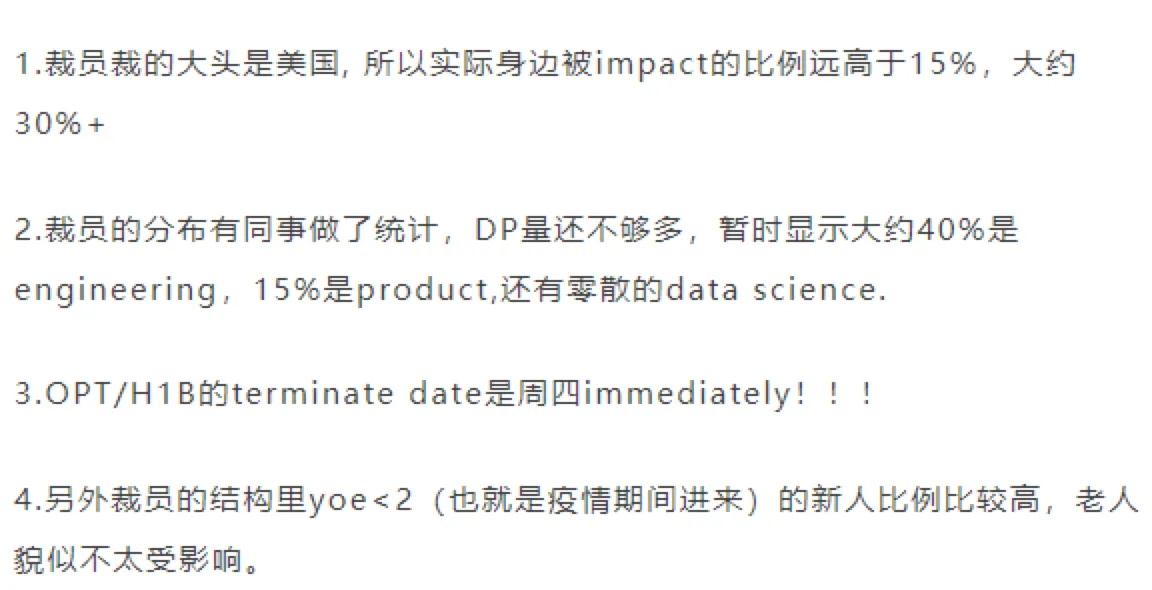
According to insiders, the hardest-hit area in Zoom's layoffs was Engineering in the U.S., especially newcomers.
Meta
Following the massive layoff of 11,000 late last year, Meta has further layoff plans this year.
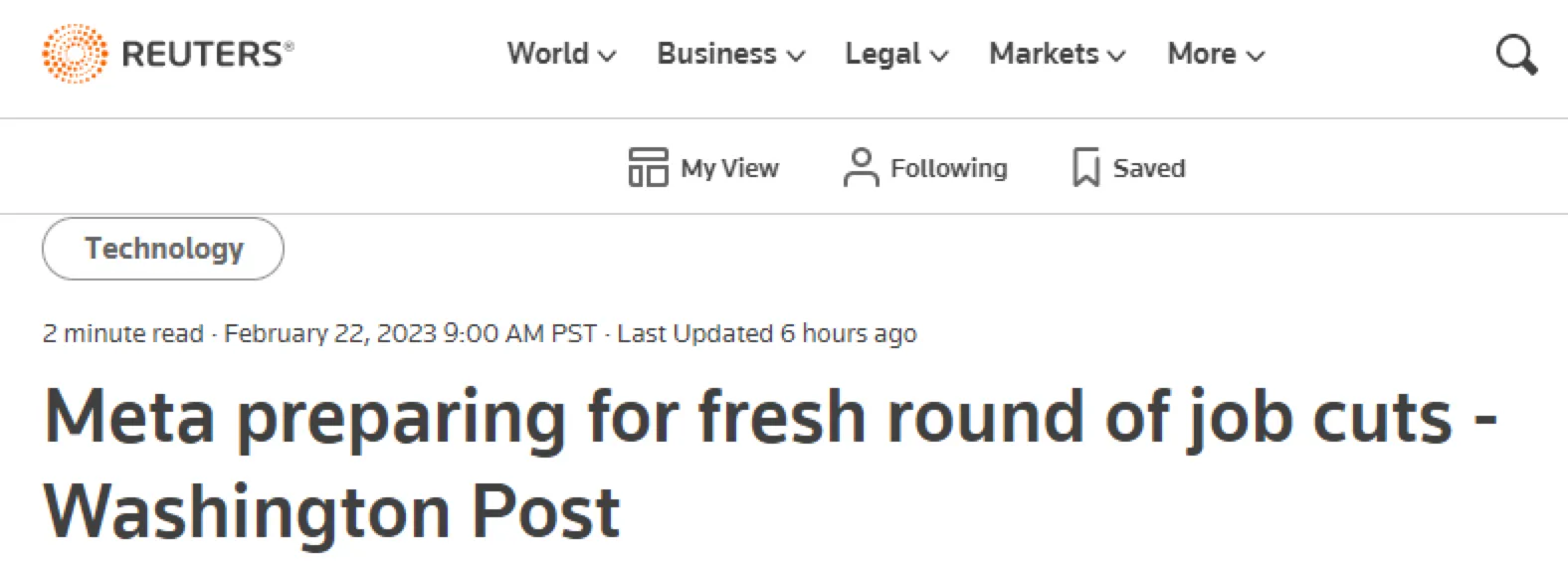
According to internal sources, Meta is currently conducting performance reviews, and a new round of layoffs is expected in March.
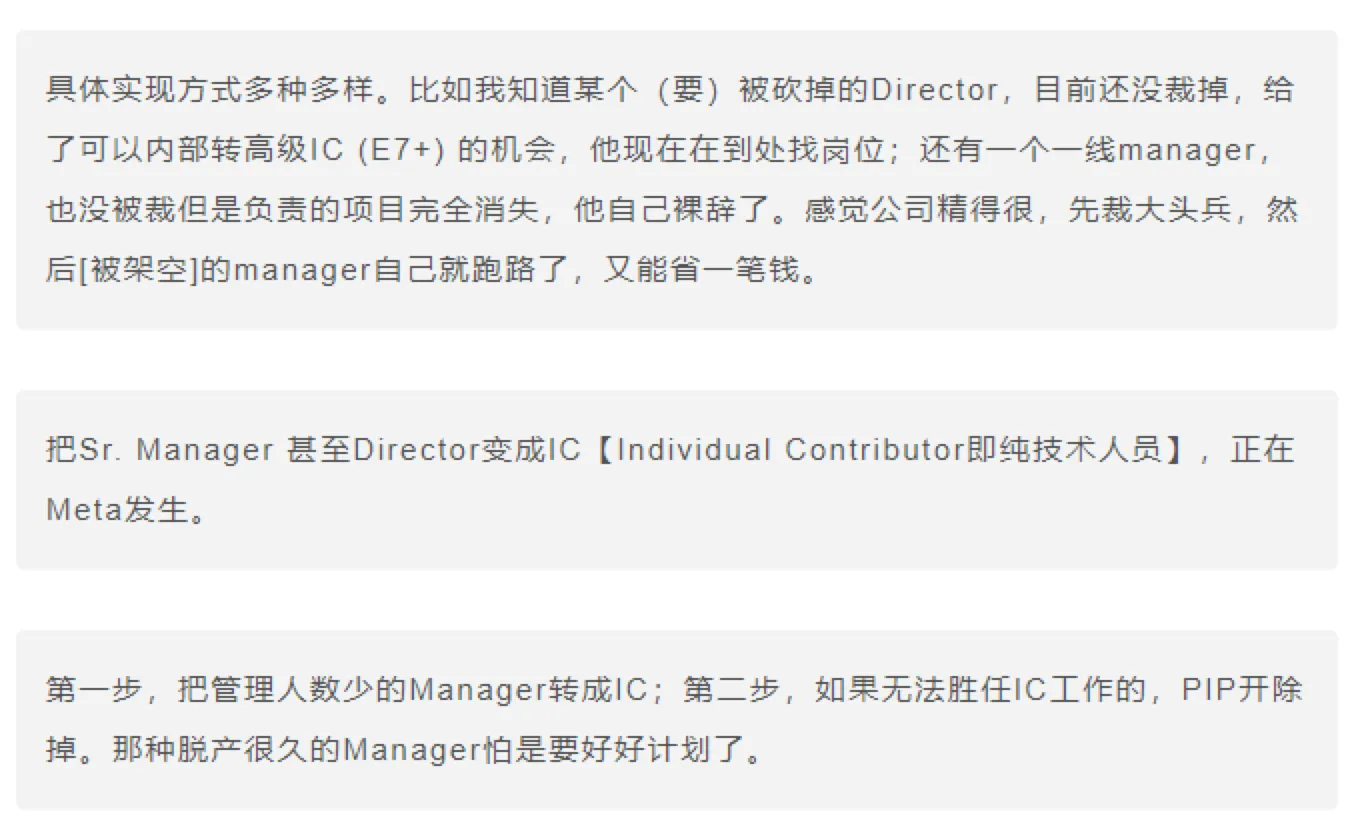
CEO Mark Zuckerberg warned in an internal meeting: managers should not be rewarded for building large teams, and Meta's organizational structure needs to be leaner.
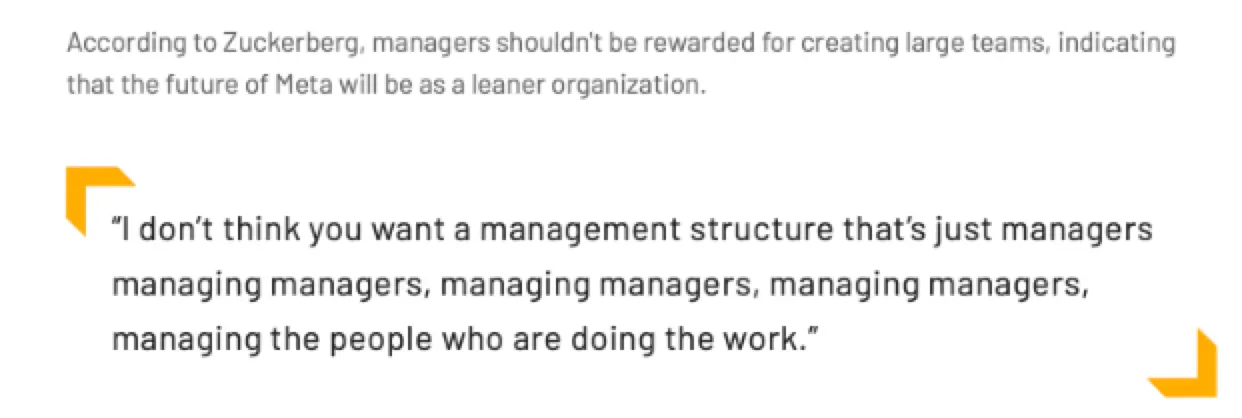
Since the pandemic, Meta's management has become increasingly bloated, even to the point of a bug: the fastest way to get promoted at Meta is to constantly hire people—the larger the team, the faster the promotion.
A Meta Sr. Manager said there were 10 reporting layers between him and the CEO.
Now that Zuckerberg wants to streamline the company structure, middle managers may face the greatest risk in the next round of layoffs.
Google also continued its sweeping layoffs at the start of the year.
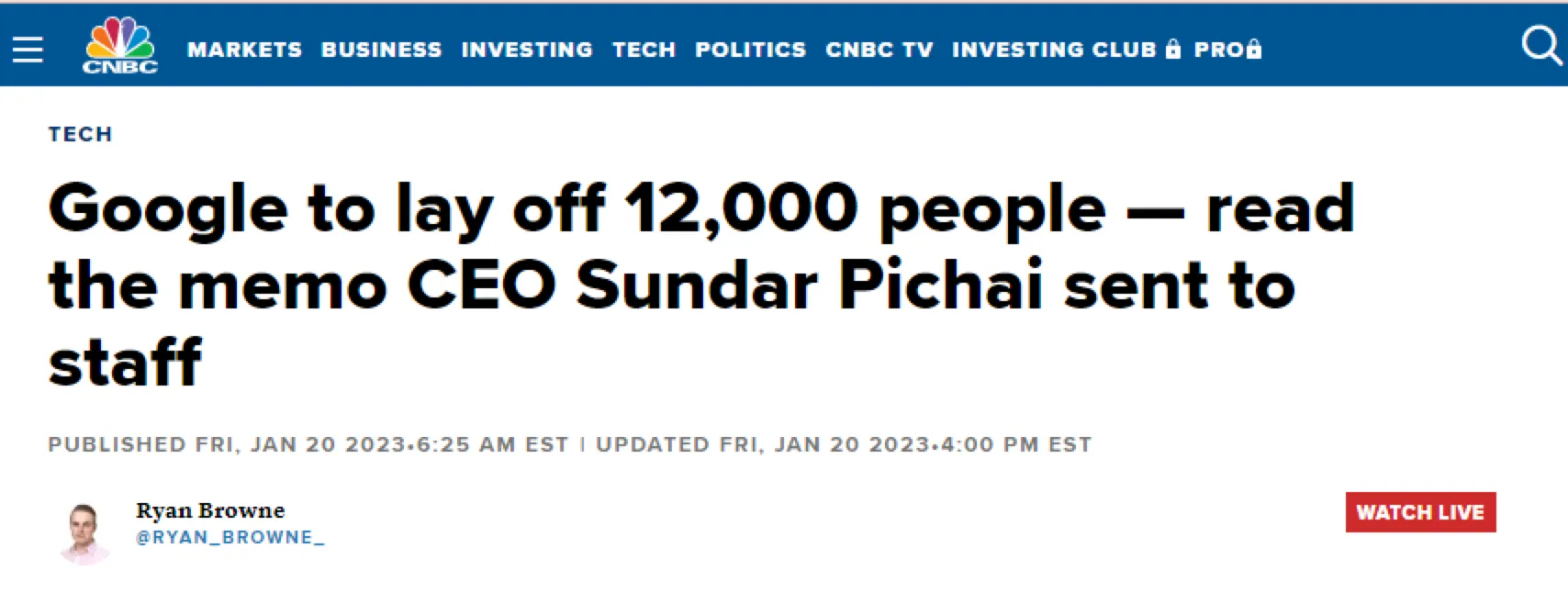
At the end of last month, Google parent Alphabet announced 12,000 layoffs, accounting for 6% of its workforce, an unprecedented scale for the company. CEO Sundar Pichai said that in recent years the company expanded rapidly, yet "the current economic reality is different."
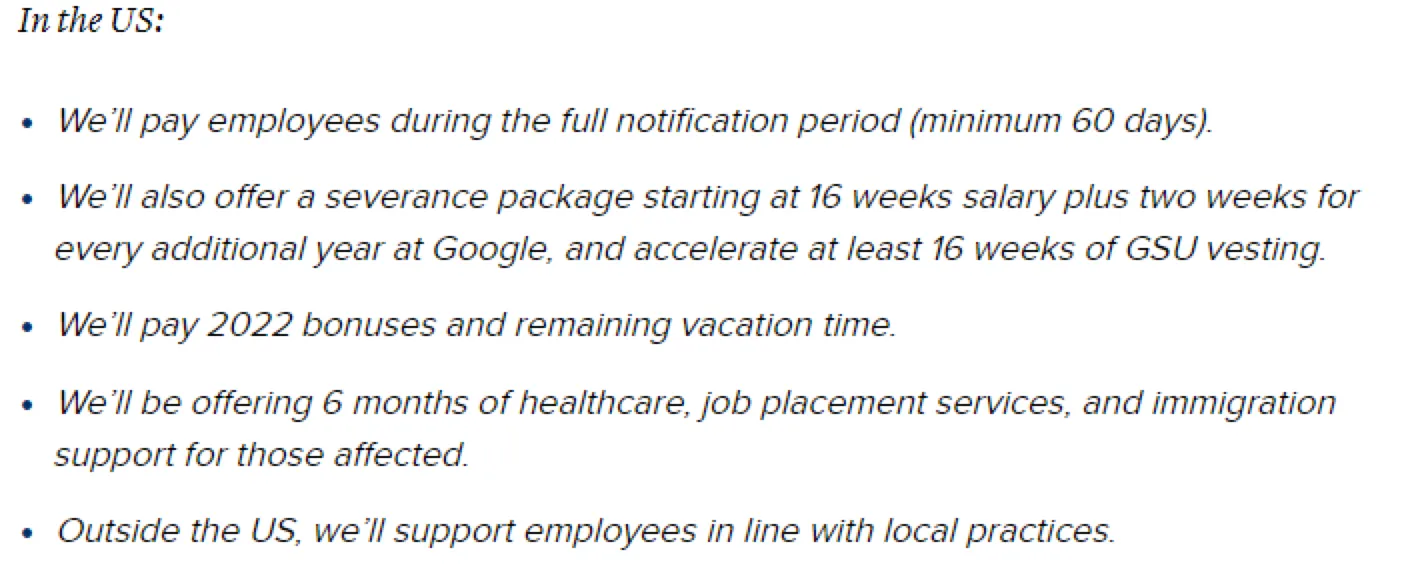
However, Google has always treated employees well, and the layoff package is also very generous:
-
At least 60 days' notice period, with full pay during that time
-
Severance: at least 16 weeks of base salary plus an additional 2 weeks for each year of service, and accelerated stock vesting
-
Last year's bonus will be paid in full, and unused vacation days can be cashed out
-
Six months of health insurance, outplacement services, and immigration support
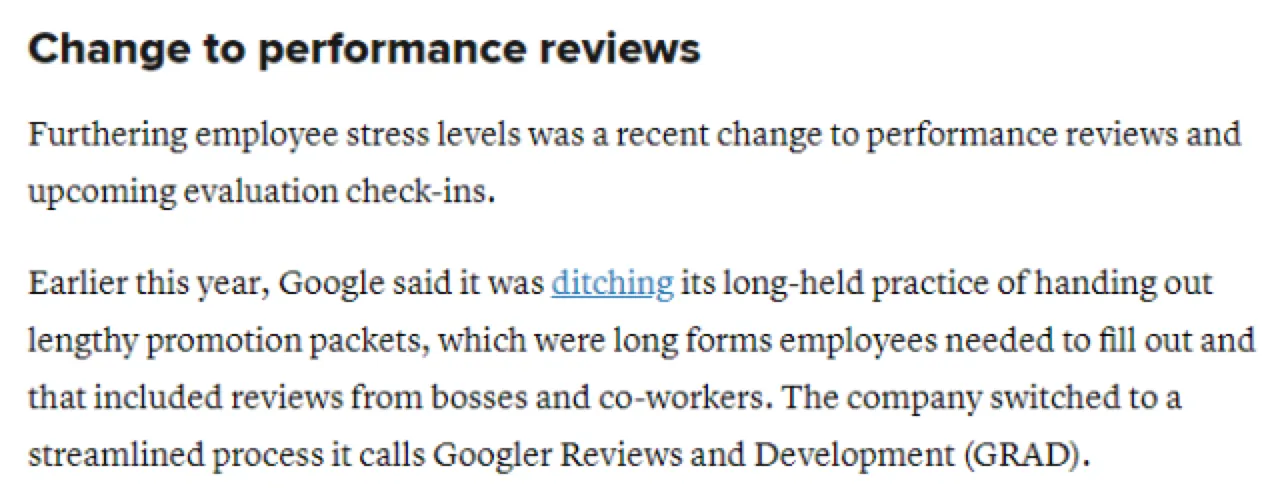
Since the end of last year, Google employees have been anxious about layoffs, seeing other big tech companies cutting staff—Google couldn't stay immune. The introduction of a new performance review system last November was a precursor to layoffs.
Amazon
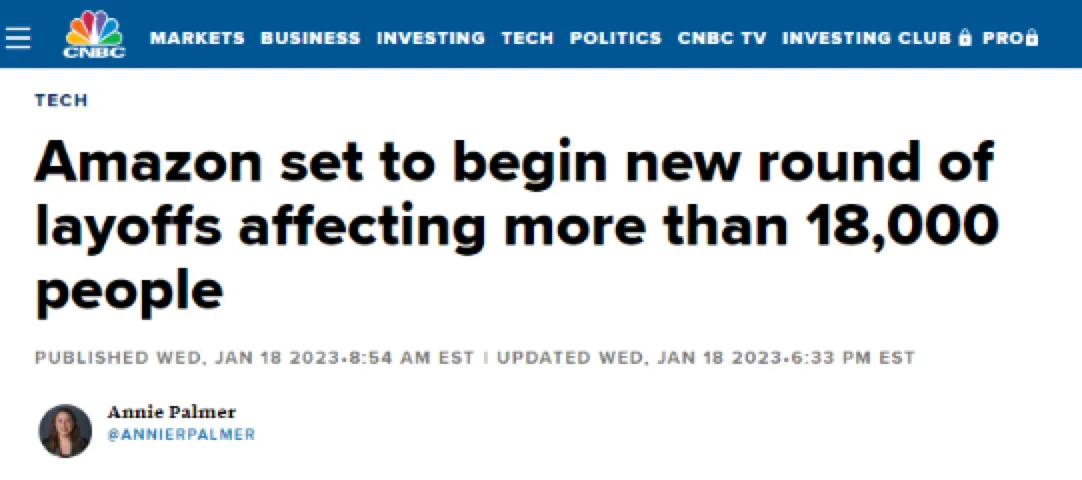
Following the 10,000-strong layoffs at the end of last year, Amazon announced a new round of 18,000 layoffs at the start of the year, the largest in the company's history. This round mainly hit the human resources and retail divisions.
Like other tech companies, Amazon expanded massively during the pandemic, with its global workforce nearly doubling from 798,000 in 2019 to over 1.6 million by the end of 2021. However, amid the economic winter, Amazon also faces slowing sales growth and rising costs.
Therefore, in addition to layoffs, Amazon has taken a series of "winterization" measures, including a hiring freeze, slowing expansion, and shutting down some experimental projects.
Microsoft
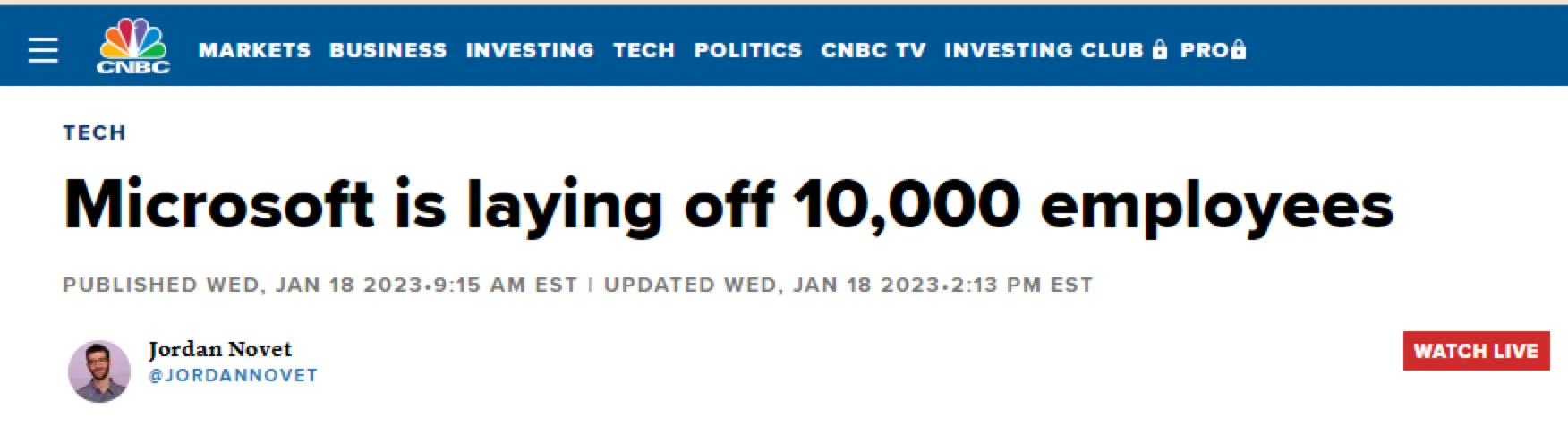
At the beginning of the year, Microsoft also announced it would cut 10,000 jobs by March 31, accounting for about 5% of its workforce, making it the second-largest layoff in the company's history.
It is reported that revenue growth has slowed, and the company is expected to post a loss of 12 cents per share in the second quarter. After the layoff news broke, Microsoft's stock price rebounded somewhat.
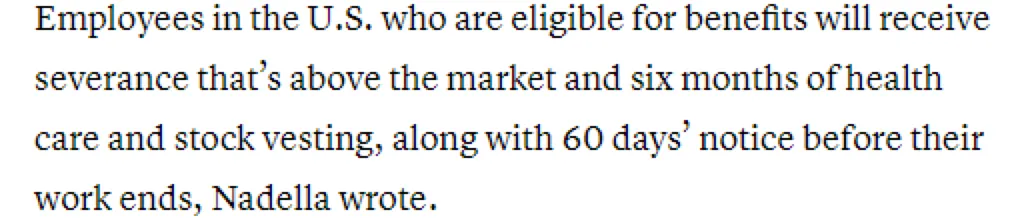
Microsoft's layoff package includes:
-
Above-market-average severance pay
-
Six months of health insurance and equity vesting
-
60 days' advance notice
Salesforce
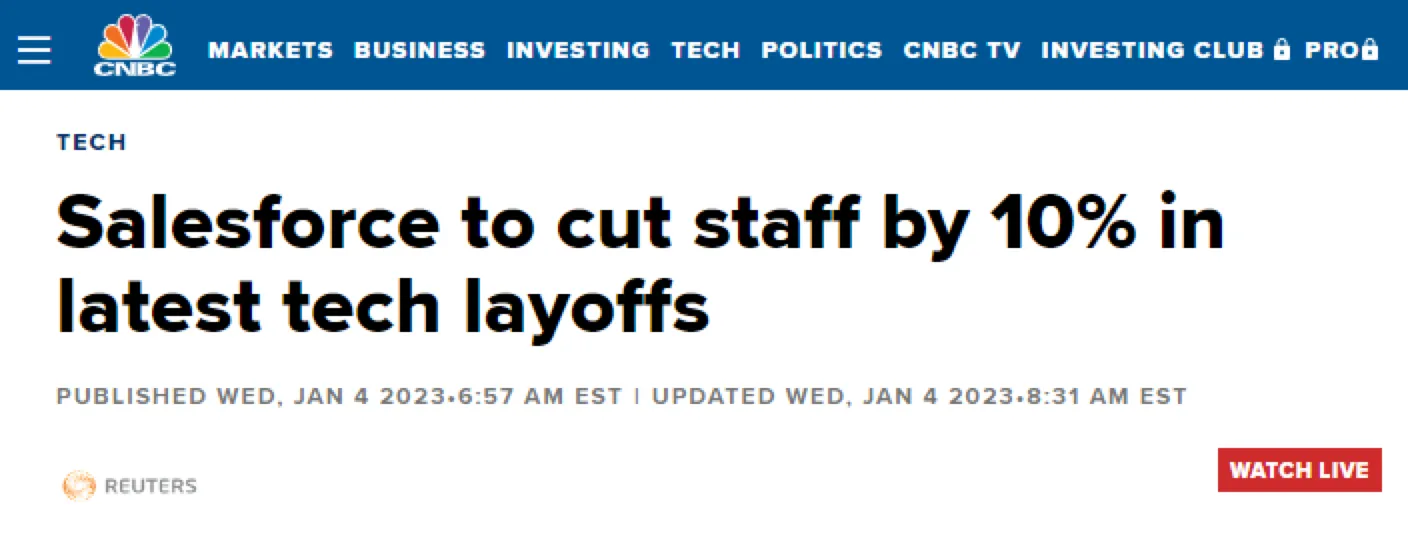
Another big tech company that laid off at the start of the year is Salesforce, planning to cut 10% of its workforce, affecting about 7,000 employees.
According to media reports, by early this month, the Slack accounts of 4,000 Salesforce employees had been deactivated, indicating layoffs were underway.
Many former Salesforce employees have changed their LinkedIn profile pictures to "#opentowork," including veterans with more than five years of experience.

How Can International Students Survive the Big Tech Layoff Wave?
In addition to the above companies, other tech firms that announced layoffs early this year include:
February
-
Twilio: ~1,500 layoffs, 17%
-
DocuSign: ~10%, about 700 people
-
Github: 10%
-
Yahoo: over 20%, ~1,600
-
Affirm: 19%, ~500
-
Dell: 6,650 layoffs, 5%
January
-
SoFi Technologies: 1,300 layoffs, about 5%
-
Groupon: 500
-
PayPal: 2,000, 7%
-
Spotify: 600, 6%
-
Coinbase: 20%, ~950
-
Vimeo: 11%
......
The above is just the tip of the iceberg of Silicon Valley layoffs; many companies are already on their second round.
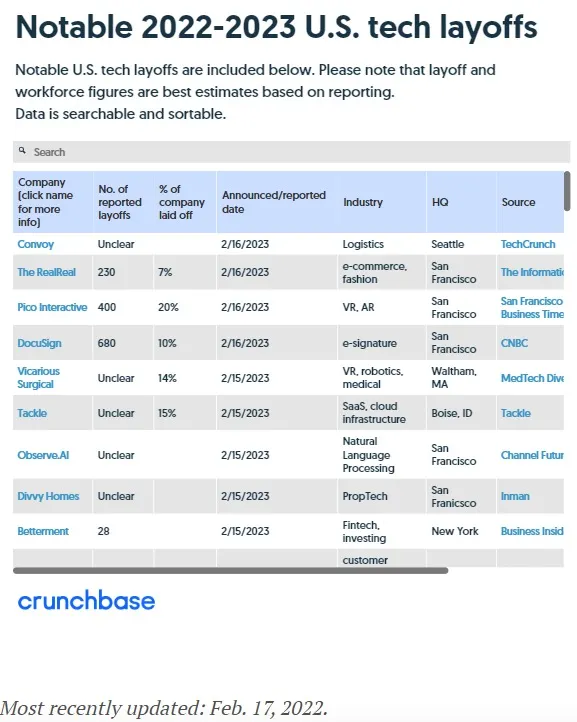
Now everyone in tech is worried, not knowing when the layoff axe will fall on them.
During the past two pandemic years, tech companies expanded rapidly and hired frantically. Microsoft, for example, added more than 57,000 new employees in those two years.
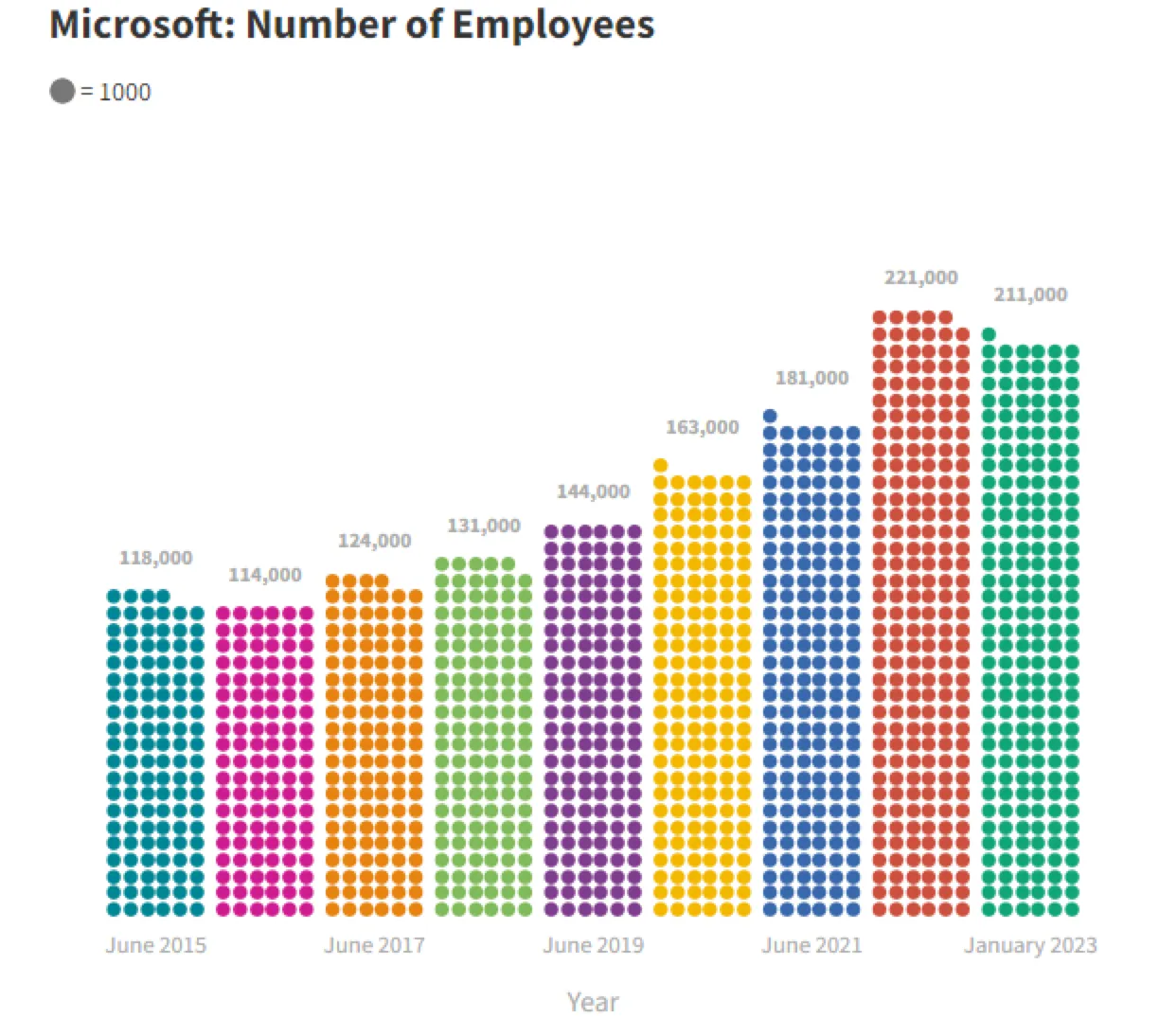
But can company revenue and profit growth really match this steep employee growth rate? This is probably a question many tech companies are grappling with now.
So it's not surprising that big tech companies are laying off tens of thousands of people.
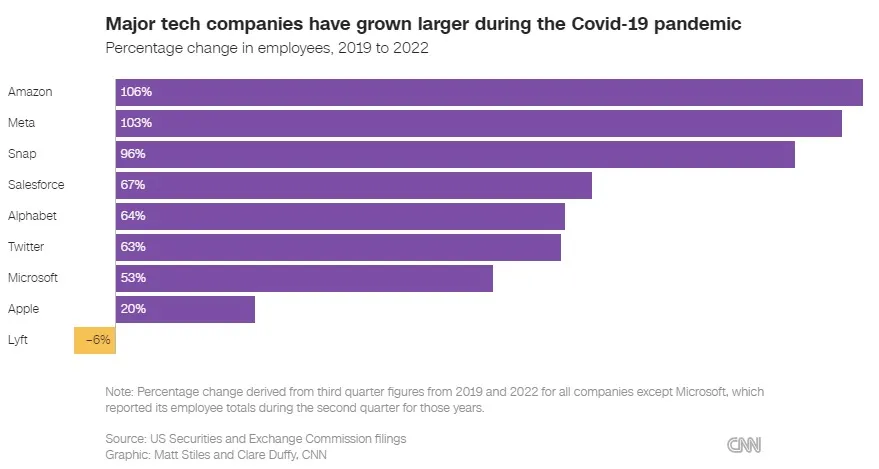
During the pandemic, tech companies were put on a pedestal, as if everyone could make easy money, programmers could get packages worth hundreds of thousands of dollars, and a casual scroll through Xiaohongshu would teach you how to switch to coding. No one cared whether this growth was sustainable.
Now everything is returning to rationality. The economic winter, high interest rates, high inflation, and recession fears are realities everyone must face, and tech giants are no exception.
A Chinese-American influencer who was recently showing off the happy life at Google on TikTok was laid off the next moment.

Those lavish themed meeting rooms, free gourmet company lunches, happy hour bar hangouts—the god-like life that seemed more like a vacation than work—are gone for many.

But for many international students, the issues of immigration status after losing a job, financial pressure, and the difficulty of finding a new job are the harsh realities they must face.


The internet winter has arrived, and no one is spared.
For programmers at all levels, especially new graduates seeking employment, this year will be very difficult to find a job. Even if you get an offer, you might face it being rescinded. If you hit a wall, don't doubt yourself; keep improving, practice coding, and try different approaches.
If you really can't find an ideal job, consider continuing your studies until the industry warms up and positions reopen, then apply again.
For those from other backgrounds thinking of switching to coding, you need to calmly consider what you truly want. The prospects for switching have changed drastically, so make your decision carefully—there's no turning back once you start.
Wishing all international students smooth sailing in their studies and job hunting~
.png)