In recent years, with the continuous enhancement of people's environmental awareness, attention to environmental issues has been increasing. To better learn environmental theory and practical knowledge, many students choose to study environmental-related majors abroad. Among environmental majors, Environmental Science and Environmental Engineering are popular choices for studying in the US. Today, CheersYou(清柚教育) will explain the differences between these two majors.
Environmental Science
Environmental Science explores the global environmental evolution patterns, the relationship between human activities and natural ecology, the impact of environmental changes on human survival, and the prevention and management of regional environmental pollution. Environmental Science is highly interdisciplinary, involving the study of biology, physics, chemistry, environmental geology, engineering, and other theoretical knowledge, as well as policy-making courses such as environmental economics and environmental management. Environmental Science belongs to the science category, leaning towards theory, with a focus on theoretical research and development. For example, when implementing an engineering project, it is more about simulating an idealized perfect solution as a researcher, without much connection to actual conditions.
Environmental Engineering
The Environmental Engineering major uses applied science and engineering methods to improve the environment, primarily studying the treatment of the three wastes, i.e., solid, liquid, and gas:
- Solid waste pollution, soil remediation
- Water resource management, wastewater treatment, polluted water body remediation
- Air pollution (smog, wildfire ash, etc.) remediation
Students primarily study general chemistry, engineering mechanics, surveying, engineering drawing, microbiology, hydraulics, electrical engineering, environmental monitoring, and other subjects. Environmental Engineering is an engineering discipline, aimed at cultivating technical talent, with a stronger emphasis on practicality and hands-on practice. When implementing an engineering project, more effort is put into specific execution, such as controlling project costs, considering time impacts, etc.
Branches of Environmental Engineering generally include:
- Water resource treatment and supply
- Drainage engineering
- Water pollution control engineering
- Air pollution control engineering
- Solid waste treatment and disposal
- Noise control engineering
- Environmental impact assessment
USNews 2023 US University Engineering School Rankings:
Top 1 Massachusetts Institute of Technology
Top 2 Stanford University
Top 3 University of California, Berkeley
Top 4 Carnegie Mellon University
Top 5 California Institute of Technology
Top 5 University of Michigan, Ann Arbor
Top 7 Georgia Institute of Technology
Top 8 Purdue University, West Lafayette
Top 9 University of Southern California
Top 10 University of Illinois at Urbana-Champaign
Future Careers for Environmental Science/Environmental Engineering
The employment distribution for Environmental Engineering is roughly:
- 43% government agencies
- 21% management, scientific, and technical consulting services
- 15% construction, engineering, and related services
- 2% self-employment
Taking Carnegie Mellon University's Civil and Environmental Engineering as an example, the 2019-2022 graduates of CMU CEE had an average annual salary exceeding $70,000, with over 60% successfully employed and a small portion pursuing further studies.
.png)
.png)
Specific career paths include environmental engineer, environmental consulting, etc. Operations managers at large corporations like JD, Wanda, and Walmart are also common employment directions.
Another popular destination for many Chinese students in environmental fields is the University of California, Santa Barbara's Environmental Science and Management program. Graduate employment data over the years show that the largest proportion go to consulting firms, followed by government agencies, non-profit environmental organizations, and various enterprises, with some choosing scientific research paths.
There is no significant gap in future career directions between Environmental Science and Environmental Engineering. Environmental Science tends to specialize in a particular area, such as UCSB graduates working in ocean analytics, ocean/water resource protection, while Environmental Engineering primarily leads to engineering roles.
Overall, future environmental employment will involve the following areas:
- Sustainability
- Clean Air & Water
- Land & Clean Up
- Health & Safety
- Waste
- Climate Change
- Emergencies
- Chemicals & Toxins
- Pesticides & Agriculture
The two disciplines do not differ greatly in future employment prospects. Which one is easier to study varies from person to person. You can consult senior students from your school for a comprehensive analysis, and just choose the major you like~
For students who wish to pursue further studies in environmental fields, studying abroad is a good choice.
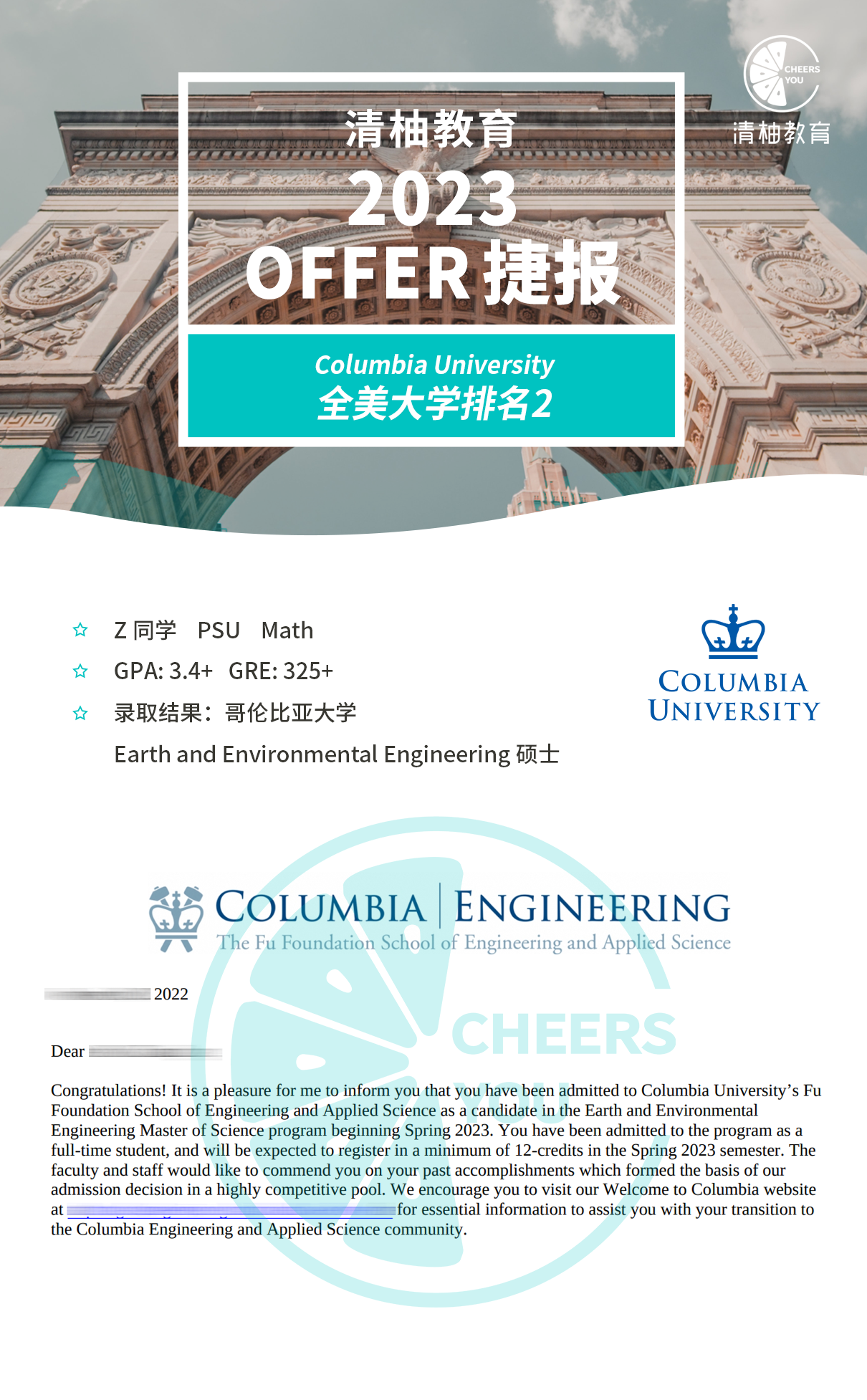
Based on years of application data, it is recommended that students planning to apply for Environmental Science/Engineering programs have standardized scores of GPA 3.3+, GRE 320+, TOEFL 100+, which will better position them for top 30 schools in overall and program rankings.
For those aiming for top 20 schools in overall and program rankings, suggested scores are: GPA 3.5+, GRE 325+, TOEFL preferably 105+. If your soft background like research is strong enough, you can attempt to reach for the top 10 elite schools.
.png)
Recommended Environmental Science/Environmental Engineering Programs
- Environmental Engineering: Duke University, University of Southern California
- Energy Systems and Environmental Sustainability: The Energy, Civil Infrastructure and Climate program at UC Berkeley, and the Energy, Environmental & Chemical Engineering program at Washington University in St. Louis are specific master's programs focusing on energy-related issues, conducting research and study on problems in specific areas.
- Combined with Civil Engineering: Programs at Carnegie Mellon University, Cornell University, Northwestern University, etc., are called "Civil and Environmental Engineering", a major category of environmental engineering programs.
- Environmental Science: Johns Hopkins University's Environmental Sciences and Policy
In summary, Environmental Science primarily covers basic environmental knowledge, fundamental theories, and policy systems. Graduates mainly engage in testing, assessment, consulting work, or pursue further studies, with somewhat limited job prospects. Environmental Engineering programs are more practice-oriented, aiming to train environmental engineers, with better practicality and employment prospects compared to Environmental Science, and the US also offers a relatively larger number of related programs. Therefore, regardless of whether their undergraduate major was Environmental Science or Engineering, students tend to lean towards Environmental Engineering for graduate studies.
It is recommended that students planning to study abroad research the program's training direction and curriculum in advance, and choose the one they like most and that suits them best.
.png)
For more questions about study abroad applications, please consult Teacher Acelin for professional help!
.png)