
What level is required to apply for an LLM at US T20/T14 law schools? What GPA qualifies for which tier? US law school rankings, recommended schools, LLM specializations, and the significance of studying law abroad—how much does it impact your return to China? CheersYou(清柚教育) will explain today.
T20 Law School Tiers
First of all, the US law school rankings are an independent branch within the overall university rankings. The top 14 law schools are commonly referred to as the T14. These 14 schools are divided into three groups: the "YHS" group, the "CCN" group, and the other eight.
📍 "YHS" Group: Yale, Harvard, Stanford. The top of the top, extremely prestigious, and naturally the application difficulty for international students is sky-high.
📍 "CCN" Group:Columbia, U Chicago, NYU. As the second tier of T14, these three schools share the advantage of excellent geographic locations, which is crucial for job prospects in law.
📍 The Remaining Eight:UPenn, UC Berkeley, Umich, UVA, Duke, Northwestern, Cornell, Georgetown.
📍 Other T20 Schools:UCLA, UT Austin, Washington University in St. Louis, USC, Vanderbilt, Boston University.
When choosing a school, in addition to looking at ranking tiers, you should also have a plan for your future career and what field you want to work in. As we know, LLM has many specializations, and each school has its own strengths. For example:
- Yale: Law School, strengths: corporate law, securities law, international law.
- Stanford: Law School, four areas: corporate governance and practice, environmental law and policy, intellectual property law, and international economic law.
- Columbia: the business school among law schools, strengths: financial law (flagship), international law and IP law, tax law, public interest law, corporate law, securities law, Chinese law, corporate and securities law.
- NYU: Law School, strengths: tax law, international law, financial law, business law, IP law, corporate and securities law.
- Duke: Law School, strengths: securities law, banking law, bankruptcy law, IP law, international law, environmental law, intellectual property law.
- Cornell: Law School, strengths: constitutional law, corporate law, contract law, international law, comparative law.
- Texas Austin: Law School, strengths: business law, global energy, international arbitration and environmental law, Latin American and international law, human rights and comparative constitutional law.
- Georgetown: Law School, international law and international economic law are among the top nationwide, tax law and environmental law in the top 10. Vanderbilt: Law School, strengths: business law, corporate law, international law, intellectual property law.
So it's clear that each school has its own strengths. When choosing a school, students should be clear about their own goals; this is a crucial decision for future employment.
Application Requirements:
- Degree requirement: Must have a law degree.
- GPA: 3.0+ can consider T20; 3.5+ can consider T14; 3.8+ can consider T6.
- TOEFL: 100+ / IELTS: 7+, because LLM programs have very high language requirements. You'll need to analyze numerous cases, and without solid English skills, it's hard to graduate even if admitted. It's recommended to aim for TOEFL 105+ for top 6-8 law schools, and 110+ for top 6.
- Relevant work experience: Top 14 prefers it.
Prestigious Internships:
Prefer reputable institutions (law firms: Red Circle firms, boutique firms, first-tier firms, etc.; courts: Supreme People's Court, provincial high courts, Shanghai Financial Court, specialized IP courts, etc.; companies: Fortune 500, etc.);
Internship duration should ideally be 3 months or longer; the department you choose should align with your interests and your intended LLM specialization.
- Top foreign firms > Top domestic firms > Foreign firms > Domestic firms > Courts and in-house legal departments
- Foreign firms: Baker & McKenzie, Wachtell, Lipton, Rosen & Katz (WLRK), Clifford Chance, Skadden
- Top five domestic firms: King & Wood Mallesons, JunHe, Haiwen, Fangda, Zhong Lun. Other firms: Dentons, Global Law Office, Jingtian & Gongcheng, etc.
Research experience: It is recommended to publish articles in law journals.
For those who want to work in the U.S. in the future, to practice law as an attorney, you must pursue a J.D. at a law school.
A JD degree is one of the most basic requirements to become a lawyer. Applying for JD does not require a legal background; anyone with a bachelor's degree can apply. Applicants must take the LSAT (Law School Admission Test). Law schools evaluate applicants based on undergraduate GPA, work experience, LSAT scores, and overall qualifications to determine admission. After three years of JD study, you can take the bar exam. Other conditions are the same as for LLM degrees.
For students who only pursue an LLM degree, the employment prospects back in China are also very promising. Top domestic law firms in China, due to increasingly international business, are more and more inclined to hire LLMs from top US law schools. It is rumored that King & Wood Mallesons has reserved more positions for LLMs than for domestic fresh graduates. Top law firms place great emphasis on academic background; compared with other domestic postgraduates, LLMs have many advantages in job hunting, especially in areas requiring foreign law experience. More and more Chinese companies are listing in the U.S., and these companies need specialized talent in China to provide legal services, such as in the case of mergers and acquisitions or equity transfers. For example, New Oriental, a company everyone is familiar with, is listed in New York State and therefore needs professionals with New York State practice qualifications; such talent is currently in short supply in China.

Therefore, in China today, there is a shortage of professionals who understand both the Chinese context and American law. Students studying law in the U.S. aim to fill this gap, which is why a large number of Chinese students flock to law programs. Overall, regardless of the path students choose, they should first determine their goals, then select a specialization and school based on their intended career direction, and work hard toward that goal.
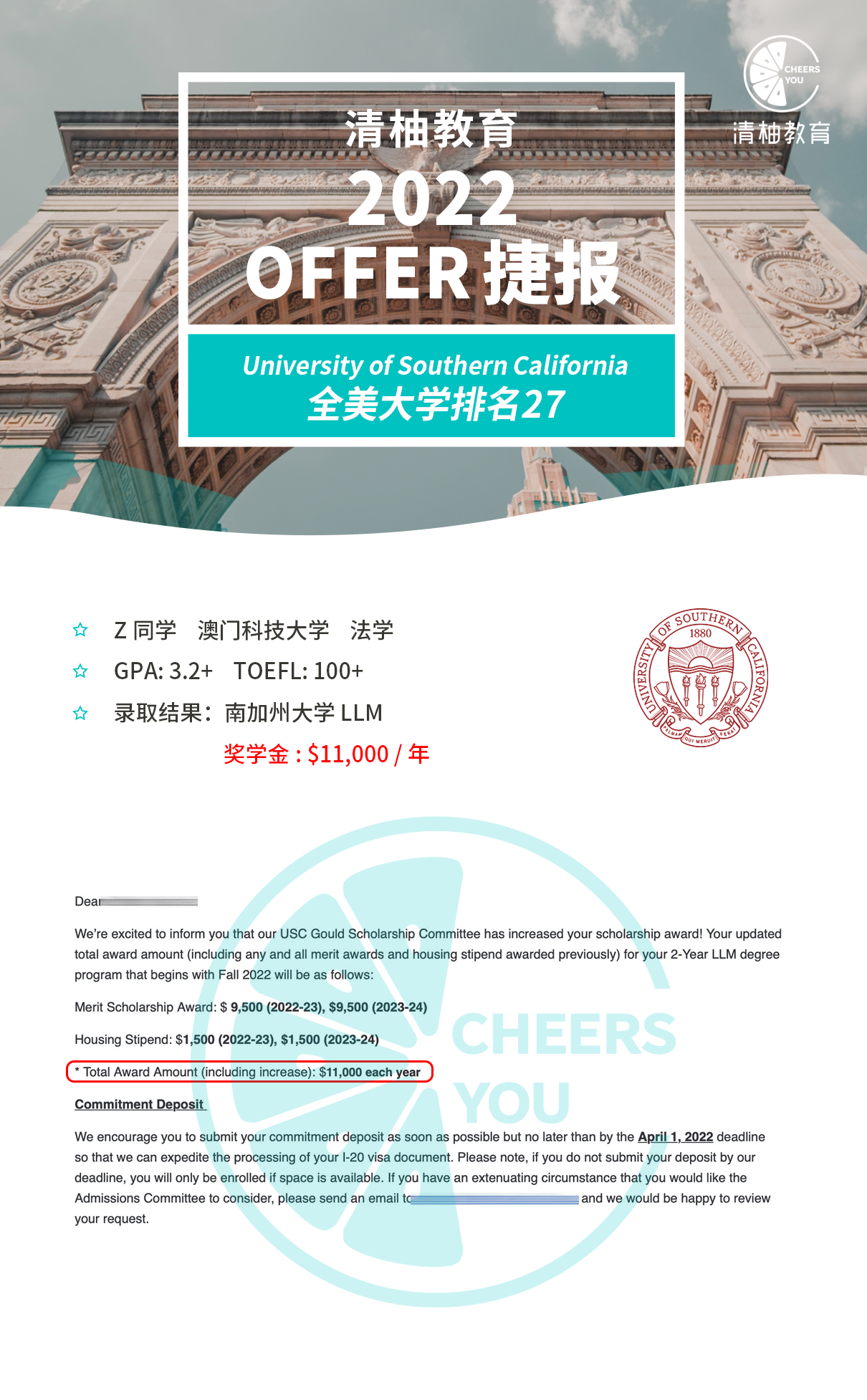
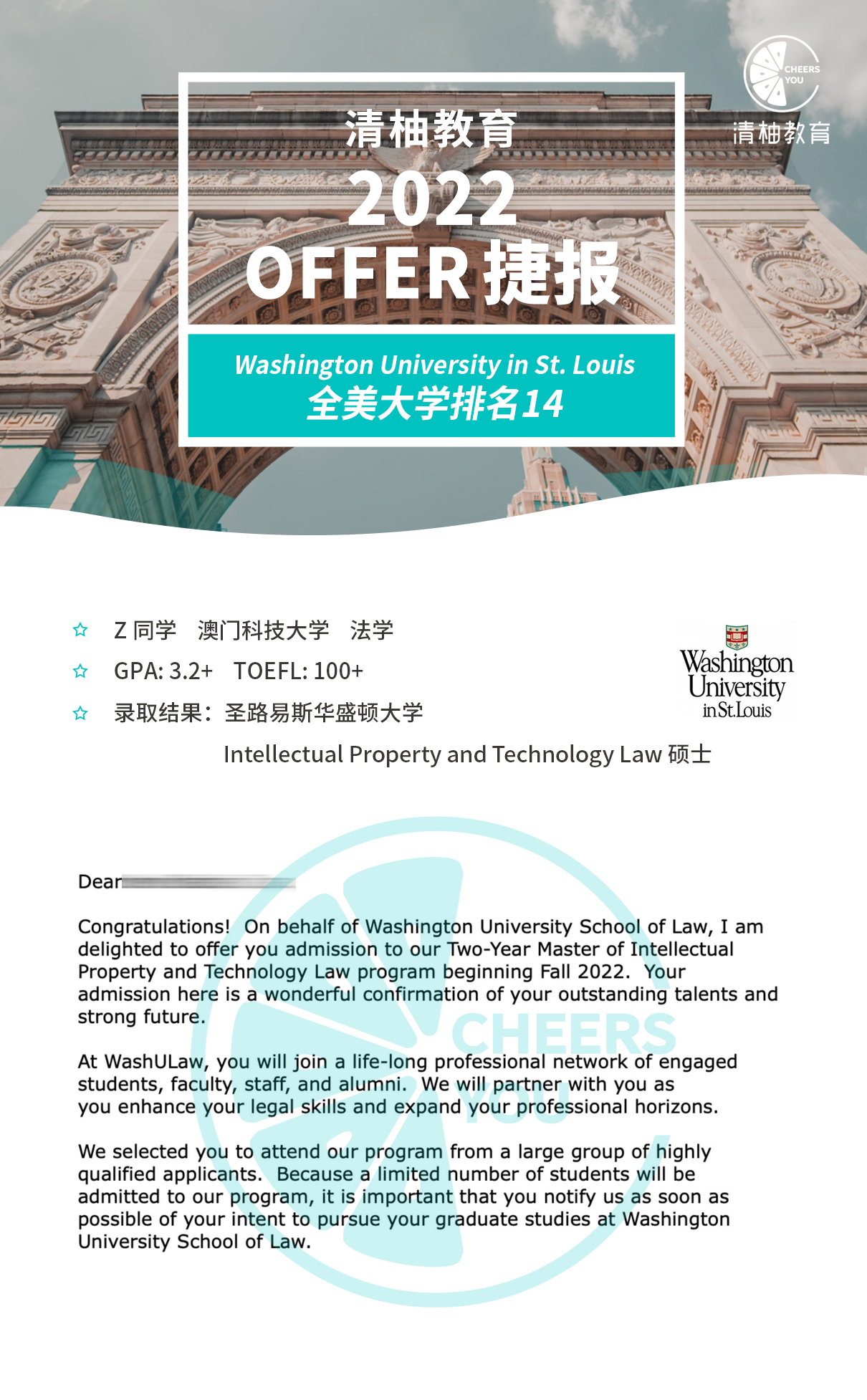
Finally, we hope everyone receives an offer from their dream school! Below are some LLM offers with application backgrounds for your reference.
For students interested in studying law abroad, scan the QR code below to start a 1-on-1 consultation~
.png)