Recently, rumors that the UK plans to shorten the PSW graduate visa from 2 years to 6 months have been swirling...
It must be said that the PSW visa has had a bumpy ride—canceled a decade ago, finally reinstated two years ago, and now it faces being nominal at best.
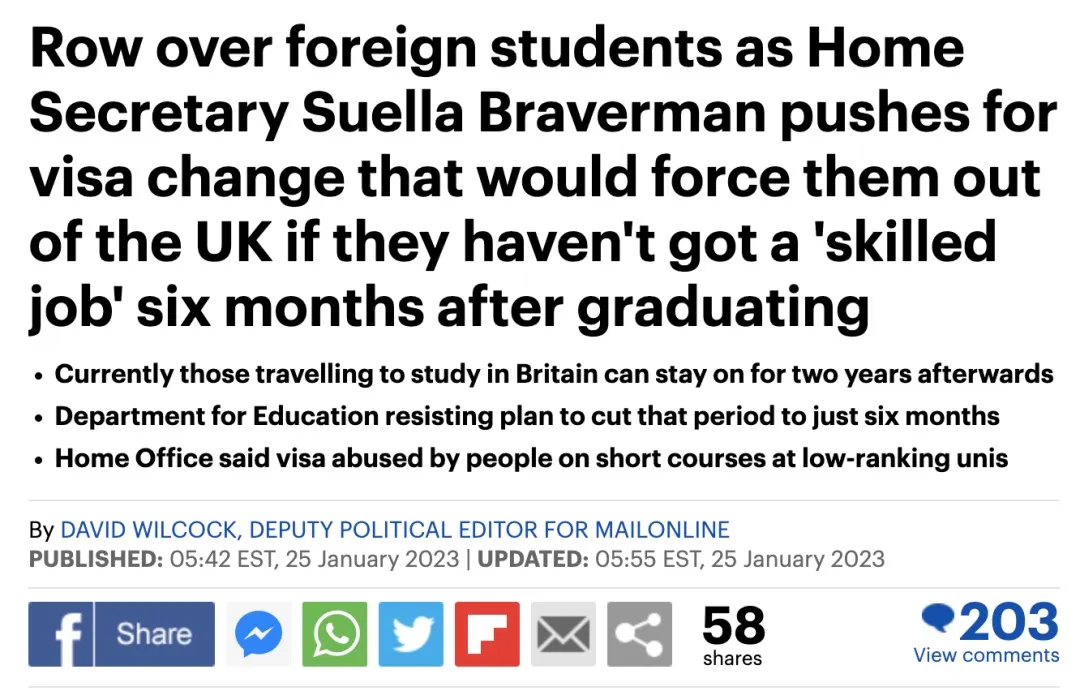
Students preparing to apply for the PSW visa are already trembling. But there's no need to panic yet—this proposal is still under discussion, it's not easy to implement, and it has no impact on current applicants.
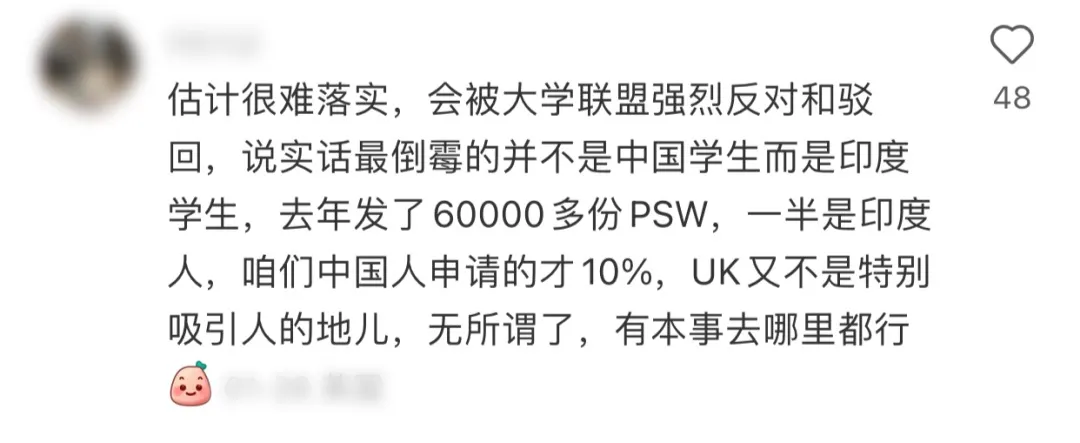
Netizens joked that shortening the visa to scare off international applicants—well, the UK university alliance might not agree, given they're already struggling to pay salaries.
Some analysts suggest that the UK's move is also meant to retain higher-quality talent. After all, high-quality talent is a long-term necessity for the development of every country/region.
Recently, countries around the world have been adjusting their student and work visa policies to attract international talent, with a slew of positive news.
International students are still in luck!
US to Resume Domestic Visa Renewals and Extend Application Window
US State Department Plans to Resume Domestic Visa Renewals
Recently, the Wall Street Journal (WSJ) reported that the US plans to launch a pilot program this year, allowing H-1B and L-1 visa holders to renew their visas within the United States.
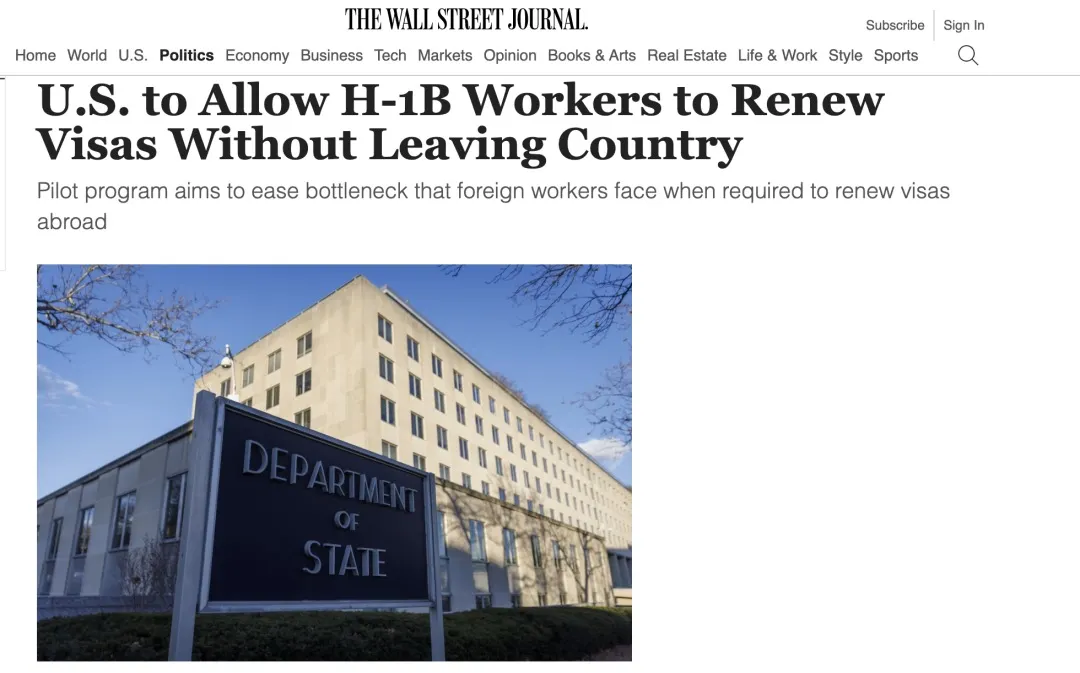
Previously, short-term visa holders had to visit US embassies or consulates abroad for renewal. However, during the pandemic, many visa holders were stranded abroad due to reduced visa interview services and ultimately couldn't return.
The implementation of this no-departure renewal plan is expected to not only reduce the workload of overseas consulates but also avoid many inconveniences caused by visa interview delays. For international students hoping to work in the US after graduation, this is very good news.
Combined with the ongoing wave of layoffs in the US, the change in renewal policy has led many to quip that while they have to lay off people, they still privately want to retain more high-tech talent.

US Student Visa Application Window Extended
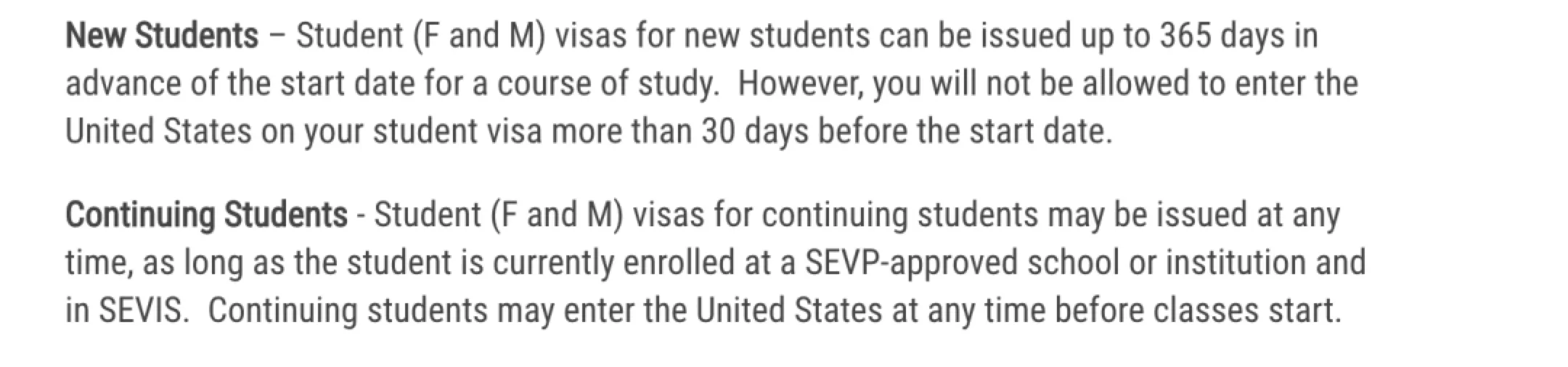
In addition, in mid-February, the US Consulate General in Guangzhou announced new student visa rules: the issuance date for new student visas (F and M) has been changed from 120 days before the course start date to 365 days!
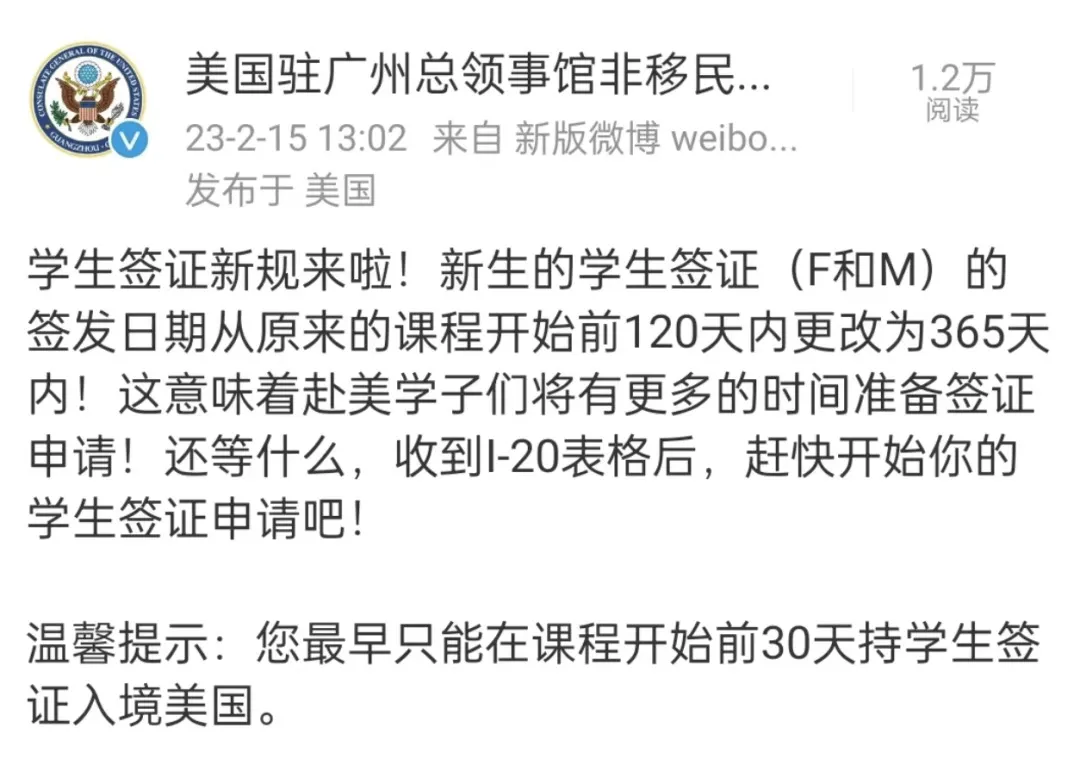
This means students coming to the US will have more time to prepare their visa applications. However, it's important to note that the earliest entry date remains 30 days before the start of classes, or they risk being denied entry at the port of entry.
Australian Government Extends Post-Study Work Visa Up to 6 Years
Not only the US, but the Australian government has also made bold moves to extend work visas to retain foreign talent, and the news quickly flooded the social media feeds of international students in Australia.
485 visa extended by another 2 years, graduates can now stay in Australia for up to 5 years!
In early January, the Australian Department of Education posted on its official WeChat account: International graduates can now work and stay longer in Australia!
Australian Education Minister Jason Clare stated that the government plans to extend the 485 visa for international graduates in "designated fields of study."
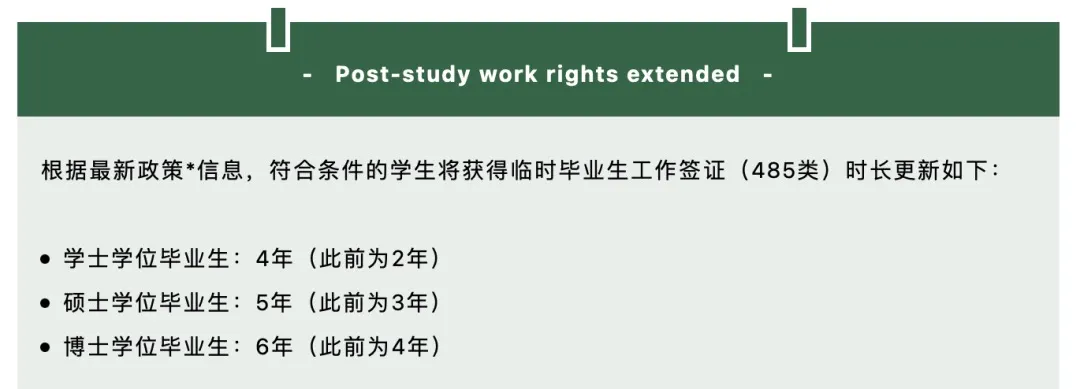
Actually, this exciting new policy was announced as early as last September, but so far, details about which majors and fields qualify for the extension, as well as the exact implementation date, have not been released—meaning this provision has yet to be officially implemented.
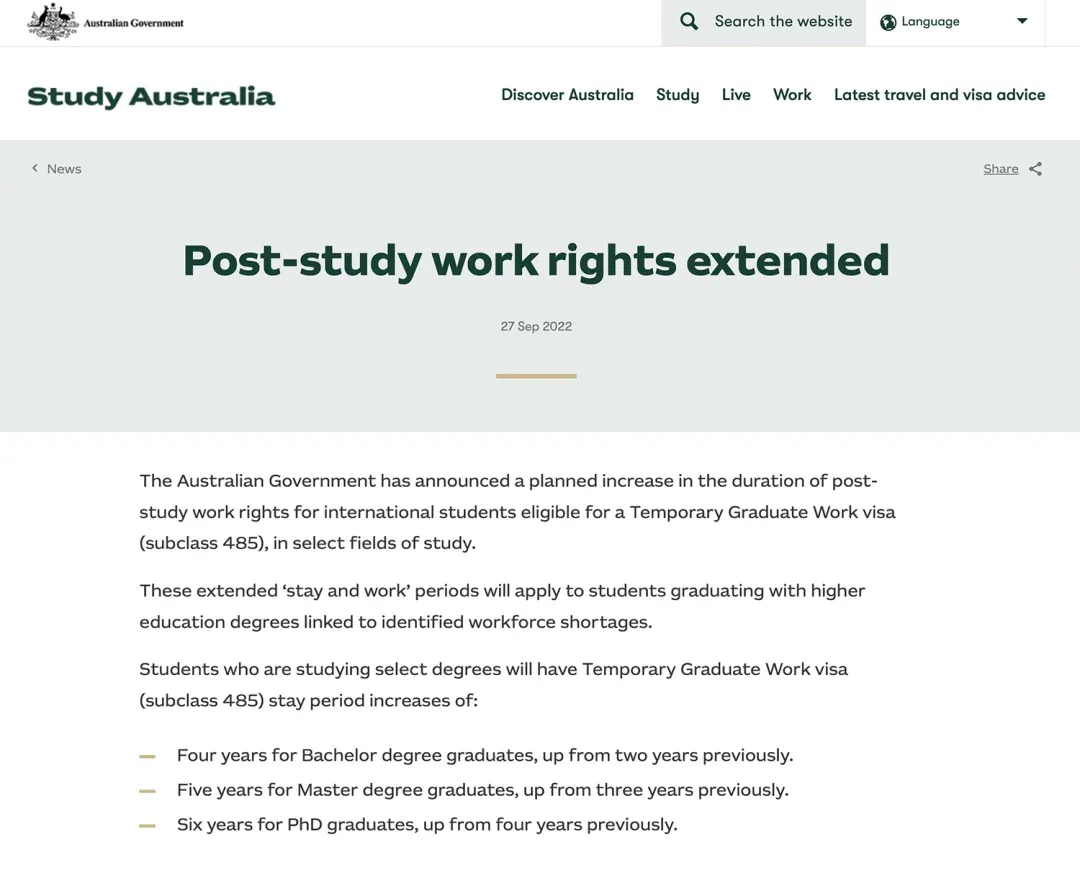
While not all international graduates' 485 visas will be extended, this is a very positive signal for international students, and the opportunities to stay in Australia will greatly increase in the future.
New Visa for HK-Macau: Unlimited Round Trips within 5 Years
Hong Kong and Macau have also joined the talent war, launching a new type of endorsement—the Talent Endorsement.
Just recently, the National Immigration Administration suddenly announced that starting February 20, 2023, a pilot policy for Talent Endorsements for travel to Hong Kong and Macau will be implemented in mainland cities of the Guangdong-Hong Kong-Macao Greater Bay Area.
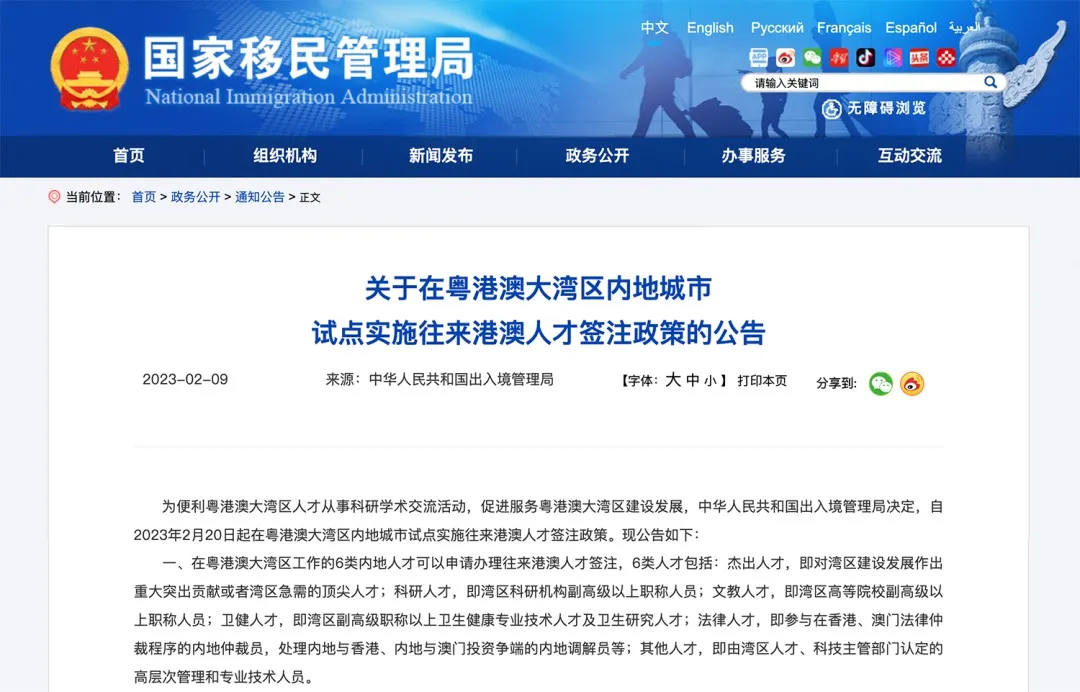
This new Talent Endorsement has a longer validity and stay period than before, and it allows multiple trips! The maximum validity is 5 years, and holders can travel to and from Hong Kong and Macau multiple times, with each stay lasting up to 30 days.
However, those eligible for the Talent Endorsement are naturally elite professionals from all walks of life. There are six categories of talent that can apply: outstanding talent, scientific research talent, cultural and educational talent, health talent, legal talent, and other talent.
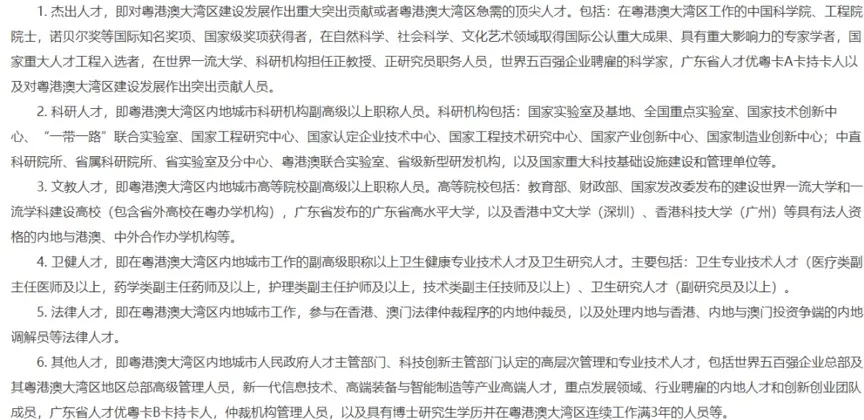
It's clear that the requirements for the Talent Endorsement are quite high, including titles like Chinese Academy of Sciences academicians, full professors at world-class universities, Nobel laureates... This standard is quite difficult for average international students to meet.
However, Hong Kong has already started a talent attraction scheme specifically for international students back in 2022, namely the "Top Talent Pass Scheme (TTPS)."
"Top Talent Pass Scheme" Applications Exceed 10,000
The "Top Talent Pass Scheme" is a talent intake scheme launched by the Hong Kong government in 2022 to attract experienced professionals and graduates from the world's top universities.
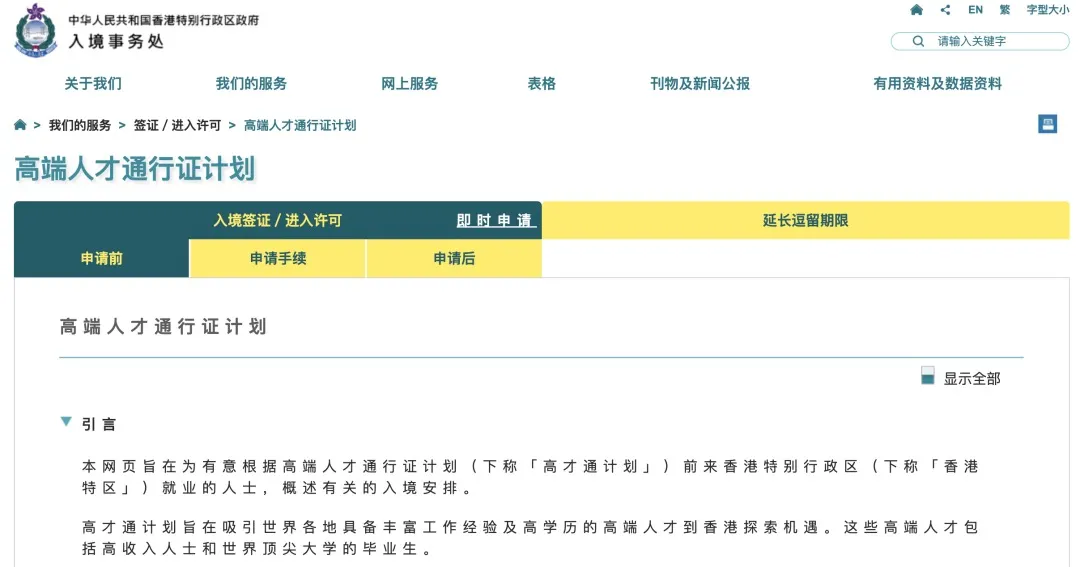
Upon approval, you can directly obtain Hong Kong residency status, and after 7 years you can transition to permanent residency. Since the scheme began accepting applications at the end of 2022, the number of applicants has already exceeded 10,000!
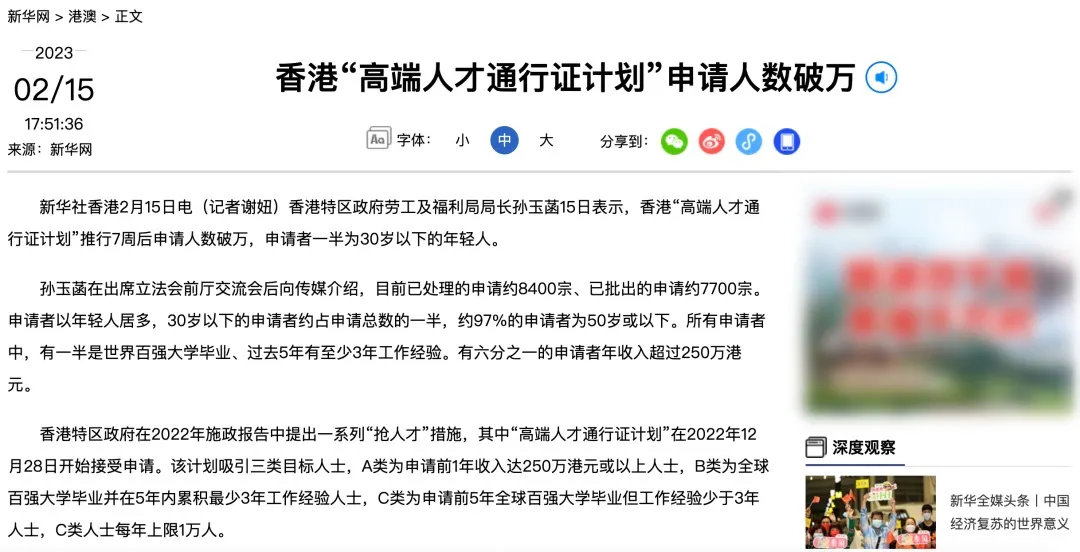
The "Top Talent Pass Scheme" application requirements are very friendly to graduates from top universities: as long as you graduate from one of the world's top 100 universities and have accumulated three years of work experience after graduation, you can apply!
Applicants need to meet at least one of the following three conditions:
Category A: An annual salary of HK$2.5 million (approx. ¥2,230,500) or above in the year preceding the application, with no quota
Category B: Graduates with a bachelor's degree from a global top 100 university in one of four designated world university rankings, with at least three years of work experience in the past five years, no quota
Category C: Graduates who have obtained a bachelor's degree from a global top 100 university in the past five years but have less than three years of work experience, with an annual cap of 10,000
It's worth noting that the TTPS requires work for visa renewal, and only bachelor's degree holders from world top 100 universities are eligible—master's and doctoral degrees do not qualify! It seems that undergraduate qualifications are becoming increasingly important for international students.
Singapore Joins the "Talent War" with New Work Visa Policies
Singapore hasn't missed the "talent war" either, and has introduced new work visa policies to aggressively attract talent.
Singapore has three types of work passes: EP, SP, and WP. Among these, the EP (Employment Pass) is the most commonly applied for by international students; it is also the highest-level pass and has no quota restrictions.
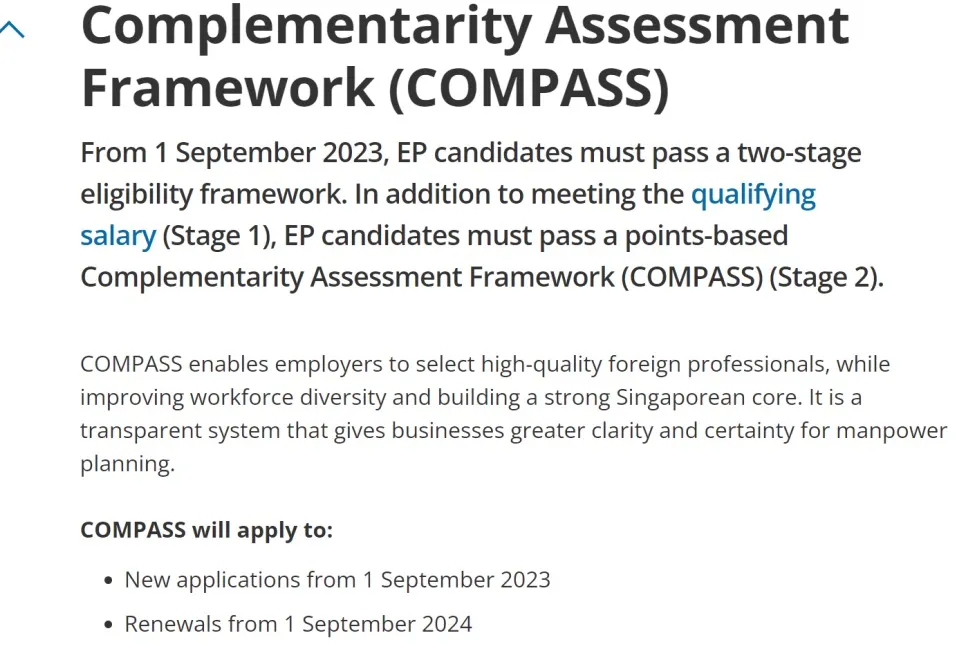
Moreover, EP holders can not only apply for renewal after expiry but also further apply for Singapore permanent residency (PR). Starting September 2022, EP will be subject to a "points system" (COMPASS), requiring 40 points to apply.
For international graduates from top 100 universities like NUS and NTU, 20 points are already firmly in hand.
Countries and regions have all started the "talent war," and the good fortune for international students is finally here!
Those students currently preparing their study abroad applications can also use this to inform their choices of destination and school.
Finally, a reminder! As the pandemic stabilizes, study abroad applications will only become more competitive. We still hope everyone can start preparing early to stand out in the fierce application season!