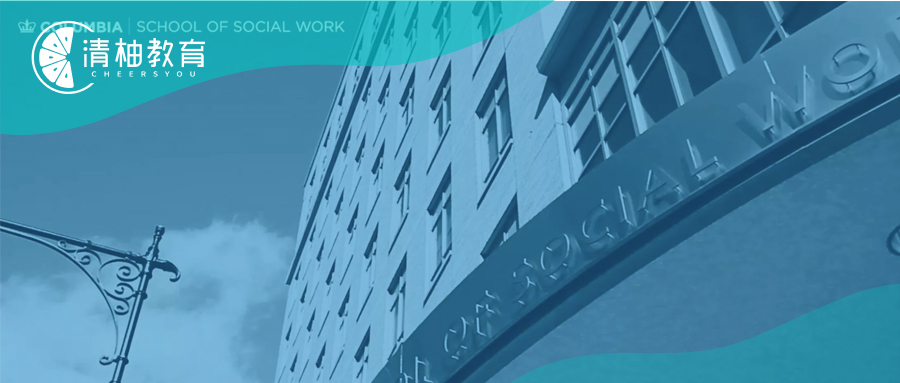
Columbia University School of Social Work (CSSW), founded in 1898, is the oldest graduate school of social work in the United States. As an independent school, it enrolls a large number of students—approximately 800 on-campus students each semester, with over 40 full-time faculty members, making it a very sizable program.
The mission of Columbia's School of Social Work is to integrate academic theory with social practice. With its outstanding faculty, rigorous academic environment, and profound social impact, it ranks among the top social work schools in the nation. It strives to cultivate exceptional graduate students in a diverse learning environment who will engage in advanced social work and assume professional leadership roles, thereby enhancing the welfare of citizens and communities in New York City, across the United States, and around the world.
.png?x-oss-process=style/opt-webp)
Master of Science in Social Work
The Master of Science in Social Work is one of CSSW's programs, offered in both on-campus and online formats.
The most popular is the full-time two-year track, which consists of two consecutive fall and spring semesters. Each week, students spend 2 days in the classroom and 3 days in field placements. The first year focuses primarily on foundational coursework in social work practice methods, social work research, and psychological and social theories. In the second year, students choose one of four concentrations—both a method and a field of practice—for more specialized training and fieldwork.
.png?x-oss-process=style/opt-webp)
-
Advanced Clinical Social Work Practice
Fields of practice: medical social work / mental health / school social work, etc.
Employers include: hospitals / nursing homes / senior centers / community health clinics / community development agencies / family service agencies / schools (elementary and secondary, public, private) / special education / Early Head Start centers / colleges / university counseling services / victim services agencies / domestic violence centers / mental health centers / religious institutions / private enterprises, etc.
-
Advanced Generalist Practice & Planning
Fields of practice: community organization / social service administration and management / private or philanthropic foundations, etc.
Employers include: community development agencies / community coalitions / social justice organizations / human rights organizations / ethnic and religious representative groups / family service agencies / child welfare agencies (public and private) / mental health departments / employee assistance programs / hospitals / public interest organizations / adoption agencies / daycare centers / foster care agencies / foundations (private or philanthropic), etc.
-
Policy Practice
Fields of practice: policy and planning / policy research / politics (state, local, national).
Employers include: social service agencies / community organizations / public interest groups / local, state, and federal government / health and welfare boards / think tanks / nonprofit organizations / international non-governmental organizations (INGOs) / consulting firms / foundations (private or philanthropic) with a mission to influence social policy / political campaigns / school boards.
-
Social Enterprise Administration
Fields of practice: administration and management / human resources / employee assistance programs (EAP) / corporate social responsibility (CSR) / philanthropy / corporations.
Employers include: corporate businesses / social service agencies / community organizations / hospitals / companies (multinational and domestic) / schools / government agencies / employee assistance programs (independent or consulting firms hired by companies, corporations, unions, and organizations) / marketing firms / advertising agencies / PR firms / in-house marketing departments, etc.
Students apply their chosen method to one of seven fields of practice: aging / contemporary social issues / family, youth, and children's services / health, mental health, and disabilities / international social welfare and services for immigrants and refugees / school-based and school-linked services / global social work.
.png?x-oss-process=style/opt-webp)
In addition to the two-year track, the 16-month full-time Master of Science in Social Work program begins in January (spring semester) and completes MSW requirements over four consecutive semesters, including the summer. This option is only available on campus, not online. Compared to the two-year track, students in the 16-month program face some limitations in choosing minors and dual degrees.
.png?x-oss-process=style/opt-webp)
Students spend three days a week in field placements and two days in class. The reading load is heavy, and many papers are required. Both tracks require a total of 60 credits: 42 credits from coursework and 18 credits from field education (1,200 field hours; students must complete two field placements, one generalist-level at 600 hours and one specialist-level at 600 hours).
.png?x-oss-process=style/opt-webp)
Application Requirements:
- Bachelor's degree from an accredited institution.
- A strong academic record demonstrating the ability to excel in graduate-level study.
- Commitment to the social work profession and the capacity to meet the demands of professional training, internships, and life experiences.
- Proficiency in spoken English is crucial: TOEFL 100 or above, IELTS 7.0 or above, Duolingo 120 or above.
- GRE optional.
- 3 letters of recommendation.
Columbia's School of Social Work admits roughly 60% of applicants. This high acceptance rate also means the admissions process is highly competitive. About 85% of students are female, and approximately 18% come from outside the United States.
Career Prospects
Graduates enjoy strong employment outcomes, finding roles in nonprofit organizations, hospitals, mental health clinics, community development centers, family service agencies, special education institutions, schools, and more. Many also provide individual or family counseling. After working for three years under the supervision of a licensed clinical social worker, graduates can take the advanced licensure exam. With that license, income levels improve significantly—hourly rates can sometimes reach $150 to $200. For Chinese students, returning home is also a great option, as the social work field in China is growing, and a degree from a prestigious university is highly valued.
Application Case Study
.png?x-oss-process=style/opt-webp)
If you are interested in applying to Columbia's social work graduate program, scan the QR code below to start a one-on-one consultation today!
.png?x-oss-process=style/opt-webp)