
The finance direction for U.S. study has always been a popular choice for business school applicants. However, many students applying to finance programs may not be able to distinguish among Finance, Financial Engineering, and Financial Mathematics. So, what exactly are the differences in their course directions and career paths? And which top university programs are recommended?
Definitions of Finance, Financial Engineering, and Financial Mathematics
Finance
Finance is a discipline that studies economic activities related to the circulation of money and monetary funds. It primarily examines modern financial institutions, financial markets, and the movement laws of the entire financial economy, and it emerged from economics. Finance programs are typically offered in business schools or management schools, tend to be more theoretical, cover a broad scope, and are considered a traditional discipline.
Financial Engineering
Financial Engineering primarily introduces trading tools and their use in modeling financial markets and instruments. Financial Engineering programs are often jointly offered by business schools and engineering schools or are directly housed within engineering schools. The main focus is on learning the techniques, operations, and principles within the financial industry, relying on financial derivatives such as futures, options, forwards, swaps, etc. It mainly cultivates students' ability to use fundamental financial knowledge to solve practical problems like derivative risk financing, financial big data, and algorithmic trading.
Financial Mathematics
Financial Mathematics is an emerging interdisciplinary field that uses mathematical tools to study finance, conducting quantitative analysis such as mathematical modeling, theoretical analysis, and numerical computation, in order to discover the inherent laws of finance and guide practice. It is usually offered in colleges of science, departments of mathematics, or exists as a branch of finance. It shares similarities with Financial Engineering but leans more toward the application of modern mathematics and computational techniques in finance in terms of curriculum design.

Fundamental Differences Among Finance, Financial Engineering, and Financial Mathematics
Finance programs lean toward theoretical research, with main branches including capital markets, corporate finance, risk management, etc. The teaching methods involve extensive case analysis. Financial Engineering is part of a broader definition of finance, but when treated as separate majors, Finance places more emphasis on financial theory learning and research, focusing on breadth, whereas Financial Engineering is more focused on financial products, emphasizing depth in that area. Financial Engineering and Financial Mathematics do not study financial theory; in essence, the two majors are quite similar, both using mathematical tools to build financial market models and solve financial problems. Both require a strong foundation in mathematics and computing. The difference lies in their curriculum systems: Financial Engineering emphasizes programming and practical technical applications, while Financial Mathematics emphasizes mathematical theory, foundations, and algorithmic models.
Curricula of Finance, Financial Engineering, and Financial Mathematics
Finance:
Accounting and Financial Reporting
Business Communication
Business Leadership and Human Values
Corporate Finance
Decision Economics
Investments
Statistical Analysis
Computational Finance
Derivatives
Empirical Finance
Fixed Income
Financial Linear Econometrics
Financial Nonlinear Econometrics
Financial Engineering:
Corporate Finance and Financial Markets
Financial Computing
Financial Techniques and Algorithms
Financial Risk
Financial Risk Management
Financial Engineering
Probability for Electrical and Computer Engineers
Mathematics and Tools for Financial Engineering
Forecasting and Risk Analysis
Investment Analysis and Portfolio Management
Introduction to Programming Systems Design
Financial Mathematics:
Financial Computing
Data Science and Data-Driven Modeling
Financial Securities and Markets
Risk and Portfolio Management
Stochastic Calculus (Half-Semester Version)
Dynamic Asset Pricing
Project and Presentation
Scientific Computing in Finance
Career Direction Differences Among Finance, Financial Engineering, and Financial Mathematics
Finance:
Career directions for finance majors include economic analysis and forecasting, international trade, marketing, management, etc. With certain professional certifications, the employment scope can be broader, such as Chartered Financial Analyst (CFA), Chartered Wealth Manager, Fund Manager, Actuary, Stock Analyst, etc.
Financial Engineering:
For future career directions, financial engineering graduates can choose to enter financial services industries or other related sectors, such as financial institutions, investment banks, fund companies, risk management departments, engaging in quantitative and technical roles including trading, investment, financial risk management, pricing, as well as financial services, insurance, industrial and commercial fields.
Financial Mathematics:
The career directions for Financial Mathematics are similar to those of Financial Engineering. However, the heavy mathematical focus of financial research means that graduates often find employment in high-risk, high-return financial investment industries, such as hedge funds, investment banks, etc.

Recommended U.S. Graduate Programs in Finance, Financial Engineering, and Financial Mathematics
Finance:
Columbia University - Master of Science in Financial Economics
Master of Science in Financial Economics

Johns Hopkins University - Master of Science in Finance
Master of Science in Finance

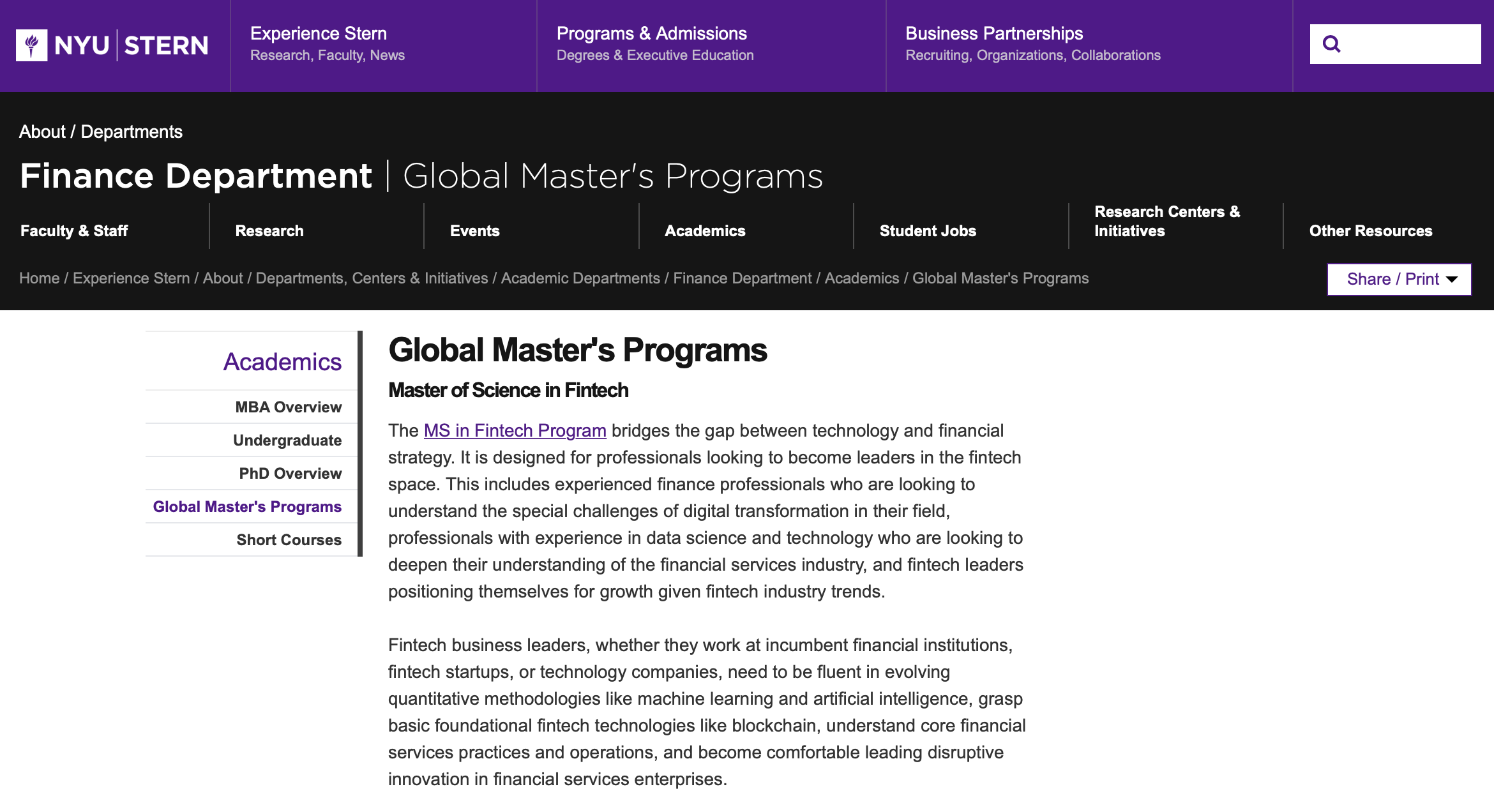
New York University - MS in Global Finance
MS in Global Finance
Financial Engineering
University of California, Berkeley - Master of Financial Engineering Program
Master of Financial Engineering Program


Columbia University - MS Financial Engineering
MS Financial Engineering



Financial Mathematics
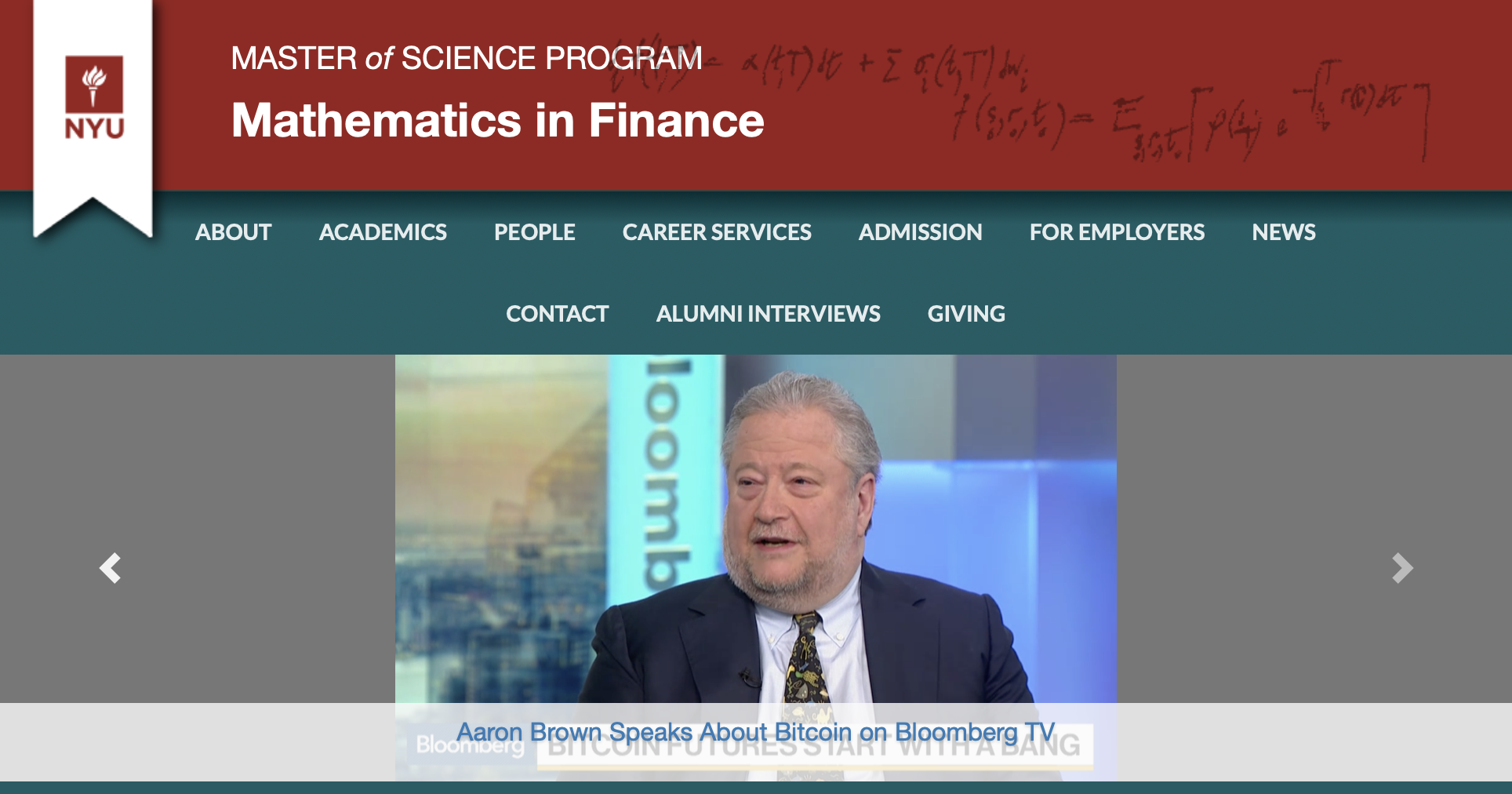
New York University - MS in Mathematics in Finance
MS in Mathematics in Finance
University of Chicago - Master of Science in Financial Mathematics
Master of Science in Financial Mathematics

Here are some U.S. top school offers for Finance, Financial Engineering, and Financial Mathematics!


.png)
Interested in U.S. master's programs in Finance, Financial Engineering, or Financial Mathematics? Scan the QR code below to start a one-on-one consultation now!
.jpg?x-oss-process=style/opt-webp)