STEM is a hot topic among international students. Beyond high salaries and excellent job prospects, one major draw is the extended OPT period, which can total up to 36 months. In recent years, more U.S. universities have been designating certain programs in communication, education, business, and psychology as STEM. Today, CheersYou(清柚教育) brings you a roundup of STEM-designated business programs. If you're interested, keep reading!
What Is STEM?
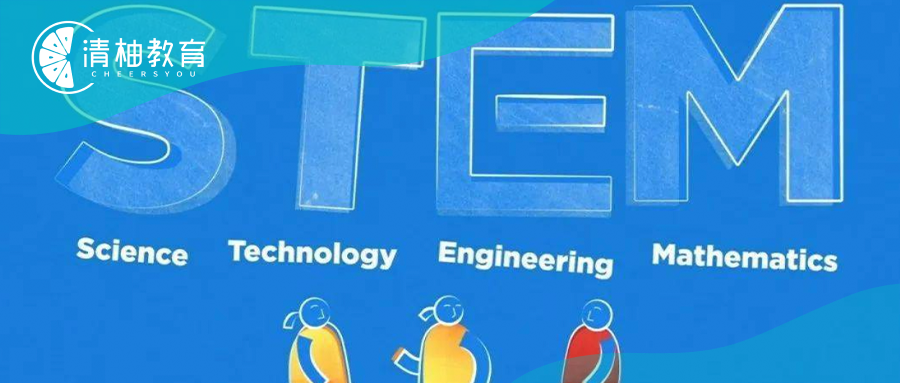
STEM is an acronym for Science, Technology, Engineering, and Mathematics. The surge in STEM popularity stems partly from curricula that align with the big data era and broad support from the U.S. government, which continues to increase investment in STEM education, encouraging students to major in these fields.
.gif?x-oss-process=style/opt-webp)
Advantages of STEM Programs:
For international students, finding a job after graduation requires applying for OPT (Optional Practical Training), which allows legal internship and work in the U.S. Typically, OPT lasts only one year. However, STEM graduates can apply for a 24-month extension, giving them up to 36 months of work authorization in total.
.gif?x-oss-process=style/opt-webp)
STEM-Designated Business Programs:
STEM fields traditionally lean toward technical disciplines like engineering, biological sciences, math, and physical sciences. But in the age of big data, more business programs that rely on quantitative and programming skills are gaining STEM designation. Note, however, that not all business programs qualify as STEM.
STEM-Designated Business Specializations and Schools
1. Master of Accounting
Accounting master’s programs focus on collecting, recording, analyzing, and interpreting financial information, as well as preparing and interpreting financial statements for risk assessment and control. Accounting is a popular business major, and a small number of its master’s programs are STEM-designated.
STEM-Designated Programs:
- Columbia University: Accounting and Fundamental Analysis
- University of Rochester: Accountancy
- University of Illinois Urbana-Champaign: Accountancy
- University of Illinois Urbana-Champaign: Accounting Science
2. Master of Economics
Some economics master’s programs are STEM-designated, typically those that emphasize quantitative and mathematical methods to solve economic problems.
STEM-Designated Programs:
- Yale University: International and Development Economics
- Columbia University: Economics
- Duke University: Economics
- Duke University: Economics and Computation
3. Master of Business Analytics
MSBA programs are almost always STEM-designated, combining business, statistics, and computer science. They are mostly housed in business schools, with a few in engineering schools.
STEM-Designated Programs:
- Columbia University: Business Analytics
- Columbia University: Applied Analytics
- University of Texas at Austin: Business Analytics
- University of Southern California: Business Analytics
.gif?x-oss-process=style/opt-webp)
4. Master of Finance
In recent years, more finance programs with quantitative focus—such as financial mathematics and computational finance—have gained STEM designation.
STEM-Designated Programs:
- Massachusetts Institute of Technology: Finance
- Columbia University: Financial Economics
- Princeton University: Finance
- Johns Hopkins University: Finance
5. Master of Financial Engineering
Financial engineering programs are almost always STEM-designated. They emphasize programming, modeling, math, and finance knowledge, and offer excellent job prospects. For instance, Columbia’s MFE graduates easily earn six-figure salaries.
STEM-Designated Programs:
- Columbia University: Financial Engineering
- Cornell University: Financial Engineering
- Carnegie Mellon University: Financial Engineering
6. Master of Marketing
A few marketing programs are also STEM. Given STEM’s inherent quantitative demands, these programs usually require applicants to have completed probability and statistics courses in undergrad, with programming background preferred.
STEM-Designated Programs:
- University of Rochester: Marketing Analytics
- Columbia University: Marketing Science
CheersYou(清柚教育) has also helped many students receive offers from STEM business programs:
.gif?x-oss-process=style/opt-webp)
.gif?x-oss-process=style/opt-webp)
If you’re interested in learning more about these programs, feel free to reach out to CheersYou(清柚教育) anytime for further guidance.
.gif?x-oss-process=style/opt-webp)