"List of World-Renowned Universities That Accept Low GPAs"
"Master's Programs Suitable for Low-GPA Students to Snag"
.......
As long as you search for keywords like "low GPA" and "snag," you'll find similar articles on various online platforms, often with hundreds of likes.
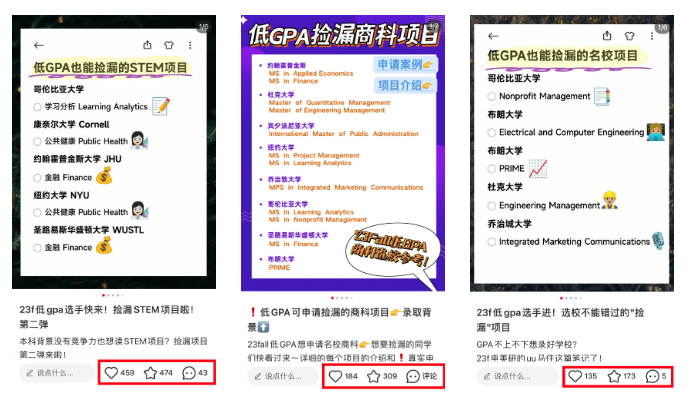
It's not hard to notice that these highly liked posts all reference the 22Fall application season for students preparing for 23Fall, while "snag" cases with 23Fall as the reference have barely any traction...
Could it be that those "easy" master's programs for low-GPA students advertised online are no longer working?
Undeniably, attending a prestigious university is the ultimate goal for every student planning to study abroad, and this includes those with low undergraduate GPAs.
Yet, with rejection letters flying everywhere and admission difficulty escalating in the 23Fall cycle, these "snag" programs are hardly effective anymore. Some students even treated them as safety schools and happily received rejection letters!
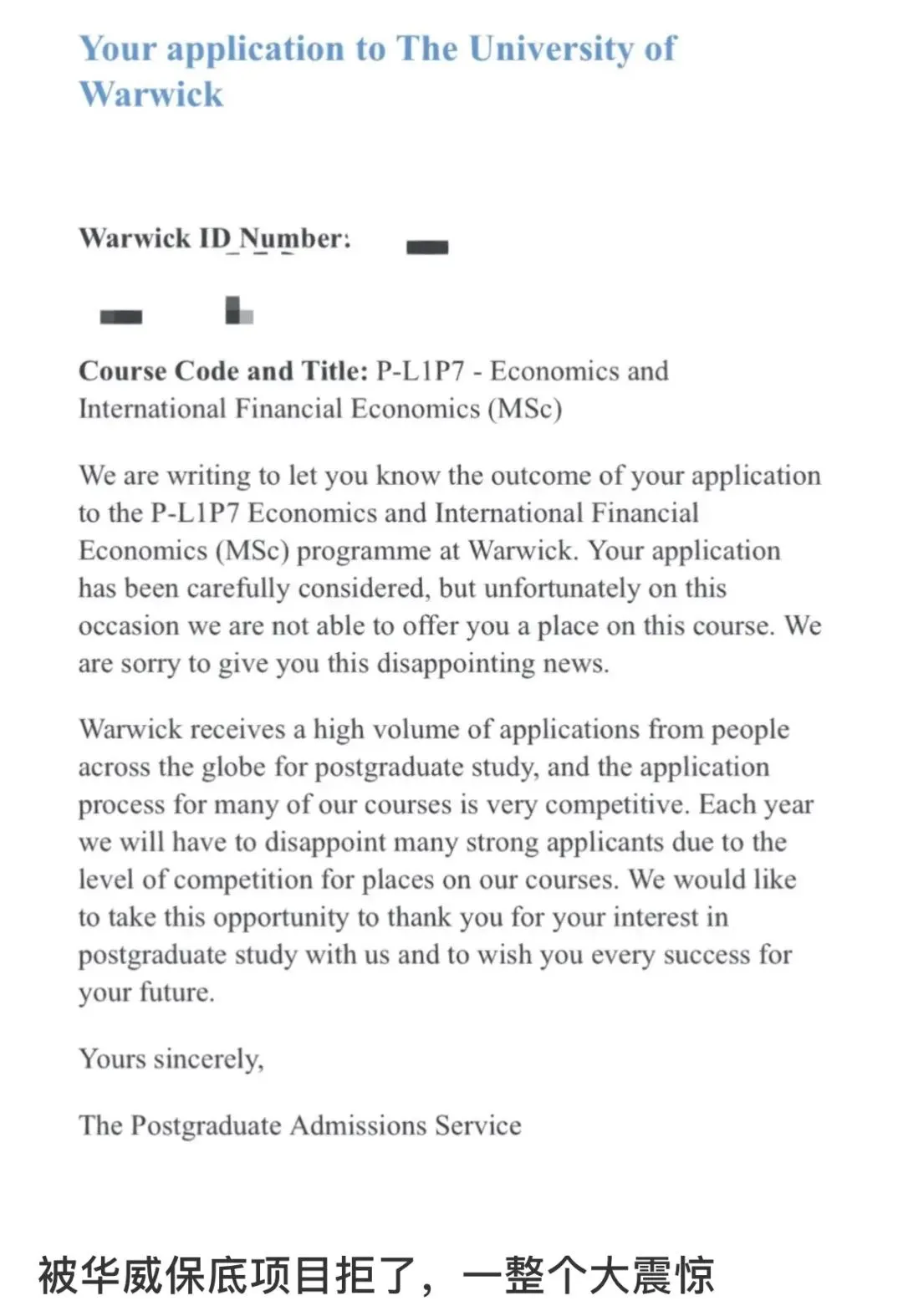
In other words, in the 23Fall cycle, even if you want to snag something, there's nothing left to snag!
Why There Are No "Snags" in 23Fall
The 23Fall application season is drawing to a close, and most 23Fall applicants feel that this year's admission bars are absurdly high or the programs simply aren't as easy to get into as expected. In fact, this phenomenon has multiple causes!
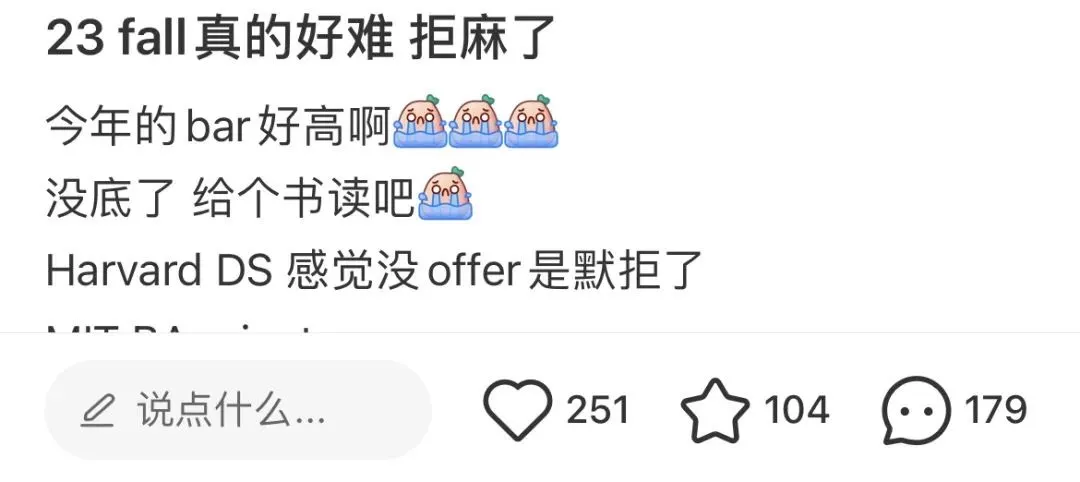
More Complex Application Requirements
GRE Requirement Reinstated:
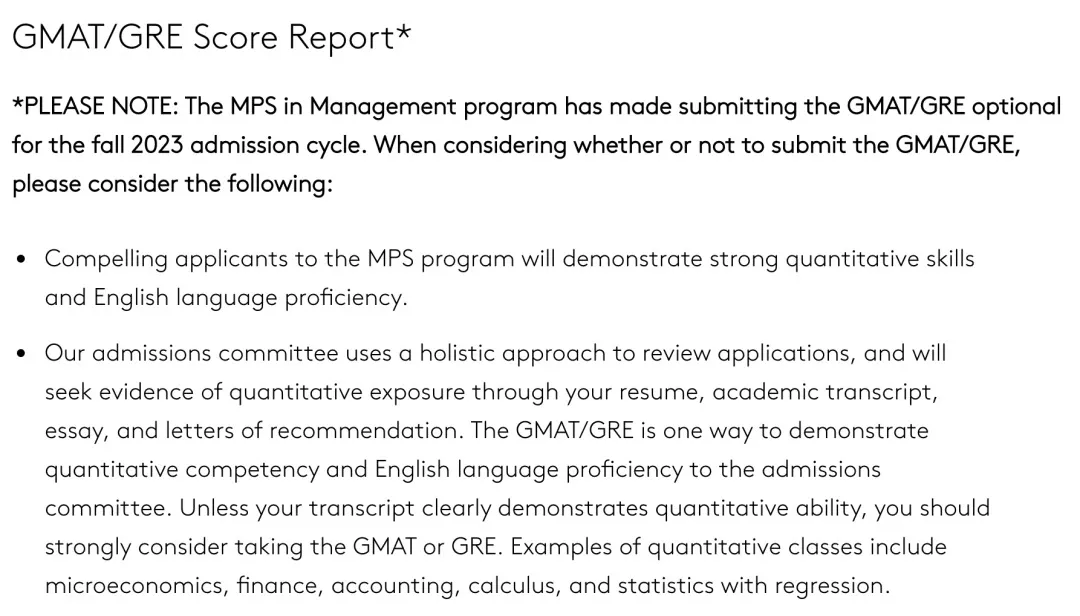
As the pandemic stabilizes, study abroad applications have returned to normal. In 23Fall, many programs have reintroduced GRE score submission requirements! The era of GRE Optional is coming to an end!
For instance, Cornell's College of Engineering explicitly states that GRE scores must be submitted. Under the business school, programs like Management also clearly state that submitting GRE scores is "strongly recommended." If you can't submit them, you'll need to demonstrate your ability to the admissions officers through other materials.
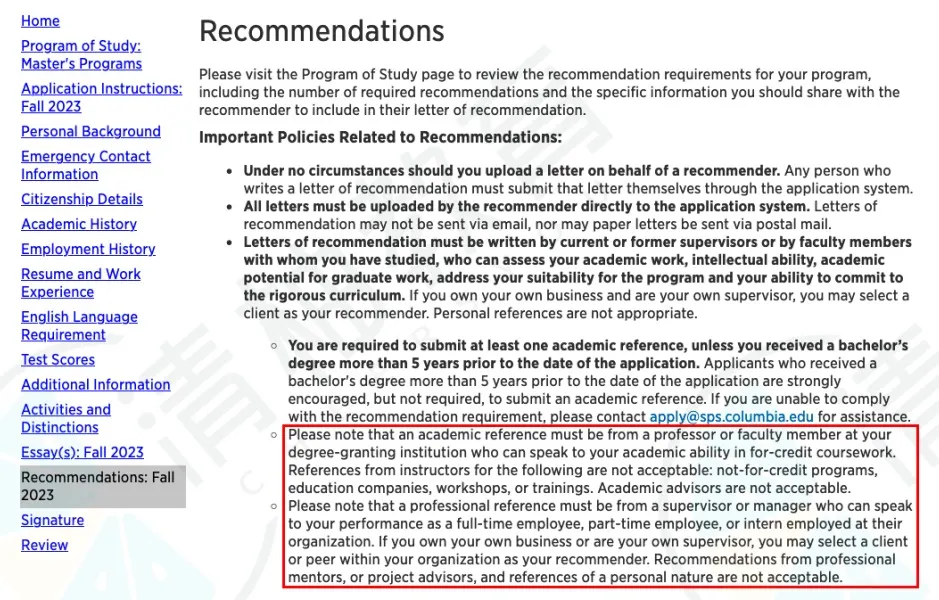
Standardized Recommendation Letter Requirements:
Columbia University's SPS has imposed stricter validity definitions on previously vague and chaotic internships and recommendation letters.
Columbia requires that academic recommenders must be professors from degree-granting institutions who have taught the student. They must specify which course the professor taught and explain why you believe this professor is suitable as your academic recommender. If you need another teacher to write your recommendation, you must explain why you are not using a school faculty member. Similarly, internship recommenders must be supervisors or managers.
More Rigorous Interview Process:
This year, after NYU's SPS introduced the Kira interview process, an unprecedented and age-old question appeared:
Describe what a flower is to someone who has never seen or heard of one before. Please walk us through your thinking. What are the possibilities? What different strategies could be used to solve this problem?
60 seconds to prepare, 90 seconds to answer.
If an applicant is completely unprepared and encounters this question in the exam, it's basically a 150-second ordeal in hell.
Higher Language Requirements:
Beyond the much-discussed UCL language requirement now reaching 8 (8), Warwick's WMG has a new rule for 23Fall: non-native English speakers applying to Warwick WMG must submit language scores for 23Fall.

Of course, if you don't have an IELTS score when applying online, you'll need to submit it later.
Accelerating Application Pace:
Hong Kong universities have introduced early rounds for 23Fall, pushing the entire application timeline forward! CUHK Business School launched its first early round for 23Fall, switching regular rounds to a rolling basis, with official strong encouragement to submit applications early.
The University of Hong Kong Business School's 23Fall application opened half a month earlier than last year, and the first-round deadline was 5 days earlier. During its official online admissions briefing, HKU mentioned that within 14 days of opening the first round, it had already received the same number of applications as the entire first round last year, demonstrating the massive applicant pool.
“Revenge” Surge in Study Abroad After Lifting of Pandemic Controls
The most direct impact of lifting domestic pandemic control measures is that international travel management has become more convenient, leading to a growing number of students planning to study abroad.
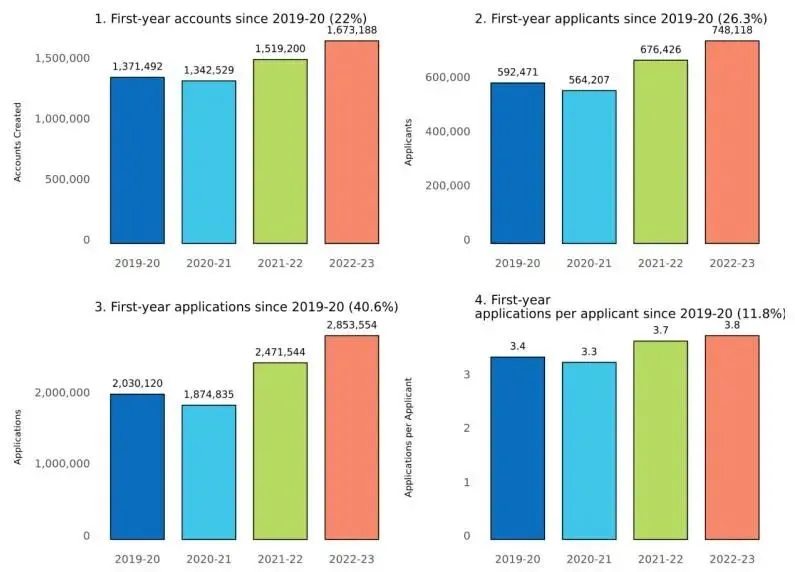
In addition to fresh graduates, there is a concentrated release of study abroad demand that had been suppressed over the past three years. As of January 1, 2023, a total of 1,079,936 students worldwide had submitted undergraduate freshman applications to U.S. universities through the Common App for the 2022-23 application season, a 20% increase compared to pre-pandemic levels!
And that's just undergraduate data, not to mention the growth in graduate applications.
Low GPA, Doomed to Be a Mere Spectator in Applications?
Although GPA is not the sole criterion for graduate school applications—GRE/GMAT, internships/research, TOEFL/IELTS, personal statements, recommendation letters, interviews, etc., all collectively influence your application outcome—GPA is absolutely the first stepping stone in the entire application process.
Even U.S. universities, which emphasize a holistic view of applicants, are no less rigorous about grade requirements for prestigious institutions. With a GPA that's too low, even applying to the Top 100 will be a struggle.
So, with a low GPA, are you destined to just be a bystander in the application process?
Avoid Regions or Schools That Fixate on Average Scores
The U.S. has relatively diverse admission standards; it won't rigidly filter applicants based on undergraduate institution or grades. Compared to a sole focus on hard criteria, U.S. institutions place greater emphasis on assessing applicants' overall competencies. Soft backgrounds such as internships, research, competitions, and overseas exchanges are key filters in U.S. university admissions.
The UK, indeed, favors students with excellent grades and has clear GPA cutoffs for different undergraduate tiers. Looking at 23Fall, many UK universities have also updated their approved lists.
Apply Across Multiple Disciplines and Choose Alternative Programs
In this increasingly competitive landscape, you can also adjust your program selection approach. Not only can you apply across multiple disciplines, but you can also opt for some "alternative" programs. Especially for those with less-than-stellar grades who highly value rankings, choosing an easier major within a broad category or adding an alternative program can be a good choice.
Media – Intercultural Communication
Business Analytics – Information Systems Management
Management – Entrepreneurship Management
Education – Education Interdisciplinary Studies
Statistics – Biostatistics
......
Newly Opened Programs Tend to Have Lower Difficulty
In the first year, newly launched programs often have lower admission difficulty. On one hand, fewer people know about them, so the number of applicants is smaller compared to other programs. On the other hand, the school may be unsure about the applicant numbers, so the initial admission standards might not be set too high.
Click image for details

Supplement with Other Application Dimensions
When GPA is not an advantage, it is crucial to amplify the shining points in other academic or internship experiences. Given the limited time, you can choose differentiated, deeply engaging, high-quality internships, research projects, or competitions based on your past experiences to enhance your overall strength and compensate for the low GPA.
If there's no longer enough time to add new internships or experiences, focus on improving the quality of your personal statement, resume, and recommendation letters to fully highlight your strengths!
The Secrets Behind Low-Score Comebacks
Not everyone happens to ride the "survivorship bias," but it's undeniable that low-score comebacks do exist and are not coincidences.
Click image for details





Clearly, students from top programs, G5, and Ivy League schools do have successful cases of gaining admission with low GPAs. However, they almost always compensated for their GPA or undergraduate institution disadvantages in other areas, such as research, internships, or exchange programs.
Therefore, without a strong background, high-quality recommendation letters, and excellent personal statements and resumes, a pure low-GPA comeback is extremely difficult to achieve.
Finally, there's no one-size-fits-all solution in studying abroad. Doing your best is the real "top pick"!
I hope everyone stays clear-headed in their own application "time zone," avoids unnecessary anxiety, makes full use of time to improve their GPA, and embraces more opportunities~