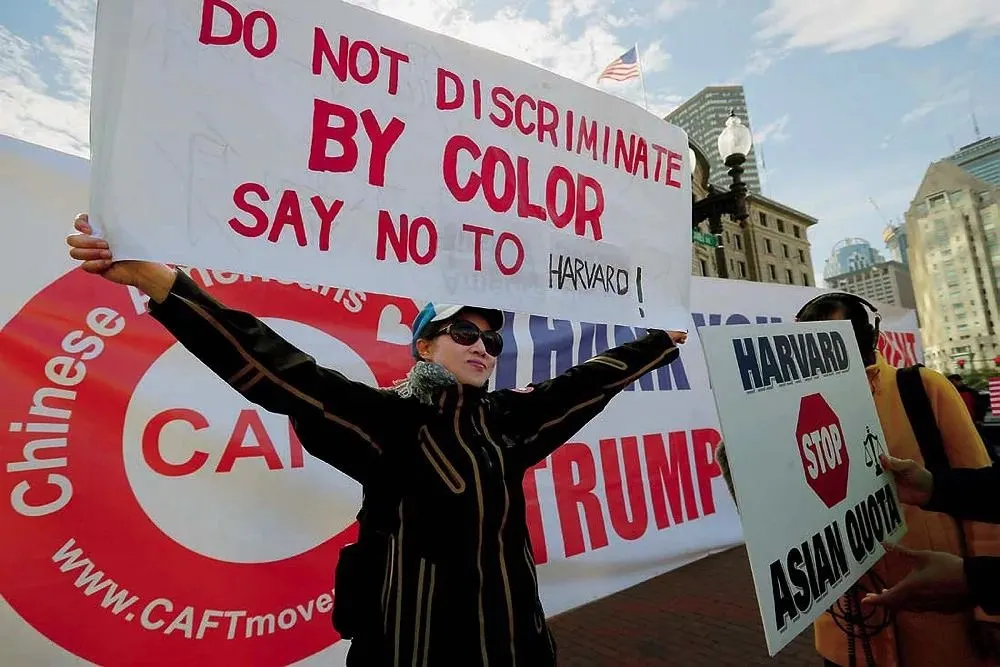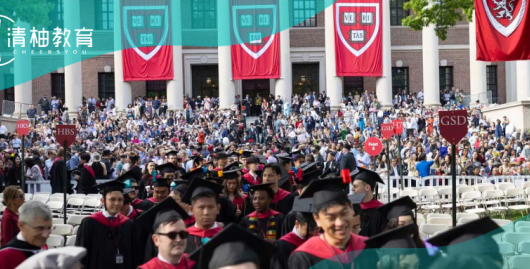
The "Harvard discriminates against Asians" case was heard in the U.S. Supreme Court late last year. While the verdict of this protracted landmark higher education case has yet to be announced, the university has been embroiled in a fresh scandal.
According to the latest revelation by Jeannie, a columnist for The New Yorker and a professor at Harvard Law School, Harvard admissions officers once mocked Asian applicants.
.png)
So, does discrimination really exist? Although the Massachusetts judge and Harvard both insist it doesn’t, opinions differ.

Harvard Admissions Officer Mocks Asian Applicants: Utilitarian and Self-Pitying
According to Judge Burroughs, the Massachusetts judge overseeing the Harvard Asian discrimination case, the Harvard Admissions Office once mentioned stereotypes about Asians and even made “anti-Asian remarks.” They ridiculed Asian applicants for playing the victim in their essays, for forcing sports despite poor physical fitness, or for being overly pragmatic and only wanting to study medicine.
Even more outrageous, an admissions officer who had worked at Harvard for over 50 years colluded with the head of the Boston Office of Affirmative Action, even taking pleasure in the suffering of Asian students.
One student wrote in his essay: “My father was a Filipino farm worker. After he was run over by a tractor, I became the sole breadwinner for my family of 14. I balanced work and school while also being a California AAA-level baseball player.”
The two senior admissions officers and government officials mocked it sarcastically:
“That’s the funniest joke I’ve ever heard.”
“Which team needs a 132-pound defensive end?”
“If he wins the Nobel Peace Prize, I’ll have to discount it a bit—after all, Martin Luther King Jr. also won it. Nothing but another example of favoring minorities.”
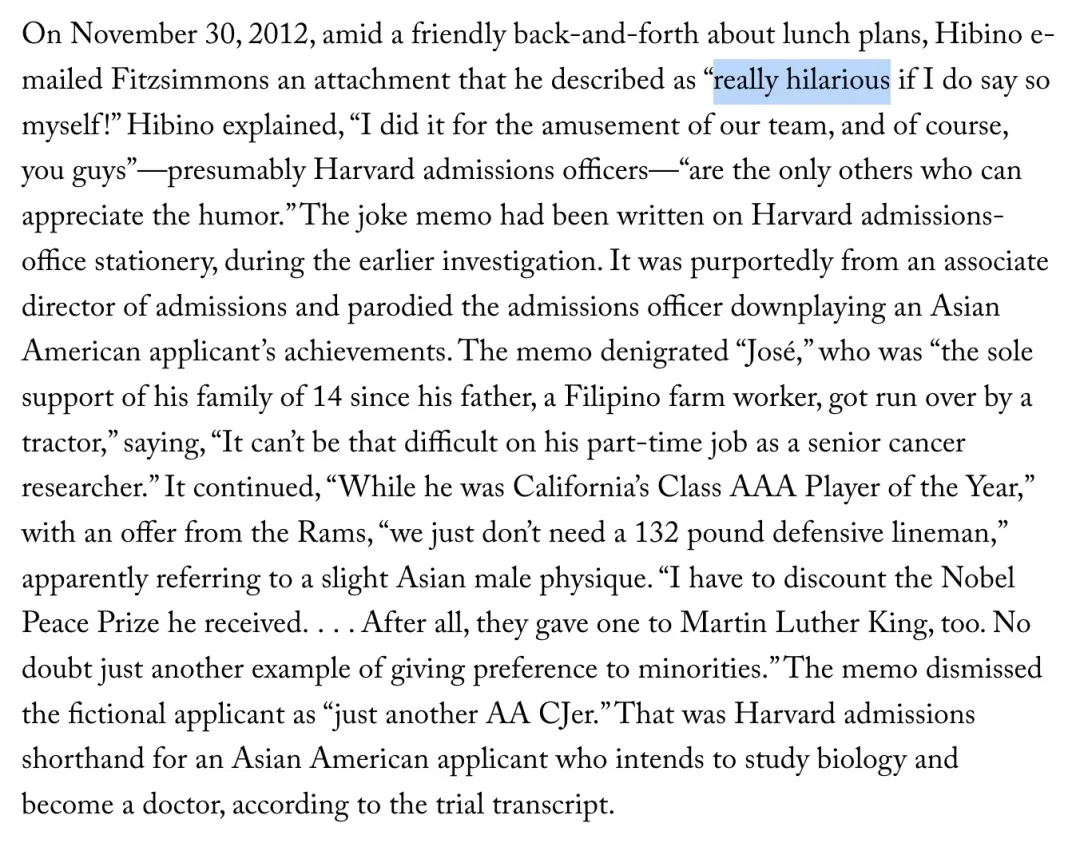
And for Asian applicants aspiring to study medicine, the Harvard admissions officer left a memo: “Another AA CJer.” This is blatant discrimination, implying that Asian students are merely utilitarian.

Yet Judge Burroughs ruled that Harvard’s admissions process was not intentionally discriminatory, only that “some implicit inappropriate remarks are inevitable.”
However, Judge Burroughs disclosed a startling fact: for applicants from areas not regularly covered by Harvard’s admissions, the school set vastly different SAT thresholds for different ethnic groups:
- White: 1310
- Asian female: 1350
- Asian male: 1370
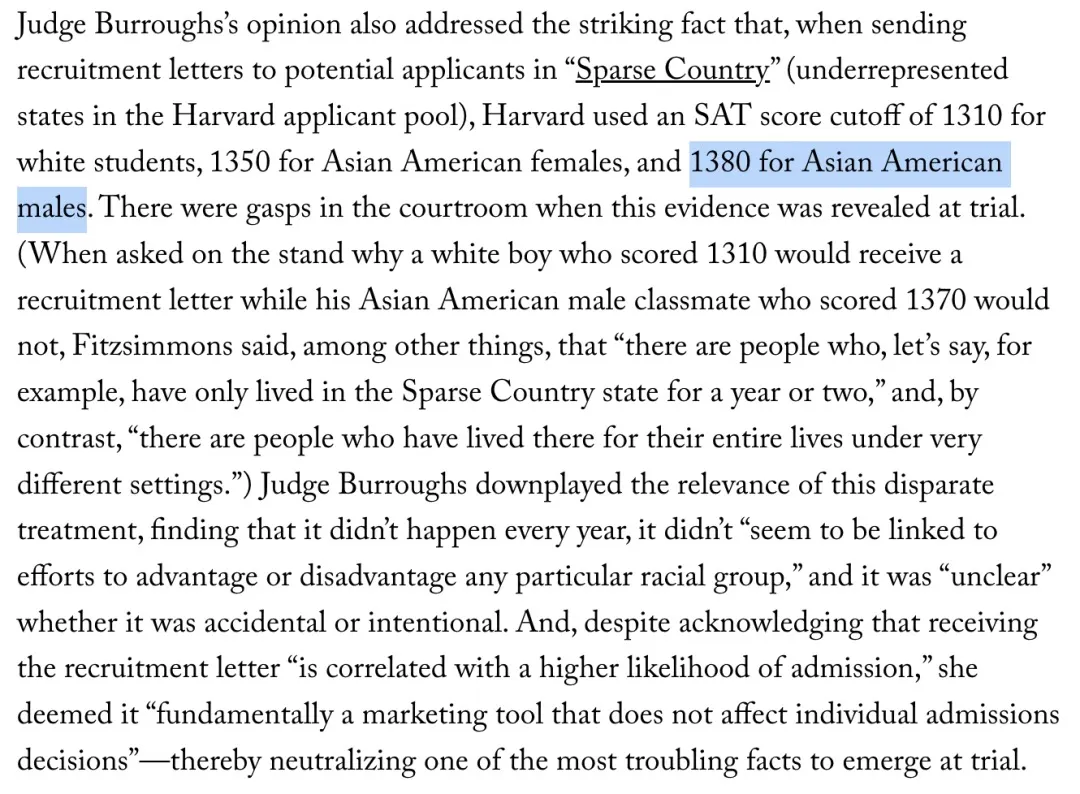
Despite such clear evidence, Judge Burroughs still tried to downplay the differential treatment, claiming it was rare: “It’s just a marketing tactic and doesn’t affect admissions outcomes.”
Whether or not they are turning a blind eye, the subtext is clear: Asian students currently make up about a quarter of Harvard’s enrollment, and the university fears that if it loses the lawsuit, the Asian proportion will climb further.

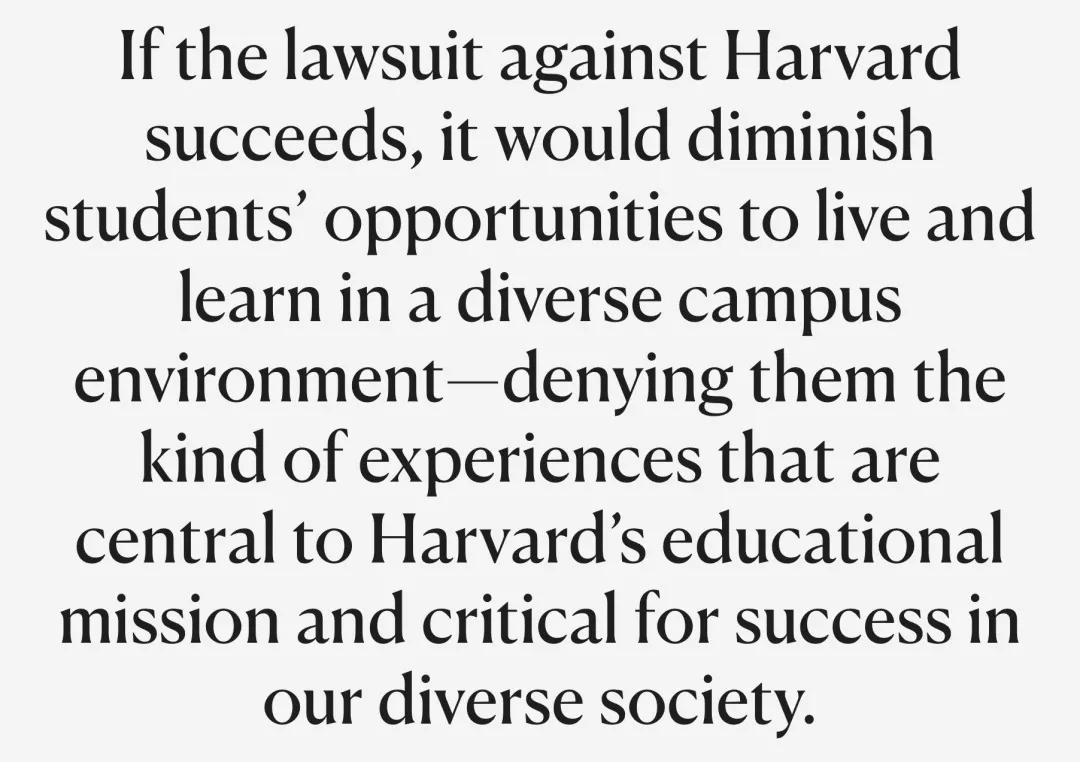
Harvard insists: we are concerned that this will undermine campus diversity and even cause unfairness to other ethnic groups.
Columbia’s Baffling Statement: Asians Enter Top Schools Thanks to Racial Advantage
It’s a common tactic for Ivy League schools to make an issue out of racial diversity.
Columbia’s official Twitter once posted a bewildering statement: “Although Asian students admitted to Harvard are smart, hardworking, and young with high achievements, they have long enjoyed advantages derived from their race.”
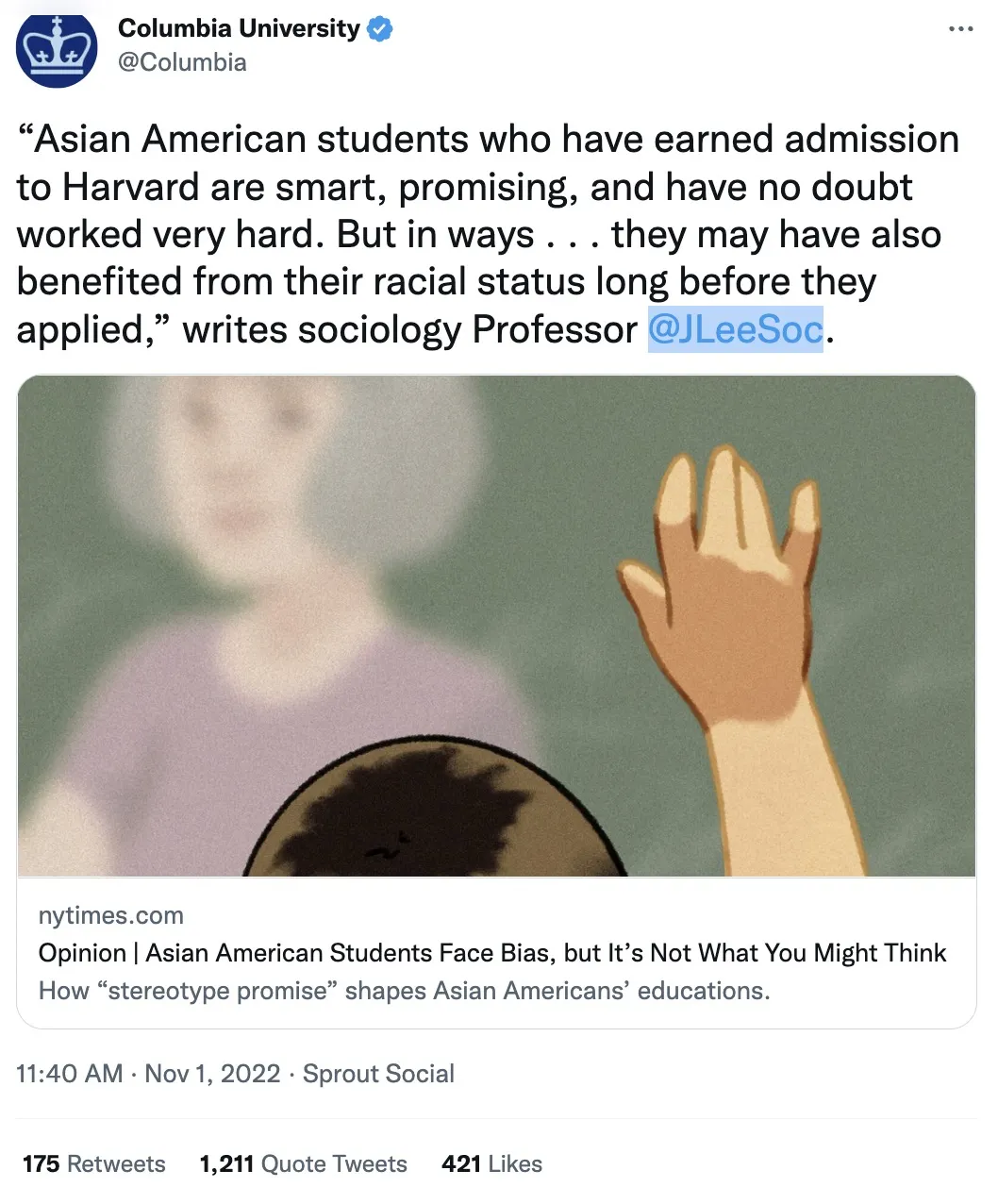
This statement originated from an article in The New York Times written by Jennifer Lee, a sociology professor at Columbia.
Professor Lee argues that Asian students benefit precisely from racial “stereotypes”: teachers generally perceive Asian students as smarter, more diligent, and accomplished, allowing even mediocre Asian students to benefit and receive higher grades.
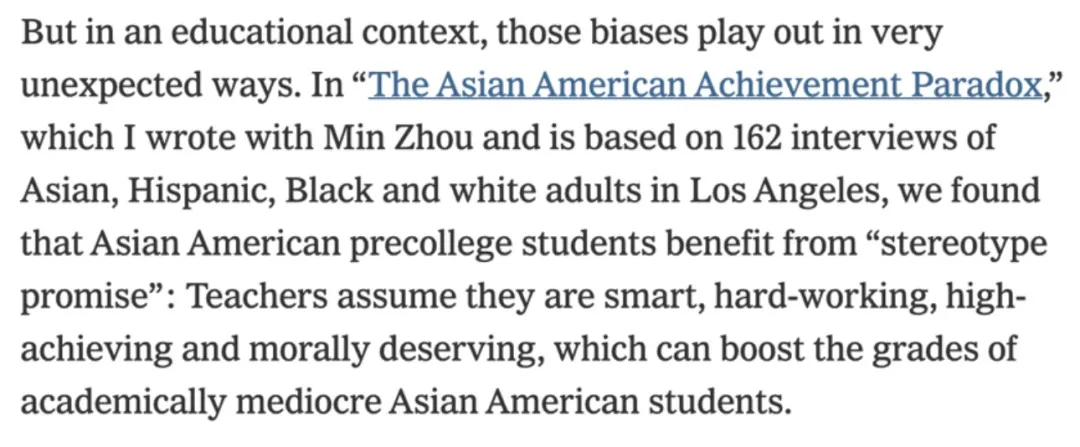
With this positive “bias” and psychological presupposition, teachers encourage Asian students to take more challenging AP and honors courses. Such competitive course selections make it easier for Asians to stand out in college applications.
So these students had no choice but to work hard, and that’s why they became so outstanding?
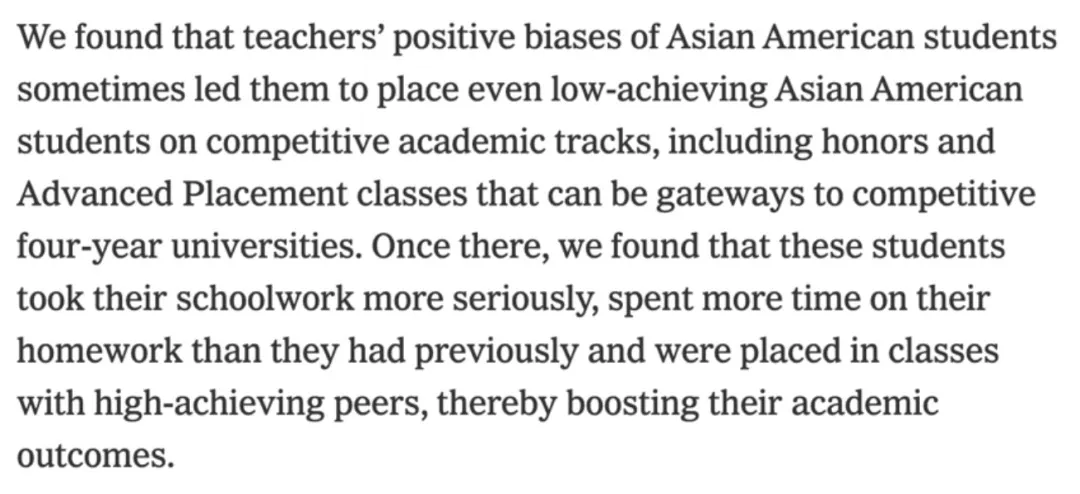
In other words, they were of mediocre talent but forced to excel.
Even more dramatic, Professor Lee claims, based on her research, that the mere presence of Asian students in the classroom intensifies negative evaluations by teachers toward Black and Hispanic students. Such “racial favoritism” is something White, Black, and Hispanic students have never enjoyed.
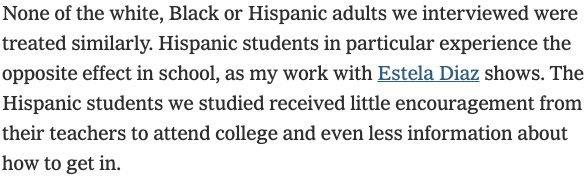
Professor Lee reasons that 27.6% of Harvard’s Class of 2026 are Asian. If affirmative action groups push further, how many Asians will be in the class?
Finally, she concludes: Asian students can enter top schools largely thanks to racial advantage.
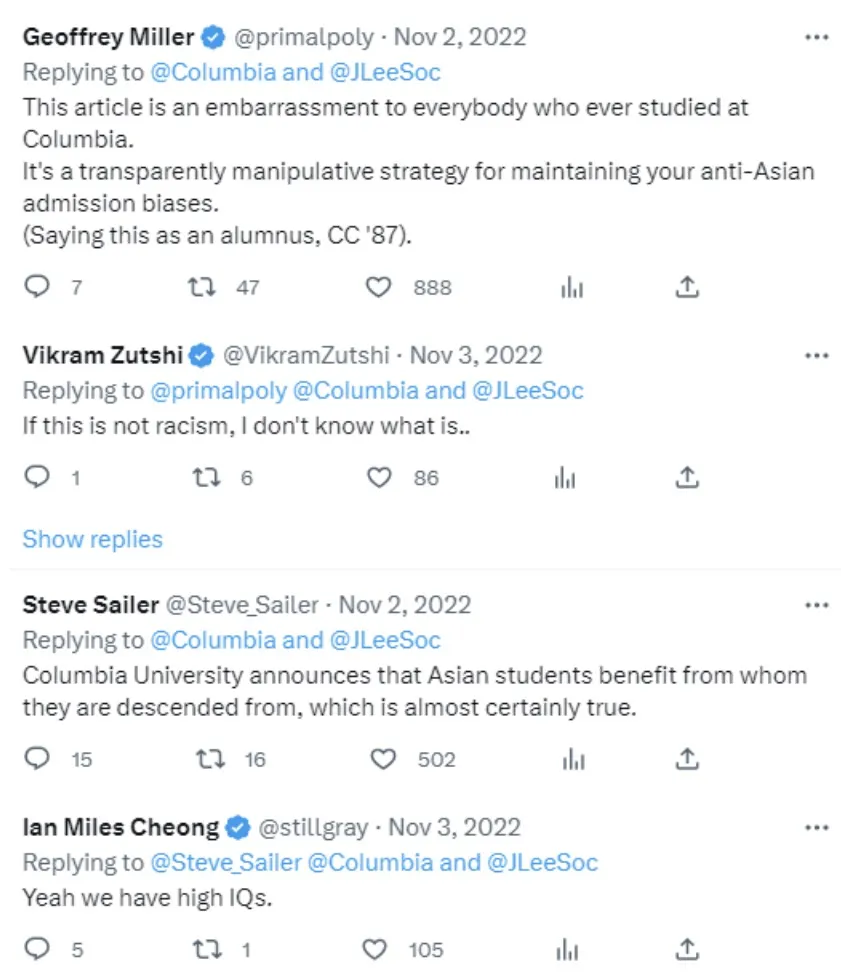
After reading this perplexing statement, many netizens—Asian and otherwise—were speechless:
“My secondhand embarrassment is acting up again — from a Columbia alum, Class of ’87.”
“If this isn’t racial discrimination, I don’t know what is.”
“Columbia is saying Asian students benefit from their Asian ancestors? That’s kind of true.”
“Yeah, our IQs are high.”
If anyone benefits from racial advantage, they certainly exist—but it’s not Asians.
Those who know, know. After all, even the Little Mermaid and Snow White have ended up like this 👇


In America, being Black is the ultimate political correctness—unless magic fights magic.
Asian Imposter as Black, Elite Med Schools Take Their Pick?
Vijay Chokalingam, an Asian student at the University of Chicago, hoped to attend medical school after graduation but struggled with mediocre grades. After seeing his more qualified Asian friends rejected from medical schools, he realized his own chances were nearly zero.
Then he had a clever idea: he transformed himself into a Black applicant. He shaved his head, used his middle name Jojo, and pretended to be Black.
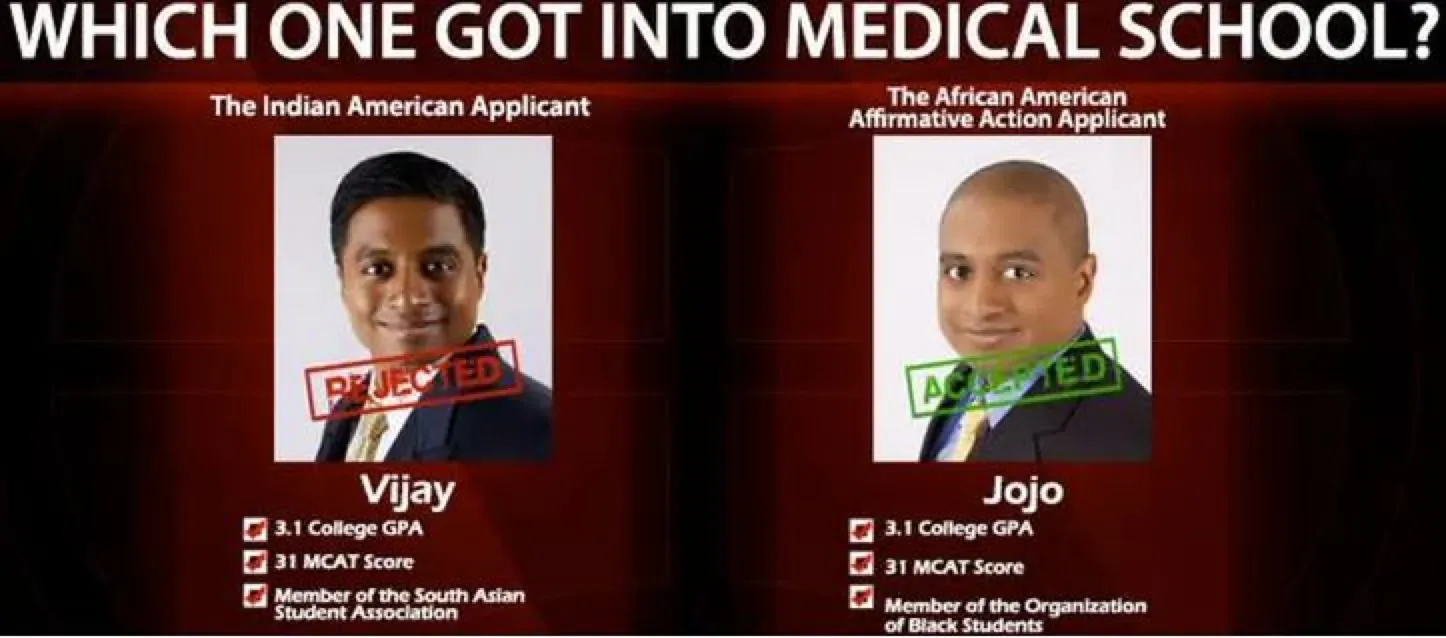
With a 3.1 GPA and a 31 MCAT score, and even without any changes to his application materials, he seemed destined for the bottom of the medical school applicant pool—far from any elite school... But, a miracle happened.
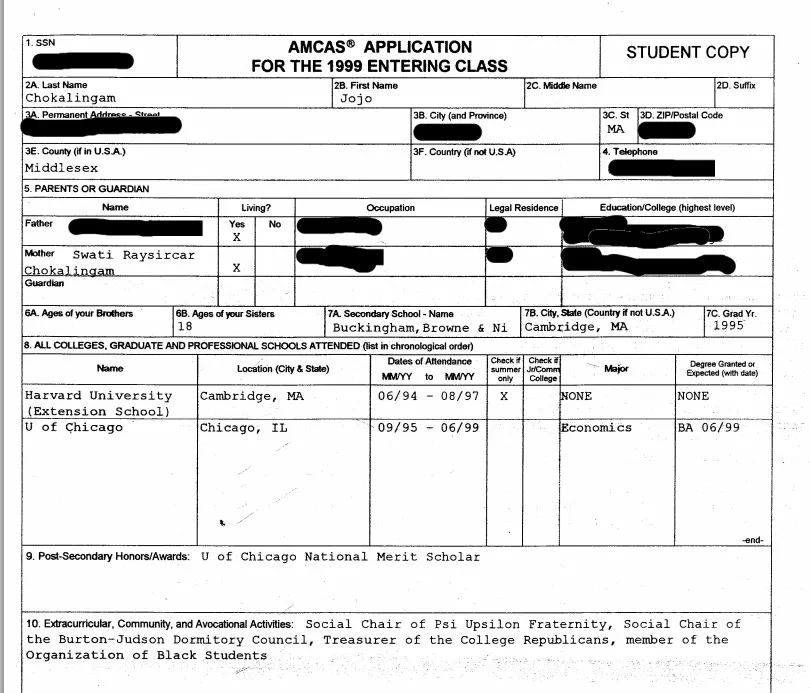
He received interview invitations from 11 top medical schools, including Harvard, UPenn, Columbia, and WashU, and ultimately chose St. Louis University School of Medicine.
Vijay chronicled this absurd experience in his book Almost Black, which caused a nationwide stir upon publication.
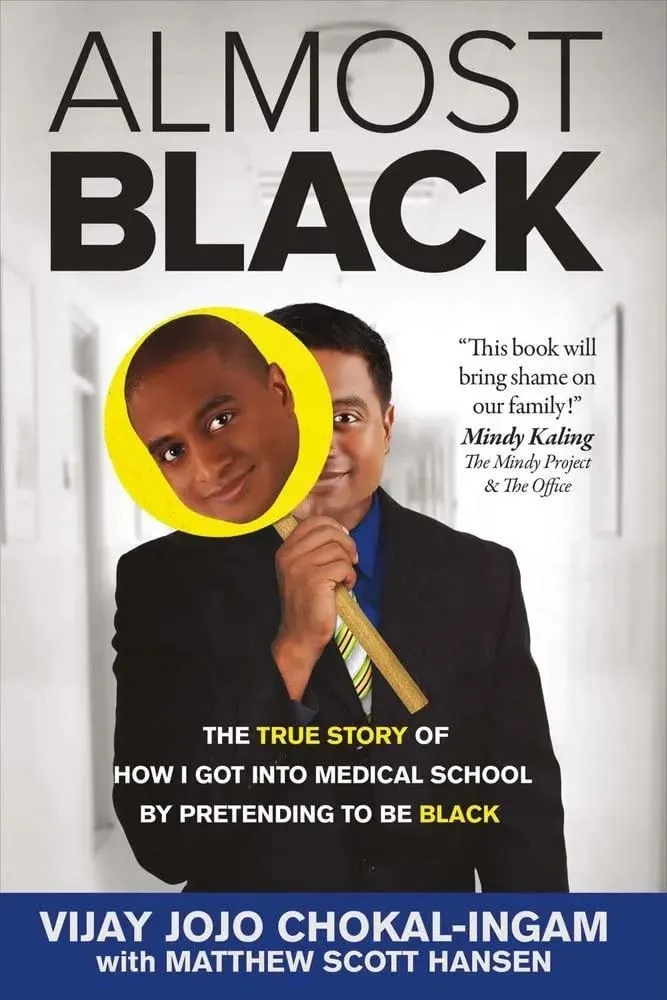
Vijay’s intention in writing the book was simple: to expose the deeply entrenched bias in the entire American education system.
An Asian posing as Black can easily enter elite schools, showing how flimsy the so-called fairness really is.
Now some schools are turning the tables, claiming that Asians use their own identity privileges to get into top schools—truly absurd.
Admissions Fairness = Political Correctness?
Affirmative action in U.S. college admissions, also known as positive discrimination or preferential treatment, is a measure to prevent discrimination against minority or disadvantaged groups based on “skin color, religion, gender, or national origin,” granting these groups preferential treatment to eliminate discrimination and achieve equality.
However, American universities have long wavered between merit-based selection and educational equity. On one hand, top universities pursue academic excellence and need to select the best while ensuring fair competition to maintain and enhance academic standards. On the other hand, socioeconomic disparities among different ethnic groups are significant, requiring specific policies to open doors for disadvantaged students.
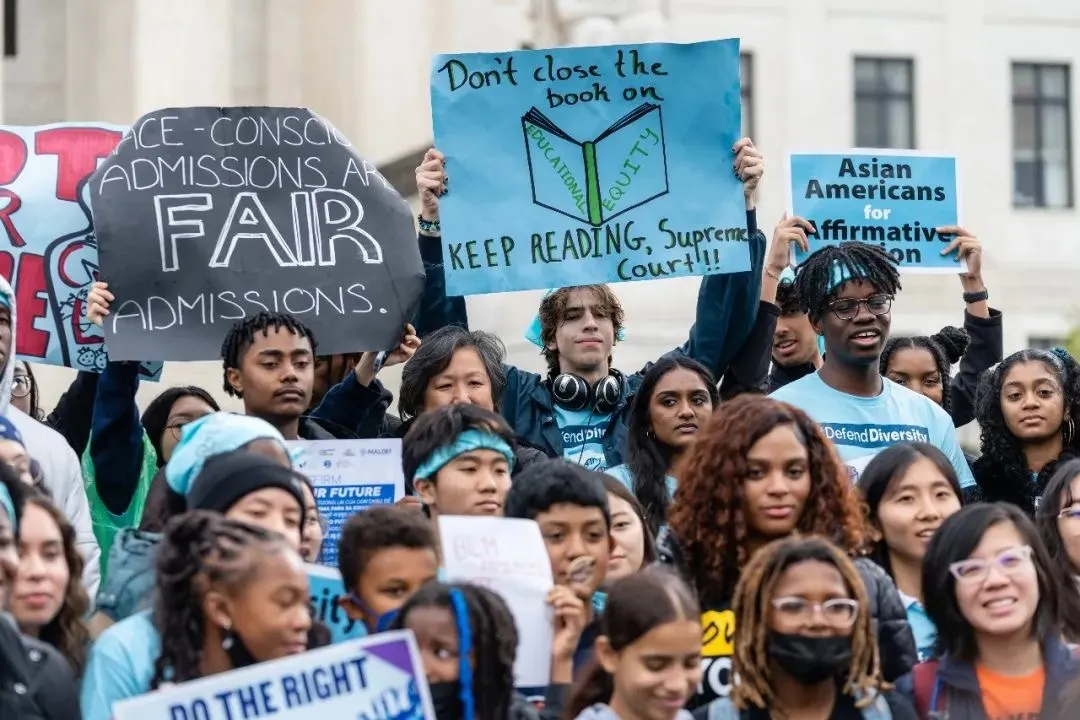
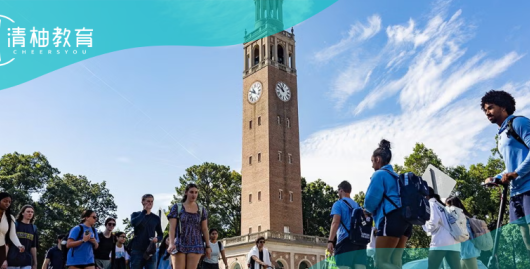
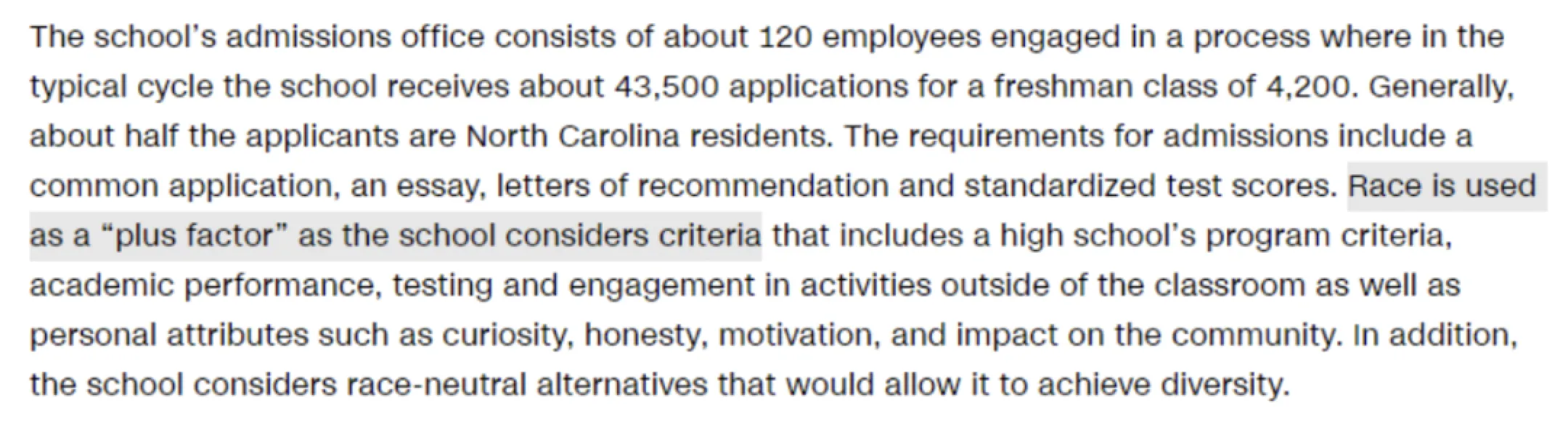
According to Ballotpedia data, about 20% of public universities still consider race in admissions. Multiple universities, including Harvard and UNC, state that using “race” as one factor in holistic evaluation of applicants is necessary to advance campus diversity. UNC even includes “race” as a plus factor in admissions:
But diversity is not a fig leaf for racial discrimination and admissions unfairness. Moreover, for an already highly diverse American society, deliberately pursuing diversity in admissions may backfire.
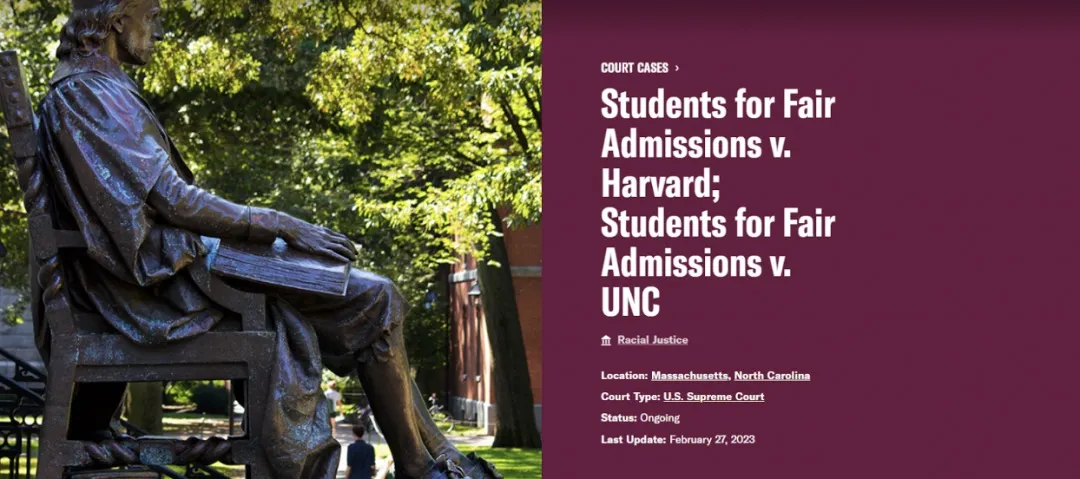
Take the biggest case, the “Harvard discriminates against Asians” lawsuit, initiated by the grassroots group Students for Fair Admissions (SFFA). This tug-of-war has been going on for nearly a decade.
Back in 2014, SFFA sued Harvard, arguing that for decades the school had favored white, Black, and Hispanic applicants over more qualified Asians. SFFA accused “Harvard of discriminating against Asians” and demanded the release of admissions data.
In the SFFA-produced “Harvard’s Finances and Admissions” report, comparing 160,000 applicants from 2010 to 2015, Asian students’ scores were treated unfairly: sometimes Harvard even assigned Asians the lowest ratings without even meeting them.
This case, arguably the most sensational in American education, reached the U.S. Supreme Court late last year and is still under review.
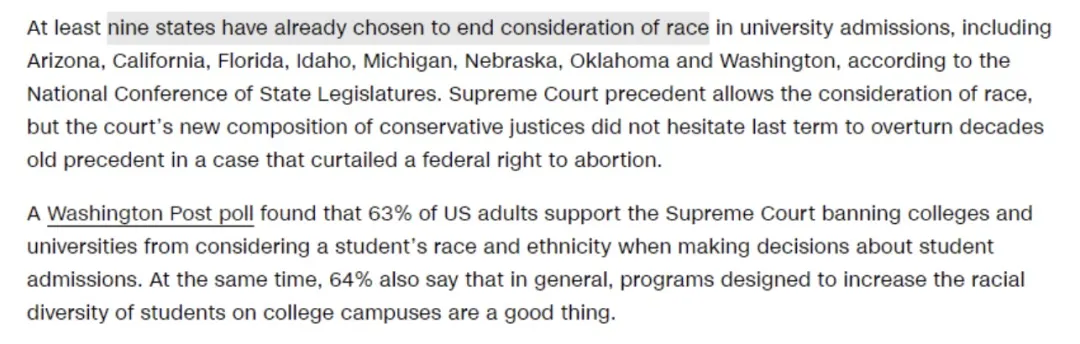
According to a Washington Post poll, 63% of Americans support the Supreme Court banning race as a factor in college admissions.
At least nine U.S. states’ public universities no longer consider “race” in admissions, including California, Florida, Michigan, and Washington.
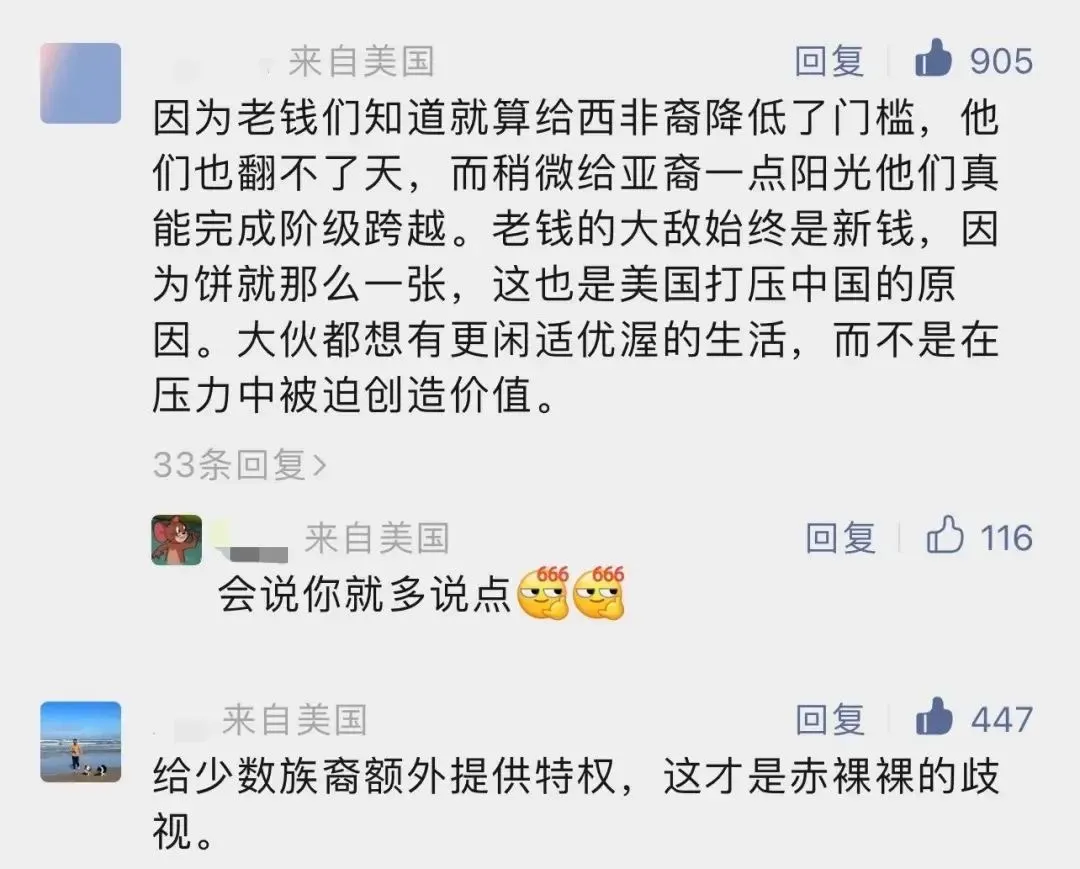
Take Caltech, for example. Without an affirmative action policy, its Asian student proportion reaches 40%.
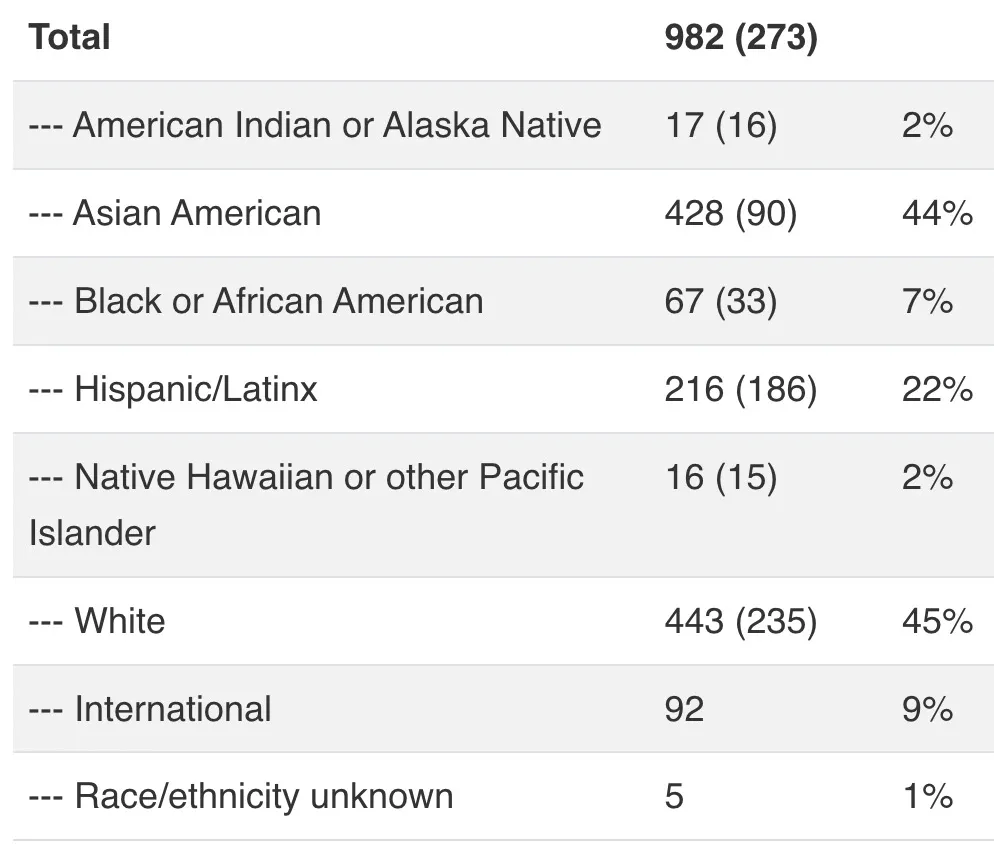
At the same time, 64% of people also hope to advance campus diversity. For universities, striking a balance between admissions fairness and diversity may require reforms and optimizations in future admissions processes.
Organizations like SFFA speaking out is the first step in defending rights.
Asians’ fight for educational equity still has a long way to go.
In the future, as the status of the Asian community rises, it will also benefit Chinese international students.