Attention all U.S. international students and visitors:
A new wave of major U.S. visa fee increases is coming!
.png)
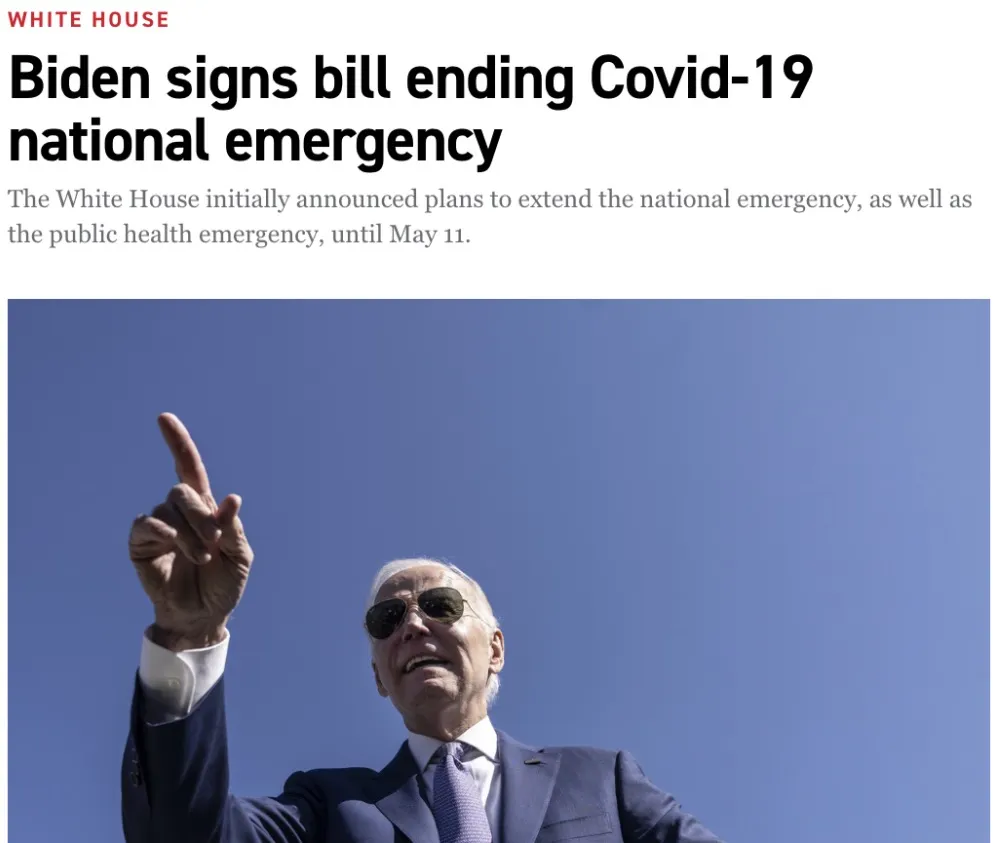
Just after President Biden signed the bill to end the national emergency effective May 11—lifting all entry restrictions, including COVID-19 testing and vaccination proof—
the government quickly followed up by announcing a broad hike in visa fees, and not just by a little...
All U.S. Nonimmigrant Visa Fees Will Increase
The U.S. Department of State officially announced that from May 30, fees for various nonimmigrant visas will go up!
Here is the breakdown of the fee increases:
1. Business/tourist visas (B1/B2): from $160 to $185
2. Student and exchange visitor visas (F, M, J): from $160 to $185
3. Temporary work visas (H, L, O, P, Q, R): from $190 to $205
4. Treaty investor visas (E): from $205 to $315
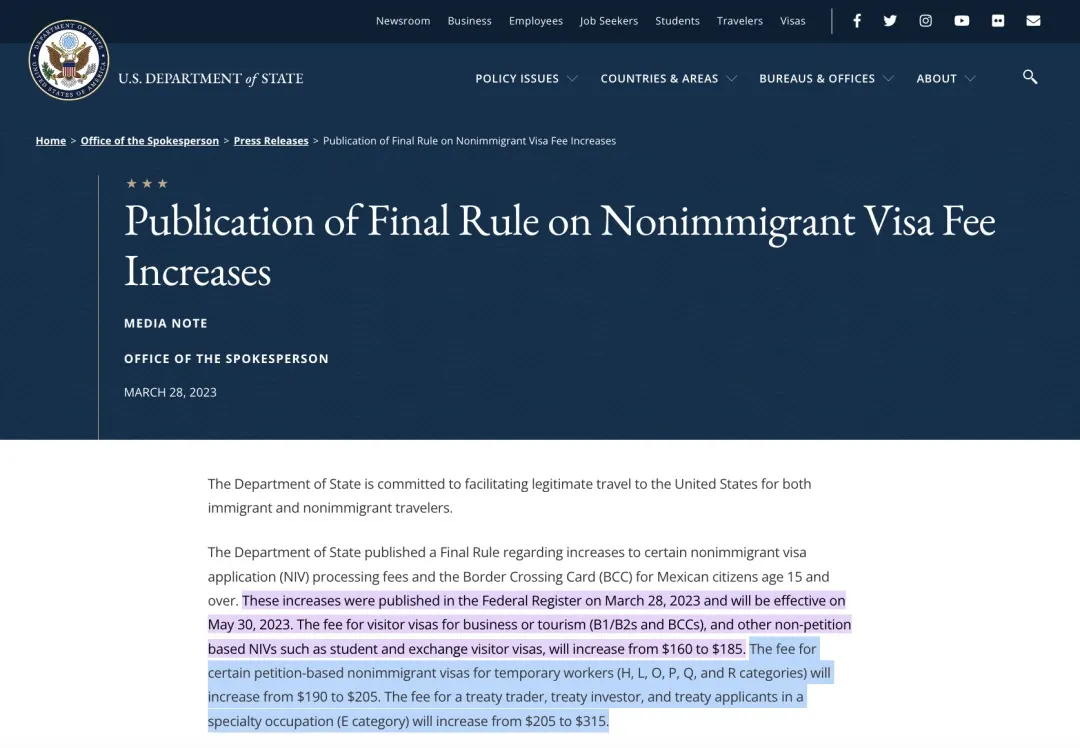
The State Department explained that nonimmigrant visa application fees are set based on the actual cost of providing the service, and these adjustments come after a study of those costs.
Using activity-based costing, the department annually calculates the cost of providing consular services, including visa services. The last update for most nonimmigrant visa fees was in 2012, with a few others updated in 2014.
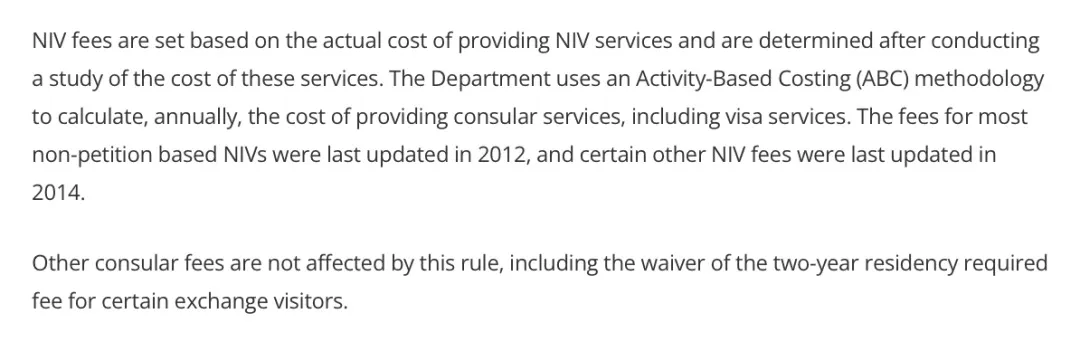
Other consular fees are not affected by this new rule, including the waiver of certain two-year home residency requirements for exchange visitors.
In the announcement, the Department also emphasized the importance of work and tourist visas to the Biden administration’s foreign policy, recognizing the critical role international travel plays in the U.S. economy.
Whether or not that’s truly the reason, it’s clear they’re looking to cash in on visa applications.
New F/M Student Visas Can Be Issued 365 Days in Advance
In addition to the fee adjustments, the U.S. government previously made another change regarding the issuance timeline for F and M student visas:
The issuance window for new F and M student visas has been extended from 120 days to 365 days before the program start date!

.jpg?x-oss-process=style/opt-webp)
This gives new students far more flexibility, sparing them the old scramble to book visa appointments just a few months before their program begins.
However, it’s important to note:
All new students holding F or M visas may only enter the United States within 30 days before the reporting date listed on their I-20 form.
Students who have already received their offers and decided on a program are strongly advised to contact their school for an I-20 as soon as possible, and to schedule their visa appointment before the fee hike to avoid paying more.
CheersYou(清柚教育) has also compiled a guide to the U.S. student visa application process and the documents needed for the visa interview and boarding. You can save it for your reference.
U.S. Student Visa Application Process and Interview/Boarding Documents
Basic U.S. Student Visa Application Process
1. Apply for I-20
2. Pay the SEVIS fee
3. Complete the DS-160 form
4. Pay the visa application fee
5. Schedule a visa interview and print the confirmation page (the following information is required when scheduling: passport number, visa application fee receipt number, 10-digit barcode from the DS-160 confirmation page)
6. Attend the interview at the consulate at the scheduled time
Documents Required for the U.S. Student Visa Interview
1. Printed visa appointment confirmation
2. Printed DS-160 confirmation page
3. Passport
4. One 5.1 x 5.1 cm passport-style photo taken within the last six months
5. Original I-20 (signed with your name and date)
6. Printed SEVIS fee receipt
7. Offer letter
8. Resume/CV
9. Study plan (templates can be found online)
10. Resume of U.S. supervisor/advisor
11. Transcripts
12. Graduation certificate
13. Degree certificate
14. Household registration booklet (hukou)
15. Property deed
16. Bank statement proving sufficient funds (typically covering two years of tuition; refer to I-20 for amount)
17. Financial support letter
18. Income documentation (for the last three years, in both Chinese and English), etc.
*Although the visa officer may not check every document, we suggest bringing all of them just in case.
Materials Students Must Carry When Flying to the U.S.
1. Flight ticket
2. Passport
3. I-20
4. Vaccination and health examination record (the yellow booklet and red booklet)
5. International travel health certificate
6. Cash (no more than $10,000), etc.
Whether you’re applying for a student or tourist visa, if you plan to travel to the U.S. soon, be sure to schedule your visa appointment and pay the fee before May 30 to beat the price hike!
CheersYou(清柚教育) wishes all departing students a pleasant journey to the U.S. ~