Recently, hedge fund giant and billionaire Ken Griffin donated $300 million to his alma mater, Harvard!
The recipient of this massive gift is Harvard's Faculty of Arts and Sciences, which is celebrating its 150th anniversary this year. Griffin made this generous donation to honor his alma mater's milestone.
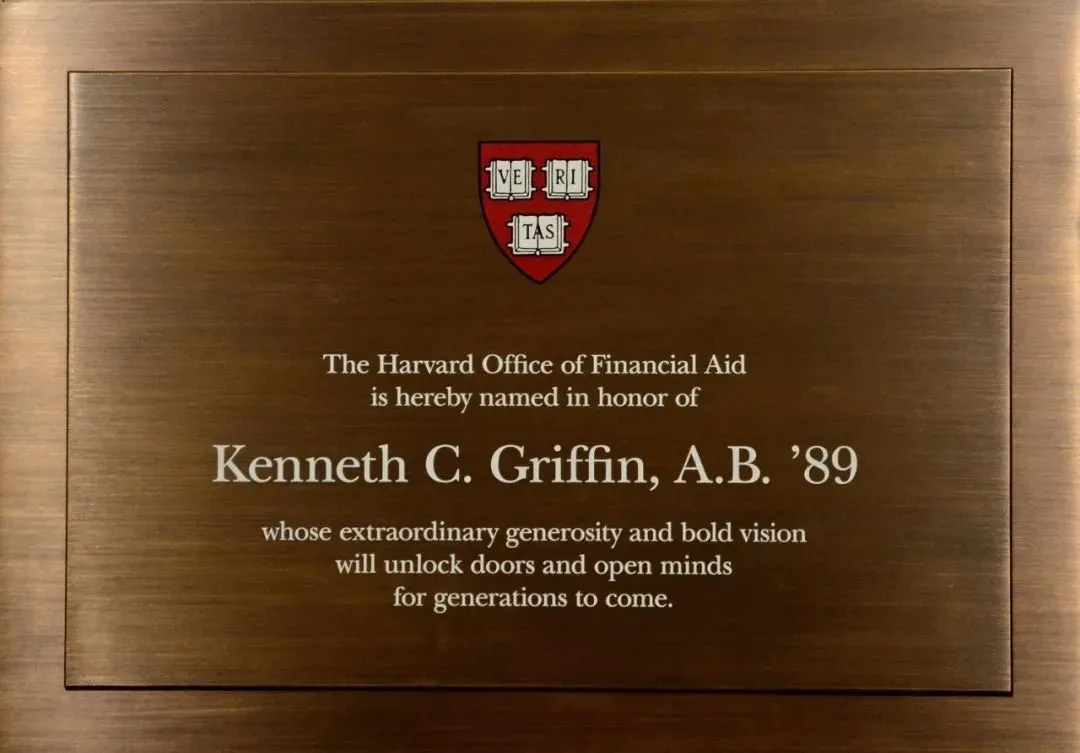
The Harvard Graduate School of Arts and Sciences (GSAS) has been officially renamed the "Kenneth C. Griffin Graduate School of Arts and Sciences" in appreciation.
.jpg?x-oss-process=style/opt-webp)
Spending Millions to Secure Harvard Naming Rights
Ken Griffin, the founder of Citadel, has a net worth of $35 billion, ranking 37th on the Forbes Global Billionaires list. He has also been listed four times among Forbes' top 20 most generous philanthropists in the U.S., with total donations reaching $1.86 billion.
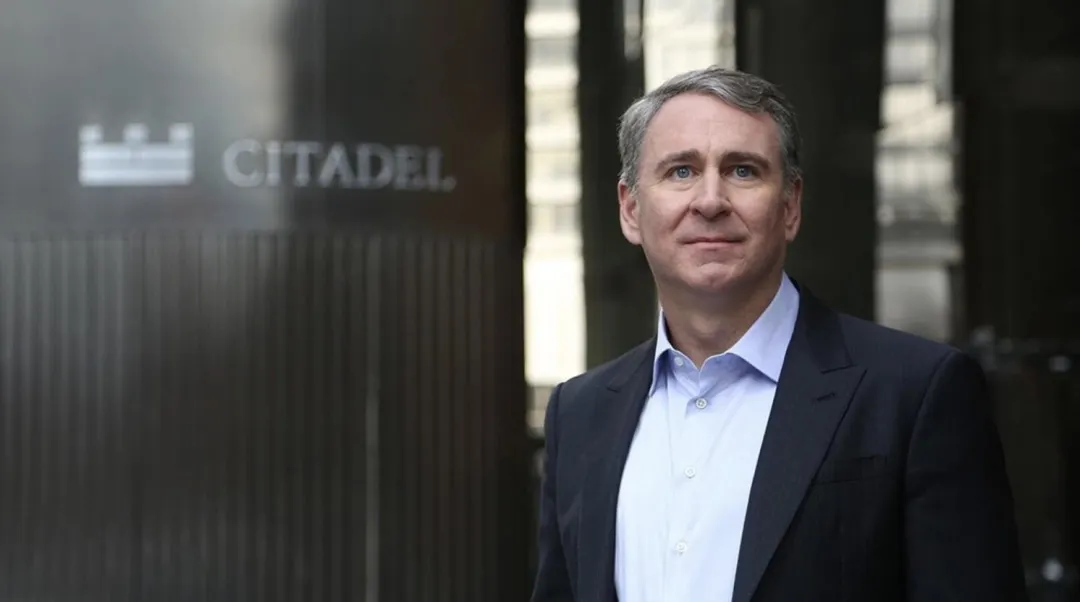
As a Harvard class of '89 alumnus, Griffin is a long-time benefactor of the university. In 2014, he donated $150 million to Harvard's undergraduate financial aid office, which has since supported over 600 students. It was the largest single gift to Harvard's financial aid office, and it was subsequently named after Griffin.
Previously, Griffin had also made donations to Harvard Business School, Harvard Law School, and the Graduate School of Education. His cumulative donations to Harvard now exceed $500 million, making him the fourth donor to have a Harvard school named after him.
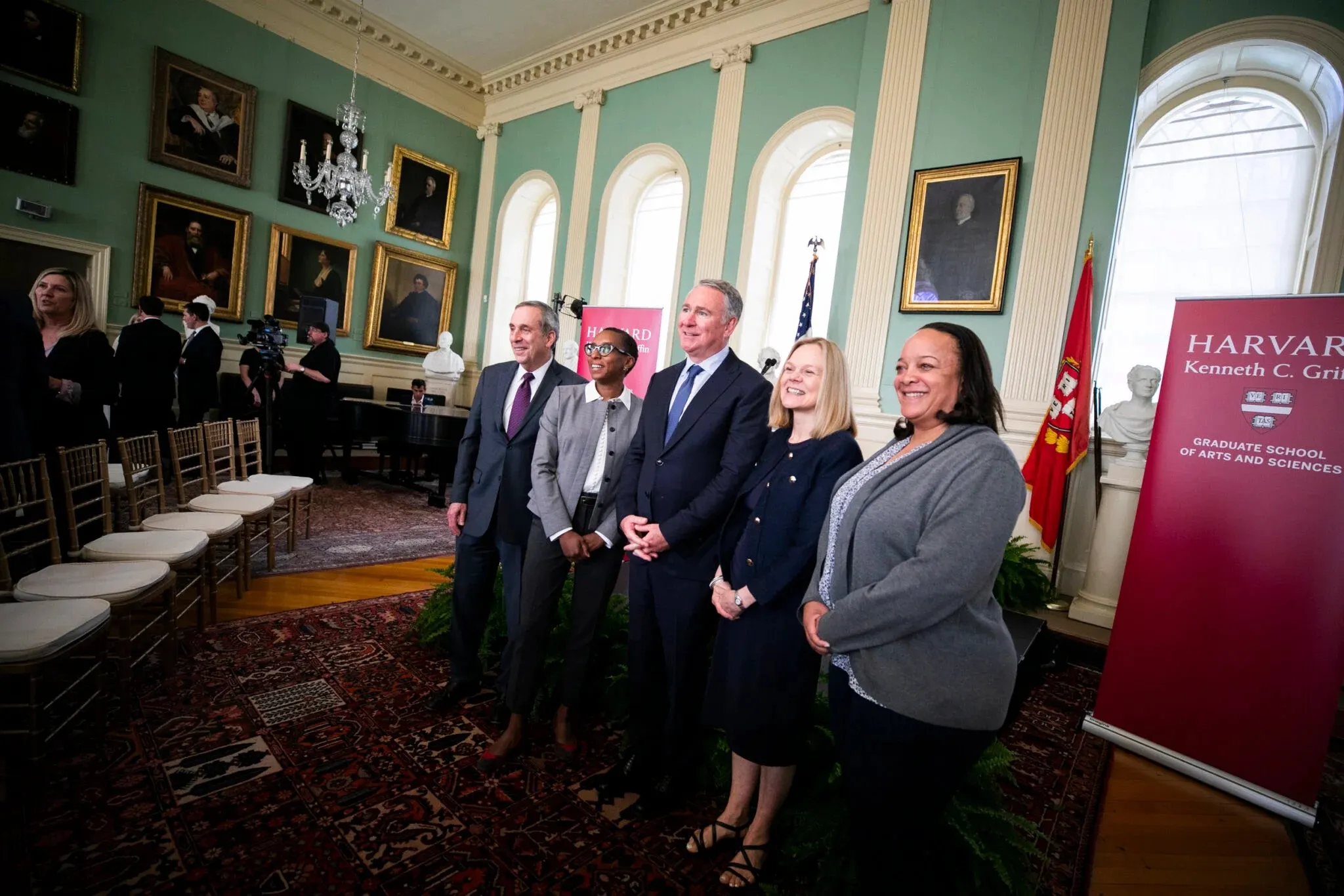
Other donors who have received naming rights in Harvard's history include:
-
1638: Harvard University named after John Harvard
-
2014: Harvard T.H. Chan School of Public Health named after T.H. Chan
-
2015: Harvard John A. Paulson School of Engineering and Applied Sciences named after John A. Paulson
The university says Griffin's donation will be used for the long-term development of teaching and research within the Faculty of Arts and Sciences, as well as ongoing talent cultivation.
.png)
Controversial: Is Harvard "Selling Its Reputation"?
However, the donation has sparked considerable controversy, with mixed reactions to the naming rights, centering on the donor's scandals and the corporatization of the university.
First is Griffin's political stance. He is a major donor to the Republican Party, contributing nearly $60 million to the party during the 2022 midterm elections. He is also a supporter of Florida Governor DeSantis and is heavily backing his 2024 presidential bid.
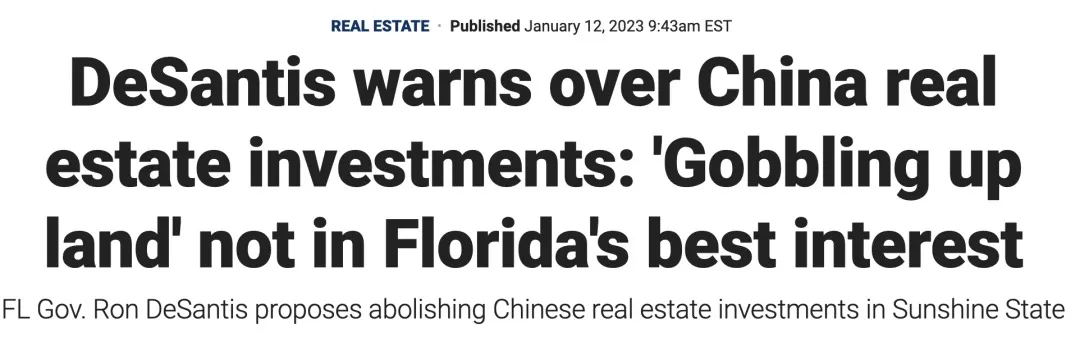
Governor DeSantis has been mired in negative news recently. He supported the anti-China bill that ultimately led Florida to pass legislation banning Chinese citizens from buying property:
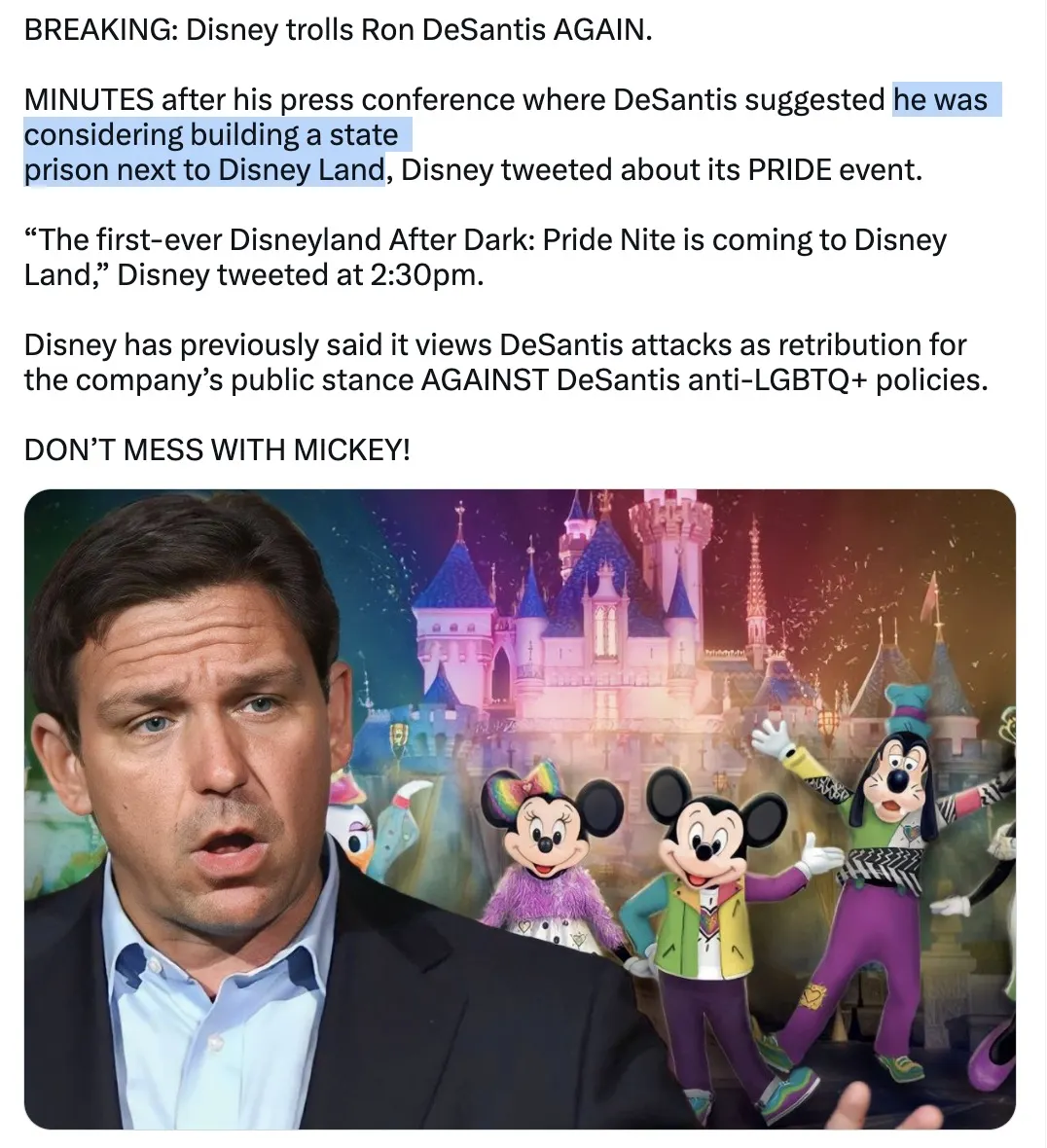
Even local attractions aren't safe; he openly threatened to "build a prison next to Disney"👇
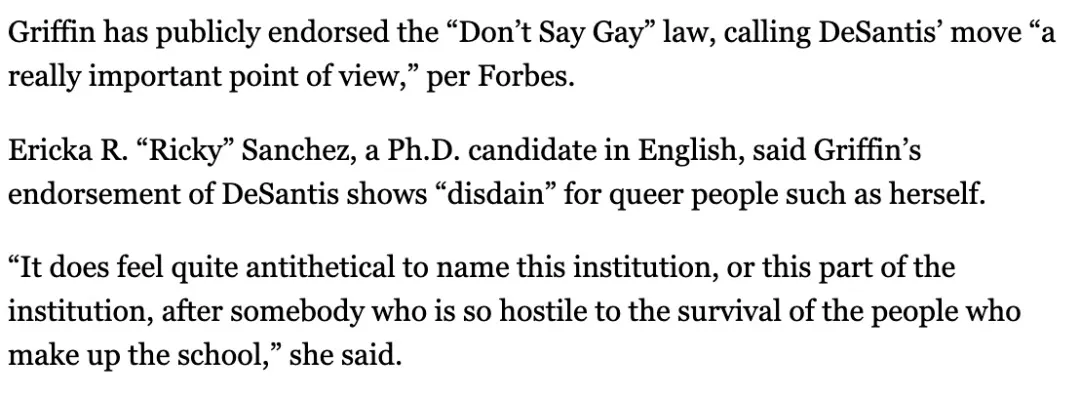
DeSantis's extreme stances on education and LGBTQ+ issues have also stirred much controversy. Last year, he signed a state bill dubbed "Don't Say Gay," effectively making the LGBTQ+ community "unspeakable."
Griffin publicly supported DeSantis's anti-LGBTQ bill, stating it was "a very important point of view."
This deeply offended the LGBTQ+ community. A Harvard student said Griffin's support for the governor's homophobic remarks made them feel discriminated against.
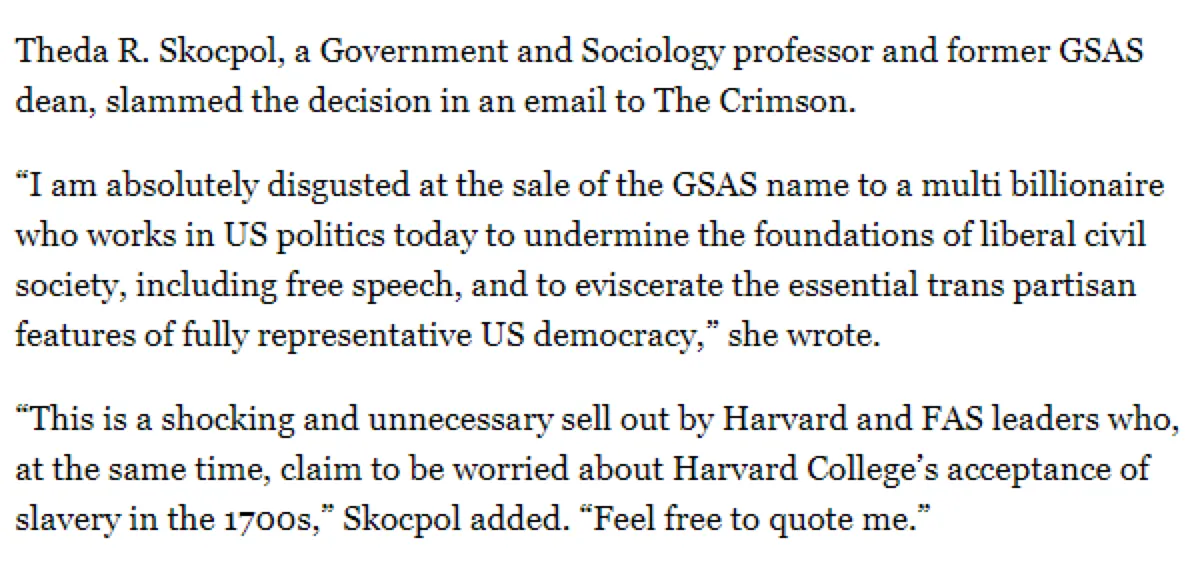
Former Dean of the Harvard Faculty of Arts and Sciences, Theda Skocpol, publicly condemned the move: "Harvard sold GSAS's naming rights to a billionaire working for the American political machine, and I am disgusted. This man undermines the foundation of a free civil society—free speech." She denounced Harvard's action as "selling the school's reputation for money, regressing to a slave society."
Not only alumni oppose it, but netizens are even more displeased:
"Does this billionaire have nowhere else to spend his money? Harvard is already wealthy beyond belief—does it still need donations? The rich donating to the rich, yuck"


"Everyone knows Griffin is a financial fraud"
"Come on, tell us which private island he took you to for a vacation"

"Griffin sells non-existent stocks while donating to Harvard to avoid taxes"

"Harvard accepting Griffin's donation is no different from a bank laundering money for a drug cartel 😅"

Furthermore, Griffin's company invests heavily in firearms and ammunition manufacturers. By the end of last year, Citadel's holdings in five firearms and ammunition manufacturers had grown to $200 million. Over five years, Chicago police have traced nearly a quarter of firearms recovered from violent crimes to companies in which Citadel holds investments.
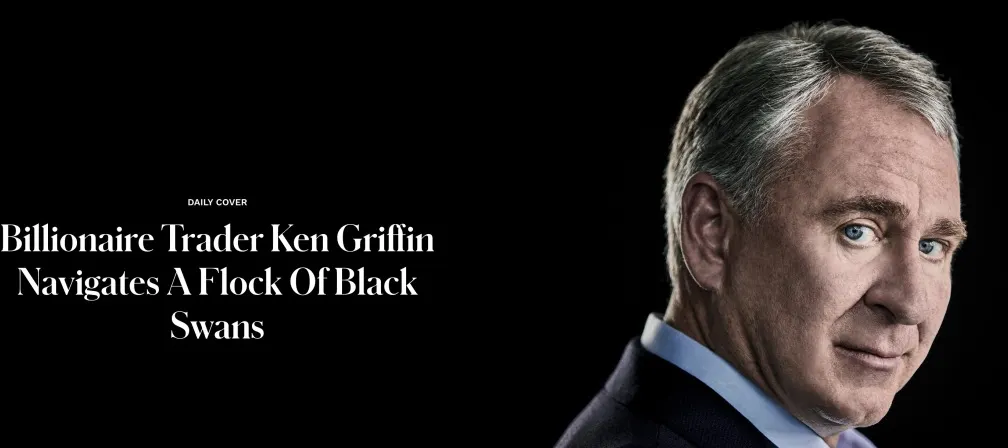
His support for the far-right, financial fraud scandals, and ties to dark money have left the financial magnate mired in controversy.
Many media outlets believe that accepting Griffin's donation and granting naming rights could potentially damage Harvard's reputation.
A Rundown of Renamed American Universities
So why are universities so fond of megadonors, even granting them naming rights?
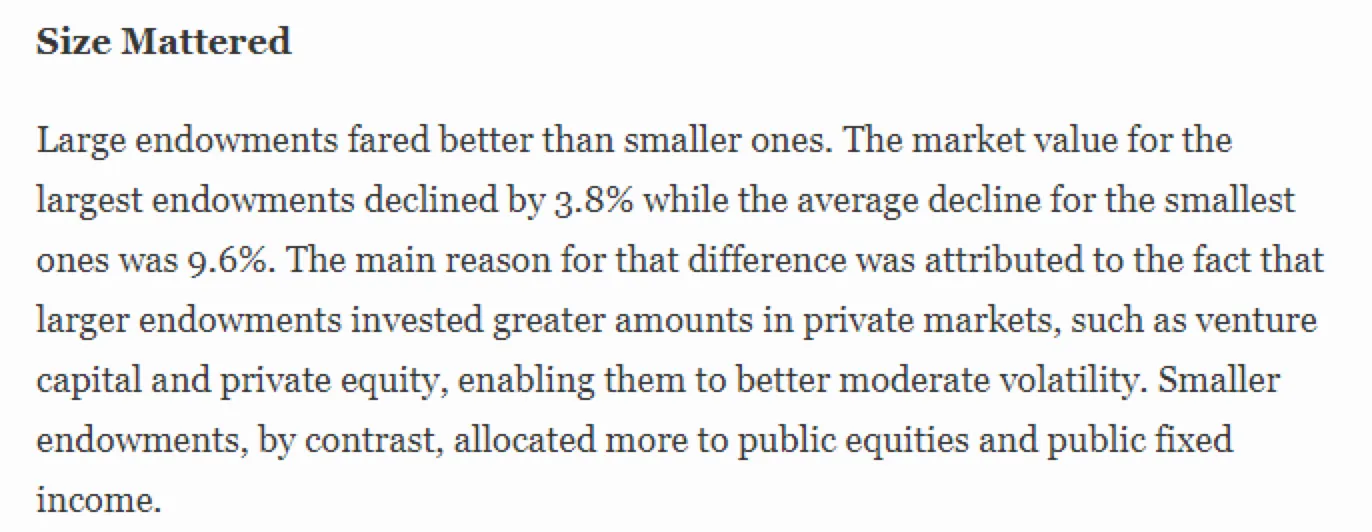
It's not just because of the large sums; in fact, large donations tend to outperform small ones in the long run, offering better investment returns and risk resilience.
For example, during the U.S. economic downturn last year, the market value of large gifts only decreased by 3.8%, while small donations plummeted by 9.6%.
Given this, universities can only say: "It's not that I want to, but the money is just too much!"

Next, CheersYou(清柚教育) compiles a list of renamed American universities.
Johns Hopkins Bloomberg School of Public Health
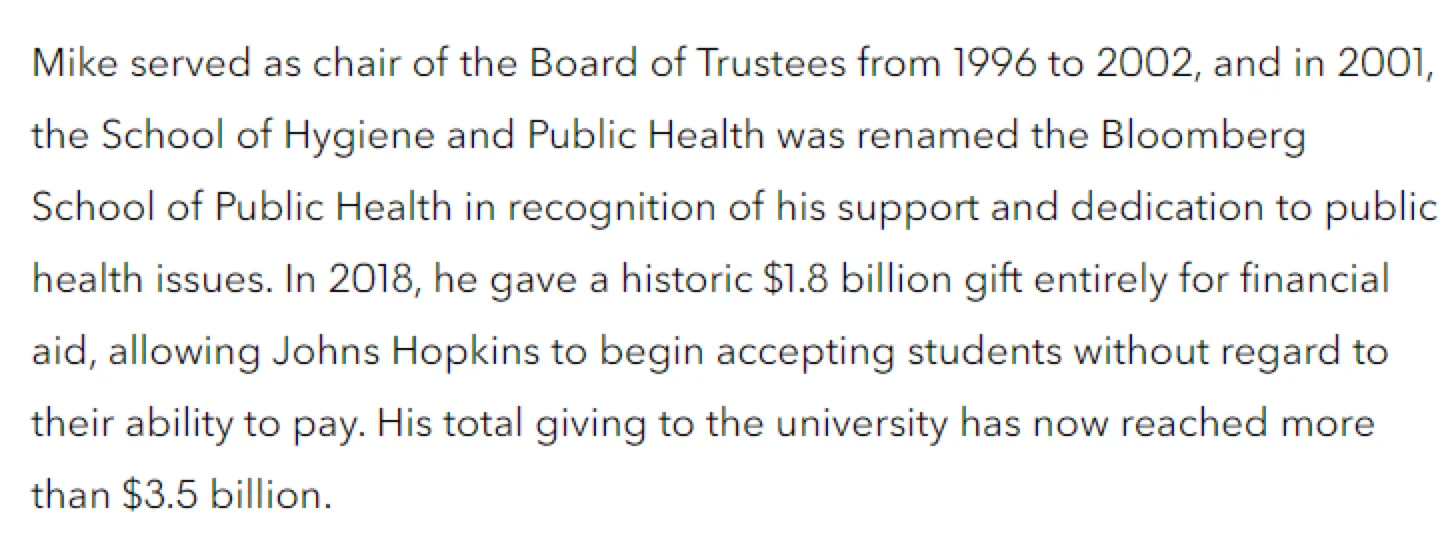
Johns Hopkins University's Bloomberg School of Public Health is named after business magnate Michael Bloomberg.
Since 2001, Bloomberg has donated over $3.5 billion to JHU, including a single gift of $1.8 billion in 2018.
NYU Tandon School of Engineering
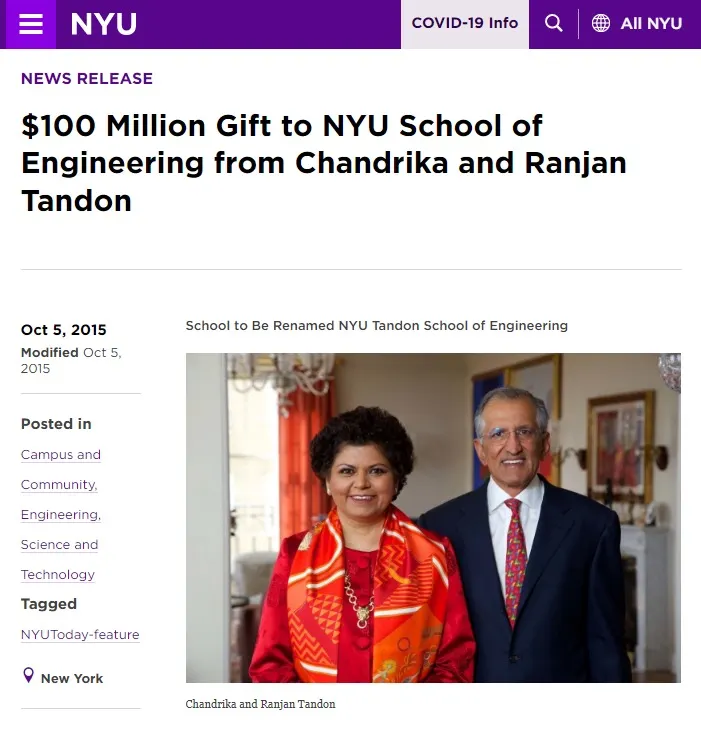
NYU's Tandon School of Engineering is named after the Tandon couple.
In 2015, Chandrika and Ranjan Tandon donated $100 million to the school to support academic innovation and student entrepreneurship. This remains the largest Indian-American donation NYU has ever received.
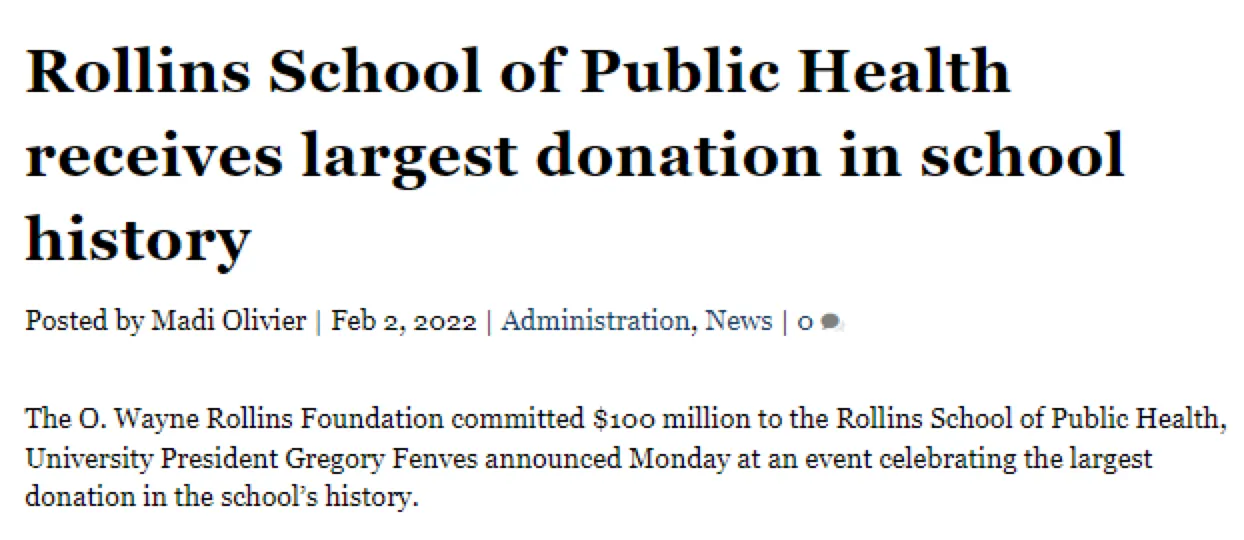
Emory Rollins School of Public Health
Emory University's Rollins School of Public Health was endowed and named by the Rollins family.
Since 1992, the Rollins family has donated a total of $125 million to Emory, including a single gift of $100 million last year.
University of Michigan Marsal Family School of Education
The University of Michigan's School of Education was recently renamed the Marsal Family School of Education in gratitude for the Marsal family's support.
The Marsal family has cumulatively donated $55 million to UMich, including a $50 million gift this past February.

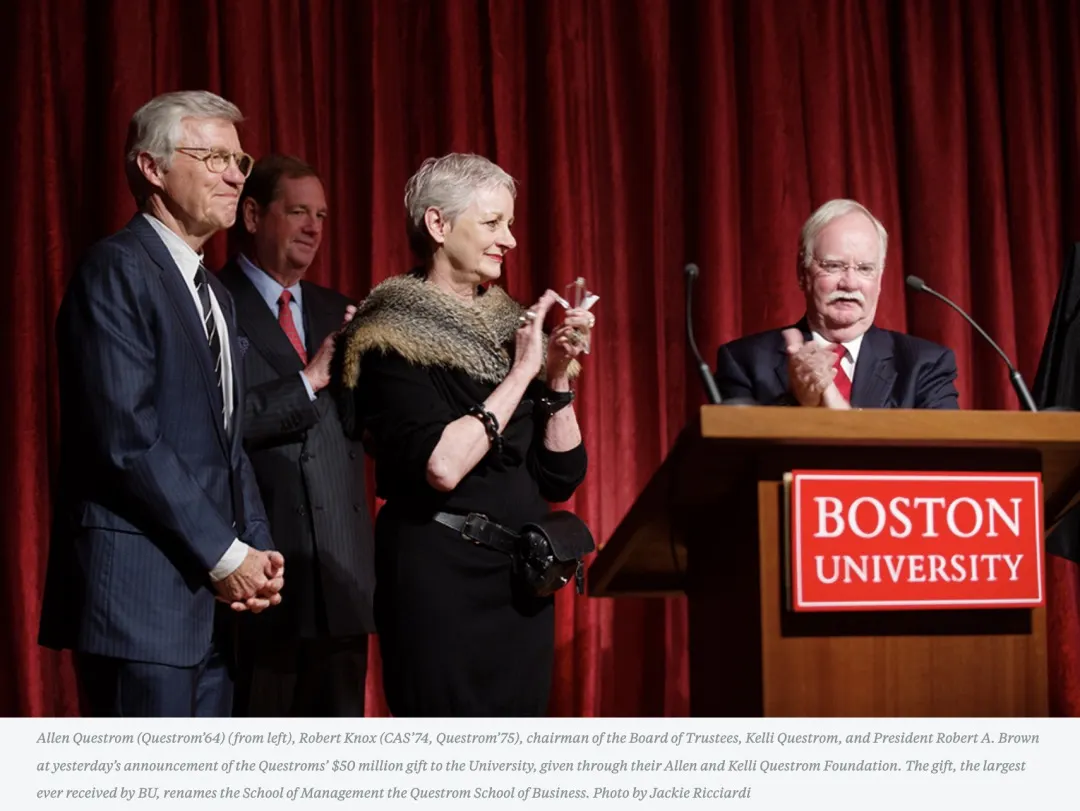
Boston University Questrom School of Business
Boston University's Questrom School of Business is named after the Questroms, who donated $50 million in 2015, the largest single gift in BU history at that time.
Allen Questrom has served as CEO of retail giants like Neiman Marcus, Barneys, and J.C. Penney, with a net worth of about $725 million.
The Corporatization of American Universities?
The criticism that American universities operate like corporations is not unwarranted.
Unlike public universities that rely heavily on government funding, private American universities depend significantly on endowments as a key revenue source.
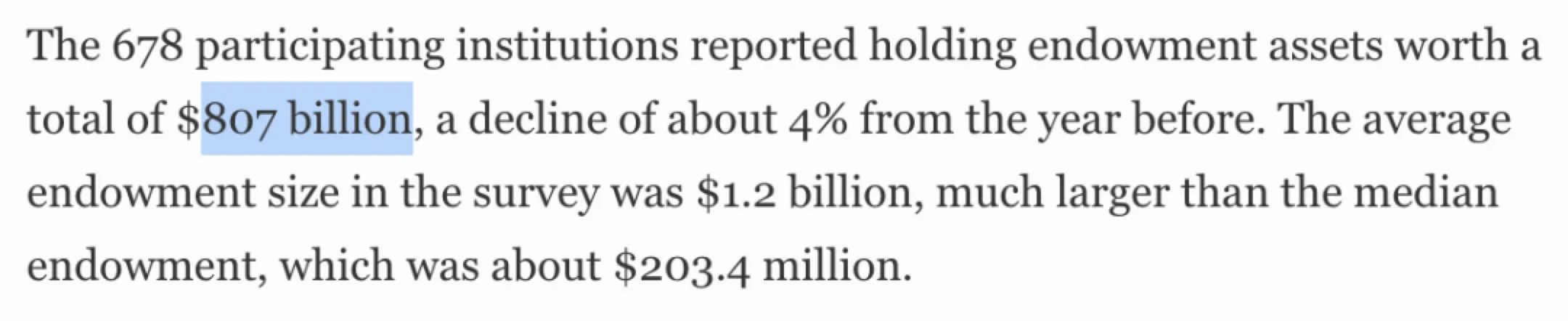
According to NACUBO-TIAA data, despite a slight decline compared to previous years, the total endowment funds of 678 U.S. higher education institutions still reached a staggering $807 billion in 2022.
To put that into perspective, that's 1.6 times the GDP of Japan, the world's third-largest economy, and twice the GDP of Germany, the fourth-largest. American universities truly are wealthier than many nations.
The latest Forbes ranking of the top 10 U.S. university endowments is as follows:
-
Harvard University
-
University of Texas System
-
Yale University
-
Stanford University
-
Princeton University
-
Massachusetts Institute of Technology
-
University of Pennsylvania
-
Texas A&M University System
-
University of Michigan
-
University of Notre Dame
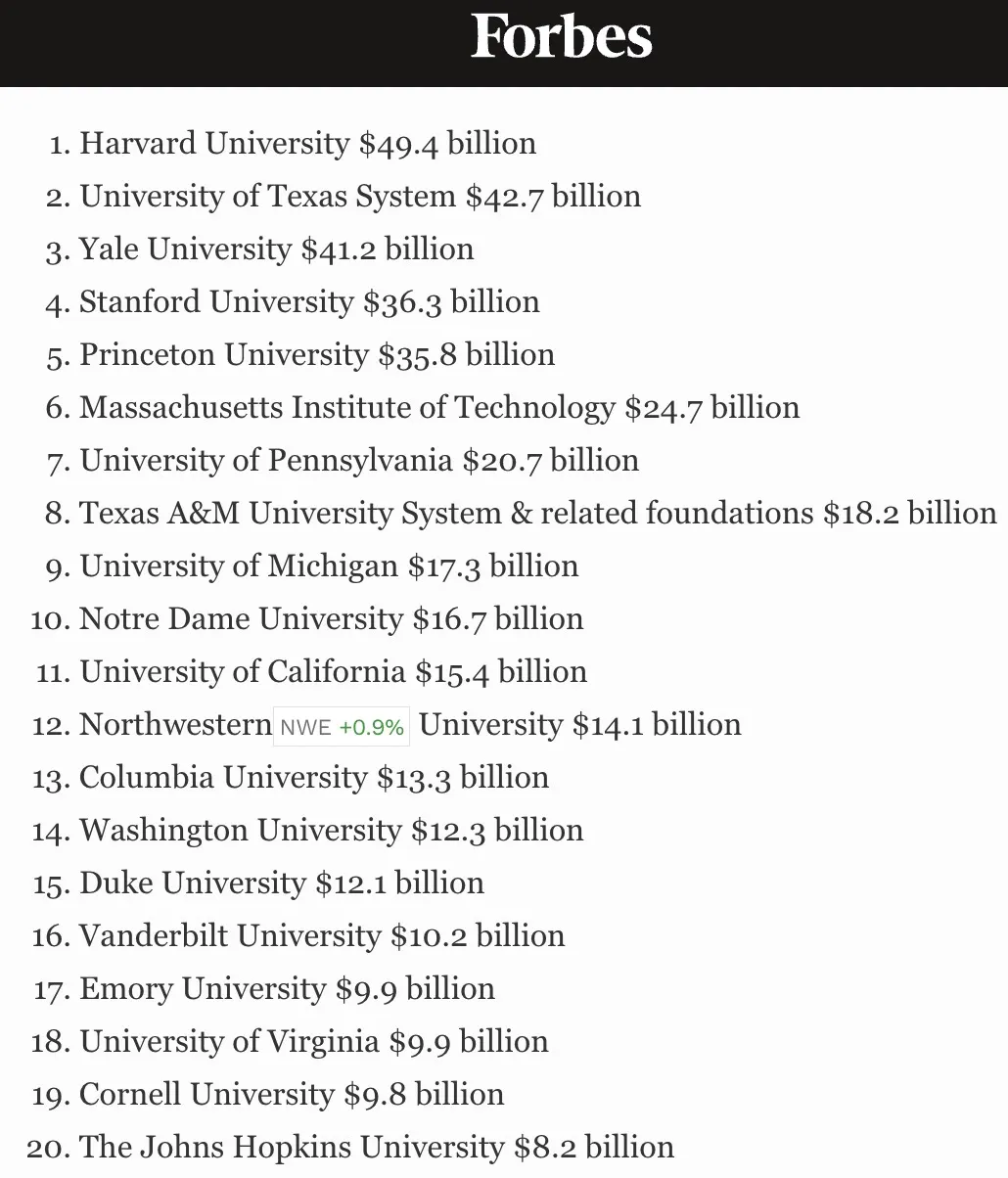
Among the top 20 schools, 16 have endowments exceeding $10 billion. Harvard tops the list with a total of $49.4 billion.
Academic research, faculty, student body, campus facilities, and abundant resources at elite top universities all require strong financial backing, and donations are a key funding source. Typically, endowments account for 30–40% of a private university's revenue.
Take Harvard, for example. In fiscal year 2022, total expenditures were $5.8 billion, with the three main revenue sources being: tuition and fees, research grants, and charitable donations. Among them, endowment distributions remained the largest income source.
In fiscal 2022, endowment distributions for operations accounted for 36% of Harvard's revenue, while Radcliffe College derived as much as 81% of its revenue from endowments.
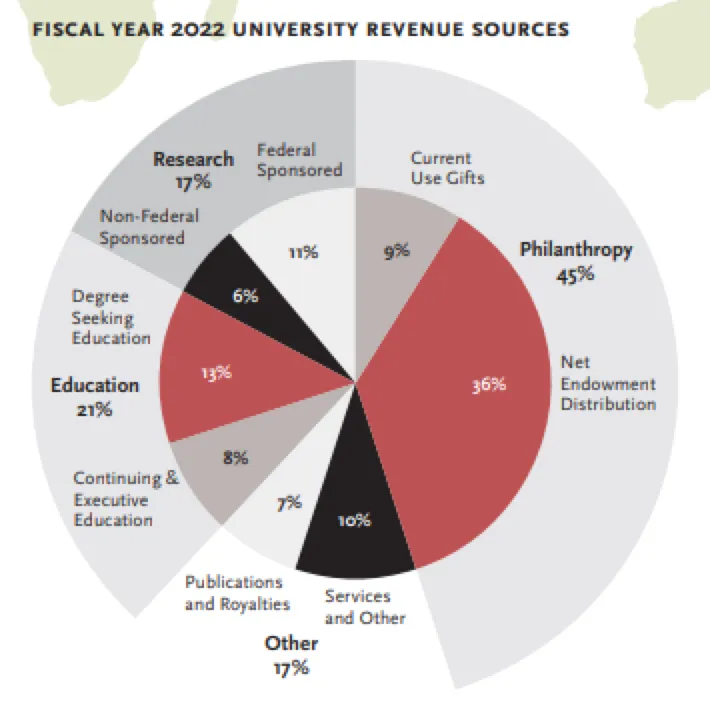
Endowments fund nearly every aspect of university operations, primarily covering two areas: faculty salaries, scholarships, and grants; and supporting academic programs, libraries, museums, facilities, and various activities.
Even with the largest endowment in the nation, Harvard still needs to supplement about two-thirds of its massive operating expenses from other sources, including government research grants, tuition, and investment income.
Thus, universities have dedicated foundations to manage endowments, growing wealth through investment portfolios. The Harvard Management Company (HMC) was established specifically for this purpose, with an annualized investment return of about 5% to 5.5%.
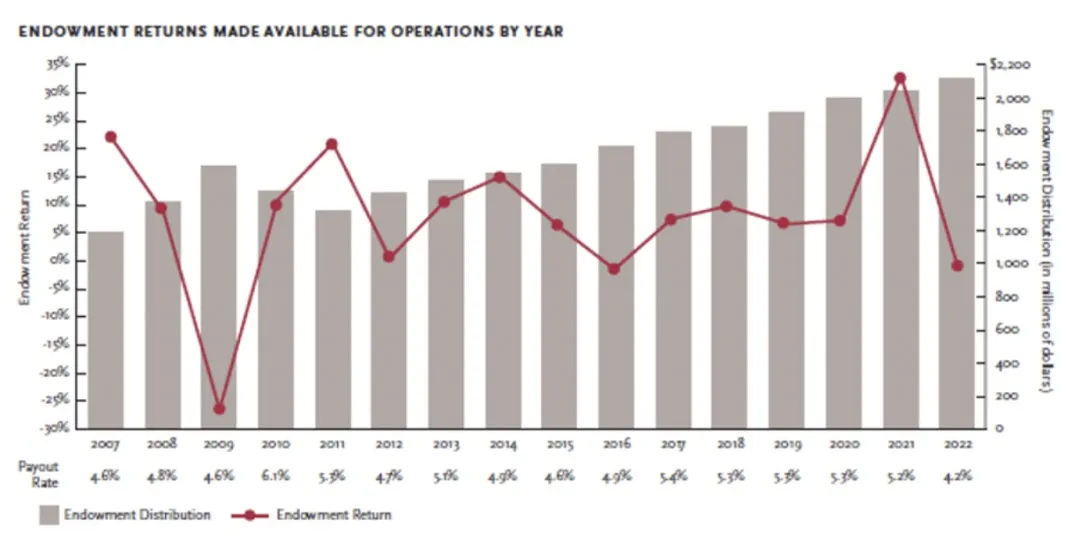
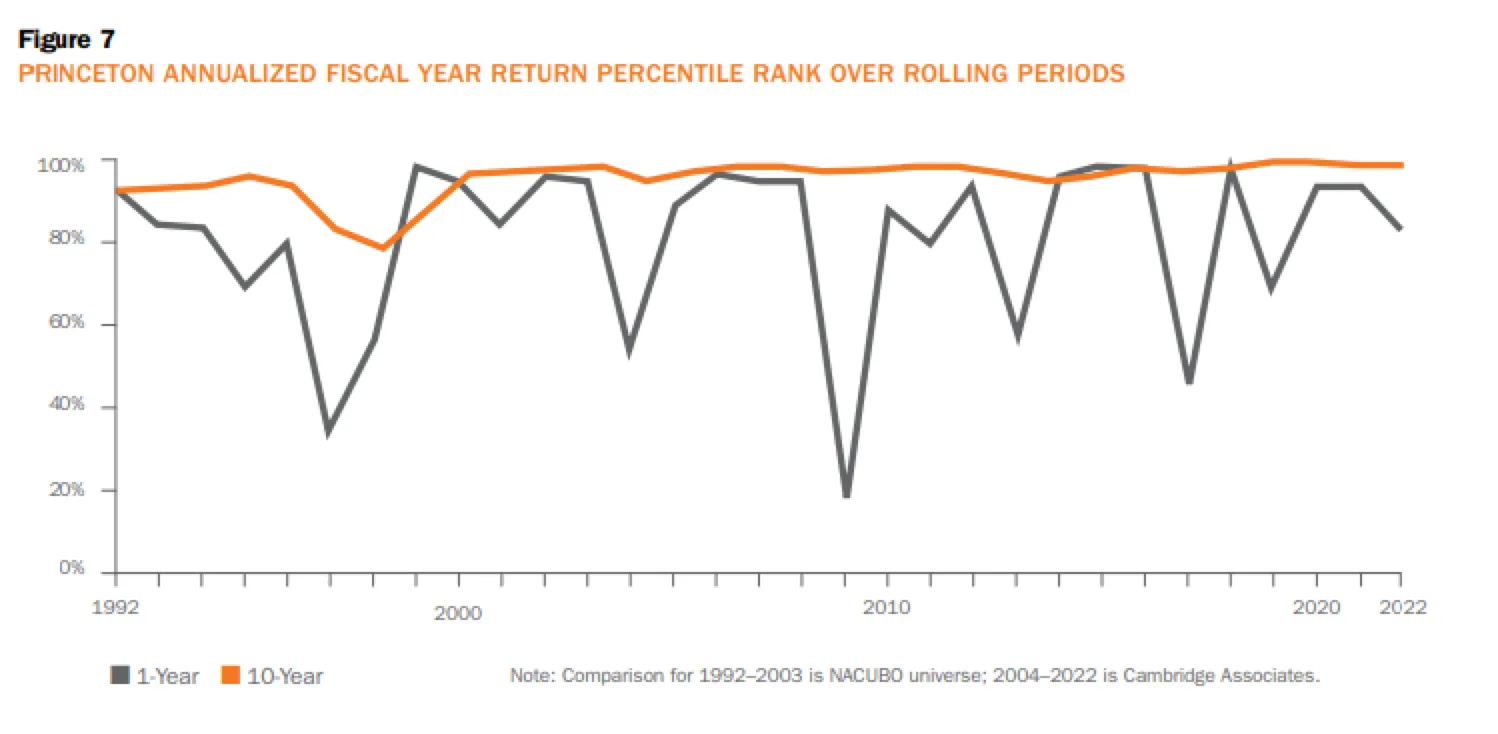
Ivy League schools not only have massive endowments but also impressive investment capabilities. Princeton University's 10-year annualized return was 12.2%, and in 2021 it reached an astonishing 46.9%—a figure many investment banks would envy.
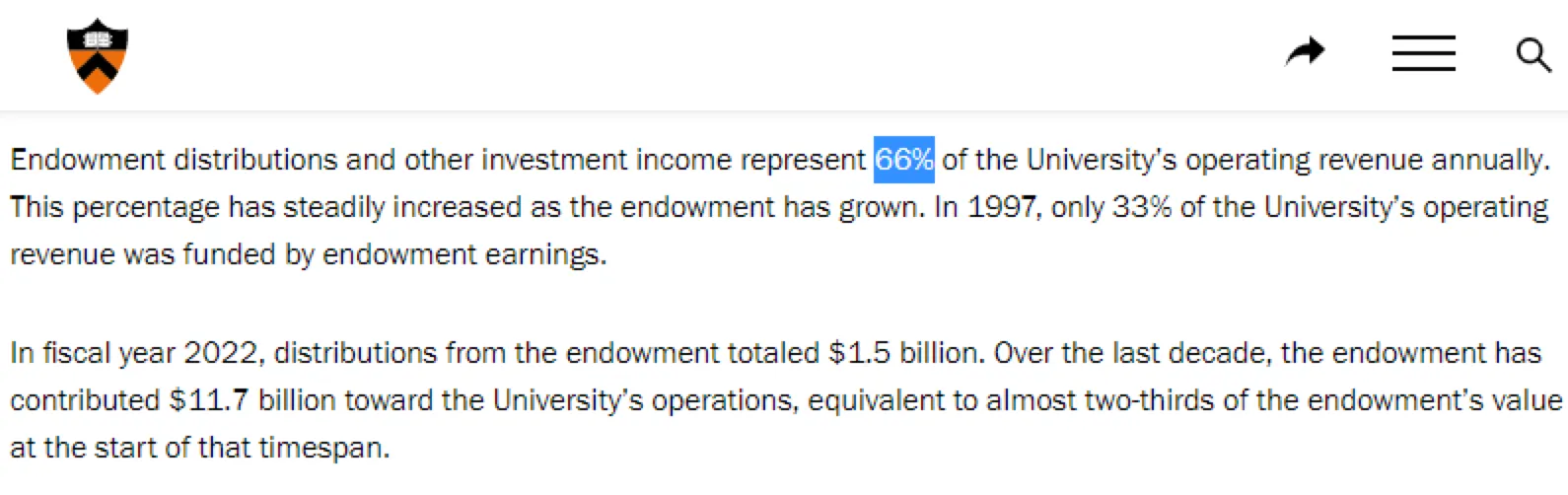
Today, over 66% of Princeton's operating expenses are covered by endowment distributions and investment income.
This corporate-style operational model allows elite U.S. universities to accumulate richer resources, which in turn attracts more donations and top students, creating a virtuous cycle that continually widens the gap between top schools and ordinary universities.
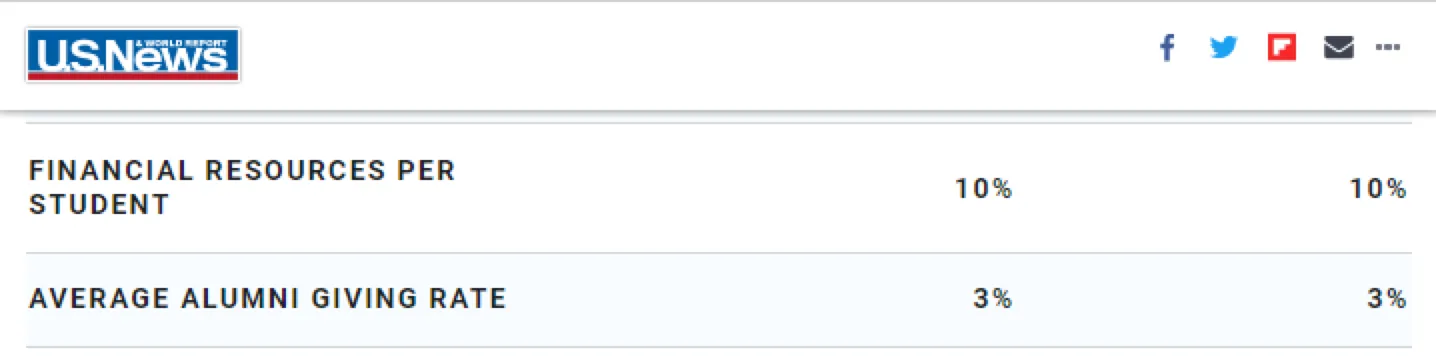
Many major university rankings also factor endowments into their methodologies. For instance, U.S. News has a factor called "financial resources per student," weighted at 10%, and "average alumni giving rate" at 3%.
Consequently, we see a pattern of "the rich universities get richer, and the poor get poorer."
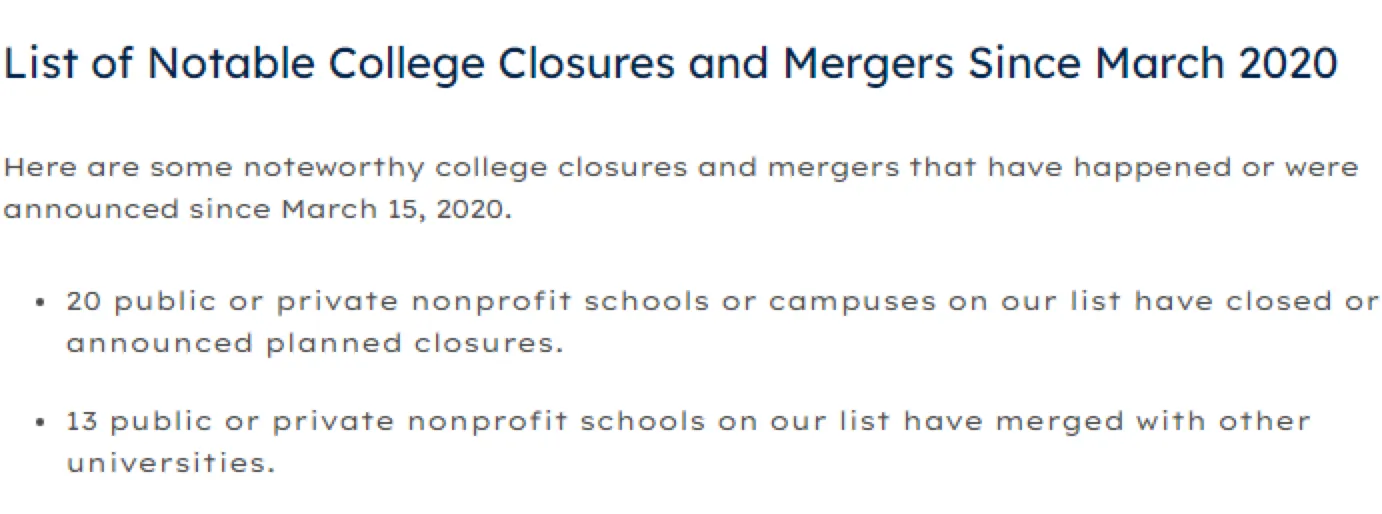
On one hand, resources continue to flow to already wealthy elite institutions; on the other, ordinary universities face declining enrollment and even risk closure.
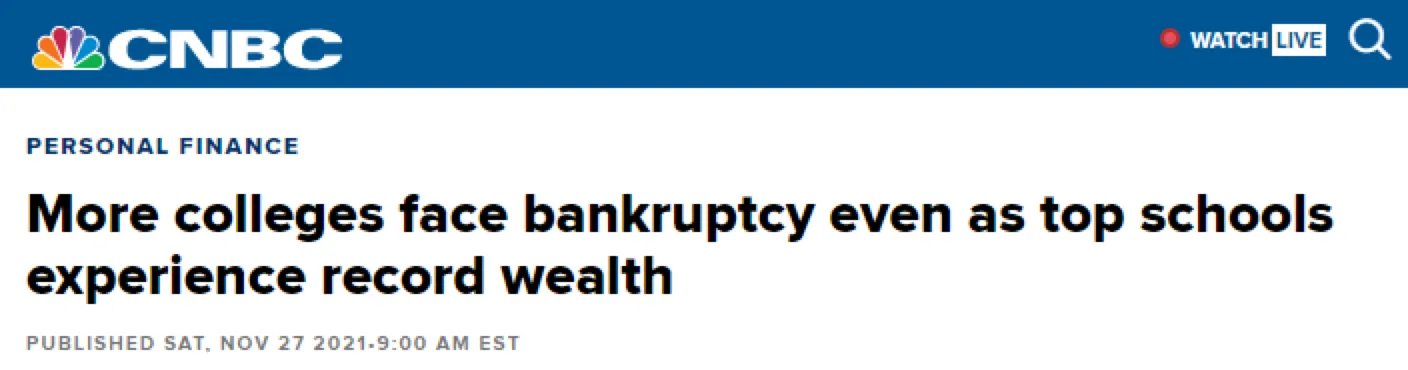
Since the pandemic, at least 33 colleges have announced closures or merged with other institutions.
The wave of university strikes sweeping across the U.S. since late last year is also disheartening. From the UC system to Rutgers, tens of thousands of university employees took to the streets to demand higher wages and better benefits.
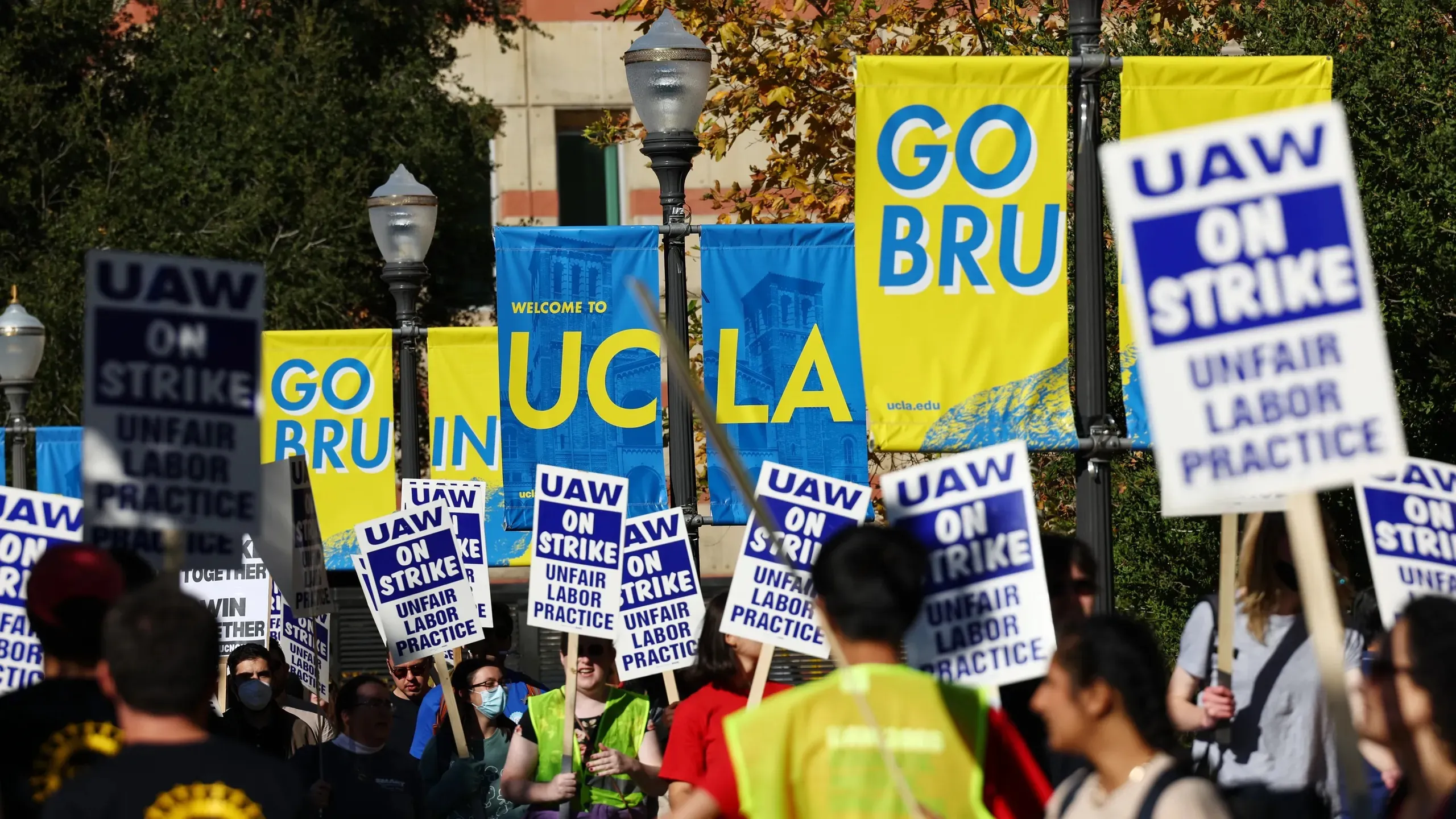
It's paradoxical: on one hand, the UC system has a $152 billion endowment pool, and on the other, ordinary staff struggle to make ends meet.
Achieving true equity in educational resources remains a long road ahead. Hopefully, university donations will be put to good use where they are truly needed.