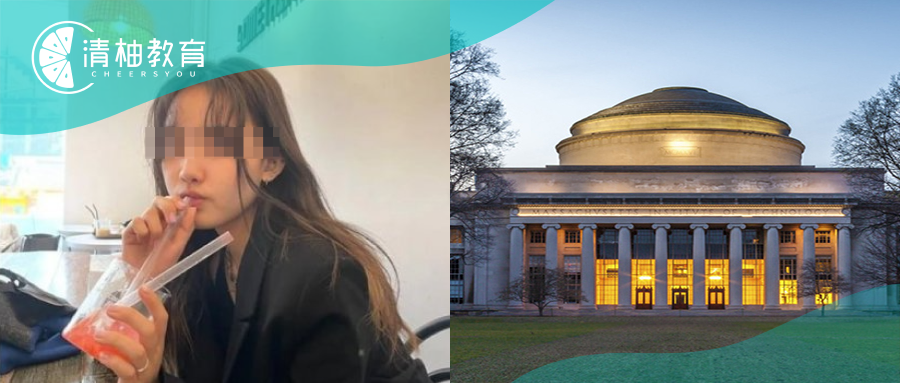
A prestigious US university, MIT, has been rocked by an admissions scandal!
Recently, a group of Korean parents launched a petition on Change.org, demanding that MIT reconsider the admission of the daughter of a high-ranking Korean official and withdraw her offer. The reason cited is that the student is suspected of plagiarism, academic misconduct, exaggerating competition achievements and extracurricular activities, and other misdeeds.
.png)
The petition, titled “MIT Should Not Be a Playground for Cheaters,” has garnered over 40,000 signatures since it was launched in early April.
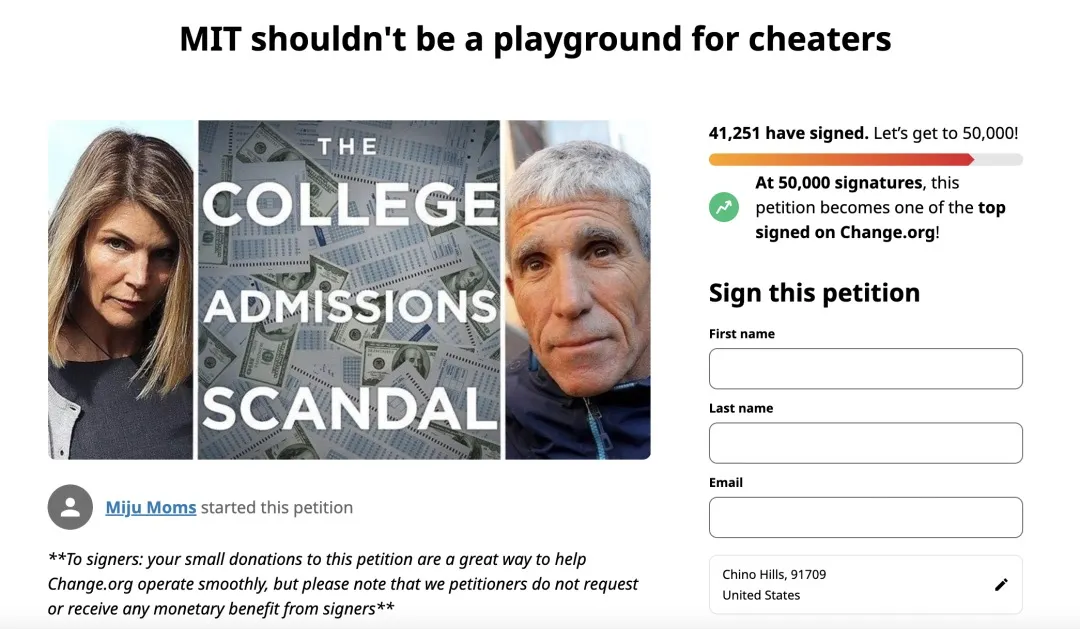
At the center of the controversy is Alex Han, the daughter of South Korean Justice Minister Han Dong-hoon.

Did a Korean official's daughter get into MIT by cheating?
Angry parents accuse Alex Han, an incoming MIT student for the Class of 2027 and daughter of the Justice Minister, of various academic misconduct, including extensive plagiarism of research papers, copyright infringement, hiring ghostwriters, using outside help in competitions, and exaggerating community service.
Han Dong-hoon, who took office as South Korea's Justice Minister last year, has held prominent political positions before turning 50, making him a rising young star.
He also received an elite education himself: a bachelor’s degree from Seoul National University School of Law and a master’s from Columbia Law School.

A prestigious American university, the child of a powerful family, academic fraud... this scenario is all too familiar and stings the petitioning parents.
The petition states, “If universities evaluated applicants based on their ability to put on a show, Alex Han would undoubtedly be first place.”
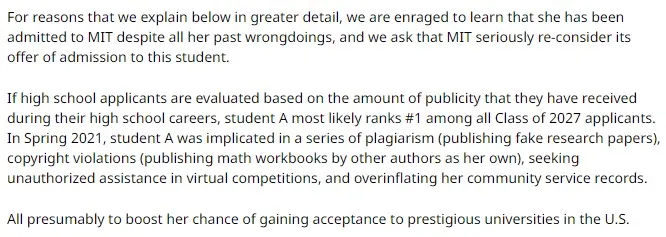
The petition includes a 16-page statement detailing Alex Han’s academic fraud.
In one year, Alex Han published 10 top academic papers and 5 e-books, covering fields ranging from politics, economics, history, sociology, to STEM:
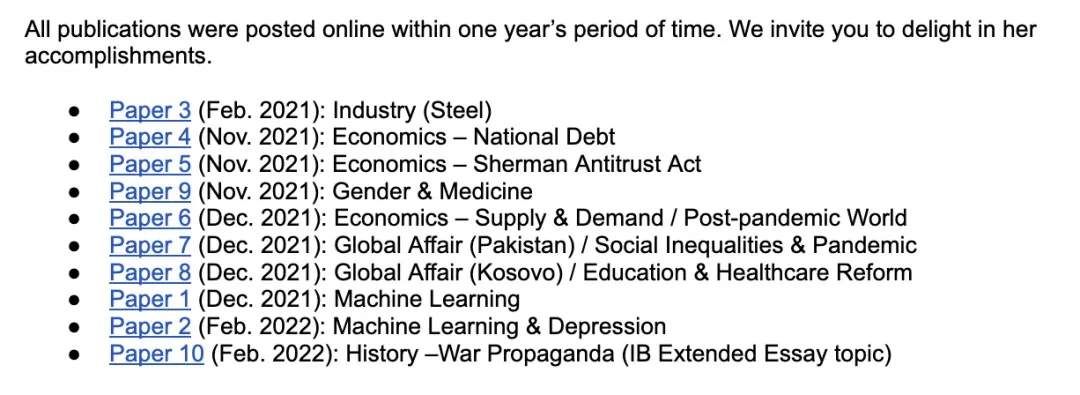
Let’s be real—this all-around girl genius, with such prolific output across so many fields, would make even a resurrected Leonardo da Vinci take a back seat.
She even published two papers in IEEE, the authoritative body in electronic engineering. At first glance, she appears to be an academic powerhouse, a high school student producing SCI-level work.

But the petition reveals that these papers are the product of plagiarism, ghostwriting, text spinning, fabrication, and other forms of academic fraud.
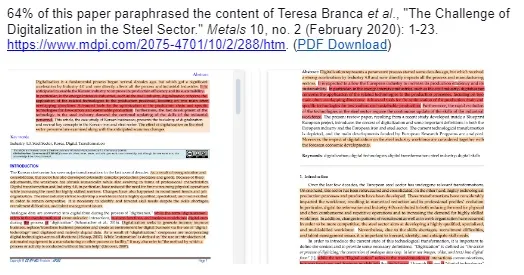
One of the papers, on national debt and economic principles, was professionally ghostwritten by a writer in Kenya:

In an interview with Korean media, the writer showed a screenshot of the order on his computer👇
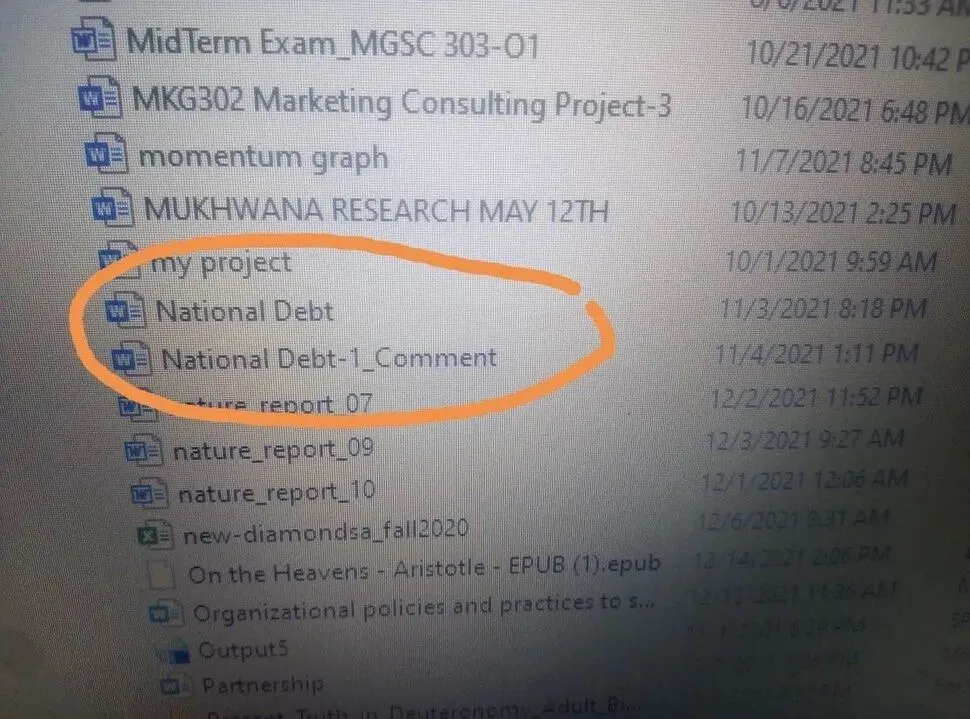
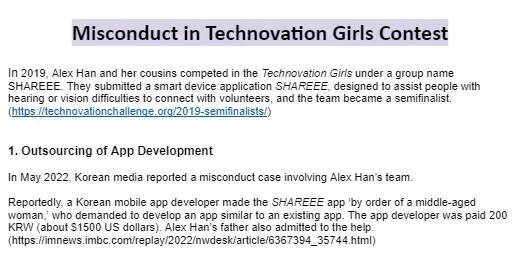
Not only were the papers falsified, but the so-called “original app” she used to win competitions was also made by paid contractors👇
Alex Han claimed to have organized over 100 students worldwide to provide more than 20,000 hours of free online education to underprivileged students. This story was reported by Los Angeles media and earned her multiple honors, including the Seoul Mayor’s Award.
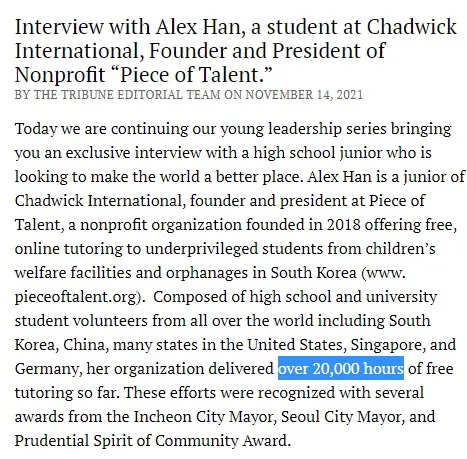
However, according to Korean media reports, these community service activities are also suspected of exaggeration and fabrication.


The petition concludes:
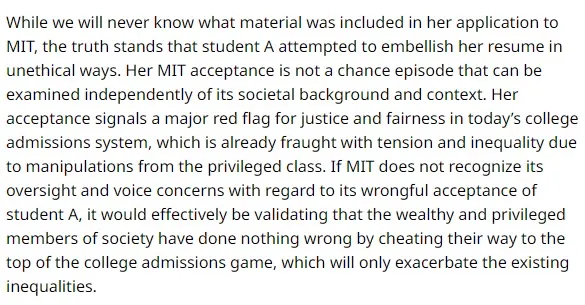
“While we may never know what materials were included in Alex Han’s MIT application, the fact is that she attempted to beautify her resume in unethical ways.”
”Her acceptance to MIT is not an isolated case but part of the long-standing privilege enjoyed by the children of the powerful at elite schools, and it raises a red flag for justice and fairness in college admissions. The manipulation by the privileged class only exacerbates the conflicts and inequities that already plague the college application process.
If MIT insists on admitting her, it will turn admissions to elite schools into a game for the powerful and further exacerbate social injustice.”
MIT recently responded. Sarah McDonnell, the school’s assistant director of media relations, stated, “MIT’s admissions office takes academic integrity very seriously and will investigate the applicant involved.” However, she firmly added, “MIT will uphold its admissions decision for Alex Han.”

She also stated that out of respect for student privacy and the admissions process, the university will not comment further on the matter.
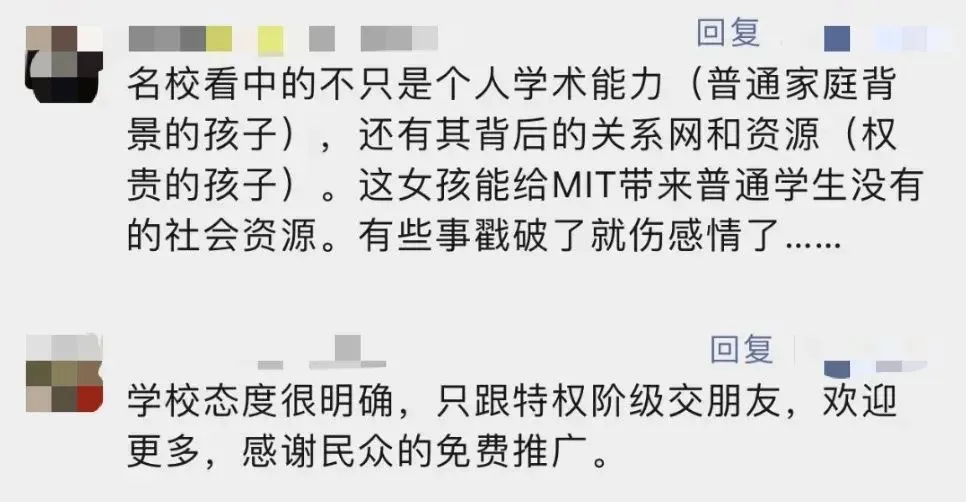
Are US elite colleges the private playgrounds of the privileged class?
The MIT admissions scandal has sparked public outrage, especially among parents of students applying to US colleges.
This year, Ivy League acceptance rates hit record lows, with Harvard at just 3.41% and other Ivies ranging from 4% to 6%.
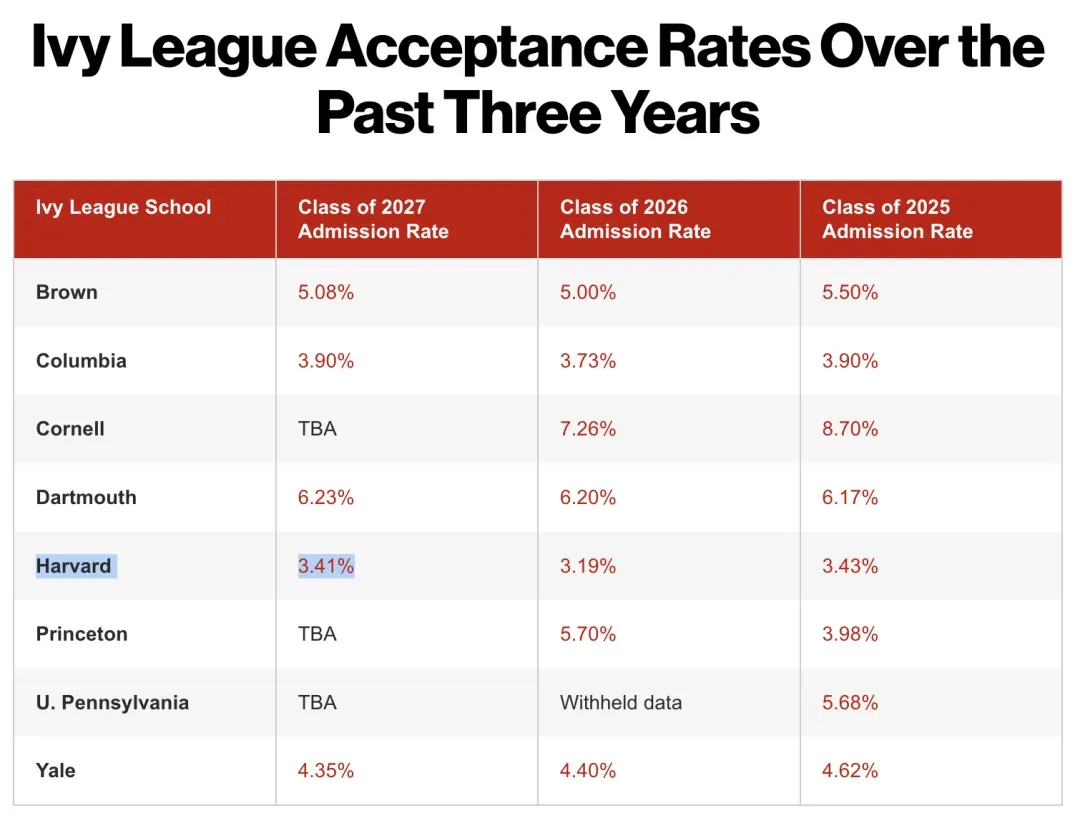
On one hand, competition for US college admissions is white-hot; on the other, the privileged enjoy various admissions advantages.
If the era of test scores once allowed talented students from humble backgrounds to compete, the post-pandemic era—with widespread test-optional policies and the diminished advantage of high SAT/ACT scores—has made it even harder for underprivileged students to rise, and even middle-class families find the return on chasing Ivy League admission very limited.


With standardized tests taking a back seat, the admission criteria for elite schools have become very difficult to decipher: leadership, community contribution, interests, personality, potential... After all, Harvard claims it has no absolute admission standards🤷♀️
Seemingly no standards, yet standards everywhere.
Those aiming for top schools need a higher-overinvolved GPA, more meticulously planned interests, extracurriculars, summer programs, clubs, competitions, and more. This not only means long-term commitment, but also: burning money.

“This is what I call cruel,” said an anonymous parent, whose 12th-grade son applied to 16 schools and only received offers from two safety schools.
Even Tier 2 US colleges are seeing competition spiral out of control.
Take USC, for example: its acceptance rate for the 2023 application cycle was only 9.9%, a record low.
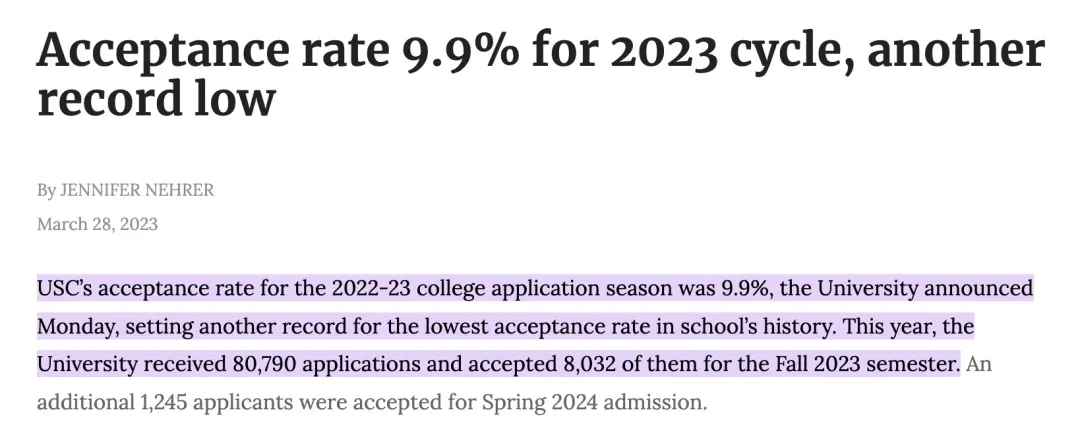
What parents least want to see now is the children of the privileged walking through the back door into elite schools as effortlessly as entering their own backyard.
“Is this a battle destined to be lost?”
In a media interview, a Korean mother living in Seattle expressed pessimism: “Even though tens of thousands have signed the petition, it may all be meaningless. The privileged class lives in a different world. It’s hard to admit, but that’s the reality.”
When education, a channel for upward mobility, is blocked, it leads to even more unshakeable class rigidity.

Top schools frequently rocked by admissions scandals
This is not the first time elite schools have been hit by admissions scandals.
The 2019 US college admissions scandal that shocked the world revealed the harsh truth behind elite college admissions.
According to US prosecutors, the ringleader, Singer, took huge bribes and used fraud, bribery, and other illegal means to get the children of 33 politicians and business elites into top US universities, with the total amount involved reaching $25 million.

With these astronomical admission tickets, the children of the powerful easily entered elite schools.
Among the parents involved were not only Hollywood stars and business moguls, but also wealthy Chinese figures. The chairman of Buchang Pharma was revealed to have splurged $6.5 million to get his daughter into Stanford.

In 2021, a documentary based on this incident, “Operation Varsity Blues: The College Admissions Scandal,” was released on Netflix, once again ripping open a scar that is hard to ignore in the history of US elite education.
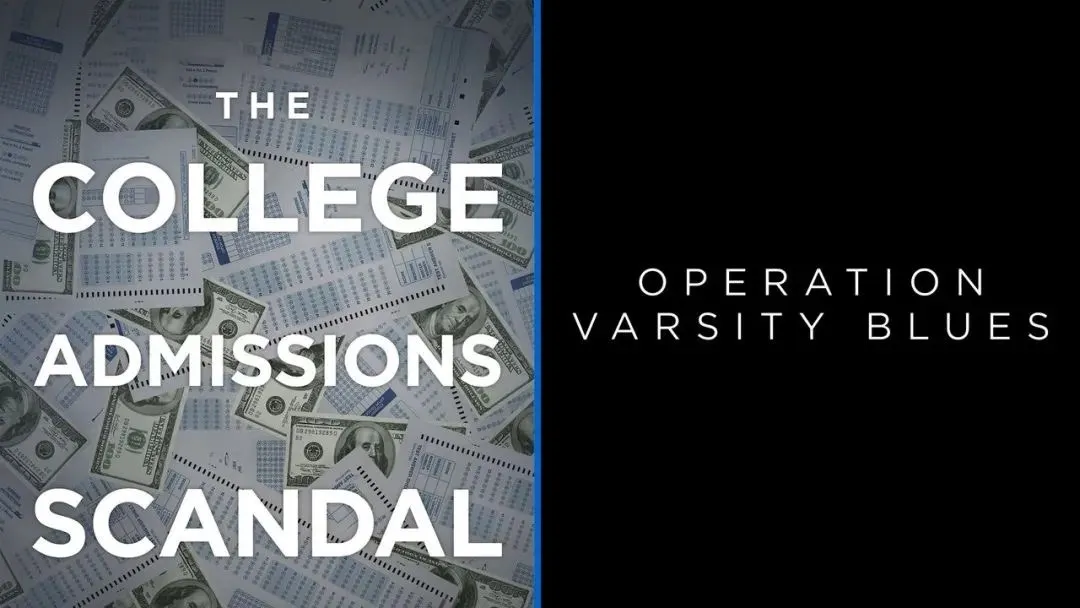
In this globally shocking admissions fraud case, 50 individuals were eventually indicted, and the students who gained admission through falsification were all expelled, reaping what they sowed.
Nevertheless, elite school admissions scandals continue to emerge one after another.
Academic fraud by Penn’s Korean-American sisters
In early 2022, over 10,000 people signed a petition urging the University of Pennsylvania to investigate two admitted students for academic plagiarism.
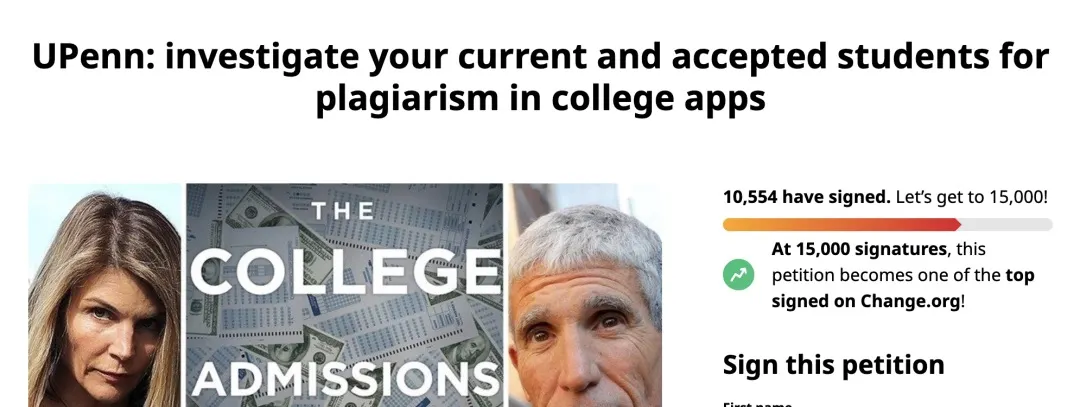
The petition targeted Korean-American sisters Annabelle Choi and Madeline Choi, alleging that five of their academic papers were plagiarized, with a similarity rate as high as 78%.
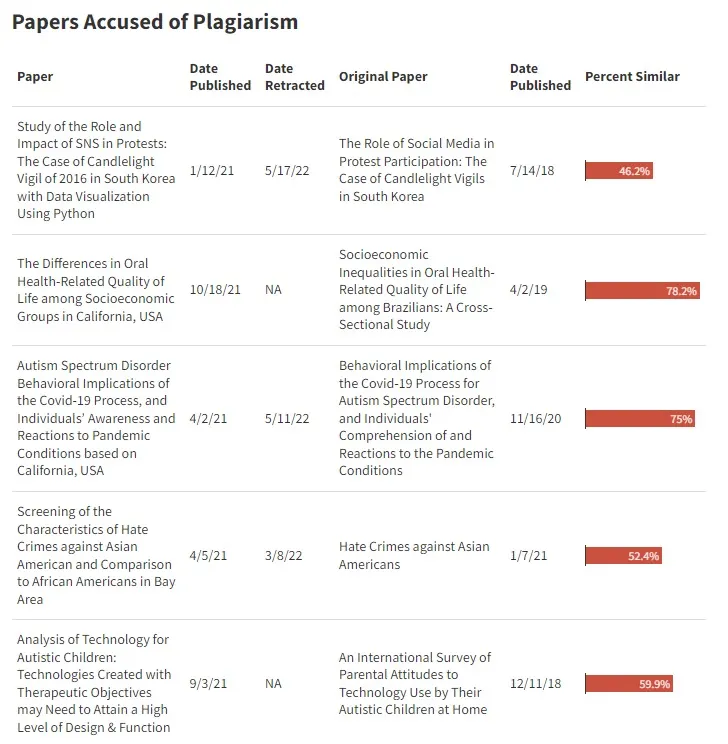
The petitioners demanded that the sisters publicly apologize and admit their wrongdoing, and that UPenn acknowledge its oversight in the admissions process.
However, even if they can’t attend UPenn, they can still go to Stanford😅
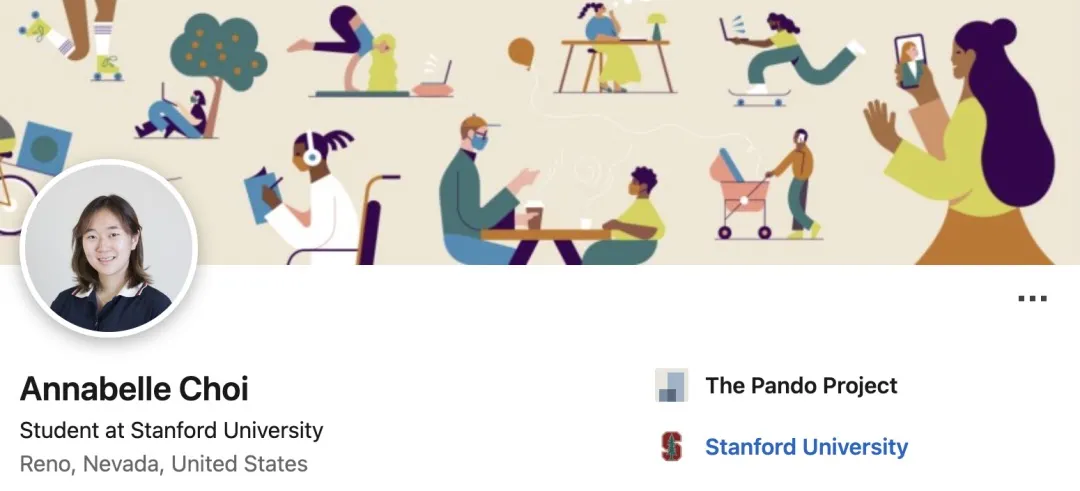
It is worth noting that the uncle of these two sisters is none other than South Korean Justice Minister Han Dong-hoon, who is now at the center of the controversy.
That’s right, the father of Alex Han in the MIT admissions scandal.
If Minister Han learned anything from his nieces' case, it was to switch from copy-paste to professional ghostwriting.

Netizens commented:
“The high selectivity of elite schools is a joke. It just depends on how much those wealthy and powerful elite parents are willing to pay.”

USC admissions scandal involving an official's child
In late 2022, the University of Southern California was exposed in an admissions scandal.
Former USC dean Marilyn Flynn publicly admitted to accepting bribes and abusing her authority during her tenure.
Flynn accepted up to $9 million annually in hefty government financial allocations from Los Angeles City Councilman Mark Ridley Thomas; in a “quid pro quo,” she agreed to provide his son with a full scholarship admission slot and a paid professorship.
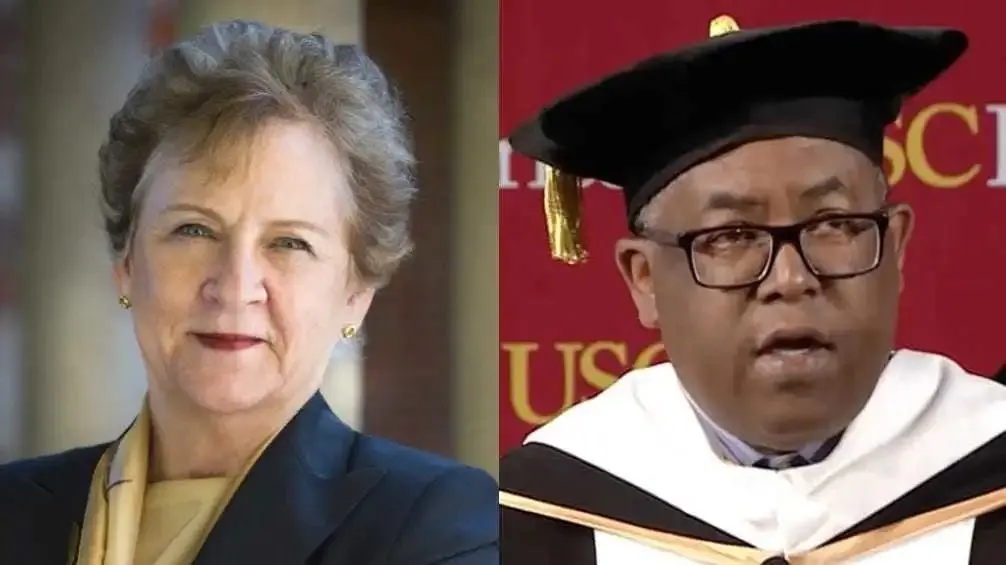
With a full scholarship and a faculty position, a series of under-the-table maneuvers allowed the official’s son to gain both fame and fortune.
Ironically, resources continue to flow to those who already have them.
The “unwritten rules” of elite college admissions
At American universities that emphasize educational equity, “unwritten rules” are nonetheless everywhere.
For ordinary people, getting into an elite school is an uphill battle that may end in failure, but for the rich, all roads lead to Rome.
First, there is Legacy Preference, giving priority to children of alumni. This is a long-standing tradition at elite American universities, where the children of alumni are given preferential treatment in admissions.
Take Harvard, for example: for the Class of 2025, when the regular admission rate was only 3.43%, the admission rate for legacy students remained as high as 33%.
.jpg?x-oss-process=style/opt-webp)
The reason is not hard to guess: Harvard alumni are usually elites in various fields with deep pockets. Over 30% of legacy students come from wealthy families with an annual income exceeding $500,000, and many are super-rich second-generation offspring from America’s top 1%.
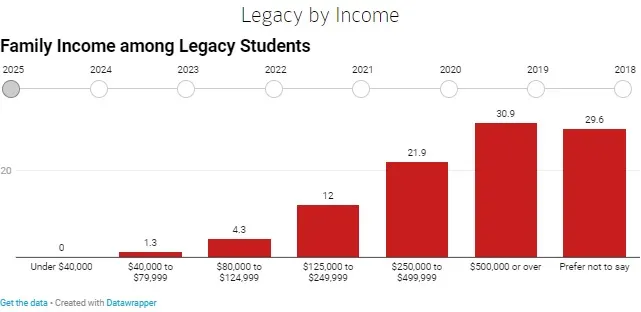
Born with a silver spoon, they have resources ordinary people can only dream of; they are destined for success, and the resources they can bring to the school are predictable.
And not just Harvard: across the Ivy League, the admission rate for legacy students is typically 2 to 5 times the overall rate. And those super-rich second-generation children from the top 1% are 77 times more likely to be admitted to an Ivy League school than children from poor families.
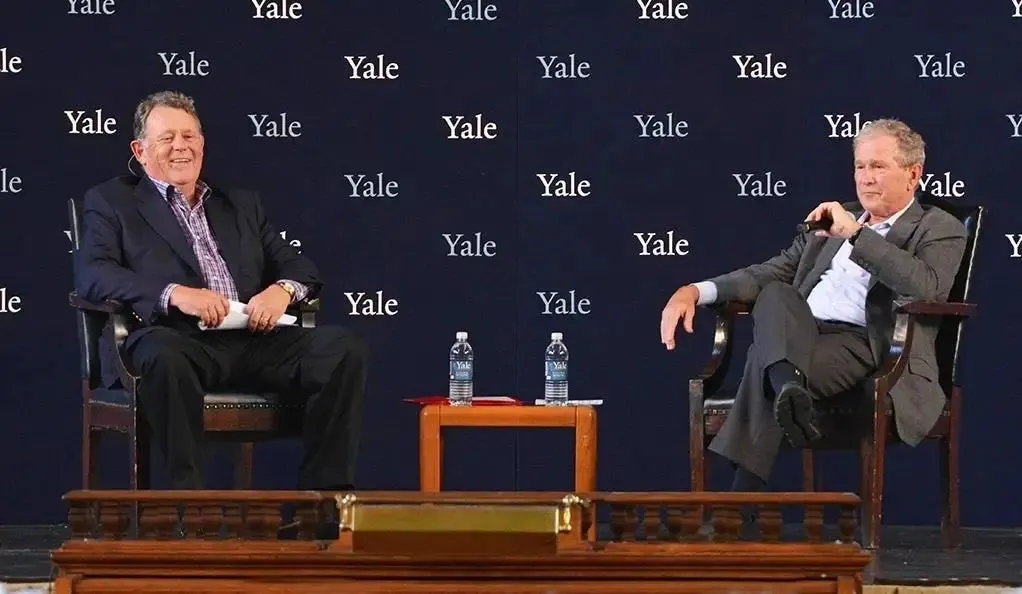
George W. Bush, with an SAT score nearly 200 points below the Ivy League average and a GPA of just 2.35, still got into Yale thanks to legacy status.
They say wealth does not last beyond three generations, but the truth is that it’s hard for the poor to produce successful offspring. The elite perpetuate their status through education, which is exactly the unspoken “unwritten rule” of America’s top schools.
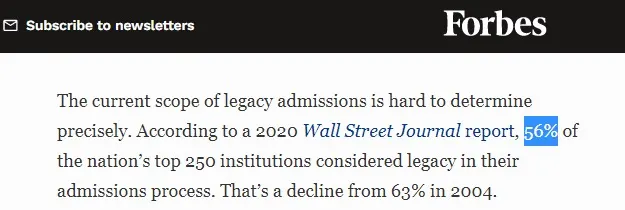
Despite various pressures pushing American universities to change, the proportion of legacy admissions among the top 250 US colleges has decreased from 64% to 56%:
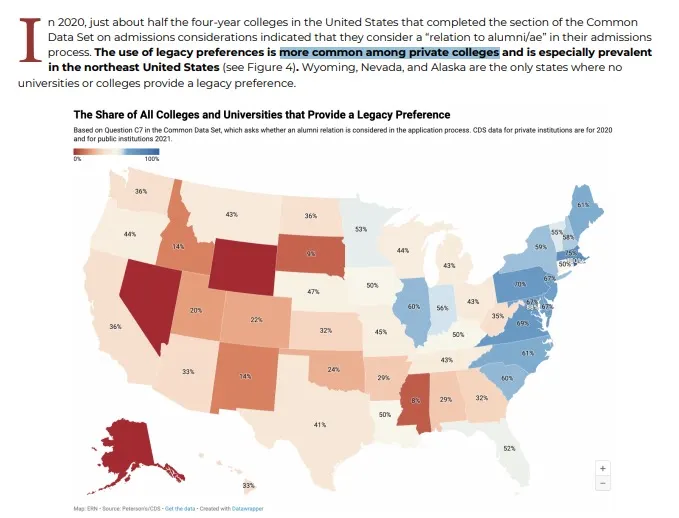
But in reality, the northeastern private schools that everyone clamors for still value the legacy tradition.
Secondly, there are donations.
Top tycoons can increase their children’s chances of admission—or even effectively guarantee admission—by donating money to build buildings.
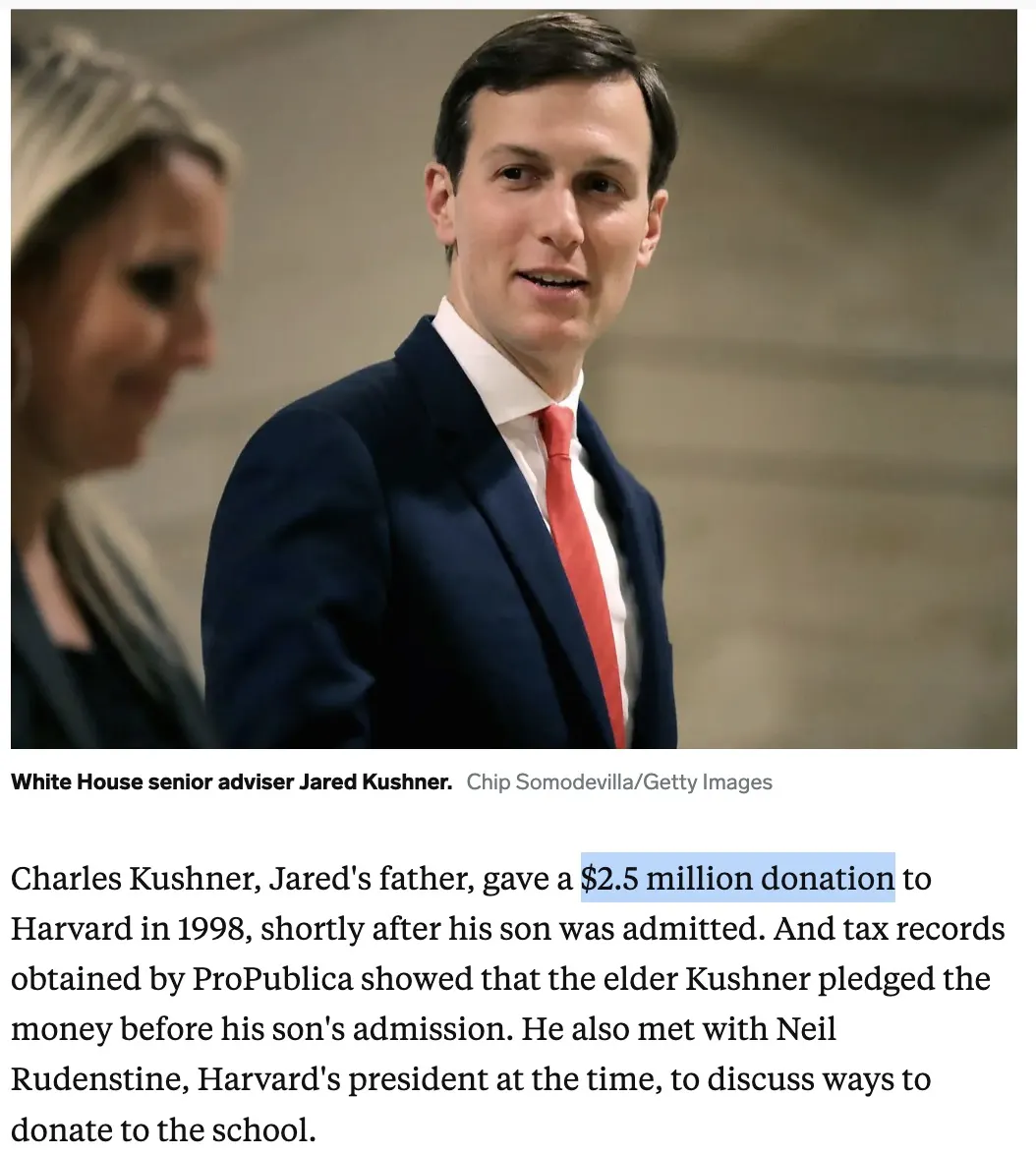
For example, Jared Kushner, the son-in-law of former US President Trump, got into Harvard the following year after his father donated $2.5 million to the university.
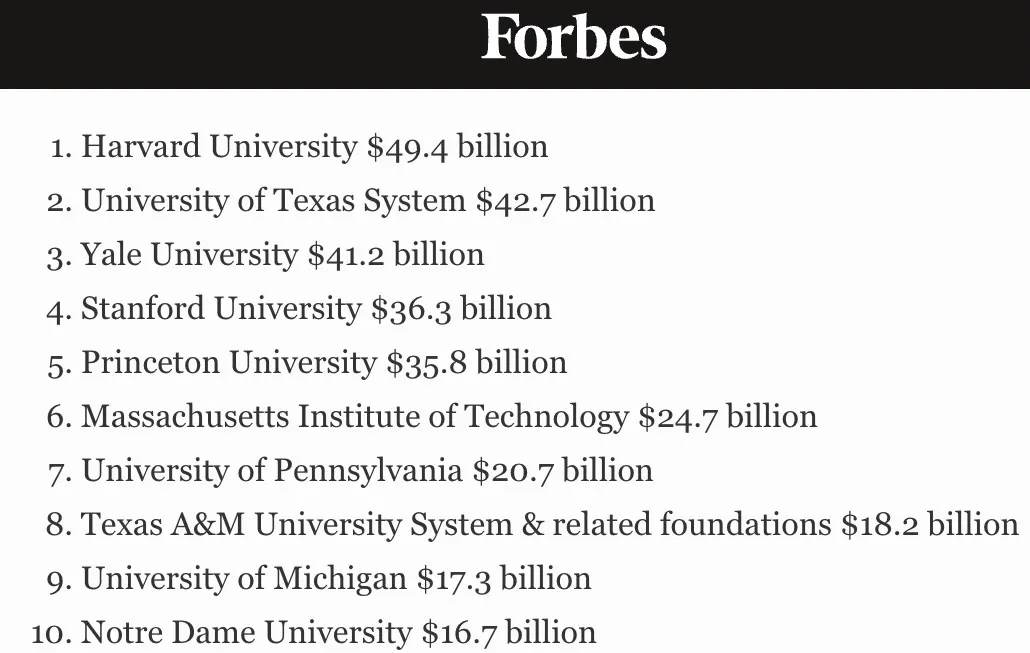
Thanks to various alumni and social donations, some schools are richer than many countries. In 2022, Harvard’s total endowment reached $49.4 billion.
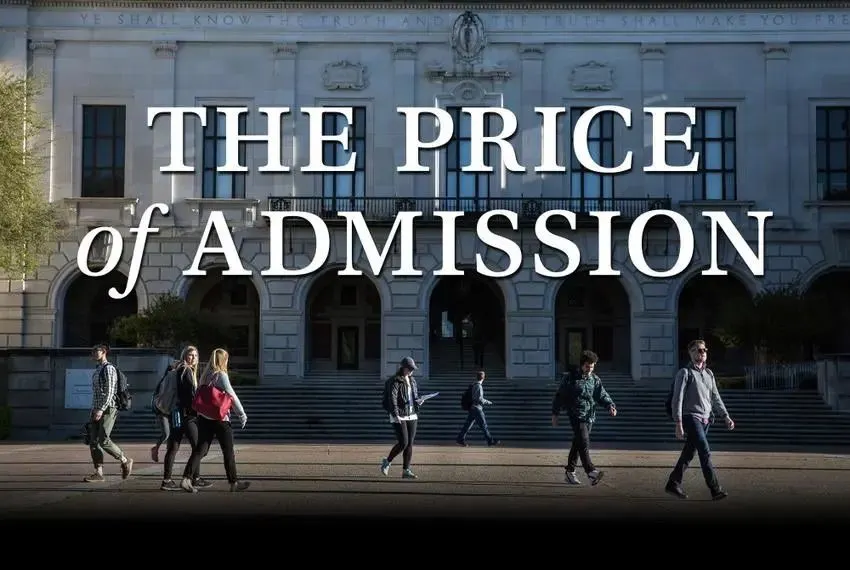
The book “The Price of Admission” exposes various unwritten rules of admissions at elite US universities:
“It is already an open secret that the children of the wealthy, celebrities, alumni, and faculty have priority in admissions. Even the special talent slots for niche aristocratic sports are often reserved for the offspring of these upper-class families. Politicians and universities collude to ensure this chain of interests can operate in the long term.”
For a long time, Ivy League schools have been closely tied to old money and the elite class. Although they have intentionally tried to diversify in recent years by admitting more African Americans, first-generation college students, and disadvantaged groups, this long-standing elitism is hard to reduce.
Ordinary people can only go through the front door, while the rich can openly use the back door. These privileges squeeze the spots that should rightfully go to students from ordinary families, constituting a grave social injustice.
Achieving educational equity is still a long and arduous journey. Though perhaps the petitions cannot change anything right now, speaking out is the first step toward change.