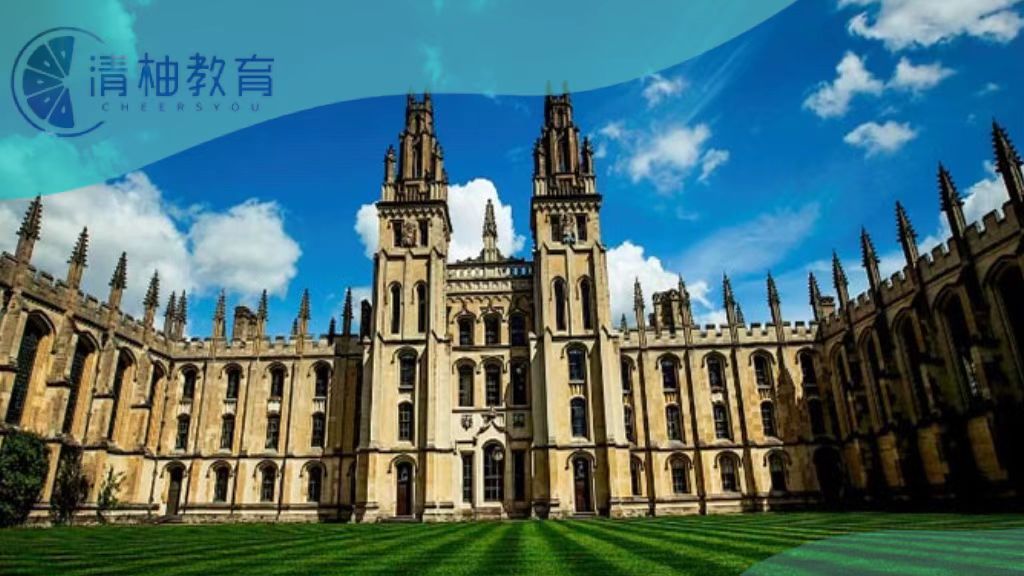
In the UK, master’s programs in Statistics are widely recognized and are offered to students interested in studying data and statistical analysis. Within the specialized fields in the UK, statistical research directions have gradually encompassed multiple disciplines, including mathematical statistics, socio-economic statistics, biostatistics, financial statistics and risk management, as well as actuarial science and applied statistics. During their studies, students have many opportunities to participate in research projects and gain practical experience to deepen their hands-on skills, laying a solid foundation for future employment.
Today, we will analyze the UK public health master's program in detail. For application details, add CheersYou(清柚教育) advisor: qingyouge23 to get more information!

I. Program Specializations
MSc in Statistics
MSc in Statistics with Finance
MSc in Statistics with Applications in Medicine
MSc Statistics with Applications to Finance
Operational Research and Applied Statistics (MSc)
Social Research Methods and Statistics MSc
MSc in Statistics and Computational Finance

II. Statistics Master's Courses
As the birthplace of foundational disciplines, the UK is home to the world-renowned Royal Statistical Society and numerous prestigious universities offering statistics programs. Below are some Statistics Masters Degree Courses in the UK:
- Oxford - MSc in Statistical Science
Ranked 5th in the world, this full-time 1-year program aims to train students to solve real-world statistical problems, enabling them to select appropriate statistical methods for given data analysis tasks and to analyze data on computers to yield clear and precise results.
Official website: https://www.ox.ac.uk/
- Cambridge - Master of Advance Study in Mathematical Statistics
These are two top universities in the UK's G5 group. The minimum admission requirement for graduate study is a GPA of 85% or 3.5/4.0; for applicants from average institutions, a first-class degree is required, with at least 90% or GPA 3.8/4.0.
Official website: https://www.cam.ac.uk/
- Imperial College London - MSc in Statistics
The Statistics program at Imperial College London is a 1-year course. Students can choose from 6 modules based on their professional interests to broaden and deepen their knowledge. Core courses include: Applied Statistics; Computational Statistics; Fundamentals of Statistical Inference; Statistical Probability; Advanced Simulation Methods; Advanced Statistical Finance; Advanced Statistical Theory; Bayesian Methods; Big Data; Biomedical Statistics; Algorithmic Trading and Machine Learning; Computational Stochastic Processes; Quantitative Methods in Retail Finance; Survival Models and Actuarial Applications; Time Series.
Official website: https://www.imperial.ac.uk/
- Warwick - MSc in Statistics
Options include full-time 1 year or part-time 2 years. The curriculum opens doors to careers in many fields such as economics and public services, including medicine, health and life sciences, marketing, insurance, banking and pharmaceuticals, business and manufacturing, and quality management and analysis in national and local government.
Official website: https://warwick.ac.uk/
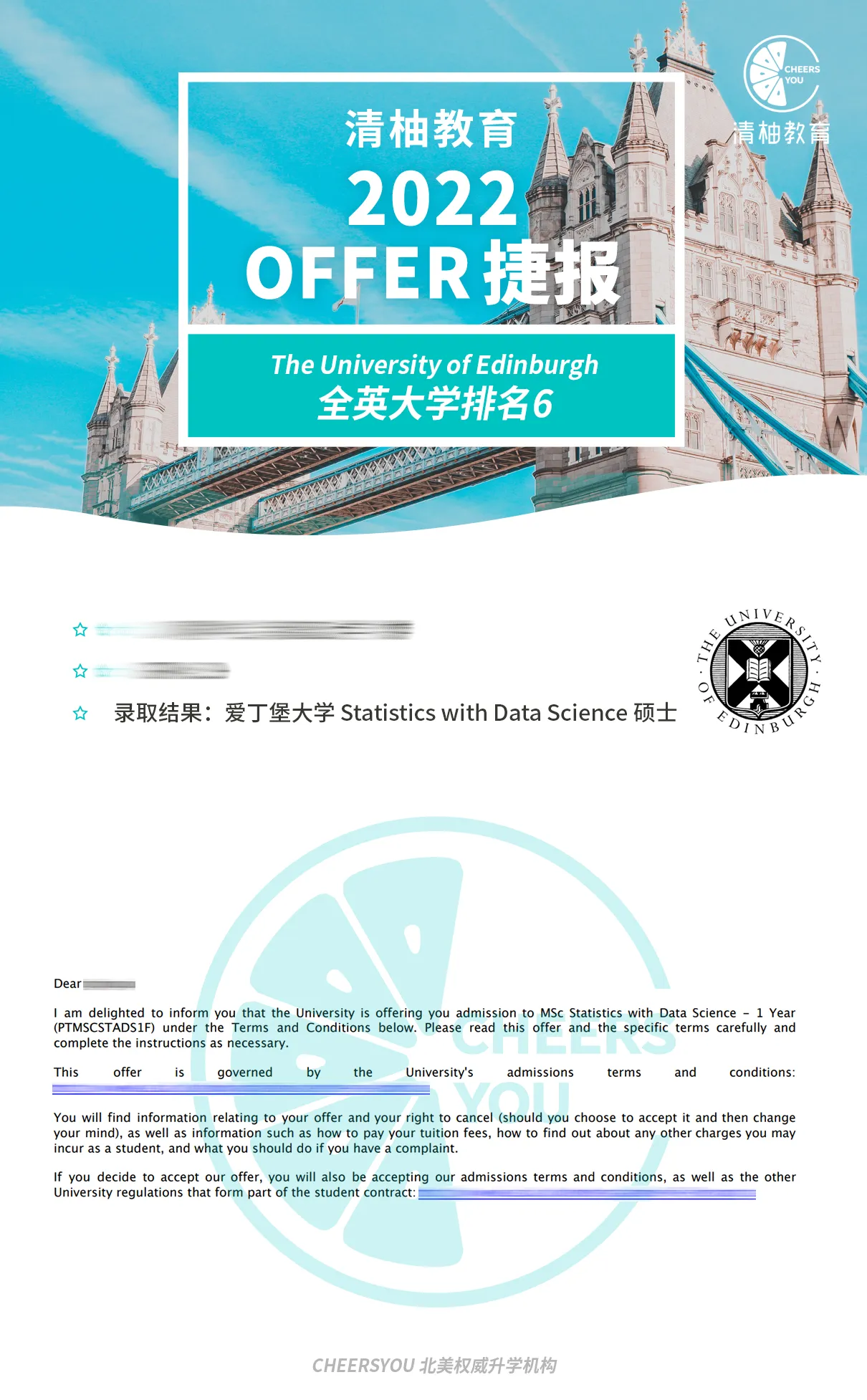
- Edinburgh - MSc in Statistics with Data Science
The program combines statistical theory with practical experience in applying statistical models to data. Specific courses include: Classical and Bayesian Theory, Computational Statistics, Regression Analysis, and Models and Applications of Data Analysis. Moreover, in addition to academic content, the teaching emphasizes interpersonal and communication skills, which are crucial for future careers and further research.
Official website: https://www.ed.ac.uk/
- Manchester - MSc in Statistics
Manchester's statistics program is more theory-focused with many course modules. This high-quality one-year statistics program is designed to provide comprehensive professional training, enabling students to pursue statistical careers in various fields. The current MSc in Statistics allows students to choose major courses in financial statistics or related courses according to their interests and career aspirations.
Official website: https://www.manchester.ac.uk/
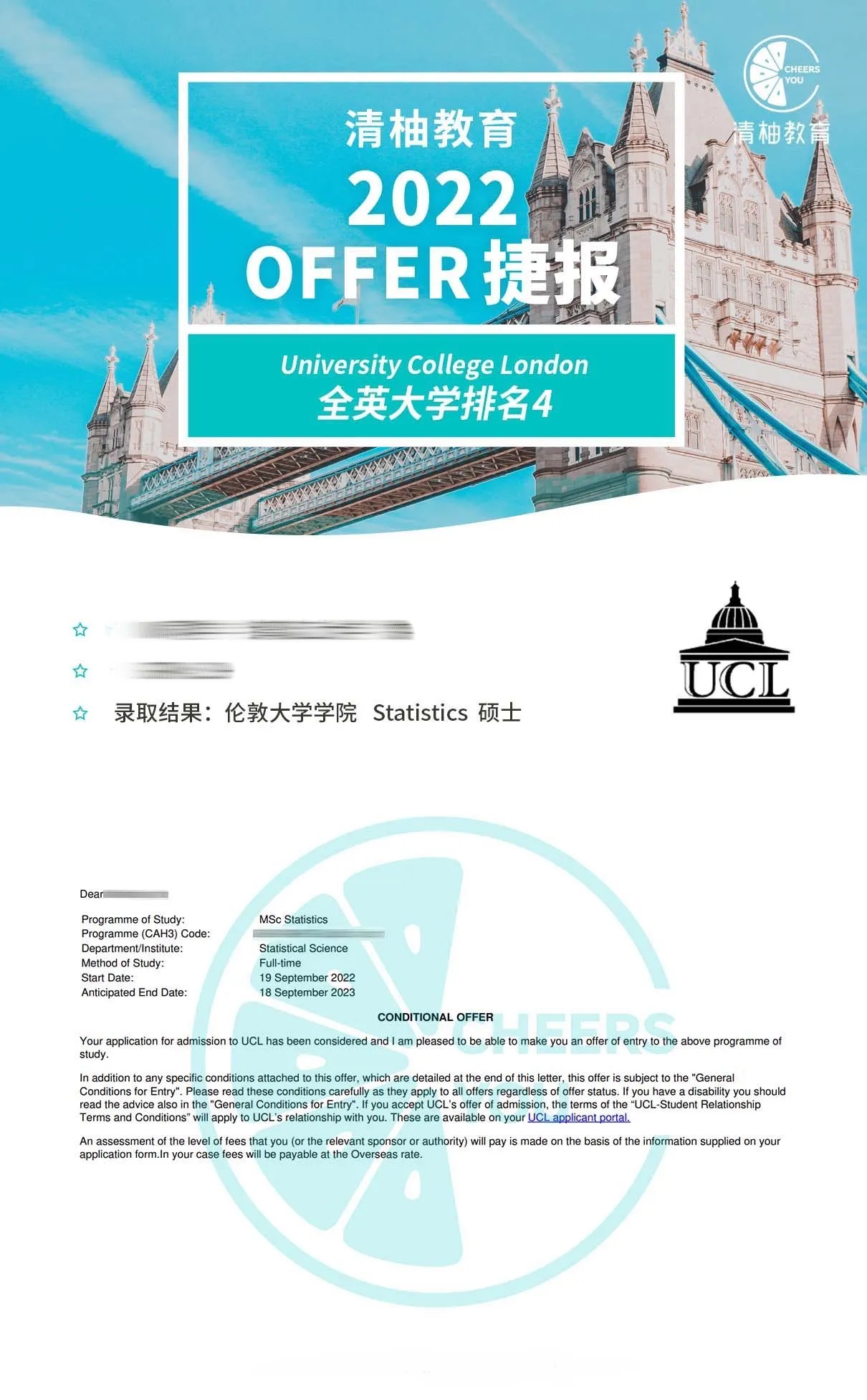
- UCL - MSc in Statistics
This one-year full-time program provides quantitative skills training that opens doors in fields such as medicine, government, research, and business. It examines statistics from multiple perspectives, offering the latest knowledge and skills in its main application areas while maintaining a good balance between theory and practice. It encompasses modern statistical concepts like Applied Bayesian Methods and Generalized Linear Models, as well as traditional statistical theory and methods.
Official website: https://www.ucl.ac.uk/
- Bristol - Masters by Research in Probability and Statistics
Bristol is strong in science and engineering, enjoying a solid reputation in industry and good visibility among employers. The statistics curriculum is more theoretically oriented. The university has a strong research atmosphere, which is something students should weigh when choosing schools. Key courses include Financial Mathematics, Social Statistics, Statistical Modeling, Programming Theory, Introduction to Models, Stochastic Processes, and Data Science.
Official website: https://www.bristol.ac.uk/
III. Career Development

STEM positions are among those with the highest growth rates in the coming decades, with statistician roles topping the list of job postings. Statisticians need a high-level master's degree and academic knowledge and can develop careers in multiple fields such as public healthcare, finance, product development, economics, marketing, education, geography, psychology, operations research, and government.
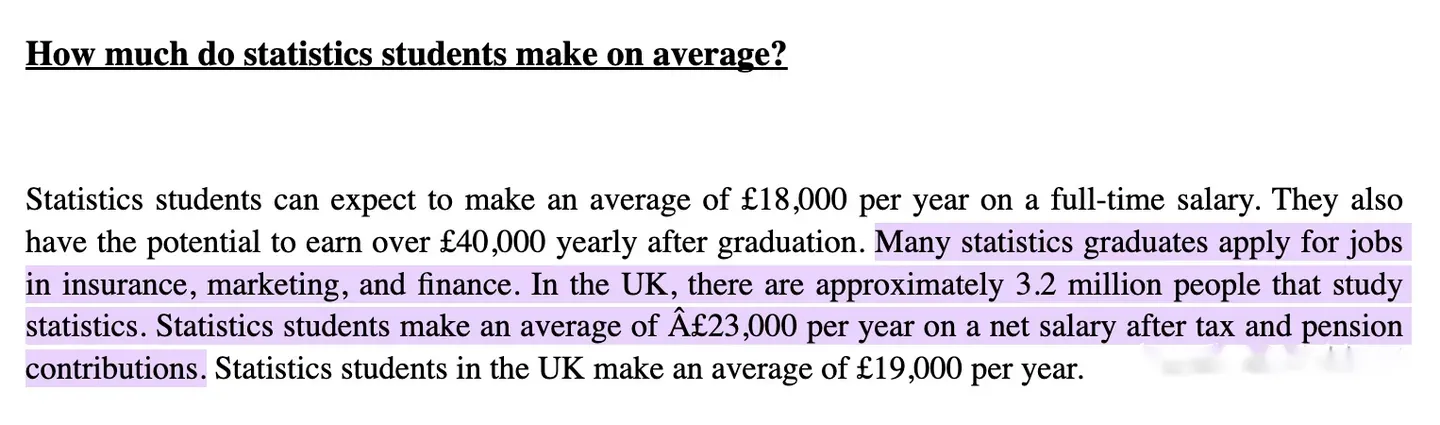
Statistics professionals excel at using computational resources for data mining and number crunching. They examine datasets, track trends, and create statistical models, presenting their findings through reports and charts to explain technical and data-driven insights. The application fields of statistics have expanded to physics, social sciences, humanities, as well as business, industry, and government intelligence decision-making. Graduates in statistics enjoy broad employment prospects, as illustrated by the average salary information below:
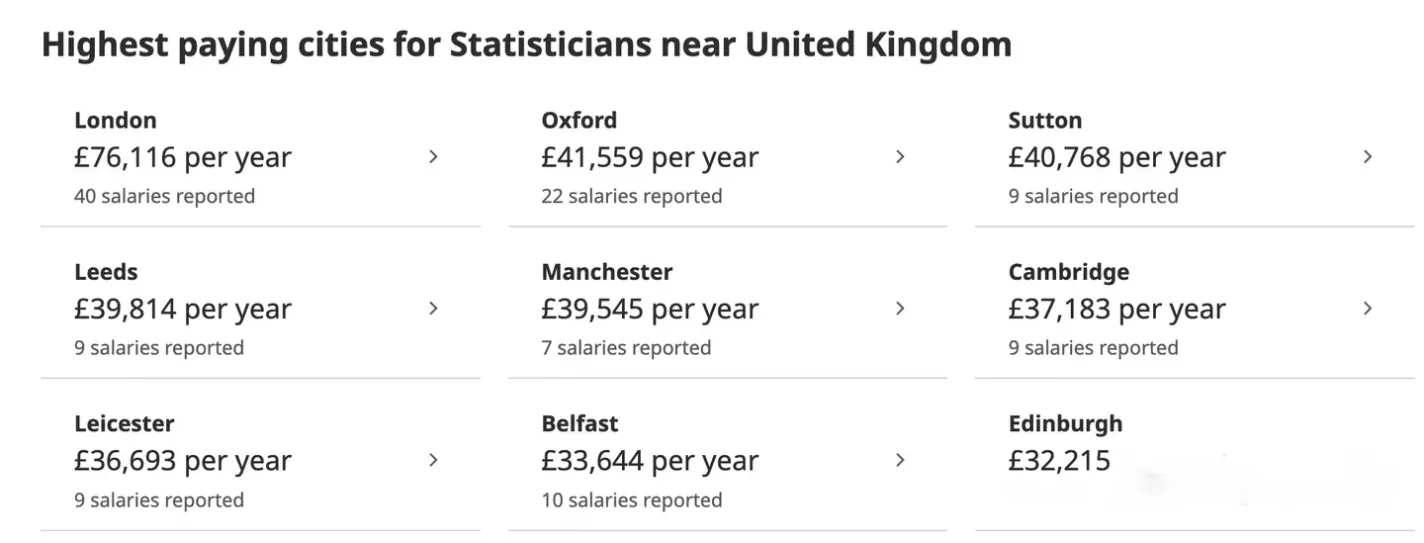
Statisticians' salaries also vary significantly by region:
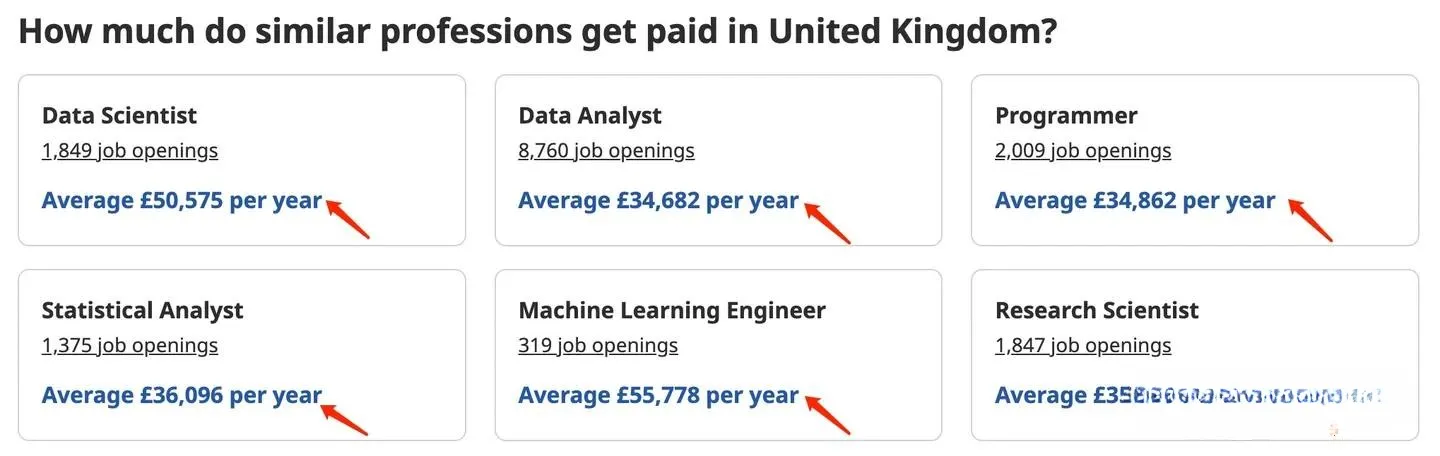
Related Positions for Statistics Graduates
- Applied Statistician
- Data Scientist
- Data Analyst
- Mathematician
- Sports Analytics
- Market Research Analyst
- Operations Research Analyst
- Financial Analyst/Financial Planner
- Statistical Consultant
- Industrial Statistician
- Environmental Statistician
- Biostatistician
- Economist
- Tax examiner or collector
- Astronomer
- Banker
- Risk Analysis Team Member
- National Security Agency (Intelligence and Counterintelligence Purposes)
- Survey Research Staff
Finally, as is customary, here are a few offers from prestigious schools:
Students who have clear goals, prepare well in advance and seize the advantage of time. We wish you all get offers from your dream schools soon! For more application details and school selection advice, feel free to scan the QR code below to inquire~