
The TESOL (Teaching English to Speakers of Other Languages) programs in the UK are highly recognized and respected. Many universities and educational institutions offer a wide range of TESOL courses to meet students' needs in the field of language teaching. These courses emphasize the combination of theory and practice, providing students with opportunities for in-depth research in language teaching. This article will introduce school selection recommendations for this program. For more details on graduate application, add CheersYou(清柚教育) consultant: qingyouge23!

1. Introduction to the Teaching English to Speakers of Other Languages (TESOL) Program
Taking UCL's TESOL program as an example, the program is divided into two distinct tracks based on whether students have teaching experience.
The Teaching English to Speakers of Other Languages (TESOL) In-Service MA is for applicants with more than two years of full-time teaching experience;
The Teaching English to Speakers of Other Languages (TESOL) Pre-Service MA is for applicants without full-time teaching experience.
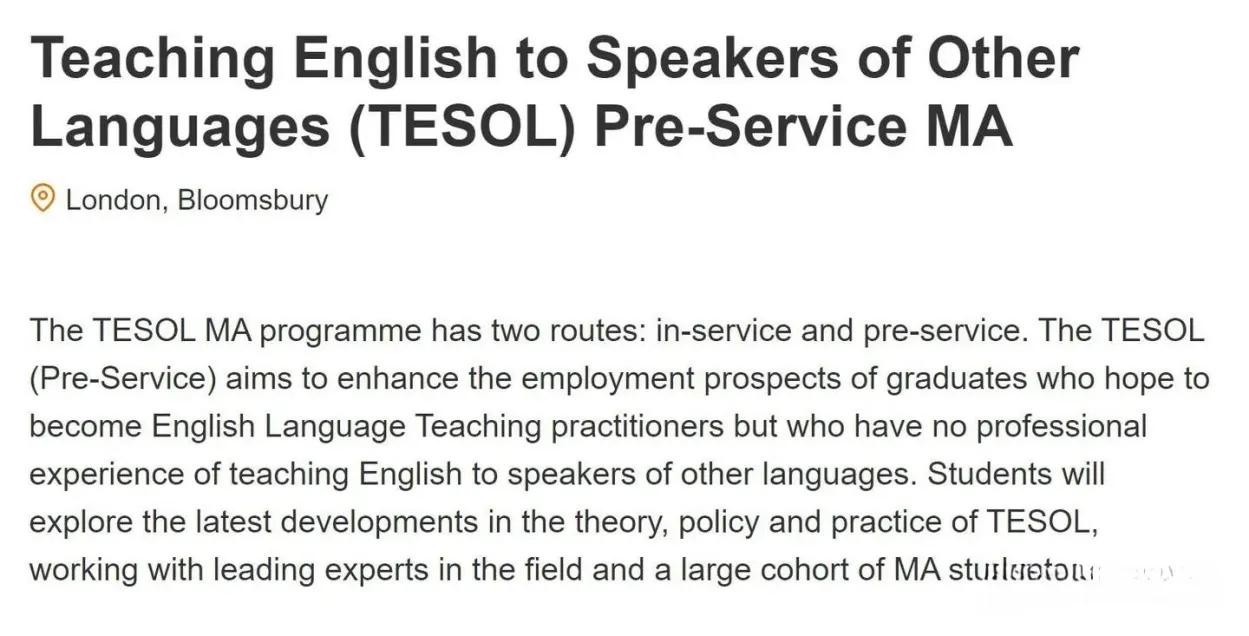
According to UCL's official website,
- The TESOL (In-Service) program aims to enhance the career prospects and promote the professional development of second or foreign language teachers;
- The TESOL (Pre-Service) program aims to improve the employment prospects of graduates who wish to become English language teaching practitioners but have no professional experience.
Therefore, both programs are career-oriented.
From a broader perspective, virtually all popular taught master's programs are primarily career-oriented. These programs have shorter durations, allowing graduates to enter the workforce 1-2 years earlier, which is one reason for their popularity.
Therefore, CheersYou(清柚教育) consultant takes UCL's TESOL (Pre-Service) program as an example to analyze from the perspective of curriculum design and preliminarily discuss the pressure of a one-year TESOL program.
Curriculum:
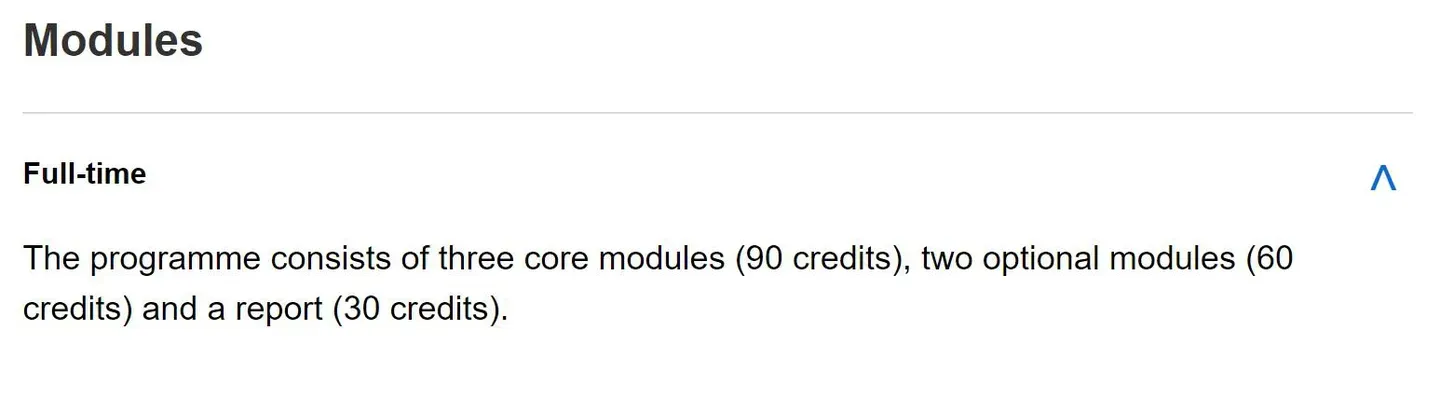
This program consists of three core courses (90 credits), two optional courses (60 credits), and a Report (30 credits).
Compulsory modules (3/3)
- The English Language Learner
- Teaching English: Theories and Approaches
- Researching Second Language Learning
Optional modules (2/9)
- English in Diverse World Contexts
- Bilingualism and Multilingualism
- Second Language Acquisition
- Language Testing and Assessment
- Working with Bilingual/Multilingual Learners in International School Settings
- English Language Teaching Classroom Practice
- Language at Work: Communication in Professional, Institutional and Cultural Contexts
- Teaching and Researching Speaking and Listening
- TESOL: Pedagogy and Practice
Report on the Teaching of English to Speakers of Other Languages (1/1)
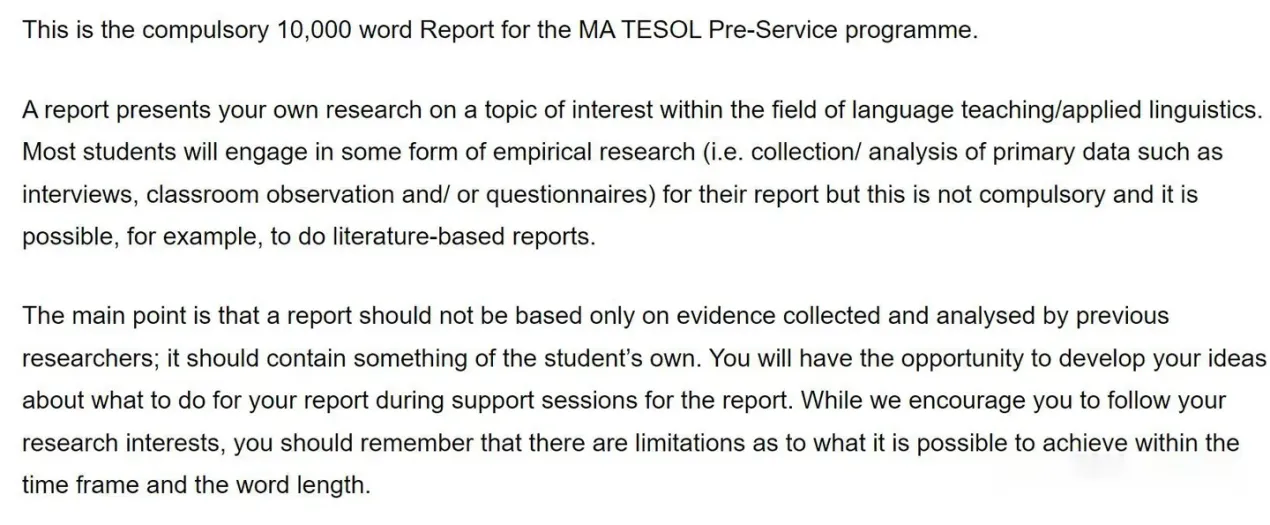
Among them, the Teaching English to Speakers of Other Languages (CCME0052) course requires students to complete a 10,000-word report introducing a research topic of interest in the field of language teaching/applied linguistics.
In addition, among the optional courses:
Language at Work: Communication in Professional, Institutional and Cultural Contexts (CCME0100) requires students to write a 5,000-word assignment as course assessment.
TESOL: Pedagogy and Practice (LCTE0001) requires students to attend a 3-hour lecture or seminar each week, as well as a 3-hour teaching practicum, during which students will teach groups of learners or observe their classmates teaching, and receive feedback on their teaching practice.
On average, the expected study time per 30 credits (one course) is approximately 300 hours, including class time, self-study during the semester, and final assignments.
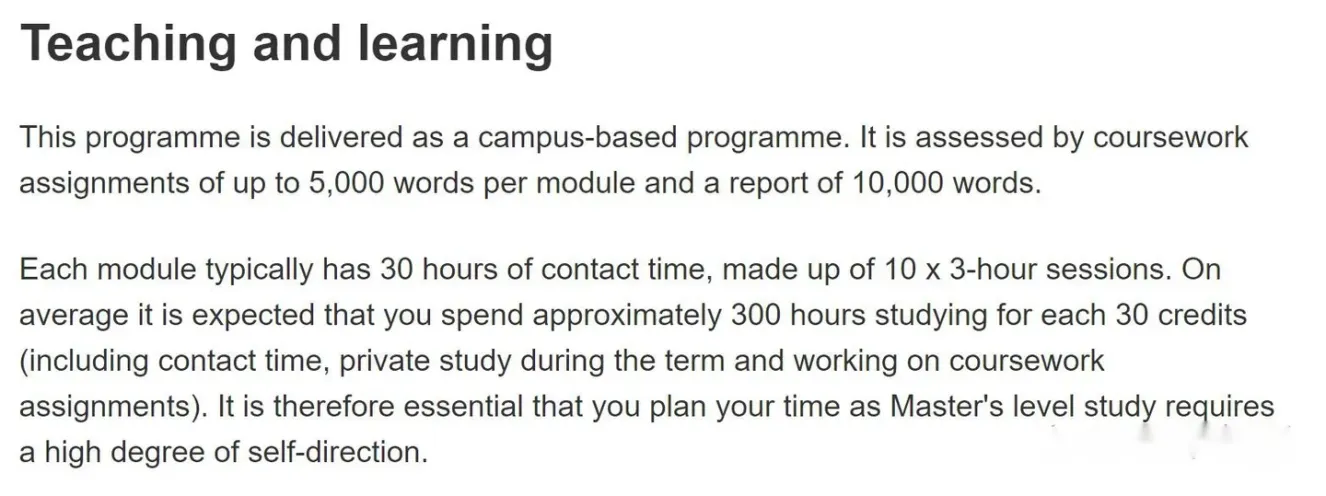
Calculated this way, the 180 credits required for graduation require a total of 1,800 hours of study. Based on an 8-hour study day, this equates to 225 days, or approximately 7.5 months.
In reality, class time and completing assignments do not account for a large proportion of the program; most of the time needs to be spent on extensive reading of various materials, literature, and works. After the semester begins, professors typically provide detailed reading lists. Although it is called a 'taught postgraduate' program, independent study and extensive reading are more important than simply acquiring knowledge through lectures. Coupled with the fact that the program lasts only one academic year, it does present significant pressure.
2. Career Prospects
As previously mentioned, the TESOL program is career-oriented. Below, we further elaborate on the career prospects after graduation.
It is believed that most TESOL graduates choose to return to their home country for development. After all, TESOL focuses on teaching English to non-native speakers, and teaching English in non-native English-speaking regions is the primary career direction. The following mainly introduces the main employment paths that TESOL graduates can choose after returning home:
1. International schools/Sino-foreign cooperative education programs in home country: Currently, there are many international schools in first-tier cities at home, and countless Sino-foreign cooperative education programs. TESOL graduates can choose to work as English teachers in these international schools or cooperative programs.
2. Language training institutions in home country: As the number of students choosing to study abroad increases year by year, language proficiency becomes the 'threshold' for overseas applications. If graduates themselves have excellent language scores and combine their TESOL professional background, working in language training can become a well-paid career path.
3. Early childhood education institutions in home country: In recent years, many families have chosen to have a second or even third child influenced by national encouragement policies. Therefore, it is foreseeable that the demand for early childhood education will increase significantly in the coming years. TESOL graduates possess language ability, teaching skills, and an international perspective, making them competitive talents in the field of early childhood education.
3. Admission Requirements
In addition to the UCL TESOL program introduced in this article, here are a few recommended programs in the same direction and their admission requirements:
- University College London
Background requirements: In-Service requires at least 2 years of relevant work experience; Pre-Service does not require work experience.
Average score requirements: For 985/211 institutions, an average score of around 85+; for non-211/985 institutions, around 90+ can be attempted.
IELTS requirements: Overall 7 (with no sub-score below 6.5)
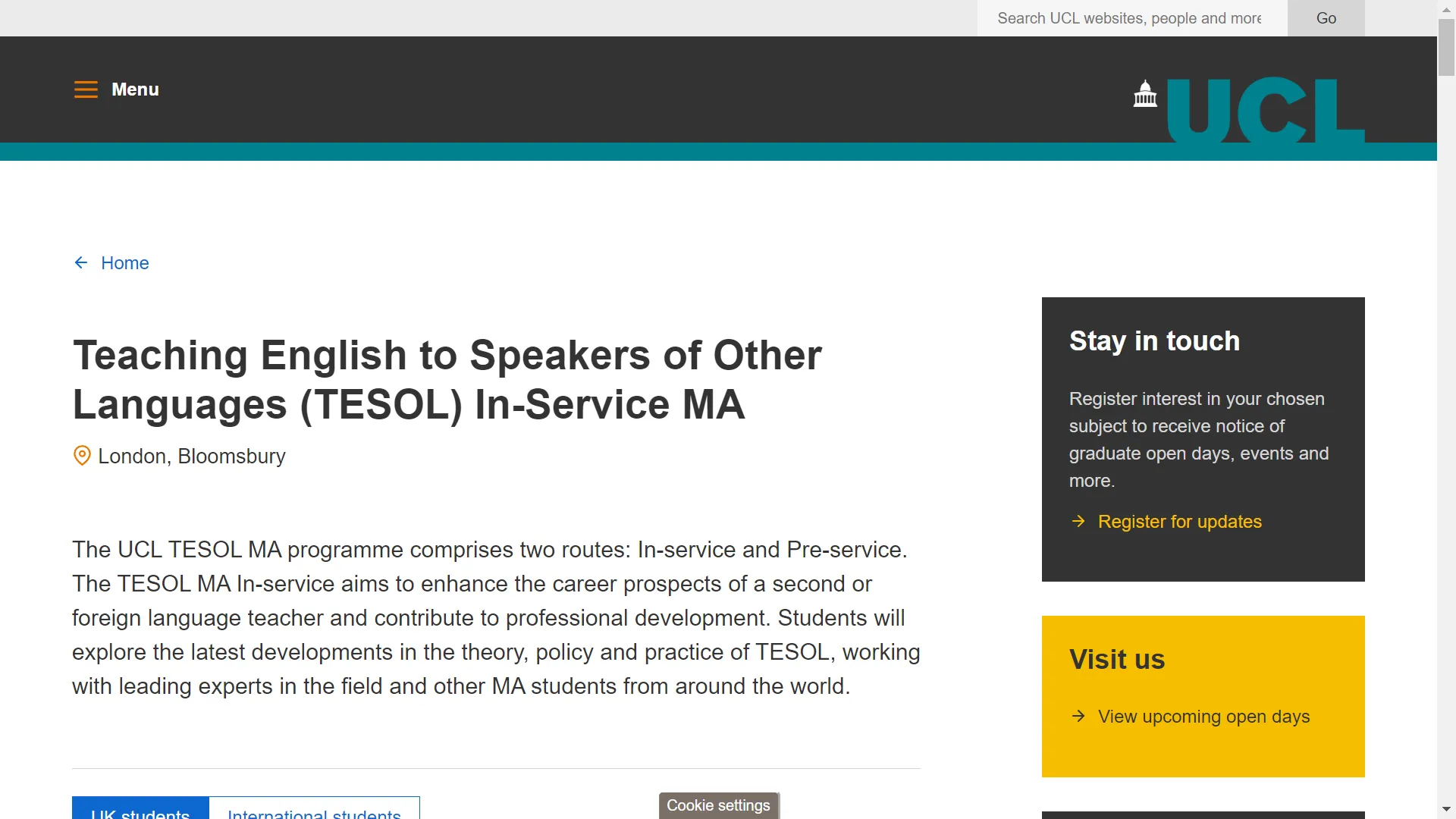
Official website: https://www.ucl.ac.uk/
- University of Edinburgh
Teaching English to Speakers of Other Languages (TESOL)
Background requirements: Bachelor's degree in a relevant field; no work experience required. (Of course, relevant work experience is preferred)
Average score requirements: For institutions on the Priority List, 80+ is required; or for Ecctis accredited institutions, 85+
IELTS requirements: Overall 7 (with no sub-score below 6.5)
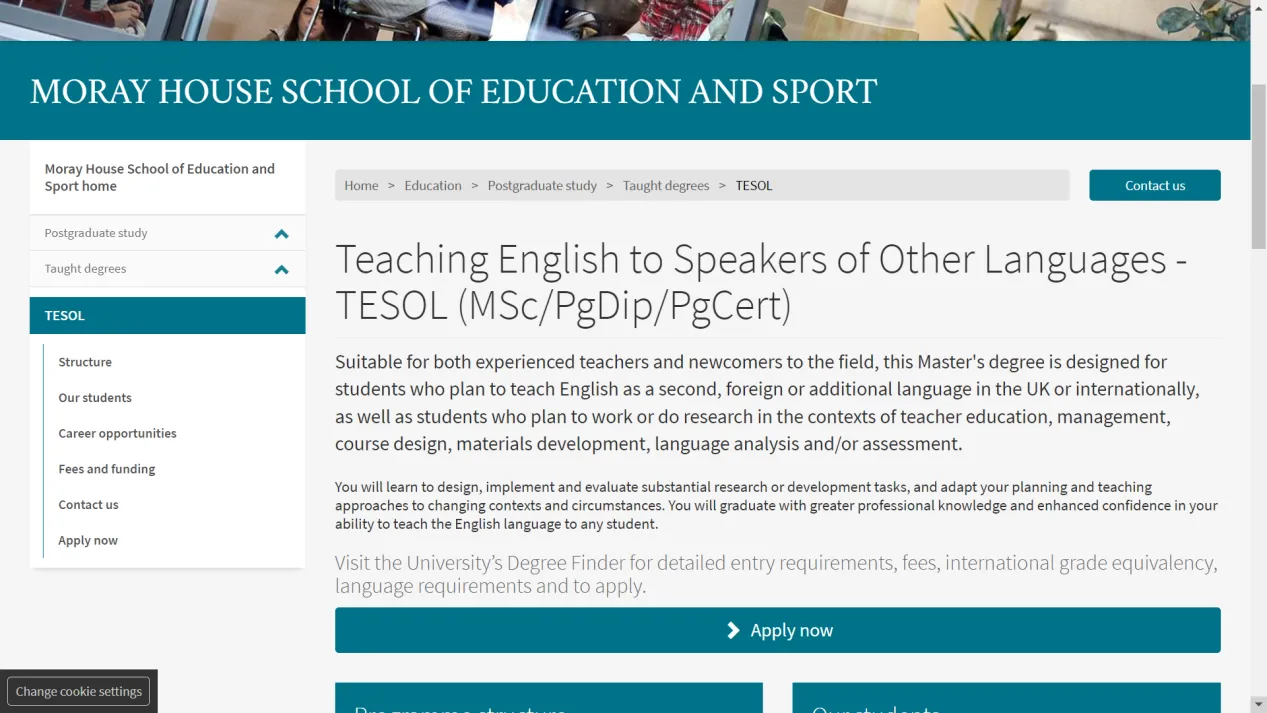
Official website: https://www.ed.ac.uk/
- King's College London
Teaching English to Speakers of Other Languages (TESOL) MA
Background requirements: Bachelor's degree in English, Linguistics, Psychology or related fields preferred, or other majors with relevant work experience in English teaching
Average score requirements: Usually 80+ for 985/211 institutions, 85+ for non-211 double first-class institutions
IELTS requirements: Overall 7 (with no sub-score below 6.5)
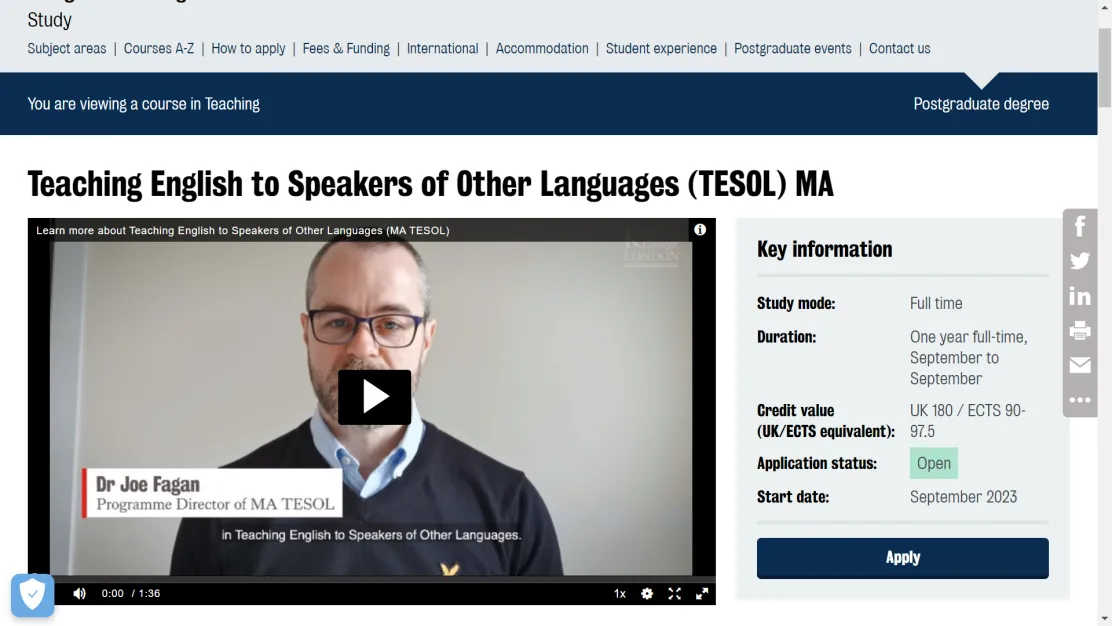
Official website: https://www.kcl.ac.uk/
- University of Manchester
MA TESOL
Background requirements: Teaching qualification and at least 2 years of relevant work experience
Average score requirements: 80%+ for institutions on the list
IELTS requirements: Overall 6.5 (with reading, listening, and speaking no lower than 6, and writing no lower than 6.5)
MA International Education (TESOL)
Background requirements: Bachelor's degree in a relevant field, or at least 6 months of relevant work experience
Average score requirements: 80%+ for institutions on the list
IELTS requirements: Overall 6.5 (with reading, listening, and speaking no lower than 6, and writing no lower than 6.5)
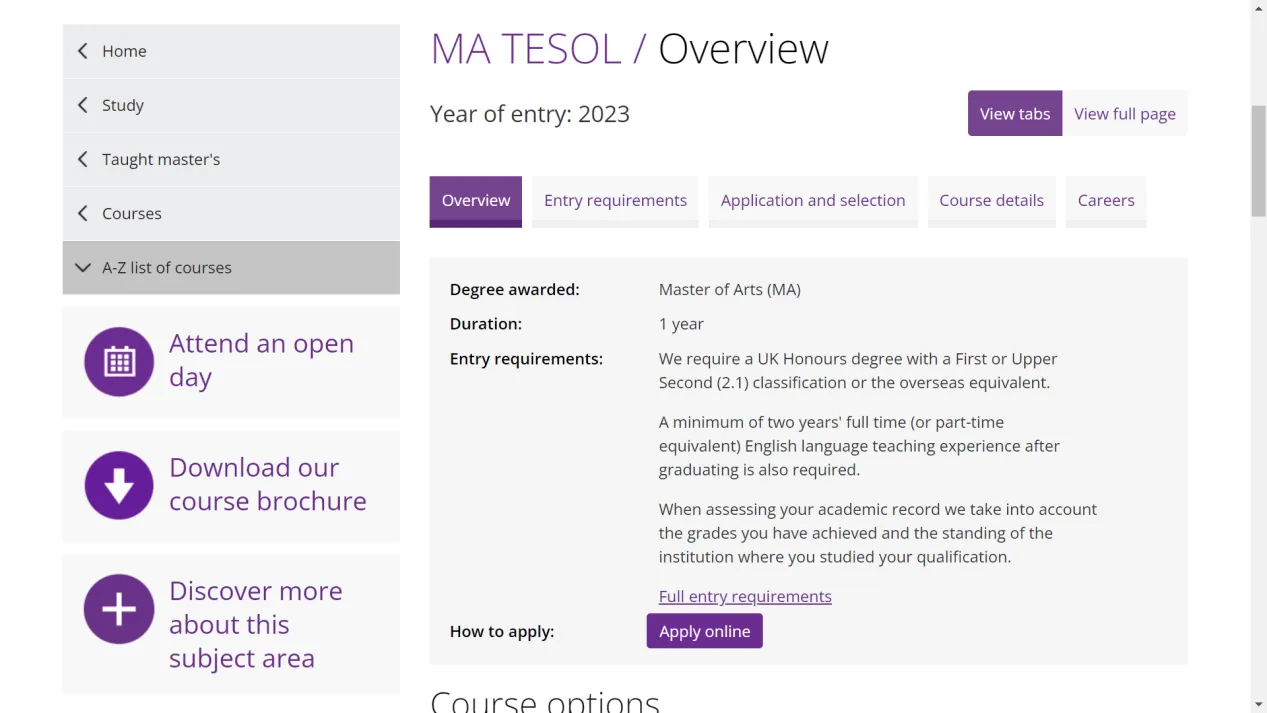
Official website: https://www.manchester.ac.uk/
Finally, we extend our best wishes to hardworking students worldwide who journey far from home to pursue their studies. May you stay true to your original aspirations, bravely face challenges, and ultimately achieve your ideal outcomes.

For more application details and school selection consultation, please scan the QR code below to inquire~