
As studying abroad becomes more popular, the purpose of studying abroad has expanded from academic advancement and further education to better employment. Therefore, many students consider which major leads to better employment when choosing a program. First, let's narrow our focus: studying in the U.S. is always a safe bet. One reason is that U.S. graduate degrees have higher recognition in the job market, and most U.S. graduate programs come with a three-year work visa. Having overseas work experience is an advantage whether you stay in the U.S. or return home.
So which majors offer better employment prospects? The first that comes to mind is coding, but fields like CS, DS, and EE are high-value, high-difficulty, and highly competitive, so applying for them is not easy. Some students also face the challenge of switching majors. Therefore, it's important to make the best choice based on your own situation. Based on current employment trends, we've compiled the following majors for your reference. If you have specific questions, you can also message a CheersYou(清柚教育) advisor.

1. Computer Science
A software engineering degree is one of the easiest degrees to find a job. The employment scope is broad: you can find work in companies specializing in software engineering development or other IT fields, or work as an IT professional within companies across various industries.
2. Finance
A finance degree offers a variety of career options, including positions such as accountant, financial analyst, or financial advisor.
3. Business Administration
Business administration is not only one of the easiest degrees to find a job, but also one of the most popular. Careers in management, human resources, health services management, marketing, and more fall under this major's employment scope.
4. Statistics
A statistics degree can lead to careers as a statistician, financial professional, and other related fields, which are in high demand.
5. Mechanical Engineering
Involving the design and development of various machines, this field has precise talent demand and offers good employment opportunities.
6. Computer Science
Computer science remains one of the most popular and easiest degrees to find a job, with career opportunities in computer repair and technology, information technology, software engineering, and network communications.
7. Economics
Financial analyst, actuary, and market research analyst are common careers for economics majors.
8. Marketing
Although marketing is a relatively common major, studying it abroad carries high value. It assesses a person's creativity and data analysis skills. By understanding consumer behavior, carrying out advertising campaigns, and using market research and statistics, you plan a company's market expansion.
9. Pharmacy
Pharmacy students study biology, chemistry, and other sciences to research and develop drugs. Pharmaceutical scientist and clinical researcher are two common jobs for pharmaceutical science majors.
10. Psychology
As more people focus on mental health, psychologists are in high demand. The number of jobs in this field is increasing, making it a blue-ocean major, and most licensed psychologists earn high salaries.
11. New Media
Online media is the fastest-growing sector in communications and journalism. New media programs combine traditional journalism courses with digital media design and management.
Some schools focus more on computer technology and web design, such as the San Francisco Art Institute; others emphasize communication integration and digital technology, like Indiana University and Purdue University.
12. Bioengineering
Bioengineering combines biology and engineering to solve practical problems in agriculture, food science, and medicine, and is an interdisciplinary field.
Bioengineering programs are often paired with business courses, offering dual degrees in both fields. Many bioengineering programs were originally at the graduate level, but demand for bachelor's degree graduates has been growing recently.
13. Organic Agriculture
In 2006, Washington State University became the first to offer an organic agriculture major, in response to increasing consumer demand for organic food. Many large companies have begun hiring specialists in this area.
The University of Florida also added an organic agriculture major in 2006. Although this major is not yet widely available, some schools have recognized its future development potential.
14. E-Business and Online Marketing
This major focuses on business transactions conducted over the internet, often involving customer communication, employee management, and business partner interactions. According to the U.S. Bureau of Labor Statistics, demand for students in this major will grow significantly faster than the average for new graduates.
15. Human-Computer Interaction (HCI)
HCI is primarily designed to improve people's ability to use high-tech products and to study the impact of technology on individuals and groups. This major is usually a graduate program within computer science departments, but some schools, like the New Jersey Institute of Technology, have started offering undergraduate programs.
16. Nanoengineering
In the nano field (at the molecular level), it studies practical sciences combining physics, engineering, and chemistry. In recent years, supported by the National Nanotechnology Initiative, it has become increasingly prominent. Most schools offer graduate-level programs, but a few, such as Louisiana State University, offer undergraduate programs in nanoengineering.
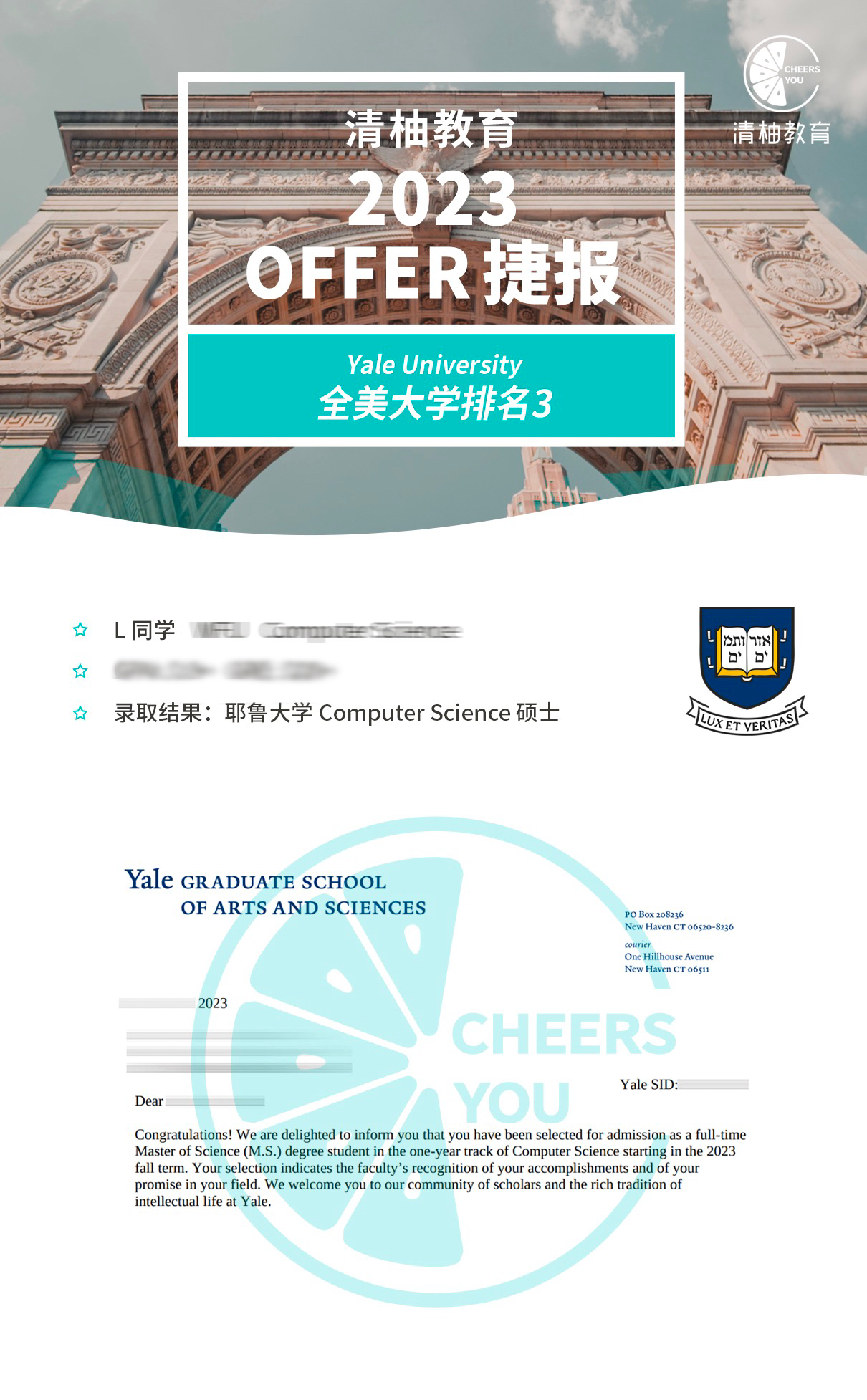
Once you've determined a broad direction for your major, choosing a school becomes much easier. Finally, here are some successful cases of students who received their desired offers.



For more graduate application questions, please scan the QR code below to add a CheersYou(清柚教育) advisor for consultation~