Columbia University has just announced it will no longer participate in the U.S. News undergraduate rankings, becoming the first major university to refuse to provide information to the ranking organization.
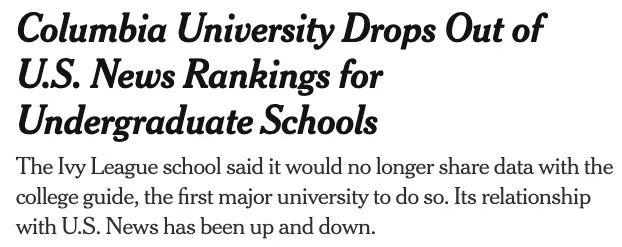
In its official statement, Columbia expressed concerns about the "outsized influence" the rankings play in the undergraduate admissions process and how they compress a university's profile into a composite of data categories, adding that this ranking approach leads to the loss of much important information.
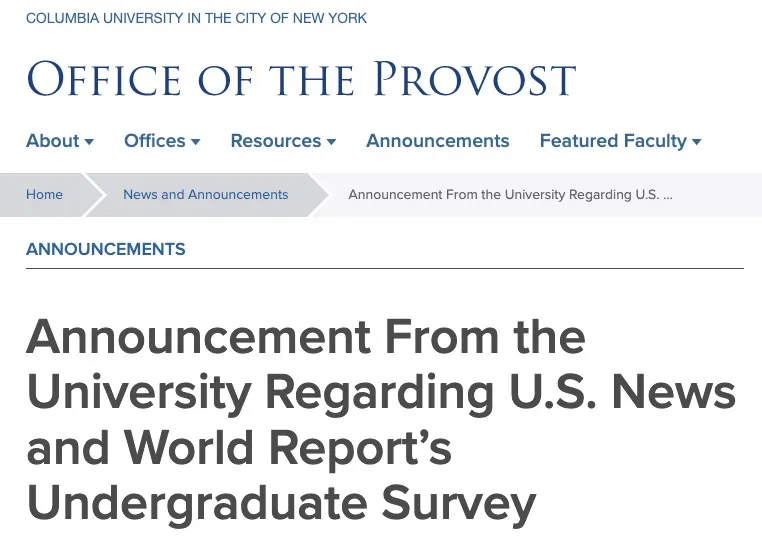
Although this is a true "permanent exit," it is not the first time Columbia has withdrawn from the U.S. News rankings.
.png)
Columbia’s Ranking Data Questioned, Leading to U.S. News Pullout
Last year, Columbia announced it would not participate in the 2023 U.S. News rankings and would not submit any data.
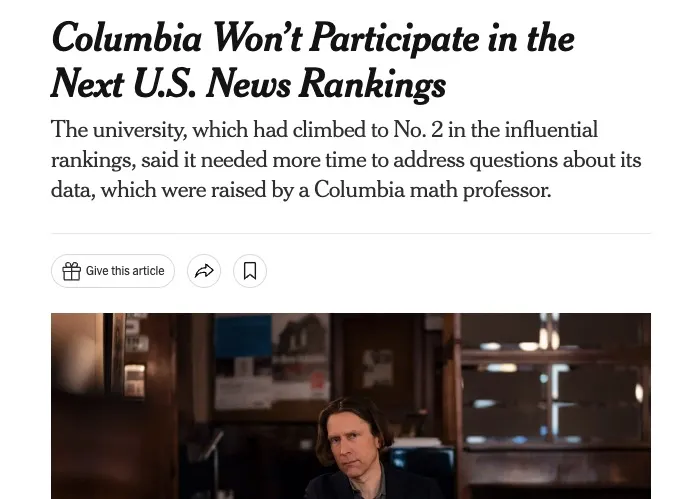
The trigger for that withdrawal can be traced back to a ranking scandal that broke in February of the same year.

This ranking scandal at Columbia stemmed from a professor’s act of “loyalty to the truth above the institution”...
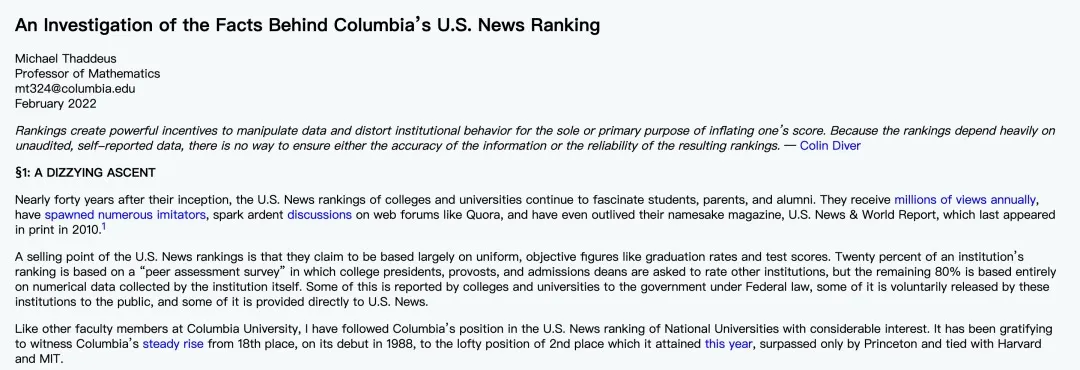
Michael Thaddeus, a professor in Columbia’s mathematics department, published a lengthy report of tens of thousands of words in February, directly accusing the university of submitting false data to U.S. News to boost its ranking.
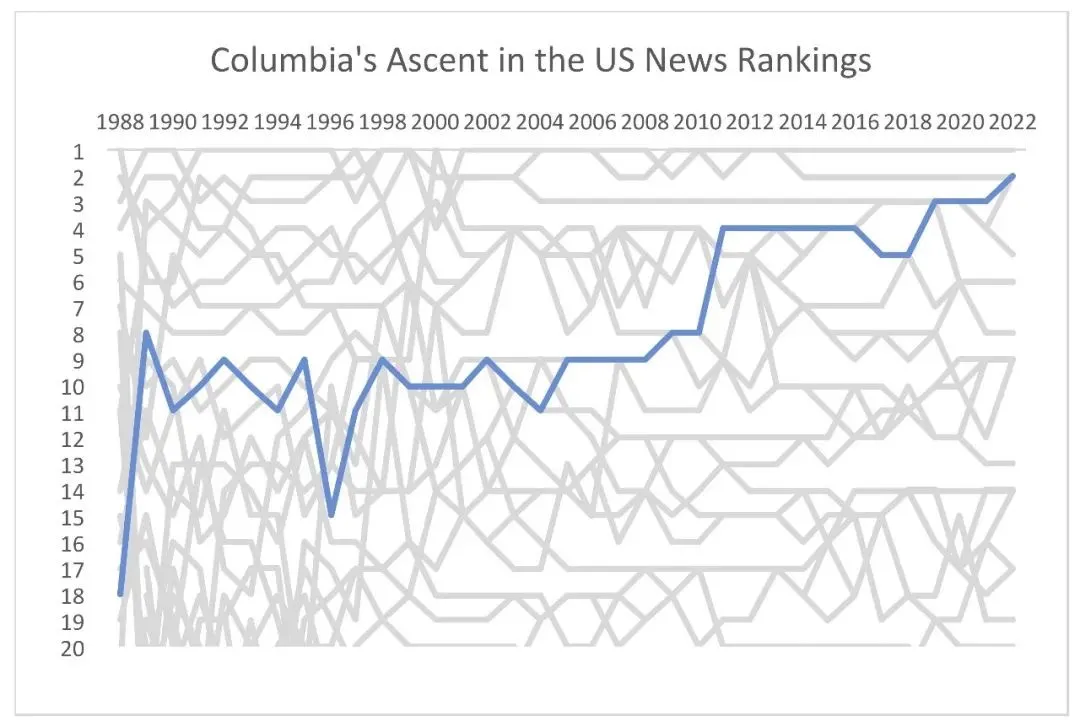
He questioned the accuracy of data reported by Columbia on class sizes, instructional spending, and other metrics, concluding in his report that “several key figures supporting Columbia University’s high ranking are inaccurate, dubious, or highly misleading.”
He also pointed out that while Columbia’s submitted data and its ranking raised red flags, U.S. News itself bore some responsibility. If an institution like Columbia can have unclear or inaccurate data, it easily calls into question the veracity and reliability of the entire ranking system.
He considers the whole concept of university rankings a “disastrous idea” because everyone needs “different things,” and he hoped to challenge the so-called “authority” of rankings through this.
This drama eventually concluded with Columbia deciding to completely withdraw from the U.S. News undergraduate rankings. The university also began publishing a common data set last fall for students and parents to reference.
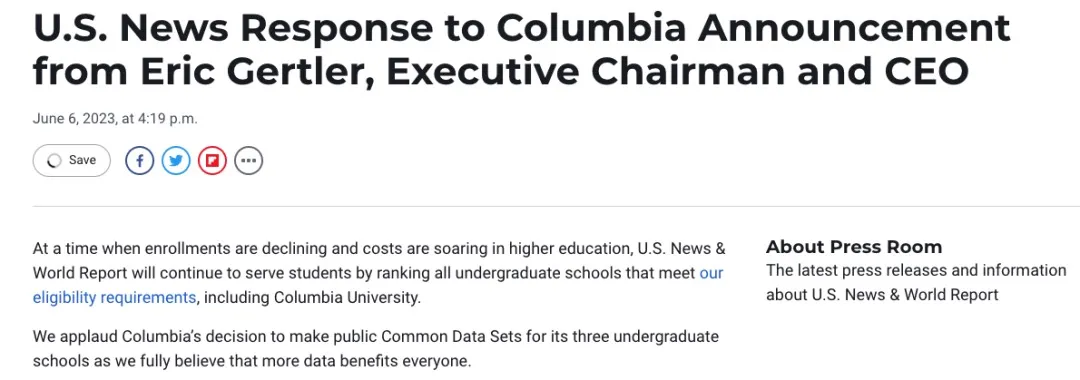
In response to Columbia’s permanent departure, U.S. News used its most polite language to essentially say “farewell and good luck.”
Universities Drop Out in Droves, U.S. News Continues to Crumble
It’s worth noting that U.S. News has had a very rough time since last year.
On one hand, U.S. News dragged Columbia, which had already withdrawn, back into the rankings by forcing it to #18, damaging the university’s reputation. On the other, U.S. News has faced a backlash from American universities, triggering a massive wave of pullouts.
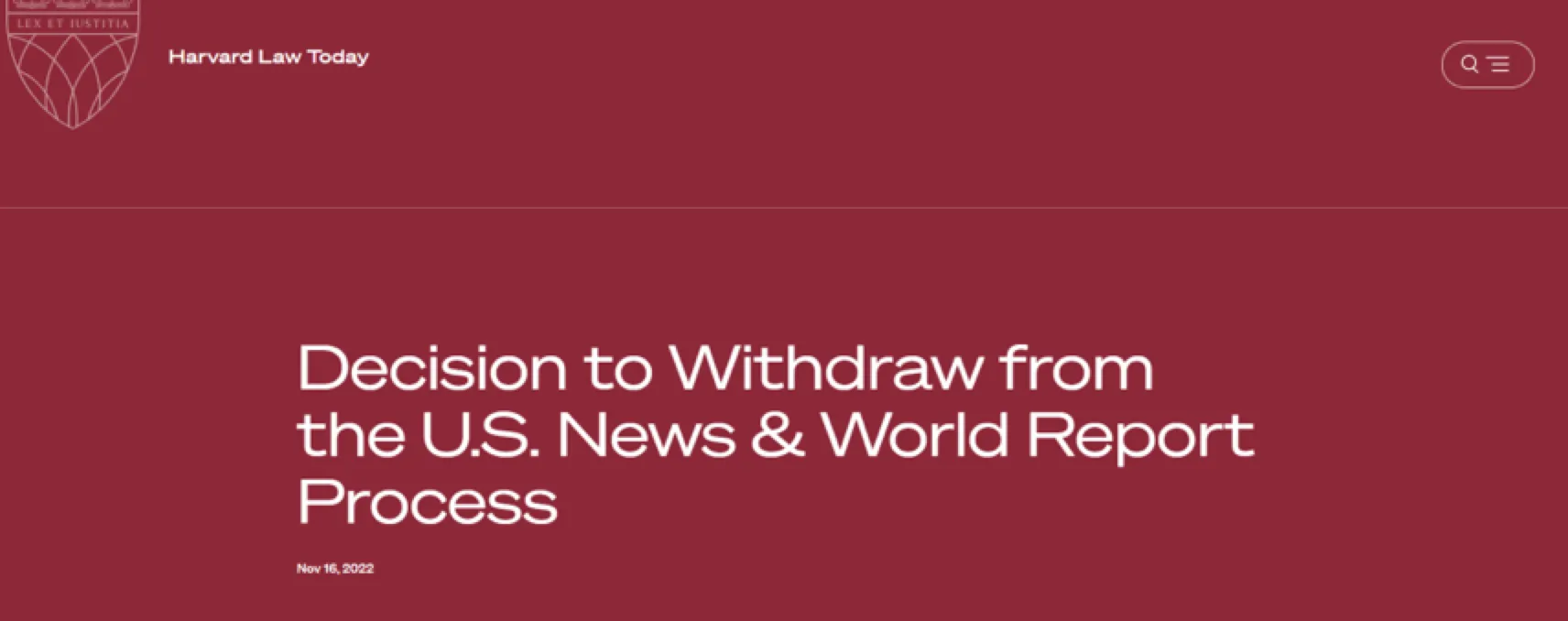
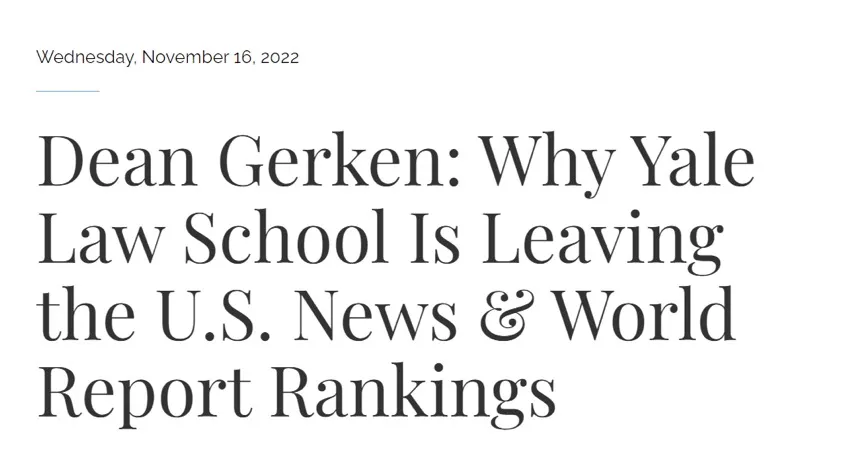
Harvard and Yale law schools, the top two in the rankings, were the first to simultaneously announce their withdrawal from U.S. News rankings. Shortly after, law schools at Stanford, Columbia, UC Berkeley, Duke, Georgetown, and other elite institutions also announced their exit.
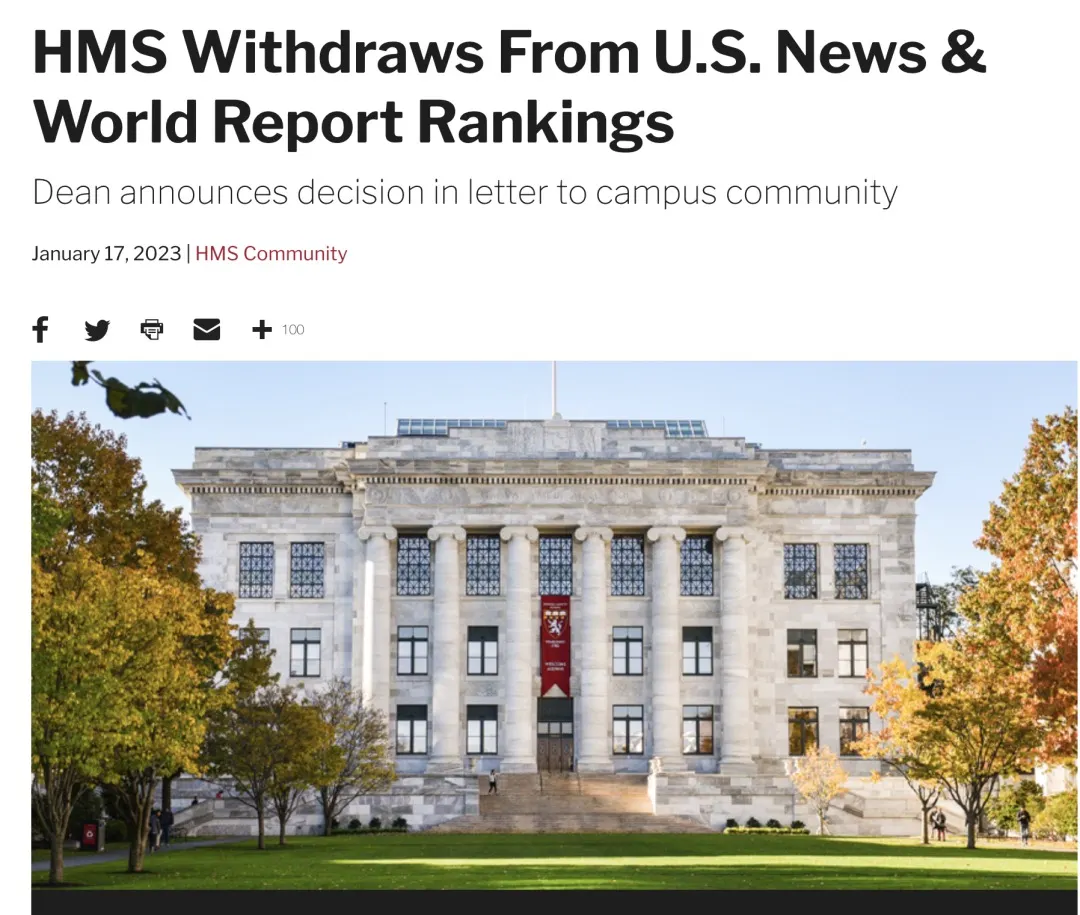
Then, Harvard Medical School became the first to pull out of U.S. News rankings. Medical schools at Columbia, Stanford, the University of Pennsylvania, the University of Chicago, and Northwestern soon followed suit.
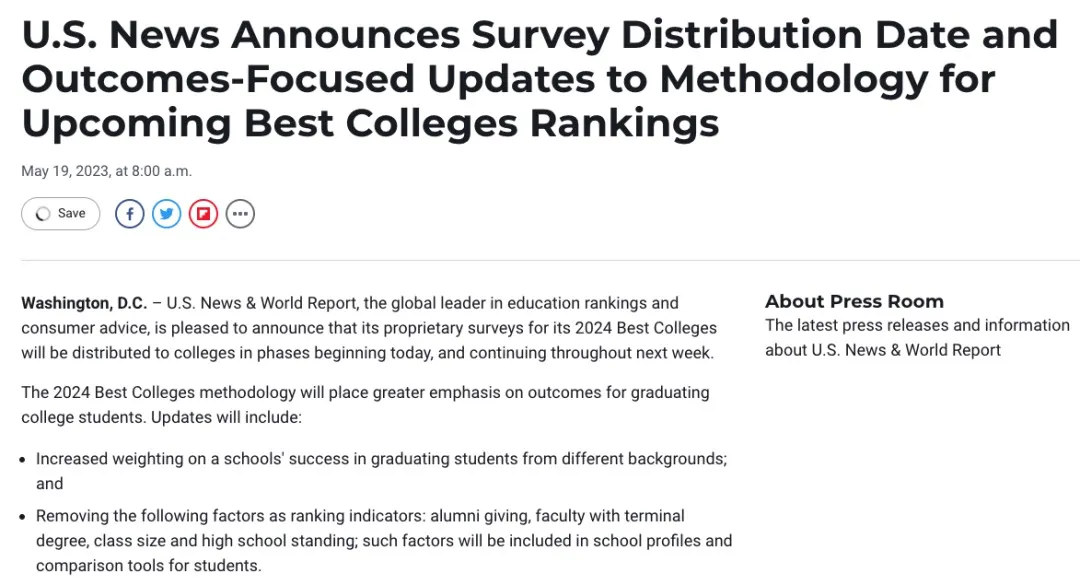
Despite this wave of defections, U.S. News maintained a surface attitude of “you can pull out, but I’ll keep ranking,” yet quietly adjusted its methodology for the 2024 Best Colleges rankings released this year, including:
1. Increasing the weight of a school’s success in educating students from diverse backgrounds
2. Removing ranking factors such as alumni giving, faculty with terminal degrees, class size, and high school standing
After Columbia’s complete exit, will more universities follow suit? Will U.S. News continue to forcibly rank schools that have withdrawn? The final act will be revealed when the rankings are published this September.
View Rankings Rationally; “Ranking Obsession” Is Misguided
For years, authoritative ranking publications like U.S. News and QS have released annual lists of the best American or global universities, which serve as key reference points for parents and students when choosing schools.
Some domestic companies even explicitly require applicants to be from a top-50 global university, fostering a frequent “ranking obsession.” In reality, rankings are only one reference and cannot prove whether a school is the best fit for you.
Even though these rankings incorporate multiple indicators across various dimensions, relying solely on cold quantitative numbers may not fully reveal a school’s true value.

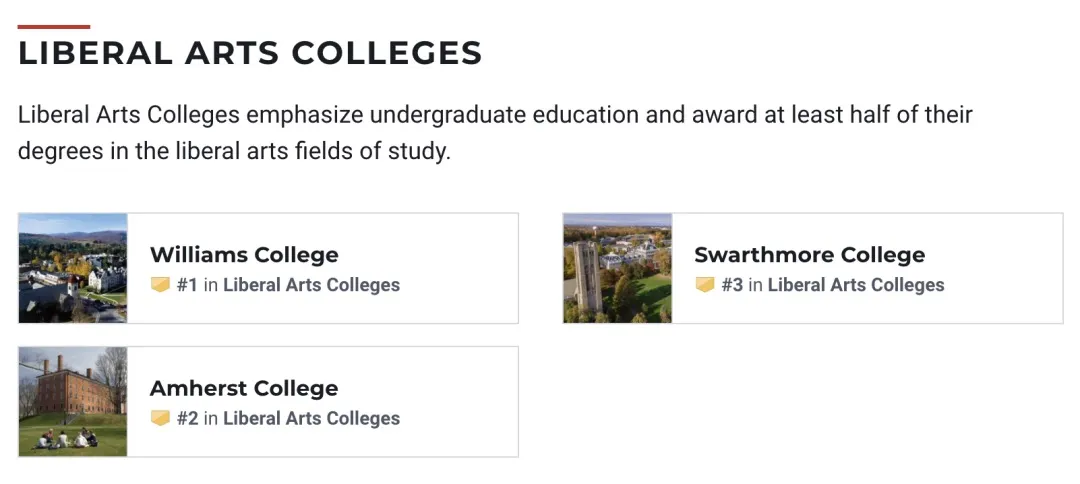
For example, many liberal arts colleges offer far fewer majors or courses than large research universities, so their achievements in certain areas may not stand out. However, this does not mean such a college is not worth attending.
Most public universities charge lower tuition and largely rely on state or federal subsidies to sustain daily operations; their alumni donations and instructional spending cannot compare to those of private universities.
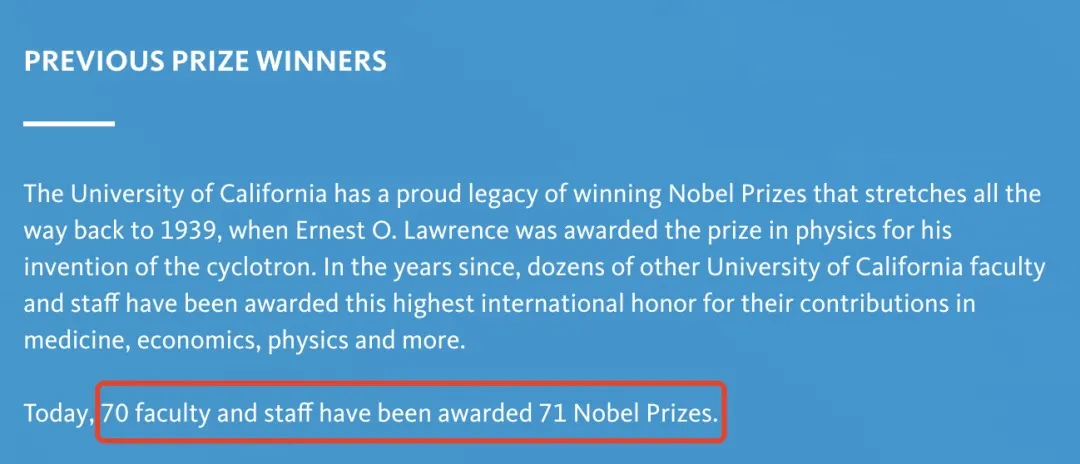
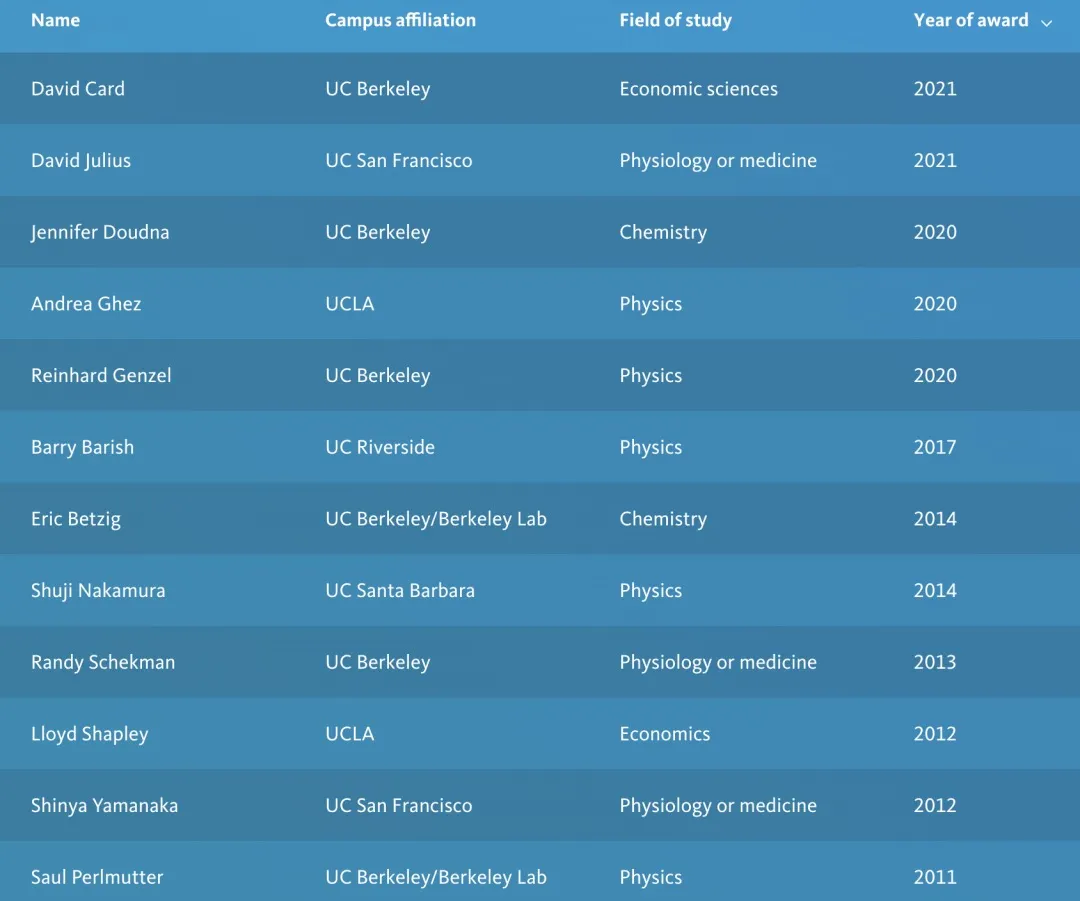
Yet this does not negate the fact that many public institutions possess top-tier faculty and educational resources. The UC system alone has produced over 70 Nobel laureates, a testament to its research caliber.
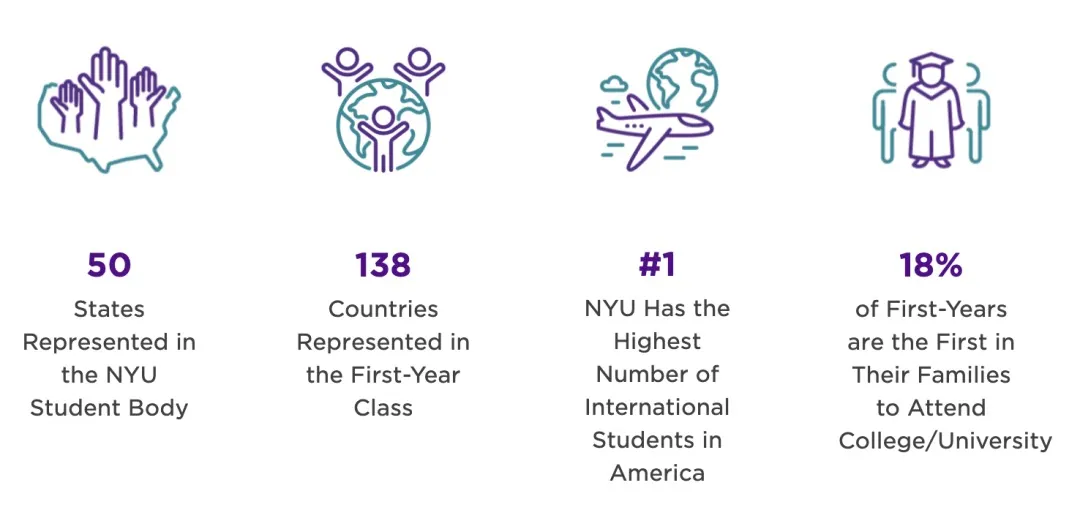
Beyond rankings, factors to consider when applying to study abroad should be multidimensional and comprehensive, including curriculum, faculty, location, campus culture, international student ratio, and more.
Every student and parent should have their own internal yardstick, weighing the factors most important to them when holistically evaluating schools and programs, and ultimately choosing the one that suits them best.
To some extent, ranking systems create unnecessary anxiety and vicious competition. University rankings actually span different dimensions, not just national or global rankings but also public university rankings, liberal arts college rankings, program-specific rankings, student satisfaction rankings, and more.
When consulting rankings during school selection, you should also look into your intended field of study or interest to assess each institution’s standing in that area, rather than blindly referencing a single list.
We still hope everyone will not be overly constrained by rankings—choosing a school you truly love and that fits you best is what matters most!