As the leading countries in the financial industry, the United Kingdom and the United States naturally have highly popular finance programs. This article will take the undergraduate and graduate finance programs of the London School of Economics and Political Science (LSE) in the UK and Columbia University (CU) in the US as examples to deeply explore the differences and commonalities of finance programs in the two countries, analyze the characteristics and career prospects of popular finance programs in the UK and US, covering fields such as investment banking, risk management, fintech, and asset management. For details on graduate application, add CheersYou(清柚教育) advisor WeChat: qingyouge23!

I. The London School of Economics and Political Science
- Undergraduate Program
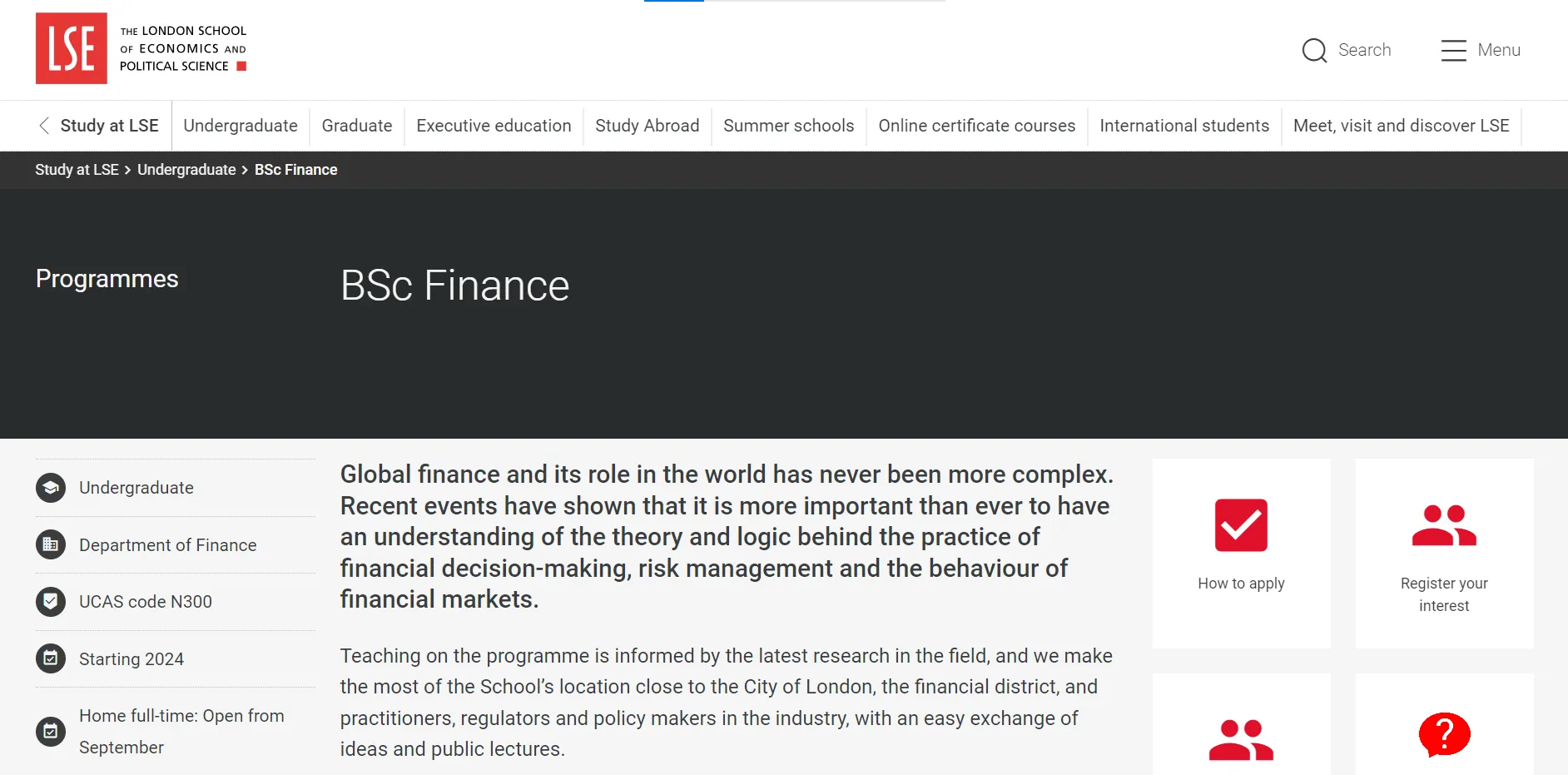
Program link:
https://www.lse.ac.uk/study-at-lse/Undergraduate/degree-programmes-2024/BSc-Finance
This degree involves studying courses worth 12 units over three years. The first year provides foundational knowledge in finance and develops necessary quantitative skills. The second year focuses on a solid grasp of core analytical methods in finance and financial economics, and applies them to a range of issues. The third year delves deeply into knowledge of various financial subfields.
Including admission requirements for the bachelor's program:
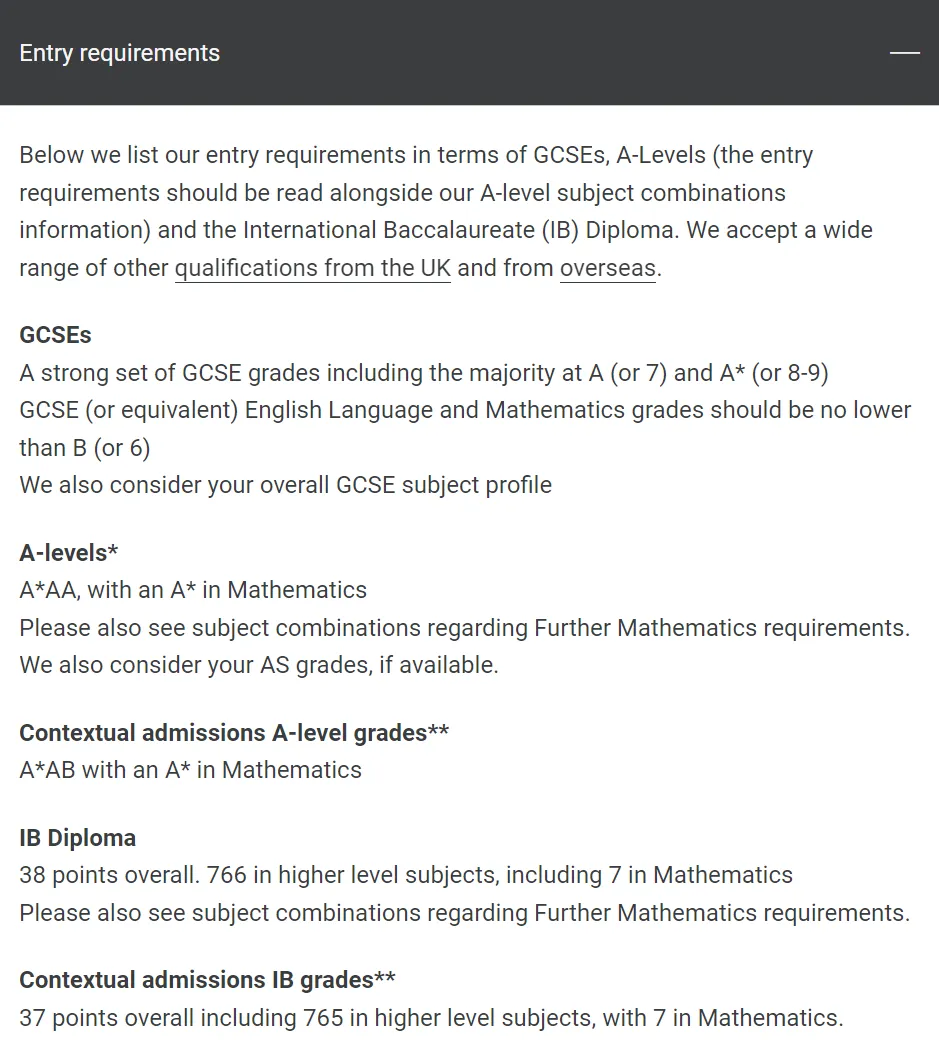
Admission requirements for this degree include assessments in GCSE (General Certificate of Secondary Education), A-Level, and International Baccalaureate (IB).
- Graduate Programs
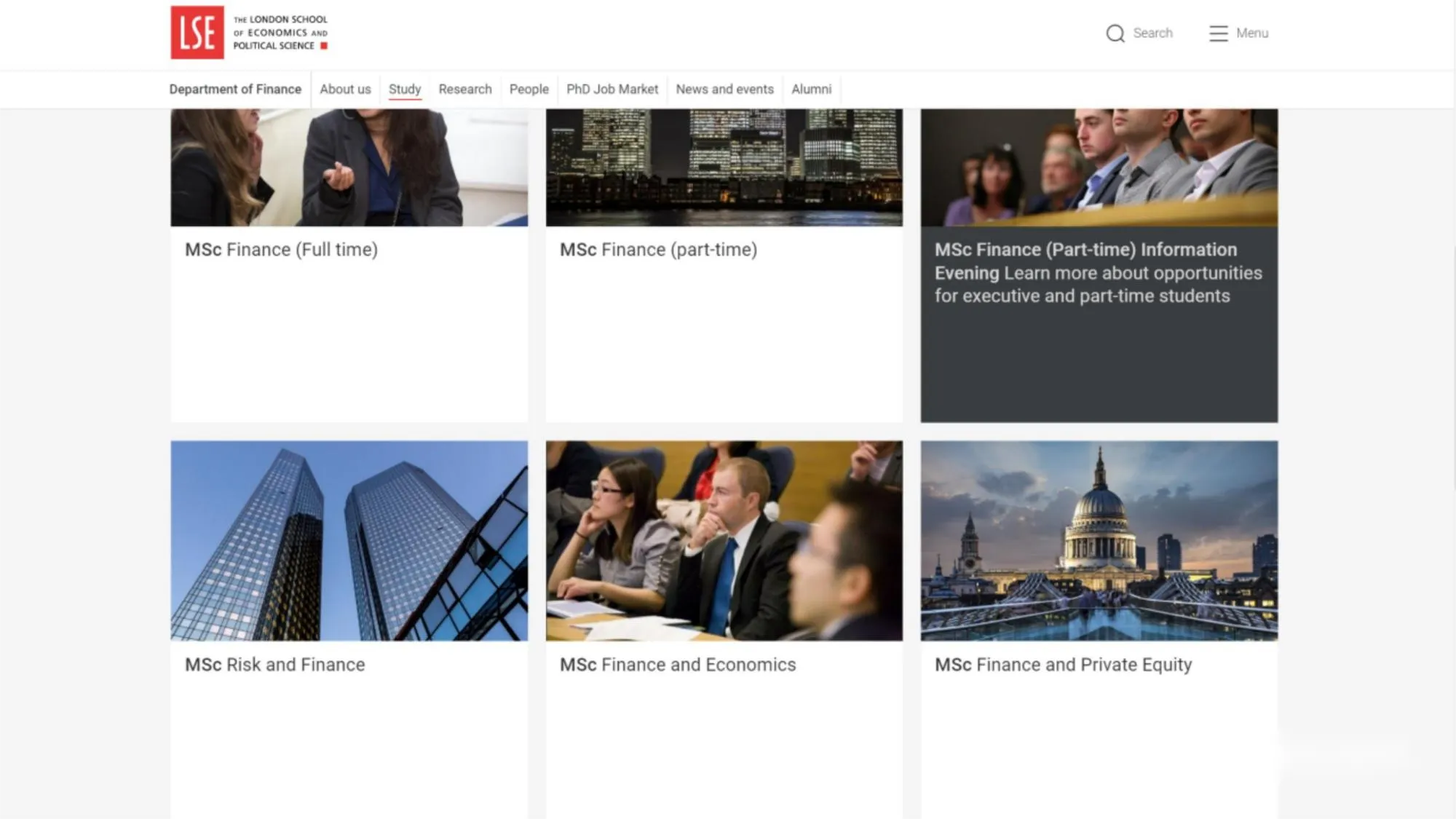
Under the Department of Finance at the London School of Economics (LSE), besides part-time programs, we can find four full-time programs:
- MSc Finance: Study the two core courses of Corporate Finance and Asset Markets. Corporate Finance covers companies' investment decisions and cost of capital, related to financial structure and market environment. It delves into important financial decisions such as dividend policy, listing, mergers and acquisitions, and financial restructuring. Asset Markets introduces the latest applications in fixed income, equity, and derivatives markets.
- MSc Risk and Finance: This core course is compulsory for students, covering risk and regulation, financial markets and regulation, financial risk analysis, strategy, control and risk in organizations, and risk analysis and the psychology of risk-taking.
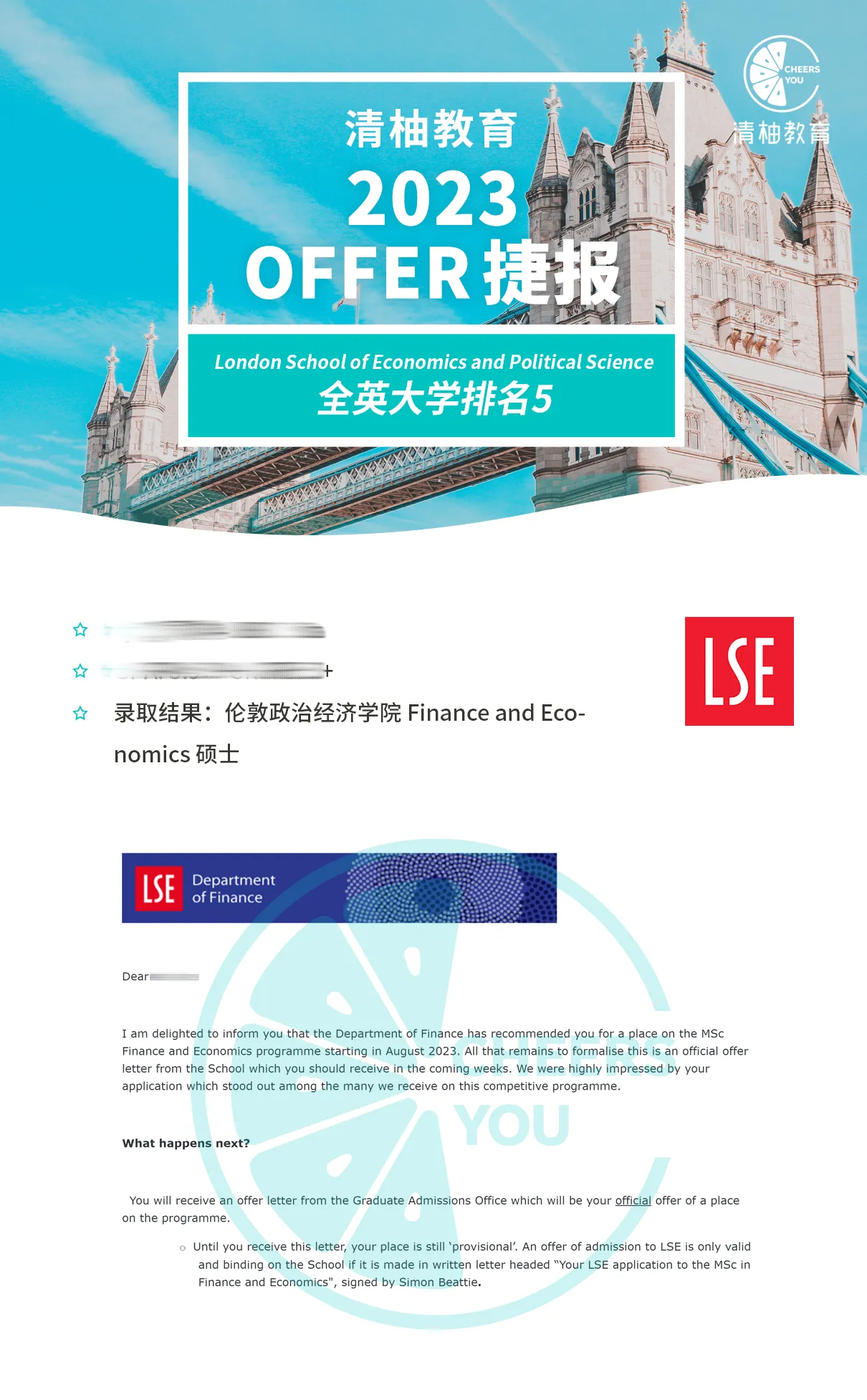
- MSc Finance and Economics: Core courses studied include Financial Economics, Financial Econometrics, and Microeconomics. Financial Economics studies investor behavior, market equilibrium, and asset pricing. Financial Econometrics focuses on empirical research techniques in economics and finance. Microeconomics develops the basic tools for analyzing resource allocation problems.
- MSc Finance and Private Equity: Core courses studied include Corporate Finance, Asset Markets, and Private Equity.
Graduate destinations:
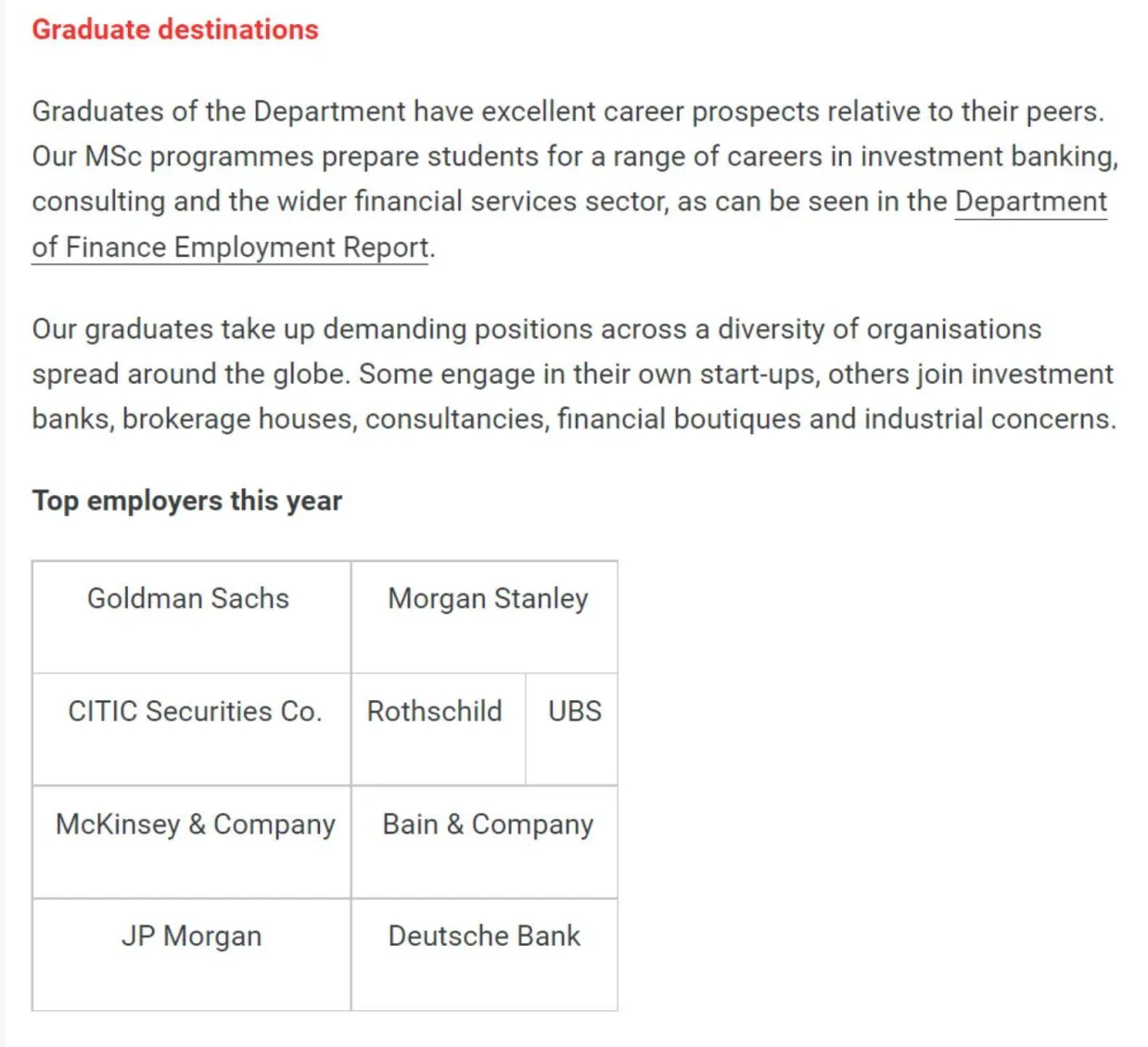
Graduates work as financial analysts (CFA), wealth managers (CWM), fund managers, actuaries, securities brokers, stock analysts, financial consultants, etc., at companies like Goldman Sachs, McKinsey, CITIC Securities, Bain, J.P. Morgan, and others.
II. Columbia University
- Undergraduate Programs

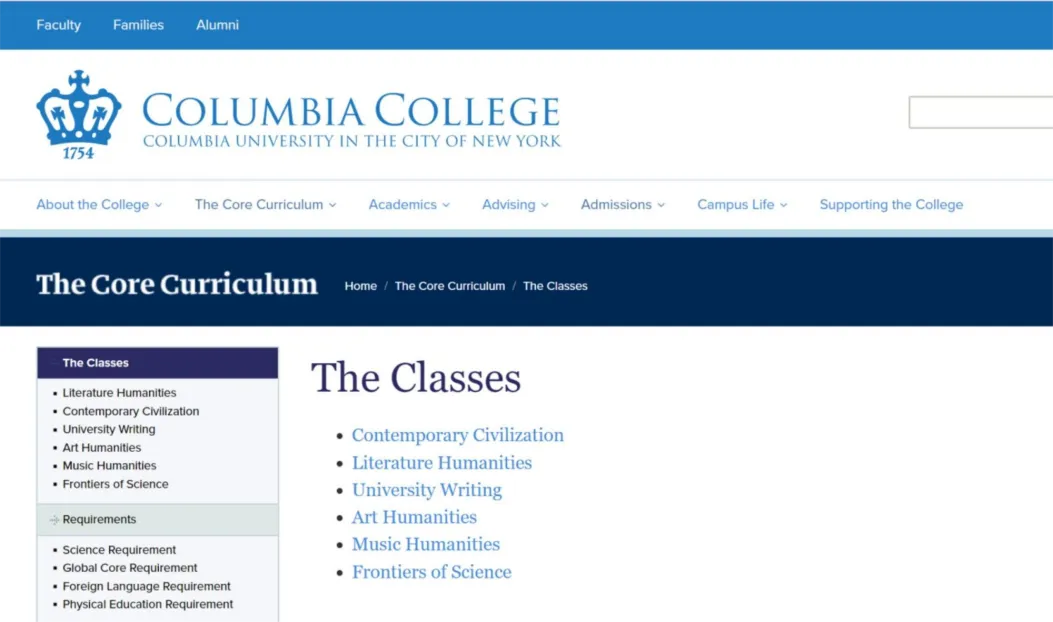
Columbia University only accepts new undergraduate applications through Columbia College and the School of Engineering; other colleges do not accept undergraduates. Neither Columbia College nor the School of Engineering currently offers a pure finance program.
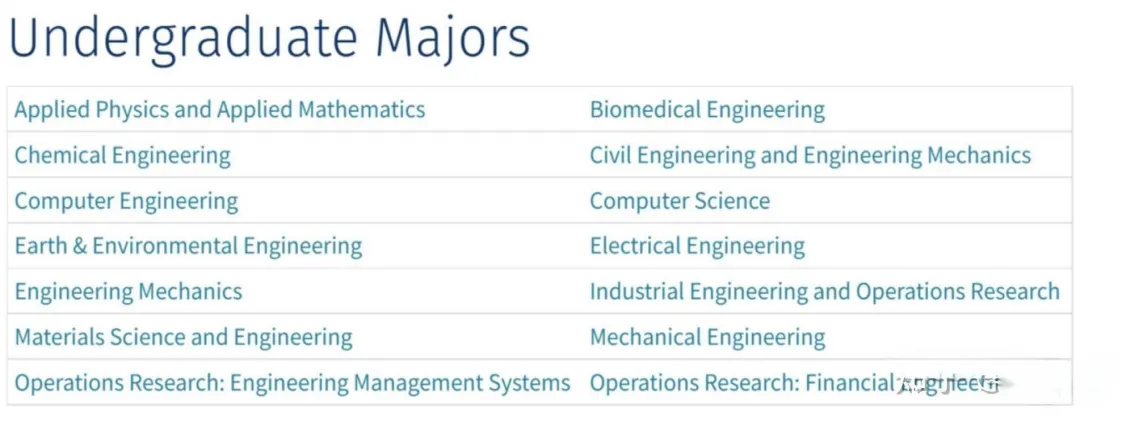
Within the School of Engineering, the program most relevant to finance is Operations Research: Financial Engineering.
- Master's Programs
Programs under Columbia Business School include:
Master of Science in Marketing Science offers a STEM-eligible curriculum focusing on marketing analytics. The program is designed to cultivate marketing researchers who can add value to marketing analytics in various organizations, including media and advertising, consumer goods, omnichannel retail, and financial services.
Master of Science in Financial Economics is a two-year, STEM-eligible master's program offered by the Finance Division of Columbia Business School. It provides academically distinguished and industry-oriented students with the opportunity to acquire rigorous graduate-level financial acumen.
Masters of Science in Accounting and Fundamental Analysis is a three-semester STEM-designated program. It focuses on active fundamental investing, with an emphasis on the application of accounting information in investment analysis. Students are exposed to the latest research, giving them an edge as investors. Research insights and quantitative skills are developed at the PhD level and practically applied in areas such as equity analysis, credit analysis, and investment consulting.
Graduate destinations:
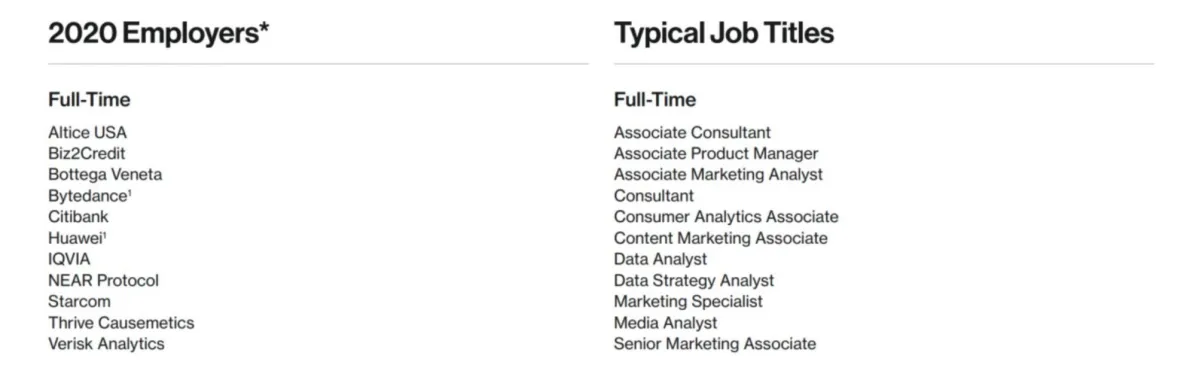
According to Columbia University's 2020 employment report, graduates have a variety of options in the job market. They can work at companies like ByteDance, Huawei, Citibank, Starcom, CITIC Securities, in positions such as data analyst, marketing, product manager, and consumer insights consultant.
All three programs are STEM-designated, and graduates can obtain a 3-year OPT (Optional Practical Training) opportunity to gain work experience in the US. During this period, they can choose to stay and work in the US or return to their home country, generally having greater advantages. It is worth mentioning that even non-STEM programs in the US allow international students to have 1 year of OPT after graduation. Therefore, gaining overseas work experience after studying in the US is very valuable.
III. Summary
There are differences in program divisions, curriculum design, and future career directions between different countries and schools, each with unique advantages.
For example, graduates from US institutions can choose to stay and work in the US for a period to gain overseas experience, while in the UK it is relatively difficult to stay and work after graduation. However, the UK study period is shorter, with undergraduate (3-year) and postgraduate (1-year) programs being more compact compared to the US. Although the time is short, the quality of knowledge acquired remains high. Moreover, UK degrees are highly recognized in China, and the overall cost is relatively lower.
Therefore, before making a choice, we should first clarify our own needs and comprehensively consider various factors to make a better decision.
For more application details and school selection advice, please scan the QR code below to consult~