
Recently, the news that a "Chinese-American boy with an SAT score of 1590 was rejected by six elite universities" has gone viral in the study abroad community.
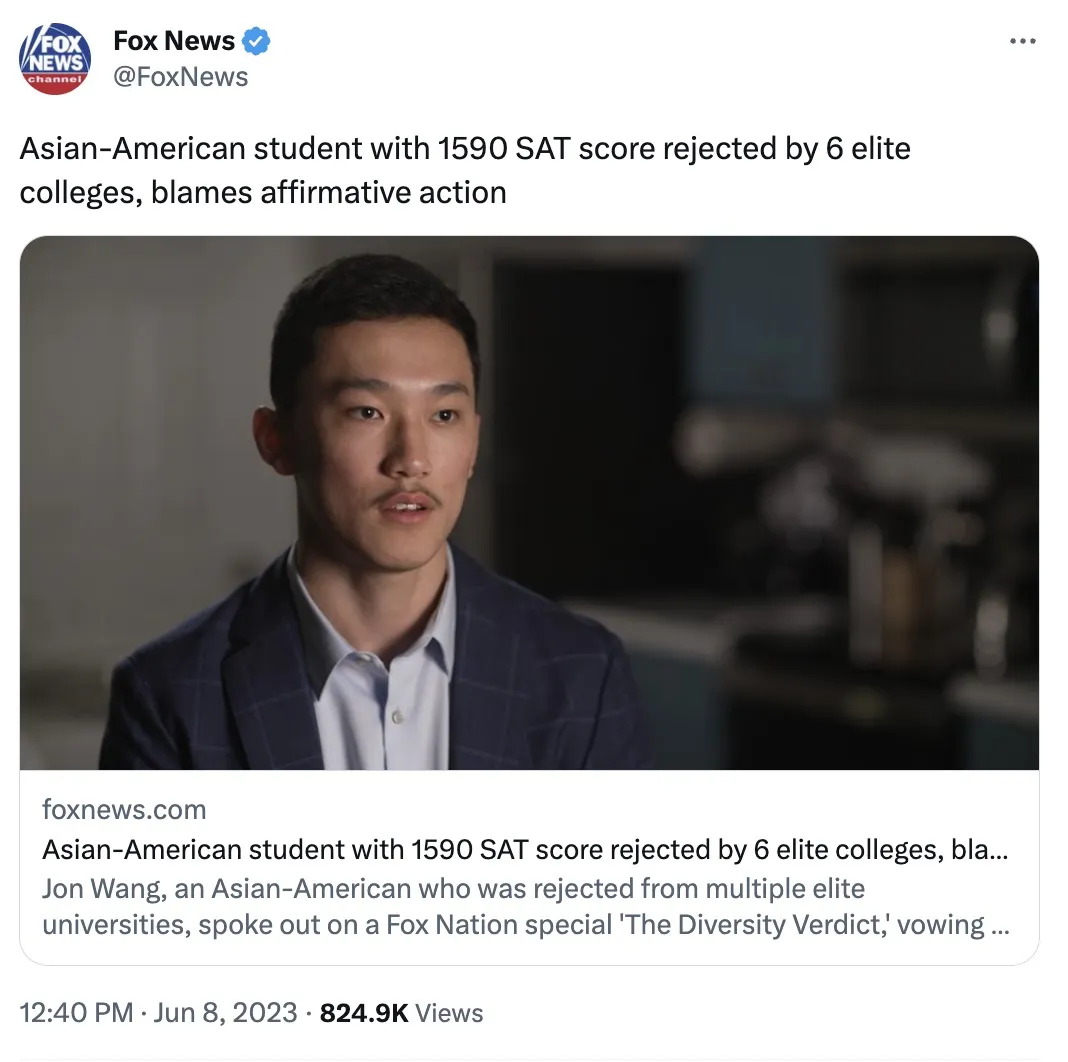
Some netizens commented that high SAT scores among Asian students are common, and that top US colleges don't like nerds who only know how to study.

However, he is actually not a nerd at all.
Perfect Applicant Rejected by All Elite Schools
18-year-old Jon Wang is a Chinese-American student from Florida. His SAT score was 1590 (out of 1600), with a perfect score in math. He had a GPA of 4.65 and received the AP Scholar with Distinction award multiple times, truly a top student.
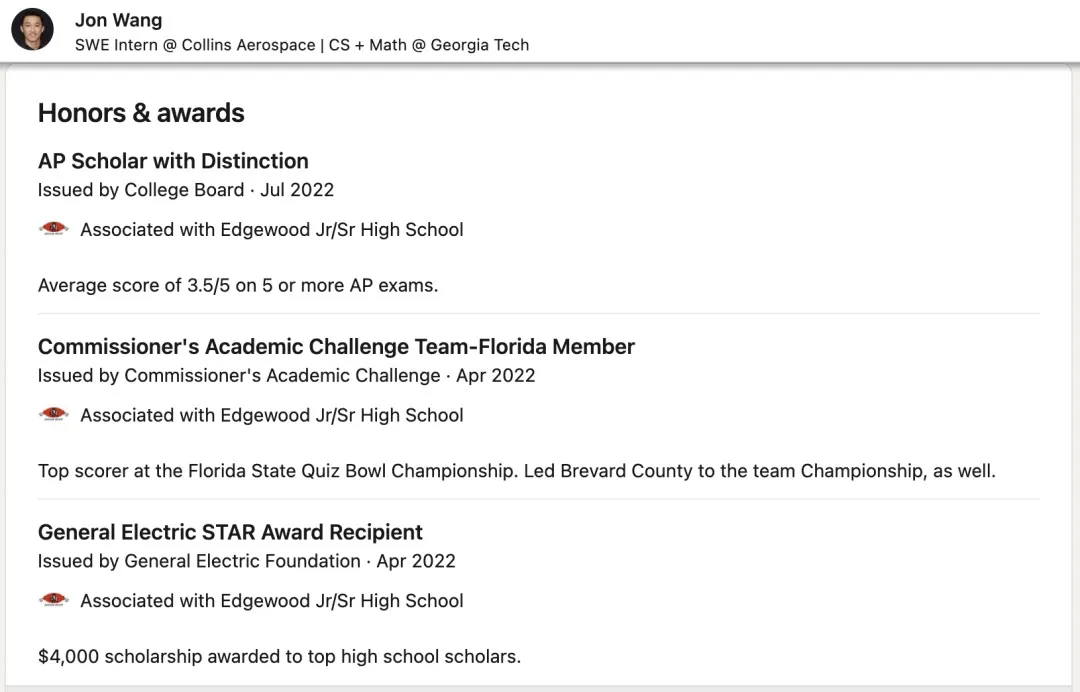
Not only outstanding academically, his extracurricular activities were also impressive. Jon was captain of his high school golf team, winning individual and team championships in regional golf tournaments in Florida, and was covered by local media.

In 2021, he received the Rolex AJGA (American Junior Golf Association) Scholastic All-American title, awarded to only 44 students nationwide.

Additionally, Jon was the top scorer in Florida's QuizBowl and won the team championship. He is proficient in programming languages like Java and Python and is the co-founder of the tech startup Wave Flight.
In many people's eyes, he seemed a shoo-in for any top US university.
However, Jon applied to six prestigious schools—MIT, Caltech, Princeton, Harvard, Carnegie Mellon, and UC Berkeley—and was rejected by all of them!
In the end, he went to Georgia Tech, ranked 44th in the nation, to study computer science.
SAT near perfect, golf champion, tech startup founder... How could such a perfect resume lead to unanimous rejection from top US colleges?
Jon was disappointed and puzzled by this outcome. He consulted several admissions consultants, who concluded that Asian students have a harder time getting into these top US universities.

He attributed his rejection to the controversial Affirmative Action: "With the same application materials, the chance of being admitted to a top school is 20% for Asian students, compared to 95% for African American students."

So, is it true that Asian students have a harder time getting into top colleges, as Jon said? The book "Cracking College Admissions" published by Princeton Review also confirmed Jon's concerns.
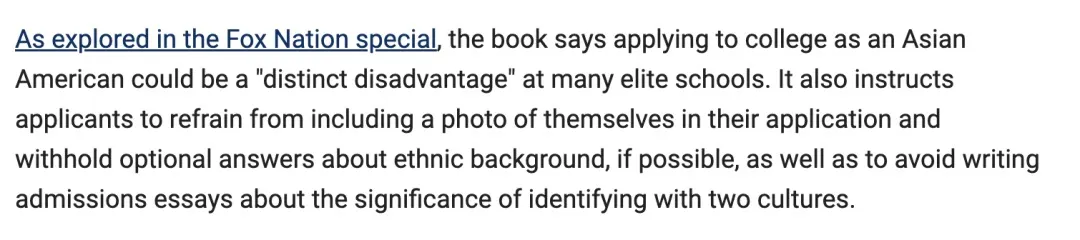
A passage in the book mentions that Asian students are too academically strong, causing many schools to worry they might admit "too many" Asian students, which would harm campus diversity.
Therefore, Asian applicants to elite schools may face a "clear disadvantage." The book advises Asian applicants not to provide their photo and to avoid revealing information about their ethnic background as much as possible.
This is not groundless at all.
Remember the story we wrote before about "Asian posing as African American gets into any top medical school"?
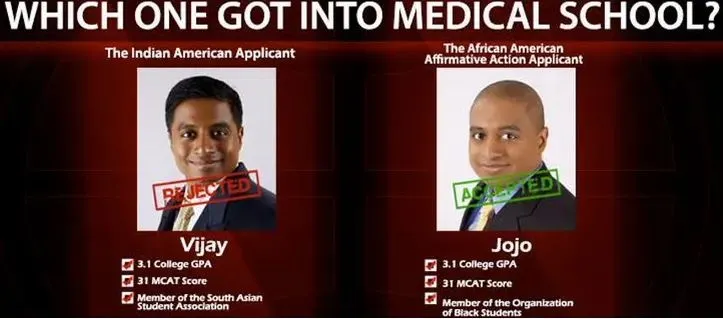
With a GPA of 3.1 and an MCAT score of 31, he would normally have almost no chance at top US medical schools. But by posing as African American, he astonishingly received interview invitations from 11 top medical schools, including Harvard, UPenn, Columbia, and Washington University.
He eventually entered the Saint Louis University School of Medicine and wrote about this absurd experience in his book "Almost Black," which caused a nationwide sensation upon publication.
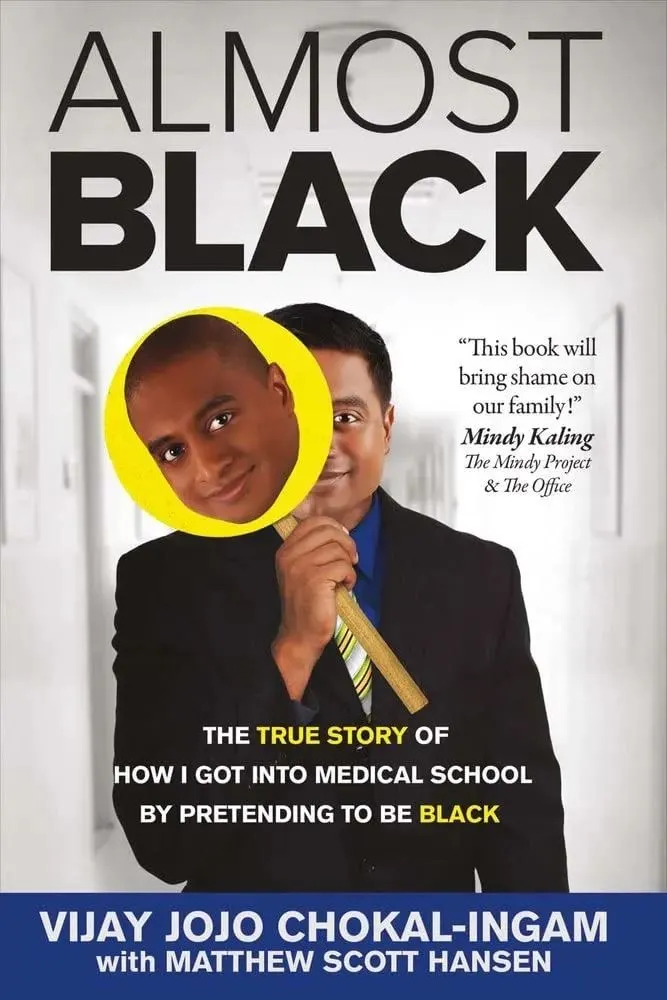
One can imagine how outrageous Affirmative Action is.
Some netizens joked that this is essentially "systemic racial discrimination."

The Controversial Affirmative Action
Affirmative Action in US college admissions, also known as "positive discrimination," refers to measures designed to prevent discrimination against minority or disadvantaged groups based on "color, religion, sex, or national origin." By giving preferential treatment to these groups, it aims to correct discrimination and achieve fairness.
Data from Ballotpedia shows that about 20% of public universities consider race in their admissions process.
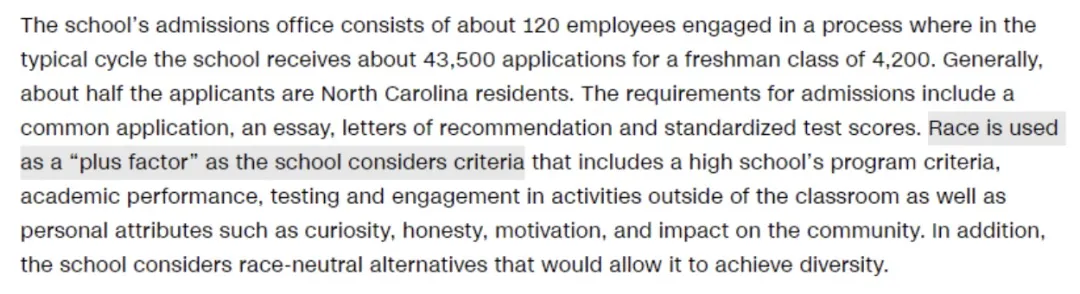
Many universities, including Harvard and the University of North Carolina, state that using "race" as one factor in holistic admissions is necessary to promote campus diversity. UNC even treats "race" as a plus factor in admissions:
However, in recent years, challenges to Affirmative Action have been growing.
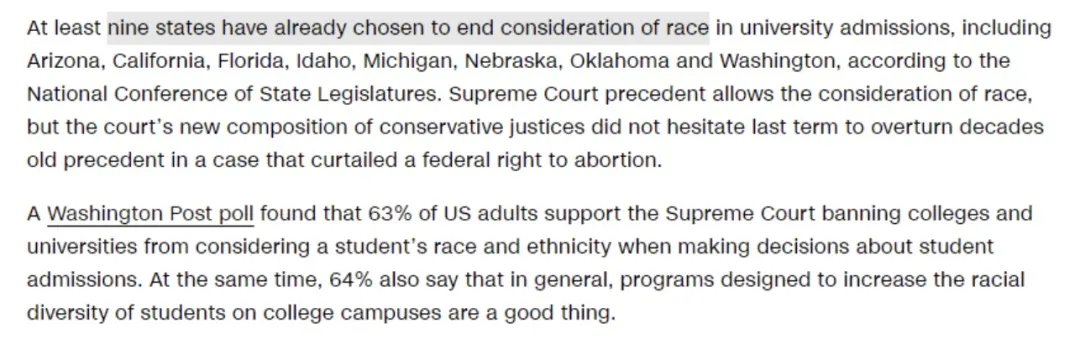
A Washington Post poll shows that 63% of Americans support the Supreme Court banning the consideration of race in college admissions. Currently, at least nine states, including California, Florida, Michigan, and Washington, no longer consider race in public university admissions.
The Chinese-American top student Jon mentioned earlier is a member of the anti-Affirmative Action advocacy group Students for Fair Admissions (SFFA). SFFA is the organization behind the lawsuits against Harvard and UNC over alleged discrimination against Asian Americans in admissions.
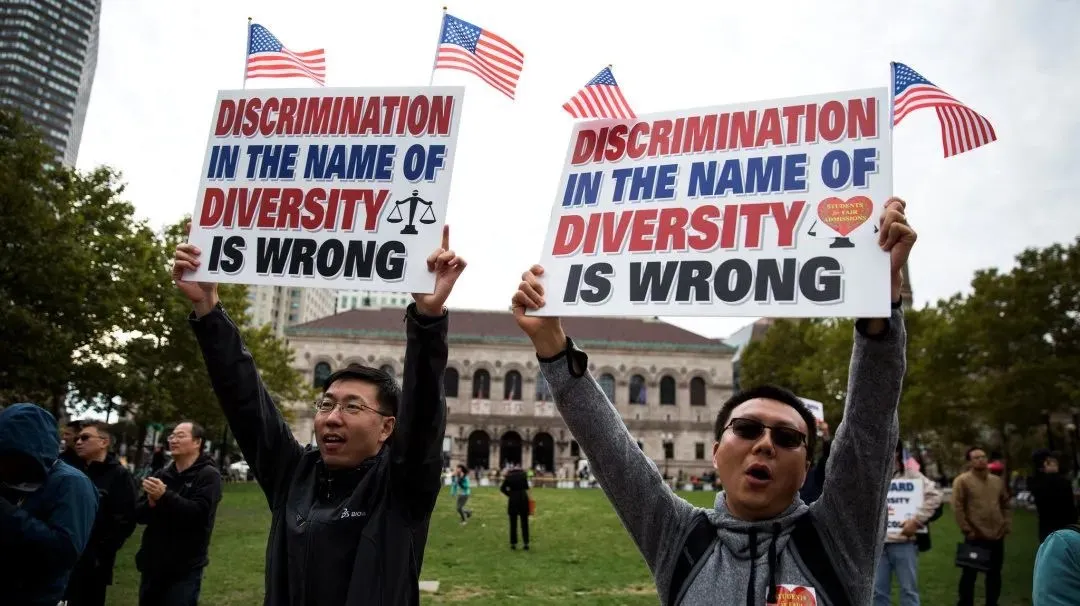
SFFA's tug of war with Harvard has lasted nearly ten years. As early as 2014, SFFA sued Harvard, accusing the school of systematically favoring other racial groups over better-qualified Asian applicants in previous years.
Under the same application conditions, the admission rate was 25% for Asian students, 36% for white students, and as high as 77% and 95% for Hispanic and African American students, respectively.

By analyzing years of application data from 160,000 students, SFFA found that Asian students were treated unfairly: Harvard gave Asian applicants the lowest personal ratings without even meeting them.
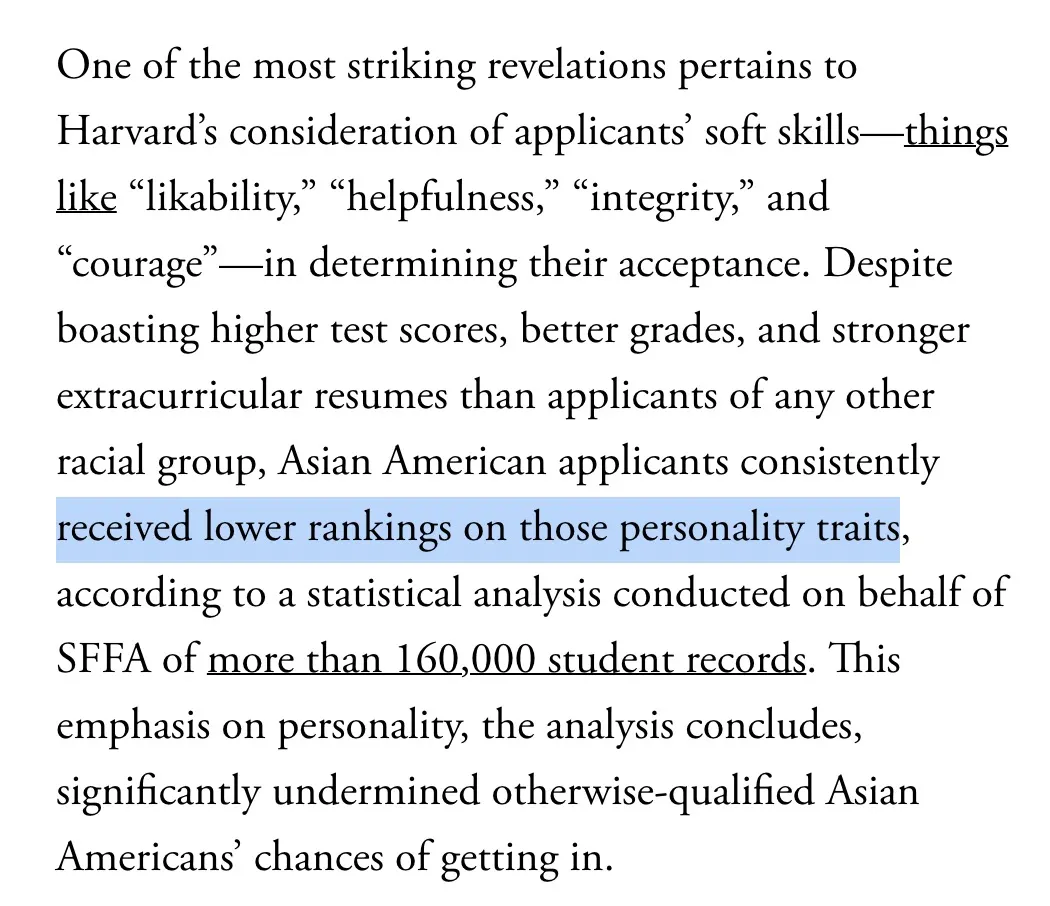
SFFA accuses Harvard of "discriminating against Asian Americans," violating Title VI of the Civil Rights Act. The accusation against UNC is that the school refuses to adopt "race-neutral alternatives."

If SFFA wins either the Harvard or UNC case, it will shake the influence of Affirmative Action.
This case, arguably the most sensational in American education, was heard by the Supreme Court late last year, and a decision is expected in July this year.

US universities have been wavering between merit-based admissions and fairness.
On one hand, elite universities pursue excellence and need to select the best of the best; on the other hand, huge economic disparities among racial groups require specific policies to open the doors of top schools to disadvantaged groups, ensuring fair competition.
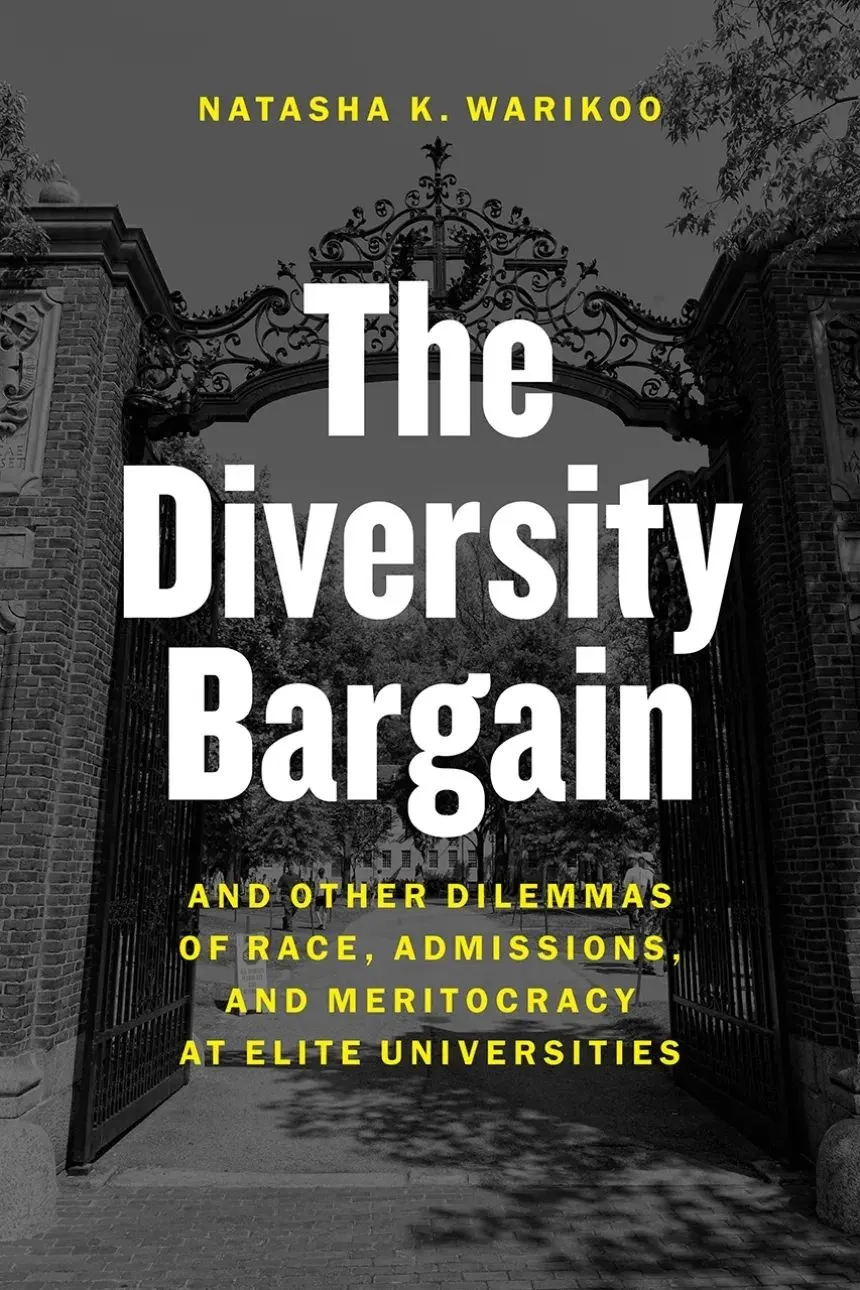
So the surreal reality is that whether it's African American or Latino students from the ghetto, or silver-spoon heirs, they both have huge advantages when applying to US universities.
However, Asian students caught in the middle are the ones being sacrificed.

The "Unspoken Rules" of Elite College Admissions
In fact, in US universities that emphasize educational equity, "unspoken rules" are ubiquitous.
Athletic recruits, legacy students, children of faculty, and those on the dean's list—these ALDC (Athletes, Legacies, Donor-related, Children of faculty) groups all enjoy preferential admission to top schools.
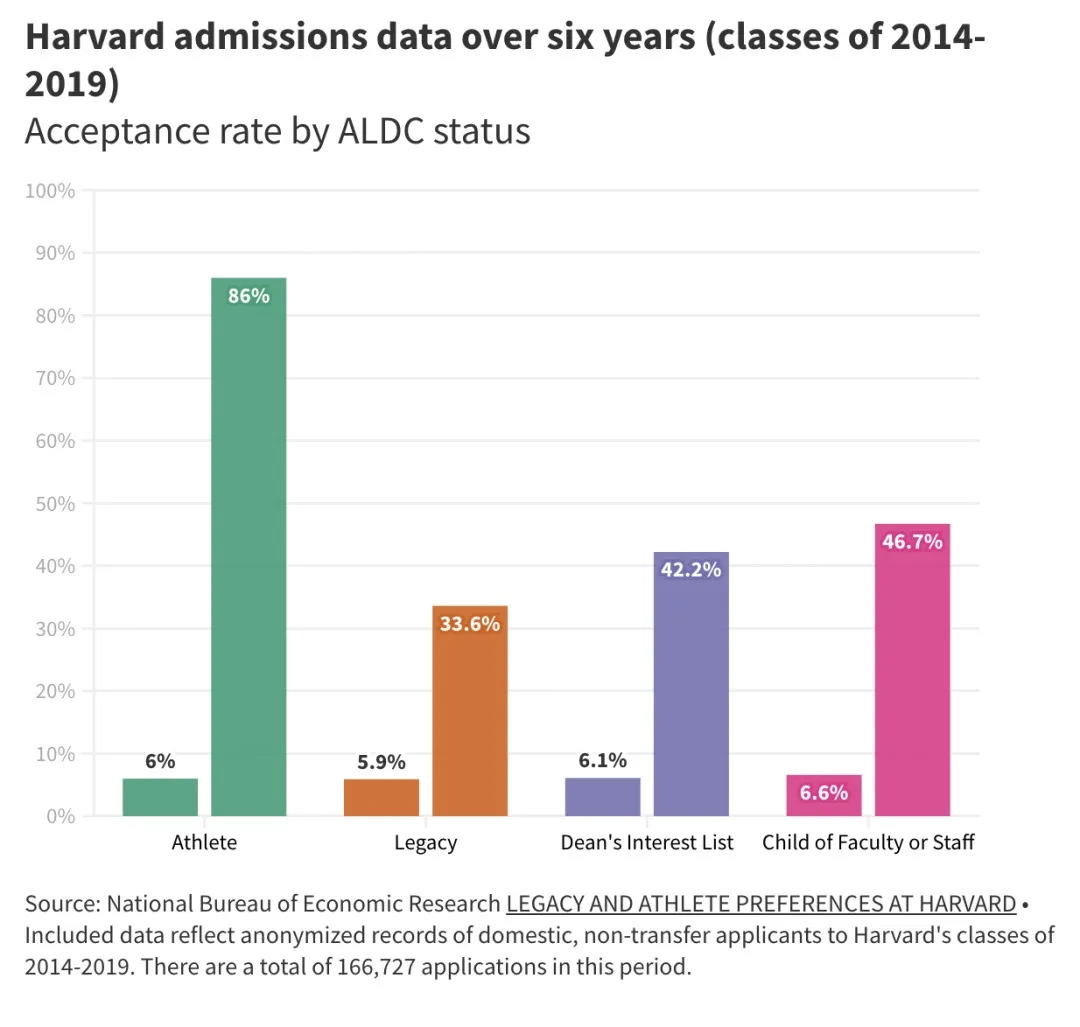
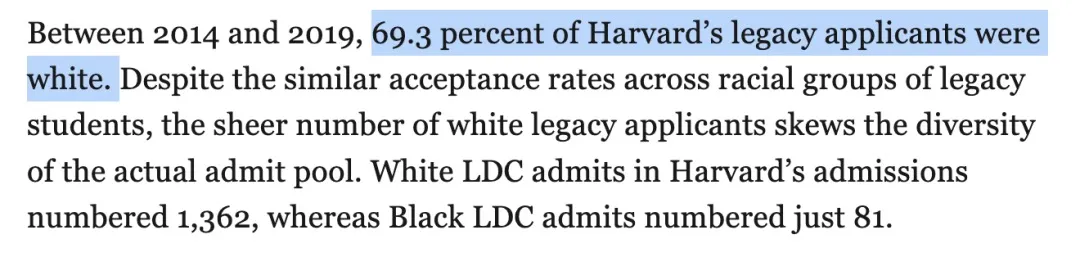
Taking Harvard as an example, the average admission rate from 2014 to 2019 was 6%, while the admission rate for legacy students was as high as 33.6%.
Among these legacy students, white students still dominate, accounting for 69.3%.
After all, the Ivy League has long been closely associated with Old Money and the elite class.
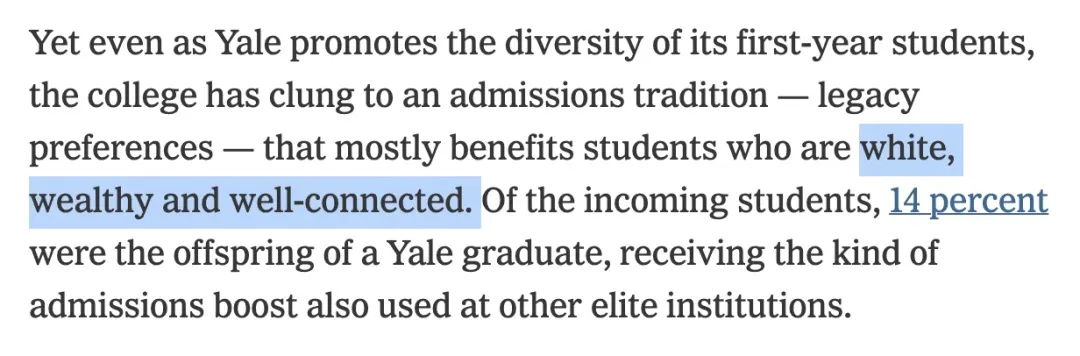
These scions are mostly "White, Wealthy, and Well-connected," coming from typical old-money families, many of whom are super-rich second-generation from the top 1% in America.
For ordinary people, getting into a top college is extremely difficult, but for the rich, all roads lead to Rome.
The wealthy can increase their children's chances of admission, or even secure a tacit "guaranteed admission," by donating to build new facilities.
Jared Kushner, son-in-law of former President Trump, was able to smoothly enter Harvard the following year thanks to his father's pledged $2.5 million donation.

Thanks to various alumni and social donations, some schools are immensely wealthy. In 2022, Harvard's total endowment reached $49.4 billion.
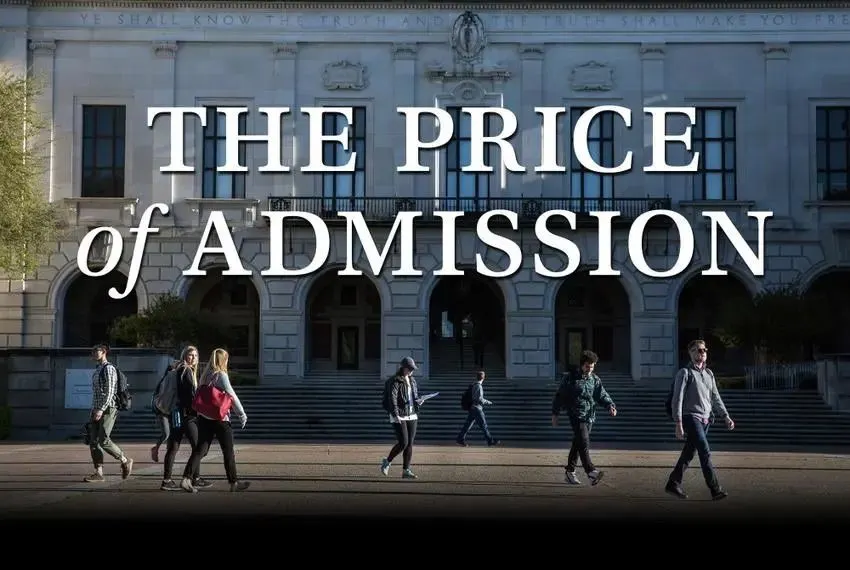
The book "The Price of Admission" reveals the unspoken rules of elite college admissions in the US:
"It is an open secret that children of the wealthy, celebrities, alumni, and faculty have priority admission. The spots for niche aristocratic sports are even reserved exclusively for these second-generation upper-class individuals. Politicians and universities collude to ensure this chain of interests can operate indefinitely."
Ultimately, it's not about race but the wealth gap.

Finally, the story's protagonist Jon Wang said he will continue to fight for the rights of the next generation of Asian students: "At least, when I look back years later, I won't regret staying silent."
How US universities balance fairness and diversity in admissions will continue to face many challenges in the future.
Educational equity still has a long way to go.
.png)