
In recent years, the trend of choosing cross-disciplinary finance programs has been growing. Financial engineering, financial mathematics, quantitative finance, and financial technology have always been popular directions for applying to cross-disciplinary finance master's programs in the UK. At both the London School of Economics and Political Science (LSE) and Imperial College London (IC), related cross-disciplinary finance programs are also offered. LSE's Financial Engineering and Financial Mathematics programs focus on building skills in financial modeling, risk management, and derivatives pricing. IC offers a Financial Technology program that integrates computer science and finance to develop expertise in fintech and data analysis. This article compares the respective strengths of these two schools and provides advice on school selection~ For more application details, add CheersYou(清柚教育) advisor: qingyouge23!

I. LSE MSc Statistics (Financial Statistics)
LSE's MSc Statistics (Financial Statistics) is outstanding. Although this program does not belong to LSE's finance or economics departments, based on LSE's reputation both domestically and internationally, choosing this major is a good choice. The program focuses on statistics and related fields, and offers relatively free elective courses. Students enjoy great autonomy and flexibility in course selection, allowing them to choose what to learn based on their interests.
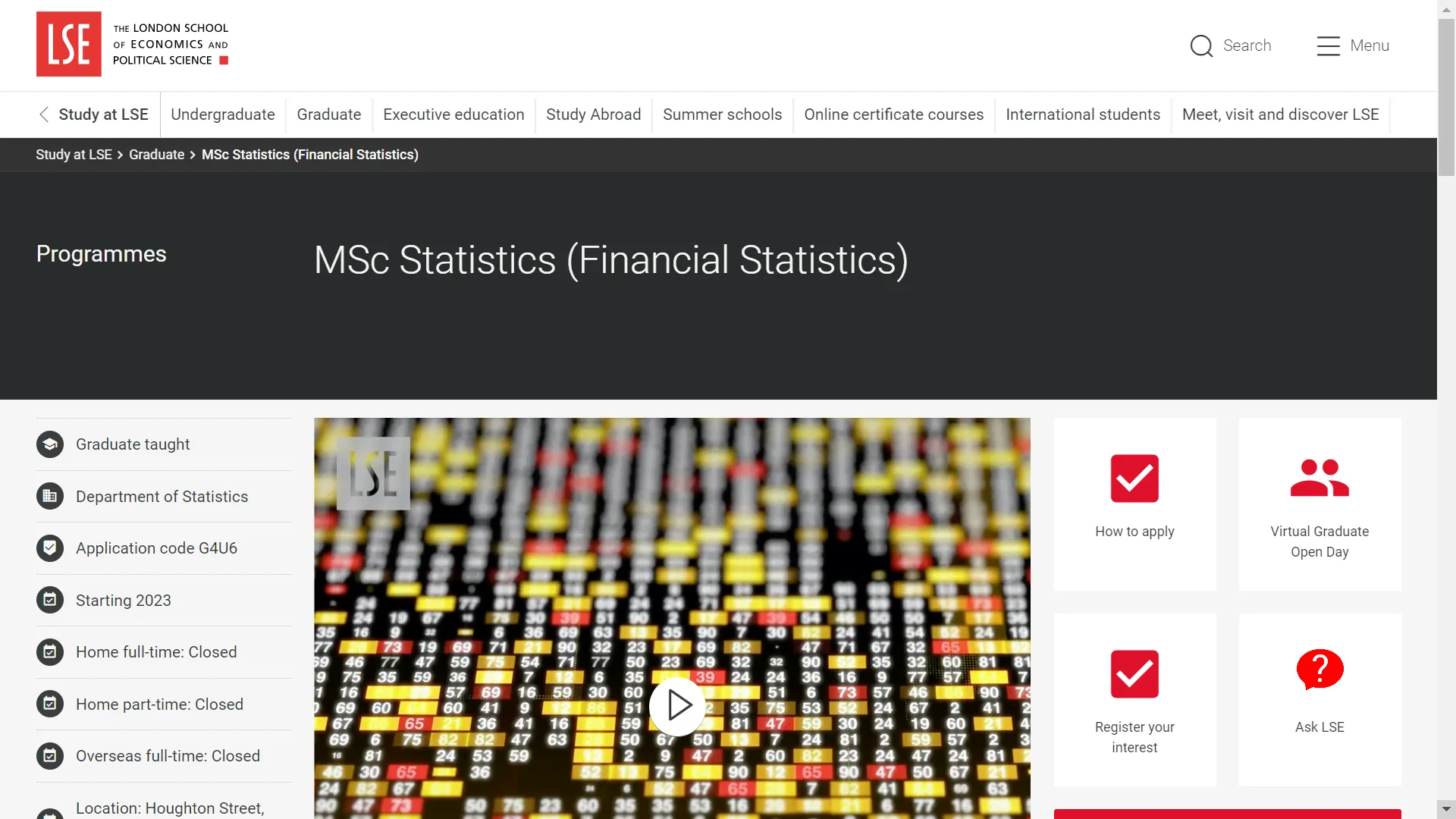
Program link:
Regarding employment, LSE's stellar reputation at home and abroad speaks for itself. At least in the recruitment process, most well-known companies give LSE students due consideration during resume screening; the rest depends on luck and ability. At an institution like LSE, the professional programs inherently hold certain advantages, so there is no need to worry about employment prospects.
Additionally, LSE frequently hosts various Public Events. CheersYou(清柚教育) advisors highly recommend participating in these activities, as they can bring rich rewards!

Event registration link:
https://www.lse.ac.uk/events/search-events?calendar=2023-06-19
II. Imperial College London MSc Mathematics and Finance
Like LSE, Imperial College London is a public research university and a member of the G5 super-elite, located in London. IC is renowned for its excellence in engineering, medicine, and science, standing as a leader in STEM fields. Alongside MIT, Caltech, and ETH Zurich, it ranks among the world's top four institutes of technology—truly a pinnacle of science and engineering education.
Imperial's MSc Mathematics and Finance program naturally falls under the Department of Mathematics (IC's strength). The overall curriculum has a quantitative focus, covering some courses related to C++ and risk management. The coursework is quite rigorous, and achieving good grades demands substantial effort.
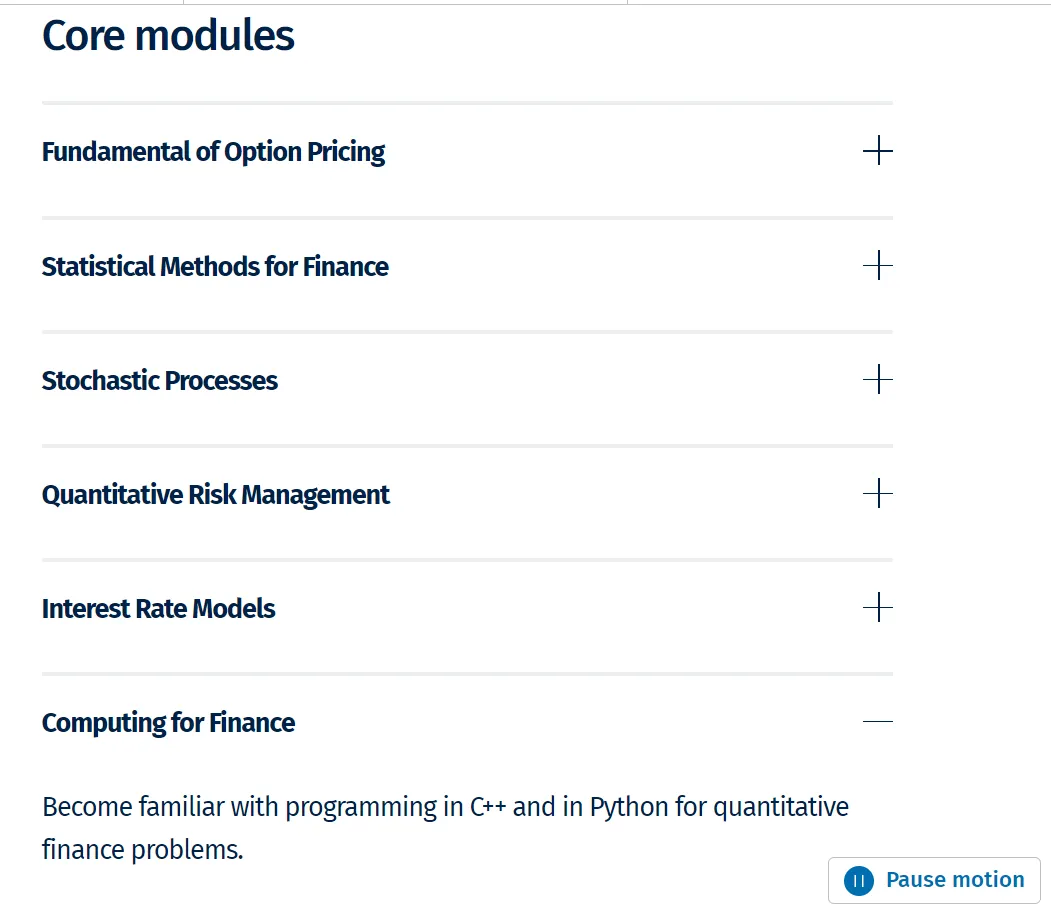
The elective courses also hold significant academic value:
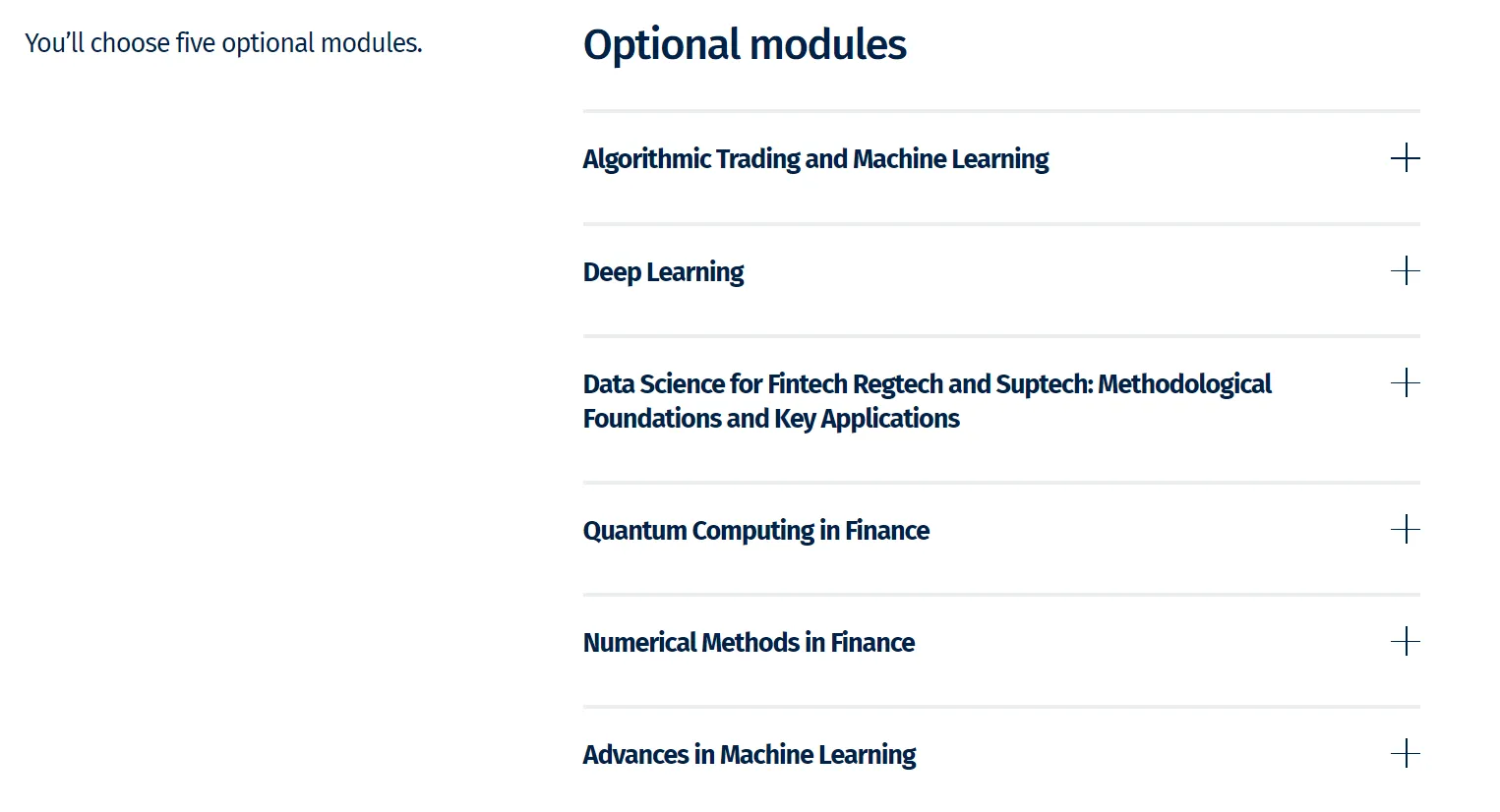
Program link:
https://www.imperial.ac.uk/study/courses/postgraduate-taught/mathematics-finance/
For those planning careers as equity index futures analysts, risk managers, or traders, Imperial College London is also a highly suitable choice. The official website provides detailed information about this program, designed to prepare students for futures in quantitative finance and risk management.
Moreover, IC offers a range of seminars and student support, providing excellent options for students.

Link: https://www.imperial.ac.uk/student-support-zone/
In summary, both LSE and Imperial College London are highly regarded in terms of rankings and reputation, and both enjoy strong recognition in China. However, in their respective strong disciplines, Imperial holds a stronger position in STEM fields, as evidenced by its QS Mathematics subject rankings.
For more application details and school selection consultation, scan the QR code below~