
U.S. Electrical and Computer Engineering (ECE) master's degrees come in one-year and two-year formats. One-year programs are typically career-oriented, while two-year programs are more research-focused. For STEM majors especially, a two-year degree often carries more weight. However, if your goal is faster employment, a one-year master's is worth considering, particularly at top-ranked engineering schools like Purdue University and Cornell University. This article will compare the differences between one-year and two-year master's programs to help students make informed decisions. For graduate application details, add CheersYou(清柚教育) advisor: qingyouge23 for more information!

The differences between one-year and two-year master's programs are mainly reflected in the following aspects:
-
Program Objective
U.S. one-year master's programs are career-oriented. Historically, most applicants have had work experience, perhaps coming from corporate management seeking to deepen expertise, or recent graduates who haven't found suitable jobs and aim to enhance their academic credentials. Two-year programs are research-oriented, with most applicants being recent undergraduates without work experience.
Career-oriented degree programs direct students toward a specific profession. In most cases, these are "terminal" master's programs, meaning their curriculum and delivery do not lead to a doctoral program, like the well-known Master of Business Administration (M.B.A.). In contrast, those pursuing a two-year master's often intend to continue toward a PhD or higher academic path.
-
Cost and Time Investment
U.S. one-year master's degrees greatly save students both time and money. Graduates can return to work or enter the job market quickly, while also saving a year's tuition and living expenses. However, precisely because the duration is under a year, the curriculum is very intensive. Starting in September and graduating in June, you need to complete 30+ credits in under ten months, making effective time management crucial. If you're confident in your time management skills, you can confidently apply to MEng programs!
The two-year master's obviously involves higher financial cost. But with a less compressed schedule, students have more free time for networking to expand professional connections, and can also seek internships outside of class, integrating learning with practice to better enhance both work and personal skills, adding valuable work experience to their future job-seeking profile.

-
Curriculum Differences
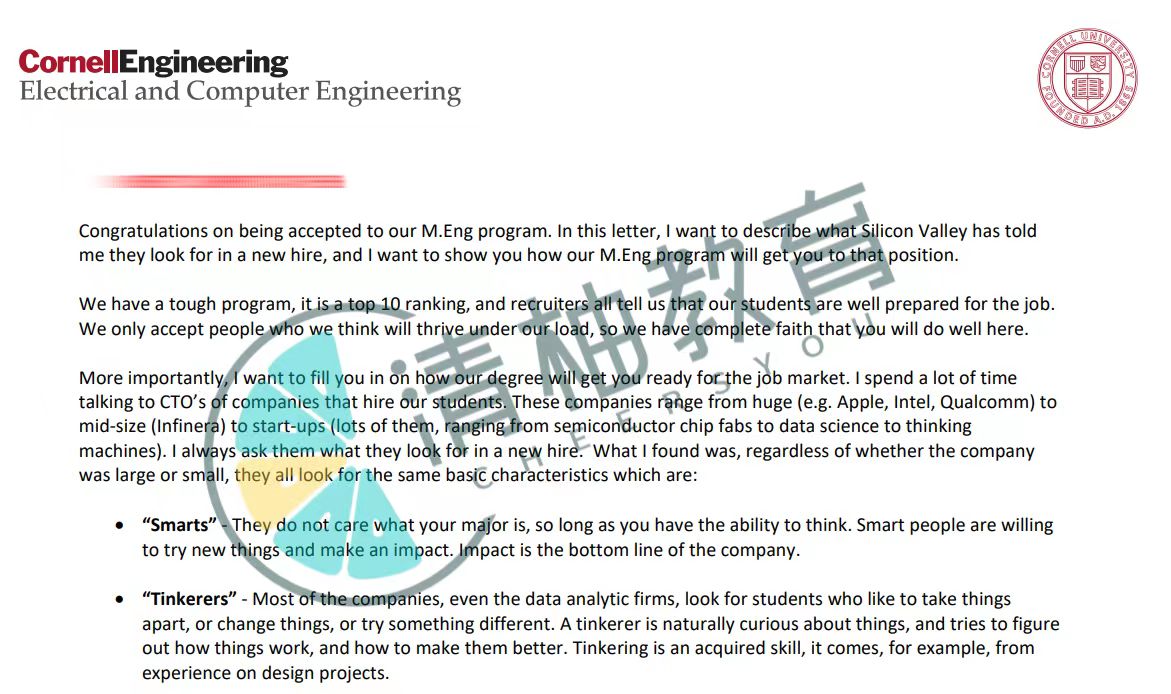
One-year U.S. master's programs have a dense, compact curriculum. Students must absorb a large amount of knowledge in a short time, and the courses are predominantly practice-oriented, as seen in Cornell University's program. Two-year master's programs are research-oriented. In terms of curriculum design, two-year programs are often considered a stepping stone to a PhD, with content leaning theoretical, featuring many research-related topics.
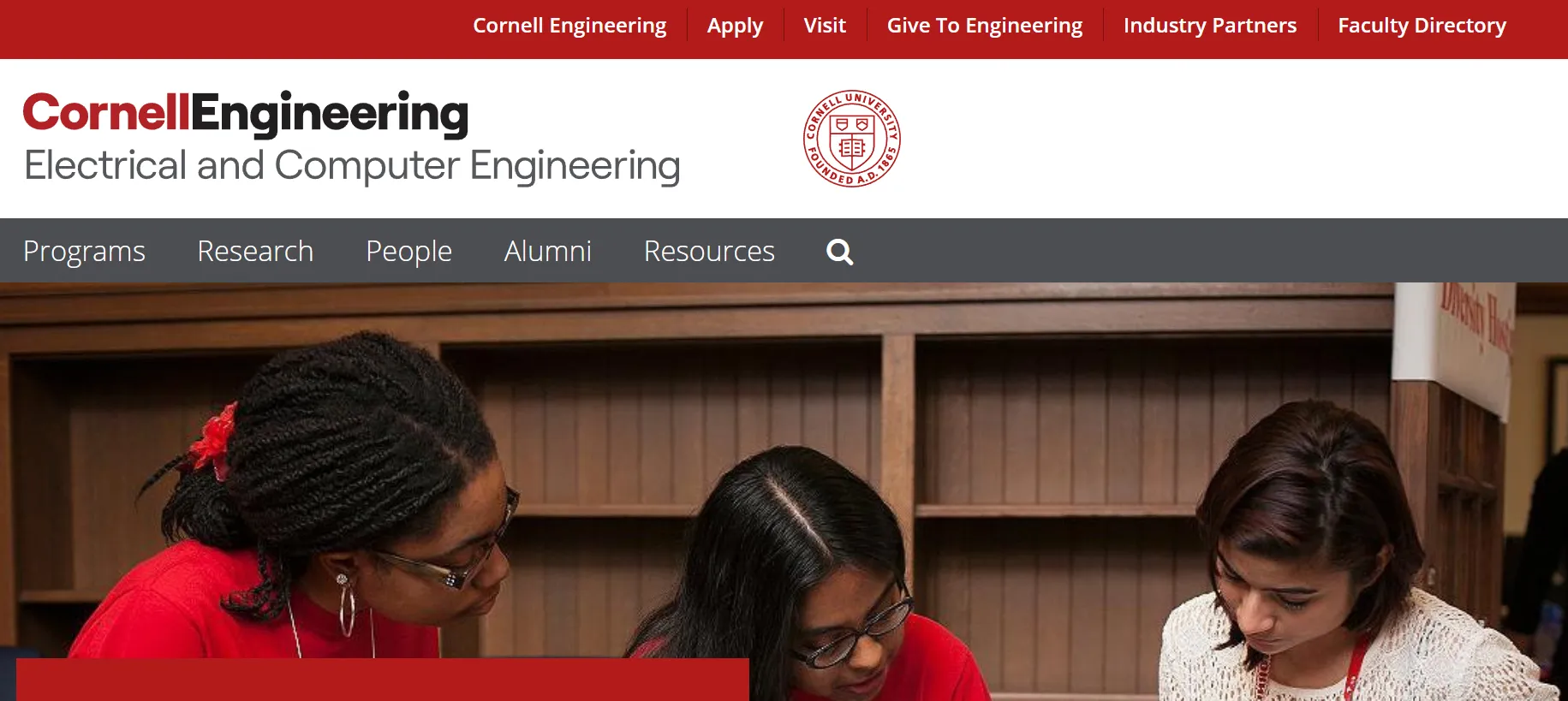
Cornell University ECE Master's Program Link: https://www.ece.cornell.edu/ece/programs/graduate-programs
In summary, if you plan to pursue a PhD, an MS is a good choice. If you aim to work directly after graduation, the MEng curriculum is more practically oriented. You don't need to worry that an MEng program will cut you off from the job market—schools often provide MEng students with more practice and internship opportunities. Based on past experience, one-year programs generally have slightly lower admission requirements compared to two-year programs.
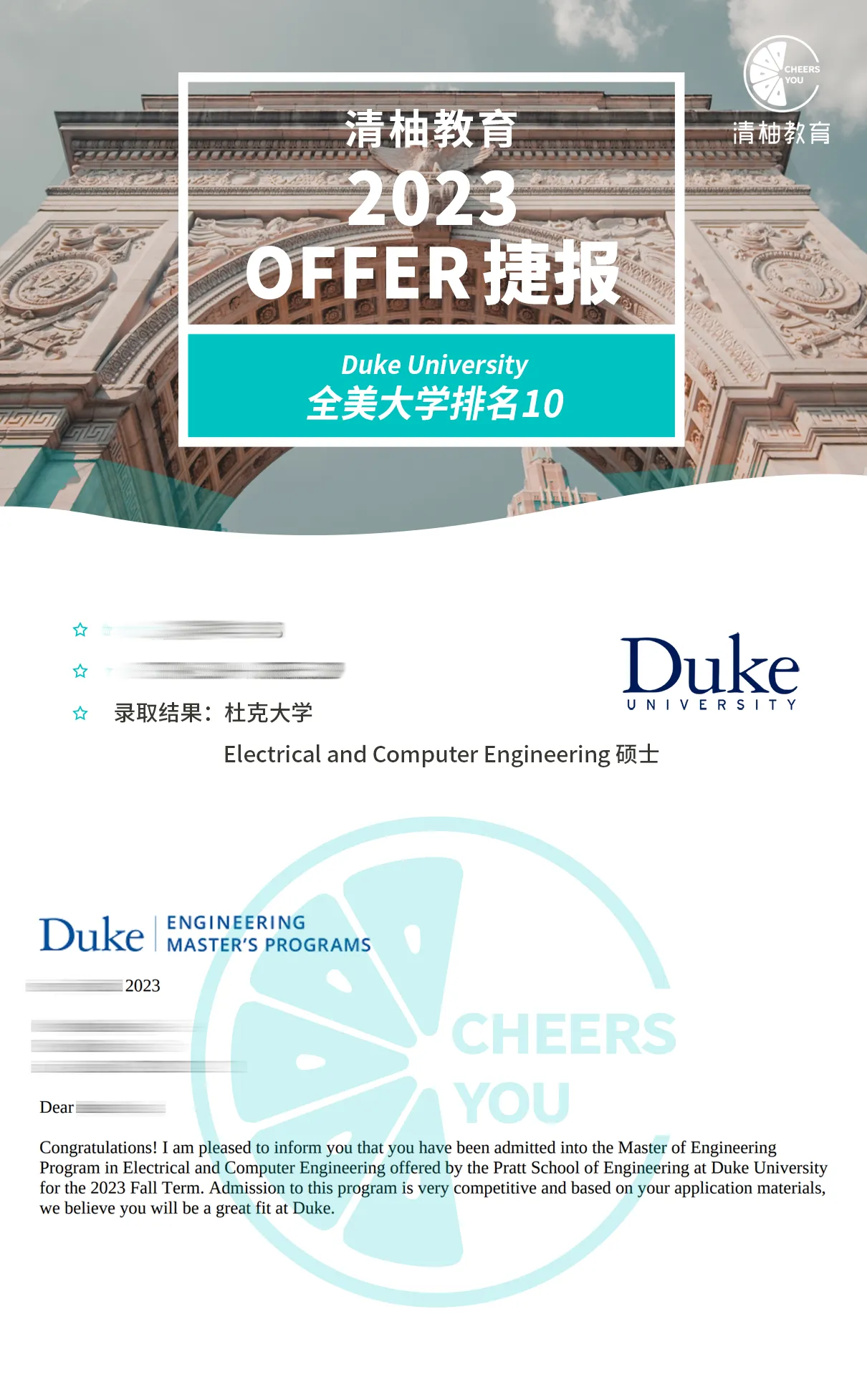
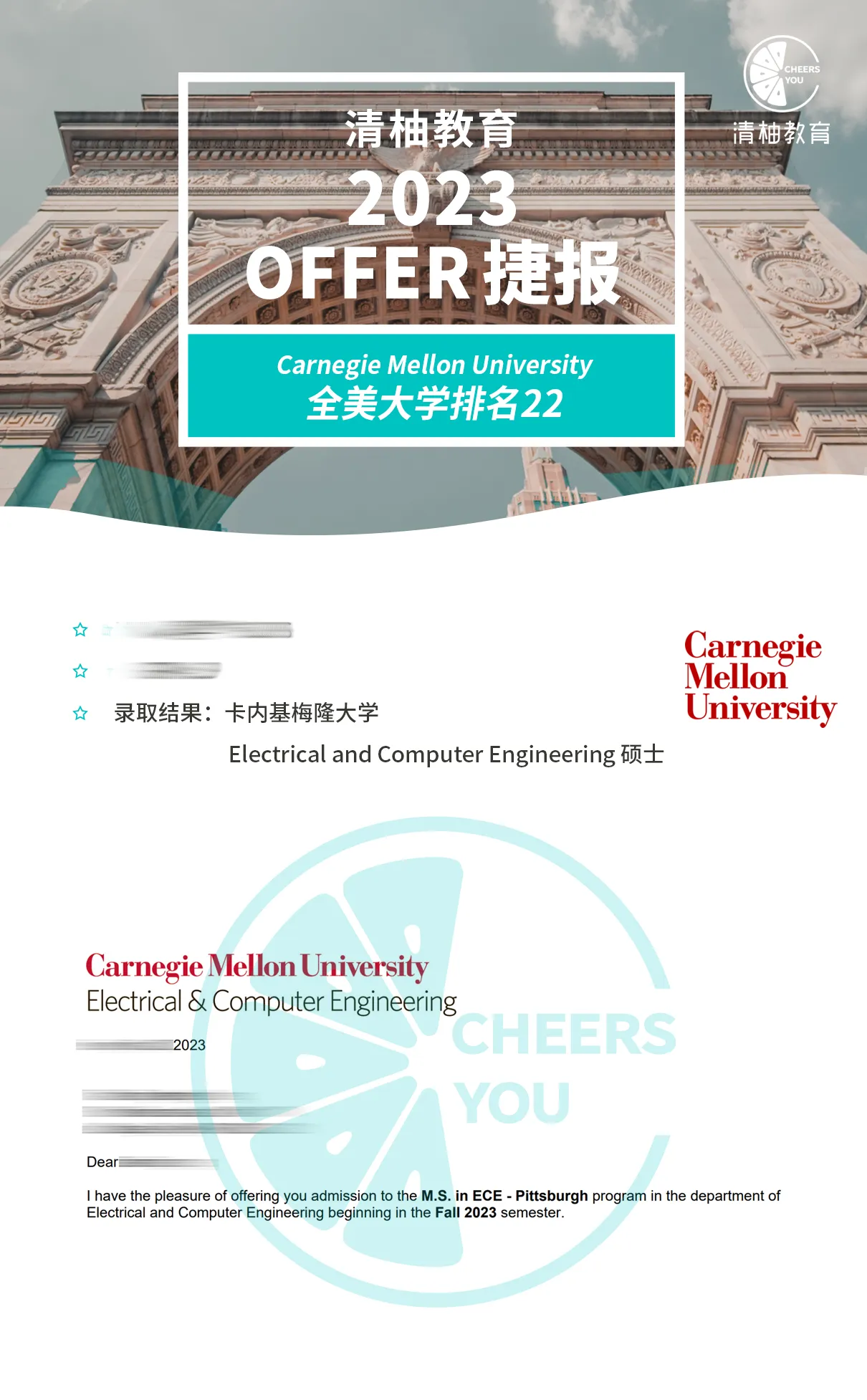
For more project consultation or study abroad application inquiries, feel free to scan the CheersYou(清柚教育) study abroad QR code below to consult a CheersYou(清柚教育) advisor~