The International Master of Public Administration (IMPA) program is housed within Penn’s College of Liberal and Professional Studies (LPS) and is a one-year, full-time, skills-based master’s program. Unlike traditional MPAs, the IMPA places a strong emphasis on internationalization, aiming to educate and empower leaders who can improve global human well-being and solve complex problems. It is not only a platform to broaden your international perspective but also, from a developmental standpoint, an excellent networking opportunity. If you aspire to join an NGO like the United Nations or work in government agencies, Penn’s International Master of Public Administration is your ideal stepping stone.
The program draws on distinguished professors from Penn’s powerhouse schools—such as Nursing, Law, and Economics—as well as other leading industry experts. Jointly developed by the College of Liberal and Professional Studies and the Fox Leadership International Center at Penn, it awards a Penn master’s degree. In terms of admissions, the program tends to favor bilingual talent. Students who participate in a summer practice project after graduation may receive a $6,000 scholarship. It is important to note, however, that while the program is friendly to Chinese international students, bilingual talent is not limited to them. Past cohorts have included many U.S. students with a strong interest in Chinese affairs.
Prior to the start of the program, each IMPA student is assigned an academic and career advisor who meets with them individually on a regular basis throughout the year. Advisors also participate in certain co-curricular activities alongside their students.
Penn’s academic atmosphere is generally rigorous. Around campus, you’ll often see pairs or small groups of students and professors discussing topics together. Professors are very welcoming during office hours, where students can seek advice and ask questions.
Beyond academics, Penn’s overall student experience is enriched by a plethora of student organizations that recruit new members at the beginning of each semester—covering academic, theater, recreational, and sports interests. One organization you should definitely join is the Chinese Students and Scholars Association at Penn (CSSAP). Within CSSAP, you’ll find many senior students who have already navigated the challenges of studying abroad and can offer valuable guidance. With a bit of luck, you may also meet like-minded friends and develop a strong network that will greatly benefit your future career.
Now, let’s return to the IMPA program itself:
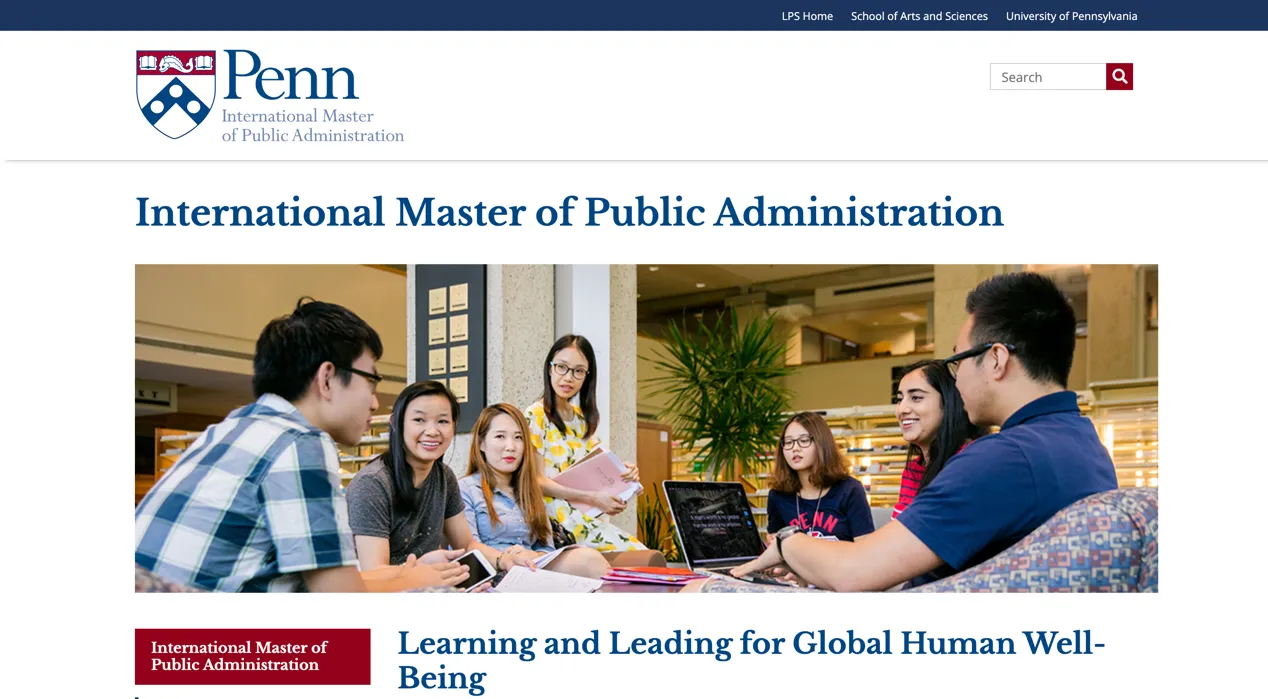
Program link:
https://www.lps.upenn.edu/degree-programs/impa
Curriculum
The IMPA program uses a small-class format and comprises ten courses in total:
1. Academic Frameworks (3 courses)
These courses build the foundational theoretical knowledge students need.
- I-MPA 6010: Focuses on critical issues in governance and human well-being
- I-MPA 6040: Immeses students in the latest and best interdisciplinary thinking on cross-sector (government, business, and nonprofit) collaboration
- I-MPA 6050: Surveys competing theories and concepts of leadership effectiveness
2. Interdisciplinary Foundations (4 courses)
These interdisciplinary courses provide academically rigorous yet practical instruction—essential for effective and ethical problem-solving leadership.
- Economic Reasoning (I-MPA 6020)
- Quantitative Reasoning (I-MPA 6030)
- Moral Reasoning (I-MPA 6060)
- Program Evaluation (I-MPA 6070)
3. Capstone Project (3 courses)
One individual, one small-group, and one full-class project—each challenges students to creatively apply evidence-based concepts, illustrative case studies, and best-practice techniques taught throughout the program:
- Individual biographical analysis of a significant global leader (I-MPA 6100)
- A small-group project focusing on India’s current energy needs and economic development challenges (I-MPA 6080)
- A full-class project dedicated to proposing actionable solutions for “global aging” and China’s elderly care crisis (I-MPA 6090)
After completing the ten required courses, students may take two elective courses from Penn’s School of Arts and Sciences, allowing them to interact with a broader community of Penn students and faculty and expand their professional networks. The course structure is distinctive: beyond research methods relevant to policy—economic reasoning, quantitative reasoning, moral reasoning, and evaluation—the program places significant emphasis on training in the Leadership Capstone Project and related areas.
Admission Requirements and Criteria
Given the unique nature of the IMPA program, admissions do favor Chinese applicants, but that should not be taken as a reason to be less competitive. Penn is, after all, a prestigious Ivy League institution, and the program’s bar is indeed high.
- Academic record: No failing grades in undergraduate coursework, with a minimum GPA of 3.0 (WES evaluation required for GPA).
- Language proficiency: TOEFL 100+ or IELTS 7+
- GRE/GMAT: optional
- Application essay
- Résumé/CV
- Application fee (non-refundable)
- Interview
- Three letters of recommendation
Additional considerations:
1. No restriction on academic background
The program does not require a specific undergraduate major; students from liberal arts or business backgrounds are equally welcome. However, the school expects strong academic performance.
Most admitted students in past years have come from top Chinese universities (985/211), though a few outstanding applicants from other institutions have also been accepted.
2. Strong practice-oriented experiences
You should have extracurricular, internship, or work experiences that involve helping others, along with a career goal of becoming an effective and ethical leader in an organization—whether nonprofit, business, or government.
3. Language and culture
Proficiency in English and one or more of the following languages: Hindi, Mandarin, Portuguese, Spanish, or Swahili.
Although the medium of instruction is English, many course materials are in Chinese or Hindi.
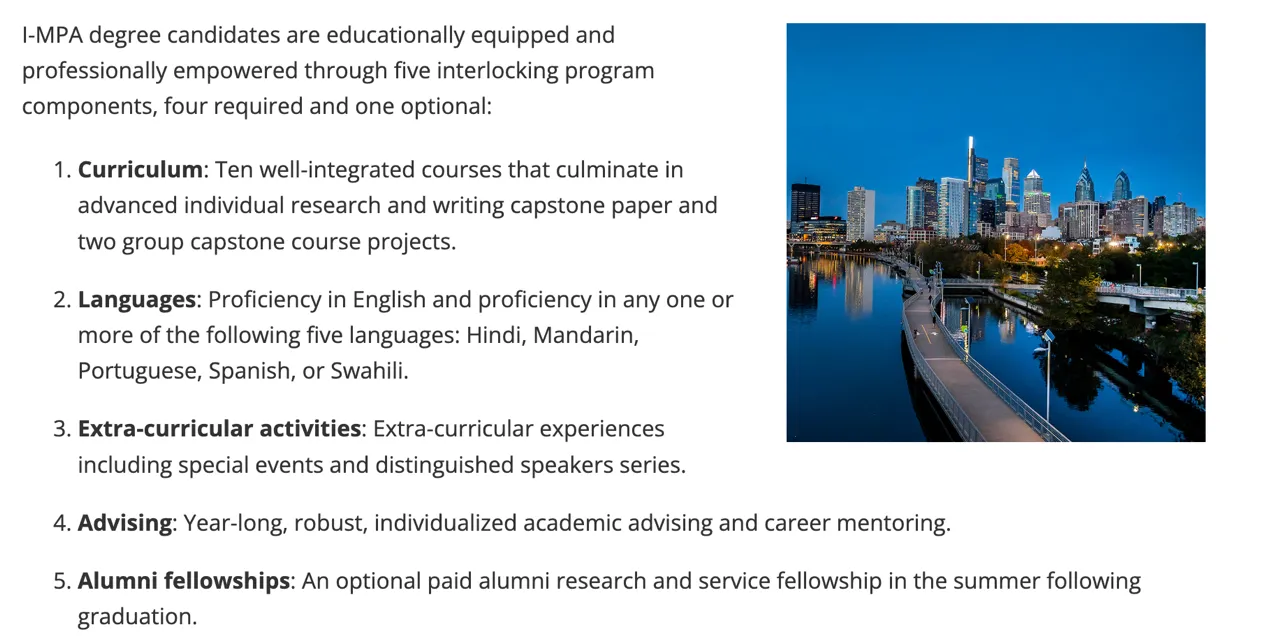
Overall, for many students, the IMPA program serves as a gateway to an Ivy League education, providing a higher platform. Through various school-organized activities, students can access the network and resources of a prestigious institution. The one-year program length also allows students to acquire relevant knowledge efficiently and transition into practice sooner.
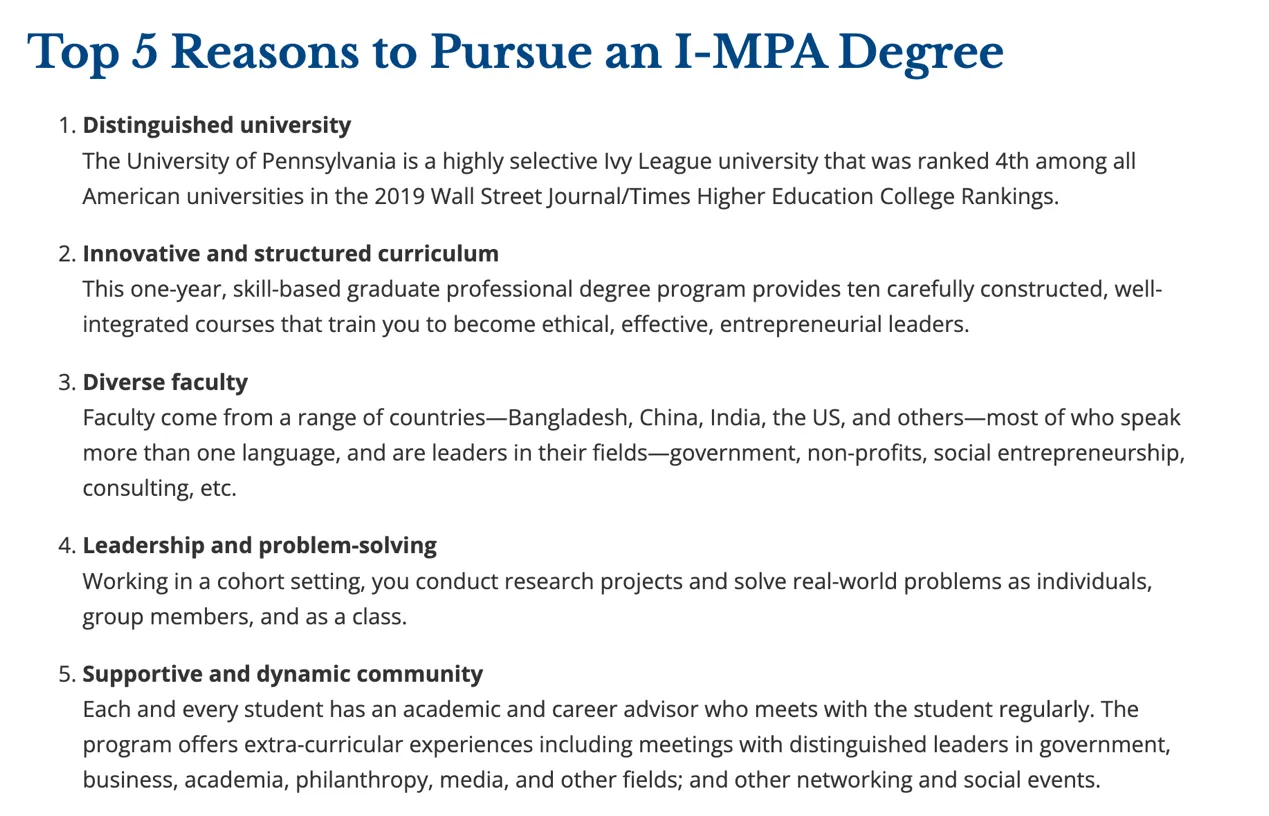
Five reasons to pursue the IMPA, as listed on Penn’s website:
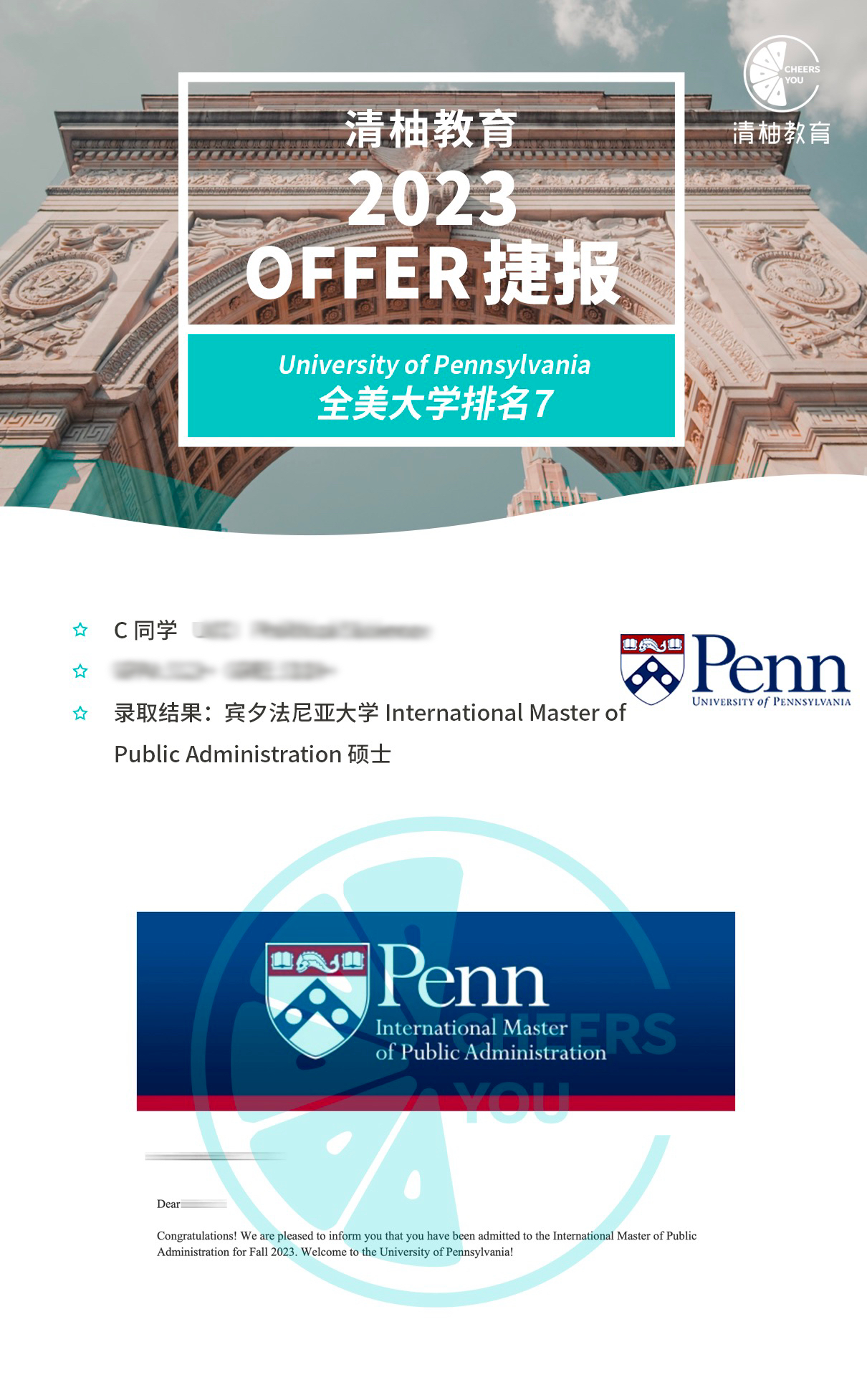
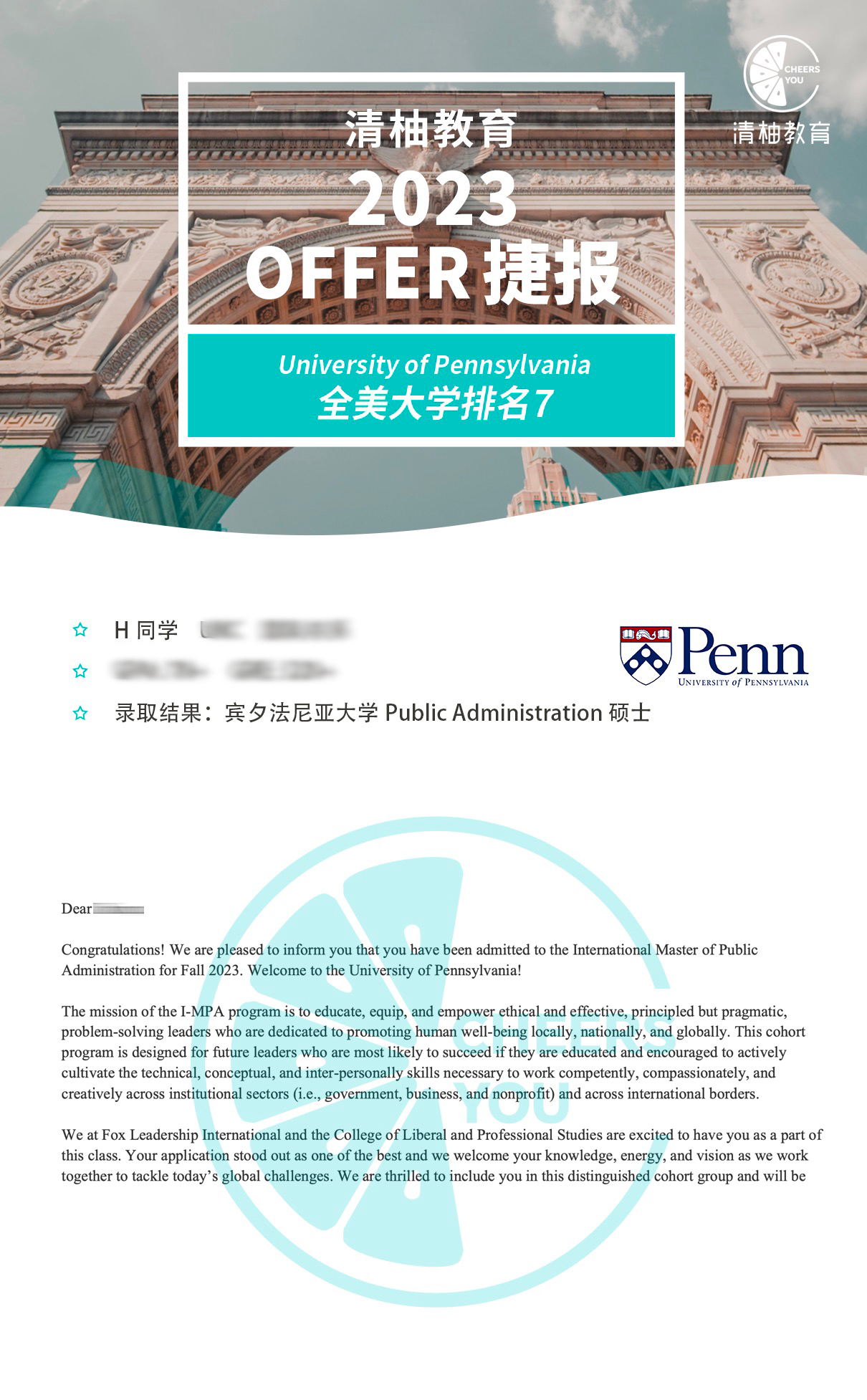
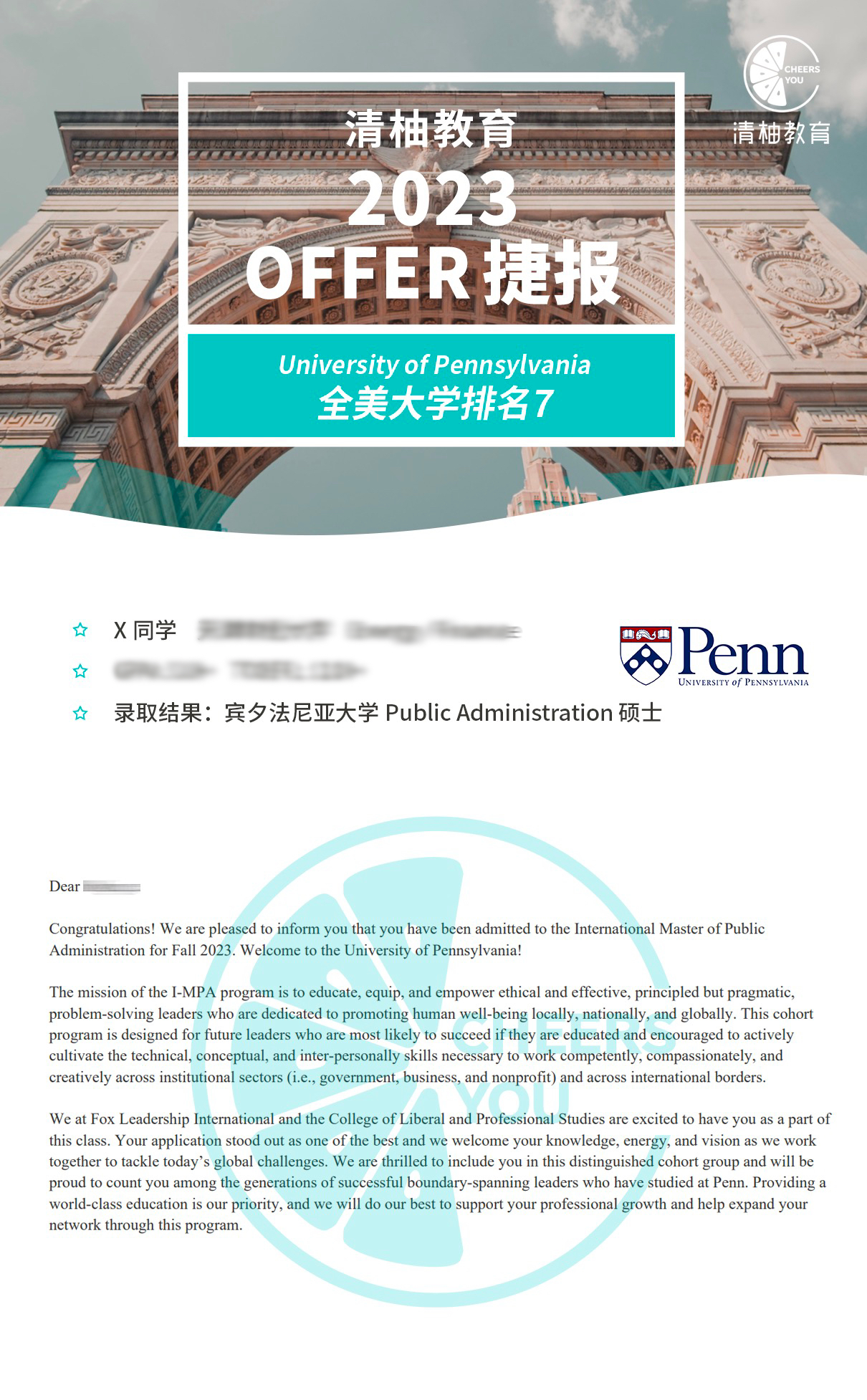
Below are examples of successful offers from our students who applied to Penn’s IMPA program, for your reference.
The above is detailed information about Penn’s IMPA program. For more questions about graduate school applications, feel free to scan the QR code below to add a CheersYou(清柚教育) advisor for a consultation~