Recently, the US dollar exchange rate has soared, causing international students to truly break down in tears.
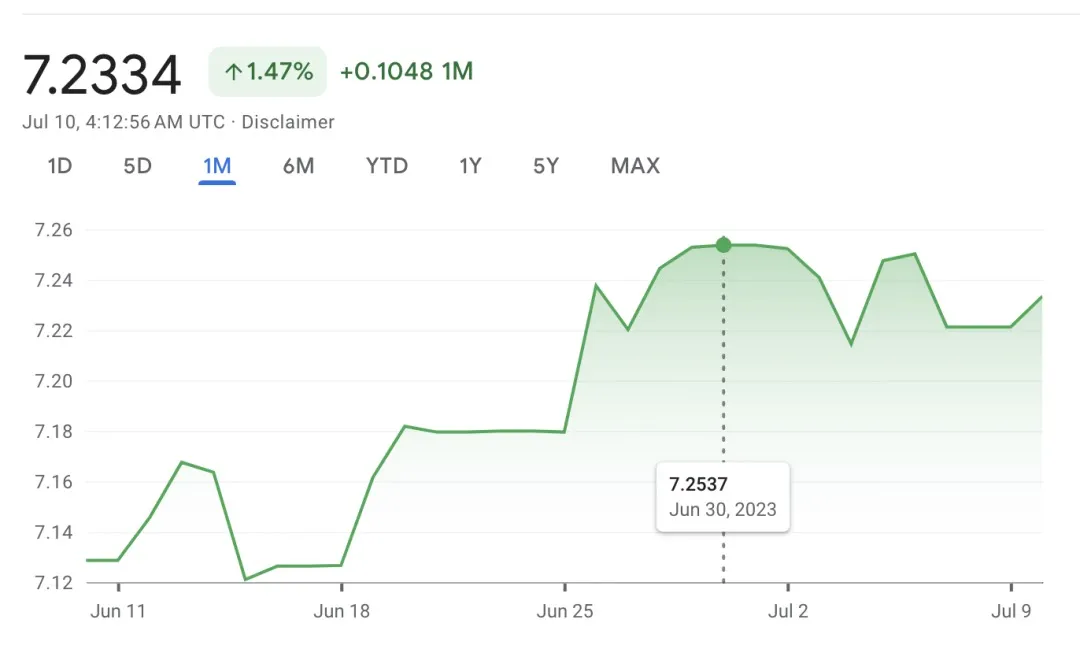
The USD to CNY exchange rate surged all the way from 6.7 to over 7.25—seriously, is the US dollar going through puberty or something? ❓
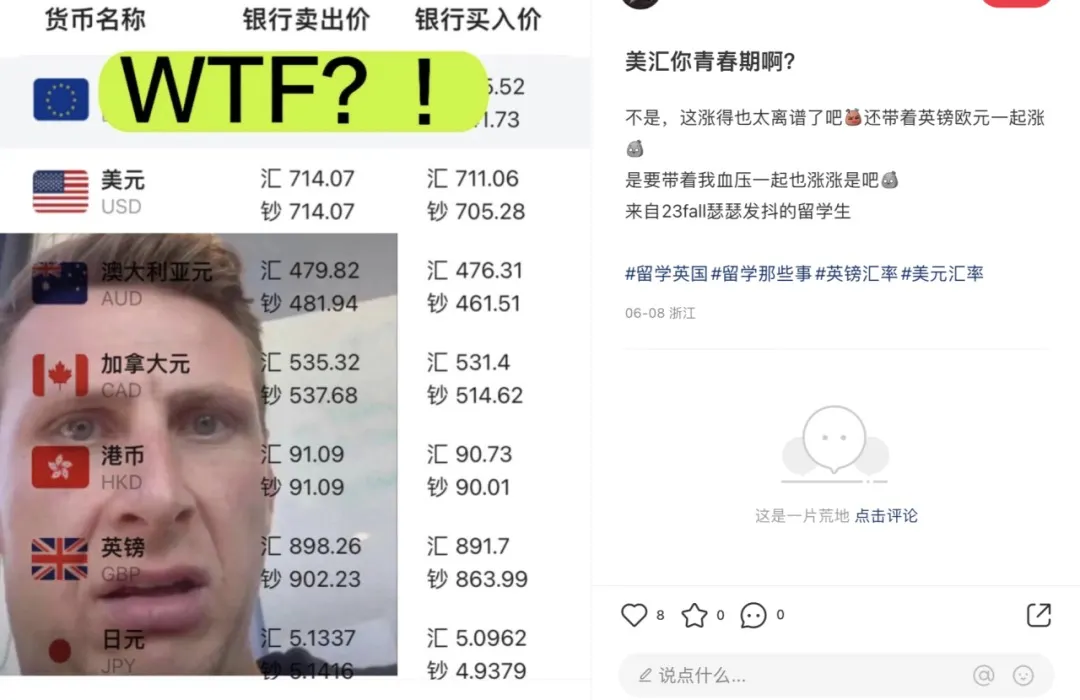
After this wild surge, some students saw their tuition inexplicably rise by 30,000 yuan, and rent go up by 1,500 yuan per month 👇
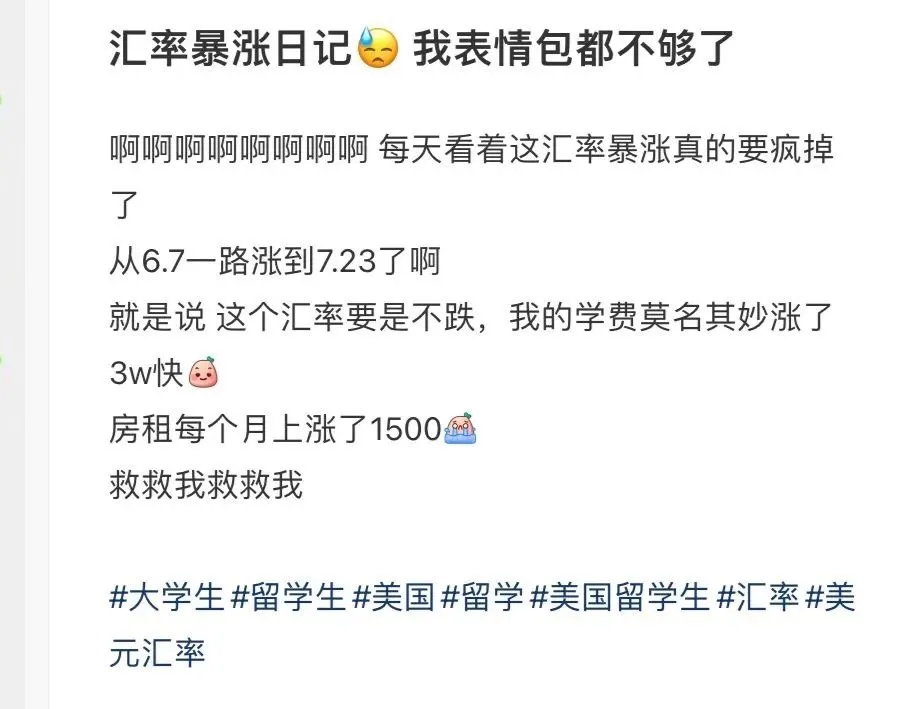
Fine. Tuition goes up, prices go up, and the exchange rate goes up—might as well drain international students dry.
For already strapped students, this is a brutal blow. Exchanging dollars now really hurts the wallet.
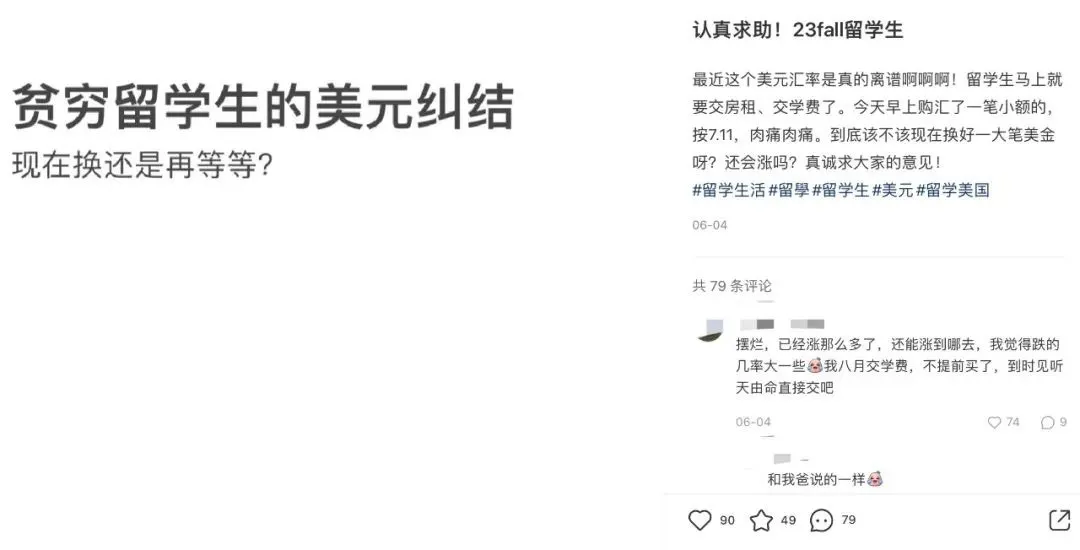
With tuition and rent payments coming up soon, should you exchange now or wait? CheersYou(清柚教育) will first provide a brief analysis of the USD/CNY exchange rate trend.
.png)
Why Is the Dollar Exchange Rate Surge?
Recently, the USD/CNY exchange rate has surged, breaking through several key levels like 6.90, 7.00, 7.10, and 7.20. On June 28, it even broke past 7.25 for the first time, reaching its highest level since December last year.

The continuous rise in the exchange rate has brought pressure on living costs and tuition for students and parents, making everyone closely watch the dollar trend to find the best time to exchange currency.

So first, let's understand: why has the USD/CNY rate surged recently?
Market Trading Sentiment
In the short term, market sentiment plays an important role. Investors' expectations and emotional swings often influence the exchange rate trend. If the yuan depreciates too quickly and forms expectations, it increases the risk of excessive adjustments.
This means bearish expectations on the yuan can trigger more selling, leading to further depreciation. To avoid this, the government will intervene when appropriate to stabilize exchange rate expectations.
Interest Rate Differential Between the Two Countries
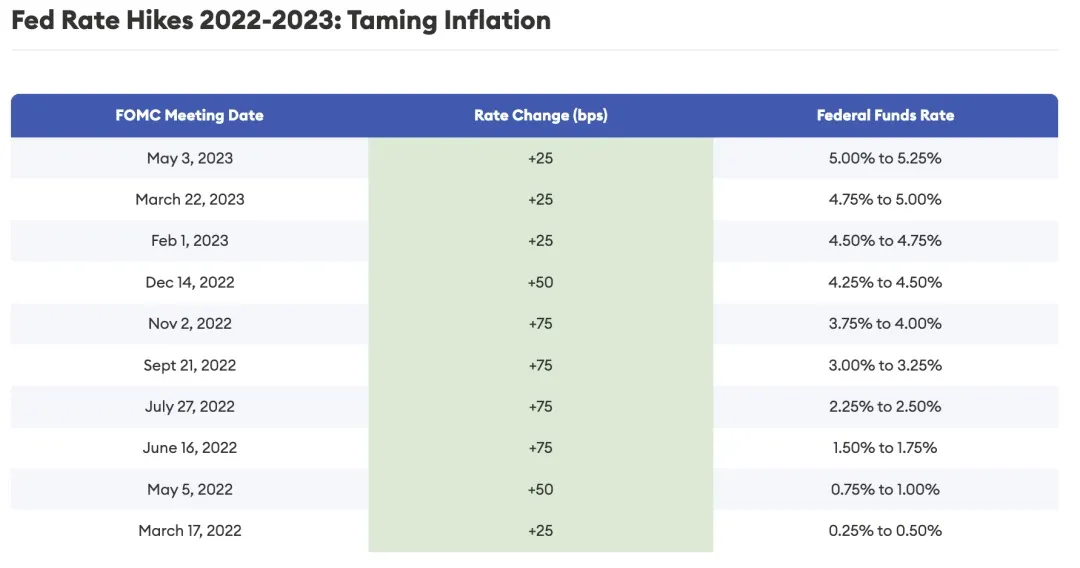
In the medium term, the interest rate differential is another key factor. Currently, China and the US have inverted interest rates: the US is raising rates while China is not, and is even cutting reserve requirements and rates. This has led to capital outflows becoming the main reason for the yuan's adjustment.
Economic Fundamentals
Over the long term, economic fundamentals are also affecting the exchange rate. China's economic recovery in the first quarter was sluggish, and economic indicators in April performed poorly, with declines in industrial value added and consumer price index, adding to market worries.
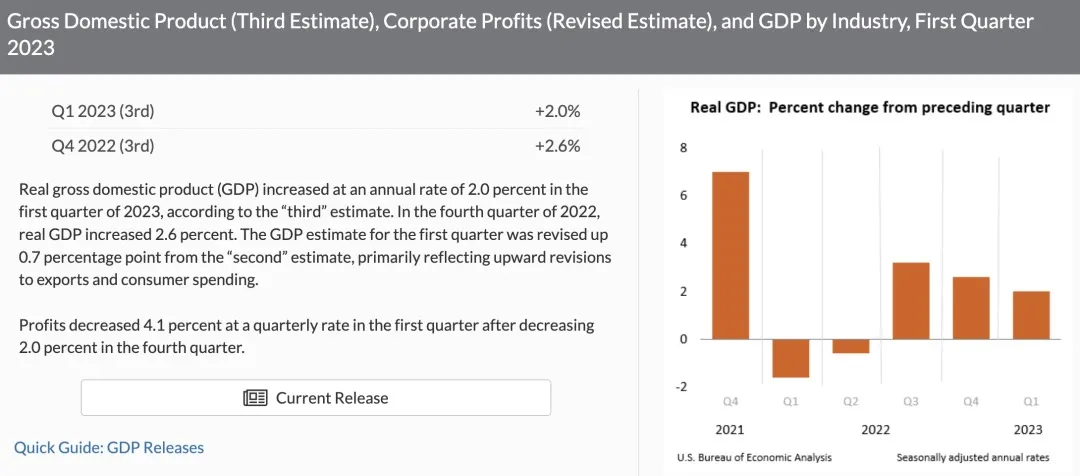
Meanwhile, on June 29, the US Bureau of Economic Analysis released that the final revised annualized GDP growth rate for the first quarter of 2023 was 2%, up from the previously predicted 1.3% by 0.7 percentage points. This data shows US economic growth exceeded expectations, giving the Fed more room to hike rates.
The current terminal rate forecast for the US is 5%-5.25%. Against this high interest rate backdrop, US stock markets have repeatedly hit new highs, showing that capital still bet on the long-term profit growth driven by US tech giant innovation.
AI-related tech companies have seen their stock prices double in recent months, driving a $4 trillion gain in US tech stocks this year.

Currently, China and the US have entered a significant watershed: the US is in a "high growth, high inflation, high interest rate" environment, while we have entered a "low growth, low inflation, low interest rate" cycle, which will further pressure the yuan. According to Long Forecast data, the average USD/CNY rate is expected to rise to 7.304 in July, possibly further to 7.401 in August, and to 7.529 in September.

Not only is the exchange rate soaring, but tuition keeps climbing as well.
US University Tuition Hikes Again?
For students entering in Fall 2023, excitement comes with a sting.

After all, US university tuition has gone up yet again this year. Harvard, Yale, Princeton, Stanford, MIT led the charge, with Stanford hiking by 7%.
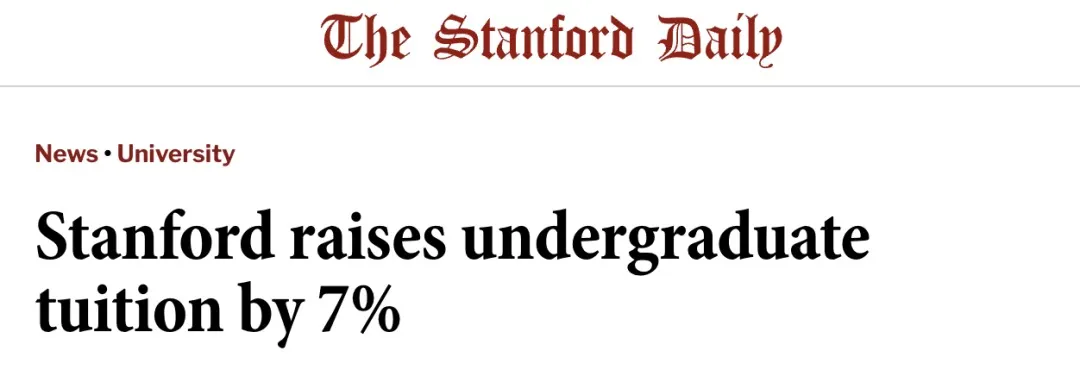
According to official university data, for the 2023-24 academic year:
-
Harvard University: total cost of attendance rose to $79,450, up 3.5%
-
Yale University: up to $83,880, up 3.9%
-
Princeton University: up to $79,090, up 4%
-
Stanford University: up to $82,406, up 7%
-
MIT: up to $82,730, up 3.75%
US private universities sure know how to raise tuition.
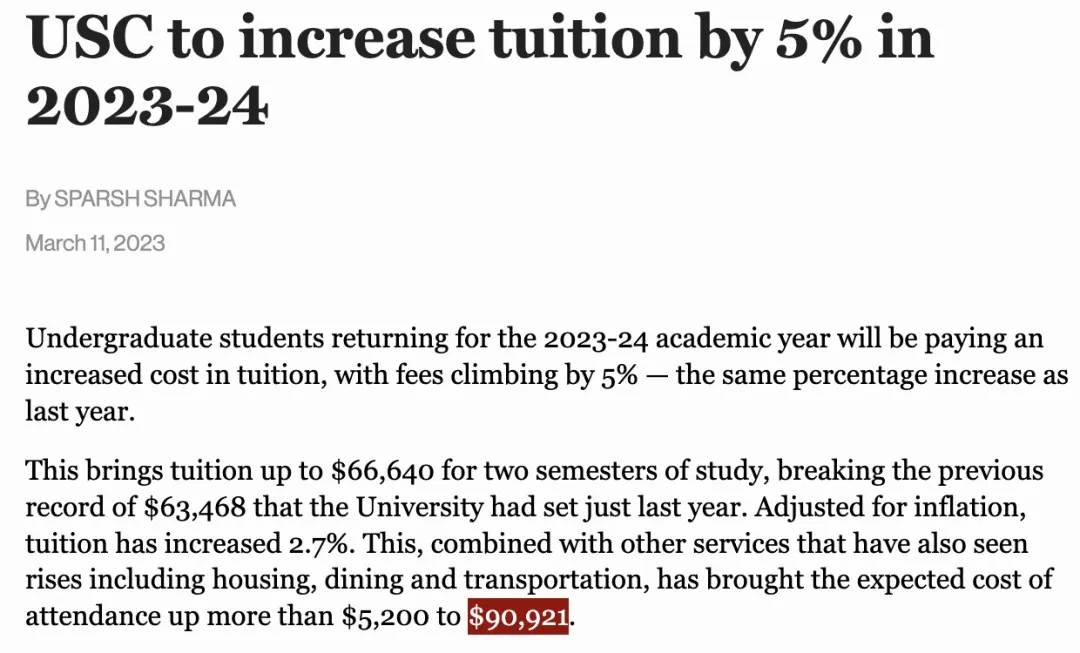
For 2023-24, private university tuition, room and board, and fees all increased to varying degrees, around 3%-5%. Some private schools' total cost of attendance has topped $90,000.
For example, USC, a favorite among well-off students, raised tuition to $63,468 this year, and with room, board, and fees, the total cost reaches $90,921.
NYU's total cost also cracked $90,000:
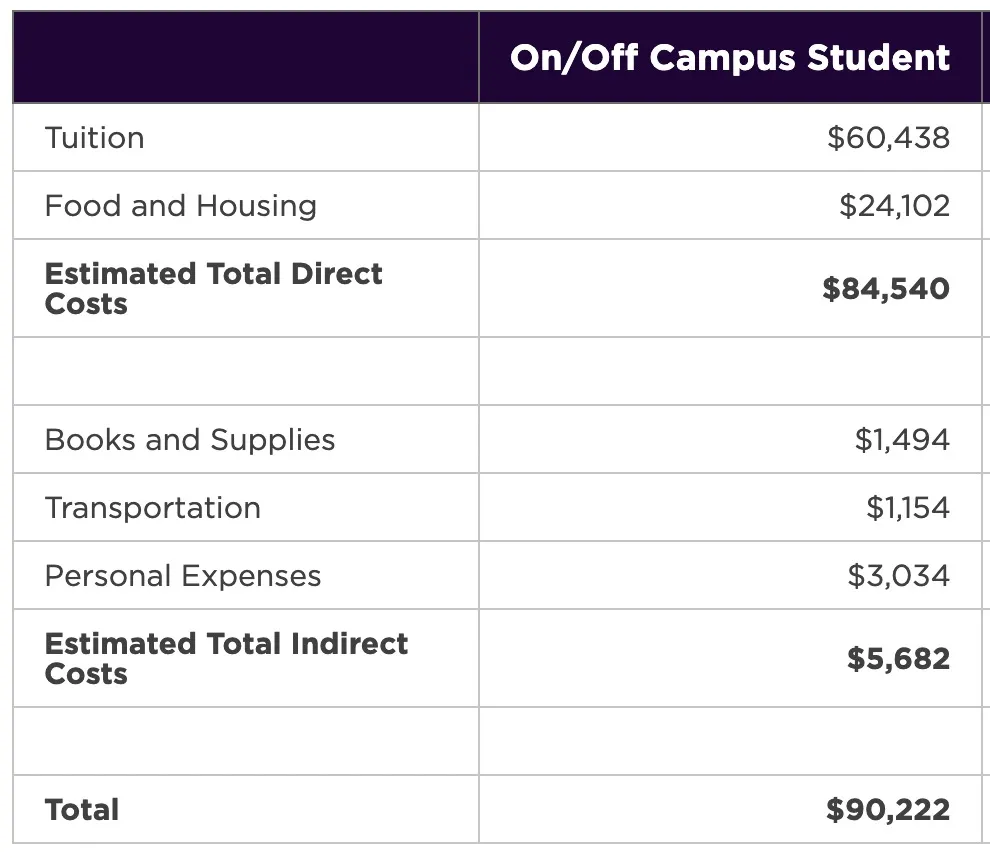
Pepperdine University surged 5.7% to $93,578.
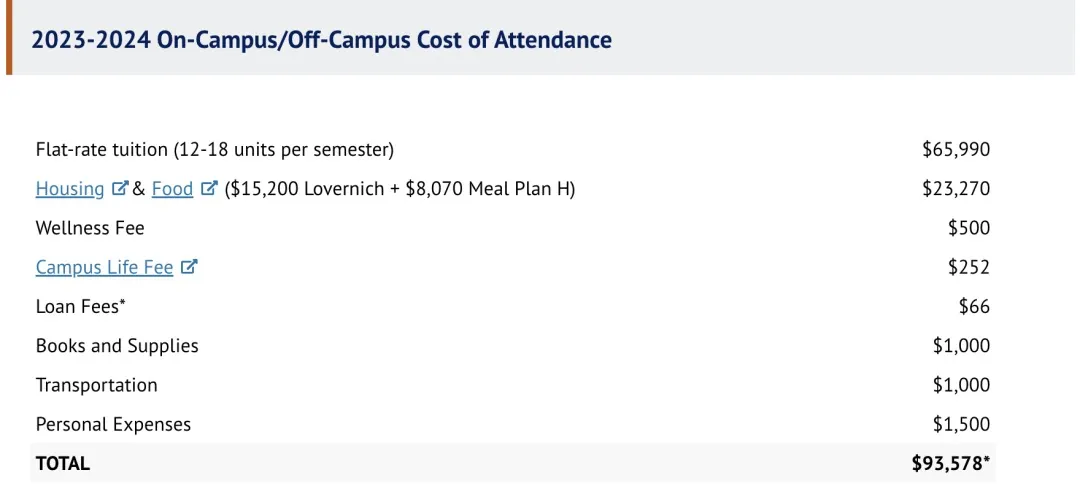
Additionally, schools like the University of Pennsylvania, Cornell, Northwestern, Dartmouth, and Wake Forest all have total annual costs near $90,000.
$90,000 per year for a private education? Four years of that will numb anyone.
Public universities hiked prices too, not just private ones.
First, the UC system. In 2021, the University of California announced a tuition increase plan: starting from Fall 2022, tuition for new undergraduates and transfers would rise each year, with specific increases based on that year's inflation rate—meaning the schools will add 0.5%-2% on top of inflation annually.
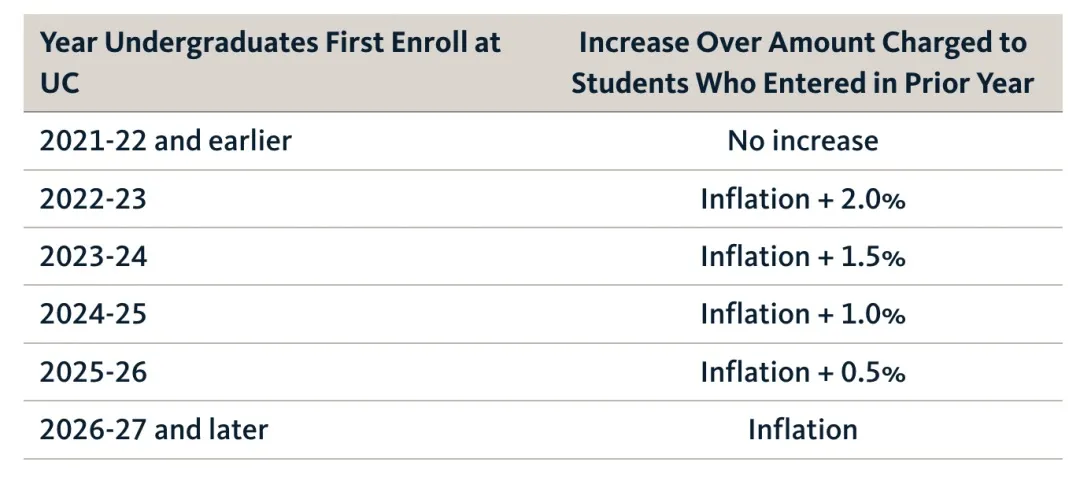
From now on, don't blame the universities for tuition hikes—blame inflation. 😅
This year, UC Irvine's total cost for international students rose to $72,776, and UCLA's to $71,091.
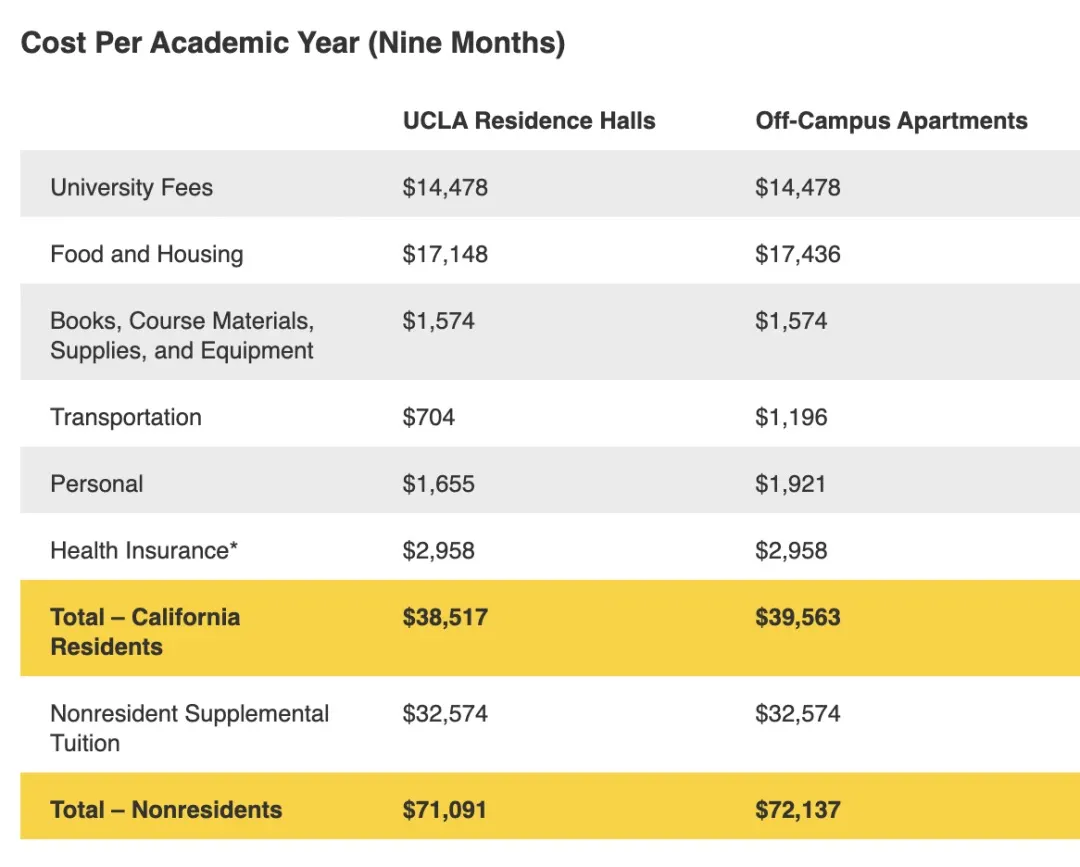
Beyond the UC system, popular public universities like University of Virginia, UIUC, Ohio State, UW-Madison, University of Maryland, and UNC also hiked prices across the board. UVA's international tuition and fees now range from $75,440 to $76,720.
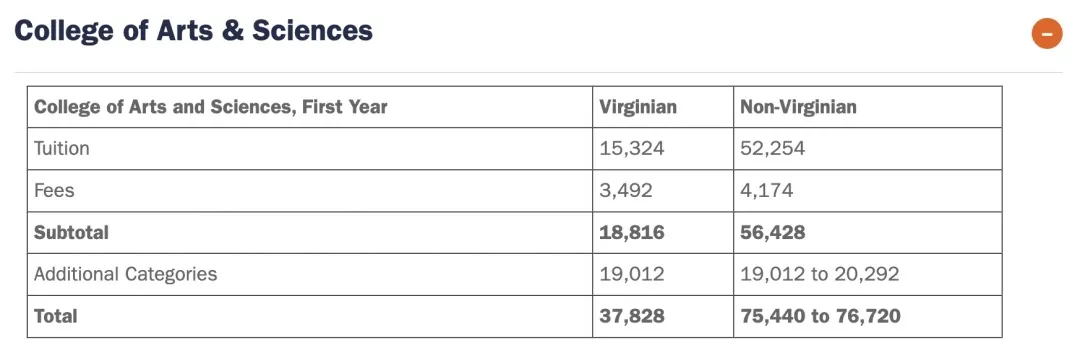
The cost of attending these popular public universities for Chinese students will only be higher than in previous years.
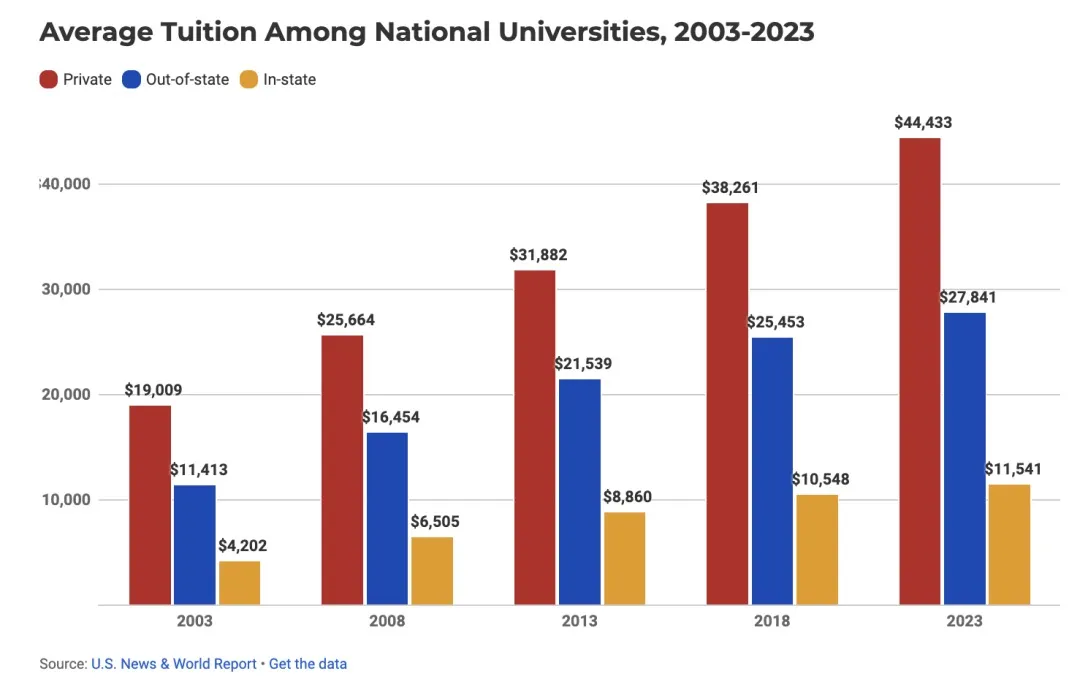
In recent years, US university tuition has risen steadily. According to U.S. News, over the past 20 years, private university tuition has gone up 134%, and out-of-state tuition at public universities has risen 141%.
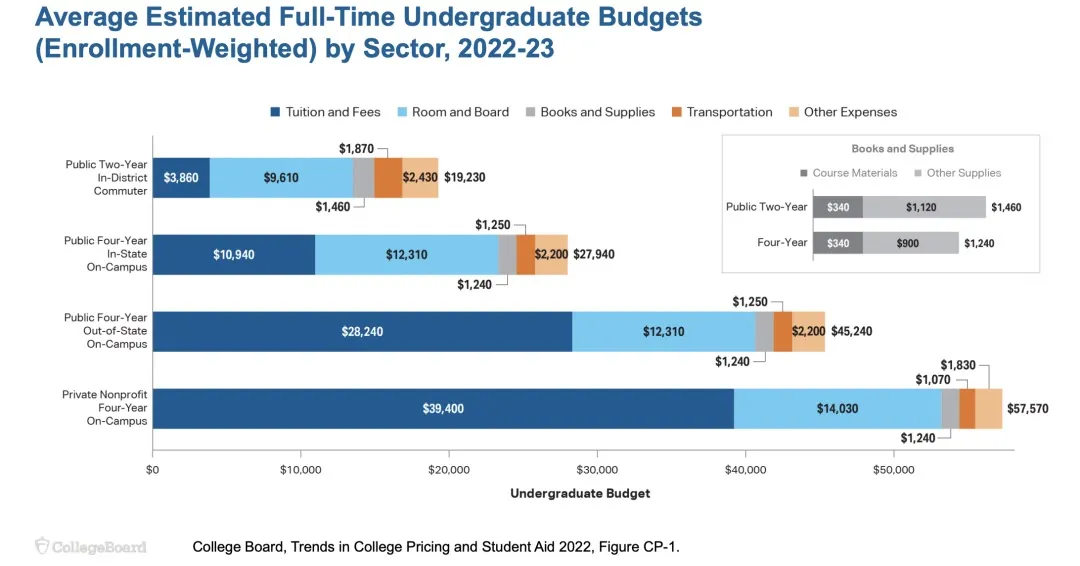
College Board data shows that in the 2022-23 academic year, international students paid around $45,000 in tuition and fees at public universities, and over $57,000 at private ones.
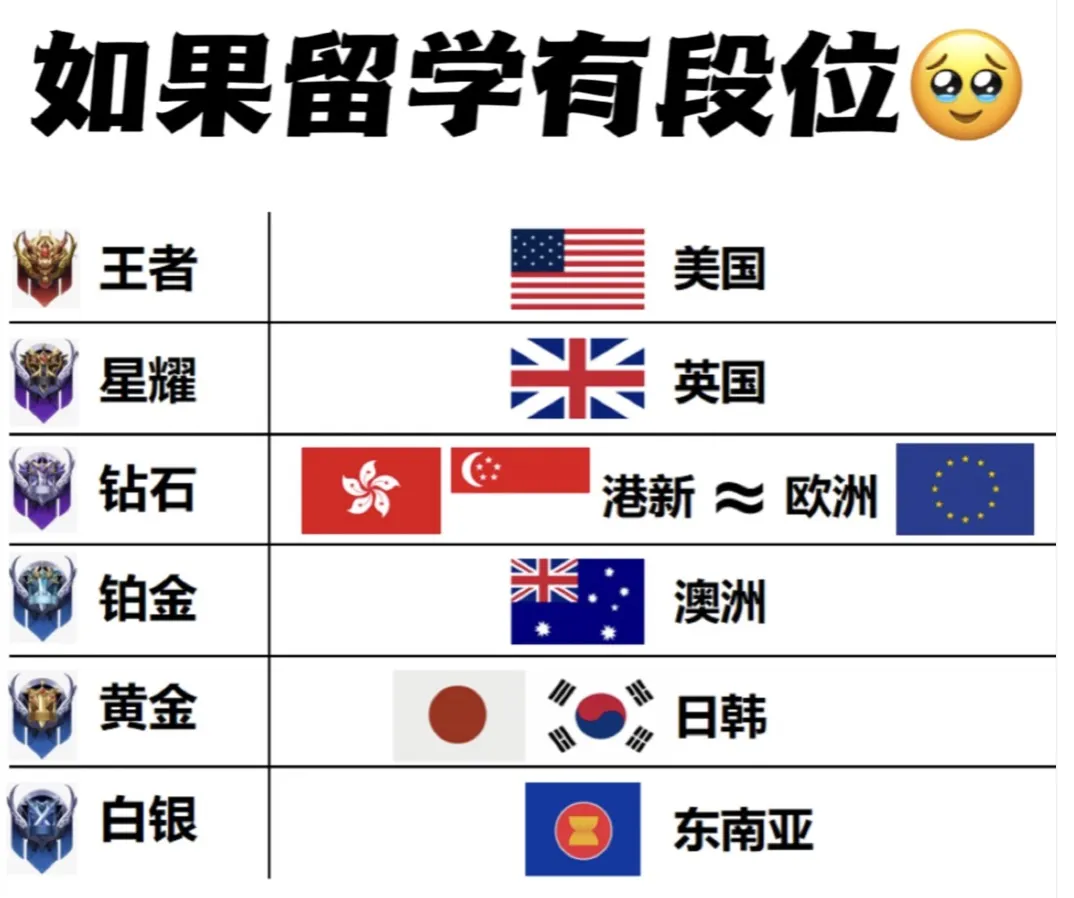
The study-abroad 'snob chain' online doesn't lie—studying in the US really is the most expensive. 😭
Currently, annual expenses for studying in the US start at 500,000 yuan. With the continuous upward trend in tuition, costs will rise by at least 20,000 yuan more each year.
Now with the dollar rate reaching 7.23, compared to around 6.7 a year ago, annual study costs have increased by another 20,000-plus yuan.
Between tuition hikes and the exchange rate surge, a four-year US undergraduate degree now costs an estimated 200,000 yuan more than before the pandemic.

Under the dual impact of tuition and exchange rates, the financial pressure of studying in the US is gradually increasing in the post-pandemic era, and it might not ease up anytime soon.
With admission thresholds currently recovering but not yet skyrocketing, it's wise to plan study abroad as early as possible. As the number of students going abroad only continues to grow, in the future we might again face the awkward double pressure of high costs and intense applications.
Is Studying Abroad Still Worth It?
Beyond high costs and exchange rate fluctuations, on the study-abroad track, we may still face many unseen difficulties ahead.
For example, the 'study-abroad millions, monthly salary three thousand' argument about wasted potential 👇

Or the 'Ivy League graduate, returned to mediocrity' dilemma of high start, low finish.

Behind the various narratives of study-abroad pessimism lies the anxiety and helplessness many international students face regarding 'degree inflation.'
While education is also an investment and cost-effectiveness matters, the meaning of studying abroad cannot be measured in money alone.
On Zhihu, under the question 'How much impact does studying abroad have on a person's life?' there are over 3,000 answers filled with reasons why we choose to study abroad.
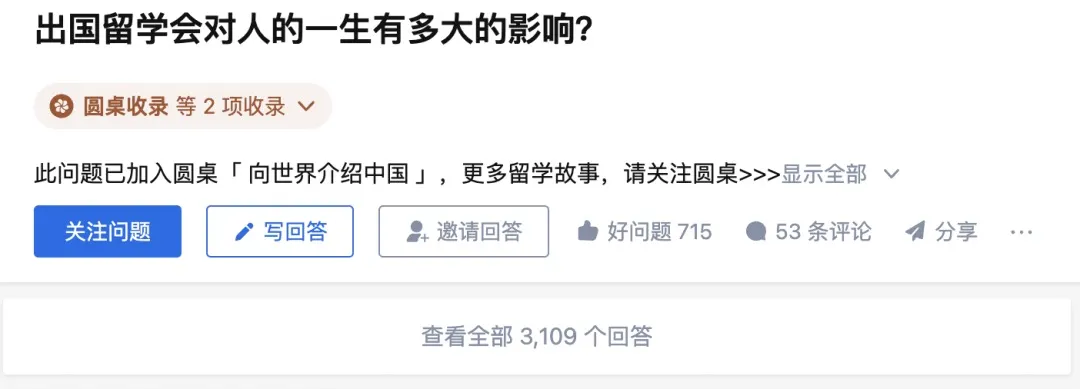
Studying abroad is a unique growth experience and life journey that brings us new ways of thinking, greater tolerance, and endless possibilities to explore the future. All of these will influence us for a lifetime.
Difficulties may keep popping up during the study-abroad process, but isn't this process of leveling up just part of growing?
Individuals cannot change the macroeconomic environment. As international students, what we need to do more is to work hard, change ourselves, and make our study abroad experience more valuable and meaningful.