
Duke University's Master of Engineering in Financial Technology is a new program jointly launched in 2019 by the Pratt School of Engineering and the Duke Financial Economics Center (DFE). This program drives innovation in the financial industry by teaching computer and programming skills alongside industry-specific business fundamentals, and its career prospects are highly promising! Today let's dive into Duke's FinTech program. If you have other questions, scan the QR code below for a one-on-one consultation.

I. Program Overview
Financial Technology, as the name suggests, is the integration of finance and technology. With the rapid advancement of technology, emerging technologies such as big data, cloud computing, artificial intelligence, and blockchain are being combined with finance, applied to aspects like payment and settlement, trading and investment, and financing management. Thus, FinTech can be considered the core competitive element for the next stage of financial institution development.
The program duration is 3-4 semesters, emphasizing the use of tools like blockchain, machine learning, and secure software development to build solutions. There are two tracks: technology and technology management, allowing students to customize their coursework based on career plans.
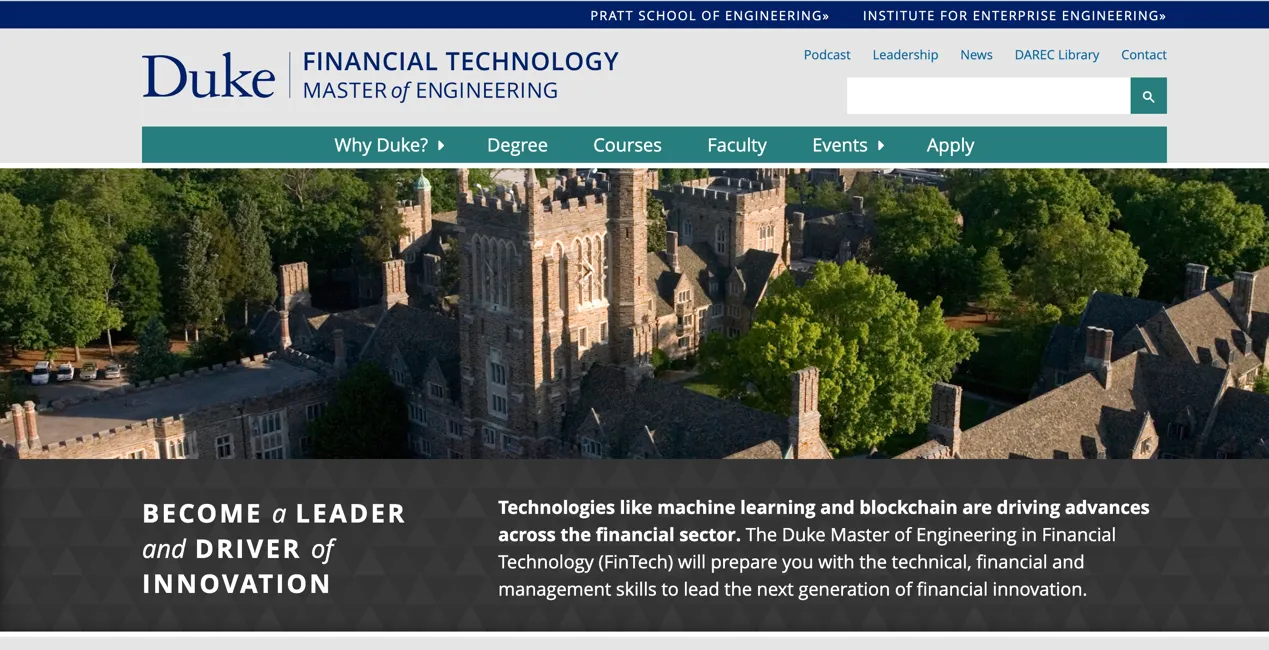
Program official website link:
https://fintech.meng.duke.edu/
II. Curriculum
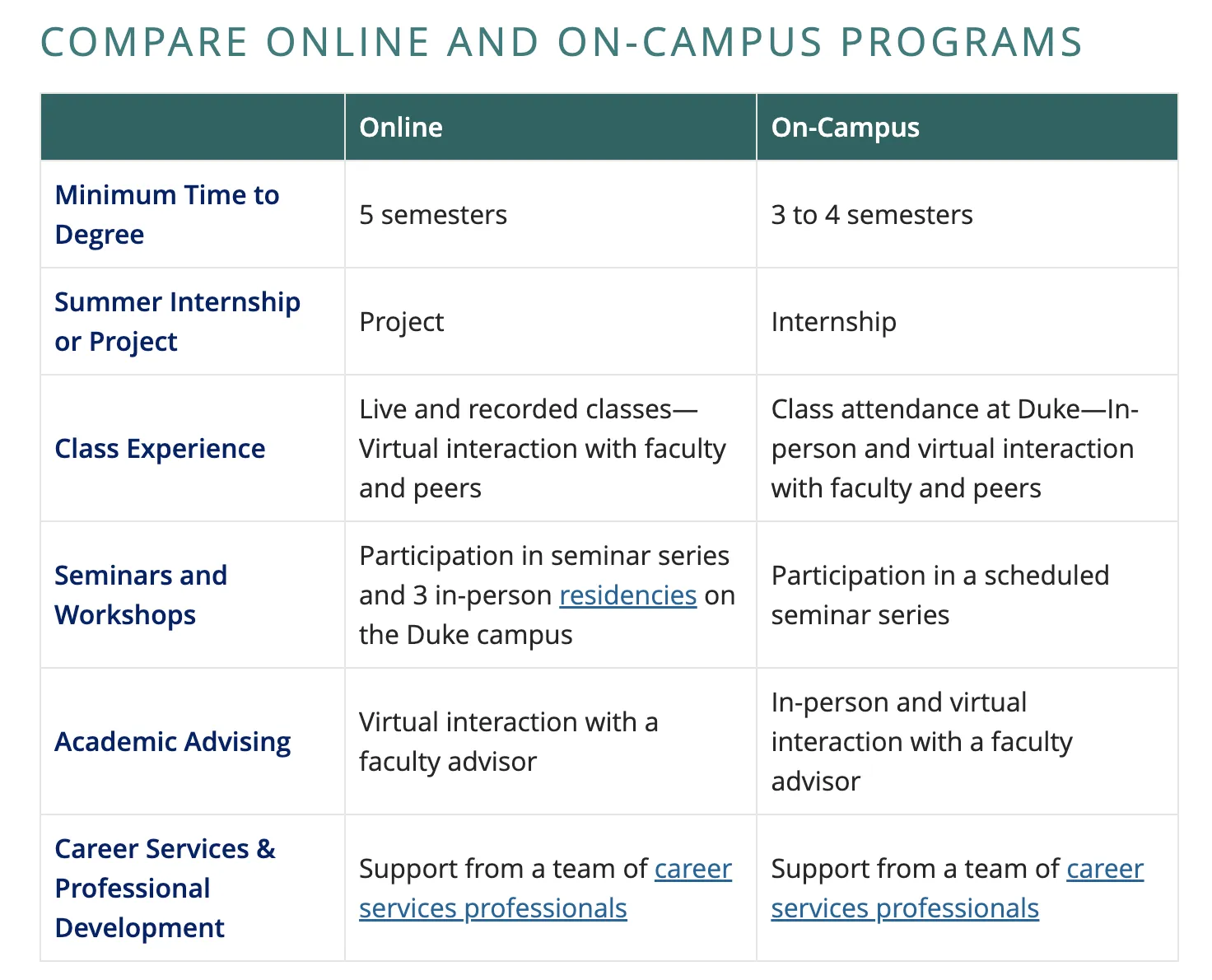
The FinTech program offers flexible study modes: you can choose full-time study completed in 3 semesters, or part-time study completed in 5 semesters.
Moreover, FinTech does not have stringent undergraduate major requirements. Majors in finance, engineering, economics, business, and mathematics are all eligible to apply. Compared to most finance programs, the admission rate for female students is also relatively favorable.

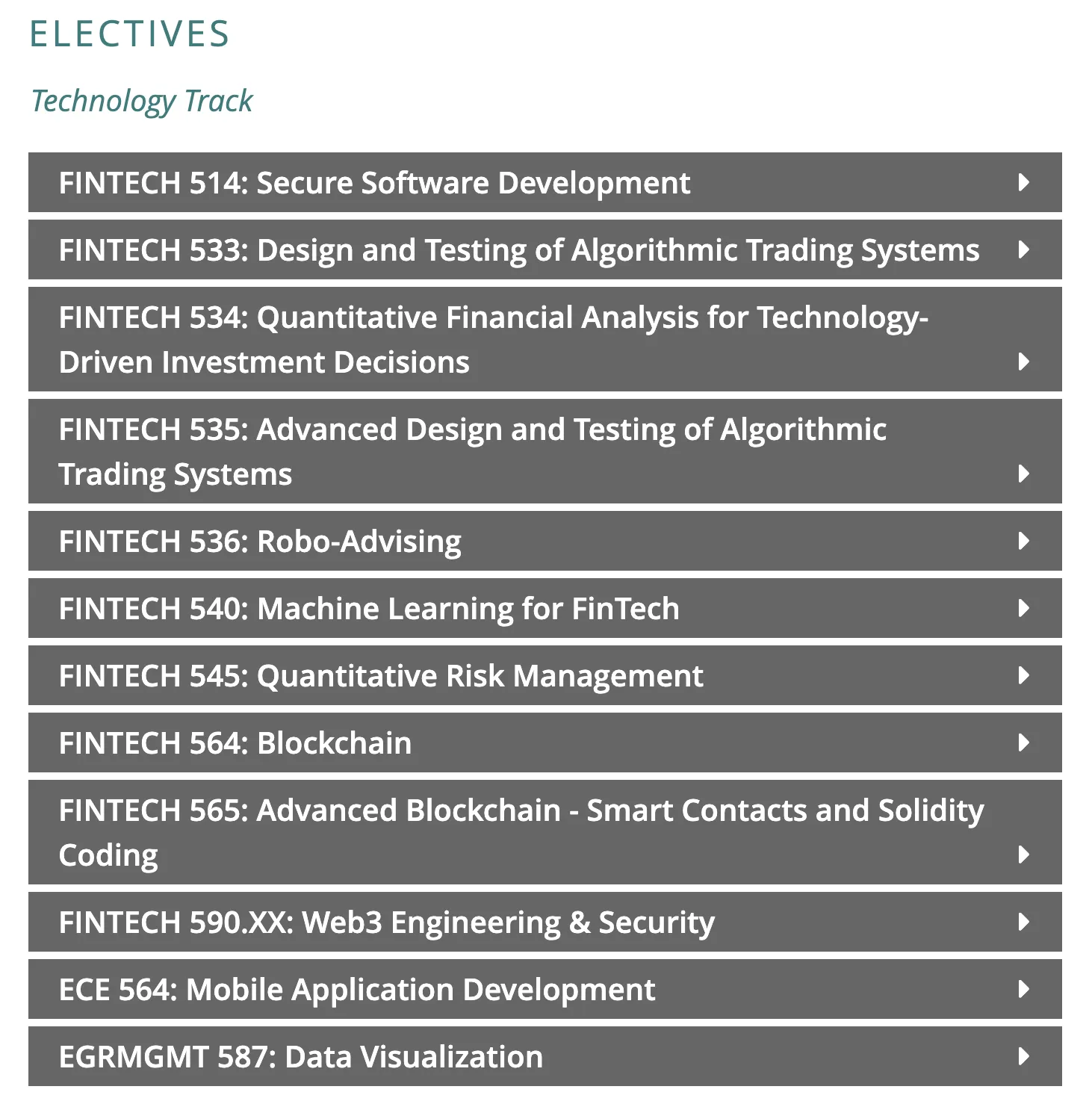
Students must complete two industry preparation core courses, four technical core courses in FinTech, programming, and finance, three FinTech electives, an optional track (Technology or Technology Management), a capstone project, and an internship.



Detailed curriculum official website link:
https://fintech.meng.duke.edu/courses
III. Career Prospects
As mentioned at the beginning, based on the current development trends of financial institutions, the career prospects for FinTech are excellent. Roles such as blockchain developer, app developer, financial analyst, product manager, compliance expert, cybersecurity analyst, and quantitative analyst are all great job options.
According to a survey by ItJobsWatch, the demand for FinTech has surged since 2015. From massive layoffs and role adjustments in investment banks to internet investment layouts, various industries have entered the field. Sectors such as finance, real estate, and the internet are all hiring FinTech professionals in large numbers. According to a Google survey, the average annual salary for FinTech talent in the United States can reach up to 88,000 US dollars.

Image source: https://www.payscale.com/
IV. Admission Requirements
Let's first look at the previous admission profile as a rough reference.
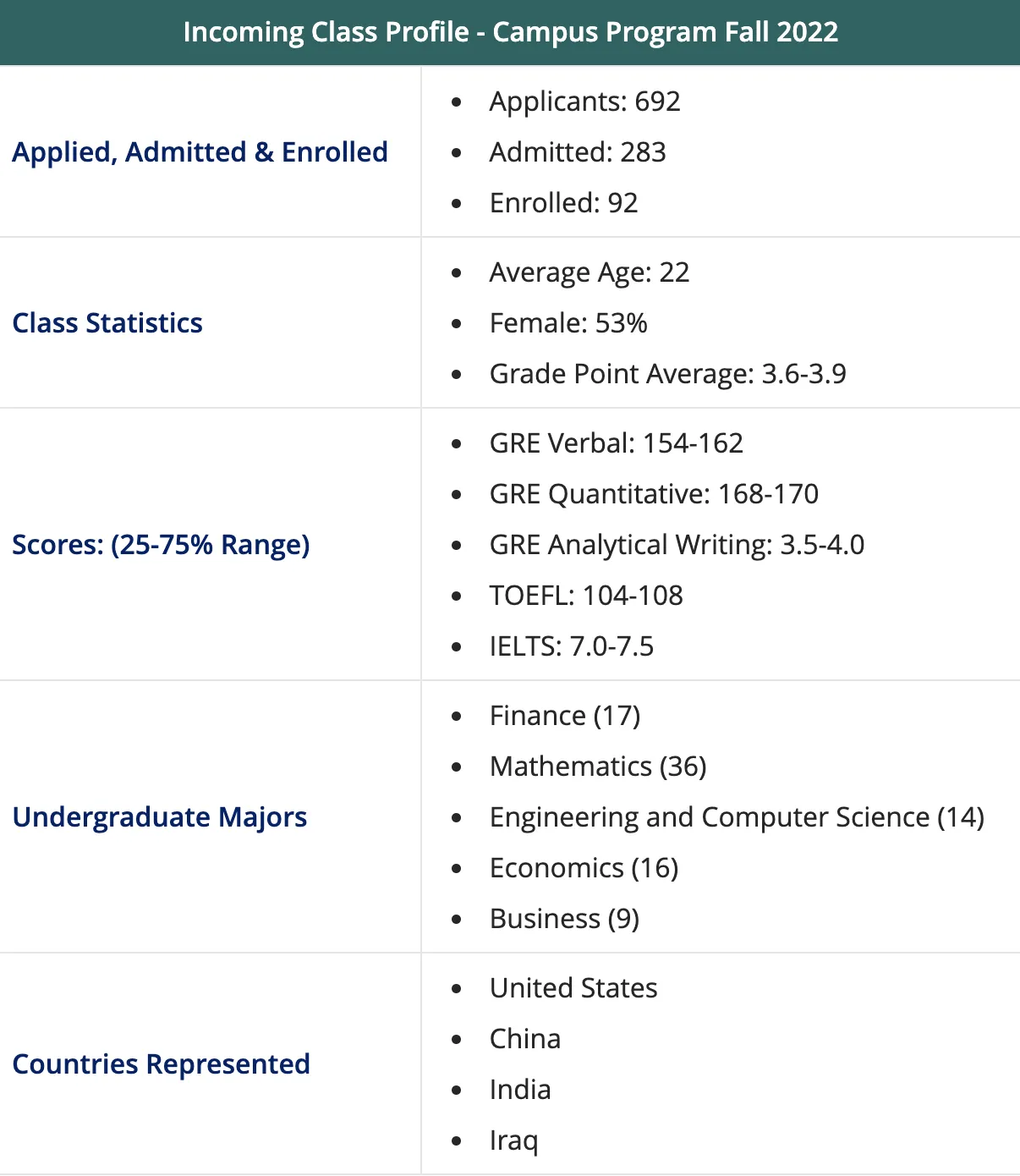
It's evident that FinTech admission is highly inclusive, with no strict limitations on geography or undergraduate major. Now let's examine the specific application requirements.
- One Statement of Purpose
- Video introduction (one question, with 60 seconds of preparation time)
- 3 letters of recommendation (one must be from an academic source)
- Application fee: $75
- No minimum language score requirement, but school-published data shows a TOEFL average around 103-109
- GRE was previously required, but optional for 2024

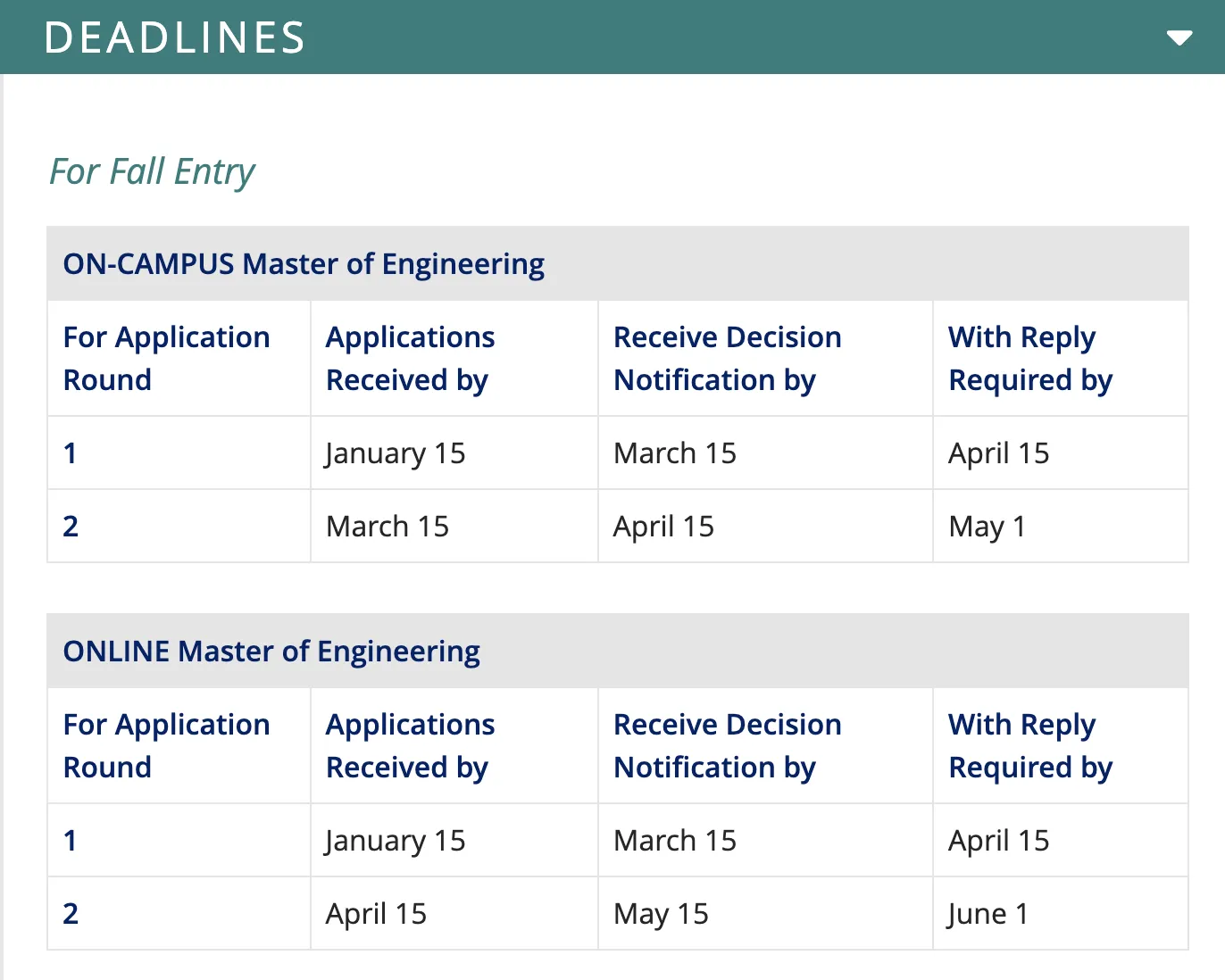
Application Deadlines
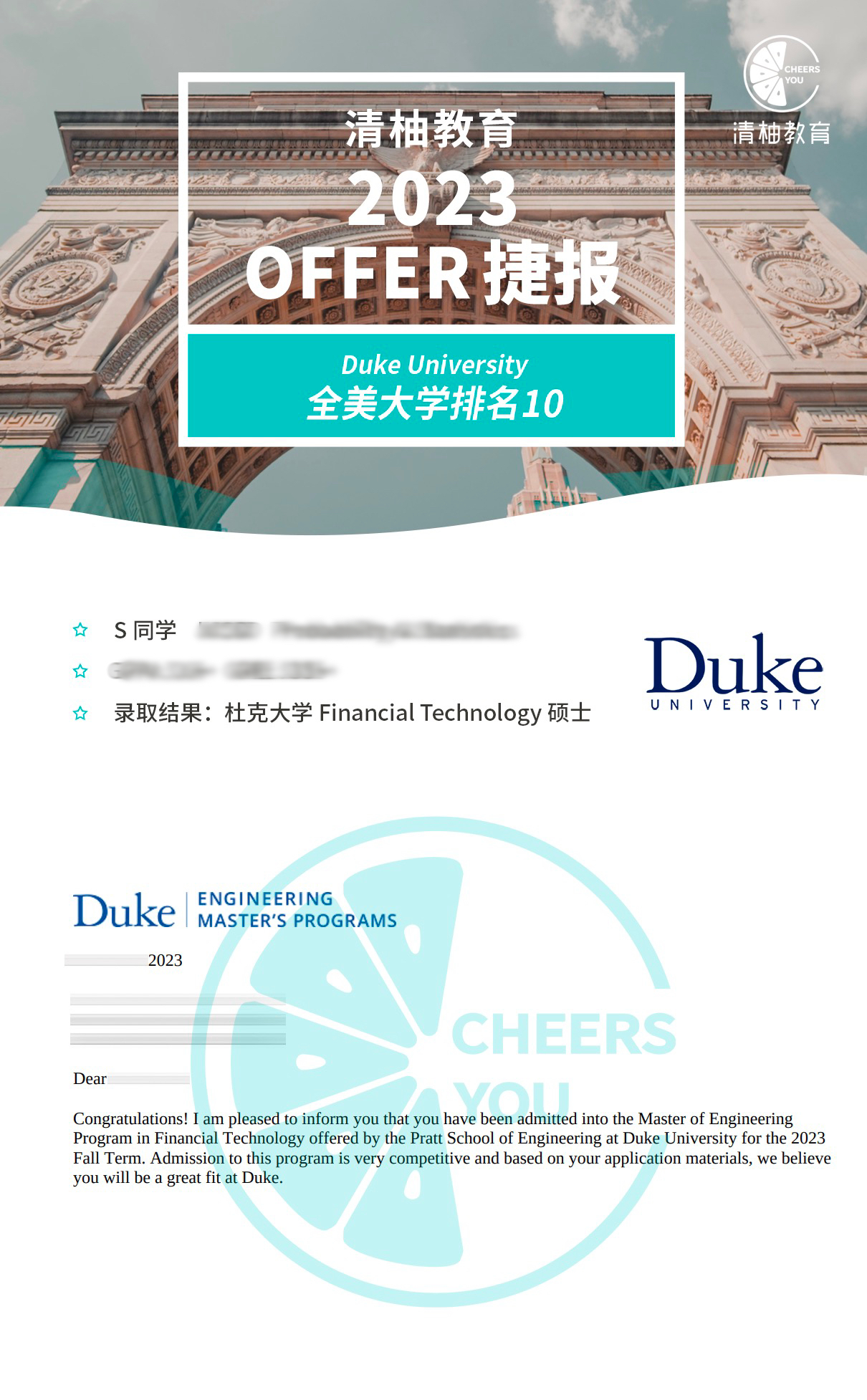
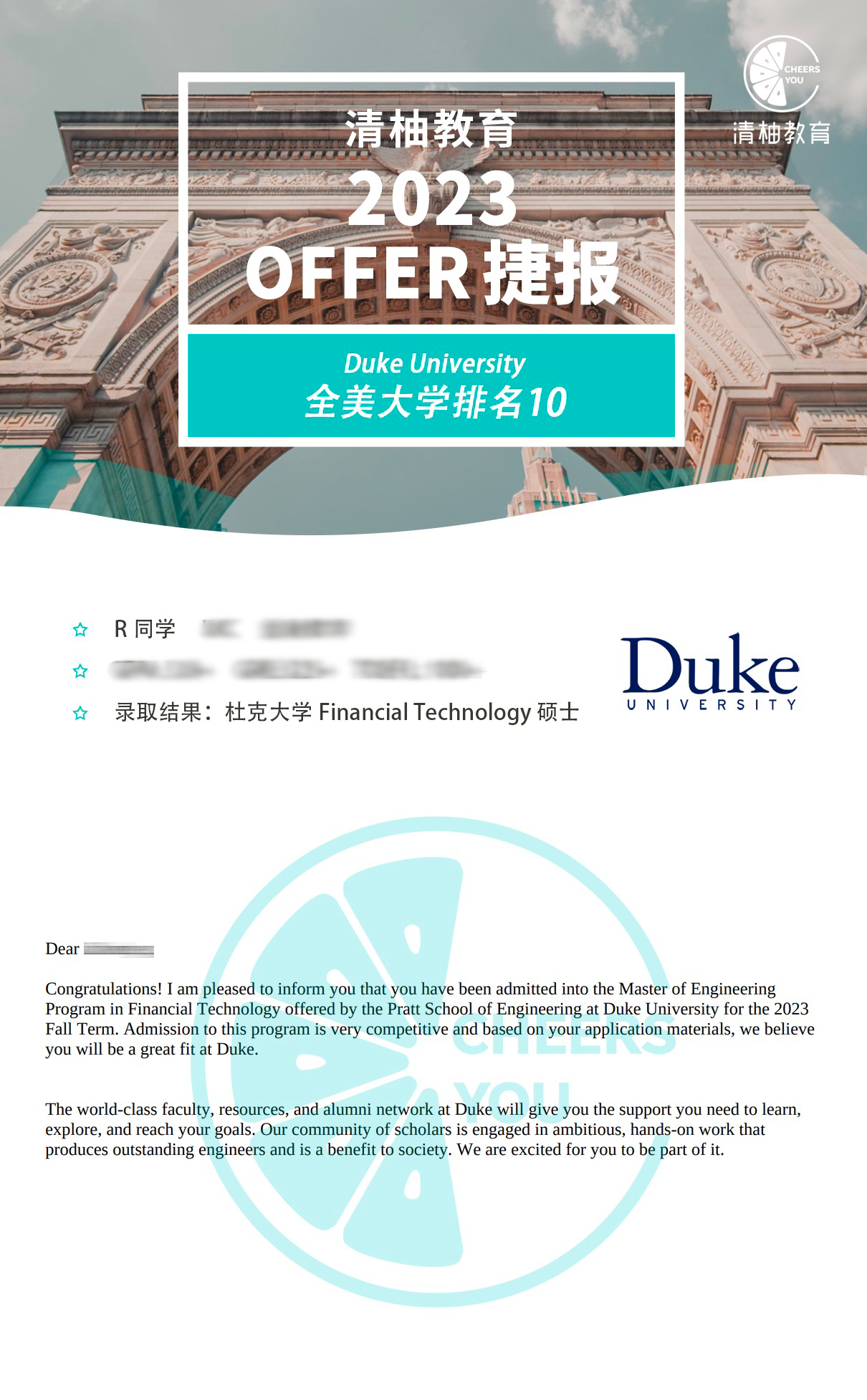
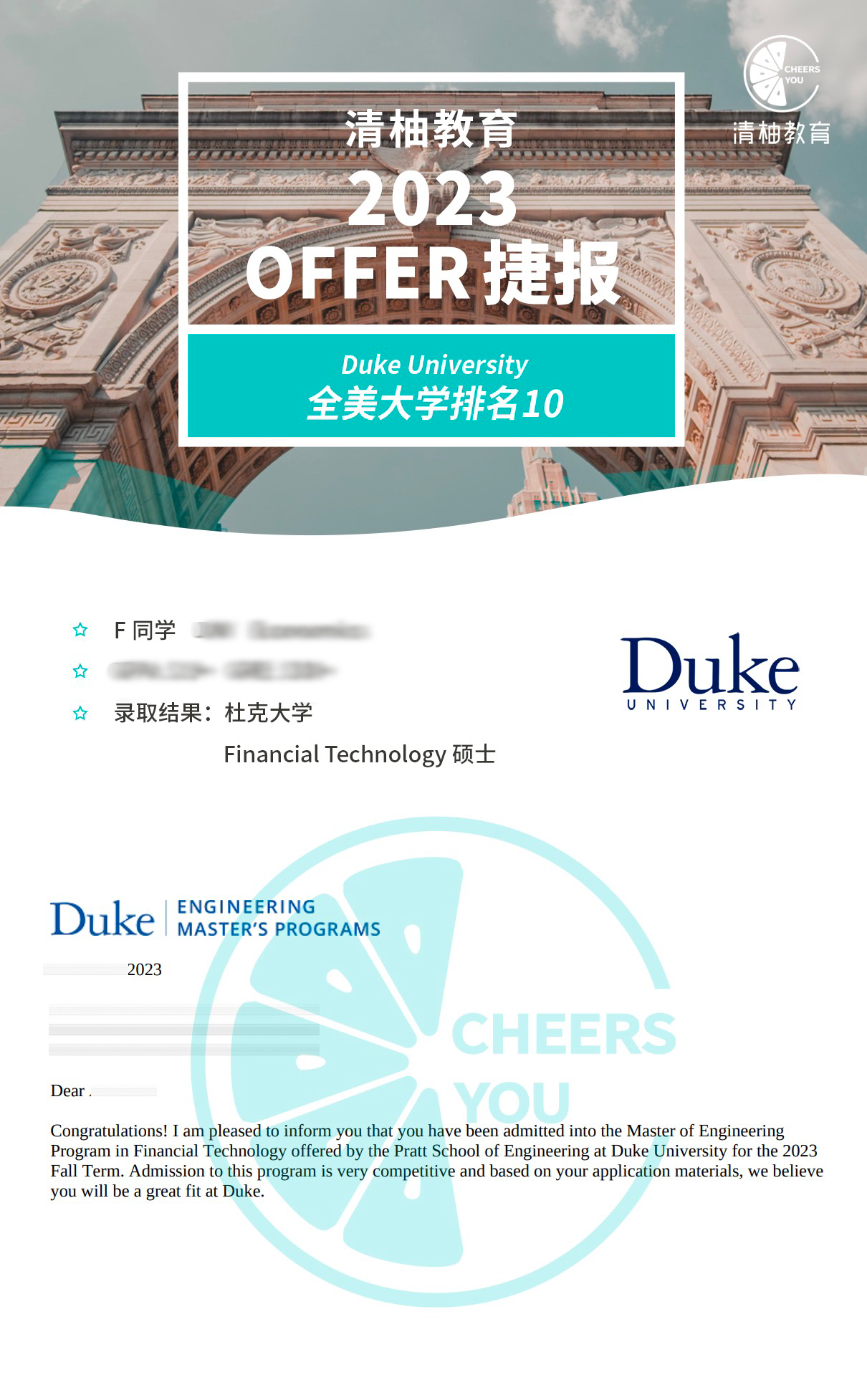
Past Admission Examples:
For more questions about graduate school applications, you can also add the contact information of CheersYou(清柚教育) consultants below for more details.