U.S. ICE and DHS have jointly announced the addition of 8 new STEM fields!
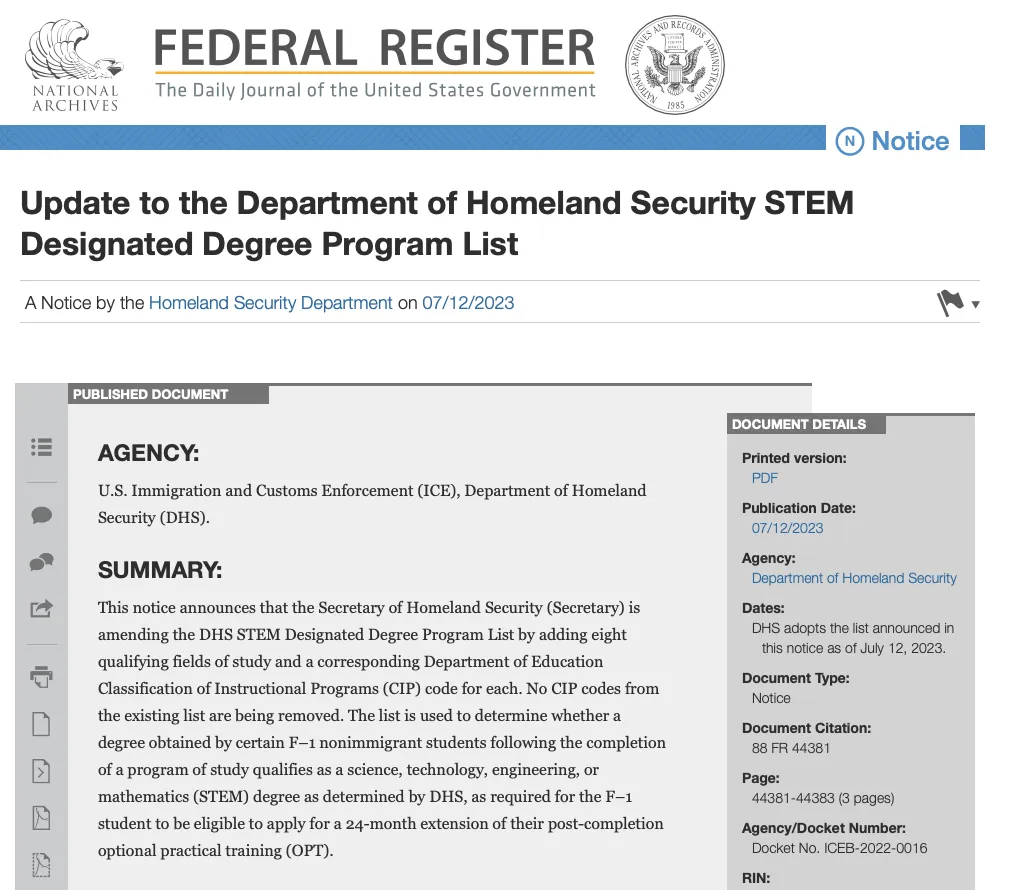
The details are as follows:
- Landscape Architecture
- Institutional Research
- Mechatronics, Robotics, and Automation Engineering Technology/Technician
- Composite Materials Technology/Technician
- Linguistics and Computer Science
- Developmental and Adolescent Psychology
- Geospatial Intelligence
- Demography and Population Studies
Last year, the U.S. government added 22 new STEM fields, including popular majors like data science, data analytics, and financial analysis, as well as traditionally liberal arts fields such as social sciences.
U.S. universities typically designate individual programs as STEM within the approved categories, entitling graduates to three years of OPT (12+24 months).
Non-STEM students, on the other hand, only qualify for one year of OPT and must leave the U.S. if they fail to secure an H-1B visa during that period.
This policy gives universities greater leeway, and more programs will likely apply for STEM designation—great news for international students aiming to work in the U.S. post-graduation.
The specifics depend on each university's implementation. CheersYou(清柚教育) will continue to bring you the latest updates~
.png?x-oss-process=style/opt-webp)