U.S. universities offering energy engineering programs are numerous, and they are not all alike—each has its own strengths and focus areas. Moreover, each field of study comes with corresponding extensions. For example, the nuclear energy field includes coursework in nuclear physics, thermodynamics, materials science, and nuclear power plant design; the solar energy field covers renewable energy, including solar heating, electricity, and management courses; the sustainable energy field, in addition to specialized knowledge, emphasizes guiding students to apply technologies to improve efficiency. CheersYou(清柚教育) advisors have also compiled some popular choices for studying energy engineering in the U.S. in recent years. Interested students can refer to the following programs, and for more questions, scan the QR code below for a one-on-one consultation.

Yale University – Environmental Science and Management (MEM)
This two-year program provides students with an in-depth understanding of natural and social systems by examining the relationships among science, management, and policy, thereby better addressing environmental and natural resource issues.
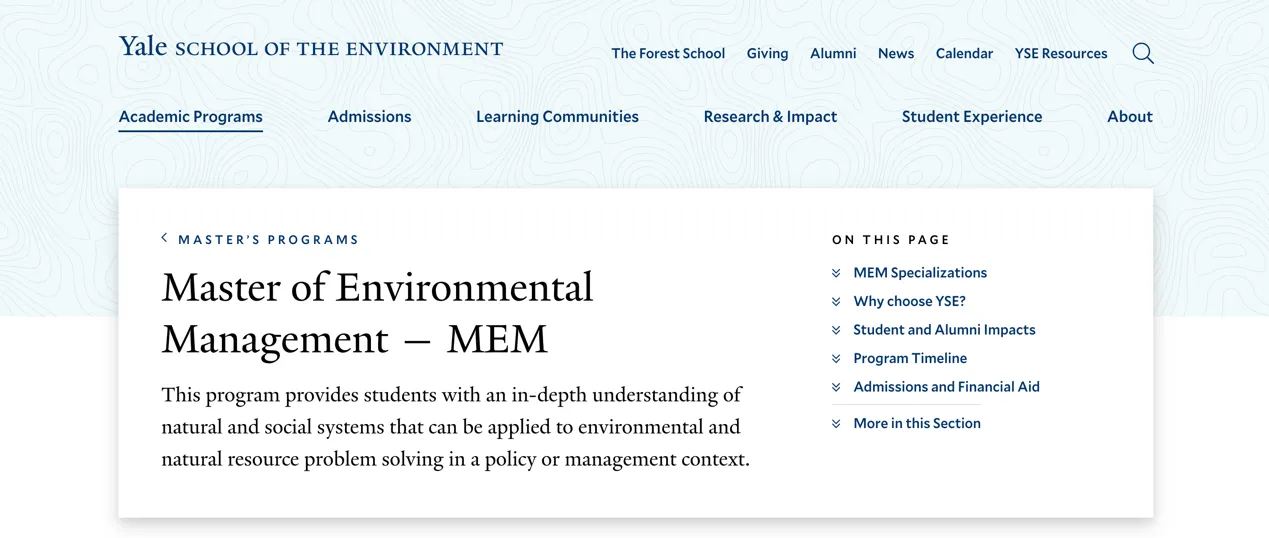
Official Website: https://environment.yale.edu/academics/masters/mem
Stanford University – Energy Resource Engineering (ESE)
ESE's research focuses more on achieving transformation in global energy supply, production and conversion, storage, and utilization to better practice energy sustainability.
Official Website: https://ese.stanford.edu/
Washington University in St. Louis (WUSTL) – Energy, Environmental & Chemical Engineering (EECE)
The EECE program is two years long, aimed at providing students with cutting-edge professional courses and skills training to cultivate their professional practice ability, teamwork ability, and industry leadership.
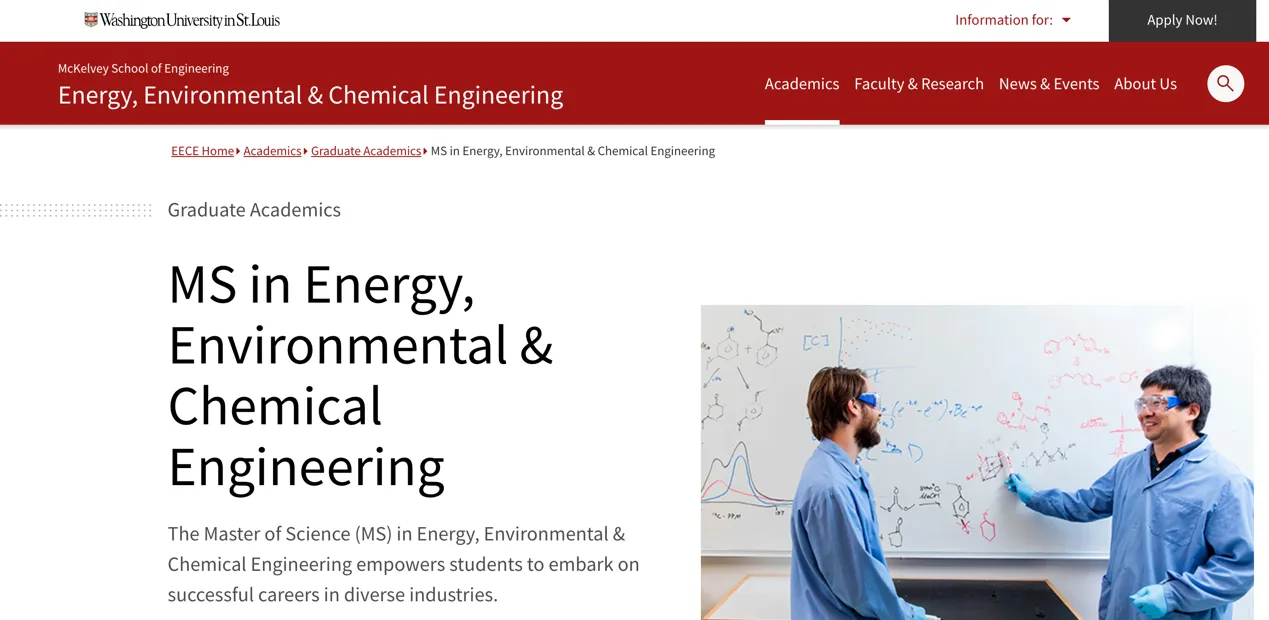
Official Website: https://eece.wustl.edu/academics/graduate-programs/MS-in-Energy-Environmental-Chemical-Engineering.html
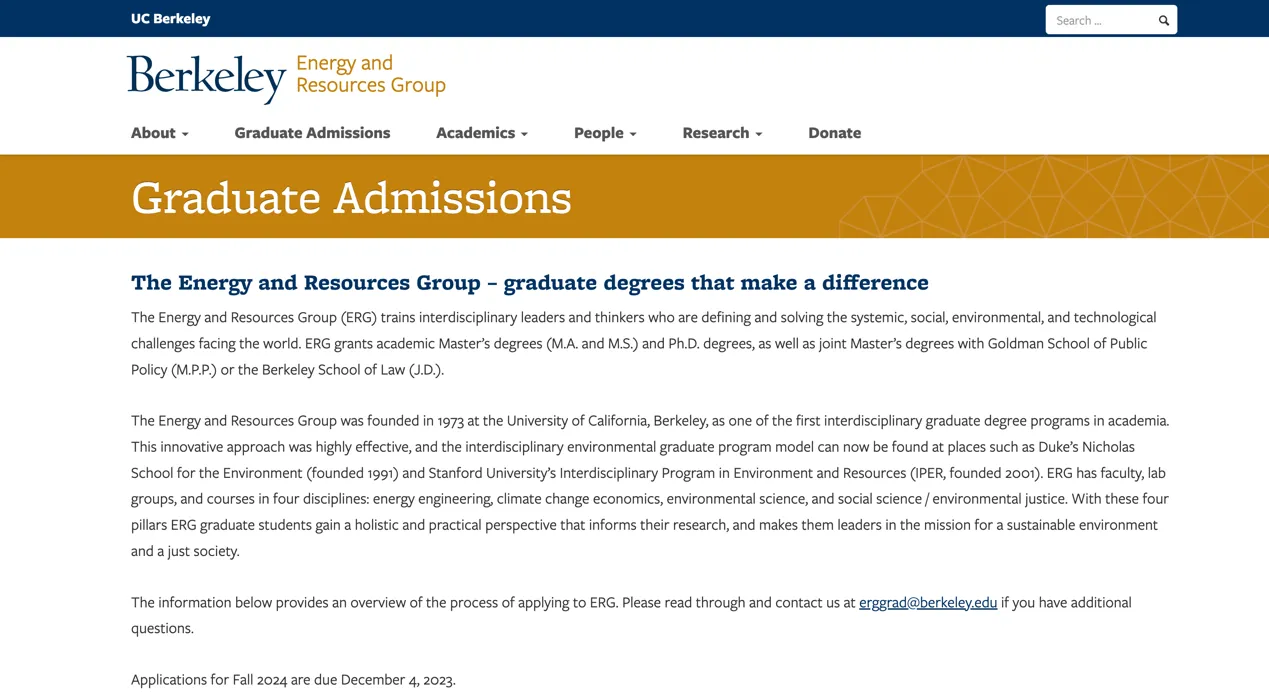
University of California, Berkeley – Energy and Resources (ERG)
This two-year program imparts specialized knowledge to address critical issues arising from the interaction between humans and the environment.
Official Website: https://erg.berkeley.edu/academics/admissions/
Carnegie Mellon University (CMU) – Energy and Science and Technology
Official Website: https://engineering.cmu.edu/research/energy-environment.html
University of Michigan–Ann Arbor – Environment and Sustainability (SEAS)
SEAS is a two-year program, one of the leading environmental master's programs in the U.S. and globally, aimed at guiding students to achieve sustainable development goals and understand their relationship with sustainability.
Official Website: https://seas.umich.edu/
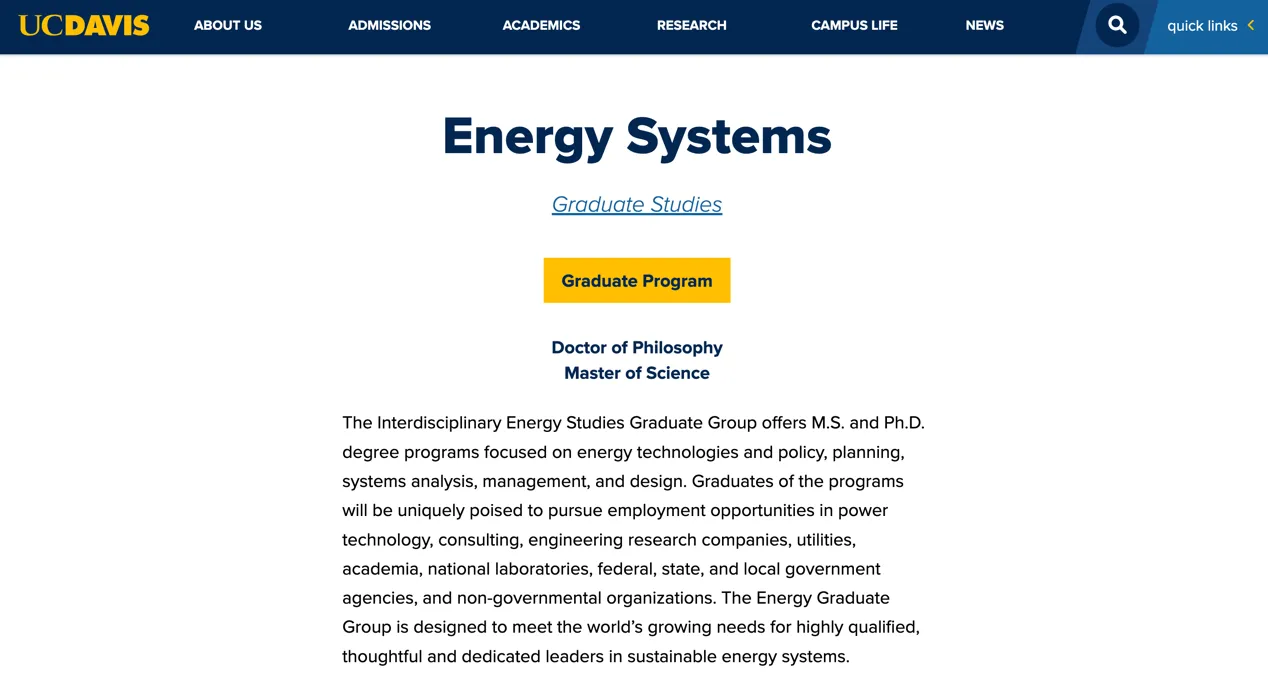
University of California, Davis – Energy System
This program's curriculum focuses on energy technology and policy, planning, systems analysis, management, and design. Research topics start from both supply and demand sides. On the supply side, it aims to reduce the risks of energy production while increasing the supply and competitiveness of low-carbon renewable energy. On the demand side, it seeks to improve efficiency and change behavior, thus significantly reducing energy use and greenhouse gas emissions.
Official Website: https://www.ucdavis.edu/graduate-programs/energy-systems
University of Southern California (USC) – Green Technology
Green Technology is a highly interdisciplinary degree program that emphasizes green systems and the environment, energy technology and efficiency, as well as sustainability and society. By understanding the product lifecycle from origin to recycling, this discipline seeks opportunities for alternative sourcing, conservation, efficiency, and reuse.
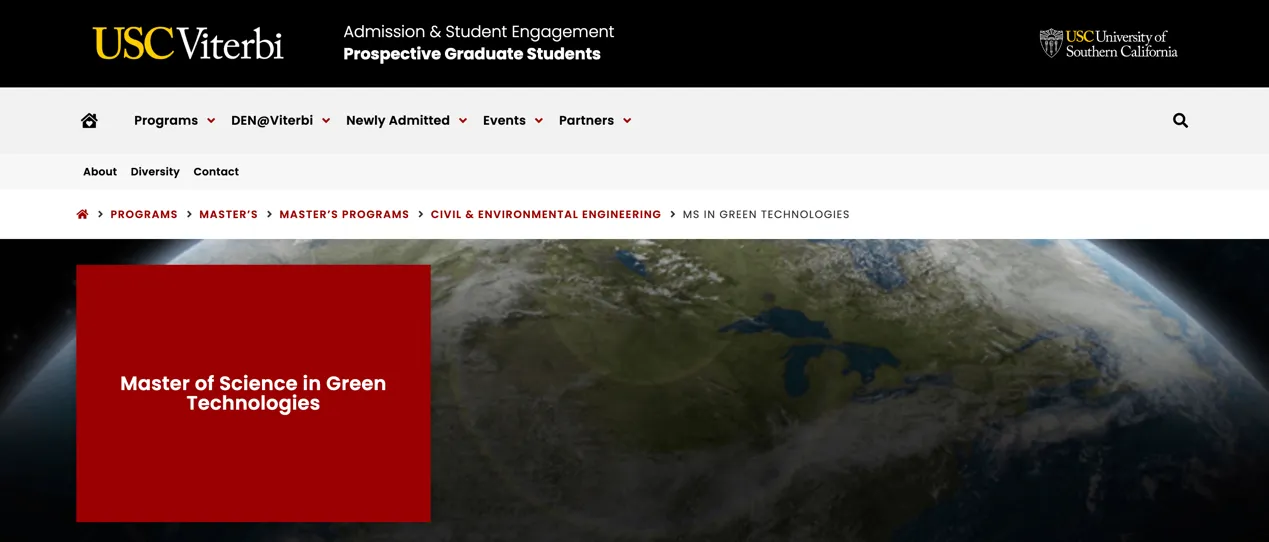
Official Website: https://viterbigradadmission.usc.edu/programs/masters/msprograms/civil-environmental-engineering/ms-green-tech/
In addition, universities like Caltech, MIT, and Cornell all have their own solar energy research centers, with main research directions such as photoelectric conversion, optoelectronic materials, and photoacoustic photovoltaics.
For more admission case studies and questions about studying abroad and graduate applications, you can also add the contact of a CheersYou(清柚教育) advisor below for detailed information.