
"The GRE is changing. Can I still use my current GRE practice materials?"
Of course they are!
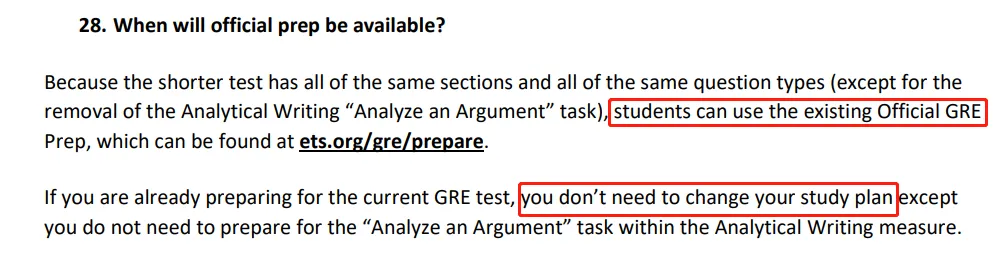
ETS has clearly stated that the test question types remain unchanged, so existing prep materials are completely applicable and there's no need to change your study plan!

If you see materials like "specially designed for the revised GRE" study methods or question-solving logic on the market, be sure to scrutinize them carefully. Don't let gimmicks derail your original prep plan – because those "specially designed" materials might very well be the same as what you're already using!
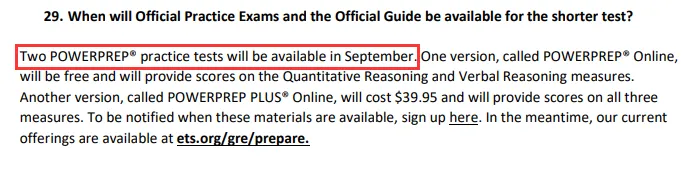
So just follow your own study plan. The two official new mock tests will be released in September, at which point the specific proportion of question types in each section will become clearer.
In fact, many answers to questions about the GRE reform can be found in detail on the ETS official website. We strongly recommend that you carefully read how ETS addresses these questions to better prepare for the GRE!
Frequently Asked Questions
Which version of the GRE should I take to get a high score?
A: The new GRE will replace the current test on September 22, 2023, so your application deadline is the primary factor to consider.
Scores will be delivered 8-10 days after the test, so if your application deadline is the first week of October or earlier, it's best to take the current test.
If you don't need to consider application deadlines, choosing between the current and the revised test is more a matter of personal preference.
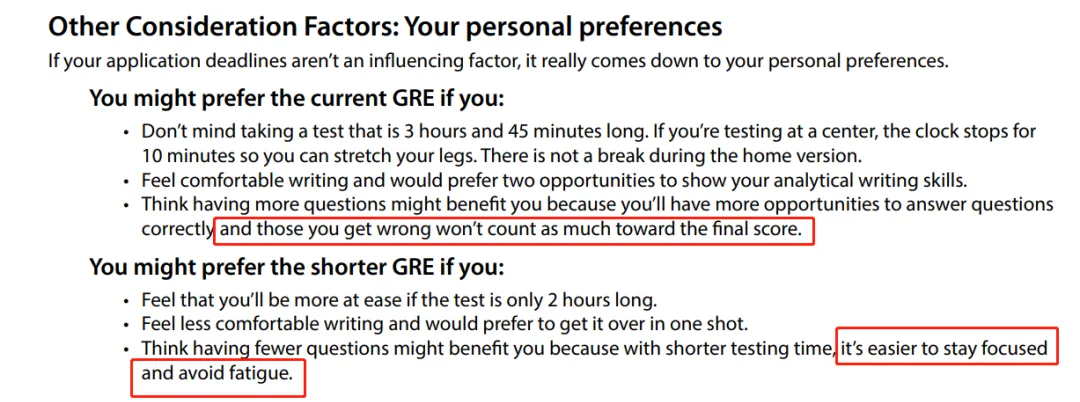
The current GRE is a better fit for you if:
• You have strong test-taking endurance, don't mind a 3-hour 45-minute exam, and prefer a 10-minute break in the middle.
• You're good at writing and would like two opportunities to showcase your analytical writing skills.
• You feel having more questions is advantageous because you'll have more chances to answer correctly, and the questions you miss won't impact your score as much.
The revised GRE is a better fit for you if:
• You have weaker test-taking endurance and would feel more at ease with a 2-hour exam.
• You're less confident in writing and prefer to complete the essay in one sitting.
• You think fewer questions will benefit you because the shorter testing time makes it easier to stay focused and avoid fatigue.
Overall, the new test has more uncertainties. With the removal of the easier Argument task from the writing section, scoring well in writing may become harder. Additionally, the lower margin for error means it could be more difficult to achieve a high score in math, which in turn increases the pressure on verbal. Thus, the difficulty of the new GRE has effectively increased, making it harder to earn high scores.
For students with flexible application timelines who struggle with long exams and tend to feel stressed during the test, the new GRE is indeed a better choice.
How will schools/programs compare GRE performance before and after the reform?
A: Because the score scale remains unchanged, schools can continue to use scores from before and after September 2023 in the same way they always have.
The GRE team will provide schools with specific guidance and information for admissions officers to use when comparing scores.
Will schools treat the two GRE versions differently? Is there any change in recognition?
A: No, the GRE remains the most widely recognized standardized test for graduate, business, and law school admissions, and scores are still valid and reliable.
Graduate and professional programs will continue to use GRE scores as they always have. The GRE provides scores in three areas, helping schools evaluate a candidate's preparedness for their programs.
Is the margin of error lower on the new test? Is it harder to get a high score?
A: Yes. Since there are fewer questions but the score range remains the same as the current test, each question carries more weight in the final score. This means a single wrong answer will cost more points, making high scores harder to achieve and the margin of error lower.
What impact will removing the Argument task from the Analytical Writing section have?
A: It may become harder to score well on writing. Some students might think having only one essay will make the test easier, but that's not necessarily the case.
The Argument task has predictable patterns and scoring points, making it easier to earn a high score, whereas the Issue task is more flexible, covers a wide range of topics, and is harder to score well on.
This means the writing section, which was previously somewhat marginalized, may now require more time to improve.
How many questions will be in each section?
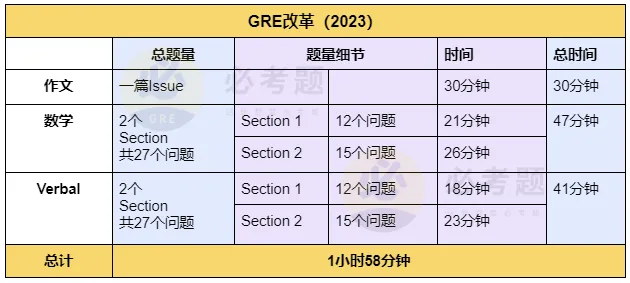
A: The new GRE will include two Math sections (27 questions total), two Verbal sections (27 questions total), and one Analytical Writing task. Note that the new GRE must be completed in 2 hours with no breaks.
Additionally, the detailed composition of question types per section has not yet been announced; we await further official notice.
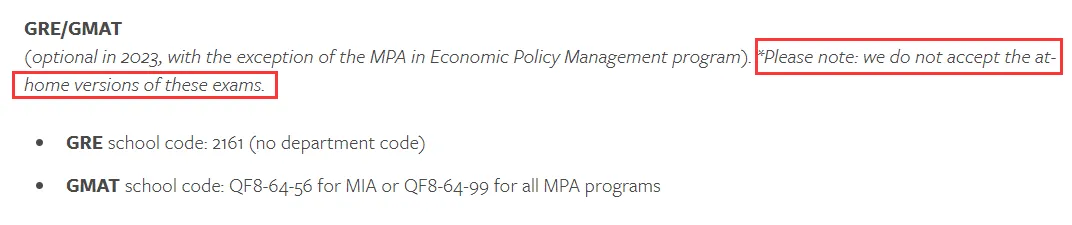
Can I still take the new GRE at home?
A: Yes. However, at-home testing can have technical issues, and some schools have explicitly stated they do not accept GRE at-home scores (e.g., Columbia SIPA). In-person tests carry more credibility in actual admissions, so we recommend you register for an in-person test as early as possible.
Basic Questions
Will the time per question be shorter on the new test?
A: No. The number of questions has decreased, but the average time per question remains roughly the same, so your timing strategy will be similar to before.
Does the new GRE still use section-level adaptive difficulty?
A: Yes, the Math and Verbal sections still use section-level adaptive difficulty. You can move back and forth within a section, mark questions for review, and change answers as many times as needed.
Registration Questions
When can I register for the new GRE?
A: Registration is open now. To register for the new GRE, simply select a test date on or after September 22, 2023.
I've already registered for the GRE – can I reschedule?
A: Yes, you can reschedule your test.
If you've registered for the revised GRE and want to switch to the current version (i.e., from a date after Sept 22 to one before Sept 22), you can reschedule through your ETS account and get one free reschedule.
If you've registered for the current test and want to switch to the revised version (from before Sept 22 to after Sept 22), you can reschedule through your ETS account, but you will need to pay the rescheduling fee.
Score Questions
Will the scoring method change after the reform?
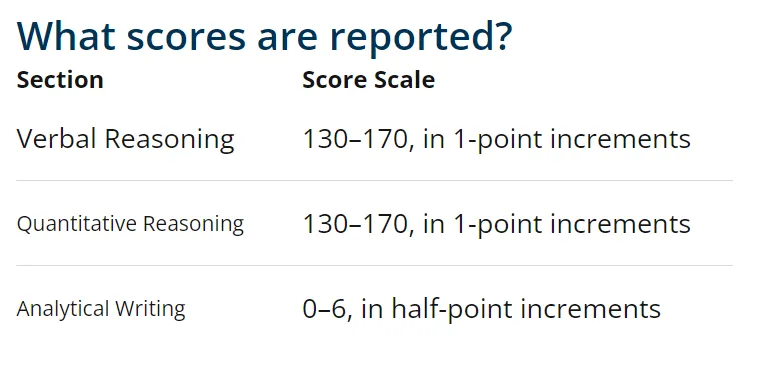
A: The scoring process for all three sections will not change, except that the Analytical Writing section will now be scored based solely on performance on the "Issue" task, rather than on two tasks.
Will schools receive official GRE score reports faster after the reform?
A: Yes. Since score delivery time for test takers is shortened from 10-15 days to 8-10 days, schools will also receive scores faster. Electronic scores are sent to schools twice a week.
Preparation Questions
When will official GRE prep materials be available?
A: The official two new POWERPREP® practice tests will be released in September. Because the revised GRE retains the same question types as the current test (except for the removal of the Analytical Writing "Argument" task), you can use existing GRE prep materials to prepare.
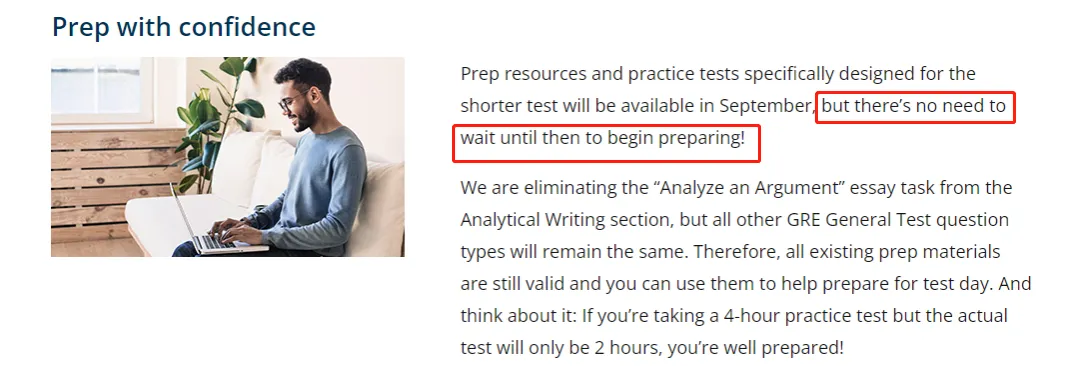
In summary, the core of the GRE has not changed after the reform. Current materials and problem-solving methodologies are still applicable to the revised GRE.
Basic aspects such as scoring method, score range, and score validity remain the same as before. If you have questions, you can add a consultant to inquire.

To adapt to the GRE reform and stay aligned with the official test format, the CheersYou(清柚教育) Must-Pass GRE Mock Test System has been fully upgraded!
CheersYou(清柚教育) Must-Pass GRE Mock Test System official website: www.bikaoci.com