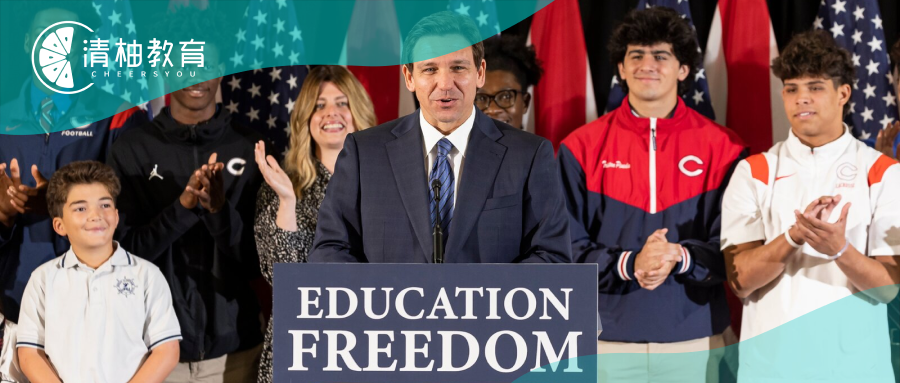
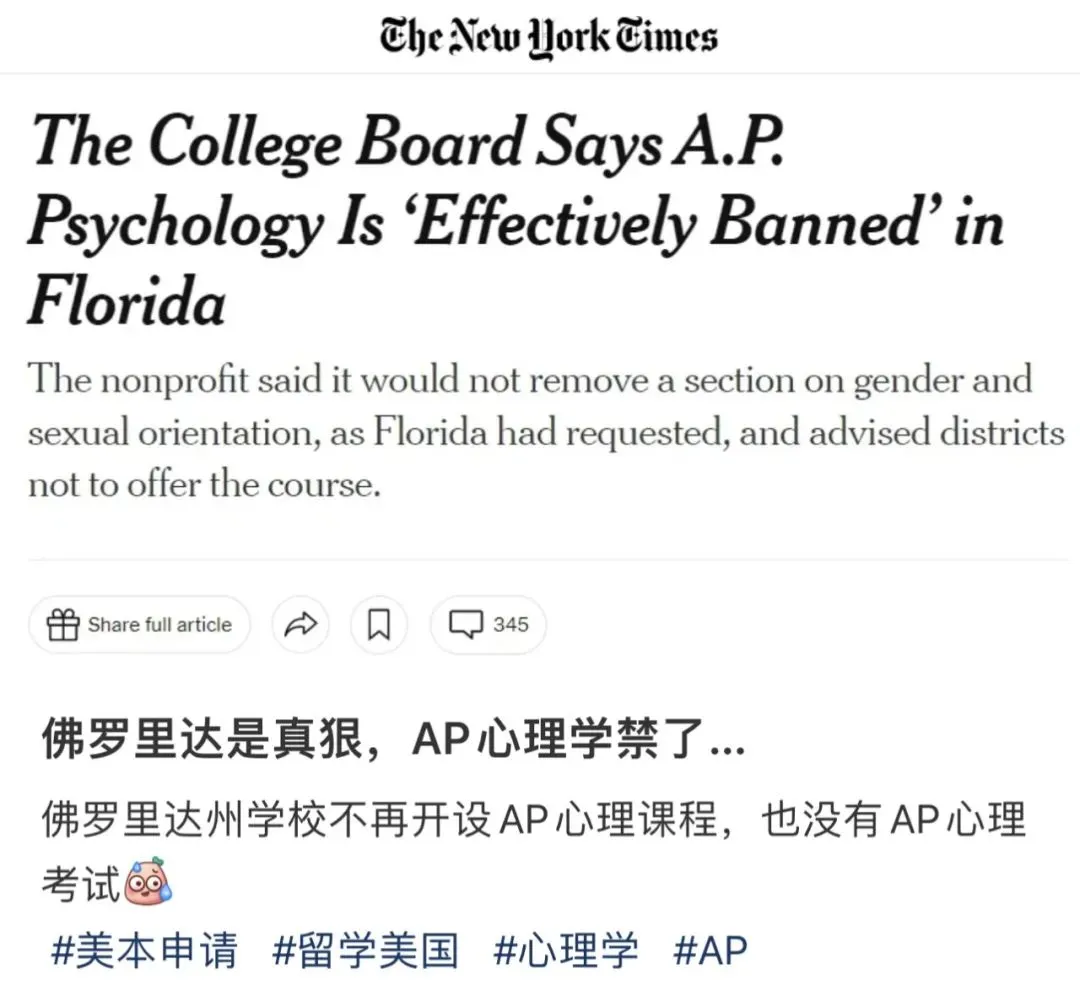
Florida is truly ruthless, not only does the law explicitly require Don't Say Gay, but recently it even directly banned AP Psychology.
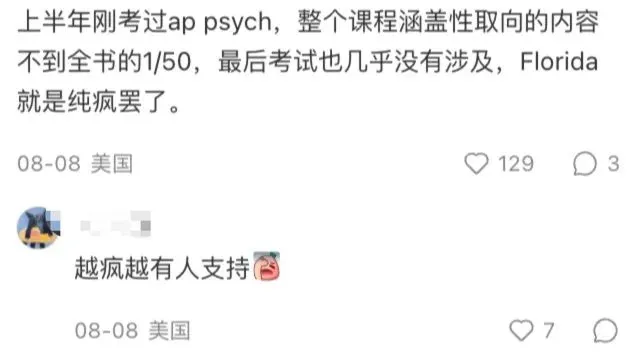
Netizens are baffled: Content related to sexual orientation accounts for less than one-fiftieth of the entire textbook, is it necessary to go this crazy? ❓
Florida Bans AP Psychology
Earlier this month, the College Board announced that AP Psychology had been banned by the Florida Department of Education because the course includes content on sexual orientation and gender identity.
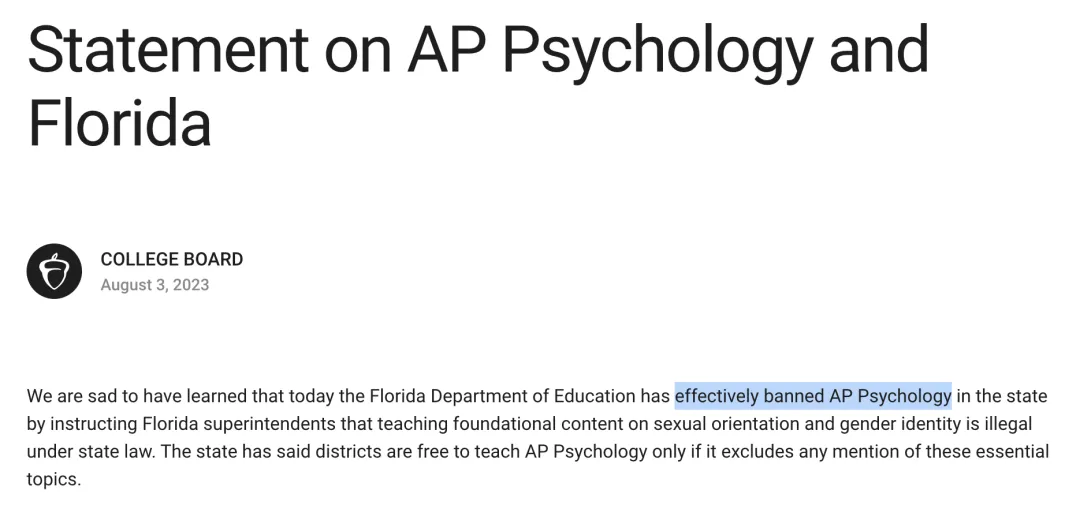
Banned, but not entirely.
Florida's government stated that as long as these "sensitive contents" are not mentioned, school districts can still freely teach AP Psychology.
The College Board's stance was also firm, saying that this course has been taught for over 30 years, and as a college-level preparatory course, it must align with university curricula and cannot be changed arbitrarily. If banned, it is the students and parents who will suffer.
The next day, a spokesperson for the Department of Education tried to smooth things over: We "will not prevent school districts from offering AP Psychology," but we "believe this course can be taught in a way that is age- and developmentally-appropriate."
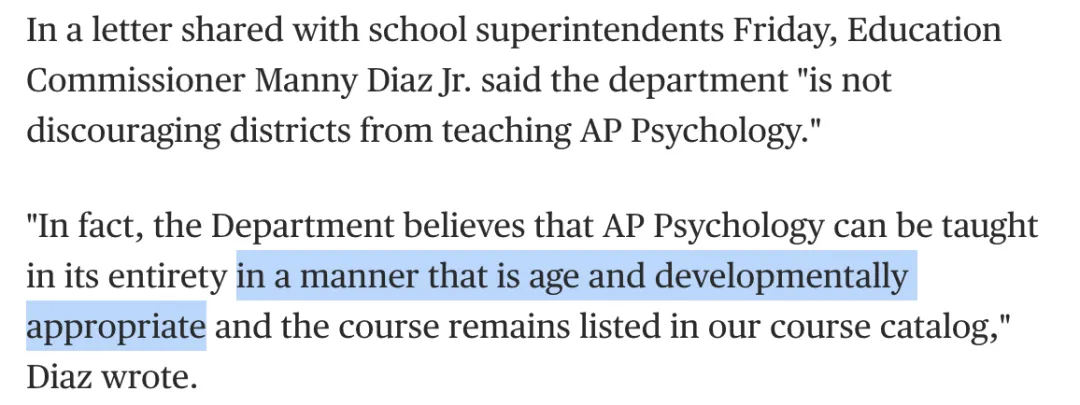
In summary, neither side is willing to budge, but neither wants to be criticized either.
Regardless of the back-and-forth between the Florida government and the College Board, the current result is that six high schools in Florida school districts have made it clear: they will not offer AP Psychology this academic year. A school spokesperson said that the schools will use IB or other college-level advanced courses as substitutes.
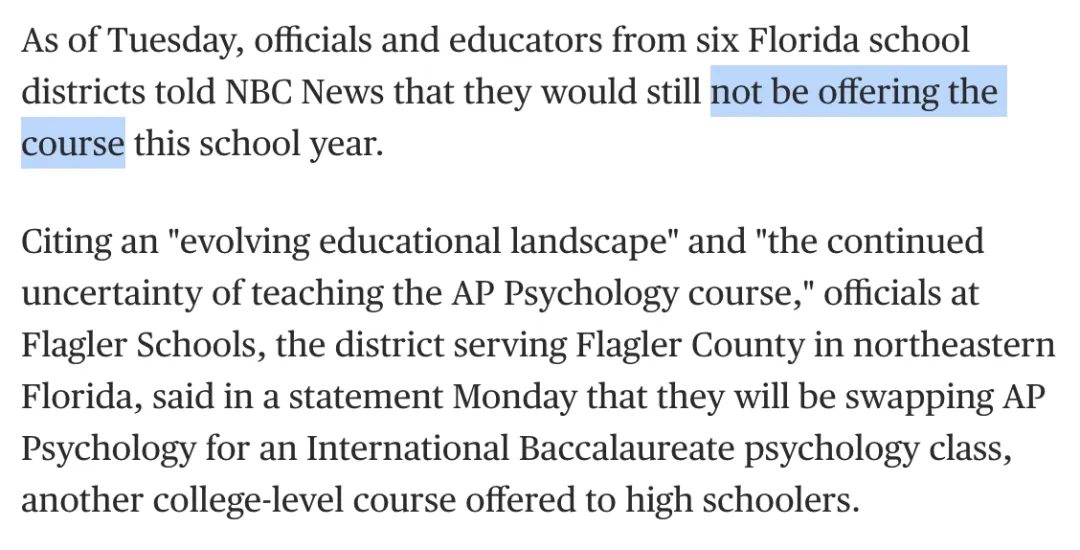
Schools are also helpless in this situation. If they don't teach it, students won't earn credits; but if they do, they'll violate local laws. So they simply chose not to teach it.
How can teaching a course be against the law?
This is because Florida Governor DeSantis signed the "Don't Say Gay" law last year, which prohibits classroom instruction on sexual orientation or gender identity in primary and secondary schools, covering both public and charter schools. Parents can sue the school district if they believe the law is being violated in teaching.
Supporters believe this law gives parents control over their children's education, while opponents see it as unfair treatment of the LGBTQ community.

A public school teacher said that topics about LGBTQ identity do indeed come up in classroom discussions. However, the content in AP Psychology that touches on LGBTQ is very limited and primarily relates to "how sex and gender influence social development."
Teaching the course now means walking a legal tightrope, so her school chose to abandon it, causing widespread anxiety.

Before the ban, over 28,000 students in Florida had taken AP Psychology. Will this one of the most popular AP courses quietly fade away? It remains to be seen how the ongoing tug-of-war between Florida government and the College Board plays out.
Netizens are finding amusement in the chaos, saying it would be even better if all AP courses were banned.
In Florida, that might actually be possible.
Florida's Daily Madness
Since DeSantis became governor, Florida has been acting crazy in various ways.
This is not the first time he has taken aim at AP courses. Earlier this year, DeSantis banned the AP African American Studies course.
The Florida Department of Education stated: "The course violates Florida law and lacks educational value." They ordered the College Board to revise the course content promptly for re-approval.
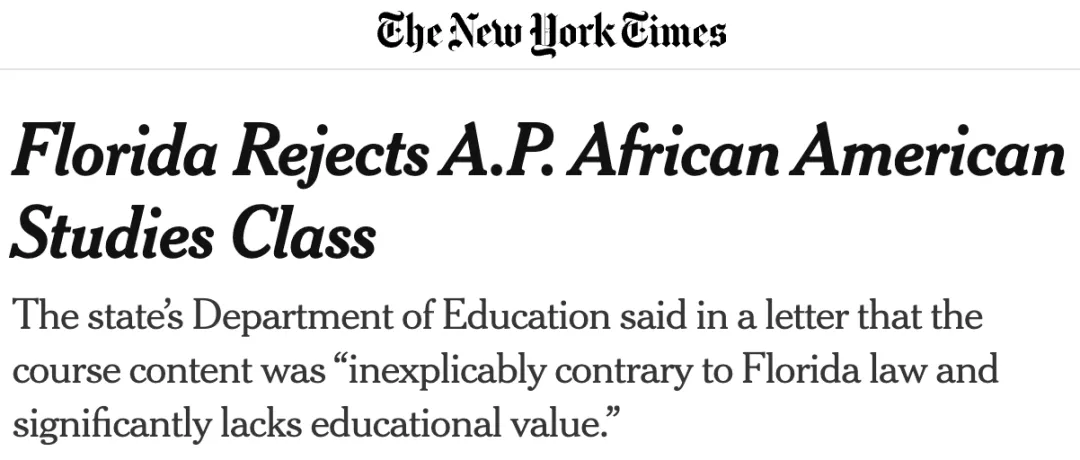
The course was accused of inappropriately discussing racial issues, violating the governor's signed "Stop WOKE Act."
In response, the White House spokesperson called the decision "incomprehensible," and Democratic and minority leaders also launched attacks.
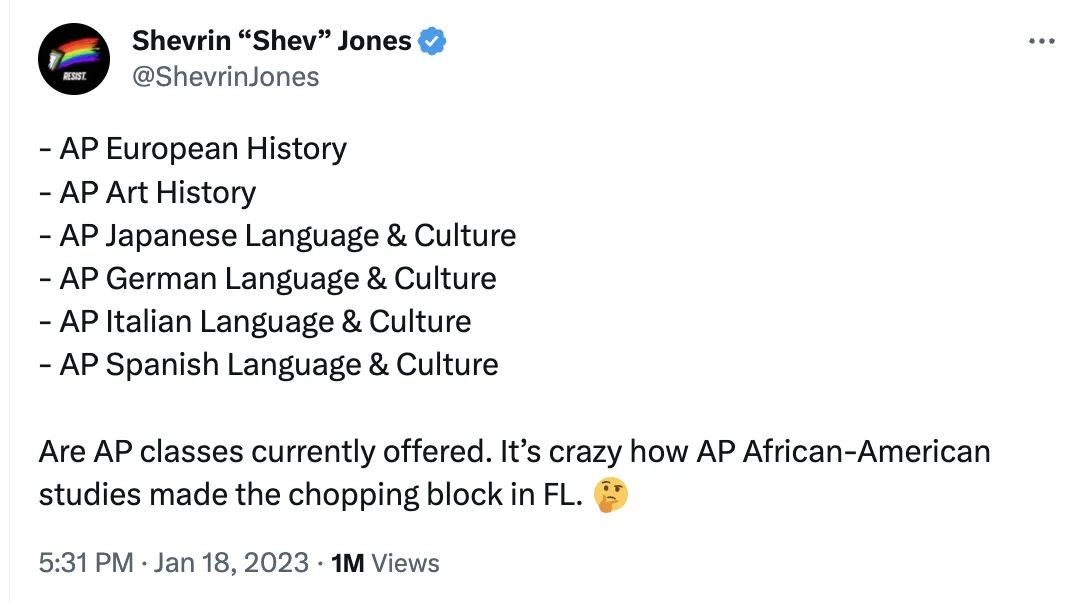
Florida Democratic state representative Jones tweeted: "This is political extremism, an attack on African Americans and their culture."
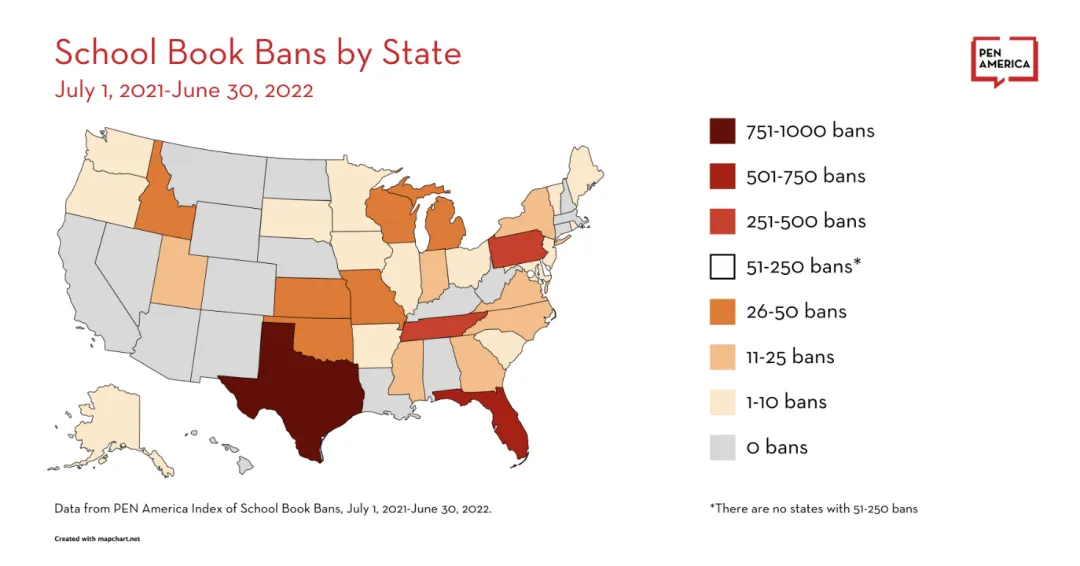
But considering DeSantis's past education policies, these decisions are not surprising. The number of banned books in Florida schools and libraries far exceeds that of other states—second only to Texas, ranking second nationwide.
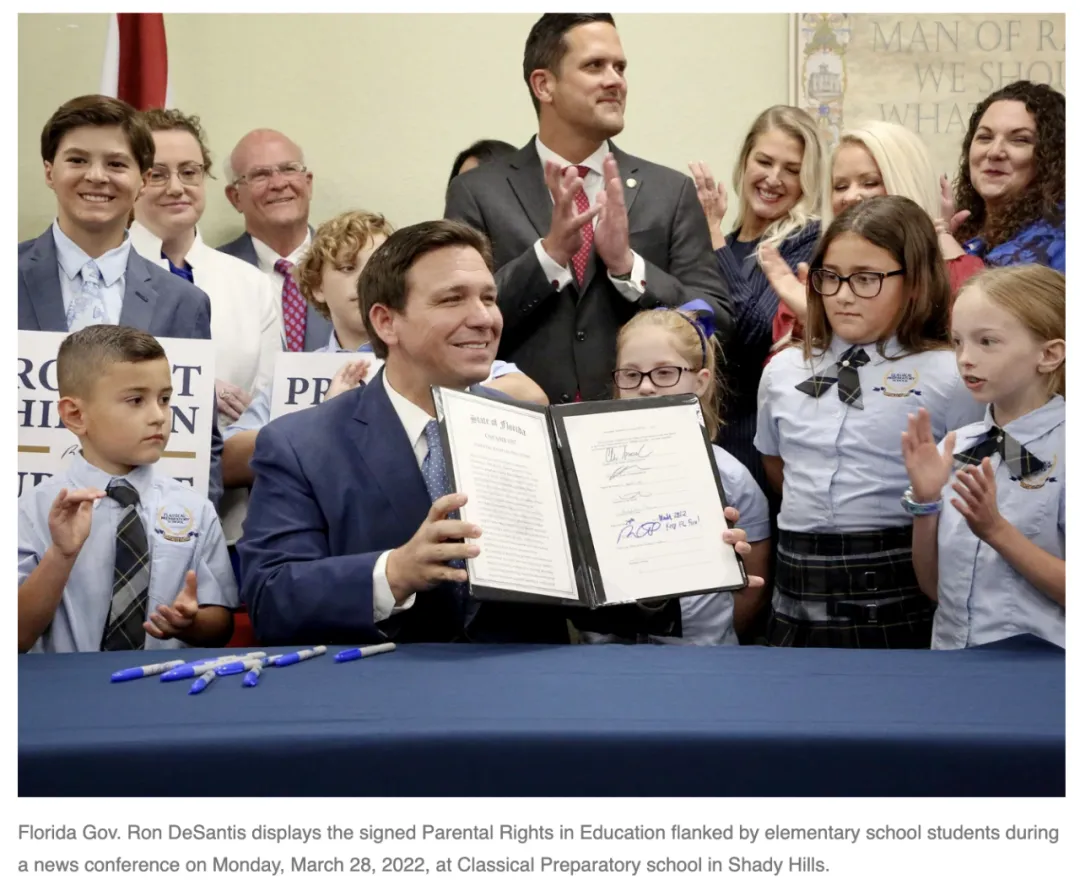
Last March, DeSantis passed a new law allowing parents to challenge school reading lists, curriculum materials, and library collections.
Conservative parents really buy into this, and last year DeSantis's approval ratings soared, pointing toward the 2024 presidential election.
Thus, the governor became increasingly unhinged.
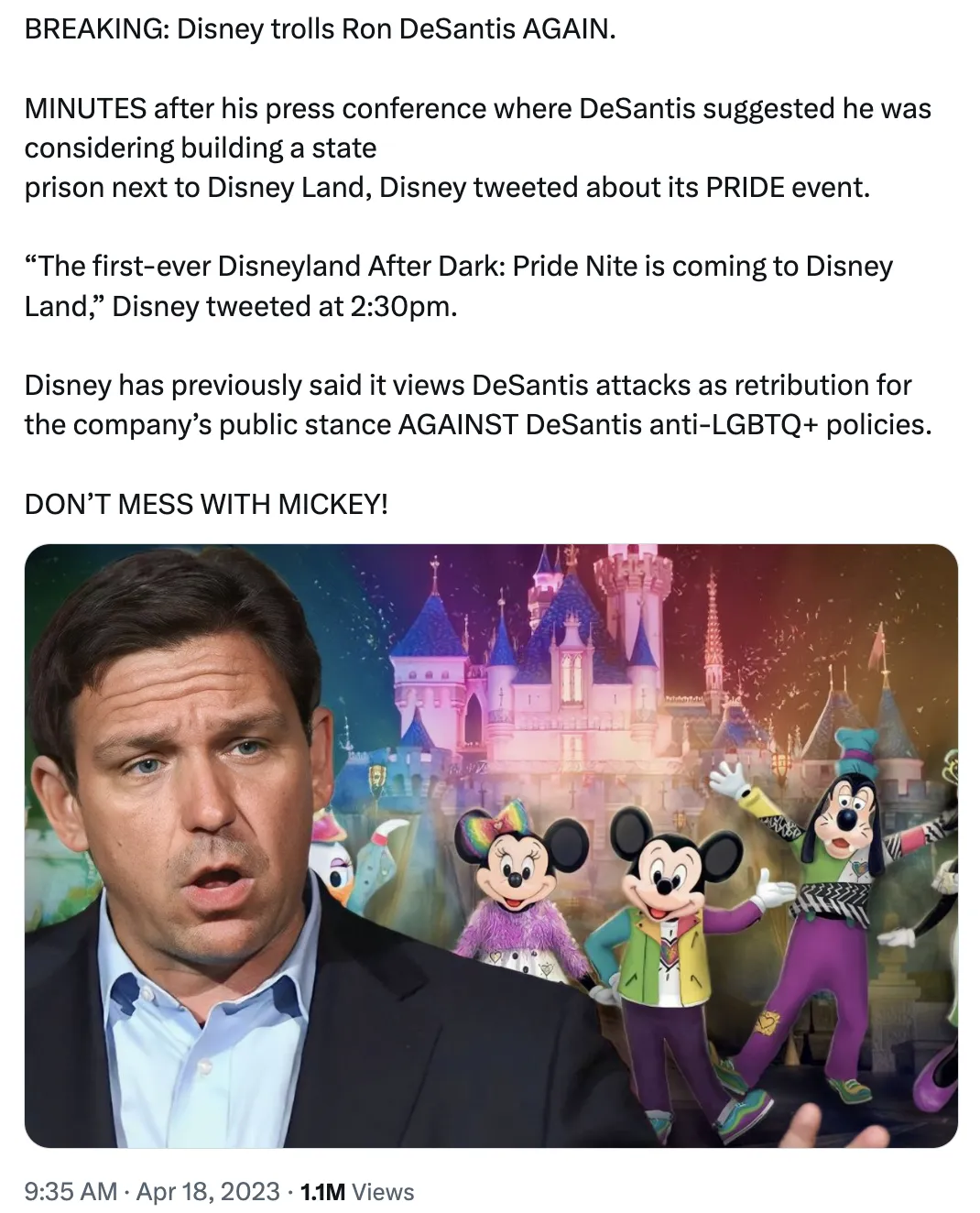
Disney spoke out against the "Don't Say Gay" law? Fine, immediately threaten to build a prison next to Disney.
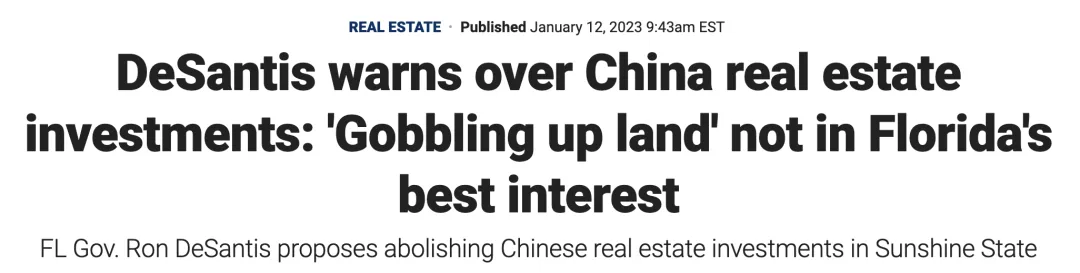
Furthermore, he supports the Chinese Exclusion Act and pushed through a bill banning Chinese citizens from buying property, which passed unanimously.
The governor in the Netflix series "Ratched" said: "I'm not a politician; I'm an actor. Whatever the public wants to see, I'll perform for them."
In red states, DeSantis clearly knows how to perform.
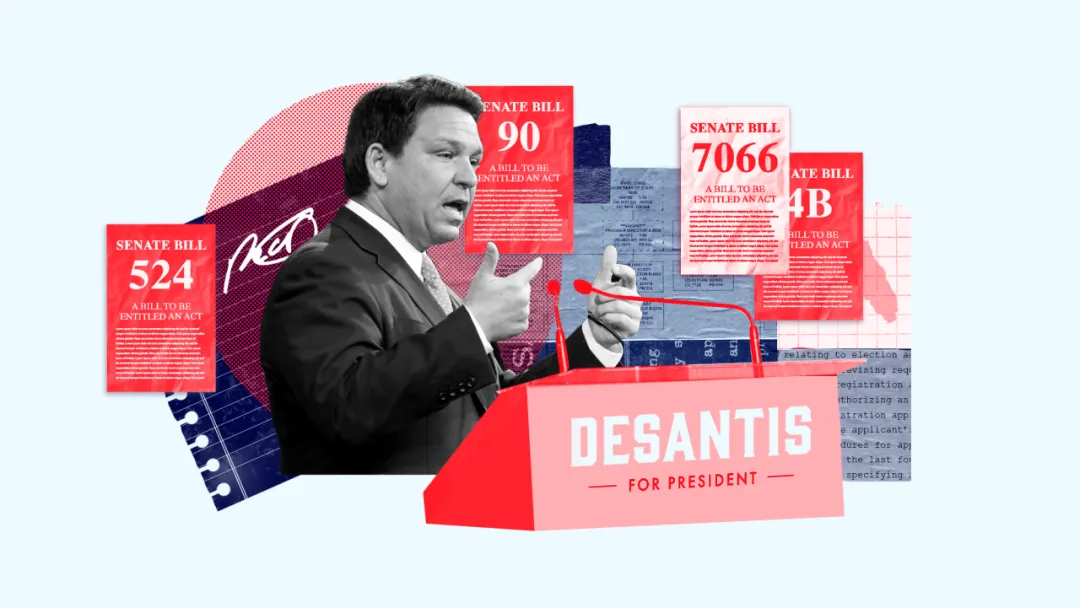
International students are truly fed up and can only temporarily avoid the state.

Bizarre Operations in American Education
The series of bizarre operations in American education are truly speechless.
Seven National Defense Universities Visa Restrictions
Earlier this month, a Chinese international student at the University at Buffalo, SUNY was arrested and charged with visa fraud, potentially facing up to 10 years in prison.
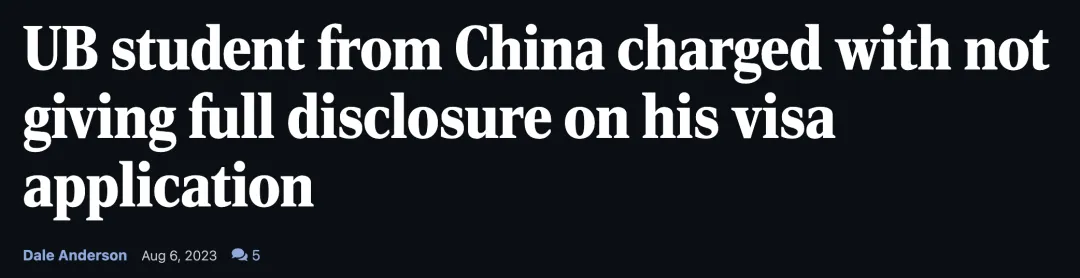
Local prosecutors said the student obtained an F1 visa in 2021 to pursue a master's degree in aerospace engineering in the U.S. During the visa application process, he allegedly intentionally concealed his educational background at Beihang University.
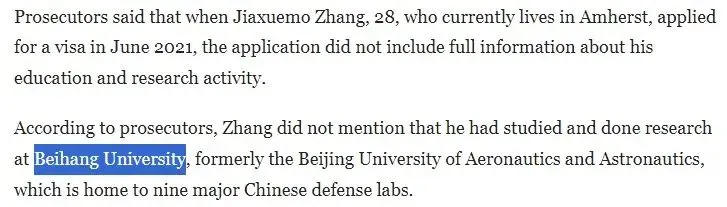
Beihang University is one of the so-called "Seven National Defense Universities." The other six are: Harbin Engineering University, Harbin Institute of Technology, Nanjing University of Aeronautics and Astronautics, Beijing Institute of Technology, Northwestern Polytechnical University, and Nanjing University of Science and Technology.
During his tenure, Trump signed an executive order banning specific Chinese students and scholars from obtaining F or J visas under the guise of national security.
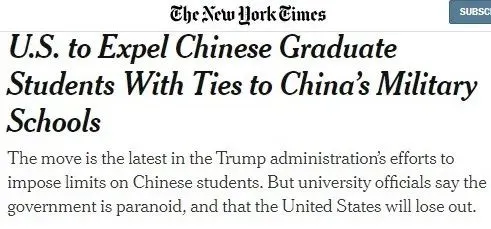
Students from these seven universities, especially those in sensitive fields, are prone to visa denials.
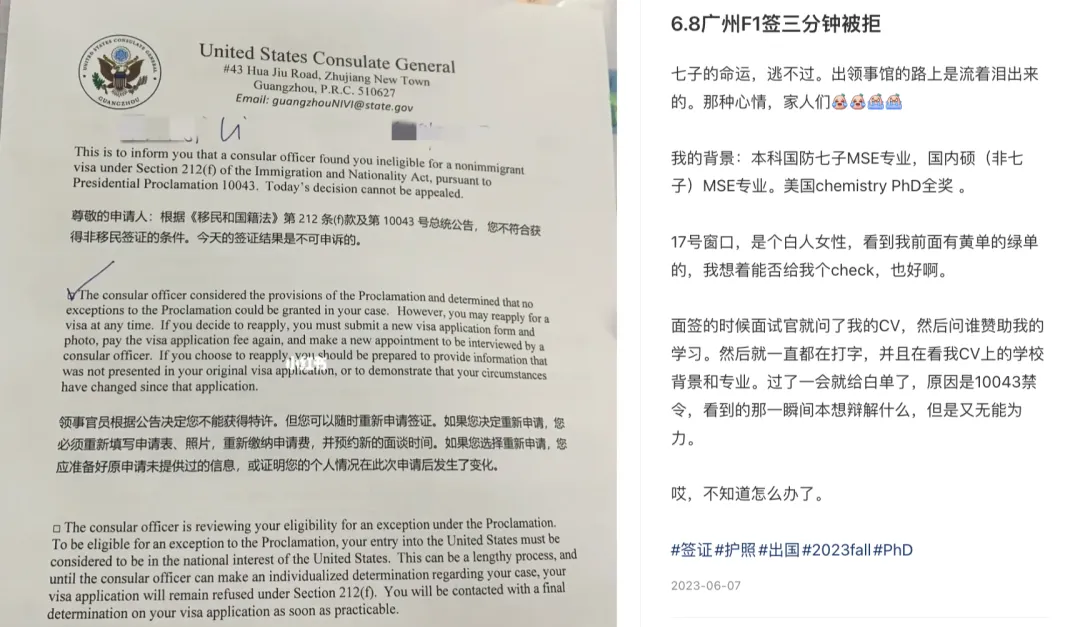
Some even had their visas revoked 👇

Telling the truth gets your visa denied, but concealing it could land you in jail—it's really tough.
Texas Bans TikTok
At the beginning of this year, the governor of Texas announced a ban on public universities using apps like TikTok, WeChat, and Alipay.
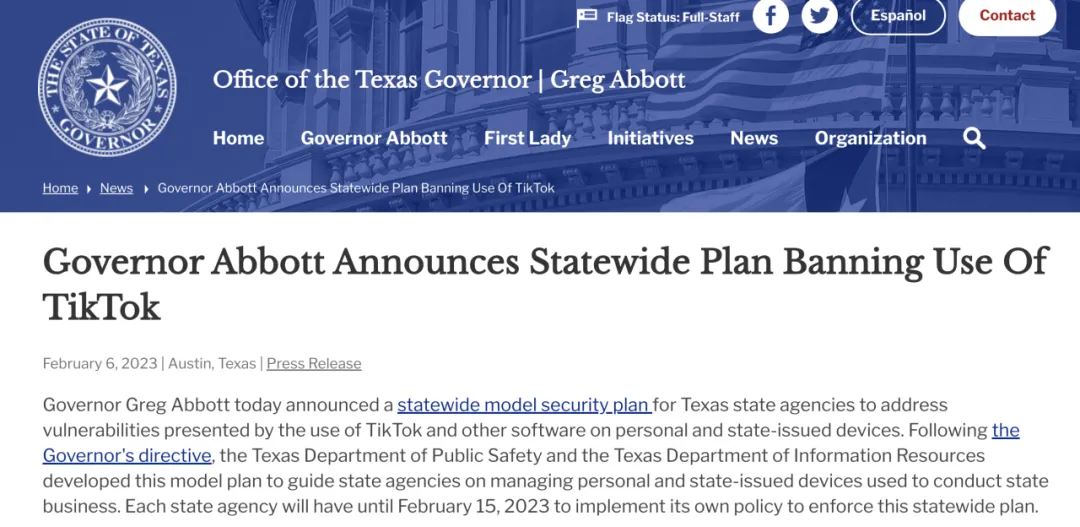
Texas A&M University, UT Austin, Texas Tech, the University of Houston, and other Texas public universities have all blocked TikTok.
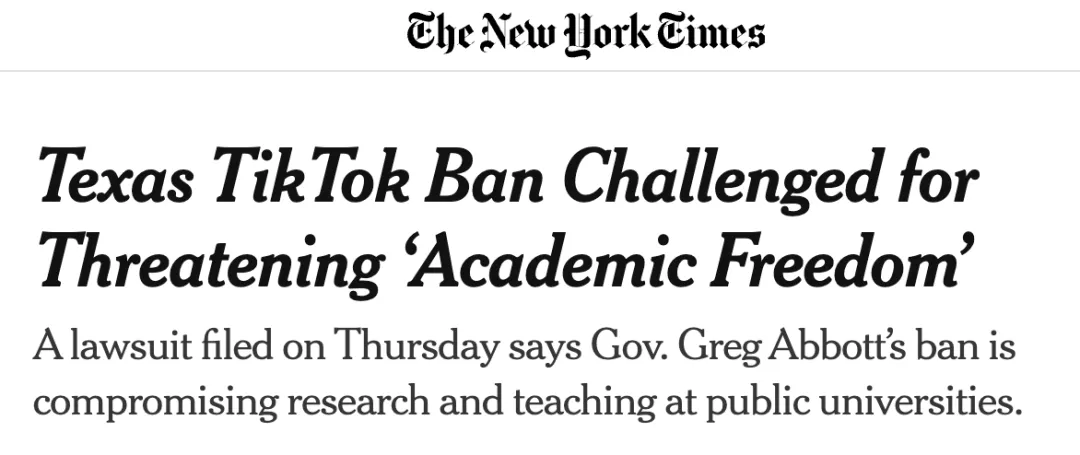
An associate professor at a Texas public university said that due to the ban, she couldn't carry out related social media teaching, forcing her to cancel research projects. All the extensive TikTok data analysis she had prepared went to waste.
Now, someone has finally taken the Texas government's ban to court, arguing that it severely impacts academic freedom.
UC Reduces International Student Enrollment
The California government's UC enrollment reduction budget bill has also thrown cold water on international students.
Starting in the fall of 2022, UCLA, UC Berkeley, and UC San Diego must cap the proportion of non-resident undergraduate freshmen at 18%, freeing up spots for California residents.
In the 2022-23 academic year alone, non-resident undergraduate enrollment was reduced by 902 students, including out-of-state and international students.
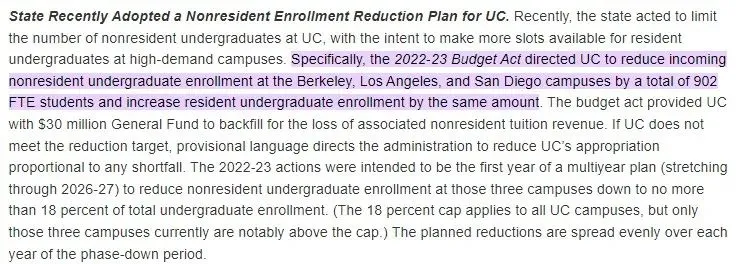
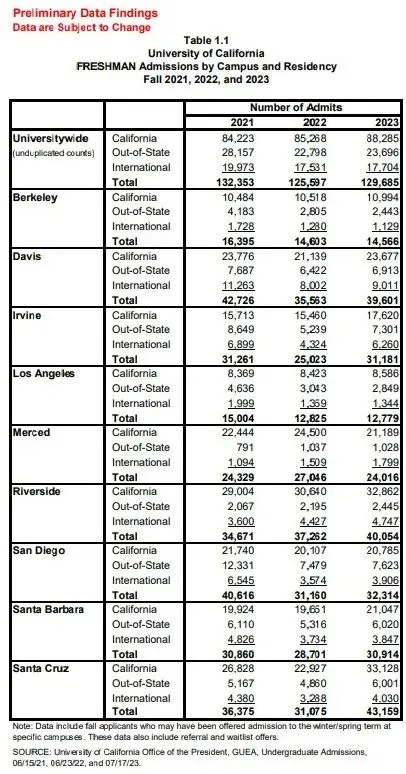
Looking at admission data from 2021 to 2023, the number of international students admitted to UC Berkeley and UCLA has declined year by year.
Affirmative Action vs. Asian Discrimination
Some American universities also use "affirmative action" as a pretext to factor race into admissions decisions, leading to "systemic injustice."
Not long ago, news of a Chinese-American male student with a 1590 SAT score being rejected by six elite universities shocked the study-abroad community.
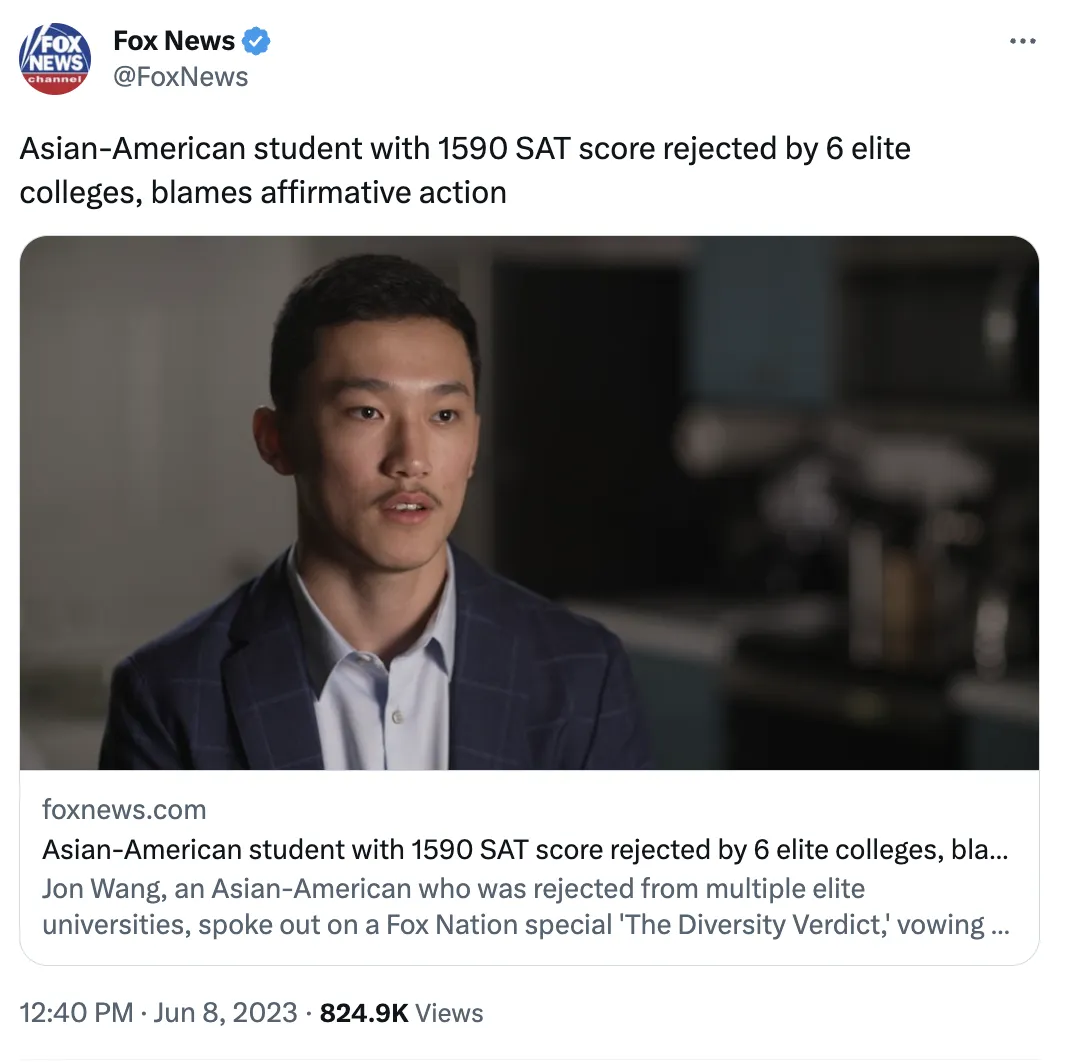
SAT 1590, GPA 4.65, multiple AP honors. Captain of the high school golf team, individual and team champion in a Florida regional golf tournament. Additionally, he was a co-founder of a tech startup.
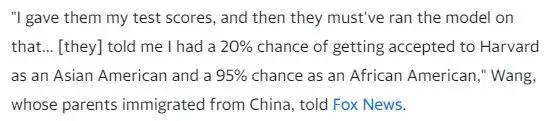
With such an impeccable resume, how could he be unanimously rejected by elite American universities? He attributed his rejection to the controversial affirmative action policy: "The admissions rate for Asian Americans at Harvard is only 20%, while for African Americans it's as high as 95%."
But good news came on June 29 this year: Harvard lost the case in which it was accused of discrimination against Asian Americans in admissions. This landmark case for educational equity witnessed a historic moment.
The U.S. Supreme Court ruled: Universities must not use racial stereotypes in admissions, and the consideration of race must come to an end at some point in the future!
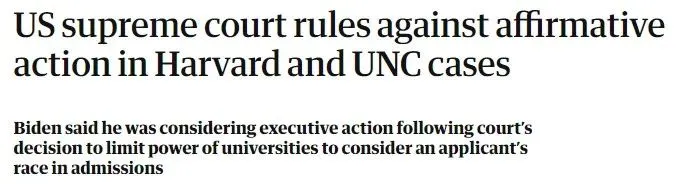
Countless Asian American students who have faced discrimination and rejection based on race finally see the dawn of educational equity.
While the field of education is often considered an ivory tower, it is still somewhat swayed by political correctness or grandstanding, swinging between extreme left and right. International students are caught in the middle. From visas, exchange rates, plane tickets, to which schools to attend and which courses to take, there's always some drama.
Despite the constant twists and turns, it is undeniable that American education remains world-class, and we need to view it rationally. When facing difficulties and challenges in studying abroad, we should not be overly pessimistic.
As international students, we might not change the broader environment, but in this era of rapidly developing social media, we need to learn to speak up and fight for educational equity and our rights together with others.
.png)