Amidst credential inflation and increasing competition, many college graduates choose to pursue further studies to upgrade their qualifications. In this context, is it worth studying abroad? In reality, studying abroad and continuing education domestically are simply different paths individuals choose; there is no absolute good or bad. Everyone should make a judgment based on their own situation and needs. Today, a CheersYou(清柚教育) advisor will start with the most concerning questions to deeply analyze who is more suited for studying abroad, whether only top university students can study abroad, where to go, what development looks like after studying abroad, and how to prepare. For more questions, you can also scan the QR code below for a one-on-one consultation.
1. Who Is Better Suited to Study Abroad
If the following reasons are your primary considerations, then studying abroad may be more suitable for you:
- The educational resources for your major are more advanced abroad: For example, in electrical engineering, the US and Singapore have many excellent schools and programs with great employment prospects.
- You have high requirements for university rankings and view a degree as a springboard for career advancement: Returnees face increasingly fierce competition in China, so pursuing further studies at prestigious overseas schools helps enhance competitiveness.
- You have the financial means and wish to experience different cultures: Studying abroad is an opportunity to see the world, broaden your horizons, and engage with different cultures.
- You want to develop independence and self-reliance: Studying abroad provides a chance to live and learn independently, cultivating autonomy and problem-solving abilities.

2. Does Being from a 985/211 University Guarantee Admission?
Naturally, domestic 985/211 universities give students certain advantages in study-abroad applications. However, university background is just one important factor. In addition, personal abilities such as practical experience, language proficiency, and social skills are also critical. These personal abilities are very important in overseas applications and differ somewhat from domestic postgraduate exams.

3. Choosing a Study Destination
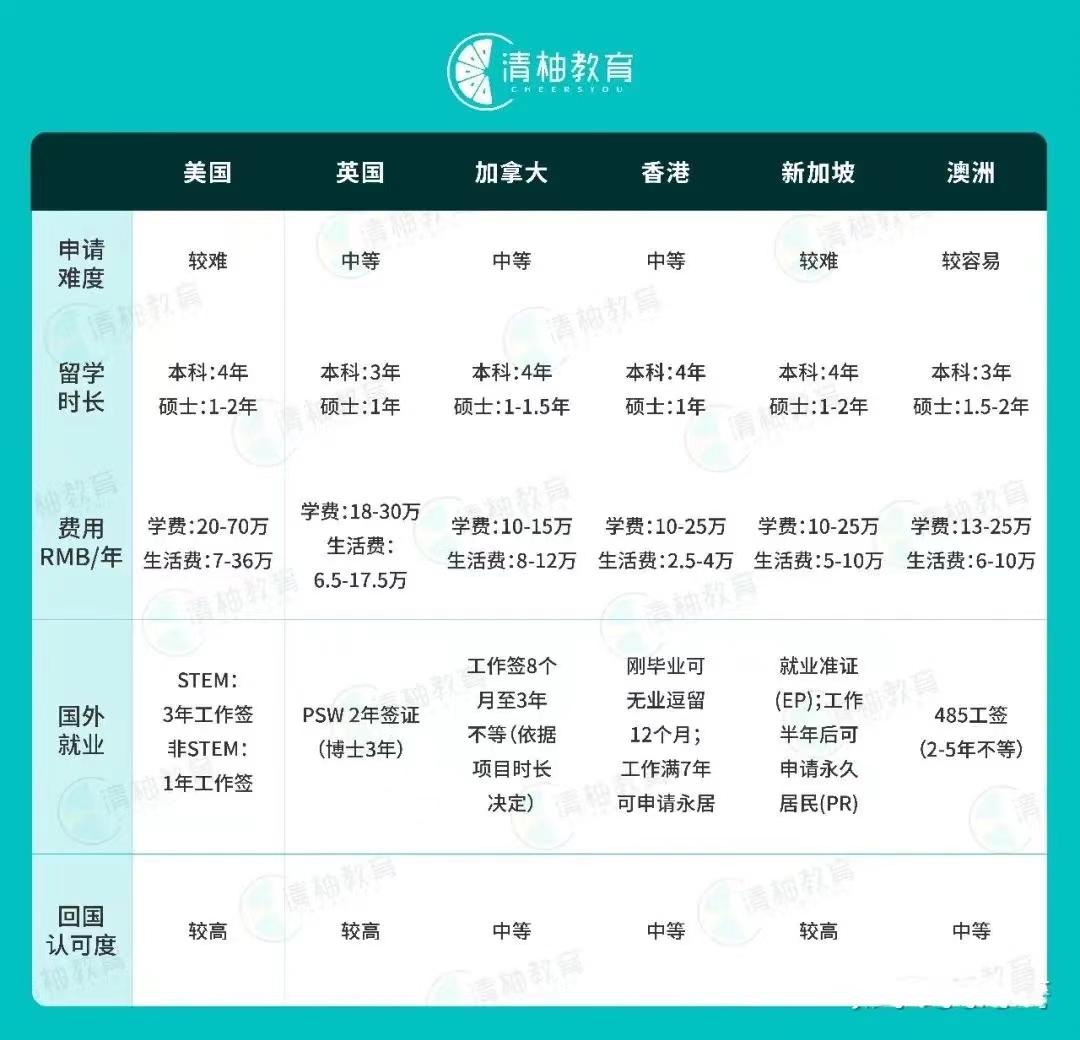
When it comes to choosing a study destination, students from 985 universities tend to prioritize the US and UK, followed by Hong Kong and Singapore. Below is a chart summarizing some basic information about these regions, including program length, tuition, and employment prospects, which can serve as a reference:
4. Post-Graduation Prospects
Regarding post-graduation prospects, taking electrical engineering as an example, popular fields include Electrical Engineering (EE) and Electrical and Computer Engineering (ECE). EE covers a broad range and essentially encompasses power automation, electronics, and other specialties. As one of the oldest engineering disciplines, EE has long-term development potential. Graduates can work in EE-related industries such as power plants, power supply bureaus, grid dispatch centers, or take on electrical technology roles in other sectors. According to statistics, EE master's graduates can often earn a starting salary above $65,000.
Different majors vary, but all will benefit from an upgraded degree and overseas background, which enriches one's resume and inevitably leads to higher starting salaries.

5. Pre-Application Preparation
As competition in all application regions intensifies, comprehensive planning and attention to detail are key to gaining admission to top schools. Here are several aspects to consider:
- Undergraduate institution: Overseas universities assess applicants based on their undergraduate institutions, including 985/211, joint-venture universities, and other institutions.
- GPA: Higher grades increase your chances of getting into a good school. When applying to the US, WES-evaluated transcripts are required.
- Language proficiency: TOEFL and IELTS scores are the main benchmarks. Requirements vary by school and program; higher scores are more competitive. Most graduate applicants need an IELTS score of 7+ or TOEFL 100+. Note that schools without a stated minimum score are not necessarily easier. It's advisable to check official websites or refer to the average scores of admitted students.
- GRE/GMAT: Whether for business or STEM, submitting GRE/GMAT scores is beneficial. These are complementary hard indicators, with GRE generally having broader coverage.
- Practical experience: Pursue internships aligned with your target major. These experiences will be incorporated into your personal statement, resume, and recommendation letters.
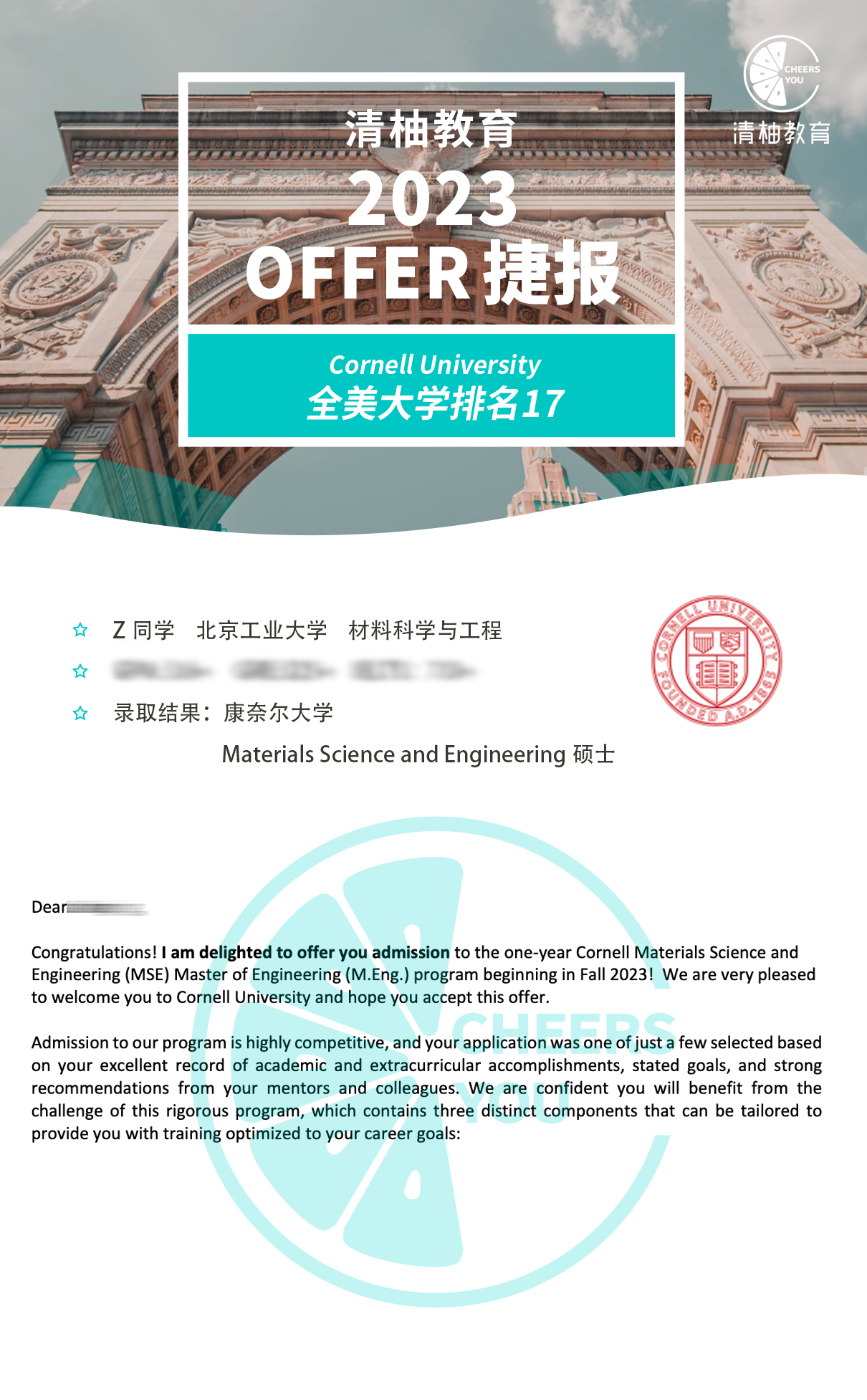
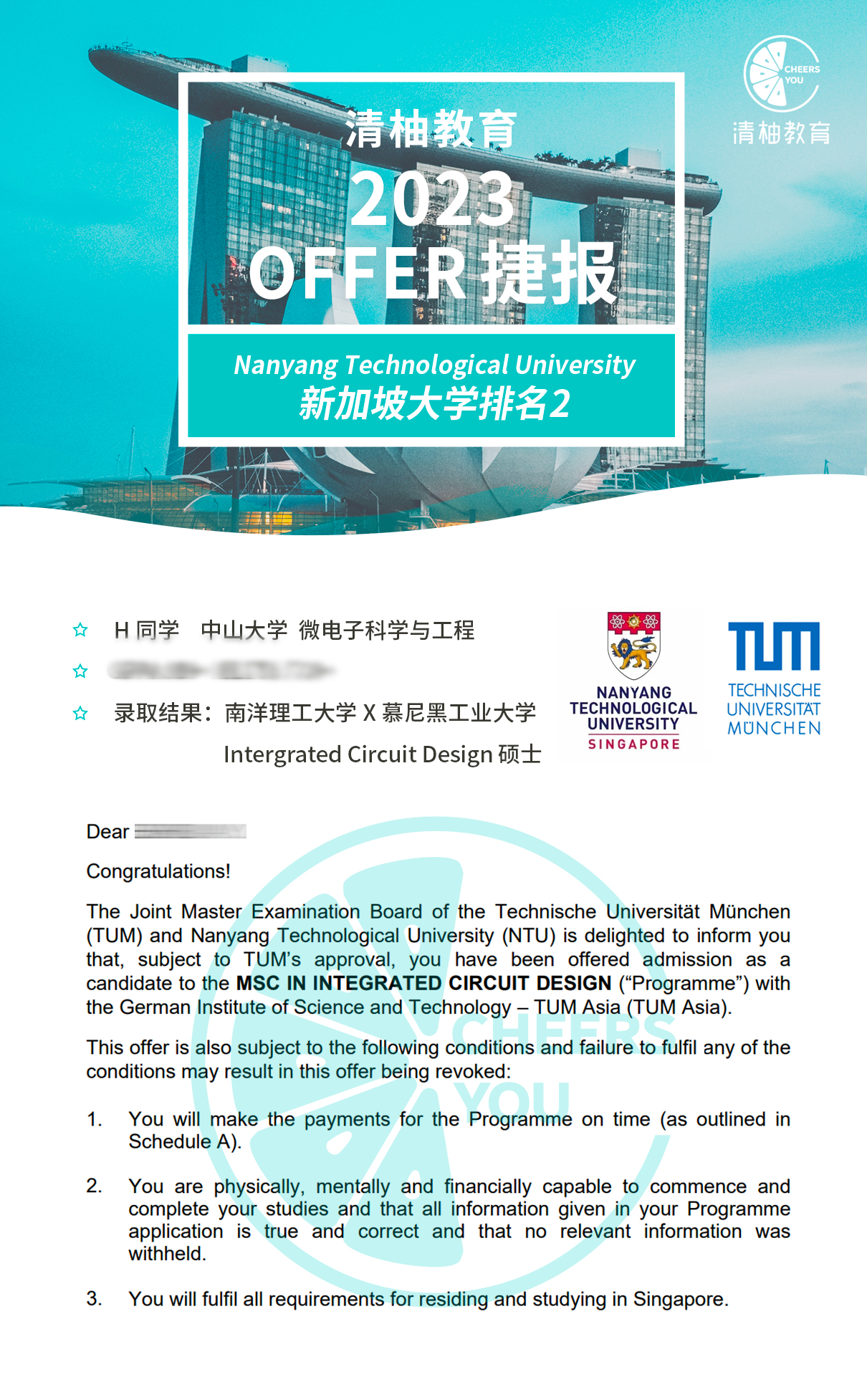
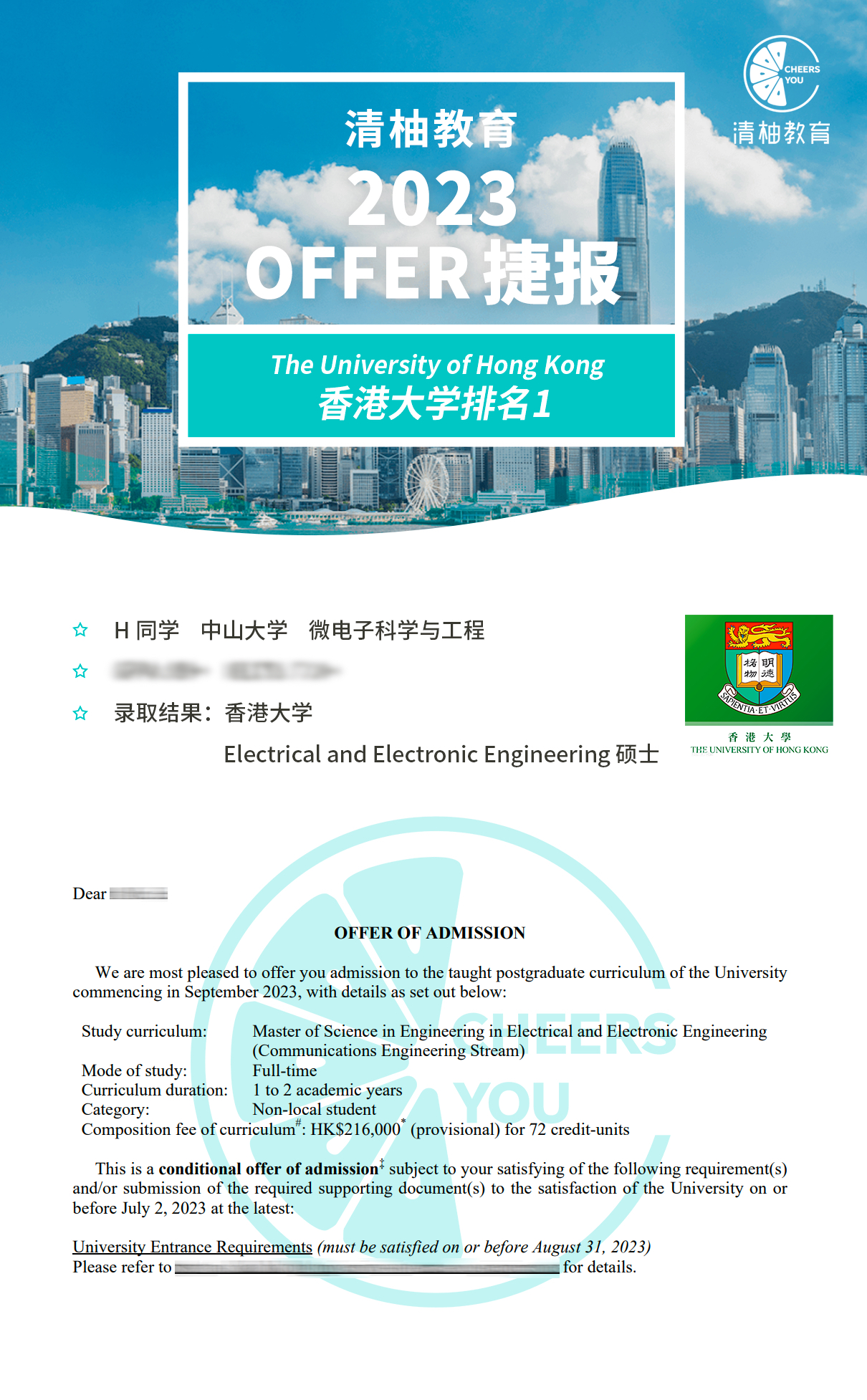
Below are some successful offer examples from domestic undergraduate students that you can use as a reference.
For more questions about studying abroad and graduate applications, you can also add the contact information of the CheersYou(清柚教育) advisor below for more details.