
Studying in the UK has always been fiercely competitive. Compared to other countries and regions, the UK offers shorter degree durations and higher qualification recognition, making it a consistently popular study destination.
Recently, The Times published its 2024 UK University Rankings. As one of the authoritative ranking lists in the UK, THE TIMES rankings hold significant recognition both domestically and internationally and serve as an important reference for many applicants choosing UK universities.
Without further ado, let's take a look with CheersYou(清柚教育) at the latest 2024 UK university rankings!
.png)
TIMES UK University Top 20 Rankings
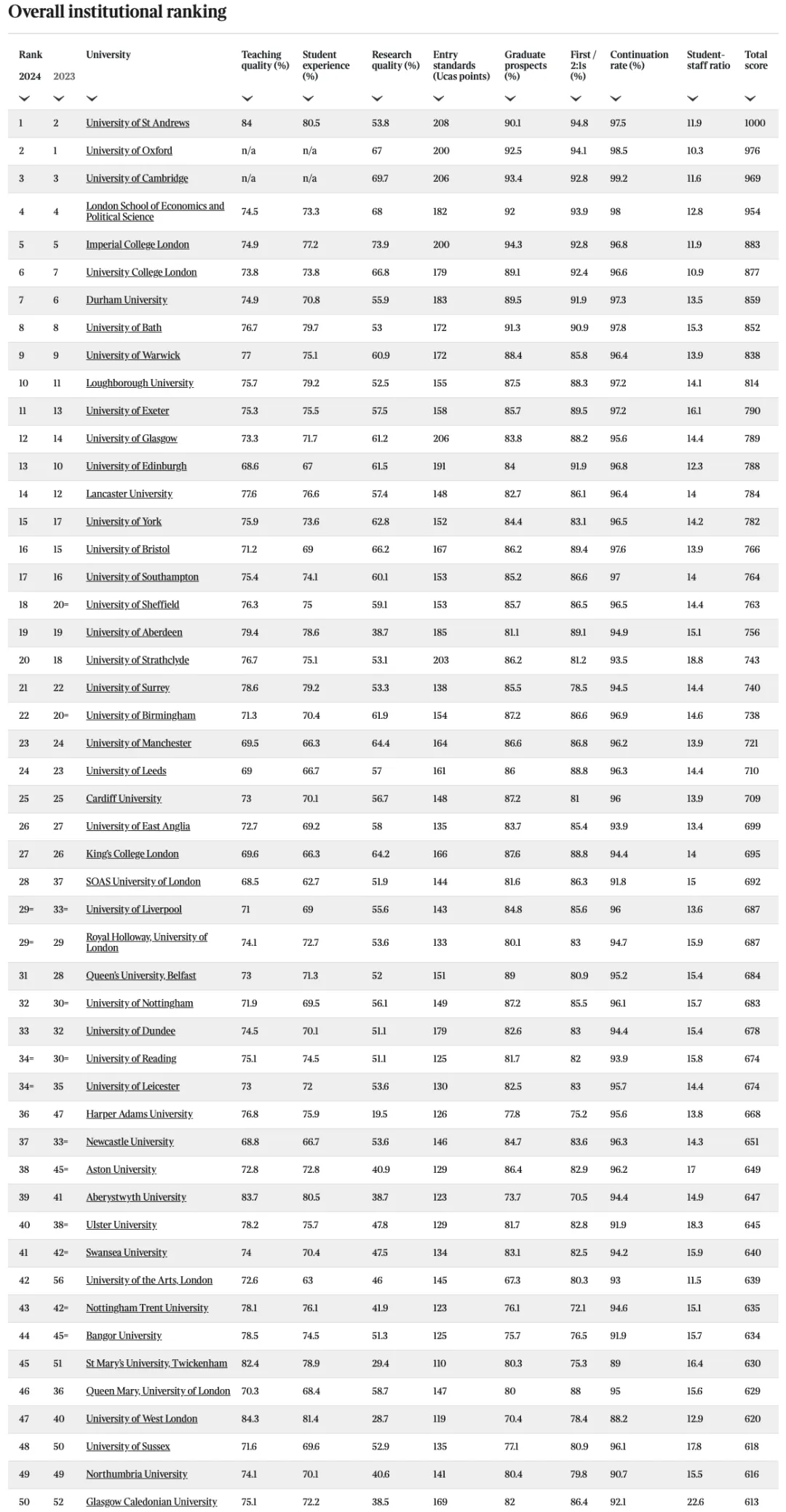
TIMES 2024 Ranking Methodology
The TIMES 2024 UK University Rankings consider nine indicators, including teaching quality, student experience, research quality, and graduate prospects. For students planning to study in the UK, the TIMES rankings are a relatively authoritative and valuable reference.
The specific ranking indicators are as follows:
Student satisfaction (teaching quality & student experience)
Research quality
Entry standards
Graduate prospects
Good honours (first and 2:1) degrees
Student retention
Student-staff ratio, etc.
TIMES 2024 Rankings Analysis
St Andrews, Oxford, and Cambridge remain the unshakable top three. The University of St Andrews has been named the UK's number one university for the second time in 30 years, beating Oxford and Cambridge.
UCL overtook Durham University, rising one place in the rankings this year. Cambridge, LSE, Imperial College London, the University of Bath, and the University of Warwick maintained the same positions as last year.
The University of Edinburgh missed its spot in the top ten this year, falling to 13th in the UK, while Loughborough University took Edinburgh's previous position, successfully breaking into the top ten.
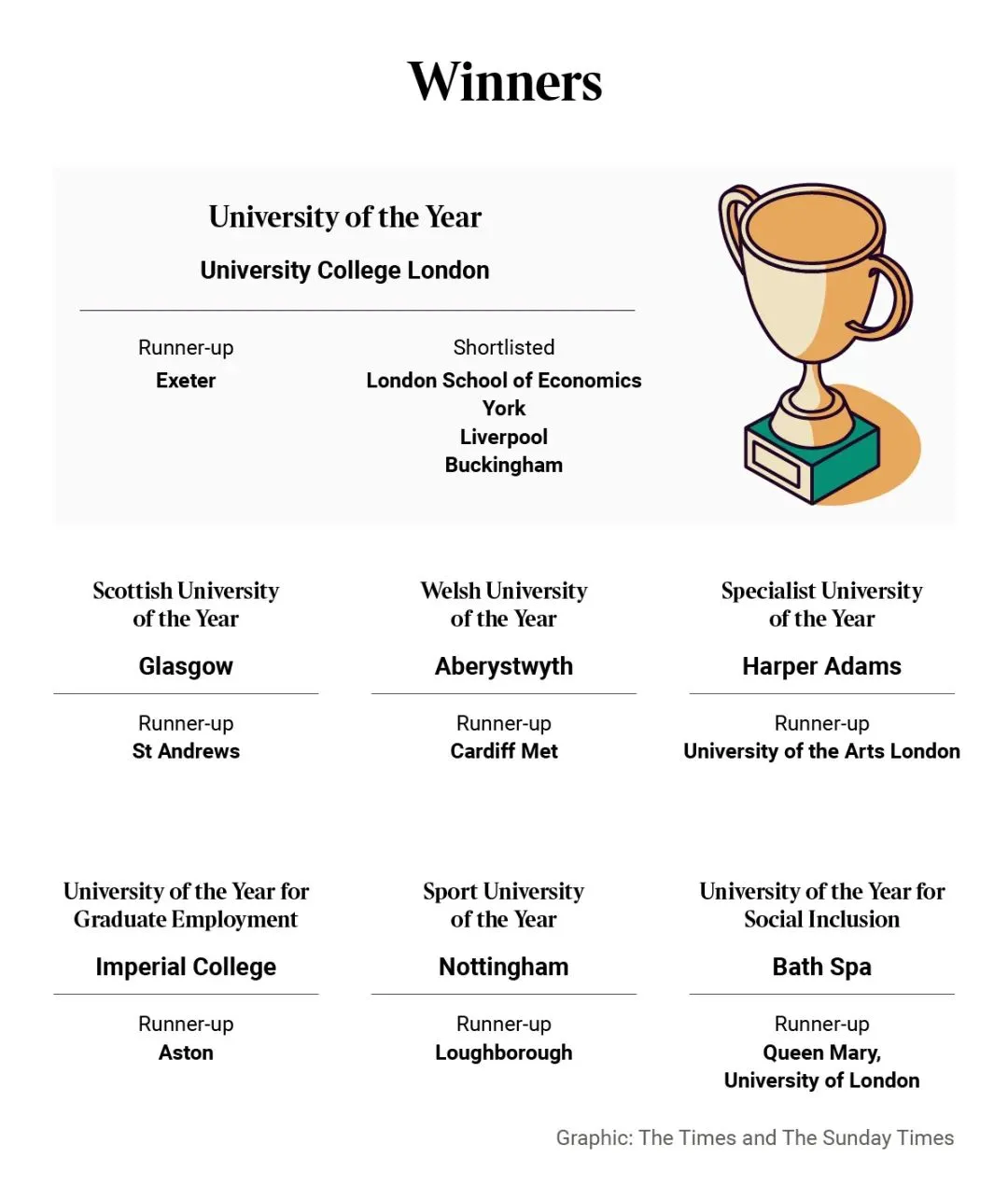
The University of the Year for 2024 is University College London. In the latest Research Excellence Framework analysis, UCL ranked fifth overall for research power, with law, medicine, and social sciences being its highest-scoring subject areas. High scores for graduate employment also played a key role in UCL's win this year.
Computer science has become a hugely popular major in the UK.
Since 2019, the number of students applying to study subjects such as robotics, video game design, and ethical hacking has increased by 31%, with a nearly 10% rise in the last 12 months, making computer science the fastest-growing field of study in the UK.
Each year, various ranking agencies rank local and global universities using different criteria. Students should be careful not to get carried away. Rankings can serve as a reference for school selection but should not be the sole basis for university applications.
With a wide choice of universities and programmes in the UK, students should consider not only the ranking but also factors such as location, campus culture, and curriculum, as well as their own academic experience and future career direction when applying.